Bellevue: Three Centuries of Medicine and Mayhem at America’s Most Storied Hospital by David Oshinsky

This fascinating history of New York’s famous public hospital provides a microcosm of national and worldwide medical history.
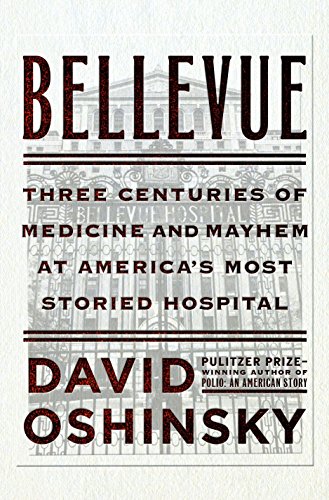
bellevue

Bellevue is one of the oldest and most famous names in United States hospitals, known for housing violent criminals and mental health patients, the homeless and sufferers of rare and exotic diseases. The incredible, multi-layered history told by David Oshinsky in Bellevue: Three Centuries of Medicine and Mayhem at America’s Most Storied Hospital covers medical and general history both national and global. This thorough narrative is wide-ranging and endlessly gripping.

The institution began in 1736 as an almshouse, where the indigent were housed and given rudimentary medical care. From these earliest days, “Bel-Vue” had a reputation for dealing with society’s unwanted. And as Oshinsky shows, in its many incarnations, this reputation is intact. The flipside is that this public hospital has always attracted service-minded professionals pursuing innovation. Before modern considerations of medical ethics, this often meant experimenting on Bellevue’s impoverished patients and their diverse range of ailments: in exchange for charity medical aid, the thinking went, they offered themselves for clinical trials–as painful and medieval as they could be at times. Nevertheless, the hospital became central over the years in battling the yellow fever epidemic of the 1790s, the “Great Influenza” of the 1910s, the AIDS crisis of the 1980s, the September 11 attacks and Superstorm Sandy. Bellevue would see hospitals shift from being considered a last resort, only for those too poor to afford a private doctor’s home visits, to becoming the best medical care available (the development of anesthesia, germ theory and infection control being crucial).

The hospital has enjoyed affiliations with several medical schools, among the U.S.’s earliest and best, including its continuing relationship with New York University. NYU students get training in a premier teaching hospital that still treats an enormous and diverse patient population, while Bellevue gets talented, passionate residents and interns, many of whom remain and make their careers there. The history of Bellevue reflects social struggles, as women, Jews and African Americans gradually gained access to the medical profession, and anti-immigrant vitriol was aimed in turn at Irish, Italian and Jewish populations, among others, as waves of struggling immigrants contributed to Bellevue’s patient population. Bellevue successfully treated New York’s sole Ebola patient in 2014. Its tenuous funding situation (mostly public, and always under attack), high standards of care and public service mission continue.

Bellevue’s beauty and staggering scope lies in these historic, social and interdisciplinary connections. William Burroughs, Sylvia Plath, Charlie Mingus and Lead Belly passed through Bellevue’s history; its physicians have traveled the world and played roles in the scientific advances that have shaped modern medicine. Bellevue hosted the invention of forensic medicine, and major developments in medical photography, child psychiatry and AIDS treatments. Oshinsky (Pulitzer Prize-winner for Polio: An American Story) generally adheres to an impersonal, journalistic style, but his moving portrayal can’t hide his admiration for this longstanding institution. Bellevue is that rare, page-turning history: engaging, smart, clearly written and of broad general interest.


This review originally ran in the October 14, 2016 issue of Shelf Awareness for the Book Trade. To subscribe, click here.


Rating: 9 five-gallon containers of fuel.

The Black Panthers: Portraits from an Unfinished Revolution by Bryan Shih and Yohuru Williams

Photos, essays and interviews with rank-and-file Black Panthers “complicate the Panther story in a good way.”

black panthers

With The Black Panthers: Portraits from an Unfinished Revolution, photojournalist Bryan Shih and historian Yohuru Williams seek to tell a nuanced story of the Black Panther Party, one different from the popular conception of gun-wielding “thugs,” chiefly male, in black leather jackets and Afros with the leadership–Huey Newton, Bobby Seale and Eldridge Cleaver–centered in Oakland, Calif.

In pursuit of the rank-and-file perspective, Shih photographs and interviews Panthers or former Panthers, male and female, whose narratives express pride, humility, trauma, frustration and hope. Accompanied by essays solicited from scholars, this collection tells a more complex and sympathetic story. While not uncritical, the authors do champion an interpretation that emphasizes love and service over violence, featuring, for example, party programs like Breakfast for Schoolchildren (in more cities than just Oakland), free busing and ambulance services, free health care clinics and more. Shih’s photographs are striking and expressive, capturing the “humanizing details” he sought.

The Black Panthers is not the complete story: for instance, the “deep misogyny and sexism within the rank and file and leadership” is mentioned but not really addressed. Perhaps there is no complete story–as proven here, the party was made up of diverse members, with varied goals and motivations. Shih and Williams’s objective to expose this multiplicity, and inspire a second look at an energetic but ill-fated cause, is achieved with this intelligent, unapologetic book.


This review originally ran in the September 16, 2016 issue of Shelf Awareness for Readers. To subscribe, click here, and you’ll receive two issues per week of book reviews and other bookish news.


Rating: 8 humanizing details.

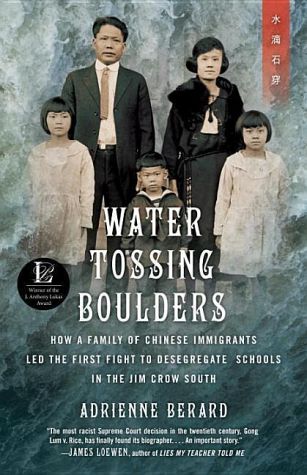
book beginnings on Friday: Water Tossing Boulders: How a Family of Chinese Immigrants Led the First Fight to Desegregate Schools in the Jim Crow South by Adrienne Berard

Thanks to Rose City Reader for hosting this meme. To participate, share the first line or two of the book you are currently reading and, if you feel so moved, let us know what your first impressions were based on that first line.

I am of course intrigued by what the back of this book calls a “vital, hidden chapter of America’s past.”

water tossing boulders

Water Tossing Boulders concerns a Chinese immigrant family in Mississippi, where the children were denied public education in 1924. It begins:

As with all rumors, the stories grew over time, in the long months between June and September, when the air is so thick that gossip is all that circulates. The new students wouldn’t bathe. They didn’t have money to buy books. They didn’t care about learning. They had so many brothers and sisters, their mothers didn’t even know their names.

I guess I’m fascinated to see how a tragic but familiar story of Southern segregation and separate-but-equal schooling applies to a community we don’t normally associate with that story. Stick around.

This quotation comes from an uncorrected advance proof and is subject to change.

Love from Boy: Roald Dahl’s Letters to His Mother ed. by Donald Sturrock

Forty years of letters from a beloved children’s author to his mother offer an intriguing, entertaining perspective on both the man and the world.

love from boy

Roald Dahl, renowned for both children’s classics and eerie adult short stories, wrote his first letter home from boarding school in 1925, when he was nine years old; Donald Sturrock (Storyteller: The Authorized Biography of Roald Dahl) edits this collection of previously unpublished letters from Dahl to his mother. In Love from Boy, Sturrock’s minimal narrative appears alongside the epistolary bulk of the text, accompanied by a small selection of Dahl’s photographs and drawings.

Organized in seven chapters by phases of Dahl’s life, the correspondence tracks the growth of a beloved imagination and literary career. Over 40 years, Dahl evolves from funny prankster to crafty storyteller to a more serious and cynical mind, particularly following World War II. Dahl had a thoroughly interesting life even before he began writing in earnest: from English boarding schools to travel and corporate work in colonial Africa, hours logged as a Royal Air Force pilot, diplomatic work in the United States and collaboration with Walt Disney in Hollywood. But Love from Boy also provides a personal perspective on his eye for detail and the absurd, his predilection for pranks, his knack for characterization–“He’s a short man with a face like a field elderberry, and a moustache which closely resembles the African jungle. A voice like a frog…”–and his quirky preoccupation with personal hygiene, especially dental care. Love from Boy is both an endearing glimpse of a much-loved author and a sober view of mid-20th-century world events.


This review originally ran in the September 6, 2016 issue of Shelf Awareness for Readers. To subscribe, click here, and you’ll receive two issues per week of book reviews and other bookish news.


Rating: 7 tubes of Euthymol.

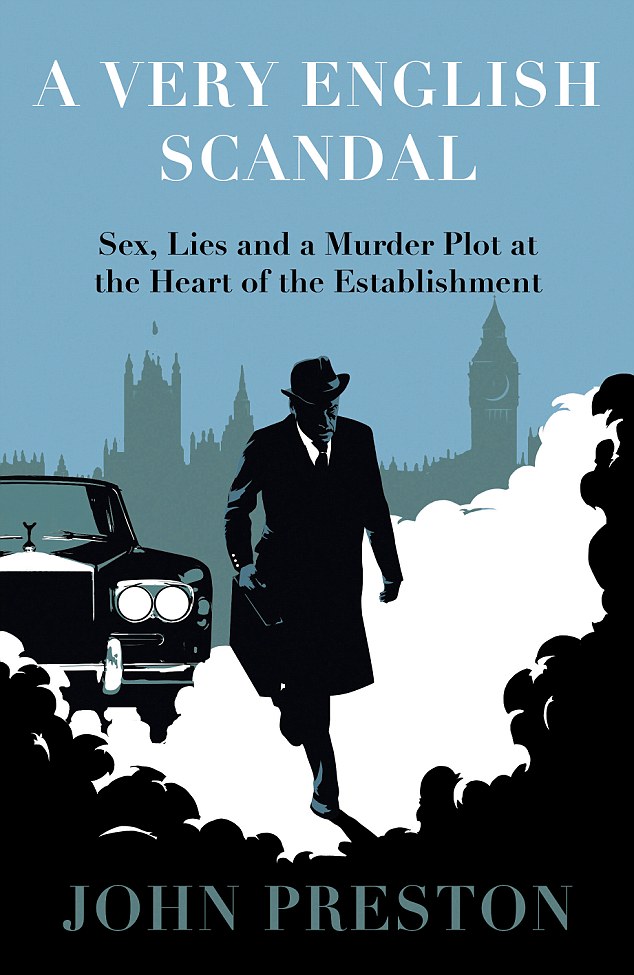
book beginnings on Friday: A Very English Scandal by John Preston

Thanks to Rose City Reader for hosting this meme. To participate, share the first line or two of the book you are currently reading and, if you feel so moved, let us know what your first impressions were based on that first line.

very english

The title of this book alone tickles me.

So begins A Very English Scandal: Sex, Lies and a Murder Plot in the Houses of Parliament:

One evening in February 1965, a man with a fondness for mohair suits, an unusually wrinkled face and a faint resemblance to Humphrey Bogart walked into the Members’ Dining Room at the House of Commons.

I smiled when I read this line, which so tidily sets a scene with those odd descriptive details that bring a character to life. I think this is a great starting sentence, and I’m looking forward to more! Stick around.

This quotation comes from an uncorrected advance proof and is subject to change.

Klee Wyck by Emily Carr

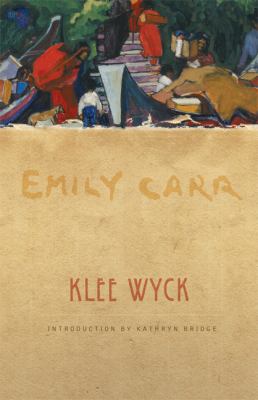
klee wyckKlee Wyck is a collection of short stories–fragments, really, many of them–begun in Emily Carr’s youth and then polished and published in her old age. I’ve written a little about some of these fragments here and here.

First and most importantly, I need to emphasize the story revealed in Kathryn Bridge’s fine introduction. If you are at all interested in this book, it is imperative that you get this edition of it. Here’s why.

Emily Carr is best-known as one of Canada’s finest painters. She was passionate about depicting her home environment of west coast British Columbia, which as she explored it in her teens and twenties in the late 1800s was still mostly unspoiled big forests; but perhaps she was most passionate about the lives, traditions and plight of the Indian or First Nation people she knew there. Their totem poles were among the central themes of her work. She also wrote extraordinarily well, and her writing was concerned with the same issues. The collection Klee Wyck serves largely as an indictment of the white settlers, especially the missionaries, who worked so hard to destroy native cultures. After a first edition by Oxford University Press, publishers Clarke, Irwin and Company purchased the rights to Klee Wyck, and put out an educational version thereof that thoroughly whitewashed Carr’s words and intentions. Bridge details the tragically extensive cuts and edits. And that’s the version of Klee Wyck that was available to so many for so long.

As it stands now, the restored & complete collection I’ve read is lovely, understated but firm. As I said in the teaser posted earlier this week, Carr had a keen eye for clean, tight prose, rather like Hemingway I’d venture. Her sentences are clear and direct, but often glittering with word choice and turns of phrase.

The grating of our canoe on the pebbles warned the silence that we were come to break it.

The sockets had no eye-balls, but were empty holes, filled with stare.

The tent full of sleep greyed itself into the shadow under the willow tree.

(She also has a knack for anthimeria, or the usage of one part of speech for another.)

The tips of the fresh young pines made circles of pale green from the wide base of each tree to the top. They looked like multitudes of little ladies in crinolines trooping down the bank.

The story “D’Sonoqua” about a character in the Indians’ mythology, and the striking, horrifying, awesome totems she inspires, is as striking as the totems Carr describes. In other words, I read her skill with language as parallel to the skill of the carver when she writes

The power that I felt was not in the thing itself, but in some tremendous force behind it, that the carver had believed in.

That clean transfer of force from the thing itself to the receiver is Carr’s gift, too.

And then in contrast is the story “Wash Mary,” a scarcely 2-page sketch of a woman Carr knew when she–Carr–was very small. Its simplicity is its accomplishment; I love that everything we see is everything the child Carr saw, nothing more, and with no added translation of meaning. It’s powerful nonetheless, perhaps because it shows how much a child can see without understanding.

Klee Wyck does address nature and the visual arts, the subjects for which Carr is known. But this book is firmly about people, not trees or totem poles. It’s about a human tragedy, for example the Indian children taken from their parents and villages to Indian residential schools (as I read about in Wawahte). This is why it’s so important to get this edition. Also: gorgeous, clean, precise writing. Emily Carr was a master of several forms. Do check it out.


Rating: 8 strong thoughts.

Teaser Tuesdays: Klee Wyck by Emily Carr

Teaser Tuesdays is a weekly bookish meme, hosted by MizB of Books and a Beat.

Teaser

In Cascadia, you’ll recall that I was much impressed by a few snippets of writing by Emily Carr (subject of the novel The Forest Lover). Now I have here, on loan from Pops, the longer work from which those snippets were snipped.

klee wyck

Klee Wyck is delightful. See for example these lines.

They were in a long straggling row the entire length of the bay and pointed this way and that; but no matter how drunken their tilt, the Haida poles never lost their dignity. They looked sadder, perhaps, when they bowed forward and more stern when they tipped back. They were bleached to a pinkish silver colour and cracked by the sun, but nothing could make them mean or poor, because the Indians had put strong thought into them and had believed sincerely in what they were trying to express.

Kathryn Bridge’s introduction and two forewords (to two different previous editions) by Ira Dilworth all note Carr’s style: painterly, minimalist, precise; each word in its place. Bridge quotes Carr on her two rules for writing, similar to those she used in her painting: “get to the point as directly as you can; never use a big word if a little one will do.” I think she’s done beautifully.

The Fire This Time: A New Generation Speaks About Race edited by Jesmyn Ward

Poems and essays by a range of writers address race in the United States.

the fire this time

Responding to the deaths of Trayvon Martin, Michael Brown, Eric Garner, Tamir Rice, Sandra Bland and so many others, the subsequent Black Lives Matter movement and a feeling that not much has changed, Jesmyn Ward (Salvage the Bones; Men We Reaped) felt moved to build a collection of words to counter the pain and injustice she saw. Essays and poems, many of them solicited by Ward, make up The Fire This Time: A New Generation Speaks about Race. Its title, of course, answers James Baldwin’s 1963 The Fire Next Time, which addressed the same questions of being black in the United States.

Led by Ward’s powerful introduction, contributions from Natasha Trethewey, Isabel Wilkerson, Edwidge Danticat and more consider past, present and future–Legacy, Reckoning and Jubilee. Honorée Jeffers writes in defense of Phillis Wheatley’s husband, a man apparently wrongfully denigrated, and honors Wheatley’s legacy while questioning the way it’s been written by others. Kevin Young muses on Rachel Dolezal’s interpretation of race. Garnette Cadogan writes movingly of what it looks like to walk through U.S. cities as a black man. And Ward offers an essay on her own ethnic heritage.

These powerful words from a range of sources vary in specific subject matter, but all make the same vital demands: for black citizens to have true equality. The entries in the collection are a little uneven, but each is stirring in its way, and the finest among them offer poetry as well as truth.


This review originally ran in the August 9, 2016 issue of Shelf Awareness for Readers. To subscribe, click here, and you’ll receive two issues per week of book reviews and other bookish news.


Rating: 8 names.

Teaser Tuesdays, hemingWay of the day and synchronicity: Love from Boy: Roald Dahl’s Letters to His Mother, ed. by Donald Sturrock

Teaser Tuesdays is a weekly bookish meme, hosted by MizB of Books and a Beat.

Teaser

hembut2
Imagine my thrill to see Roald Dahl and Ernest Hemingway walking alongside one another, pictured in my galley copy of Love from Boy, a collection of previously unpublished letters from the beloved children’s author to his mother.

love from boy

I’m afraid you’ll have to buy the book to see the photo! (It’ll be worth it.)

The caption reads,

Wing Commander Roald Dahl and his literary hero, Ernest Hemingway, in London, 1944. Roald got to meet many of the great and good in the literary world while he was in Washington. He thought Hemingway ‘a strange and secret man’ for whom he felt ‘overwhelming love and respect.’

For me, this was another moment of chimes sounding, so to speak. I hadn’t realized these two had any contact; I guess I hadn’t thought much about their contemporaneity. What fun to find that Dahl – one of my favorite authors when I was a kid – shared my appreciation for Papa’s work. Strange and secret man, indeed.

I was also interested to see Hemingway looking quite short and fat, next to the tall, thin Dahl. I’ve seen a lot of pictures of Hem: mostly the flattering ones he liked released; fewer in which he appears fatter and wearing his glasses (which he generally avoided being photographed in). While he is a perfectly distinguished-looking man here, in a suit and tie and those offending spectacles, both hands in pockets, striding purposefully across a street, beard clearly dark-going-to-gray (even in black and white) – I suspect this is not a photograph he liked. This one, taken during his third marriage, to Martha Gellhorn, hearkens to a slightly older Hemingway.

I love that there is always more to know.


This quotation comes from an uncorrected advance proof and is subject to change.

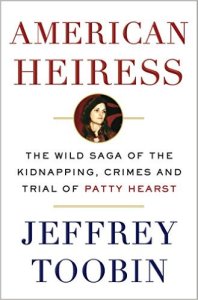
American Heiress: The Wild Saga of the Kidnapping, Crimes and Trial of Patty Hearst by Jeffrey Toobin

New research on the Patty Hearst case reveals a story as compelling and confounding as ever.

american heiress

Jeffrey Toobin (The Run of His Life) brings context, nuance and new sources to a dramatic story in American Heiress: The Wild Saga of the Kidnapping, Crimes and Trial of Patty Hearst.

The 1974 kidnapping of heiress Patricia Campbell Hearst by the radical group self-styled as the Symbionese Liberation Army (SLA) was a media sensation. A nation watched with shock as the victim joined her captors in bank robberies and other crimes. Decades later, Toobin helpfully sets this salacious story against its backdrop: the influence of the Hearst name; the fledgling nature of televised media, particularly live news feeds; and the cultural upheavals underway via the radical political left, especially in the San Francisco area where Hearst lived. Surreally, a bumbling, incompetent SLA plagued by internal strife managed to elude federal investigators for many months. Jim Jones, Bill Walton and Ronald Reagan make cameo appearances.

American Heiress avoids firm conclusions about Hearst’s level of agency in her own crimes. As Toobin observes, the phrase “Stockholm syndrome” was not yet in use at the time, but psychological coercion was the focus of Hearst’s criminal defense. With the information uncovered, Toobin can reveal only a woman making the best of circumstances, “a clear thinker, if not a deep one.”

While most older readers will have preconceptions about the events, Toobin’s ample research and new sources offer a fresh version. An author’s note states that Hearst declined to comment, and explains the research methods. This history satisfies with its level of detail and emotional distance from a subject who remains mysterious.


This review originally ran in the August 2, 2016 issue of Shelf Awareness for Readers. To subscribe, click here, and you’ll receive two issues per week of book reviews and other bookish news.


Rating: 7 shots fired.