Teaser Tuesdays: Crossing the Borders of Time by Leslie Maitland

Teaser Tuesdays is a weekly bookish meme, hosted by MizB of Should Be Reading. The idea is to open your current read to a random page and share a few sentences. And try not to include spoilers!

crossing

I am pleased with the early chapters of this memoir, in which the author travels back to Europe to hunt down her mother’s long-lost love, from whom she was separated during World War II. Today’s teaser concerns the mother’s family, Jews who lived on the border between France and Germany in a region that changed hands between those two countries frequently, confusing their sense of heritage.

…for Sigmar, returning to French-controlled Mulhouse after [World War I] – a German war veteran with a new German bride – proved difficult too, with anti-German sentiment in France running so high. Feeling even less welcome as Germans in France than as Jews in Germany, Sigmar and Alice crossed the Rhine once again to settle and start a family in Freiburg.

This is a nuance I had not considered before, and drives home the displacement of Jews in this era.

What are you reading this week?

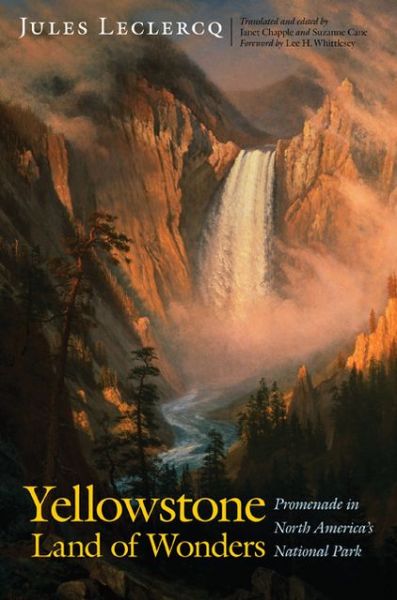
book beginnings on Friday: Yellowstone, Land of Wonders by Jules Leclercq; with notes

Thanks to Rose City Reader for hosting this meme. To participate, share the first line or two of the book you are currently reading and, if you feel so moved, let us know what your first impressions were based on that first line.

yellowstone

I am having a difficult time deciding where to “begin” this book, because it opens with not just a foreword or introduction, but:

  • Foreword
  • Acknowledgements
  • Translators’ Introduction
  • Translation and Editorial Method
  • A Note on the Illustrators
  • Preface (by the original author), and…
  • Chapter 1.

All of which is not a problem for me; I read each of these sections happily (most were 2-3 pages); but how to design today’s book beginning? Let’s start with chapter 1:

In 1871 the American geologist Hayden revealed the existence of one of the most phenomenal regions on earth. It was named the “Land of Wonders.”

This quotation comes from an uncorrected advance proof and is subject to change.

As I learned in the copious introductory remarks, this is the first-ever English translation in full of an 1886 publication in French, La Terre des Merveilles, by a renaissance man who spent 10 days in Yellowstone in 1883. It is billed as being remarkable and unique in many ways, and I am looking forward to it.

In the first few pages alone I learned several interesting pieces of trivia, including that Yellowstone is roughly one third the size of Belgium (at least as they both looked in 1886!); that geyser is an Icelandic word; and the definition of the word ‘diadem’ (I was thinking something like jewelry or a tiara, and I was right). And speaking of notes – as I’ve written before, I keep notes while I read: passages I want to quote, words or concepts I want to look up, thoughts I want to include in a review. I have also written before about footnotes; and on this subject I have some observations to make here. For one thing, the endnotes are copious. By the time chapter 2 ended on page 21, I had been cued to reference 47 endnotes. That’s two-and-a-quarter per page! And they are endnotes, meaning they occur at the end of the book rather than throughout; and while some direct the reader to a source for the information given, some make substantive contributions to the text, so that I can’t know to always refer to them or always ignore them; and this makes for a great deal of flipping around. Also, while we’re keeping track, I’ve made only 4 notes myself in those 21 pages (plus 6 pages of notes!), so there you are. This is looking like… are you ready for it?… a noteworthy read.

And what are you reading this weekend?

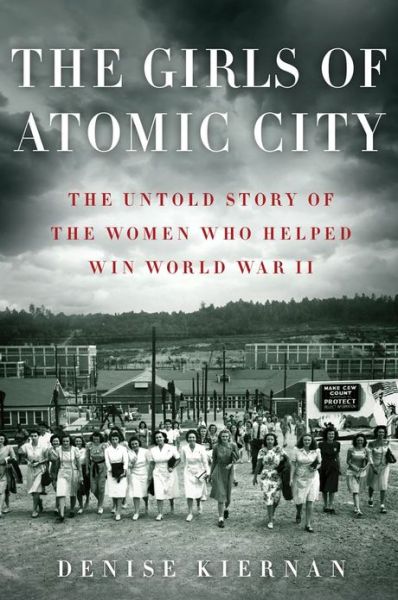
The Girls of Atomic City by Denise Kiernan

An evocative view of the Manhattan Project through the eyes of the women who worked and lived in the secret city of Oak Ridge, Tenn.

atomic

Oak Ridge, Tennessee was born in the fall of 1942, but would remain unknown until August 6, 1945, when the United States dropped the atomic bomb on Hiroshima. Oak Ridge, or “Site X,” housed factories for the enrichment of uranium. The workers at those factories at their peak numbered some 75,000, living in a secret city and working on they knew not what.

Diverse young women traveled from around the country fill the jobs needed to help win a war. Denise Kiernan’s The Girls of Atomic City is a unique glimpse into their strange experience of working on a project whose nature was kept from them. Most expected to leave Oak Ridge as soon as the war was won, but many stayed on for decades. Due to the fine supply of handsome young men in uniform, a number of Kiernan’s subjects would make families and homes there.

Based on interviews with their now-elderly subjects, the stories of Jane the statistician, Virginia the chemist, Kattie the janitor and many more are vivid and human in Kiernan’s telling. The focus of the book briefly zooms out for the dropping of the bomb, visiting Truman’s White House during the decision-making process, but then plunges back into Oak Ridge, where women who tested for leaks in pipes and kept tanks clean were rocked by the revelation of what they’d contributed to. Kiernan melds hard science and history with the moving stories of women caught in events bigger than themselves, whose experiences and whose work changed the world irrevocably. The result is a compelling and unusual new perspective on the Manhattan Project and World War II.


This review originally ran in the March 5, 2013 issue of Shelf Awareness for Readers. To subscribe, click here, and you’ll receive two issues per week of book reviews and other bookish fun!


While I am always constrained by the limited space available for reviews in Shelf Awareness (you know I can get wordy!), this book was especially difficult to boil down, touching as it does on women’s issues, history, science, working conditions, civil rights, war and ethics… It could be compared to Soundings or The Immortal Life of Henrietta Lacks in its intersection of hard science with the creative, feeling portrayal of women’s lives. Additionally, Kiernan’s use of primary sources – interviews with survivors of the era – made me pause to think of my grandfather, a WWII veteran who’s over 90 years old now, whose memories will someday be lost to us. This is a fine book on an interesting subject and I just had to say a few more words to that effect.


Rating: 8 acronyms.

In the Garden of Beasts: Love, Terror, and an American Family in Hitler’s Berlin by Erik Larson (audio)

gardenAs the title indicates, this is a creepy work of nonfiction. Erik Larson, popular author of (among other things) The Devil in the White City, here tackles the subject of one American family living in Berlin in the years leading up to World War II. William E. Dodd was an unassuming professor of history in Chicago in the early 1930’s, wishing for a little more free time to finish his life’s work, a 4-volume history of “the Old South.” He lobbied Roosevelt, through his modest political connections, for a quiet diplomat’s post to somewhere like Belgium or the Netherlands. There he hoped to settle down to finish his books and not have to do too much real diplomatic work, to which he readily confessed he was not well suited. Instead, owing to a strange combination of forces – mostly, no one else being willing to take the post – he was appointed to be the United States’ diplomat to Berlin in 1933. He traveled to Hitler’s Germany with his wife and grown son, Bill Jr., both of whom play almost no role in the story, and with his grown daughter, Martha, who stars next to the elder Dodd himself.

William E. Dodd is a conscientious man, rather to the point of annoyance. His sense of humor is wry and not well appreciated in diplomatic circles. He comes from a modest background and lives on a professor’s salary, and now a diplomat’s, which is quite moderate; in Berlin he plans to live within the bounds of that salary, which is the first time he offends protocol, but not the last. As Larson explains, diplomats are traditionally wealthy men of great style – valets, fancy chauffeured cars, fine wines, grand balls and the like – and make up what Larson quotes one diplomat as calling a “pretty good club.” Dodd will fail to fit into this club, and will, to the aggravation of all, criticize it throughout his tenure.

Martha is a sultry young woman very comfortable with her charms and her ability to wield her sexuality as a weapon against the men in her world; she enjoys men, and sex, and is in the process of ending a secret marriage even when she sets sail for Germany. When she gets there, she is charmed by the Nazis, handsome and blonde and polite and uniformed, and is not unhappy to be characterized as a “little Nazi” herself. Among the lovers we assume she took in Germany (Larson points out what we don’t know for sure, but makes a strong case) are a Gestapo leader, a French diplomat, a close assistant to Hitler, and eventually a Russian diplomatic assistant who turns out to be a Soviet spy. She is even at one point asked to be “Hitler’s woman,” and introduced to him, but nothing comes of it (not for lack of her attraction to the man of power, however). By the end of the Dodds’ years in Berlin, however, she has noted the evils of the Third Reich and flirts with becoming a spy for Stalin, herself.

Larson’s fine work here is in bringing a time and a place to life, and it raises goosebumps. Hitler’s Berlin is chilling, in large part because we, the modern readers, have the benefit of hindsight, and it is deeply disturbing to watch humanly flawed men and women walk around that time and place without realizing just how bad things are going to get. There is willful ignorance, naturally, as well as antisemitism in varying degrees: the Dodds share this prejudice with many of their contemporaries, and it helps them to excuse Hitler’s regime longer than they should… but again, this is all with the 20/20 vision we possess today. It’s difficult to imagine the tolerance shown by the United States, and Dodd, and the world, for Hitler; but this is history.

The decision to showcase Martha alongside Dodd was a fine one. They are two very different characters, both tending to minimize Germany’s faults at the start of the story but both (very differently) eventually coming to understand and fear the changes to come. When the Dodds left Berlin in 1937, the United States were yet years from a war with Germany, but Dodd had begun to prophecy some of the terrors to come.

Larson’s In the Garden of Beasts (poetically named for the literal translation of Tiergarten, a garden & neighborhood in Berlin where the Dodds lived) is to my tastes a great way to read history. The story electrifies, brings the past to life, and promises to faithfully follow the sources available. An enjoyable and worthwhile, if unnerving, read (or listen).


Rating: 7 breaches of protocol.

Vera Gran: The Accused by Agata Tuszyńska, trans. by Charles Ruas

The unanswered questions surrounding the life of a lounge singer in the ghettos of Warsaw, as seen through the gauze of memory.

veragran

Vera Gran was a wildly popular Jewish lounge singer in the Warsaw Ghetto during World War II. In 2007, she died in an apartment in Paris–filthy, claustrophobic, paranoid and hateful. For decades, despite being found innocent by several tribunals, she had faced accusations of collaboration with the Gestapo.

Agata Tuszyńska was 19 when her mother, also a survivor of the Warsaw Ghetto, first told her she was Jewish. In her approach to a profoundly sad and traumatized old woman, Tuszyńska seeks the truth but realizes it cannot be pinned down. Vera Gran: The Accused is not a biography, but a shifting portrait of Gran, the Ghetto and survivors’ guilt; it is a contemplation of what we will do (and should do) to survive. Readers unfamiliar with Vera Gran may be more familiar with Wladyslaw Szpilman, the subject of Roman Polanski’s award-winning film The Pianist: Szpilman was Gran’s piano accompanist, but he cut her out of his memoir–later becoming one of her most vocal accusers. The nature of memory and memoir, the power of the stories we tell when those stories outlast memory of the events themselves, becomes a central theme in Tuszyńska’s book.

Charles Ruas’s translation from the French is subtly poetic and adds to the quiet tones of Tuszyńska’s musing as well as Gran’s anger. It is this atmosphere, along with the unknowable questions surrounding Gran, that makes Vera Gran: The Accused a remarkable and memorable contemplation.


This review originally ran in the March 1, 2013 issue of Shelf Awareness for Readers. To subscribe, click here, and you’ll receive two issues per week of book reviews and other bookish fun!


Rating: 6 changed stories.

Speaking Truth to Power by Anita Hill, second half review

anitahillI am pleased to report that I had a different experience with the second half of this book, in all the right ways. You will recall (or, I will direct you to) my first half review of same: I thought it was a wonderful book but such a painful story that I had to put it down for a little while. Well, in a nutshell, the second half is: still painful, tragic, and true, but also uplifting, far more hopeful than I expected; and equally well-written and impressive. I wholeheartedly recommend it.

Anita Hill continues to be thoughtful and thorough – I definitely see the mind of a lawyer at work, as she discusses the what-if’s, the precedents, the niceties of the law. She is quite cerebral in her theories on society and stereotyping; far from being a simple revelation of her experiences, this is a treatise on gender & race. She examines the relationship between issues of gender and of race, and the indivisibility of feminism from the fight for racial equality, and the relationships between race and sexism. Hill is clearly an extremely intelligent women! She is also warm and loving about her family, and always seeking privacy, not eager to be a symbol or a leader. In other words, she comes firmly across as a “just regular” person, and someone I’d like to know.

Her story is also entirely convincing. It is beautifully put together and well-written: not lyrical, but methodical, structured, can I say thorough and lawyerly again? And she preaches more hope than I felt in my first-half review. However, the battle is still not over, and I still feel upset & angry that Hill’s experience reads so familiarly more than 20 years later. On that note, I’ll refer you to Jessica Valenti’s lovely speech to my local Planned Parenthood group, here. Well said, Jessica. You give me hope, too.


Rating: 9 strong women, please.

The Lady and Her Monsters by Roseanne Montillo

A spirited investigation of the bizarre times that inspired Mary Shelley’s Frankenstein.

monsters

On its surface, Roseanne Montillo’s The Lady and Her Monsters is an exploration of the genesis of Mary Shelley’s Frankenstein. But Montillo clearly rejoices in meandering through the volatile times that gave life to Shelley’s gothic classic, and her multifaceted literary study expands to include discussions of anatomy and alchemy, suicides, ghoulish dissections of men not quite dead and the dramatic death of Percy Shelley at sea.

In the early 19th century, Europe grew increasingly fascinated with life, death and man’s ability to control nature. Grave robbers known as “resurrectionists” provided subjects for human dissections that were conducted both in medical schools and for the general public’s entertainment. Scientists and imposters experimented with the capacity of electricity to restore life. Into this environment, Mary Shelley was born to Mary Wollstonecraft (A Vindication of the Rights of Woman) and William Godwin, a famous reformer of the day. Percy Bysshe Shelley was her lover and eventual husband; her sister was lover to Lord Byron. The foursome were traveling in Italy, telling the ghost stories with which Percy Shelley was obsessed, when–as Mary Shelley and legend have it–a human monster appeared to Mary in a waking dream. It was also in Italy that she may have first heard the surname Frankenstein, tied to the inspiration for Bram Stoker’s Dracula, as well as to Sir George (he who killed the dragon). In Montillo’s enthusiastic prose, such diverse and macabre subjects make for a lively survey, not only of Shelley’s masterpiece, but of an odd and colorful time in European history.


This review originally ran as a *starred review* in the February 8, 2013 issue of Shelf Awareness for Readers. To subscribe, click here, and you’ll receive two issues per week of book reviews and other bookish fun!


Rating: 5 volts.

Teaser Tuesdays: The Girls of Atomic City by Denise Kiernan

Teaser Tuesdays is a weekly bookish meme, hosted by MizB of Should Be Reading. The idea is to open your current read to a random page and share a few sentences. And try not to include spoilers!

atomic
I know I just shared with you this book’s beginning, but that’s how good it is! Below you will find a quick picture of life in World War II. The first sentence relates a concept I was already familiar with; but the second was news to me. Here’s my teaser:

Some young women even drew seams up the back of their legs to simulate stockings or hose, much of which had gone to war where their fabric was needed for parachutes. If you were a woman handy with a needle and thread, you might get that fabric back in another incarnation: many young brides had taken to fashioning wedding dresses from the very parachutes that had brought their loves safely back down to earth.

Did you know about the parachute wedding dresses? What an evocative image. Still enjoying this book!

And what are you reading this week?

This quotation comes from an uncorrected advance proof and is subject to change.

Speaking Truth to Power by Anita Hill, first half review

anitahillFor reasons I’ll discuss below, I have had to put this book down at about the halfway point, through no fault of Anita Hill’s absorbing story or lovely, clear, honest writing. This first review will be more about my emotional reactions and reason for pausing in my reading; soon I will publish my second-half-review which will be more about the book itself. Briefly, for the record, it’s a great book.

Anita Hill was a young black female lawyer from the south in the early 1980’s, when she found herself employed as an assistant to Clarence Thomas, then an aspiring government official looking for an appointment under President Bush (Senior). She was largely successful in leaving behind her unpleasant experiences in his employment as she moved onto other lines of work, teaching law back in her home state of Oklahoma, where she could be closer to her family and further from the nasty environment Thomas created for her in Washington, D.C. When Thomas was nominated to the Supreme Court in 1991, however, she reconsidered her silence on his sexual harassment, and ended up traveling to D.C. to testify at his confirmation hearing as to his behavior nearly 10 years earlier. She was excoriated for her decision and her actions; every piece of her life, her morals, her “virtue” were picked apart. This book is her attempt to set the record straight.

Most Americans know the name Anita Hill, in my (limited) survey. When I mentioned this book, a coworker spoke of having horrible, vivid dreams, set in the Senate, as the hearings went on; she sympathized with Hill’s unfortunate position. I am young enough that I don’t remember these events (I was 9 in 1991 and not paying much attention to sexual harassment and Supreme Court nominations, for which I suppose I’m glad); it’s history to me. However, the name Anita Hill did mean something to me, and it means much more now.

I am reading this book because my father raved about it and felt it was important reading for me, which I easily believed. And it’s a lovely book. But it so happens that I picked it up during a time when my personal life was in upheaval in a few ways. I don’t want to share too many personal details here (I’d rather get personal when the news is good!) but it involved my loved ones being spread around the globe dealing with various trauma, and I was distracted, worried, and depressed. And unfortunately, one of the central truths of Hill’s book, based on events in 1982 and 1991 and published in 1997, holds true today: that most women will be sexually harassed; that most will choose not to accuse their harassers; and that few harassers are sanctioned. Again, without revealing too much of my personal story, I know this firsthand. And reading about Hill’s experiences, both being harassed by Thomas, and then being harassed by her national media and political representatives, was entirely too painful to me. I felt physically sick to my stomach reading it, and I had to put it down.

I still agree with my father’s statements that this is a very good book, and that it’s an important book for me to read. I look forward to picking it back up – as I write this, personal-life issues are mostly resolved, and (thank goodness!) Husband is home here with me. Hill writes like a lawyer: she makes statements of what she knows to be true, and is careful to note where she speculates, while providing evidence to support her speculations. She speaks strongly where she is sure that she is right; and (as one would expect) she has a very sure and confident grasp of legal issues in their minutia, and is capable of making those legal details understandable to her reader. I also really enjoy her gentle, loving treatment of her family history; that background adds to her story immeasurably.

I wanted to give you this first-half-review of this book where I’ve paused in my reading of it, to note the painful emotional impact it’s had on me. Make no mistake, it’s a fine book and I will finish it and tell you more very soon. But for now, know that this story is rather excruciating.


Rating: 8 brave public statements.

book beginnings on Friday: The Girls of Atomic City by Denise Kiernan

Thanks to Rose City Reader for hosting this meme. To participate, share the first line or two of the book you are currently reading and, if you feel so moved, let us know what your first impressions were based on that first line.

atomic

Friends, I am quite excited about this book. The subtitle reads: “the untold story of the women who helped win World War II,” and the blurbs indicate that this is the story of Oak Ridge, Tennessee, where much work on the Manhattan Project took place in a secret purpose-build city; and the stars are the female workers in particular. I will also say that the fact that this is a finely-bound, good-looking galley doesn’t hurt my first impressions, either.

Speaking of first impressions:

There have long been secrets buried deep in the southern Appalachians, covered in layers of shale and coal, lying beneath the ancient hills of the Cumberlands, and lurking in the shadow of the Smokies at the tail end of the mountainous spine that ripples down the East Coast. This land of the Cherokee gave way to treaties and settlers and land grants. Newcomers traversed the Cumberland Gap to establish small farms and big lives in a region where alternating ridges and valleys cradle newborn communities in the nooks and crannies of the earth. Isolated. Independent. Hidden.

That is a striking beginning, I’m sure you will agree. As soon as I read those lines I knew I wanted to share them here.

I hope you’re equally excited about your reading choice(s) this weekend!

This quotation comes from an uncorrected advance proof and is subject to change.