Teaser Tuesdays: A Little History of Literature by John Sutherland

Teaser Tuesdays is a weekly bookish meme, hosted by MizB of Should Be Reading.

literature

I am quite impressed so far with this truly small introduction to literature, from myth and the oral tradition through the now. It’s a feat.

I chose this teaser for you because I found it impactful – something I’d never thought about before, and yet made perfect sense in the instant I read it. Also a little chilling, but that’s just me.

Why did what we (but not they) call the ‘novel,’ the ‘new thing,’ emerge at this particular time and in this particular place (London)? The answer is that the rise of the novel took place at the same time and in the same place as the rise of capitalism. Different as these two things may seem, they are intimately connected.

Stay tuned for more!

This quotation comes from an uncorrected advance proof and is subject to change.

book beginnings on Friday: The Hunted Whale by James McGuane

Thanks to Rose City Reader for hosting this meme. To participate, share the first line or two of the book you are currently reading and, if you feel so moved, let us know what your first impressions were based on that first line.

huntedwhale

The title recalls a certain famous fictional white whale, or is that just me? This is a coffee-table style book, I expect (my copy is pre-publication), and filled with images. It begins:

The hunt is one of man’s most ancient endeavors. One can barely imagine an early time when man was free from the need to find nutritious food or eliminate a dangerous predator. It’s been posited that language itself grew out of the need for precise communication as men stalked and hunted prey.

No argument there, I don’t think. And I like that McGuane pulls language into his opening lines – this being a work of written artistry, after all. But The Hunted Whale promises to star the whale, as well as the hunt, so stay tuned.

These quotation comes from an uncorrected advance proof and is subject to change.

Weeds: A Farm Daughter’s Lament by Evelyn Funda

A memoir about the loss of the family farm, and everything it means to the child of immigrant farmers–and to us all.
weeds
Evelyn Funda’s mother escaped Nazi-occupied Czechoslovakia in a wine barrel, eventually landing in the United States. Her father was the son of Czech immigrants, early homesteaders who sought to make farmland of the Idaho desert. The family farm never felt like it would be Evelyn’s: this “farm daughter,” unwelcome among the tractors and irrigation pipes, would leave to become a college professor. Her musing memoir opens in the fall of 2001 with a triple tragedy: the sale of the family farm; her father’s cancer diagnosis; and her mother’s death, closely followed by her father’s.

Weeds is an elegy, an academic’s personal tale of research and disillusionment, and Evelyn’s own story–with hints of a botanist’s or social historian’s study. (The chapters are named for weeds, beginning with dodder, which she long misheard as “daughter,” when her father cursed the unwelcome growth.) The pursuit of her mother’s joyful youth in a series of cities and countries, of the truth of her grandfather’s apocryphal tales, of her parents’ romance and of the history of her own hometown takes Evelyn to dusty library stacks and to small Czech villages, where she meets dozens of cousins and examines old bones.

Meditative and lyrical, Weeds smoothly braids weeds with family. Funda is sometimes frustrated along the way, but finally satisfied with the personal history she builds for herself–and the conclusion that, even in exile, one can find a sense of place and of belonging.


This review originally ran in the September 6, 2013 issue of Shelf Awareness for Readers. To subscribe, click here, and you’ll receive two issues per week of book reviews and other bookish fun!


Rating: 7 kolaches.

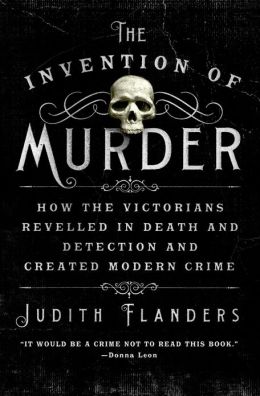
The Invention of Murder: How the Victorians Revelled in Death and Detection and Created Modern Crime by Judith Flanders

An exhaustive, engaging examination of how murder and the murder mystery novel infiltrated our modern world by way of 19th-century Britain.

murder

Judith Flanders (A Circle of Sisters) tackles an unwieldy subject in The Invention of Murder, telling the tale admirably well, even entertainingly.

The Victorian British, Flanders tells us, were the first to identify murder as an object of fascination–inspiring in turn a passionate interest in trials, executions, motives and, eventually, the developing profession of solving crimes. The action opens in 1811 with the murdered Marr family, and quickly moves to 1820s Edinburgh, where Burke and Hare infamously killed so they could to sell the corpses to doctors as medical specimens. Flanders introduces a lengthy list of famous (and obscure) murderers and serial killers, culminating, of course, with Jack the Ripper. Alongside the killers and their victims, she presents Thomas Hardy, George Eliot and many contributions by Charles Dickens to illustrate her thesis that murder in life inspired murder in art. Fictional murderers and detectives play a role equal to their real-life counterparts, as Sweeney Todd and Sherlock Holmes take the stage.

Flanders also tracks the evolution of the police force from a force of deterrence to an investigative organization, along with the parallel development of murder and detection in literature and on the stage. The penny-blood (or penny-dreadful), a cheap booklet telling a sordid and often illustrated tale of horror, morphs into the detective novel (and play), as the public shifts its interest from bloody murder to the newly invented and increasingly sympathetic crimesolvers we know and love today.


This review originally ran in the August 2, 2013 issue of Shelf Awareness for Readers. To subscribe, click here, and you’ll receive two issues per week of book reviews and other bookish fun!


Rating: 6 dismembered parts.

two striking paragraphs from Young Men and Fire

A cloudburst was already waiting to challenge us at the top of the ridge. From the bottom of Meriwether Canyon we could both see and hear it making preparations for a joust with us. As we tried not to fall backwards to where we started in the canyon, we could hear the storm rumble and paw the ground. When we neared the top, it tried to beat us back by splintering shafts of lightning on gigantic rocks. There was a lone tree near the top, only one, and in case we had any foolish ideas of taking refuge under it a bolt of lightning took aim and split it apart; it went down as if it had been hit by a battle-ax. Trying to reach the rocks, we were held motionless and vertical in our tracks by the wind. Only when the wind lessened for a moment could we move – then we fell forward. With the lessening of the wind the rain became cold and even heavier and forced us to retreat from the battlefield on top. The rain fell on us like a fortified wall falling. By the time we reached the bottom of Meriwether, we were shivering and demoralized and my brother-in-law probably already had pneumonia.

All this was like a demonstration arranged to let us know that Mann Gulch had power over earth, air, and water, as well as fire. As the wind continued to lessen, the rain increased and fell straight down. It was solid now everywhere. It knocked out the motor in our borrowed boat, and we couldn’t get it started again; after a while we didn’t try anymore, and it took several hours to pole and paddle our way back to Hilger Landing. My brother-in-law was seriously sick before we got there; he would never go back to Mann Gulch. So for some time Mann Gulch was mine alone, if I wanted it, and for some time I left it to the elements. I turned to the archives because I knew they would be dry and no wind would be there and the air would be the same air the stacks had been built around and nothing but a book or two had been moved since. The signs would demand “Silence” and even the silence would be musty, and for a time anything musty had an appeal.


I am seriously tempted to leave this passage to stand alone. Below I will make a few notes toward a closer reading of it; but feel free to skip my little words and reread Maclean and go on with your day.


Or, if you want my thoughts:

Here Maclean relates his first attempt to visit Mann Gulch, scene of the decades-old tragedy he wants to write a book about. It is a geographically remote and wild area, not easily reached. He refers several times in Young Men and Fire and in his related notes and letters (in The Norman Maclean Reader) to the “truculent universe,” reluctant to give up its secrets regarding these events. This first visit to the spot itself clearly informs his feeling of the universe’s truculence. Perhaps, he thinks, the archives will be more revealing. (As it turns out, they weren’t, especially.)

These paragraphs are both easy to read, and dense with description. You can feel the weather beating through your computer screen, can’t you? Look at the action verbs, the militarism, the agency attributed to the inanimate storm. It is waiting to challenge; preparing to joust; it rumbles and paws the ground. It tries to beat us back; it takes aim and disabuses us of foolish ideas. The top of the gulch is a battlefield; rain was like a fortified wall falling.

There is comedy: when the wind stopped we were able to move again – we fell forward. (Can you see the slapstick even in this dramatic moment? Does it make you smile?)

All of this was a demonstration – and note Maclean’s reference to the concept behind the title of this book, the elemental forces of earth, air, water, fire (and young men).

In this round of battle, Maclean concedes that the Gulch has won; he retreats to the archives, where the librarians among us are amused and charmed by the air the stacks had been built around, and the appeal of mustiness after such a run-in with the wild outdoors.


I again encourage you to read this amazing book.

book beginnings on Friday: Weeds: A Farm Daughter’s Lament by Evelyn Funda

Thanks to Rose City Reader for hosting this meme. To participate, share the first line or two of the book you are currently reading and, if you feel so moved, let us know what your first impressions were based on that first line.

weeds

I’m taking the liberty of sharing two beginnings with you today. Preface:

In late 2001 my small family suffered what I think of as a triple tragedy. On October 1, 2001, my father, Lumir Funda, age seventy-nine, was diagnosed with advanced lung cancer that, by the time of the diagnosis, had metastasized to his brain, liver, spleen, spine, and bones.

(I’ll leave the other two tragedies for your own reading.)

And chapter 1:

Highway 16, the main route into my rural hometown of Emmett, Idaho, winds through a high desert country of sand and sagebrush before the road narrows and suddenly descends into the valley through a steep grade known as Freezeout Hill. Gouging straight through the terrain, the road drops more than five hundred feet in elevation within the span of a mile.

I think these set Funda’s tone, which is contemplative, quiet, and often melancholy; this seems to be in many ways a memoir of loss, so that’s not inappropriate. It’s early yet, but I’m enjoying it.

These quotation comes from an uncorrected advance proof and is subject to change.

The Astronaut Wives Club by Lily Koppel

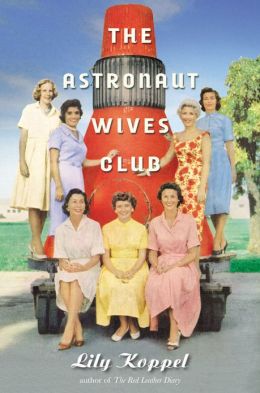
astronautThe US space program began in 1958, with an original group of seven astronauts. Their seven wives were expected to be the classic 1950’s perfect housewives; and that blissful domestic harmony was considered as important a job qualification for the men as was their athleticism and stamina. (Later rounds of astronauts would be highly educated engineers and technologists; the early ones emphasized physical attributes a little more.) The Astronaut Wives Club studies those original seven wives, and later additions which swelled the group toward 50. Lily Koppel examines the lives of these women and their husbands: marital dramas, difficulties with the press, lifestyles, tragedies, and lives after NASA was done with them. She interviewed the available surviving women. It comes across as a truthful depiction of them: women whom, unlike their husbands, we have surprisingly never thought to study until now.

The first space program was based out of Cape Canaveral in Florida, moving to Houston (my hometown and current place of residence) in 1962. It was fun to read about the early suburbs of Clear Lake and Friendswood, which I’m familiar with in slightly different forms today. A guide at the front of the book to “the astronaut wives” groups them by wave: the original seven (Mercury), the new nine (Gemini), the fourteen (more Gemini and Apollo), and the nineteen that came in 1966. The original seven are those we get to know the best, and their influence would remain on those that followed, but even the later waves of wives receive good personal treatment. From 1950’s stereotyped domesticity to the hesitant beginnings of women’s lib (which, unsurprisingly, came later to Space City wives than to certain segments of the population), these women tended to stick together, presenting a united front against the intrusive media and comforting each other in times of tragedy. But there was also competition: just as their husbands competed for the honors of “firsts” (outer space, moon orbit, moon walk), their wives had to compete to present the proper image on husband’s behalf. And as later waves of wives rolled in, the earlier ones were, perhaps predictably, a little distrustful of newcomers; they had worked hard to establish a tight-knit, protective club that still had its own internal issues to boot.

Koppel treats these women with sensitivity and respect. Their stories, and their collective story, is moving, poignant, and brought to life. On the night I finished this book, I dreamed about the astronaut wives. I can’t tell you much about my dream, because it faded so quickly, but I had been planning a trip, and I think I was consulting with the wives about some of my plans. I don’t dream about many books I read (at least not that I can recall), so this should be taken, probably, as a vote of confidence in the reality and staying power of what I’d read.

The Astronaut Wives Club is a well-deserved first look at a particular and unique group of women in history. As a bonus, it’s a fun glimpse into Americana of the 1950’s, 60’s, and 70’s. There is almost no science involved, so if you’re looking for the specifics of space technologies, look away; this is the homebound perspective on the man on the moon. While they suffered widowhood, divorce, and even suicide, this group of women is charming, funny, likeable, and amusing. I found it fascinating to consider this period through its unsung background heroes.


Rating: 7 Valium.

Teaser Tuesdays: The Astronaut Wives Club by Lily Koppel

Teaser Tuesdays is a weekly bookish meme, hosted by MizB of Should Be Reading. The idea is to open your current read to a random page and share a few sentences. And try not to include spoilers!

astronaut

I am pleased with this newly-released work of nonfiction focusing on the wives of the first astronauts (and their immediate successors). A developing reading niche of mine is what I am calling “biographies of little-known women in history,” and this qualifies. To set the tone:

The wives pored over their fifteen-page “Seven Brave Women Behind the Astronauts” spread. Through touching up and editorial tinkering, Life had transformed seven very different, complicated women into perfect cookie-cutter American housewives. There was not a whiff of domestic turbulence.

What is written boldly between these lines is that there was domestic turbulence, right? Nothing horrendous (that I’ve encountered so far, at least), but the point is that the program that employed the astronauts in question began in 1959, and thus the all-American, 1950’s, dimples-and-apple-pie version of family life was paramount. These women were expected to exemplify that image, for the sake of their husbands and their country. And that’s really something: a daunting challenge, I think.

notes on Young Men and Fire by Norman Maclean

young men and fireI decided to do a whole separate post (because my review was… long) sharing my notes as I read this book. As I’ve said before, I like to use a scrap of blank paper as a bookmark because I can takes notes on it. Often these are words I’m unfamiliar with, with page numbers, so I can look them up and reread them in their context; quotations with page numbers; or notes of concepts I want to include in a review. Some books fill a quarter-page piece of scrap paper with notes; some have 2-3 notes; a fair minority of the time, I can get all the way through a book with no notes at all and write a review from memory.

Young Men and Fire filled 3 quarter-page scraps of paper and part of a 4th, and I was writing very small. So I wanted to share these notes here. I’ve expanded them slightly to explain to you what I was noting; but still they are basically marginalia. [My page numbers refer to the 1992 hardback from the University of Chicago Press that I got from my local library.] I also left off a few that turned out to be less interesting avenues of pursuit, or that turned out to be personal.

  • author photo: this V.C. Wald 1981 portrait of Maclean in a boat, looking down, is evocative for me and I love it. (see bottom of post)
  • Ehrlich & Dillard blurbs: on the back of the book (among others). Gretel Ehrlich is one of those I had never heard of til I had, and now I see her everywhere. Dillard is one I’ve heard lots about, and it’s finally time for me to read her.
  • like The Perfect Storm: science, weather, geography – actually like it in subject too
  • takes his reader in hand to guide her on this together-journey
  • “left a world that is still burned out.” 86
  • “a mystery of the universe is how it has managed to survive with so much volunteer help.” 112 (having worked with volunteers, and been a volunteer myself, I found this quite apt and funny.)
  • great comments on human nature 114-15. “…most people think they can be of help, and some even seem born to rescue others, as poets think they are.”
  • stations of the cross (a concept that I had to look up: I am unapologetic about being an atheist, but regret a little how uneducated I am in the religions that I don’t believe in)
  • Custer: turns out to be a subject of sort of secondary obsession for Maclean. apparently The Norman Maclean Reader includes his unpublished notes on Custer that were headed for being their own book. I am looking into this.
  • poem 201: I had to look up a poem that was quoted without attribution; it turned out to be “In Flanders Fields” by Colonel John McCrae.
  • “I added a final truism for myself, ‘True poems are hard to find.'” 202
  • “Beer doesn’t seem to do much to remove dehydration, but it makes it easier to admit error.” … “We were too tired to sit down in the shade, if there was any, so we put the plastic bag with the rest of the beer between us on the hot hood of the engine. We figured, since beer couldn’t take away dehydration, we might as well drink it warm.” 209. What I can say, I guess I collect literary quotations about beer.
  • sewing machines 214. The scene described is one in which the smokejumpers play a game of volleyball, watched by visitors from The General Public, who are surprised the smokejumpers are “not as big as the Minnesota Vikings,” and after the game is over, “to the ever-increasing surprise of the visitors, would sit in front of sewing machines and peacefully mend their parachutes. They were very skillful with their sewing machines and damn well better have been, since their lives hung on their parachutes.” This one is for my mother, who not only collects sewing machines but also uses them. She also collects instances of the intersection of manliness and sewing machines – not as rare as you might think, it turns out. (She still has not gotten Husband onto one.)
  • this story in Fire Season? and Jumping Fire? note to self to go and check on the Mann Gulch’s appearance(s) in the two books; I’m sure it must be there…
  • story 214-15: a brief anecdote I appreciated, told by Hal Samsel
  • “…a storyteller should never look at a day as lost if he has learned something about how to tell stories, especially about how to make them shorter.” (which is a lesson Maclean learns from Hal, above.) 215
  • Ancient Age 216: a brand of bourbon that I confess I had to look up (I like Knob Creek myself, if you’re taking notes)
  • I begin to see clearly that I favor those authors who booze. Hemingway, Abbey, Burke, and Maclean, I’m looking at you.
  • math 229-30 and on… another note for my mother, who is a math person (geometry particularly) and might appreciate this discussion of math, its challenges, and its value, not to mention the math itself, complete with charts and graphs, that helps explain the Mann Gulch fire
  • Black Larry: the real-life character in Fire Season who recommended I read this book. make a note to send him a note.
  • silviculture 247: from the US Forest Service: “Silviculture is the art and science of controlling the establishment, growth, composition, health and quality of forests and woodlands to meet the diverse needs and values of landowners and society on a sustainable basis.” Maclean uses it in a way that suggests an earlier meaning (at least to him), of the science of controlling forests to meet the needs of loggers, which is not really the same thing as the above definition.
  • anemometer 248: An instrument for measuring the speed of the wind, or of any current of gas.
  • Phil Connors – management – Rothermel – 256: another note to check Fire Season for reference to a man named Rothermel who helped rework the Forest Service’s policies on managing fires rather than just always fighting them. again, I’m sure it’s in there.
  • (back to The Perfect Storm) as I remember it, Junger never addresses much his own strengths or weaknesses with the technical aspect of his research, that is, the science. Maclean does; he pokes fun at his limits with math. This brings in his own personality & amuses me. Also Junger never becomes a character until his final comments(?), whereas Maclean is a major character, necessarily, throughout.
  • “All of us have the privilege to choose what we wish to visualize as the edge of reality. Either tier of crosses allows us to picture the dead as dying with their boots on. On some of the bodies all but the boots were burned off. If you have lived a life that has thrown you in contact many times with nature, you have already discovered that sometimes you can deal with nature only by allowing it to push back what until now you and others thought were its edges.” 277
  • elements – title: I discussed this in my book review, how Maclean adds “young men” to our list of the elements, normally four: earth, air, fire, and water. thus the title of the book.

As you can see, this book inspired many ruminations in me, some still unfinished.

Many thanks to Veronica Wald for sharing this on her blog! It’s worth clicking the link above for the story of the iconic photo.

Young Men and Fire by Norman Maclean

EDIT: more of my notes on this book available here.

Black Larry told me I should read this book, and I’m so glad I did. Thank you, sir.


young men and fireI struggle to tell you how good this book is. You know I loved Maclean’s A River Runs Through It. This, though lesser known, is better.

Young Men and Fire is the true story of the Mann Gulch fire in Montana in 1949, in which 13 smokejumpers of a crew of 16 were killed. Maclean was in the area in the days after the deaths, and was moved – as any of us would have been moved, but more intimately, because he had worked with the Forest Service and fought fires himself, and had one particularly frightening close call. He hiked out to see the still-smoldering forest as the Mann Gulch fire died out, and he knew even in 1949 that he would tell the story of those 13 men and what happened there.

He started his research and writing in earnest in his late 70’s, years later, after the publication of A River Runs Through It that made him moderately famous, and which too he had written after retirement. But Mann Gulch had always been on his mind.

As I said in my book beginning post, I learned quickly that this was a posthumous publication, a cooperative effort by his publisher and his son to put together as faithfully as they could what he had been working on. He died in 1990 and the book was published in ’92. In my observation, it must have been very nearly finished, and/or their editing work is seamless, because it feels decidedly like a finished work to me, and it all feels like Maclean.

It begins with a story, Black Ghost, about Maclean’s visit to the scene of the tragedy while the fire still sputters, in which he compares it to his earlier experiences. This short story sets the background of Maclean’s continuing fascination with the Mann Gulch fire. Then the bulk of the book is divided into three parts. They are untitled, but I saw a clear method of division; I’ll share my impression here, and note that it’s my own and from memory. Part One is about the events of 1949, told narrative-style with what information Maclean has and relatively less commentary than we’ll find later on; it relates the events of the days on which a fire was spotted, men raced towards it, the fire blew up, men ran, and men died and their bodies were found. Part Two relates Maclean’s research: it’s the story of his life since 1949, in which he thinks and muses, travels, researches, draws diagrams, visits with the two survivors, and climbs the steep gulch repeatedly to examine minutely the remaining evidence. Part Three is a brief 9 pages in which he tries to say what the Mann Gulch fire really was, and what young men might have felt and thought in their final moments. Throughout, and concluding in Part Three, Maclean discusses the meaning and power and definition of tragedy in life and in art. There are also plentiful religious allusions. I’m not clear on Maclean’s own relationship to a church – he doesn’t make it abundantly clear – but he does make very clear that he was raised by a Presbyterian minister (which we know well from A River Runs Through It), and his religious training comes through, not least with many references to the stations of the cross.

Briefly, the Mann Gulch fire looked routine to a team of Smokejumpers from the air (and to the pilot and spotter who released them), although there were some especially challenging elements of wind that required men and equipment to be spread out over a larger area than usual, which cost them time in regrouping. Also, the team’s radio did not survive its “jump,” which would come to be significant. Once on the ground, their very experienced fire foreman went off to investigate and quickly concluded that they had better head the other way; while heading his team one way, they found fire suddenly in front of them as well as behind; and thus began what Maclean calls their race against fire. In minutes, a fire of such ferocity and speed that they could not understand it had overtaken the team and… the details are ugly. Five men survived the fire, two so badly burned that they died around noon the next day, which appears to have been a mercy. One of the remaining three survivors was the foreman, who would receive a lot of flak for the deaths of his mean; the other two were the youngest and most inexperienced of the crew, one of whom had lied about his age and was still not old enough to actually be jumping out of airplanes into forest fires.

To say that this is a powerful story is both understatement and unnecessary. Sixteen men, the majority of whom were just boys really, thought they were going to do a routine job; they were brave, but their bravery was born of confidence rather than a comprehension of what they were up against. The Smokejumpers were a brand new part of the Forest Service – established in 1940, and slowed during World War II by the bulk of them going overseas to jump out of planes for other purposes – and the boys themselves were young, too, “still so young they hadn’t learned to count the odds and to sense they might owe the universe a tragedy.” It doesn’t work to accuse them of hubris. Simply, a whole lot of just rotten luck, a failure to understand fire, a lack of experience (both personally and institutionally), and a confluence of events that created a perfect storm of fire, caused these young men horrible suffering and created an event that rocked the lives of many. Obviously, their families & loved ones were effected; also the Forest Service, which reacted very defensively and was sued by several families; and ramifications were felt in the burgeoning scientific understanding of forest fires and how they work, all of which Maclean explores.

This is a beautiful eulogy to 13 men, and an eloquent and compassionate chronicle of a significant event. It’s also a story personal to Maclean, about his fascination with this fire and the fate of those 13 men, and the telling of this story as his “homespun anti-shuffleboard philosophy of what to do when I was old enough to be scripturally dead” (meaning, he’d lived his three score and ten). I love that the process of researching the story and writing it is the story itself; they are inextricable in Maclean’s version, and that feels right. Of course, as a reader, writer, and lover of books and stories, that makes perfect sense to me.

Maclean’s version is beautifully written, complete and complex, with a respect for all the nuances, unknowns, and conflicting version and conflicting points of view. He examines the accusations made against the foreman who saved himself by setting an “escape fire” and was unsuccessful in convincing his men to join him – which might have saved them, too – and thereby invented a technique which is now a part of fire defense. He examines the different impressions of events by the two survivors and the ranger who was one of the first on the scene after the deaths (and who took copious notes and was a meticulous observer). In fact, he examines everything available to him in exhaustive detail, and justifies his conclusions and questions with a base in science: geography, weather, and what we know about fire (which is more than we knew in 1949, thanks in part to those 13 deaths).

The title derives from Maclean’s discussion of the four elements, earth, air, fire, and water, of which the Smokejumpers interact with three in their normal line of work: earth, air, and fire; by the end of the book he makes reference to the elemental nature of young men. Thus the title: the action of this book is at the intersection between the elemental forces of young men and fire.

Young Men and Fire is a work of art and of poetry, and so much more. It’s definitely one of the best books I have read or will read this year.


Rating: a rare 10 feet downgulch.

Further thoughts…

My personal tragedy now is that Maclean only wrote two books and I have now read them. I do see, though, that The Norman Maclean Reader includes “previously unpublished materials with incidental writings and selections from his two masterpieces” (says the University of Chicago Press), so I have that to look forward to. Also, I just learned that Maclean’s son has written a parallel work about a later fatal wildfire, Fire on the Mountain: The True Story of the South Canyon Fire, and my copy is on its way to me now.