two-wheeled thoughts & Teaser Tuesdays: Luigi’s Freedom Ride by Alan Murray

click for details

click for details

Teaser Tuesdays is a weekly bookish meme, hosted by MizB of Should Be Reading. Two-wheeled thoughts is my own.

luigi

I am very excited about Luigi’s Freedom Ride, a novel that accomplishes what Life is Beautiful did in film: a story about the horrors of World War II, but that is also funny, joyful, hopeful. And bicycles! Really! Go out and get this one. Review to come, but I wanted to share two bike-related lines that amused me.

Who there could possibly doubt the determination of this young, fit, self-assured bicycle man?

Who, indeed? Yes, I regret that this has to be so man-centered; but to give a little context, the setting is a 1930’s war-bound Italian culture of machismo – and the next lines are spoken in a military training camp.

All that truly mattered was mastery of the bicycle, and the unbreakable, manly bonds that flowed from such mastery.

Manly bonds! And with that I leave you.

This quotation comes from an uncorrected advance proof and is subject to change.

The World of Raymond Chandler: In His Own Words, edited by Barry Day

This collection of Raymond Chandler’s reflections and witticisms, edited into themed chapters, will equally satisfy his fans and readers unfamiliar with the noir master.

chandler

Though born in Chicago in 1888, Raymond Chandler was raised in England, so when he returned to the United States at age 24 he felt rather foreign. He had to study and learn what he called the “American” language, but conquered it in writing The Big Sleep, Farewell, My Lovely, The Long Goodbye and many short stories in the noir style–a style he helped perfect. He created the famous Philip Marlowe (an archetypal hard-boiled private investigator who has trouble with the ladies) and wrote screenplays for Double Indemnity, The Blue Dahlia and Strangers on a Train. When he died in 1959, he left a variety of written works behind, and many are respected as classics today. In The World of Raymond Chandler, editor Barry Day (The Noël Coward Reader) compiles Chandler’s published and epistolary writing to form a picture of the man behind Marlowe.

The voice of this book is as much Day’s as his subject’s. Rather than a memoir by Chandler or, as the subtitle might suggest, a narrative told in his words, this is a collection of quotations. Beginning with an excellent brief introduction, Day sketches the major events and publications in Chandler’s life, largely avoiding a standard biography. Selecting from letters and articles, but more often from Chandler’s fiction, Day patches these fragments together with commentary into chapters on themes or common topics of Chandler’s work: cops, dames, Los Angeles, Hollywood. We see Chandler invent the strong sense of place that helps define such writers as Michael Connelly and James Lee Burke today. Day makes the argument fairly successfully that Marlowe’s voice represents Chandler’s, particularly in their later years, as both softened (but not, Chandler insists, mellowed) until Marlowe in The Long Goodbye was “as hollow as the spaces between the stars.”

Chandler fans will be tickled by a great many pithy aphorisms that both describe and exemplify his distinctive style. “To justify… certain experiments in dramatic dialogue… I have to have plot and situation; but fundamentally I care almost nothing about either.” About his preference for small casts, he wrote, “If more than two people were on scene I couldn’t keep one of them alive. A crowded canvas just bewilders me.” And what Day calls the master’s “ground rules” (Chandler labeled them “Casual Notes on the Mystery Novel”) are treasures, including “The mystery must elude a reasonably intelligent reader” and (sadly) “The perfect mystery cannot be written.” At the end of this admiring collection, Day’s reader is left wondering if Chandler came closest.


This review originally ran in the December 2, 2014 issue of Shelf Awareness for the Book Trade. To subscribe, click here.


Rating: 5 disconnected quotations.

The Color of Courage: A Boy at War by Julian Kulski

Kulski’s story heart-wrenchingly follows the arc of a boy becoming a young man in World War II Poland.

kulski

The Color of Courage is the chronological diary of Julian Kulski, who was ten years old when Germany invaded his native Poland in 1939. Transitioning from the Boy Scouts to the Polish Underground Army, through the Warsaw Ghetto and the event of the Warsaw Uprising, Kulski ends up a sixteen-year-old German prisoner of war; but his story doesn’t end there. This gripping personal account brings a deeply moving and unique perspective to World War II Poland.

…Click here to read the full review.


This review was published on November 27, 2014 by ForeWord Reviews.

IMG_4538


My rating: 8 bricks.

Growing Up with Ignorance: Memoirs of a Singaporean Baby Boomer by Ali Lee

Sweetly touching, yet sometimes shocking, this memoir provides a unique view of a child’s daily life in 1950s Singapore.

growing up

Lee Ali’s Growing Up with Ignorance: Memoirs of a Singaporean Baby Boomer is a simply written, powerful tale of a particular kind of childhood and upbringing. Born in Singapore in 1949, she was raised simultaneously in an immensely multicultural city and in great isolation, often staying within her family’s one room. By telling her story, she hopes to improve conditions for later generations. Her straightforward narrative is moving and sympathetic.

…Click here to read the full review.


This review was published on November 20, 2014 by ForeWord Reviews.

growing


My rating: 5 buses.

Christmas Day in book history

This post is part of a series.

To celebrate Christmas, let’s take a look at today’s date in authorly history.

reader's book of daysAs usual, I consulted A Reader’s Book of Days for today’s happenings, and found births and deaths of some literary figures unfamiliar to me.

Born in 1924: Rod Serling (Stories from the Twilight Zone), Syracuase, N.Y.

Born in 1925: Carlos Castaneda (The Teachings of Don Juan), Cajamarca, Peru

Died in 1938: Karel Čapek (R.U.R. [Rossum’s Universal Robots]), 48, Prague

Died in 1956: Robert Walser (Jakob von Gunten), 78, Herisau, Switzerland

But of real interest I found one anecdote. In 1956,

Kept from going home to Alabama for Christmas by her job as an airline ticket agent, Harper Lee spent the holiday in New York with Broadway songwriter Michael Brown and his wife, Joy, close friends she had met through Truman Capote. Because Lee didn’t have much money they had agreed to exchange inexpensive gifts, but when they woke on Christmas morning the Browns presented her with an envelope containing this note: “You have one year off from your job to write whatever you please. Merry Christmas.” Given the humbling gift of “paper, pen, and privacy,” Lee quit her job and set to work, and by the end of February she had written a couple of hundred pages of a manuscript that was first called Go Set a Watchman, then Atticus, and finally To Kill a Mockingbird.

That’s the stuff right there. I had heard (or rather read) this story before, of how Lee got the chance to write her novel, the only one she’d publish and one which has made such a difference in this country and the world over a number of years now. But the detail I hadn’t heard or at least hadn’t retained was that she had the bulk of her manuscript completed by February of a “year off” that started at Christmas. Now that’s impressive! For all those who were frustrated by NaNoWriMo last month, chew on this: Harper Lee’s masterpiece was written in two months. Whew.

And on that inspiring note… happy holidays, friends. Stay tuned for my annual “best of” and “year in review” posts in the next few days.

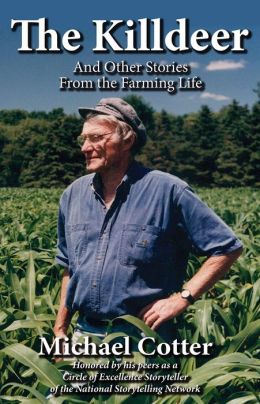
The Killdeer: And Other Stories From the Farming Life by Michael Cotter

There is something for everyone in this very special collection of moving stories about the farming life, and the human experience.

killdeer

Michael Cotter, born in 1931 on Minnesota land his family had farmed since the 1870s, was scolded from an early age: “Cut out those damn stories and get some work done around here!” As a hardworking livestock farmer, his natural inclination toward storytelling had to be suppressed. He was nearly fifty when he attended a workshop that reactivated his artistic side and began his storytelling career. The Killdeer and Other Stories from the Farming Life compiles his stories, full of simple humor and pathos of his life experiences and storytelling prowess.

…Click here to read the full review.


This review was published on November 6, 2014 by ForeWord Reviews.

IMG_4538


My rating: 8 kittens.

Ashes Under Water: The SS Eastland and the Shipwreck That Shook America by Michael McCarthy

Profiles of the central personalities involved in the career of the SS Eastland help to bring this compelling tale to life.

ashes

After more than a decade of research, journalist and Chicago resident Michael McCarthy shares a heartbreaking history in Ashes Under Water: The SS Eastland and the Shipwreck that Shook America. McCarthy gives this little-known Lake Michigan tragedy a thorough and compassionate telling and covers the media frenzy and indictments that followed.

…Click here to read the full review.


This review was published on November 27, 2014 by ForeWord Reviews.

IMG_4538


My rating: 6 inches.

Maus I, A Survivor’s Tale: My Father Bleeds History by Art Spiegelman

mausI have heard about this book for years, and am glad I finally picked it up.

Art Spiegelman’s father was a survivor of Auschwitz. Subtitled (excellently) “My Father Bleeds History,” this book tells the elder Spiegelman’s story, as told to Art, complete with the dialog between father and son that constitutes Art’s research. The action therefore switches back and forth between late-twentieth-century New York City and 1930’s Poland. The father-and-son interview portions are humorous, although with a sad note: Vladek Spiegelman is unhappily married following the suicide of his first wife (Art’s mother), Anja. The flashback parts are, naturally, disturbing, as they tell the story of Polish Jews as Nazi Germany pushed into Poland.

There is also a love story, that of Anja and Vladek, and the family story of Art and Vladek, father and son, getting to know one another and setting boundaries (as in the question of calling in the middle of the night about fixing downspouts). As Art himself laments, Vladek makes for quite a stereotypical – or racist – image of an older Jewish man: he is stingy with his money, manipulates his son using guilt, and speaks in a broken English dialect that I found quite charming, actually. But the story itself is killer, of course. There is a part II, and why do I not already have it here in my hands?

I am no connoisseur of comic (or cartoon?) art (I don’t even know what to call it). I will say that the art is fine, good: lots of black, easy to read (remarkably easy to read – I don’t do many graphic novels, and this one flew by). Spiegelman plays with symbols by making Jews mice, the Nazis cats, and non-Jewish Poles pigs. When the Jews try to blend in with Polish society after they have been removed, they wear pig masks over their mouse faces.

I was reminded of Alison Bechdel, most obviously because of the graphic format, yes, but it doesn’t stop there: Are You My Mother? also dealt with a parent, and framed the parent’s story with the interview process (and the familial tensions that came with it). That framing, that in-and-out of the story by way of the interviews, was familiar, and it’s a technique I like.

I have a feeling that there is quite a bit here to be studied from a more academic angle. I raced through this read in a quick evening, and it probably deserves more time & attention, but I need guidance. Happily, I have not only Maus II to look forward to, but MetaMaus (if I can find it?) with background material. Stay tuned.

Any graphic format fans out there? What have you enjoyed?


Rating: 9 chandeliers.

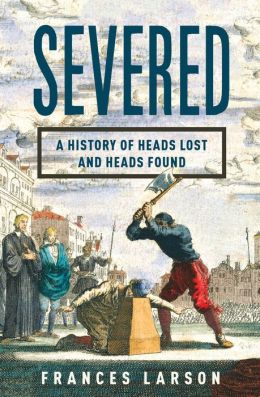
Severed: A History of Heads Lost and Heads Found by Frances Larson

Strong-stomached readers will enjoy this accessibly written cultural anthropology of severed heads.

severed

The human head is remarkable. Not only does it boast receptors for each of the five senses and house the brain–the command center for the body–but it also displays the face, which (for better or worse) defines our identities to the outer world. In Severed, anthropologist Frances Larson (An Infinity of Things) examines a dark side of the human head–specifically, its separation from (and attempted reattachment to) the human body in myriad ways and with different purposes, intentions and results.

The Western world has balked at shrunken heads, trophy heads, headhunting and wartime brutalities, but still maintained a macabre enthusiasm for collecting these specimens, which, ironically, led to an increase in the practices. In Europe, beheadings for criminal and political offenses led to the development of the guillotine during the French Revolution. Despite its gore, this machine was heralded for its efficiency and arguably humane approach relative to other execution methods. Detached heads have served as religious and secular relics; scientific or pseudo-scientific tools; artists’ inspiration; soldiers’ souvenirs; and objects of ritual and political symbolism. In fact, much of Larson’s study considers the interplay between the head as part of an individual and head as object: it is necessary to objectify in order to decapitate or dissect. An overarching concern is whether the head alone holds the essence of each of us. The question remains unanswered, even as Larson investigates cryonic suspension of severed heads and head transplants (or as their practitioners prefer, “body transplants”) in one of her most intriguing and memorable chapters.

Larson’s examinations of the head’s place throughout history and the present are endlessly fascinating. Her writing is never gratuitously gruesome, but necessarily deals in grisly detail. (In addition to the myriad lessons within these pages, readers may well learn the threshold at which they become disturbed by such subject matter.) Severed explores the head in idiom, in its “linguistic ubiquity,” and as a tool for justifying racism: one major collector of skulls and related data rounded average skull size up for Germans and Anglo-Saxons, but down for “Negroid” Egyptians.

In this thoughtful survey of decapitated heads and their implications in history and across cultures, Larson is sensitive and thorough, allowing occasional humor while giving her subject the respect it deserves, offering entertainment alongside a truly engrossing educational experience. For readers of science, history, culture, anthropology and generally quirky nonfiction, Severed will be thought-provoking and unforgettable.


This review originally ran in the November 18, 2014 issue of Shelf Awareness for the Book Trade. To subscribe, click here.


Rating: 8 measurement tools.

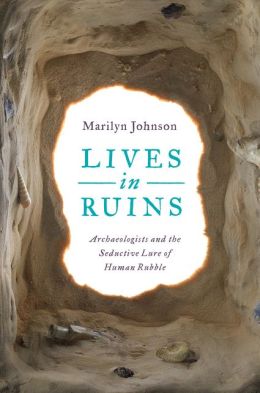
Lives in Ruins: Archaeologists and the Seductive Lure of Human Rubble by Marilyn Johnson

This charming, accessible tribute to archeologists and their work will both entertain and educate a wide range of readers.

lives

Marilyn Johnson, who celebrated librarians in This Book Is Overdue! and obituary writers in The Dead Beat, here turns her attention to another underappreciated profession. She had long been captivated by the idea of digging in the dirt and bringing up treasure in the form of human history, and was awed by the men and women who do that work. Archeologists are plagued by low pay, scant job security and the pressures of a world that values many things–real estate, the pace of progress or simply the future over the past–more than it values potsherds and human remains. With Lives in Ruins, Johnson pays homage to and learns about these individuals and their often-dirty, often-uncomfortable, always-intriguing work.

In pursuit of archeology’s magic, romance, filth and smells, Johnson enrolls in several different field schools, working as an archeologist-in-training (with varying degrees of success). She attends conferences and travels to notable sites ranging from Peru’s famous Machu Picchu to the almost unknown, but historically indispensable, Fishkill Supply Depot in New York. She learns techniques and technologies, views artifacts and absorbs history, but her most important work comes when she meets archeologists. They are tough, intelligent, deeply committed people; they are “cultural chameleons” who work in dust and grit and heat and are also capable of attending formal affairs to advocate passionately for preservation. (One is a woman who cleans houses for the wealthy to support her nonprofit organization, and appears at fancy balls in the same upper-crust circles.) When archeologists and the U.S. military team up to defend cultural heritage from the violence of war, Johnson comments on the intersection of two “cautious, even paranoid professions.” She meets a young woman who sifted through New York City’s topsoil and sewage in the years after 9/11, and another who teaches forensic archeology using the carcasses of farm animals as stand-ins for human murder victims. She also investigates classical and prehistoric digs around the world.

Lives in Ruins will captivate a variety of readers: those who, like Johnson, dreamed of being archeologists; fans of history, anthropology or odd jobs; and people who respect the past and have an interest in preserving it. Johnson is merrily self-deprecating and funny in her anecdotes of the personalities she encounters, but also absolutely serious about the importance of their work. We are all the richer for Johnson’s eloquent ode to this dirty job.


This review originally ran in the November 11, 2014 issue of Shelf Awareness for the Book Trade. To subscribe, click here.


Rating: 8 sherds.