rerun: The Song of Achilles by Madeline Miller

Fun fact: I interviewed Miller for the podcast Critical Wit, and that interview posted on the same day (May 31, 2012) that she won the Orange Prize for this novel, which was a fun piece of synchronicity for all of us, I think. That interview can be heard here.

This review originally posted on May 17, 2012.

I read this book in a day, rapt and tearful and awed. Madeline Miller, I love you. Write more, please.

I expect that most people are at least vaguely familiar with the story of the Trojan War, even if you never read the Iliad, yes? The Greeks sail to Troy in pursuit of Helen, “the face that launched a thousand ships” (that’s these ships!), the most beautiful woman in the world, stolen from her king-husband Menelaus by the Trojan prince Paris. They fight at the gates of Troy for ten years before Odysseus’s characteristically clever notion of the big wooden horse (the Trojan horse of idiom) wins the war for the Greeks. Achilles is a hero of the war, on the Greeks’ side. He had been sitting the war out in protest against an offense to his pride when his close friend (and, most scholars agree, lover) Patroclus goes into battle and is killed. In the opening scene of the Iliad, Achilles is mad with grief and rage, about to rush into battle, kill Hector, and be killed by Paris.

That’s the background. Miller, a scholar of ancient languages (including Greek) and theatre has written a novel from Patroclus’s point of view. This gave her quite a bit of leeway, since Patroclus is not given much coverage in Homer or in ancient myth generally; she got to do what she wanted with him. Here, we see him grow up from a boy: he was a disappointment to his father, then was exiled in dishonor and sent away to be fostered in another kingdom, where Achilles is the prince and heir. The two boys form a decidedly unlikely friendship, with Patroclus the dishonored and weak following in the footsteps of Achilles, whose future is prophesied to be something enormous: he will be Aristos Achaion, the greatest of the Greeks.

Patroclus joins Achilles in his studies and their bond grows closer until they become lovers. They are not eager to join the Greeks and sail to Troy to fight for another king’s wife, but circumstances (and Odysseus, the crafty one) conspire to see them off. From there, you can revisit my synopsis of the Iliad, above – except that we keep Patroclus’s perspective, which actually made the Trojan War that I thought I knew so well spring fresh from the page.

And that is one of the several strengths of this book: that an ancient myth that is familiar to many readers, like me, becomes so real, new, crisp and juicy in Miller’s hands. It definitely made me want to go back and reread the Iliad, as well as other cited works. (Check out the Character Glossary, whether you think you need it or not, for background as well as mentions of other books you’ll want to go find.) The myth of the Trojan War comes alive with Patroclus as it hasn’t before.

Another great strength is the emotional impact Miller achieves. This book is moving, sweet, heartfelt, powerful, in its tragedies as in its loving moments – and the tragedies are plentiful. There is visceral wrath in Achilles’s mother Thetis and her hatred of all mortals and Patroclus in particular; that emotion comes through just as strongly as the love that makes Patroclus put aside jealousy and envy, makes him put Achilles’s needs before his own. I noticed that the first-person voice of Patroclus rarely uses the name Achilles, but just refers to his lover as “he” – thus emphasizing the extent to which Achilles is the center of his world.

As I said at the start of this review, I want more of this! It’s so well done. If you’re taking requests, Ms. Miller, I would like to read a book about what happened to the happy family of Odysseus, Penelope and Telemachus following the conclusion of the Odyssey: how does Odysseus manage to gracefully step down from power and transfer to Telemachus without sacrificing any of his machismo? Reading The Song of Achilles raised this question for me – how a king could step down and preserve his dignity and quality of life. I wonder, too, whether Penelope ever gets grumpy about all the philandering Odysseus did along his homeward journey, while she was standing strong against the suitors.

In a nutshell, this retelling of the Trojan War and the relationship between Achilles and Patroclus is lovely, loving, sweet and deeply emotional; it preserves the grand, sweeping scale and feeling of humanity and drama in the original, but brings it freshly alive in an appealingly different format. The Song of Achilles made me sigh and think and cry, and I wanted more when it was all gone. This may very well be the best book I’ve read in 2012.


Rating: a rare 10 loving caresses.

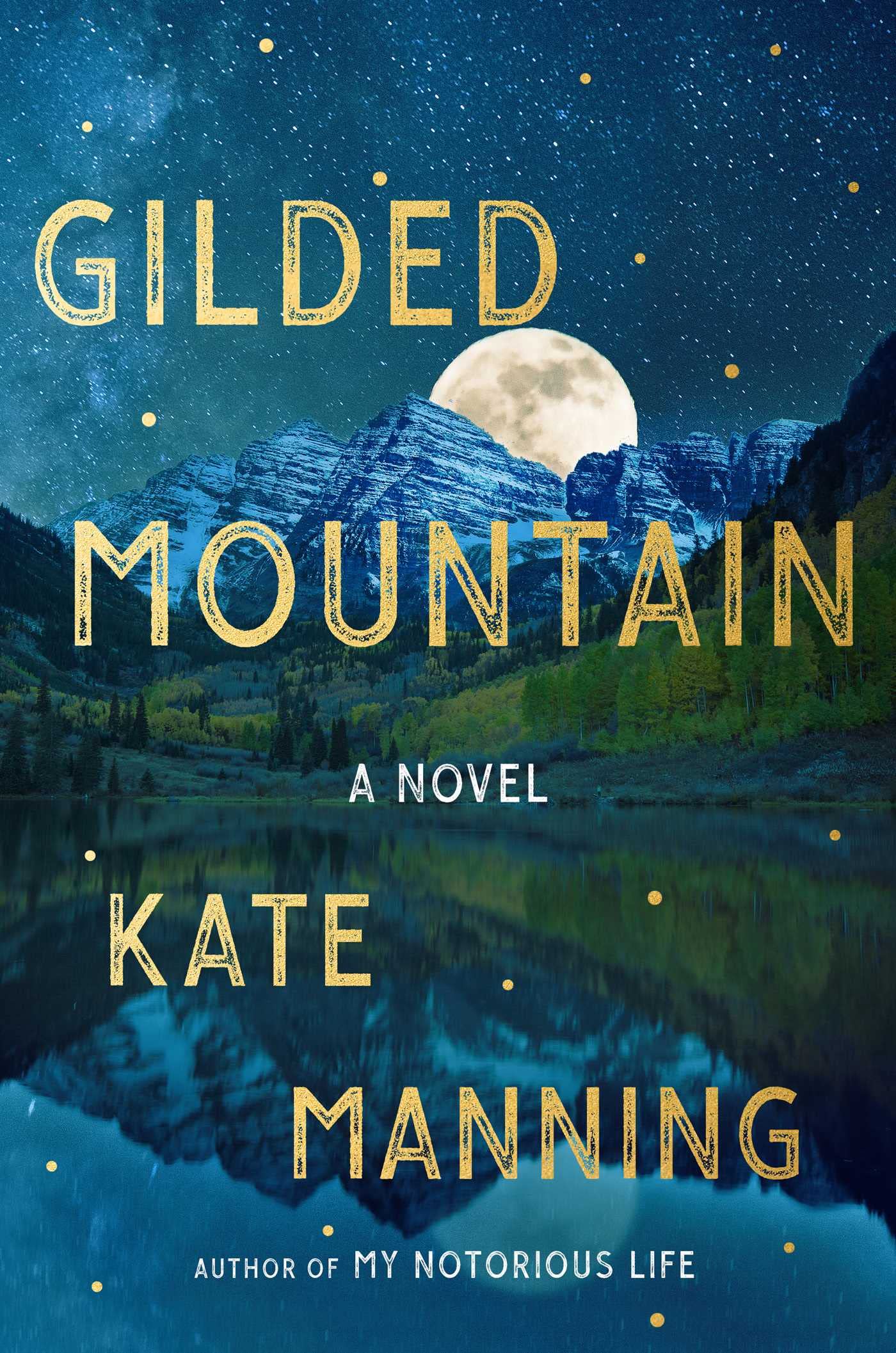
Gilded Mountain by Kate Manning

This gorgeously evocative novel of the early-1900s American West takes on issues of race, class, labor and women’s rights via a remarkable young woman’s coming of age.

“Strikes are all the same. Same songs. Same reasons. Same hope and rage. In those years it was struggle and strife all over the mountains, in the cities and on the plains of the country, wherever there was industry or toil.” Gilded Mountain by Kate Manning (Whitegirl; My Notorious Life) is an expansive novel of passions: love, beauty, suffering; struggles for labor rights, women’s equality and the rights of formerly enslaved people. Set in the early-1900s Colorado mountains, this enthralling story stars Sylvie Pelletier, who travels west at age 17 to find the world broader, more lovely and more terrible than she’d imagined. Gilded Mountain tracks her coming of age and the troubles of her family and the marble miners of Moonstone.

Sylvie’s father, Jacques, is beloved by his family and his coworkers in the marble quarry, who call him “Frenchy,” but Sylvie’s mother fears he will again meet danger with his union organizing. Sylvie graduates from high school and apprentices as “printer’s devil” to the freethinking K.T. Redmond, who further shocks townspeople by being a newspaperwoman. As conditions in the mines deteriorate and K.T. nurtures Sylvie’s rebellious streak, the young protagonist is also invited into the household of Company owner Duke Padgett and his wife, the Countess. Their royal titles are self-assigned, but their wealth is real. The Duke’s son, Jace, becomes something of a romantic interest, but there is also United Mine Workers’ representative George Lonahan. Sylvie is torn between her principles and love for her family, her class and her boss, and the temptations of the other life. “I forgot to observe with the sharp eyes of a printer’s devil because my sight was dulled by sugar and awe,” she realizes. “My loyalties gnarled and snared me.”

Gilded Mountain is an ambitious novel, swelling to encompass labor rights (complete with Pinkerton Detective Agency goons), women’s rights, the societal role of the free press, the rights of Black Americans immediately following the Civil War, lynching, immigration and more. Starring real characters from history (union organizer Mother Jones, Belgium’s King Leopold II), it contains romance, historical fiction and inspired, high-minded thinking on important issues. Moonstone, Colo., is a fictionalized composite town, but its marble mining and the standard operating procedures of the Company are well based in historical fact. It also contains lovely writing about the natural world: “[T]he Diamond River overflowed its banks and rushed downhill, rooks sang in the trees, and leaves unfurled like new little salads on the ends of their branches. A corduroy of greens softened the hard folds of the mountains, and the meadows bloomed with swaths of blue columbine and dashes of yellow sneezeweed.” The result is a painfully beautiful novel of big ideals, heartbreaks and tragedies, sewn together by an admirable and unforgettable heroine.


This review originally ran in the September 15, 2022 issue of Shelf Awareness for the Book Trade. To subscribe, click here.


Rating: 8 maraschino cherries.

The White Hare by Jane Johnson

Love and mourning, betrayal and hope, ancient legends and modern conflicts come together in the atmospheric Cornish countryside in this engrossing novel.

Jane Johnson (The Sea Gate; The Tenth Gift) transports readers to rural Cornwall in the years just after World War II in The White Hare, a fanciful novel of family, village life, history, mythology and more.

In the opening pages, first-person narrator Mila, her daughter, Janey, and her mother, Magda, arrive at their new home, a grand but dilapidated Cornish seaside estate, in the summer of 1954. Timid Mila is fleeing an unnamed scandal in London; the irascible Magda has taken charge of their little troop. Janey, age five, is eager to explore her new surroundings, accompanied by Rabbit, her stuffed toy and best friend. The estate, purchased with unexplained but apparently significant funds, has a mysterious history; locals make foreboding remarks and then clam up. “Best not talk about unlucky things too much, or you may attract unwanted attention,” Mila is warned. Magda plans to refurbish and open a grand guest house, with Mila to cook and clean. Immediately and surprisingly latching on to their odd household is Jack Lord, a local who is (like all these characters) unforthcoming about his past, but handy with repairs and good with high-spirited, imaginative, clever Janey. Things go bump in the night, there are hints of ghosts and old crimes, and the vicar in town is inexplicably, aggressively sinister.

Mila and her parents immigrated from Poland just before the war, so she must deal with several layers of outsider status in this insular and remote setting. Janey and Rabbit are oddly at home in the natural world and its legends, while Mila struggles with local culture; her mother’s hostility is considerable, but Jack’s influence is calming, if enigmatic. The White Hare is jam-packed with slowly released secrets: those between mothers and daughters, those kept by the villagers, and those locked away within traumatized minds. It addresses class and war, mysticism and folklore, the persistent influence of history and bloodshed; it dabbles in romance, but remains centrally concerned with the relationships of family, community and place. With lush descriptions of fashion, food and especially nature, Johnson’s prose appeals to sentiment and expertly evokes an often-menacing mood. The intrepid, uncanny Janey and her Rabbit, however, joined by several wise women of the village, offer hope that Mila and her family can move into a happier future in the end. The White Hare is enthralling, as filled with secret passages as the stately home in which it’s set.


This review originally ran in the August 22, 2022 issue of Shelf Awareness for the Book Trade. To subscribe, click here.


Rating: 6 Latin phrases.

Maximum Shelf: Ithaca by Claire North

Maximum Shelf is the weekly Shelf Awareness feature focusing on an upcoming title we love and believe will be a great handselling opportunity for booksellers everywhere. The features are written by our editors and reviewers and the publisher has helped support the issue.

This review was published by Shelf Awareness on June 22, 2022.


Claire North (The First Fifteen Lives of Harry August; The Pursuit of William Abbey) offers a new take on a familiar tale with Ithaca, a richly imagined, thought-provoking novel of Penelope’s trials during the Trojan War and its aftermath. The forgotten or misrepresented women and goddesses of ancient Greece bring joy, sorrow, humor and wit.

A lengthy space of time falls between The Iliad‘s story of the Trojan War’s conclusion and The Odyssey‘s story of Odysseus’s protracted homecoming. On the island of Ithaca while its king, Odysseus, is absent, Penelope, his queen, rules uncertainly, beset by unruly suitors wishing to become king, and the hopes and ambitions of her son, Telemachus, an infant when his father went to war and a young adult by the time he returns. Into this gap comes Ithaca, which follows the challenges faced by Penelope and the other women–queens, wives, mothers, goddesses, slaves–who surround her and fight their own often overlooked battles.

The Homeric myths are well-known and familiar territories for many readers and indeed many writers, who have reimagined and retold these stories in abundance. But despite the richness of such retellings, Penelope remains an enigma, and North’s contribution to the genre is unique and welcome. While the Ithacan queen is in some respects its protagonist, Ithaca is narrated by the goddess Hera, wife (and sister) to Zeus, and frequently represented as bitter, jealous and vengeful. Hera’s interest in Penelope is self-serving: as the goddess of women, wives, queens and motherhood, she resents the ways in which Penelope is disregarded by her male counselors, her absent husband, her suitors and her son. While Hera’s stepdaughter, Athena, is chiefly concerned with the hero Odysseus, Hera is entirely here for the women. In fact, it is not Penelope whose fate concerns her first: “No one ever said the gods did not have favourites, and it is Clytemnestra I love best, my queen above all, the one who would be free.”

Clytemnestra’s crime of husband-murder is reframed by the recounted sins of Agamemnon, and when the murderess-queen hides on Ithaca, readers are reminded that she and Penelope are cousins. Next arrive Orestes and Elektra, who seek to avenge their father’s death; Orestes is near-mute and disengaged, while his sister is a magnetic, powerful force, barely remembering that she must at least seem to defer to the will of a man: “aware that she has been perhaps a little too forceful… [she] adds, ‘My brother will issue his commands shortly.’ ” Clever Penelope is more practiced at the trick of subtly sliding her wise points into conversations while seeming to demur. Telemachus is a bit silly, a boy hoping to be a man. Odysseus is entirely off-screen, “groan[ing] in the nymph’s pearly bed.” Both Artemis and Athena make appearances, annoying their stepmother with their own agendas.

Penelope is of course harassed by the unwelcome suitors who place the queen in a sort of stalemate, as she can neither accept their offers of marriage (both because Odysseus may still be living, and because to accept one would be to provoke the others quite possibly to war) nor send them away (because of the culturally sacred host’s obligation). In this version, Penelope is additionally beset by pirates attacking her island nation–pirates dressed as Illyrians but wielding the short swords of Greeks. There seems to be intrigue afoot, offering a whodunit mystery subplot for Penelope and her subtle female counselors (in contrast to her blustering male ones) to investigate. Women warriors lurk in the shadows of this Ithaca. And North does not forget the maids, who are also slaves, and also in some cases Trojans: “Death to all the Greeks,” one of them repeatedly mutters under her breath. The maids are frequently bedmates of the suitors; but to what end, and with what choice in the matter?

Thus is Ithaca the story not only of Penelope, Hera and other queens and goddesses, but of less famed women as well, down to the teenaged village huntress who opens these pages. Hera is quick to remind her audience that the stories that get passed down are written by poets, whose narratives may be purchased, and who rarely notice the contributions of women: “That girl is not remembered now”; “No poet will ever do her homage.” “Freedom only increased the efficacy of her work, though there is not a single poet in all of Greece who would dare breathe of such an outcome.” Hera’s voice is humorous, whimsical, imperious, frequently scornful. But she is also surprisingly easily cowed by the other Olympians, knowing that Zeus holds power over her. “I was a queen of women once, before my husband bound me with chains and made me a queen of wives.” While this story is on its face about Penelope, Clytemnestra, Elektra and the rest, Hera is an engrossing and masterful character in her narration.

North’s prose is clever, funny and as wise as Penelope herself, with an eye for pleasing images as well as deeper meanings. In her capable hands, this ancient landscape is both fresh and timely. Ithaca is the first in a trilogy, and having come to know this three-dimensional Penelope, North’s readers will eagerly await the next two installments.


Rating: 8 dreams.

Come back Monday for my interview with North.

The Wild Hunt by Emma Seckel

On a remote Scottish island, villagers battle the sluagh–crows said to host the souls of the dead–and the aftermath of World War II, and one young woman reckons with the ghosts of her own past.

“On the first of October they arrived.” Leigh Welles has just returned home to the island of her birth for her father’s funeral, and the crows have returned as they do each October, but she finds nearly everything else changed since the war. So begins Emma Seckel’s first novel, The Wild Hunt, an atmospheric story of place, family, home and belonging.

This small, isolated Scottish island lost many of its young men, “nearly an entire generation off to fight for a country they’d barely thought of until now,” in World War II. Leigh’s brother had gone, and though he survived, he did not come home, and all they’ve done since is argue. Leaving has in fact been a family trait, beginning with their mother’s mysterious departure when Leigh was a girl. Later, Leigh had committed the sin (in island eyes) of moving to the mainland, where she’d been miserable: “the telephone call summoning her home had been a black sort of blessing.” Now she’s returned to the Welles home, “a run-down sheep farm with no sheep.” Her mother gone, her brother gone, her father dead, the island haunted by its absent young men and by the sluagh–those crows who group in threes and beat upon windows and strike at eyes and kill.

Leigh drops with surprising ease into the old ways, reciting the Gaelic and joining the rituals meant to protect the islanders from the sluagh, which are said to carry the souls of the dead. She is disturbed, however, to see the crows’ increased audacity–attacking villagers in the street–as well as the villagers’ subdued reactions and the persistent signs of the war, which has been over for years. Meanwhile, Iain MacTavish, widower and RAF veteran, struggles to function at all, some days leaving his bed only when forced by his mother-in-law. Leigh’s younger childhood friend Hugo McClare kills a crow, and then disappears, on this island too small to hide a man. Leigh and Iain unexpectedly connect over a shared purpose, although it may be of the saddest sort.

The Wild Hunt is part ghost story, part elegy to war and traditional lifestyles, dreamlike even in its horrors. Seckel weaves historical fiction with mystery and fantastic elements and threads of romance in this tale of love, grief, attachment to place and resistance to change. Her island setting is both otherworldly and firmly rooted, and her prose style is lushly evocative. This imaginative novel is memorable and wild indeed.


This review originally ran in the May 27, 2022 issue of Shelf Awareness for the Book Trade. To subscribe, click here.


Rating: 8 goats.

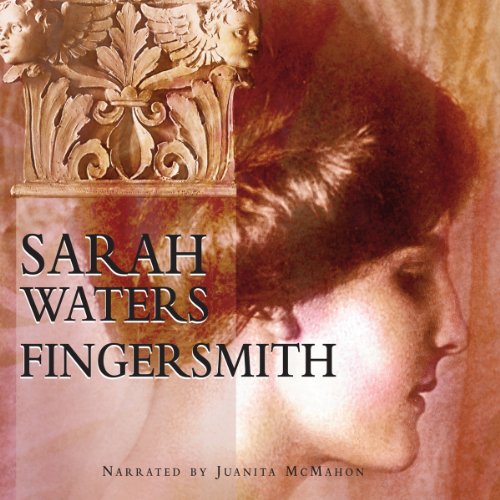
Fingersmith by Sarah Waters (audio)

I got this title off some list of bests somewhere, and queued it up behind In the Woods on the return trip from Texas. It was a delightful, weird, engrossing adventure. I am going to be careful and vague with this one, as it hinges on big reveals that I don’t wish to spoil.

Set in Victorian London, Fingersmith begins with the first-person narration of Sue Trinder, an orphan who has been raised by a household of ‘honest thieves’ and a mother figure, Mrs. Sucksby. Sue and her comrades are fingersmiths, or pickpockets (and they partake in other crimes and cons, mostly of the property reassignment category). One day Sue is invited into a masterful heist: she will pose as lady’s maid to an innocent, sheltered woman of just her own age, the also-orphaned Maud Lilly, to aid in a fellow crook’s seduction of the lady. He will then marry her, steal her fortune, and have her locked away in a madhouse (which is sinfully easy to do to women, in those times and into quite recent history). Sue has never been a lady’s maid before, so she has much to learn about the job, but off she goes. The plot proceeds, but Sue’s loyalties become split, as it turns out she rather likes her mistress.

This is just the very beginning of the complications. But then! Part two! The first-person perspective shifts, which I did not see coming. And everything the reader thought she knew about this story gets turned on its head. I will stop writing about plot now, but it continued to surprise me, repeatedly, and Waters gets full marks for this feat. Also, I was not expecting erotica, which popped up a few times to (again) surprise me and was remarkably well done. Fingersmith is absolutely a plot to get thoroughly lost in; really great road trip fodder. I did feel in the middle that it dragged on a bit longer than it needed to – especially when the victim of this or that plot must wallow in her misfortune. I could take much less of the wallowing. But eventually we stepped out of that puddle, and the story continued to twist and turn; I was riveted right until the end, and was sorry to be done. Masterfully plotted; do recommend.


Rating: 8 ink stains.

Last Call at the Nightingale by Katharine Schellman

With lively and appealing historical detail, this mystery turns a poor factory worker into a sleuth when a murder disrupts the party at her favorite jazz speakeasy.

In Last Call at the Nightingale, Katharine Schellman (The Body in the Garden) serves up Prohibition-era murder and intrigue with style, atmosphere and a side of bootlegged bubbles and gin. The first in a Jazz Age mystery series, this novel will appeal to readers on several levels.

In 1920s New York City, Vivian Kelly is alone in the world but for her stick-in-the-mud older sister, Florence. Vivian works for a pittance and receives less respect in a dressmaker’s factory, but at night she has a space where she can forget her poor pricked fingers and dance ’til last call: the Nightingale, a speakeasy jazz club. “She needed to feel like she belonged somewhere, to feel there was something in her life that actually belonged to her,” and the Nightingale and its staff and patrons give her just that. Vivian is “poor orphan Irish trash”; her best friend Bea is Black; bartender Danny is Chinese; and the bar’s owner, Ms. Honor Huxley (don’t call her Miss), prefers other women as her dance partners. The Nightingale is a place where anything goes, more or less–until one night that includes murder.

When Vivian discovers a body just outside the club’s back door, she finds herself thrown into circumstances beyond her usual daytime drudgery and nighttime frolics. “I grew up in an orphanage. I live in a tenement. People die faster there than on Park Avenue,” she blusters, but she’s in over her head. Arrested in a raid, she owes her bail bond to the intimidating but sexy and intriguing Ms. Huxley. Then a mysterious stranger arrives from Chicago and begins pursuing Vivian. Threatening bruisers are hot on her tail, and Florence is increasingly displeased by the younger sister’s nightlife. Vivian at first feels pressure from others to solve the murder; eventually she may need to do so to save her own life. A poor dressmaker’s apprentice, she creeps into the parlors of the powerful to poke into their secrets, and finds herself pinned between the criminal underworld and the careless menace of the very rich. Time is running out, but this protagonist is as plucky as they come.

Readers will love Last Call at the Nightingale for its twisting plot, its flair for historical detail and its inclusive cast of appealing characters. Schellman’s author’s note on historical accuracy broadens the appeal of this engrossing jaunt into murder and dangerously good times. Don’t look away, as the surprises keep coming until the final page.


This review originally ran in the March 18, 2022 issue of Shelf Awareness for the Book Trade. To subscribe, click here.


Rating: 7 stitches.

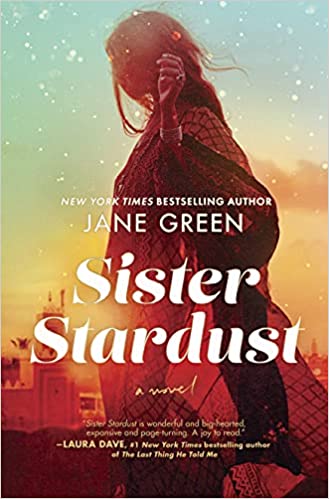
Sister Stardust by Jane Green

In this captivating coming-of-age novel, a teenager from the English countryside throws herself into life in 1960s Marrakech in a grand adventure that will color the rest of her life.

Sister Stardust is the captivating coming-of-age story of a shop girl from Dorset swept into 1960s Marrakech among the rich and famous. Jane Green (Summer Secrets; The Sunshine Sisters) dazzles readers with the brilliant adventures of Claire, who leaves behind a little Dorset village and a troubled relationship with her stepmother to journey to London. From there she is astonished to achieve a few girlhood dreams: losing baby fat, working in progressively hipper clothing stores and buying cooler clothes, finally meeting real, live rock stars and setting off on a spur-of-the-moment trip that will change her life forever. But even as she embarks on drugs, sex and cultural discoveries, Claire–by now calling herself Cece–finds that fabulous celebrities have their problems, too, and a tabloid-picture-perfect lifestyle is no guarantee of happiness.

This story takes the form of an extended flashback, as an elderly, widowed Claire goes through boxes in the attic and finally tells her daughter, Tally, what the colorful Moroccan artifacts were meant to remind her of. Still in her teens, Claire had jumped into a silver Bentley and been flown away to Marrakech, where she became the houseguest of 1960s icons Paul and Talitha Getty (true historical figures), running with a large group of famous musicians (of the fictional hit band the Wide-Eyed Boys) and an enigmatic chauffeur/bodyguard named Jimmy. The newly minted Cece experiments with hashish, opium, Quaaludes and orgies; she develops a passionate bond with Talitha, “this mysterious woman who lived in a palace and had managed to seduce the son of the richest man in the world,” and a close friendship with Paul, who introduces her to poetry, opera and more. However, a tragedy will change Cece’s course once again.

As a girl, Claire naively imagines that becoming skinny and flat-ironing her hair will be the answer to all her problems, as she dreams about pop stars and beautiful dresses. “Of course, I would have settled for Paul McCartney, but Dave Boland was my number one.” As a grandmother, telling these stories to her daughter, she draws different conclusions: the value of friendship, of self-actualization, of seizing the day. This dreamy narrative emphasizes life lessons and revels in the glitter and dazzle of 1960s free love and sex in more or less equal measure. Sister Stardust gathers momentum and achieves the kind of propulsive prose that brings immediacy to its joys and sorrows. Female friendships, the arts and the sensory joys of Morocco combine for a sparkling coming-of-age story of simple adventure and profound experiences.


This review originally ran in the February 8, 2022 issue of Shelf Awareness for the Book Trade. To subscribe, click here.


Rating: 6 babouches.

The Stone World by Joel Agee

Immediately following World War II, an intuitive boy from the U.S. in Mexico carefully observes his changing world in this scintillating work of literary fiction.

Following his memoirs (Twelve Years; In the House of My Fear) and translations, Joel Agee’s first novel, The Stone World, is a dreamy, haunting immersion in the mind of a child in a gravely serious adult world. The story spans mere months in the life of six-and-a-half-year-old Peter, who prefers to go by Pira, as his Mexican friends pronounce his name. (Pira wishes he was Mexican; he has learned that gringo is not a compliment.) This is a quietly profound study of boyhood, in some ways almost humdrum: Pira writes a poem, borrows a significant item from a parent and breaks it (and lies about it), falls out with a friend, learns about the world. But the backdrop is late-1940s Mexico, where Pira lives with his American mother and German communist “second father” (his biological father lives in New York), and they rub shoulders with a range of characters: American, Hungarian, Mexican, rich, poor, activists and organizers and artists, including Frida Kahlo.

Pira is prone to involved imaginings, including dreams but also waking visions, as when he lies on the cold stone floors of the family’s small patio and feels himself sinking into another world. There is a literal fever dream as well (brought on by a serious allergic reaction), but even the half-sleep of the afternoon siesta can transport the boy–a very serious thinker–into realms of fantasy, where he decides that a nearby decaying bull’s carcass is the famous bull that has just killed a beloved Spanish bullfighter. Through the eyes of this curious, philosophical, sensitive child, the whole world is fresh and new, colorful, beautiful and dangerous.

Joel Agee is the son of celebrated novelist James Agee, and Pira’s life resembles his creator’s, who likewise lived in Mexico with his mother and German stepfather in the late 1940s. The Stone World is concerned with relationships, interpersonal and political: Pira is friends with boys his own age, as well as his pet dog and parrot and the family’s cherished maid, Zita. The politics of his parents and their friends (with their talk of parties–but not in the usual sense) are initially boring to young Pira, but real-life risks and even arrests bring the issues home to him: “He didn’t understand, but there was an explanation.”

In the hands of such a skilled and nuanced writer, this material glistens and tilts with both beauty and menace. Pira is captivating, and The Stone World is completely absorbing. Readers should clear their calendars until the final page has been turned, and then leave time for the contemplation this novel deserves.


This review originally ran in the December 21, 2021 issue of Shelf Awareness for the Book Trade. To subscribe, click here.


Rating: 7 marbles.

Valentine by Elizabeth Wetmore (audio)

This audiobook, also part of my cross-country travels, was a birthday gift from my mom. Thanks, Mom!

Valentine is a powerful novel. It’s set in Odessa, Texas in 1976: a central West Texas oil town in a harsh environment filled with hard-edged, struggling people. The setting is definitely part of the appeal, as I know Odessa a little and its region a little better, and Elizabeth Wetmore’s striking writing about place I found very affecting and authentic. Mostly, this place comes across as rough, stark, unbeautiful; but a close read will reveal appreciation for the natural world and the people who find something to love in it. These characters are really well done, too. Chapters shift between the points of view of a number of them, with a firmer focus on three or four. All are women: men are only viewed through their eyes. As a woman, in a world of books historically over-focused on men, I appreciated this, too.

Let me get in a content warning before we go too much further: the event the book opens with, which is also the event that the entire narrative centers around, is a brutal and violent rape. It’s described in what I’d call moderate detail, which is plenty disturbing. Readers for whom this may present a problem should avoid the whole thing.

This rape and its aftermath affects all our characters in various ways. Even those who are initially unsympathetic become three-dimensional and complicated when they get their own chapters, in that way that I love: all people are complex, no one all good or bad, no perfect heroes or villains. I love a complication like nothing else. There is even a brief – failed – attempt to understand the perpetrator of the rape; that impulse and its failure both feel real and right to me.

Gloria, or Glory, Ramirez rightfully opens and closes the book. Fourteen years old, the US-born child of an undocumented Mexican immigrant mother, Glory’s life brings race and racism into the story. Valentine is centrally concerned with women’s lives and violence against women, but this layer is important and (of course) related. Then there is Mary Rose Whitehead, young mother of a young daughter, drawn into Glory’s life by circumstance. She rebels against many of the structures of the world around her, in ways that we applaud, but this is no fairy tale, so she will not necessarily triumph. Next comes Corrine Shepard, an older woman, recently widowed and handling her grief with booze, cigarettes and not giving two sh*ts what you think about any of it, which serves her well, to a point. I think of these three women as the core, although there are probably other interpretations – I haven’t counted chapters. Again, there are others who get less spotlight but make important contributions: I’m thinking of the bartender/babysitter/waitress we get to hear from near the very end.

This book covers so much. Race and racism and immigration, women’s lives and violence against women, economics patterns and the dire straits it puts all kinds of people in; the cultural and ecological milieu of a particular place, in a particular time, including what it looks like for an oil boom to hit a town like Odessa, which my friends who live in the region today tell me about: it sounds like it looks awfully the same after more than 40 years. Valentine‘s contents contain a lot of ugliness, brutality, violence, hate, tragedy: beware. But it’s also a beautifully rendered novel. And I appreciate its glimpses of beauty even in Odessa in 1976. It’s masterful, in other words. I’m very impressed, and I’ll be thinking about these characters for a long time.

Thanks again, Mom. Good pick.


Rating: 8 pistols in purses.