

the value of fiction

I want to share with you something that I wrote, oh, in 2007 or thereabouts. (I am resisting the urge to edit myself. It is a strong urge.) And then I think I will respond to myself. And hopefully you will share your thoughts, too.

My best friend is self-educated, and claims that he reads only non-fiction because he sees no value in studying fiction. He thinks that fiction’s purpose is entertainment, and he wants to learn new facts and better understandings of the world, and thus needs to read non-fiction. I like to counter with, for example, Harriet Beecher Stowe’s Uncle Tom’s Cabin. This book is fiction, but I think it’s pretty clear that its purpose is to teach and educate and hopefully to change minds about one of the most important issues of the last century.

One of my favorite books is Ernest Hemingway’s For Whom the Bell Tolls. This book is fiction, but closely based on the author’s experiences. It served an important purpose: it taught readers that the Spanish Civil War, and by extension war in general, is not one-sided and has no “right” side to it; once violence has begun, innocents on both sides will suffer and everyone finishes with blood on their hands. (I hope Hemingway will forgive me for brutally simplifying this masterly work for my purposes here.)

Upton Sinclair’s The Jungle is another great example of fiction that performed important social functions. Although Sinclair’s concerns began by centering on social issues, food safety turned out to be an enormous beneficiary of his work, as public response was enormous. Historical perspective on this book in its time helps us to understand its significance; however, just reading the novel without context would give a person new respect for the purposes of fiction.

The question of whether Mark Twain’s The Adventures of Huckleberry Finn should be taught in high schools strikes me as a parallel to my friend’s complaint about fiction. It is clear to me that this work should be taught to high school students because, while it is fiction, it brings to light some extraordinarily important and very real questions. For example, Huck’s relationship with Jim and the development of their friendship addresses the humanity of slaves and the moral rectitude of this American institution. The racial slurs need to be read by high school students – with the right guidance – to teach beyond the idea that they are wrong, to why they are wrong.

Thus, the question of whether to teach Huck Finn is the same as the larger question, why read fiction? (For that matter, if it’s not worth reading, why write it?) I find the study of literature (fiction and otherwise) to be pleasurable as well as important, so I take it upon myself to argue on its behalf. My assertion is that just because a story is not true, does not mean it can’t hold massive significance on wildly important issues. For that matter, if fiction were truly and solely for entertainment as my brother asserts, one could argue that there is value in this purpose as well. Humans need entertainment to draw their minds off of the problems of our world; to blow off steam; to relax and/or exercise our minds. If fiction served no higher purpose than these, it would still be worthwhile to write, and read, and study, fiction. However, I find that fiction can serve the purposes of, for example, bringing a nation’s and a planet’s attention to dire social issues: the enslavement of blacks by whites; the wage slavery of many white and nonwhite immigrants to the United States; the corruption and lack of hygiene in a meatpacking industry; and the damage inflicted by massive violence on a people. I continue to bring my friend works of fiction to read.

Urges to edit this piece of writing aside, I stand by my original position. On the other hand, I’ve also written before about the perils of reading historical fiction for educational purposes. While my friend has not specifically used this argument (that I recall), I think it’s an important concern. If we read really convincing, accurate, moving, memorable historical fiction, I think we run the risk of taking it as fact. Even the most discerning and aware reader (even me!) could end up with blurred lines in her subconscious about what she learned in a nonfiction vs. a fiction book. Once I learn a “fact,” it can be hard to call up its source, especially years later. This is especially concerning for someone like my friend in question, who is a highly intelligent man and who likes to have serious debates. I think he feels the importance of being able to cite one’s sources.

So I acknowledge the dangers of confusing high-quality historical fiction with fact. And even more confusing are the books that are billed as nonfiction and get questioned years after the fact (ahem, James Frey and Greg Mortenson). How’s a person to keep it all straight? Don’t even get me started on the library patron who was SURE, and could not be convinced otherwise, that John Grisham only writes nonfiction books. Everything in The Firm happened, she says. I couldn’t talk her out of it. (This is why the front of the book says, “This is a work of fiction…”)

So I do respect some of the challenges. My position hasn’t changed; if anything, I feel more strongly than ever that fiction is important. Some of the fiction I see doing good work in my day-to-day job is not even what we might call Important Fiction – it’s a lot of Louis Lamour, Danielle Steel, Debbie Macomber, and James Patterson, in fact. I work in a cancer hospital where my little library provides leisure reading for people experiencing incredible difficulties, great pain, or great fear. If reading Nora Roberts/J.D. Robb improves their day, I rate the value of even this pop/genre/fluffy/call-it-what-you-will fiction very, very high. My favorite examples are still Huck Finn, The Jungle, and the like. (Also Slaughterhouse-Five…) But it goes beyond such Important Books. Fiction can be beneficial, enlightening, world-changing, and uplifting in so many ways. Also, it can be fun. What’s so bad about that?

I’m not the first to ask this question or to try to answer it; and I’m certainly not the most eloquent, articulate, thorough, or exhaustive. Have you seen any great examples of answers to the question, “what is the value of fiction?” Do you have a great answer? I would love to hear (read) it. Do you disagree? I would be interested to read your argument on either side.

On a related note, I’m still hoping to find time to tackle Mightier than the Sword: Uncle Tom’s Cabin and the Battle for America by David S. Reynolds. Maybe I’ll have something new to contribute soon!

Two for Texas by James Lee Burke

Another good one from James Lee Burke; and such a quick read, too.

Son Holland and Hugh Allison escape together from a prison in Louisiana in an opportunistic and unplanned series of events that includes killing a prison guard. With Son struggling to recover from a gunshot wound, they flee into Texas, where the Mexican army is skirmishing with General Sam Houston’s troops, and various Indian tribes make up a plurality of fighting factions. It’s a lawless land, whose chaos does help Son and Hugh stay lost, but the brother of the murdered prison guard is on their trail. The older, more experienced Hugh (a friend of James Bowie) acts as a big-brother figure to the younger Son, who’s had his share of violence and hard times but retains some innocence and some righteous virtue, both for better and for worse. The two pick up an Indian woman, Sana, along the way, who will turn out to be an ally.

Son and Hugh decide to join Houston’s army as a defense against being recaptured and thrown in prison. Even if the tortures of their earlier incarceration weren’t unbearable enough, a return would mean certain slow, painful death. They catch up with Houston and spend several fateful months in the General’s camp, and are there during the battle at the Alamo, as well as Houston’s final defeat of Santa Ana’s Mexican army at San Jacinto.

My little paperback copy of this novel does not include any notes from Burke to tell me how much of this story is fiction. I surmise that Son and Hugh are entirely fictional characters. Certainly, the battles at the Alamo and San Jacinto are a part of history, as are the many big names Burke drops: Houston, Austin, Fannin, Milam, Bowie, Crockett, and more. But I think the story of these two men is Burke’s creation.

I enjoyed this quick read. At only 148 pages, it took me about a day in my free moments. It offers Burke’s usual fine descriptive writing, and I thought both of the main characters were well drawn: they had personality; they felt real; I was invested in their personal outcomes. The battle scenes and the rough edges on the soldiers, Houston’s ragtag troops, and the outlaw character of Texas at the time were all visceral and (in my embarrassingly limited knowledge) true to history.

An easy read with poignant characters and a good, readable (if cursory) history of the Texas Revolution, in Burke’s usual fine writing style.

[If you’re concerned: there is some blood-and-guts in the battle scenes, to be sure (how could there not be?) but it’s fairly conservative.]

book beginnings on Friday: Two for Texas by James Lee Burke

Thanks to Katy at A Few More Pages for hosting this meme. To participate, share the first line or two of the book you are currently reading and, if you feel so moved, let us know what your first impressions were based on that first line.

I couldn’t resist a historical novel – NOT mystery – by James Lee Burke.

According to the back-of-the-book blurb, this very short little book (under 150 pages) involves two convicts escaped from a Louisiana prison who play a role in the Texas Revolution. It begins:

The first day that Son Holland arrived in the penal camp, manacled inside a mule-drawn wagon with seven other convicts, he knew that he would eventually escape, that he would die before he would spend ten years in a steaming swamp under the guns and horse quirts of malarial Frenchmen with Negro blood in their veins and a degenerate corruption in their hearts. But he was just barely nineteen then, still sufficiently naive to believe that his will alone was enough to win his freedom. He didn’t know that almost two years would pass before his escape would come almost by accident, and that he would have to help murder a man to accomplish it.

Yes, I’m from Texas, and yes, I had to look up quirt: “a riding whip with a short handle and a rawhide lash.”

I feel hooked already! I love James Lee Burke, and a slim little book like this just begs me to devour.

What are you reading?

Clara and Mr. Tiffany by Susan Vreeland

I was attracted by the idea of this book when it came out in January, and I’ve just now gotten around to it. I’m really enjoying reading books pre-publication for Shelf Awareness, but it’s also nice to sneak one in every once in a while that’s NOT a thriller/suspense/murder-mystery. For that matter, I have some classics to read for the Classics Challenge, and I’ve been talking about Don Quixote…

But at any rate. Recently, on a whim, I picked up Clara and Mr. Tiffany, and it immediately grabbed me with its lovely writing, evocative of the artistic beauty the book revolves around. Clara, the narrator, works for a living in the 1890’s, and before the action of the book begins, has already had to choose between marriage (even… love?) and her passion for her work. Clara Driscoll, a real historical figure, was the artist behind much of the stained glass and the legendary lamps for which the Tiffany name is so famous. Vreeland has fictionalized her story for us here. Clara also has quite a bit in common with another historical figure I read about recently: Annie Londonderry took her extraordinary ride during the same years in which this book begins. It gave me a nice little thrill to recognize the historical setting, especially because the two female characters have so much in common. Reading these two books back-to-back allowed me to immerse myself even more in the times, and I’m tempted to head right into The Devil in the White City next. We’ll see.

I want to share a beautiful excerpt with you to illustrate the writing style.

…I carefully wrapped in a hand towel the one thing I had that no one could wrench from me – the kaleidoscope, his engagement gift to me. Bits of richly colored glass in a chamber served as his sweet acknowledgement that I’d had to give up my joyous work with just such glass in order to marry him. At the slightest turn of the maple-wood tube, the design collapsed with a tiny rattle of falling objects, and in a burst of an instant, nothing was the same.

Vreeland’s writing is quietly lovely and melodic; it expertly creates both a mood and a pacing to match the world in which Clara lives and works, and also evokes the colors, art, and beauty that involve her so deeply. Clara is an artist, first and foremost; she wants to design, to create, to replicate nature (she loves flowers, insects, the sea, leaves) and uplift the human spirit. As a woman at the turn of the century, though, she faces a number of challenges as a working woman, as a single woman, and as a craftswoman intent on earning a living, knowing she deserves one. She’s tormented by the frustrations of being unrecognized by Tiffany and by the world, as Tiffany (the man, and the company) receive accolades for her work. But she’s also tormented by guilt for what she thinks of as her narcissism – in that she desires credit at all.

Clara is a well-developed character. We see her progress, for example, as a feminist. She doesn’t set out with any high-minded ideals, but rather develops them as the world fails to treat her fairly. Clara heads up the Women’s Department at Tiffany, and her “girls” are described in varying detail; some of them become very real and sympathetic characters, and many of them serve to portray the experiences of immigrant workers in New York during this time. When their department comes under attack from the unionized male employees, Clara organizes the women to march into work together through a picket line – not striking, since the union doesn’t recognize them, but vilified all the same. This part of the story serves to underline that not all feminist demonstrators began as idealists or radicals, but rather that “regular” women were forced to stick up for themselves or die quietly. I appreciated that point.

Over the course of the book (spanning 1892-1908), she has a series of relationships: we meet her freshly widowed, she is courted by several men, and has a number of very close friendships. I found her heartfelt friendships, with men and with women, to be very touching. She struggles with love, with the idea that she’ll never find a satisfying romantic relationship with a man; with finding respect and fulfillment at work; with creating ideal art and beauty and being recognized for it. The story is of art, and of a time and a place, of love, and of women’s rights and a changing world. But mostly, it’s Clara’s story.

This was a beautiful book. The art and music bleed through the pages:

The sparrows of Irving Place were preening too, and gossiping pianissimo, and hopping about with an air of importance. Distant medleys of the city blended into a pleasant humming, punctuated at intervals by the Third Avenue elevated rumbling in a crescendo, grinding its brakes shrilly for the Eighteenth Street station, expelling its pfft of steam, then starting up again and fading away in a diminuendo.

I liked the historical aspects, too. As I like my hist-fict authors to do, Vreeland includes a note at the closing to explain where she took liberties. It does seem fairly clear that Clara Driscoll created many or nearly all of the leaded-glass lamps Tiffany got credit for; she did have two marriages; and a number of the figures in the novel did at least exist, with a few verifiable details. But much of the novel is purely fiction.

This was a really beautiful book, enjoyable to read, with a comforting, quiet rhythm and characters I cared about. It was a joy, and I recommend it.

Theme Thursday: Numbers


Theme Thursday is hosted by Reading between Pages. My job is to find and post a quotation from my current read, to express each Thursday’s theme. Today, our theme is numbers, and my snippet comes from page 10 of the book I started today, called Clara and Mr. Tiffany, by Susan Vreeland. So far, this is a lovely read…

Now I told Mary to number the individual sections, left to right.

“If a body can count that high,” she said.

“This one only has several hundred pieces because they’re large, but some windows have thousands of smaller ones. When she’s finished, Cornelia, you will cut up the first copy into its sections using these special scissors with three blades.”

Lots of numbers, yes? This book is the fictionalized story of Clara Driscoll, the woman behind much of the artistry of Tiffany’s famed lamps and other glass confections.

And here’s a bonus from pages 33-34:

“…more than that,” Mr. Nash said. “We can now control clarity, color, and surface to create nuances in an infinite variety of glass. We’re approaching five thousand types now.”

“That’s staggering,” I said, knowing I had to keep all of them in my mind when I placed my glass orders for each window and mosaic that my department would create.

The story is told in the voice of Clara herself, in case you were wondering.

vocabulary lessons: South Texas Tales

I thought I’d share a few more words I was inspired to look up by my recent read: a Mexican-American collection of short stories.

Cuatro Milpas is both the name of a cantina (bar) and the bartender/owner’s favorite song. Apparently a milpa is “a small field in Mexico or Central America that is cleared from the forest, cropped for a few seasons, and abandoned for a fresh clearing.”

anaphora: “a rhetorical term for the repetition of a word or phrase at the beginning of successive clauses.” From the story Dona Porfiria Comes Calling, “Their father was a prolific reader and whenever he spoke to them using anaphora, they knew from past experience that they were doomed.”

Shibboleth: “any distinguishing practice that is indicative of one’s social or regional origin.” In its usage in the story by the same name, the Shibboleth (capitalized in the story, but this does not appear to always be the case) is basically a secret handshake.

menso: “someone who is stupid and/or annoying.” Used in dialog: “Hey! Jou’re not so ‘Mr. high and mighty’ now, eh rich boy? Jou’re daddy’s not aroun’ here, menso!” I like this phonetic expression of accents, a la Twain in Huck Finn and so many more (although I believe Twain was the first).

dècimas: defined in the story itself. Let me just share with you a short passage:

Sebastian remembered the dècimas and their complicated forty lines. A man would challenge another to a verbal duel by nailing a quatrain to the front door or a fence post. The challenged had to answer within a week by producing a complicated forty line poem with four ten line stanzas. Not only that, but the poem had to have a strict octosyllabic beat with an ‘abbaaccdde’ rhyme scheme. Many a man had tried and failed to meet the verbal challenge, but the CÌsneros men were fine ‘dècimeros’ and always relished the competition.

Isn’t that an awfully cool tradition? And so literary! I would be very impressed to observe one of these challenges being met.

merienda: context clues tell me that this is something like a late-afternoon meal of dessert. In my interwebs-searching for a definition, I found a source of information that I especially appreciated. (You may observe that I vary my sources: Wikipedia, About.com, online dictionaries including the urbandictionary.com, or whatever seems most appropriate to my need.) I found a blog that nailed this one, in a surprisingly close-to-home post about eating in the Med Center, where I work. Dr. Ricky defines the term for me:

Although loosely translated to mean snack, merienda cuisine is markedly different from what Americans consider snacks (which appear to me as extended desserts). They aren’t simply sweet items meant to provide a quick spike of blood sugar – merienda foods are proper filling small versions of regular meals, more often savory than sweet.

…and so on, discussing the food he (I think it’s a he? I could be wrong) is accustomed to seeing at meriendas in different countries.

These little cultural learning moments were great fun for me. Have you learned any new words lately?

South Texas Tales by Patricia Cisneros Young

South Texas Tales: Stories My Father Told Me by Patricia Cisneros Young is a slim volume of short stories, taken in part from the stories the author grew up with. It’s a quick and easy read, and an enjoyable one.

These simple and simply told stories read almost like fables; they reminded me of the Coyote Native American stories I read as a child. These stories aren’t just for children, though. The writing style is sparse and straightforward, but these vignettes evoke a time and a place.

Issues addressed include race and racism, marriage and spousal abuse, religion and faith, and even suicide; many stories are about family, love, or the value of hard work. But all of these themes are understated. The stories are quietly powerful but always unpretentious. I enjoyed the minimalist, unfussy style very much; it’s rather palate-cleansing. There’s nothing fancy here, but the stories have value despite being… spare.

Just to give you a quick sampling:

Shibboleth is a story about the Masons acting ruthlessly for their own benefit, and feeling the wrath of the community in turn. The characters are drawn quickly and in broad strokes but it’s enough to feel the pride of the Hinojosas, and to respect Don Manuel’s speaking out, even if it’s too late.

Blood Moon Lullaby is heartbreaking but, I fear, all too true and common a tale.

The Courtship of Red Collins is a bit clumsy but also an awfully realistic-feeling portrayal of small town society and racism, with a surprising turn at the end. Unrealistic? Perhaps. But in that these tales read like fables, I can appreciate the moral.

A Good Day for Dying is a wise choice to finish the collection, because I found it to be the most powerful story of them all. I appreciated Don Sebastian and would like to sit under the mesquite tree with him, myself. It begins:

The old man was tired. Life had given him his fair share of trials and woes and now Sebastian, after surveying his vast estate, decided that the time had come for him to die. The bed that he crept out of had been imported from Paris and brought out to his ranch by mule train. It had been a surprise gift for Sara, the woman who had shared it with him for forty-eight years. He missed her warmth.

These unadorned, down-to-earth stories were remarkably powerful, and I think them a fine accomplishment for such a modest little book. I’m glad I stumbled across them.

Teaser Tuesdays: South Texas Tales by Patricia Cisneros Young


Teaser Tuesdays is a weekly bookish meme, hosted by MizB of Should Be Reading. Anyone can play along! Just do the following:

* Grab your current read
* Open to a random page
* Share two (2) “teaser” sentences from somewhere on that page
* BE CAREFUL NOT TO INCLUDE SPOILERS! (make sure that what you share doesn’t give too much away! You don’t want to ruin the book for others!)
* Share the title & author, too, so that other TT participants can add the book to their TBR Lists if they like your teasers!

I first learned about South Texas Tales: Stories My Father Told Me when I got a request for it here in the library. I’d not heard of it, but it sounded very interesting, and I was pleased to pick it up when we got it in (not least, because of that beautiful cover! Look at that!).

Your teaser today comes from page 65:

Jagou had not counted on the popular support of the communities, both in Brownsville and in Matamoros, rallying around the grief-stricken Hinojosa family. He watched nervously as regular customers became scarce and his daily sales margins dwindled to a trickle.

I am not sure that Jagou has done a good thing… or are the customers being unreasonable?

I look forward to reading these stories of a unique area right in my backyard.

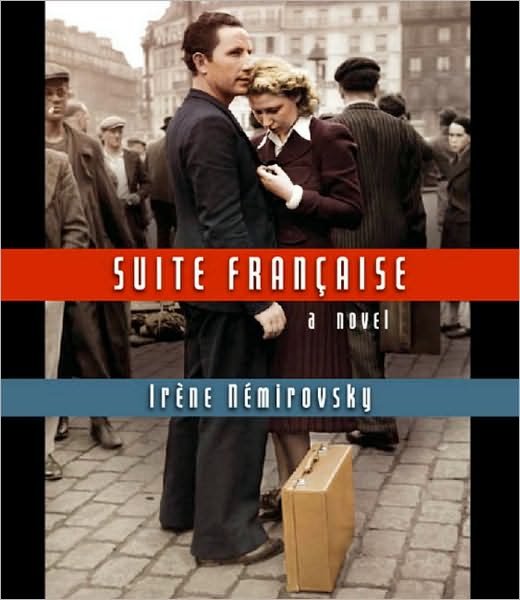
guest review: Suite Française by Irène Némirovsky (audio), trans. by Sandra Smith – from Pops

I have an exciting guest reviewer today: my father. He’s off for the season now – he leaves Houston for the hot months (must be nice to be retired!) and does all his favorite things: running, riding his bike, camping and hiking and visiting beautiful outdoor settings all over. Not to mention, visiting all the great craft beer and brewpubs he can find. He’ll settle for a few months at a time in some hip small town with the right combination of culture, outdoors, and beer; and he’ll move on for the next attraction. This summer I sent him off with a small collection of audiobooks for all that driving, and he has hesitatingly agreed to see about writing up his reactions to them for me to post here. Today he’s sharing with us his thoughts on Suite Française by Irène Némirovsky. Pops, you’re on.

This is not a major work, but is indeed unique, intriguing and noteworthy in a number of respects.

Synopsis: this is a work of fiction written contemporaneously with the author’s own experience during the 1940 German onslaught in France and the subsequent occupation and collaboration. Unlike many journal-type works from the period, this is stylishly written with a now-familiar formula using a cast of fictional, intertwining characters to personalize incidents and experiences amidst real-life events. (Among a number of intriguing questions raised by this work – was this formula at all established at the time?)

For me, this reading was reminiscent of Winds of War (Herman Wouk, 1971); while not nearly as ambitious in scope (actually, a strength), Suite Francaise was as engaging both for the characters as well as for revealing historical nuance. I thoroughly enjoyed it, spent time reflecting over it, and was left wishing for the narrative to continue.

So – what’s exceptional about it?

First, much of the impact derives from knowing the author’s own story and how the book came to life. Born 1903, she was a Russian Jewish immigrant to France (1918), converted to the Catholic Church (1939), published numerous works of renown before the war (including one brought to film), was denied French citizenship in 1938 due to Jewish heritage, and has since been criticized for being a self-hating Jew. She was in the course of writing this work as events unfolded, expecting to create a novel in 5 parts. She finished two parts, was denounced by French collaborators and deported to Auschwitz where she died within a month. Many more of her writings were published since the war. But her daughters retained this notebook manuscript, keeping it unread until 1990 due to anxiety over the expected pain of reading her wartime “journal” – only then, before donating the pages to an archive, did they realize what powerful words those pages held. Written 1940-42, it was published in 2004, acclaimed, translated and read internationally.

Reading with this background, there are numerous elements that may gain impact or raise questions either in the context of her own experience or a clear sightline to contemporary thinking of the time.

  • There are a number of musings by characters and narrator about the future during and after the war that raised chills for me knowing they were written so early in the war.
  • The story contrasts individuals’ different experiences of war, from common civilians feeling powerless and distant from the passions of aggression versus the anonymous, indistinct elites and politicians driving the conflict.
  • She sharply depicts still-thriving class contradictions that threaten to surmount the national conflict: aristocrats of mixed national heritage, communists, resistance fighters, the Church, city vs provinces, villagers vs farmers.
  • There is one passage that strongly evokes scenes from Lord of the Flies. This includes one of several “arbitrary” non war-related deaths in the story. I was left wondering about the origin and meaning of these.
  • Aristocrats and other characters tending to be collaborators make reference to their sympathies opposing the advance of Jews, communists and Freemasons (a triad central to Nazi propaganda). Freemasons?
  • How the French characters respond to the war depends greatly on whether they experienced the “first war” only 25 years (and one young generation) earlier, or the 1870 war (with Prussia, resulting in a victorious German Empire); for the entire society the immediacy of both was stunning.
  • As often occurs with translated works (and in this case the separation of 60+ years), numerous passages had me wondering about the author’s full meaning.

Well you’ve sold me on needing to read this book; and I certainly didn’t know any of that backstory, which does indeed enrich the experience. Thanks for the guest post! Please do give us more as you keep listening!

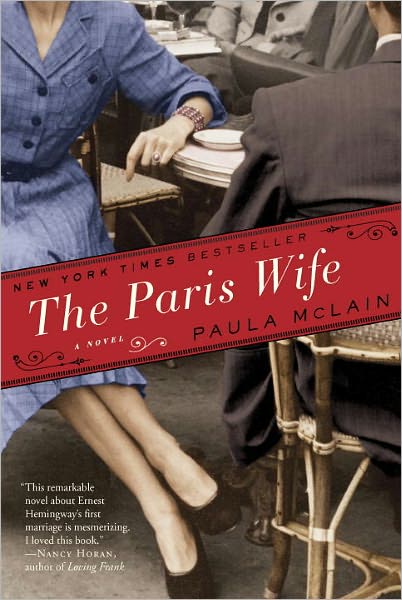
The Paris Wife by Paula McLain

Ahhh. This was really a joy and a pleasure to consume. I’m just sorry it’s over.

(Let me apologize in advance for a lengthy post today, but I have a lot to say about this book.)

Ernest Hemingway is my greatest literary obsession; I’ve certainly loved, and returned to, and reread, and studied other authors, but Hemingway has been the love of my reading life. Certainly, that was a large part of the appeal of this book: to come home to familiar and much-loved territory. We all know that feeling, I think: visiting an old neighborhood, hearing a song from one’s happy youth, telling old friends the same old stories of shared memories.

So, as I’ve said, part of the luxuriant pleasure of this book was all the intertwining threads of familiarity. I have recently been reading By-Line: Ernest Hemingway, a collection of his newspaper and magazines stories and dispatches, many from the Hadley era of his life. I’ve read 3 or 4 biographies, and piles of his novels and short stories, and nonfiction/memoirs like Death in the Afternoon (about the bullfights he saw) and A Moveable Feast (about his life in Paris with Hadley). And I just yesterday purchased The Garden of Eden, a novel published posthumously (and controversially edited by his surviving family), about a couple who becomes a triangle on the beaches of France and in Spain. I read it years ago but wanted to own my own copy. I remember really loving this book, although it’s surrounded by critical ambivalence and debate; this is where Hemingway most directly ventures into gender-changing, gender ambiguity, cross-dressing, bisexuality, threesomes… and all sorts of interesting and disturbing subjects linked by some biographers to Hemingway’s mother’s tendency to dress him up as a little girl when he was young. I find it all fascinating.

my Hemingway library at present


Hadley Richardson was Hemingway’s first wife; they married when he was just 22, and she was 29, and surprised at herself for landing such a vibrant, popular, ambitious young man. They took off for Paris quickly, and shared the early years of Hemingway’s career, including the publication of Three Stories and Ten Poems, In Our Time, and The Sun Also Rises, his first novel and the one that really launched his career. They also shared poverty and insecurity, a number of hardships, an unstable but scintillating circle of famous friends, and an unplanned pregnancy. Their story ends (I’m not giving anything away here, it’s history) when Hemingway begins an affair with Pauline Pfeiffer, who will be his second wife (who will be thrown over for the third, who will be thrown over for the fourth, who will hear the gunshot when he commits suicide just before his 62nd birthday).

So, as I’ve said, a large part of the joy of this book for me was sharing so intimately in the life of someone I feel I know well, and whose work I love. But there was a real danger there; for if it had been done badly or in poor taste (overly sentimental or maudlin, or vindictive towards Hem the womanizer) or inaccurately, imagine my upset! With this subject being so near to my heart, the standards were very high.

Paula McLain has my gratitude and admiration, because she’s done beautifully! This is a gorgeous novel. Her writing style (in Hadley’s voice, in first person) is a bit like Hemingway’s, although not quite so sparse. She paints pictures with short brush strokes. Hadley’s character is an interesting blend of strength and weakness (which is an observation she makes about Hem, too); she repeatedly bemoans her un-modern tendency to obey and bow to her difficult husband, compared with the women around her and their new-age relationship rules. She “lets him go” to Pauline without a fight, from the perspective of several mutual friends. But I think she maintains a certain dignity, and not just in her defeat at the deceitful Pauline’s hands. And at any rate, her voice is clear and authentic and emotionally revealing without being sappy. She seems to be honest with herself, and with the reader. In many ways this is a novel about a woman struggling to find and maintain her own identity in the unique setting of 1920’s expatriate Paris, and while being a loving wife and mother. In this sense it wouldn’t need to be about Hemingway; it’s a woman’s story, and it’s important without the celebrity. It reminded me a little of Kate Chopin’s The Awakening, or The Painted Veil by W. Somerset Maugham.

I loved how McLain (or Hadley) used some of Hemingway’s own rhetoric about truth and turned it back around on him. For example, on page 230, Hadley is dealing with her feelings about being completely left out of the book, The Sun Also Rises, when all the others present made it in as characters (none flattering):

I was incredibly proud of him and also felt hurt and shut out by the book. These feelings existed in a difficult tangle, but neither was truer than the other.

Hadley was a complex and mostly sympathetic character; I got frustrated with her here and there for not standing up for herself a bit more, but she was so authentic and real and human, I mostly was able to take her as she was. Hemingway was not so sympathetic, which is also very authentic and real. He was a cad towards the men and women in his life, pretty consistently. He was also very lovable, which is why so many men and women came back to him over and over for more fun and abuse. He was, as Hadley says on page 311,

such an enigma, really – fine and strong and weak and cruel. An incomparable friend and a son of a bitch. In the end, there wasn’t one thing about him that was truer than the rest. It was all true.

Again with the truth of the thing, which Hem himself loved to cite.

What a work of art this book was, and how evocative of emotions. It was exhausting and cathartic. Is my reaction colored by my love of all things Hemingway? Yes. But my standards were also raised almost impossibly high, so please take me seriously when I give McLain an A+, and thank you, ma’am.