Maximum Shelf: I Am You by Victoria Redel

Maximum Shelf is the weekly Shelf Awareness feature focusing on an upcoming title we love and believe will be a great handselling opportunity for booksellers everywhere. The features are written by our editors and reviewers and the publisher has helped support the issue.

This review was published by Shelf Awareness on June 10, 2025.
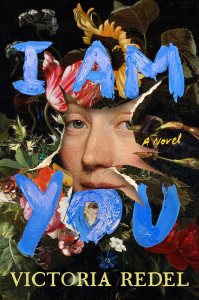

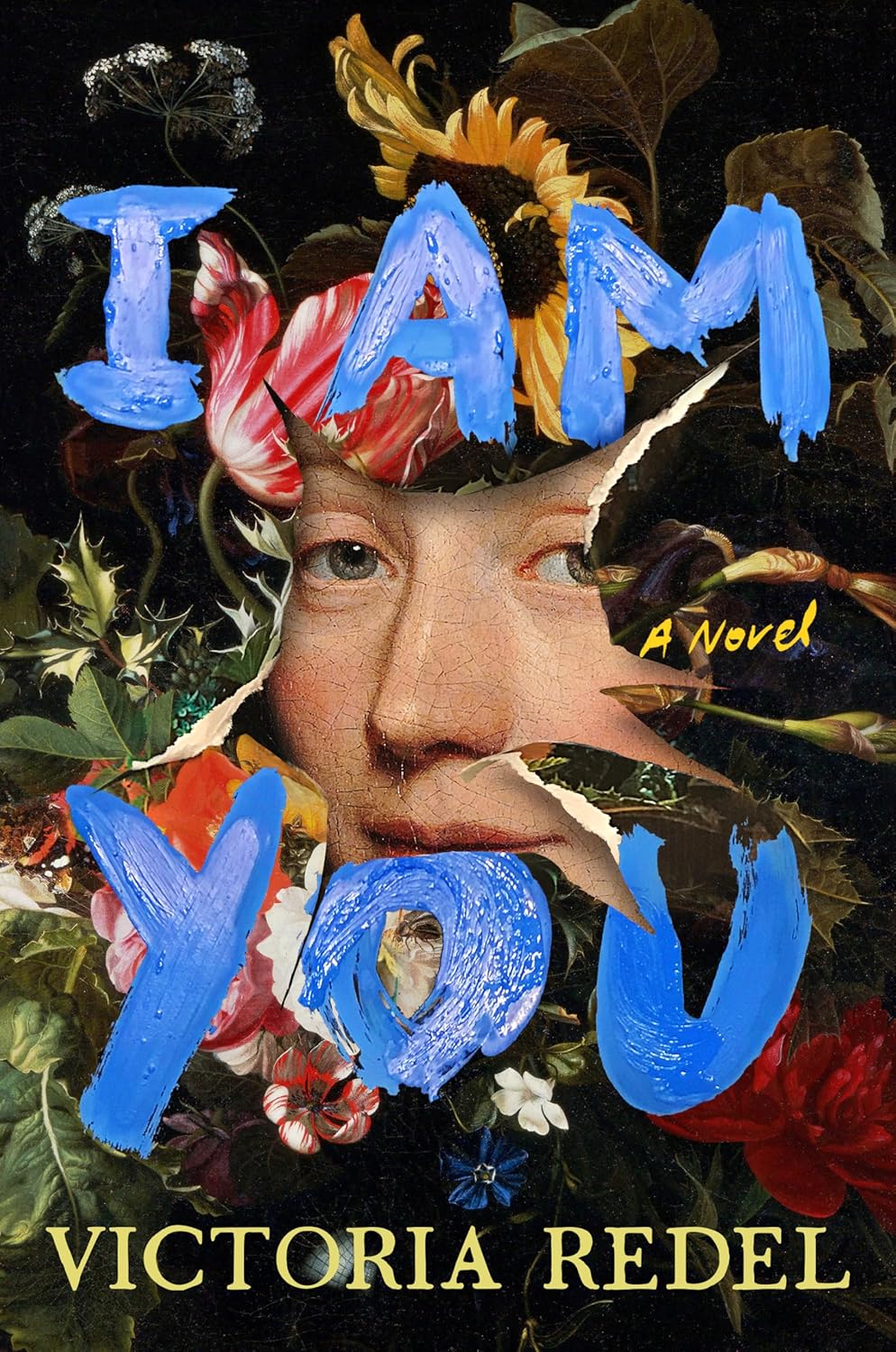
Victoria Redel (Before Everything; The Border of Truth) presents a bold, poignant historical novel about art, love, power, and authorship with I Am You. In the 17th-century Dutch Golden Age of painting, two women with greatly contrasting social and economic status achieve enormous closeness. One is a successful still life painter, the other her maid and assistant. Through their shared story, Redel finds room to muse on art and observation, the wonders of paints and pigments, social strata, interpersonal relationships and power dynamics, gender expressions, and much more. I Am You is no treatise; it is firstly a story of human relationships. But like all great stories, it allows for reflections beyond its literal subjects.

The novel opens in the town of Voorburg in 1653. A child named Gerta is put out to work by her family. Because the household where she is to live needs a boy, Gerta becomes Pieter in service to the wealthy Oosterwijcks. At age seven, Pieter is fascinated by the 14-year-old Maria Oosterwijck: “Her particular words. The varieties of her laughter. The concentration of her fingers as she skimmed or flicked the board with a paintbrush.” Pieter is a quiet child and a hardworking servant, gentle with the rabbits he cares for and butchers for the family meals. Maria, an aspiring painter, is permitted to study only still life, a form considered appropriate for “woman’s art.” She compulsively sketches and paints young Pieter at work: he is “the body most available” to a girl forbidden the study she craves. In his turn, and in his fascination, Pieter begins preparing inks for Maria’s use. He collects the materials–black walnut husks, alder cones, willow bark, oak galls, lichen, marigolds–and crafts them into inks and reed pens. In this way, Maria and Pieter grow up together, intertwined by art and separated by their stations in life. Then Maria, bound for Utrecht to continue her studies, peremptorily declares Pieter a girl once more, in order to to take her as her maid to the larger city.

In Utrecht and then Amsterdam and beyond, Maria and Gerta remain joined. Maria is an increasingly successful painter, commercially and socially, despite the significant impediment of being a woman. Gerta, serving as her maid, becomes progressively indispensable as a talented maker of paints and pigments. Eventually, she teaches herself to sketch and then to paint, becoming Maria’s studio assistant in more functions.

Sometimes Gerta still goes out as Pieter: “How could I erase all I’d known as a boy? Why would I? How much more useful to have known the world both male and female, to traverse brazenly with the rude mind of a boy or angle delicately with a girl’s careful polish.” Her gender-bending is a mode of social expediency, more than of self-identity: “Inside both costumes was me.” In this and other ways, I Am You comments on gender in society, which is only one of Gerta’s disadvantages, but Maria’s chief one. Gerta (or Pieter, as Maria will call her in private all their lives) narrates the novel from start to finish, providing a nuanced perspective on their world, with an evolving appreciation of her limits in it. Even as Gerta’s privileges in Maria’s household expand–she has a nicer bedroom, furnishings, and clothing than any maid should expect–she is reminded that she enjoys these advantages only by Maria’s whim.

Their relationship deepens until the two women become partners in every aspect of life, but Gerta remains subservient. Her devotion to Maria is total, so that even when Maria’s circumstances change and she finds herself ever more dependent on her maid, Gerta is glad to provide a broad range of support. But calamities arise, and there may come a time when the subordinate’s need for recognition, for identity, surfaces. Maria has had a painter’s eye for detail in the visual world from a young age, thanks to both talent and training, but it is Gerta who sees the changing nature of all. “Every day since childhood, hadn’t it been my daily job to make one thing into another? Nut into ink. Stone into viscous paint. The chicken I clucked to as I scattered melon scraps became the stew I spooned into bowls. Even myself, a constant transformation–girl child to boy, servant to budding girl, woman to man to woman, maid to painter to lover….” In the end, it is Gerta who will navigate the hardest choices for the two of them.

Redel excels at sensory and imagistic writing, particularly in the thrilling qualities of color, inks, paints, and pigments, and revelatory art. Her descriptions of the sights, smells, and sounds of daily life, food, and housekeeping are visceral. She writes expressively about sex, which in this novel can be both pleasure and communion, and also disturbing–as an abuse of power, and with questionable consent. The canals of Amsterdam, the butchering of dinner, and the disposal of bodily wastes alongside tender caresses and vivid achievements on the canvas: Redel offers compelling descriptions of both splendor and pain.

I Am You is a novel that deals with heavy themes and tough choices. Gerta’s sensitive, incisive perspective often reveals sad and distressing events, as well as the transcendent revelations of creative work. In considering art, love, gender, and class, her story confronts injustice and tragedy as well as beauty. The result is sensual, thought-provoking, and unforgettable.


Rating: 7 rabbits.

Come back Monday for my interview with Redel.

Etiquette for Lovers and Killers by Anna Fitzgerald Healy

A bored townie in 1960s Down East Maine comes into her own when both romance and a series of murders enter her orbit.

Anna Fitzgerald Healy’s debut novel, Etiquette for Lovers and Killers, is a darkly humorous, lighthearted romp of a mystery set in mid-1960s Down East Maine with an unusual heroine. Billie McCadie is a townie in Eastport, on Passamaquoddy Bay, where “fishermen squatting in trailers” abut “Vanderbilts languishing in mansions.” She’s never felt at home with the other locals, who fail to appreciate her sarcasm or her ambition to study linguistics and work in a museum. “I’ve grown up listening to their sock-hop hopes and Tupperware-party dreams, but my aspirations don’t fit in a casserole dish.” Since the tragic death of her parents, Billie, a “twenty-six-year-old virgin,” lives with her grandparents and works as a seamstress at Primp and Ribbon Alterations. Her great thrill, aside from the novels, dictionaries, and etiquette manuals she loves, is checking her post office box for rejection letters responding to her many employment applications to museums around the country.

But then comes the fateful summer when Avery Webster notices her. Billie receives an envelope containing a love letter to an unknown Gertrude, along with an engagement ring. She is invited to a solstice party at the fabulously wealthy Webster family’s estate, where she discovers a freshly murdered corpse–Gertrude. Avery has the potential to be Billie’s first taste of romance, but the strange communications pile up, along with the bodies, in sleepy, previously crime-free Eastport. And Billie leaps into all of it, because “Who needs a life when you’re busy investigating a murder?”

Billie’s wry narration of these events is peppered with wordplay and the occasional footnote commenting (still in Billie’s voice) upon the etymology of “home,” “love,” and “tuxedo.” Chapters are prefaced with relevant quotations from the book of etiquette that belonged to Billie’s mother, which emphasize that even amid a murder case, a sex scandal, and a budding romance, in 1960s Eastport, one must be mindful of appearances and manners. Billie’s never been in such danger, but she’s also never had as much fun, finally coming into herself, gaining confidence, and learning what she might want from life aside from a museum job: “So what if I’ve ended up in a Highsmith rather than an Austen? I’m the main character, and I need to start acting like it.”

Stylish, playful, and more than a little tongue-in-cheek, Etiquette for Lovers and Killers blends intrigue and romance into a perfect cocktail. Billie herself offers a delightful combination of bookishness, wit, and questionable decision-making that will keep readers on edge until the final pages. Healy’s debut is good, not-so-clean fun.


This review originally ran in the May 19, 2025 issue of Shelf Awareness for the Book Trade. To subscribe, click here.


Rating: 6 stilettos.

My Name Is Emilia del Valle by Isabel Allende, trans. by Frances Riddle

A daring young woman and groundbreaking reporter journeys from San Francisco to Chile in the 1890s to investigate a civil war and her own roots in this stirring novel by the celebrated Isabel Allende.

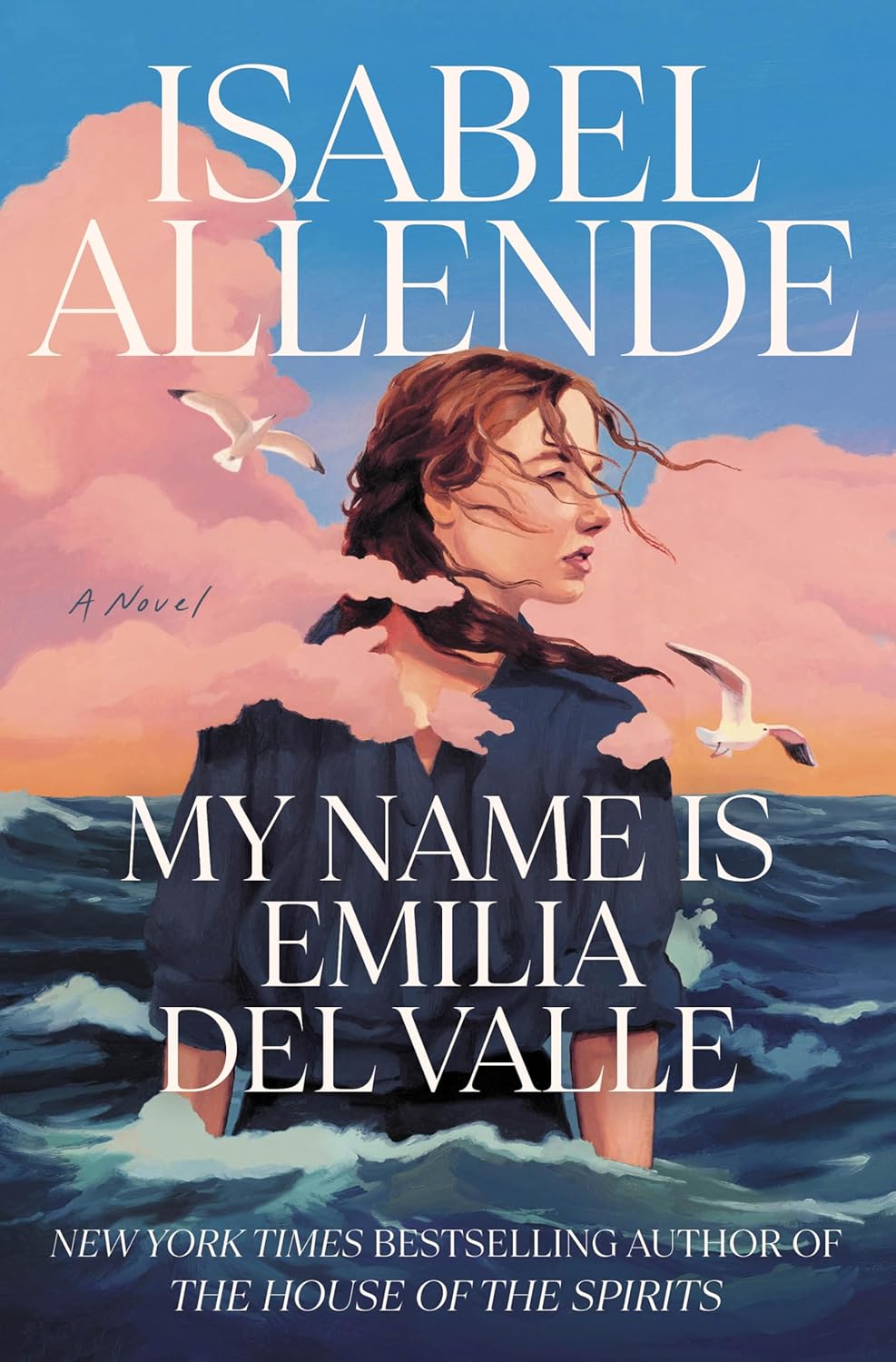
Isabel Allende brings the experience of more than 20 books to My Name Is Emilia del Valle, a swashbuckling tale of the life and adventures of a young woman born in San Francisco in the 1860s. Emilia’s story is exciting, empowering, and inherently feminist, as she travels from California to her father’s native Chile during that country’s civil war, bucking social norms and going wherever she’s told she can’t.

A young Irish novice named Molly Walsh is about to take vows as a nun when she is seduced and abandoned, pregnant, by a Chilean aristocrat. Devastated, she accepts a marriage proposal instead from a colleague and friend in San Francisco’s Mission District, who will be the devoted stepfather, “Papo,” to her child. Molly remains bitter toward the absent father, del Valle, but Emilia lacks for nothing in the loving household where her mother and Papo teach the Mission District’s children, provide bread to the poor, and support her unusual goals.

Emilia first makes a living by writing sensational dime novels of “murder, jealousy, cruelty, ambition, hatred… you know, Papo, the same as in the Bible or the opera” (under a pen name, of course). Next she decides to become a journalist, launching a newspaper career, soon traveling to New York (where she takes her first lover and otherwise broadens her worldview) and then abroad: Emilia journeys to Chile to cover the civil war as a reporter for San Francisco’s Daily Examiner. Female reporters are vanishingly rare, but as war correspondents, unprecedented; and Emilia del Valle writes under her own name. She is also motivated to fulfill her mother’s lifelong wish to track down her biological father, del Valle. Emilia finds great danger as well as the opportunity to define her identity for herself. The adventures she encounters along the way fill Allende’s pages with violence, love, high society, and human interest.

As she has in previous acclaimed novels, Allende (The House of the Spirits; Inés of My Soul; Maya’s Notebook; The Japanese Lover) applies riveting storytelling to an exploration of history through the lens of a fictional heroine. Allende’s language, and Frances Riddle’s translation, is evocative in its descriptions of Chile’s lovely landscapes, a young woman’s complicated love for her family, and the horrors of the battlefield, with which Emilia will become painfully familiar. This enthralling novel leaves Emilia, still young, in a position of some uncertainty: readers may hope for more from this plucky protagonist in a possible sequel.


This review originally ran in the April 3, 2025 issue of Shelf Awareness for the Book Trade. To subscribe, click here.


Rating: 7 stitches.

The Lilac People by Milo Todd

A trans man survives with a small chosen family, from Berlin’s lively queer scene in 1932 through the Holocaust and the Allies’ hostility, in this moving historical novel.

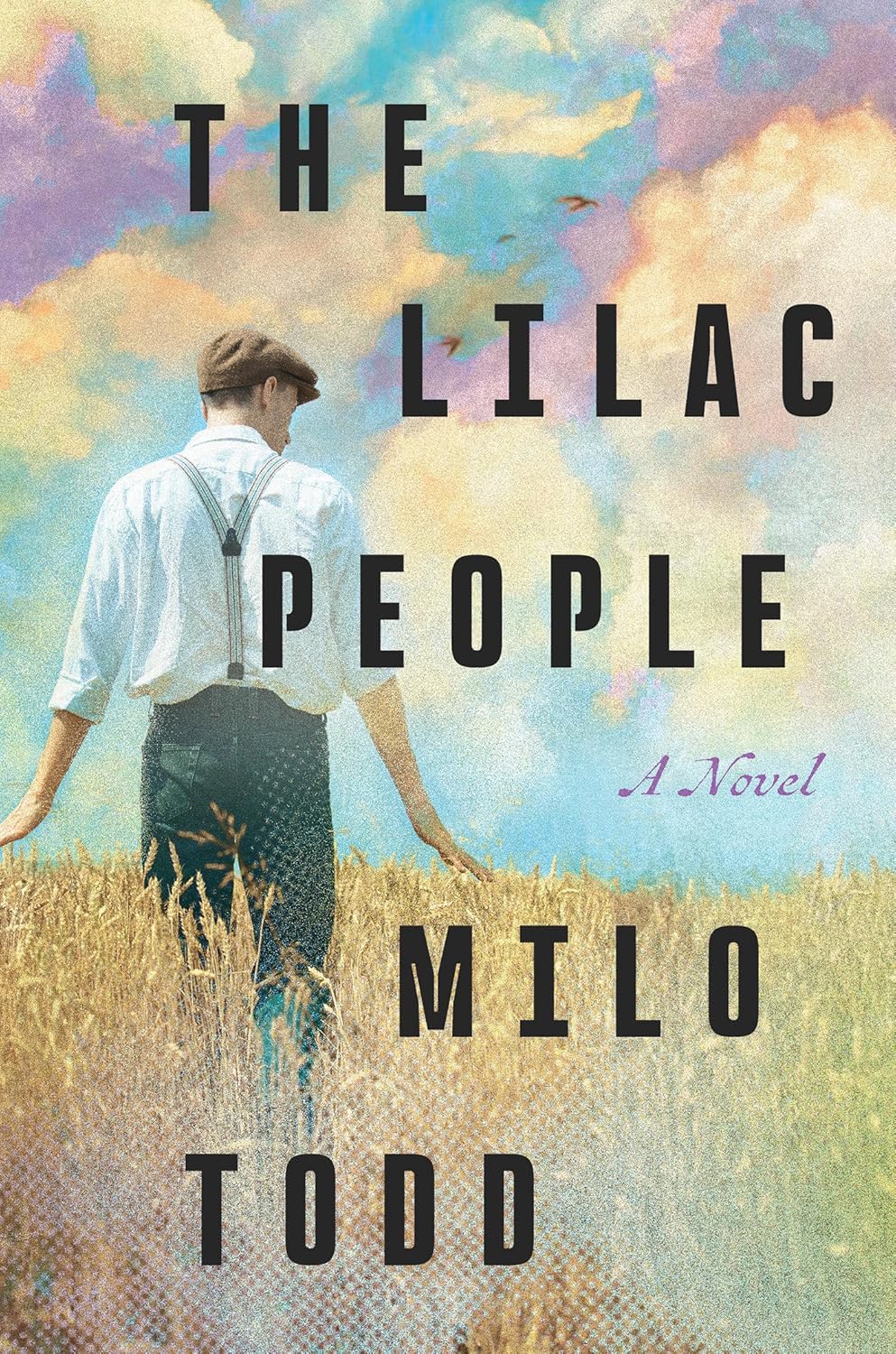
With The Lilac People, Milo Todd delves into the nearly lost history of trans people in the Holocaust. Integrating imagined characters with historical research, Todd brings humanity and specificity to atrocities that are still being uncovered. The heartbreaking result honors love and friendship, and ends with hope for one built family of survivors.

The opening pages find Bertie on the outskirts of the German city of Ulm in 1945. He has ridden out the war with his partner, Sofie, “on a little farm that was not theirs,” growing vegetables, raising chickens and one cow. It is an unadorned but not unpleasant life, and they know they are lucky. “The apple blossoms were beginning to show on their three trees at the far edge of their land, pollen spilling out as they blushed.” Then, weeks after the news that the Allies have freed camp prisoners, Bertie finds a body in the garden. Dressed in rags from the camp, the young man is alive, barely. “[The Allies] sent all the pink triangles to jail. And all the black triangles that qualified the same,” he tells Bertie. He wears a black triangle. He is a trans man–like Bertie. This changes everything for Sofie and Bertie, who will be greatly endangered by their choice to hide and protect Karl.

But Bertie finds that he must help, to confront his survivor’s guilt, his failure to protect his own community, and (as a hostile Allied lieutenant accuses) his complicity in Germany’s crimes. Karl’s appearance takes Bertie back to 1932 Berlin, where Bertie assists Dr. Magnus Hirschfeld at the Institute for Sexual Science and is a member of a vibrant queer and trans community, with a tight-knit group of friends that is lost on the Night of the Long Knives. Karl’s existence brings hope, guilt, and memory. To save Karl and themselves, Bertie and Sofie must leave the farm’s relative safety.

The Lilac People is filled with music, with an emphasis on the queer anthem “The Lilac Song.” Sofie is a pianist who gives Karl piano lessons alongside Bertie’s instruction in “how to transvest,” or pass as a cis man. The song is an important piece of history and means of accessing a pride in community that’s been all but destroyed. Notes from the author detail the research required for this writing, what is true history and what is fiction, and just how limited is the historical record on Germany’s queer and trans communities in this era.

The Lilac People is emotionally wrenching, but also lovely in its details, the humanity of its characters, and the resilience and hope at its end, when a fresh start seems possible. Todd has made an enormous contribution to historical fiction with his own research and this beautiful, touching narrative.


This review originally ran in the March 25, 2025 issue of Shelf Awareness for the Book Trade. To subscribe, click here.


Rating: 7 seeds.

North Woods by Daniel Mason

A gift from a dear friend, this novel is different. It could be categorized as a collection of linked shorts, in various formats (formally playful, you might say), including epistolary. The stories that make up North Woods are connected across history by place: together, they track a single location, a small valley in what will become western Massachusetts, from early colonial America until the more-or-less present and into the future. We are used to novels and stories being connected by character or plot. We are familiar with stories that center place heavily – I’m thinking of Rebecca, Housekeeping, The City We Became, The Rope Swing. This one felt a bit more… kaleidoscopic.

They had come to the spot in the freshness of June, chased from the village by its people, following deer path through the forest, the valleys, the fern groves, and the quaking bogs.

Fast they ran!

So opens the novel, and it takes several paragraphs until the reference to ‘harquebuses‘ (I had to look it up) gives us a clue as to setting in time. I loved how the fens and meadows, bramble and thickets, bear caves and tree hollows could have been anywhen. The couple who run remain nameless, and we learn very little of their story in their four-page chapter, but we see them stop in a valley: “a clearing, beaver stumps and pale-green seedlings rising from the rich black ash.” “Here,” says the man, and there they stop with their chicken and their squash and corn seeds and fragments of potato. And scene.

Subsequent residents – most of them human – find the log and stone hut built by this original couple, experience joys and hardships there, and add to that structure. A veteran of the American Revolution establishes an apple orchard. His twin daughters, after his death, grow old preserving his legacy and bickering with each other, unto a shocking end. A mountain lion briefly occupies the abandoned dwelling, hoarding her kills. A slave catcher hunts other prey in the area, eventually homing in on the house in the overgrown orchard, but will not find what he seeks. A painter finds a haven there, in a gorgeous valley where he can observe nature and work on landscapes and studies of birds nests, fungus, and trees; he pursues a forbidden love. In his old age, a nurse comes to assist him, and finds a love of her own that will fare no better. (It begins to feel like the home in the valley, at this point with many additions and “improvements,” might be a site of bad luck.) A mystic plies her trade, claiming to drive out a haunting, but has bitten off a bigger haunting than she’s realized. The chestnut blight settles in. A mother struggles to care for her disturbed son, who is schizophrenic, or haunted, or maybe both (?). The son wrestles with his delusions, or, his heightened knowledge of reality; his sister, an academic on the west coast, grapples with her brother’s life’s work. A newlywed couple lives out a fantasy, and a bark beetle expresses its lusts in parallel, in one of the weirder sections of this novel (and that’s saying something). (The chapters that feature nonhuman characters – spores, beetles, panthers – are delightfully immersive, but also somehow inherently creepy, in a way that feels anthropomorphic.) A lonely old woman narrowly avoids a dangerous con artist, a crime writer discovers an ancient grave, a metal detectorist goes seeking evidence, and a graduate student searches for spring ephemerals but encounters a ghost. The world turns.

It was a fascinating experience to sink into this place. There were not many characters or episodes to like or even especially enjoy; there was often a sense of watching something disquieting take place. I definitely loved the consideration of place over time, the natural world, and the different ways we interact with it. I loved the orchardist, the painter, and the graduate student most of all. I do love a zoom in on a procreative beetle. It was a disjointed experience, one I’ll not soon forget, but also don’t feel a firm grasp of. Maybe I need more time out of this book to figure out what it did for me. Maybe this is an instance of the author demonstrated prowess for its own sake. (As ever, your mileage may vary.) If you get into it, please do let me know what you think.


Rating: 7 antlers, turtle shells, and bird eggs.

The Case of the Missing Maid by Rob Osler

I thought this one was good fun, with a perfect ratio of good values blended in. It’s an amateur-sleuth sort of mystery: in 1898 Chicago, Harriet Morrow seeks to improve her lot in life (earning potential and freedom, both) by applying to work as a detective at the Prescott Detective Agency. Female detectives are quite rare, but the Pinkertons had one recently, and why not Harriet? With her unadorned clothing style and men’s hat and shoes, Harriet already turns heads; she may as well pursue a path that feels more natural than the secretarial pool. And she has a household to support: since the death of their parents and Harriet’s coming of age, she cares for her sixteen-year-old brother as well as herself at just twenty-one years.

The Prescott Detective Agency takes her on, but no one seems exactly to expect her to succeed. The case she’s given first is a bit of a dud: her boss doesn’t believe it for a minute, but his elderly next-door neighbor claims her maid has gone missing, and to mollify his wife (who loves the old woman) he asks Harriet to look into it. Surely the maid has merely taken an extra day off, or the old neighbor lady is senile to begin with. But Mrs. Pearl Bartlett turns out to be a firecracker: unconventional, perhaps a bit like Harriet herself, not a bit dim, and very sure of Agnes Wozniak’s disappearance. She also has misheard our protagonist, and misread her large stout frame and men’s hat: she calls Harriet Harry, and the nascent detective finds she likes it.

Unfortunately for Agnes, but rather fortunately for Harriet, the maid does indeed appear to be missing, and quite possibly in real danger. Harriet has herself a case, and a chance to prove herself, although she is very much learning on the job; she has lots of moxie, and a certain amount of natural instinct, but there is much about the work of detection that she’ll need to figure out. Luckily, the Prescott Detective Agency offers one friendly face: Matthew McCabe seems willing to help. Armed with a mentor (and eventually, properly armed), Harriet will learn her new profession, hopefully find the missing maid, earn a proper living for herself… and maybe learn a bit about underground queer Chicago along the way.

The historical aspects to this novel were great fun, even when frustrating, from Harriet’s clothing conundrums (she does not like women’s styles. but doesn’t really want to impersonate a man. but their options are just so practical, comfortable, and natural feeling…) to the infuriating dismissals she faces from pretty much everyone around her. I was especially delighted to lean into not only a historical inner city Chicago, populated by immigrants and the working class, but a queer underground, including their nightclubs and practices and (nearly literal) secret handshakes. I really appreciated Osler’s Author’s Note, where I felt he did a good job of clarifying what came from research and what was just fun to invent. Terminology, for example, can be difficult: folks we might recognize as queer or as lesbian today would have been less likely to use those terms in 1898. A nightclub that hosted both drag queens and drag kings for the same event is perhaps a bit of a stretch, but it works so beautifully here, both for plot and for fun.

I loved the mystery story itself, and absolutely fell for Harriet, the awkward but admirably strong woman at the lead. I loved the history and the queer framing, and especially that intersection. Just a hell of a tale all around; I can’t wait for more Harriet Morrow. Could hardly put it down; nonstop fun; do recommend.


Rating: 8 silver bells.

The Café with No Name by Robert Seethaler, trans. by Katy Derbyshire

A humble café in post-World War II Vienna serves as backdrop for all the large and small dramas of everyday life in this subtly scintillating novel.

The Café with No Name by Austrian writer Robert Seethaler (The Field; The Tobacconist) opens in 1966 Vienna. Robert Simon is 31 years old and about to embark upon the quiet dream of his lifetime. It’s his final day at the market where he’s worked for seven years, as he begins to clean out and shape up a long-empty café across the street. Simon is a solitary, steady, and kind man who was orphaned as a young child during the war and is now a reliable worker who keeps to himself. “For a while he worked as a glass clearer and brush boy in the Prater beer gardens, and perhaps it was there–as he roamed between the tables in search of empty glasses, chicken bones and cigarette stubs in the light of the coloured lanterns–that he first felt a nascent germ of yearning: to do something that would give his life a decisive affirmation. To one day stand behind the bar of his own establishment.” He realizes this modest ambition with the café on the edge of the bustling market, where Simon serves blue-collar workers like himself. He offers beer, wine, coffee, and raspberry soda; bread with drippings and gherkins; and a place of respite. He is soon joined by a single employee, a loner like himself. Mila, too, finds a home in the café with no name.

Seethaler’s tender novel follows Simon and his café for the 10 years that they operate, until a change in the building’s ownership pushes the small business out again. These years see Simon’s Vienna neighborhood rebuild from postwar austerity, its population and workforce swell and change, and cultural patterns begin to shift. The café is a microcosm of these evolutions.

The Café with No Name does not have a plot filled with action, conflict, and resolution; instead, it focuses on mundane details of life. “Simon couldn’t help smiling at the thought of all the lost souls who came together in his café every day.” An aging prizefighter, two older ladies who drink and chat in the afternoons, the cheese shop proprietor and her painter boyfriend, and Simon’s friend the butcher are among the regulars; they and others experience death and dismemberment, quiet violences, loss, and alcoholism, but also uplifting moments of humanity, friendship, and love. There are, remarkably, no villains in this novel, only people struggling against ordinary human challenges. While Seethaler’s characters face significant difficulties, the story never feels grim, but rather steadfast and even hopeful. Katy Derbyshire translates Seethaler’s prose from the German with calm delivery, charming descriptions, and understated humor. This lovely novel sweetly and simply emphasizes built family, resilience, and rebirth.


This review originally ran in the January 14, 2025 issue of Shelf Awareness for the Book Trade. To subscribe, click here.


Rating: 7 paintings.

The Mists of Avalon by Marion Zimmer Bradley

I received a special copy of this book from one of my very best friends. It was originally published the year after I was born – not new, but an important classic. The Mists of Avalon is a ~900 page retelling of the legends of King Arthur, his Companion Knights, including Sir Lancelot, and the Round Table – but from the perspectives of the women involved, including Queen Guinevere (here Gwenhwyfar), Arthur’s mother the Queen Igraine and her sisters, Queen Morgause and Avalon’s Lady of the Lake Viviane… and most centrally, Arthur’s half-sister and lover, Morgaine, who we have also known as Morgan la Fay or Morgaine of the Fairies, and Viviane’s sometime successor as Lady of the Lake. Among others. (Sorry. These name changes are a bit to follow. Lancelot here is Lancelet, etc.)

I generally stay away from books of this length in recent years – I don’t know when I last read a book of 900 pages. It took some adjustment around paid reviews and deadlines, but I’m grateful I was able to find time for this one. It took a little over two weeks, while crocheting a blanket (!) and spending days on an excavator in the woods! But was worth every minute. I enjoyed being able to sink into a story this sprawling, which does call for some in-depth engagement, as we follow generations and lifetimes, a quite convoluted family tree, and shifting allegiances (and names).

My own background with the Arthurian legends is weak, although I definitely loved T.H. White’s The Once and Future King when I was young (high school? earlier still? that one over 600 pages), and I remember an illustrated book of the tales of the knights of the Round Table at some point… I have a loose sense of the romance and idealism of Arthur, Guinevere, Lancelot, and Camelot, but brought no muddied plotlines to this reading. It seems The Mists of Avalon is understood partly as corrective to Morgaine’s reputation as evil sorceress from previous tellings.

There’s no question that Bradley’s is a big, complicated, engrossing story. Its prologue begins with a brief, italicized reminiscence of Morgaine’s from later in her very long life; these retrospective views will punctuate the book. Then we move (with book one, “Mistress of Magic”) to Igraine, who will be mother to both Morgaine and Arthur, when she is a teenaged bride to the much older and coarse Duke Gorlois of Cornwall. Igraine was raised on Avalon, that magical, misty island where an ancient, pagan, woman-centered religion has long been fostered. She has some priestess training and some of the Sight, but it’s been her duty to be a wife and a mother: her daughter Morgaine is Gorlois’s child, and she will later marry Britain’s High King Uther and have a second child who will become the fabled King Arthur. So we begin with Morgaine’s infancy and before Arthur’s birth. I will begin fast-forwarding here… much has been written about this book, and you don’t need my plot summary.

Morgaine will become a priestess of Avalon, and she will become very powerful indeed, but will have to serve the Goddess in ways that pain her deeply. In four parts – “Mistress of Magic,” “The High Queen,” “The King Stag,” and “The Prisoner in the Oak,” we see her play the role of the maiden, the mother, and the crone. She is fierce in her protection and promotion of the religion in which she is trained. It is central to the story of Arthur’s reign, in this telling, that (under Gwenhwyfar’s influence) he shepherds Britain toward a homogenous Christian faith, away from a diversity of indigenous traditions, including the goddess cult of Avalon, and Morgaine fights that transition mightily. Her story is, I think, a tragedy, and includes strong threads of that classic tragic element, hubris (a term Arthur invokes once).

Bradley has chosen to tell this story mostly in a series of close-third-person perspectives, so that the reader can see the thoughts and feelings of one character and then another (the exception being those italicized first-person moments with an older Morgaine), so that we understand that each is dealing with insecurities and ultimately, mostly, good intentions, which heightens the sense of tragedy: that both Arthur and Morgaine want the best for Britain, that Viviane knows she will hurt her beloved niece Morgaine but feels it necessary for the greater good. It is a very fine literary trick to set up no absolute villains or heroes, but rather to offer us flawed humans who try hard and fail. It is hard, though, not to sympathize with the side that wishes to preserve its tradition as one of several, rather than the one that wants to squash out all but one religion.

There are many plot threads, romances, love affairs, couples that produce children (all-important heirs) and those that don’t. There are many themes, a number of which involve women’s various roles in society: to bear children, to be chaste, to support their mates, to participate in political machinations (or not), to be involved in one religion or another. An important difference between the rites of Avalon and those of Christianity centers on sex, which is either a grievous sin in all contexts except strict (marital) reproduction, or a beautiful celebration of life, the natural world, the God and the Goddess coming together. [Same-sex encounters are not many, but also not absent. No surprise that Avalon and Christianity handle them in different ways.] Morgaine’s tradition is inherently feminist, and at odds with Christianity, in that it holds that women belong to no man and may take lovers as they choose and as serves their worship and their life’s work.

This is a work of fantasy (as in magic and sorcery), and a classic retold, as well as historical fiction, as Arthur’s legend offers a version of how the Great Britain we know today came to be. Bradley’s work offers another take, in which a brave woman undertakes to defend indigenous traditions in a time of political and religious upheaval. The outcome, I think, doesn’t change much, but the way we view the different players involved matters a great deal. It’s also, of course, about human relationships. Morgaine, Arthur, Gwenhwyfar and Lancelet go back to childhood together, and there is a refrain late in the book of recalling the few of them who had once been young together. There’s a pretty strong thread of sympathies between friends, lovers, enemies, and those who move between those categories, even when they wind up killing one another.

Bradley’s storytelling is absorbing. It was easy to fall into a world very different from my own here, in the details of women’s lives in royal castles – dark, monotonous, filled with gossip and spinning and sex that’s not entirely consensual, even for privileged women – and in the rapture of Avalon’s powerful priestesses. The mysticism of that religion, the spell of Goddess-blessed sex, and the strong feelings of characters willing to die for their beliefs are all evocatively told. The romance, intrigue and pathos of that famous love triangle between Arthur, Gwenhwyfar and Lancelet is powerful and discomfiting. Heavier scenes are as well written as the light-hearted and humorous ones; Bradley’s characters’ humanity is always present. It was a hell of a journey, and I’m glad to have made it.

Whew. Thanks, Liz.


Rating: 8 scabbards.

The Scholar and the Last Faerie Door by H. G. Parry

H. G. Parry continues to impress me deeply (see previous reviews here). I think this might be my favorite of her books, although The Magician’s Daughter was a feat. (This is not the first year I’ve given two books from the same author a perfect 10 rating: Alix Harrow, Stephen King, and Norman Maclean have each held this spot. Still.)

The book opens with a fateful meeting of the narrator, Clover Hill, with a person who will become one of the most important figures of her life. Chapter 2 rewinds to how she got there. “If it hadn’t been for the Great War, I would never have gone to Camford University of Magical Scholarship. I would never have known it existed.” Clover comes from a farm near a tiny village in Lancashire, a humble family background. She was very close to her older brother Matthew, despite five years of age difference, and it was Clover who helped convince their mother to let Matthew go to war, with some misgivings on Clover’s part. And so she carries the predictable guilt when he returns to them after four long years, alive, but scarcely recognizable. His homecoming is preceded by a visit from a fellow soldier who tells the family a wild and unbelievable story: Matthew’s is no ordinary war wound. He has been the victim of a faerie curse.

Families like Clover’s aren’t normally made aware of this fact, but magic is alive and well in the world she inhabits. Its study and practice, however, are reserved for select few magical Families (always capitalized), who possess great wealth and privilege as well as inherited, secret powers. Matthew suffers terribly. His life is in danger. And young Clover, already an ambitious girl who’d hoped to escape the family farm by way of teachers’ college, decides that she will pursue magic instead. A very, very tiny number of students are accepted to England’s university of magical scholarship, if their entrance exam scores are exemplary. Perhaps a tinier number of students even from the great Families are women. Clover will need to be very good indeed. But with the hopes of recovering Matthew’s health – even saving his life – to motivate her, Clover can do great things.

Camford University is located (as you might guess) in a mysterious space accessed by two enchanted doors in Cambridge and Oxford Universities, respectively. It’s a charmed and charming place, and upon first sight, Clover wants only to be a part of the place. Her desperation to save her beloved brother is quickly paralleled by her passion for magical scholarship (at which she excels, despite the oft-repeated claim that only members of Families should be so talented) and her desire to belong to Camford. Her heart leaps further when she clicks into place as part of a foursome of close friends: Hero Hartley, a lovely, glamorous girl, socially gifted and a serious scholar in her own right. Eddie Gaskell, awkward, shy, deeply devoted to plants and the natural world. And Alden Lennox-Fontaine, the golden boy of their year at Camford and beyond. He is physically stunning, impossibly wealthy, clever, graceful – “he was like a burning sun.” In Alden in particular, Clover finds a partner in the study of faerie spells and magic, which has been outlawed since the sensational wartime accident that changed Matthew’s life. The foursome make a project of studying what has been forbidden. Clover wants to save her brother. Hero wants to achieve the kind of academic success that will justify her career as a scholar so that she doesn’t have to marry a rich bore like her father intends for her. Eddie wants to please his friends. It’s not clear what drives Alden to study the fae.

The novel is historical fiction, in that it takes place just before, during and after World War I, reestablishing those events in a world with secret magic held by a chosen few. It’s about academia, the ivory tower that elevates and excludes, while offering a thrilling search for truth and self-betterment. It’s very much about friendship: the less-literal ‘magic’ of finding one’s people after a young life spent feeling alone – the magic of friendship, belonging, fellowship – is atmospheric and thick and real, evoked here in a way that it took me a while to realize reminded me of Tana French’s work in The Likeness or The Witch Elm or maybe The Secret Place. (There are also obvious parallels to the Scholomance series by Naomi Novik.)

As is often true in Parry’s work, there is metaphor available, if one considers that Clover is an outsider by gender, by class, and by not coming from a magical Family – England having a nuance of caring not just about class but about family and ‘breeding.’ We can think of the inherited ability to do magic as another manifestation of class or caste. And it is revealed late in the book (spoiler appears here in white text; highlight to read) that it is not Family at all that confers ease of magical learning, but the inhalation of magical pollen at the various universities of magic around the world. The Families know this, and purposefully keep that pollen to themselves, feeding it (as it were) to only their own, to keep alive an appearance of difference and superiority where there is none. It’s like giving multivitamins to your kids and then pretending they’re inherently better than those lousy malnourished kids down the street. That’s a whole ‘nother level of ugliness.

These issues of caste and injustice, and the idea of who is worthy and who is harmed by being kept out, are revealed and considered in layers as the story progresses. After a youth of yearning to be let in, to belong to Camford, Clover achieves what she seeks, more or less: in later, fast-forwarded sections of the novel, she is a PhD candidate and professor at her alma mater. But continuing injustices will eventually force her to realize that nothing has been resolved by her own promotion except her own personal success (which is tenuous). “The only difference was that the door had let me in, and so I hadn’t questioned who else it was keeping out and why.”

As you might be gathering, Clover and her friends and their secret work on faerie magic wind up involved in larger issues than they originally expect: not only Matthew’s fate but the very world around them are at stake. They must navigate split loyalties, major sacrifices, and big questions of right and wrong. Secrets also exist in layers: the magical world mostly a secret from the larger mundane one that Clover is native to; her studies with her friends on faeries, necessarily a secret from Camford and the magical world; and each of the friends, perhaps, keeping secrets from each other. There is heartbreak in the development and breaking of the friendship bond. More so in the possible breaking up of the world.

I think this is the most brilliant of H. G. Parry’s work yet.


Rating: 10 roses.

A Declaration of the Rights of Magicans by H. G. Parry

A sprawling epic by one of my new favorites, A Declaration of the Rights of Magicians combines history–the 1770s-1790s Age of Enlightenment in England, France and Saint-Domingue–with fantasy. In this alternate history, magical powers are relatively common, but only permitted in Aristocrats. Commoners with a magical Inheritance must be registered and wear a bracelet that will burn them painfully if they use their forbidden powers. The idea of a more equitable world, “one whose Commoners could use their magic freely, not to steal to feed their children but for their own education and enlightenment,” fires the imagination of several reformers the novel will follow in both England and France; chief among these are real historical figures like William Wilberforce, William Pitt the Younger, and Maximilien Robespierre. The abolition of slavery (the recognizable, historical practice of stealing and trading in African people) is a parallel issue for many of the same men. Meanwhile, in modern-day Haiti, an enslaved woman named Fina learns that she holds extraordinary powers of her own, which she will use to advance the cause that is most important to her and her friends: their freedom to move and speak and act, let alone to use magic. In this world, slaves are spellbound by their so-called owners: fed a certain elixir, they are unable to disobey orders, unable even to move or speak of their own volition.

It is an important facet of this story that characters with great and noble values and aims must confront questions about what means are justified by what ends. There is an introduction of dark magic of a kind that has been outlawed – and supposedly eradicated – for generations. There are questions of sticking to one’s principles in the face of certain defeat, versus compromising in profound ways to achieve interim goals. This intersection, again, of fantasy with real history (and very real human struggles) is exceptionally well done.

In over 500 pages, the reader gets to know Pitt and Wilberforce and their friends in London; Robespierre and his in Paris; and Fina and her fellows, before and after Saint-Domingue’s famous slave rebellion. Parry’s setting and characters may be based on history, but she’s absolutely doing in-depth worldbuilding all the same; she has laid out not only the ‘rules’ of this world in terms of its realities (how magic works, who has it) but the laws to be obeyed or broken (who is permitted magic, how the bracelets work, how the court systems function). The relationships – in particular the friendship between Pitt and Wilberforce, which I found the most compelling of the book – are involved and engrossing. The personalities – especially poor, despicable, manipulated Robespierre – are complex. I found Fina to be the least developed of the lead characters, which is an absolute shame; to be clear, she gets the least screen time (cause or effect, chicken or egg?), but still concerning. (I have a vague impression this is somewhat corrected in book two of the duology.) The historical content feels right, and a few quick googles reinforce that impression, but by no means am I sufficiently up on my Enlightenment history to judge. The fantasy is intricate and satisfying. Parry’s greatest strength is in her characters. It only hit me after I finished reading that there is a shortage of women in this story; I am a bit sad about that, too.

I don’t often get excited about an expansive, wide-ranging saga, but if anyone can keep me page-turning for 500 pages, it’s this author. I’ll be reading book two. I’d be even more stoked for more of Uriah Heep or the Daughter, though.


Rating: 7 birds.