Wolf’s Mouth by John Smolens

This breathlessly paced, plot-driven action novel covers a wide range of historical, geographical, and emotional ground.

wolfs mouth
With Wolf’s Mouth, John Smolens offers suspense, intricate plotting, sweeping historical subjects, violence, love, and war. This impressive array of action, introspection, and international settings has something for everyone.

…Click here to read the full review.


This review was published on March 2, 2016 by ForeWord Reviews.


5 hearts


My rating: 7 jars of pesto.

Maximum Shelf: Smoke by Dan Vyleta

Maximum Shelf is the weekly Shelf Awareness feature focusing on an upcoming title we love and believe will be a great handselling opportunity for booksellers everywhere. The features are written by our editors and reviewers and the publisher has helped support the issue.

This review was published by Shelf Awareness on February 24, 2016.
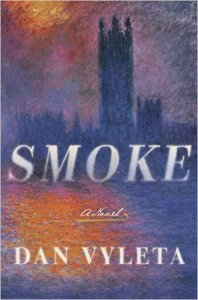

smokeSmoke is set in England, “a century ago, give or take,” a familiar yet strange land where, when the wicked lie, or sin in thought or deed, they release Smoke: thin, white wisps, or oily black and oozing, or yellow or green, depending on the crime. They might smoke through their mouths, or the pores of their skin. “One notices it at the shoulders first, and where the sweat has plastered the nightshirt to his skin: a black, viscous blot, no bigger than a penny. It’s like he’s bleeding ink. Then the first wisps of Smoke appear, stream from these dark little spots, leaving gritty Soot behind.” It is a remarkably convenient way to judge people. Or so it seems.

With this premise, Dan Vyleta (The Crooked Maid) introduces a world of action, intrigue and challenge. Smoke opens in a boarding school for upper-class boys, where they are taught, using the stringent and often painful methods of Discipline, to smoke no more. It is fitting of their class that they show no flaws; being without Smoke or Soot marks one for the aristocracy, and it is taken for granted that the lower classes will “show”: “[their] kind are meant to.” And the teachers always know: when a boy smokes, it leaves Soot on his clothing, which can be removed only by intensive cleaning with lye. The stain is seen in the laundry, and this evidence results in a boy being called before the Master of Smoke and Ethics–or, worse, a tribunal.

Charlie and Thomas became friends upon their first meeting, when Thomas arrived at the school at a later age than most. Charlie is the golden boy who hardly ever releases Smoke; he has money and breeding, and everyone likes him. Thomas is mysterious, and not well-liked. His Smoke is not under control, and his history involves a shame better kept hidden. Julian, the head boy, seems determined to cut him low.

At Christmas, Charlie had thought to bring his new friend home to his estimable family estate for the holiday, but the orphaned Thomas gets a surprising invitation–or is it a summons?–from an uncle he hardly remembers. The headmaster pressures Charlie to accompany Thomas, and requests a report when they return: Charlie, apparently, is to spy on Thomas’s family reunion.

All of this takes place in the first of six sections of Smoke, entitled “School.” Charlie and Thomas remain fast friends, but they will confront many new and frightening realities, and enemies, and even meet newly discovered relations–some friend, some foe. Within just a few weeks, the two schoolboys are forced to reckon with more than a schoolyard bully and the standard methods of Discipline. A lovely young woman aspires to blamelessness: her mother scornfully calls her a nun and a prude. A madman is strapped to his bed. A lady challenges the very order of their world, calling into question the role and the value of Smoke itself, aiming to recruit the Soot of the most evil men and women for a mysterious purpose. And still the plot twists, thickens, roils–dark like Smoke. To pursue truth and good, the boys, now joined by a third companion, will have to venture into the darkest of places: London, a city of criminals, dim and choking with the evidence of their wrongdoing.

Smoke is many things: a fast-racing, heart-thumping adventure tale of good and evil paced with formidable momentum; a collection of lovely characterizations; a series of questions about children and adults, passion and reason, trust and corruption; a marvelous world of mind-bending unreality that simultaneously echoes our own; a philosophical puzzle and an entertaining whirlwind of a tale. Seemingly a plot-driven novel, it nevertheless poses existential problems: If one’s Smoke is imperceptible, as in a coal mine, does one really smoke at all? Which is greater, emotion or rationality? And can one be human without Smoke?

Smoke is told from many perspectives, and as the plot continues to expand, the cast expands as well, eventually spanning social classes to include religious fanatics, compassionless scientists, imitators of virtue, good-hearted working-class misfits–and, possibly, the truly evil. Readers and characters are confronted with revelation after revelation, eventually including the very nature and meaning of Smoke. At a little over 400 pages, Smoke feels both longer and shorter than it is. It begs for a single-sitting read, such is the momentum of the plot. On the other hand, its world-building is so massive and engrossing that the experience feels much larger than a mere novel. Indeed, the scope of what began as a story of individual people and a fantastical premise swells into something both larger than life and intrinsic to life itself.

For moralists, or those who question them; for those pondering the difference between good and evil, or whether such a dichotomy even exists; and, especially, for readers who appreciate a wild and large-scale story of action, adventure, risk and destiny: Smoke will entertain and provoke thought. Thinking and feeling readers alike will be left wanting more.


Rating: 9 sweets.

Come back tomorrow for my interview with Vyleta.

Arcadian Nights: The Greek Myths Reimagined by John Spurling

Classic Greek myths starring Herakles, Theseus and more are reborn in vivid, funny, fresh forms.

arcadian

From his home in a hillside Peloponnesian village, John Spurling (The Ten Thousand Things) charmingly retells some of Western literature’s best-known stories. He balances careful attention to the originals with his own humorous voice, honoring well-loved classics with a fresh eye.

Each section focuses on a hero: Perseus, Herakles, Apollo, Theseus and the ill-fated Agamemnon. Chapters begin and end with Spurling’s own Arcadian vista, on the Gulf of Argos, which inspires his imagination. Through these lenses, Arcadian Nights (re)familiarizes readers with the curse on the House of Atreus, the Twelve Labors and the complexly intertwining genealogies of mortals and immortals in a storied era somewhere between history and myth. Spurling notes commonalities with other cultures’ and religions’ fables, and infuses the established legends with added detail: imagined dialogue lends well-known characters extra personality, and Herakles gets a perfectly apt new piece of apparel. The occasional modernization enlivens the tales, as when the newly dead line up to cross the River Styx into Hades–it “was a little like going through security in an airport today”–but this is no clumsy 21st-century resetting of Aeschylus. Rather, Spurling’s gentle, clever wit complements the originals’ themes of heroism and romance, and their reminders of the importance of hospitality, humility and memory.

Spurling’s passion and enthusiasm and the best of Greek myth shine through this new version, equally appropriate to introduce new readers or reinvigorate the appetite of those who already honor such names as Zeus, Achilles, Athena, Poseidon and more.


This review originally ran in the February 16, 2016 issue of Shelf Awareness for Readers. To subscribe, click here, and you’ll receive two issues per week of book reviews and other bookish news.


Rating: 7 golden apples.

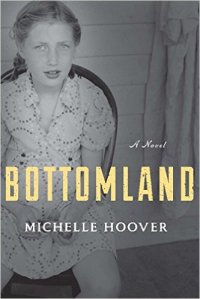
Bottomland by Michelle Hoover

Following World War I, a German American family in the Iowa plains faces the usual deprivations of farm life compounded by wartime prejudice and the mysterious disappearance of two children.

bottomland

In Bottomland, Michelle Hoover (The Quickening) tells the story of an immigrant family’s experience in the Midwestern plains with empathy, understanding and an eye for detail.

Julius and Margrit Hess arrived in Iowa in the 1890s, determined to make their bottomland there support a family. Four daughters, two sons and years later, the story opens with Nan, the eldest child, straining to hold her household together following Margrit’s death. The two youngest girls, Esther and Myrle, have disappeared in the night, from behind locked doors, leaving no note or sign of struggle. In the anti-German frenzy of World War I, the neighbors and townspeople began to harass the Hesses, and good relations have never been established since. Nan and her siblings fear that this local animosity has finally culminated in the fate of the two girls. How does a family negotiate such a loss? “Deaths are commonplace. But a disappearance–it has the scent of murder in it.” The Hesses are now only Nan; her bitter and gnarled brother Ray and his wife, Patricia; brother Lee, well-meaning but easily confused; quietly supportive sister Agnes; and near-silent Father, who ceased his full participation in life when Mother died. They search for Esther and Myrle across the countryside and even as far as Chicago, the city that “sounded like spitting.”

Bottomland is told in alternating first-person perspectives. Nan has sacrificed to keep the Hess family fed and in one piece. Julius brought his wife to a dusty claim, with a dugout to sleep in, to start a family. Lee, the younger and larger of the two boys, was always a little slow, but his injury in the war did him further harm. And finally there are the perspectives of Esther, the unruly child, and then the baby, Myrle. These are the personalities most revealed in the novel, and each of the Hesses is developed expertly, each dealing differently with the rock-hard and dirt-poor life they lead, with the prejudices of their neighbors, and of course with the missing girls, empty seats at the table and the question of food for the winter: “Hope, it was a terrible expense. We couldn’t let anything go to waste. And we couldn’t risk the extra we might set side only to spoil” if the girls did not return.

Hoover offers a lovely feat of exposition, bringing to life the immigrant experience, the hard work of homesteading, the deprivations and bigotries of the war years, and the workings of family, how its members cope and hold onto one another. Bottomland covers a large terrain, with characters who feel warm and close. Readers will be drawn in, and moved.


This review originally ran in the February 12, 2016 issue of Shelf Awareness for the Book Trade. To subscribe, click here.


Rating: 7 accidents.

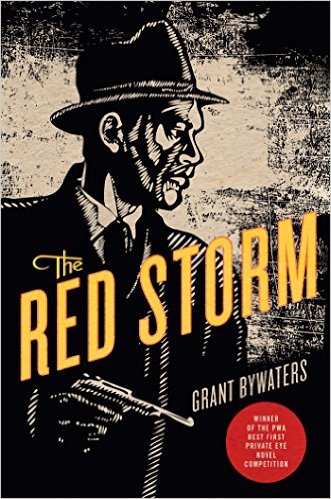
The Red Storm by Grant Bywaters

The case of a disgruntled P.I. with mysterious enemies is set in atmospheric 1930s New Orleans.

red storm

Grant Bywaters employs his expertise as a licensed private investigator in his first novel, The Red Storm. William Fletcher was a 1920s black prizefighter whose ambitions for the heavyweight title were frustrated by the prejudices of his day. After the end of his boxing career, he becomes a P.I. in New Orleans, a city Fletcher credits with a “more lax view on segregation.” He struggles to make a living, though, so when a contact from his old life shows up more than 15 years later requesting help, Fletcher reluctantly agrees to investigate, even though Bill Storm is a wanted murderer. Storm wants to find his estranged daughter. But as soon as Fletcher contacts her, violence breaks out around both Fletcher and Zella Storm. What, exactly, has Storm gotten him into?

Fletcher is a loner, with racial tensions adding to the distinctive anti-authority stance his profession tends to take. Zella is a peppery character, with an ambitious career singing in French Quarter establishments that would rather she just take her clothes off. Bywaters evokes a recognizable New Orleans and surrounding swamps, and the police are hard beset by organized crime, both local and inbound from New York City. Fletcher may be just the man to help out, if he can keep himself and Zella alive. The Red Storm‘s plot is solid, but it is the setting in both time and place that distinguish this classically styled noir P.I. story, which Bywaters flavors with period slang as liberally as a Creole cook spices food.


This review originally ran in the December 22, 2015 issue of Shelf Awareness for Readers. To subscribe, click here, and you’ll receive two issues per week of book reviews and other bookish fun!


Rating: 6 songs.

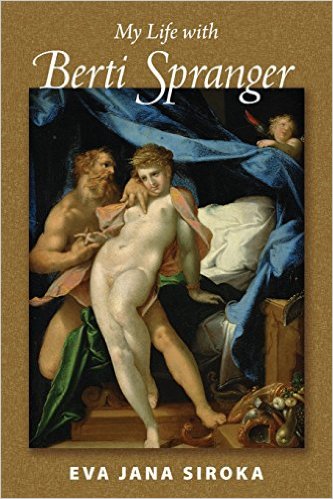
My Life With Berti Spranger by Eva Jana Siroka

An intriguing plot and engaging story highlight this tale of love and art.

berti spranger

My Life with Berti Spranger, a novel by art historian and artist Eva Jana Siroka, stars an art collector who discovers a memoir by sixteenth-century erotic painter Bartholomaeus Spranger. This brings him into contact with a student of history, and Spranger’s titillating art and writing help to prompt the modern pair to romance. This intriguing plot concept is poorly served by disjointed writing, but the glimpses of Spranger’s life in the Flemish court are captivating.

…Click here to read the full review.


This review was published on December 3, 2015 by ForeWord Reviews.

5 hearts


My rating: 5 pieces of disjointed dialog.

The Japanese Lover by Isabel Allende

Isabel Allende’s latest masterpiece explores war, race relations, forbidden love and reconciliation.

japenese lover

Isabel Allende (The House of the Spirits; Maya’s Notebook) presents a beautiful, complex story of love, sacrifice and redemption in The Japanese Lover.

In 1939, an eight-year-old Polish girl named Alma is sent from Poland as the Nazis advance, to live with her aunt and uncle in opulent circumstances in San Francisco. There she meets a Japanese boy her age, Ichimei, who will be her great love, and her older cousin Nathaniel, who will be her best friend. Alma’s story–and her convoluted relationships with Ichi and Nat–is revealed from a distance of many years, when a young Eastern European woman named Irina takes a job at the senior residence Alma has just moved into. Slowly, Irina wins the trust of the prickly elderly Alma, and the unsolicited devotion of Alma’s grandson Seth. These and other characters are wrought with tenderness, humor and nuance in Allende’s characteristic lyric style, as the story of Alma’s love unfolds in a narrative alternating between passionate old age and the passions of youth.

Allende ruminates over lifelong love, in its various forms and bound by destiny; the sacrifices love does and does not compel; and the ugly realities of war and racism–while Alma emigrates to flee war, Ichimei and his family are interned in the United States following Pearl Harbor, and Irina’s personal history is touched by trauma and displacement that is revealed only late in the book. This novel of fervent feeling, reflection and multiculturalism will please Allende’s many fans.


This review originally ran in the November 17, 2015 issue of Shelf Awareness for Readers. To subscribe, click here, and you’ll receive two issues per week of book reviews and other bookish fun!


Rating: 7 gardenias.

The Living by Annie Dillard (audio)

the livingMy difficulty and back-and-forth feelings about Annie Dillard continue with this epic story of pioneer families in my place of residence, Bellingham, Washington.

The Living spans more or less the second half of the 19th century, and it expands to fill all those years and all that space. It is a big story, with lots of characters – several families, over generations – and I’m not sure it ever chooses one or several to center around. This is not a book that benefited from my regrettable new habit of taking months to finish an audiobook: I flailed a little in trying to finish, and I confess a feeling of relief now that it’s over.

There were certainly strengths. Dillard is an inspired writer, some of the time, and there were certainly passages I paused to appreciate, and will share with you here, in a little while. The stories were often moving – individual episodes, that is, within the larger saga – and the characters were often compelling, interesting, diverting people I wanted to get to know better – but again, only for a moment, and then we’d zoom out and on to a different character who was less intriguing. These were all small pieces of a whole that, as a whole, failed to capture my attention. There were moments of glittering, evocative, engaging story or character, but then we returned to a larger, sweeping view that repeatedly challenged me to continue to care. Again, this might work better with a quicker reading. It certainly didn’t work for me in the way I experienced the book.

Witness these shining moments of writing, though…

She lay under mats in the bottom of a canoe once, during the Indian troubles, and Rooney told the Haidas she was clams. Lived in five or six different places, including a stockade. She felt her freedom, reared two boys to manhood, busted open this wilderness by the sea, buried the men on their lands. She saw a white horse roll in wild strawberries and stand up red. She took part in the great drama. It had been her privilege to peer into the deepest well-hole of life’s surprise. She felt the fire of god’s wild breath on her face.

Great imagery there, and a strong retrospective view of the gravity of this woman’s life and what she’s seen.

He had long ago concluded that he possessed only one small and finite brain, and he had fixed a habit of determining most carefully with what he would fill it.

A funny and wise moment.

She read books as one would breathe air, to fill up and live. She read books as one would breathe ether, to sink in and die.

And, who among us doesn’t love such a quotation?

But the whole thing might have worked better if presented as a series of vignettes; the parts of it that I loved were relatively few and brief, with a great deal to be slogged through in between. Dillard created some likeable characters, but it’s almost as if she didn’t like them very much, herself. She asked some interesting questions about humankind and the broader sense of what we’re doing here, but she spent so much time setting them up as sort of clinical questions that she forgot to make me care about them, or about the little creatures involved.

I’m sorry to say this one didn’t work for me, especially (by coincidence) as it came up against Stegner’s The Big Rock Candy Mountain, an infinitely better, more compelling story with its own momentum.

This review was short because I’m a little sick of The Living and very glad to be quit of it. I’m sorry. You can find better reviews elsewhere; me, I’m looking forward now, not back.


Rating: 6 deaths.

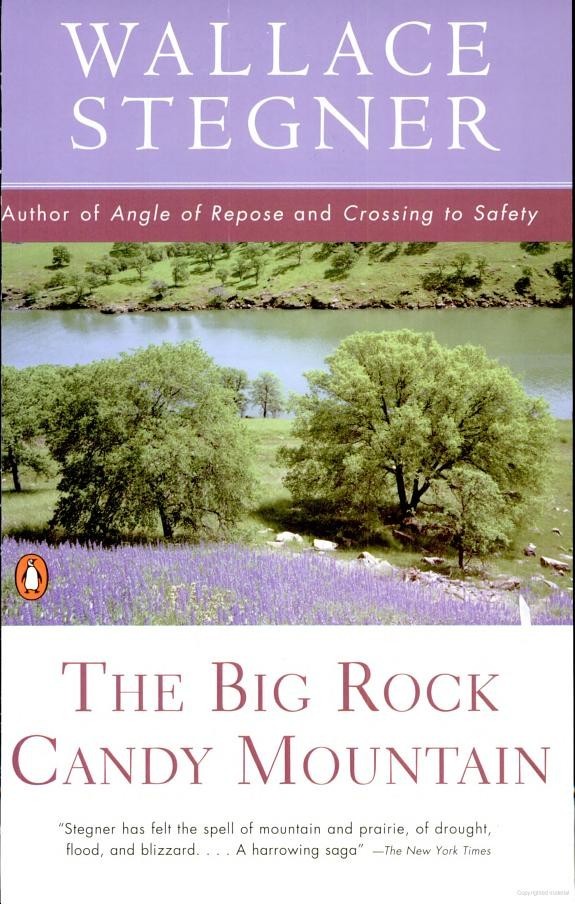
The Big Rock Candy Mountain by Wallace Stegner

big rock candy mountainThe Big Rock Candy Mountain is the story of a family, struggling to make a life in the early days of the twentieth century and bouncing around the American West.

Elsa Norgaard is eighteen years old when she leaves her family’s farm in Minnesota to head west, offended that her father and her best friend plan to wed. She takes the train to her uncle’s grocery in a pioneer town in North Dakota, a journey that makes her feel free but also makes her physically ill. In Hardanger, she meets the charismatic Bo Mason, who runs a blind pig (illegal whiskey joint) and is seemingly talented at everything: baseball, shooting, style. His wild nature and occasional violence frighten her, but she is drawn to his charm and his dreams and promises. They marry, and move.

Bo and Elsa have two sons, Chester (Chet) and Bruce, before we see them next. Already a pattern has been established: Bo, the eternal optimist and occasional romantic, chases his fortune. He pursues chances to get rich quick, to settle his family in the good life they deserve. He believes the developing West offers enormous opportunities for the brave and restless. The title The Big Rock Candy Mountain refers to a hobo folk song of the 1920’s which describes a paradise, where “there’s a lake of stew and of whiskey too” and “the jails are made of tin.” (Stegner refers to the song elsewhere, as in the title of an essay collection, Where the Blue Sings to the Lemonade Springs). One of Bo’s tragic flaws is his stubborn belief in the truth of that paradise, if he could just uproot his family one more time and find it.

He has others. He falters in his sense of responsibility to family, leans perhaps too hard on his constant wife Elsa, and is abusive toward his sons – particularly Bruce, the younger, who is a sensitive boy. A violent event related to Bruce’s toilet training sends Bo away, for years. But Elsa brings her sons back to him when he homesteads in Saskatchewan. Over the years Bo runs a hotel; a cafe; another blind pig; tries farming wheat, bootlegs whiskey on the back roads, and opens a casino. He and his family live in small towns in the Dakotas and Washington, in Canada, for a spell back in Elsa’s hometown of Indian Falls, Minnesota, and later in Salt Lake City, Reno, Tahoe. As an adult, Bruce will reflect,

Since I was born we’ve lived in two nations, ten states, fifty different houses. Sooner or later we’re going to have to take out naturalization papers.

The story is told from all four perspectives – Bo’s, Elsa’s, Chet’s and Bruce’s – at different points, and spans some thirty years. It’s a big story, a saga even, and runs nearly 600 pages. I have been sticking to shorter books than this lately, but I nevertheless found this a relatively quick read, because it has such momentum. Each of these characters is complex and compelling, and the expansive drama of their family life is engrossing, and keeps the pages turning. It references a larger story, of the development of the United States: Prohibition and expansion, cultural evolution.

I read this book in a few days, as I also neared the end of listening to Annie Dillard’s The Living (almost as long, over 400 pages). The latter took me much, much longer, and that review will come up soon; but it made for an interesting parallel. Both cover the frontier days of similar locations (The Living is concentrated on northwest Washington state, which is a small part of the larger setting of Big Rock Candy), and span decades of family life. I shan’t review Dillard here, but I will say that Stegner came out ahead, in terms of sympathetic, engaging characters and story. I found The Living more effortful.

Stegner is a fine storyteller. This novel evokes the mountains and the plains, the droughts and sun and rain and blizzards that the Masons live through, and the cultural challenges; but I think most of all it evokes character, the complicated nature of men and women doing their best, trying and failing and occasionally succeeding at business and relationships. It is an autobiographical novel, I have read, with Bruce as Stegner and Bo as Stegner’s difficult father. Indeed, Bruce’s reflections as a young adult upon his family and the hardship of almost entirely hating his father, the question of where home lies for an itinerant man, family, nation, are some of the best, most eloquent, and memorable parts of the book. The narrative of the Mason family story is an outstanding yarn, a tragedy and a tale of adventure, among other things. I loved the whole thing, but Bruce’s ruminations were my favorite part.


Rating: 8 cases of whiskey.

Teaser Tuesdays: The Living by Annie Dillard

Teaser Tuesdays is a weekly bookish meme, hosted by MizB of Should Be Reading.

the living

As is the new norm with audiobooks, I am working my way through Annie Dillard’s novel about my new place of residence very slowly. Set in the region including and surrounding what is now the town of Bellingham, The Living is about the early days of settlement. It is a large and sweeping tale that spans generations, which will give me some challenge when it is time to write about the whole, since I’m taking so long to listen to it. But no worries. It remains an engaging story, and it’s always stimulating to read about a place that you know. Today’s teaser involves a settler to Washington state traveling back east for a visit.

Minta considered the Rockies inferior to the Cascades and dull, for they lacked form, height, and glaciers. The volcanic cones she loved, Mount Baker and Mount Rainer, had enormous forests at their skirts, and waterfalls that drained the meadows above the forests, and precipitous snowfields and glaciers that rose above the clouds.

Indeed. As I am a new resident of Cascadia, this is something to think about in a country enamored of the Rockies.

Thanks for stopping by today. I’ll get around to reviewing this novel one of these days…