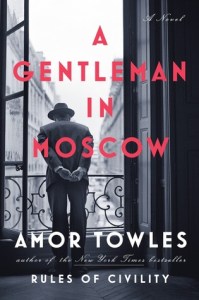
A Gentleman in Moscow by Amor Towles

This grand, sweeping story takes place entirely inside the walls of a luxury hotel in 1920s-1950s Moscow, in lushly evocative writing from the author of Rules of Civility.

gentleman in moscow

Amor Towles’s first novel, Rules of Civility, won readers’ hearts with its strong sense of time and place, fully realized characters and richly evocative voice. A Gentleman in Moscow repeats the feat with those qualities and more.

In 1922, Count Alexander Ilyich Rostov (“recipient of the Order of Saint Andrew, member of the Jockey Club, Master of the Hunt”) appears before a Bolshevik tribunal, accused of “succumbing irrevocably to the corruptions of his class.” He responds with quips, and is sentenced to house arrest in the luxury hotel where he has lived for the last four years. “Make no mistake: should you ever set foot outside of the Metropol again, you will be shot.”

This stylish and cultured protagonist has already lost his family and their estate. Now two armed guards move him from his suite into a monastic room of one hundred square feet. The bulk of his fine furniture, which will not fit in his new lodgings, becomes the property of the People. Remarkably good-natured, Rostov makes the best of his circumstances. He has all he needs in the Metropol: two restaurants, a barber, a seamstress and impeccably mannered staff who know him well. His worst enemy, perhaps, will be boredom–or a waiter who is particularly committed to the revolutionary cause. To brighten Rostov’s days, a fellow resident, “the young girl with the penchant for yellow,” befriends him. And then the hotel opens for him into a world as broad and rewarding as the one he wishes for his new friend–but ultimately as limiting as well.

The charming, complex Rostov is joined by colorful hotel employees (especially a talented chef and maître d’) and visitors, including a lovely actress, a dear friend from his youth and an assortment of Western journalists and businessmen. It is the charm of this expansive, lushly detailed novel that such a rich cast and such diverting and occasionally devastating events can populate the closed space of the Metropol, over a span of 32 years. A Gentleman in Moscow is filled with literary and cultural references–Chekhov, Tolstoy, Tchaikovsky, Humphrey Bogart–and with tastes, smells, humor, love and loyalty. Towles indulges in sentimentality to just the right degree. Readers who enjoy a generous, absorbing story, vibrant characters and immersive time and place will fall in love with this saucy novel. And by the time A Gentleman in Moscow closes in 1954, those readers will be sorry to lose the new friend they’ve found in Rostov.


This review originally ran in the July 29, 2016 issue of Shelf Awareness for the Book Trade. To subscribe, click here.


Rating: 8 jackets hanging in the closet.

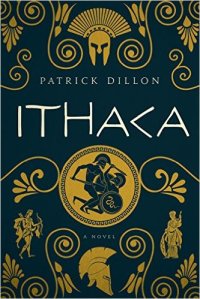
Ithaca: A Novel of Homer’s Odyssey by Patrick Dillon

This retelling of the Odyssey gives Telemachus more voice than ever before.

ithaca

Homer’s Odyssey recounts Odysseus’s 10-year journey home from the Trojan War, to where his wife and son await him. His adventures along the way take center stage. Ithaca, Patrick Dillon’s retelling, resets that center to the son. With substantially more insight into Telemachus than readers have had before, this version also offers a more fallible Odysseus, with all the drama and yearning of the original.

Dillon remains true to Homer’s setting, but the novel is told in Telemachus’s voice, and the weighty absence of a father he never met defines his existence. At 16, he worries over his role and responsibilities, and his inability to protect his mother: he has no one to teach him how to fight. These interior workings bring Odysseus’s iconic son to light as a nuanced and fully formed character. When the wise warrior Nestor assigns his daughter to be Telemachus’s traveling companion, the story gets an appealing twist: Polycaste is headstrong and capable, and her friendship has much to offer Telemachus. The gods are less present this time around; Telemachus is openly dubious. Veterans of the Trojan War roam Greece as bandits and vagabonds.

Though only slight details are changed, Ithaca is a vibrant and fresh revival; Telemachus’s struggles are illuminated through the use of his own voice. The well-loved classic is present: Penelope is beautiful, determined, fading; the suitors are shocking; Menelaus and Helen fight bitterly; the aging Nestor tries to guide Telemachus true. Dillon’s achievement is in characterization while retaining the heart and passion of Homer.


This review originally ran in the July 8, 2016 issue of Shelf Awareness for Readers. To subscribe, click here, and you’ll receive two issues per week of book reviews and other bookish news.


Rating: 8 arrows.

The Book Thief by Markus Zusak (audio)

book thiefI need to give up the audiobooks for a while. I know I’ve been saying this, but The Book Thief is the extreme case. I may have started listening to this in, like, March.

And I had some trouble getting involved at first, but how can I criticize, when I’ve listened so infrequently and over such a long time? My bad, Zusak. Slowly but surely, I was pulled into the world of Liesel Meminger, who is (about) ten when we meet her. Her mother immediately deposits her with a foster family at the start of World War II. Liesel’s story is about the war and its effects on one child, her family and the town where she lives. Unusually, it is narrated by Death; and he is a weary one indeed, especially in 1930’s and ’40’s Germany.

I found out some time into my listening that the print version of those book includes illustrations. It is probably worth getting the print version for this reason!! I wish I had. Also, my poor perspective has been noted, but I think it may be true that the book opens a little slowly: Death reflects, and sets up Liesel’s circumstances, for perhaps a little too long before entering Liesel’s head and the intimacies of her life and struggles. Death develops as a character, too, but it is really in Liesel’s childlike, but wise and somber mind that this book becomes most absorbing and affecting.

This is barely a review. Go read someone else’s review – like this one from The New York Times, not entirely raving, or one of these, the first of which notes that slow-to-start observation I made. I made the mistake of listening to the audiobook when I think the print would have been better, and going toooooo sloooooowly. But I can see from here that this is an intriguing perspective, and witty in several ways.

And wouldn’t you know, I just found out while writing this that there’s a movie too, as of 2013. It looks a little prettier and more sentimental than my impression of the book (just from the trailer); but it also looks beautiful, and moving. I will want to see that next. The movie never accomplishes what the book does, because of the limitations of the form (time, for one thing), but sometimes the movie is a fine thing in itself.

The Book Thief: worth more than I put into it.


Rating: 7 and a half stairs down to the basement.

The Art of History: Unlocking the Past in Fiction & Nonfiction by Christopher Bram

A succinct survey of history in both fiction and nonfiction offers advice for writers and readers.

the art of history

Christopher Bram takes on the broad subject of what history has to offer literature–and vice versa–with The Art of History: Unlocking the Past in Fiction & Nonfiction.

Beginning with memories of a high school English teacher, Bram celebrates the interest and value of reading and writing history. His thesis is that history need not be written in dry, textbook form: in both fiction and nonfiction, a talent for storytelling and a keen eye for just the right details, in the right quantity, can render the near and distant past in enthralling fashion. “Details,” he says, “are the raisins in the raisin bread.” He examines works including Gabriel García Márquez’s Love in the Time of Cholera, David McCullough’s The Path Between the Seas and Leo Tolstoy’s War and Peace, and topics ranging through war, slavery in the United States, comedic perspectives and the blending of lines between fiction and nonfiction. An author in both disciplines, Bram does not claim objectivity: he is clear about his love for Toni Morrison’s Beloved and his disregard for Hilary Mantel’s Wolf Hall, among others.

Books in “The Art of” series inspect craft from a perspective seemingly for writers and critics, and Bram offers good advice: “In both fiction and nonfiction, writing well means knowing what to leave out.” But The Art of History works for readers as well, as in an appendix of Bram’s recommended reading. Exploration, appreciation and instruction combine in this slim, accessible study of literary history and historical literature.


This review originally ran in the July 5, 2016 issue of Shelf Awareness for Readers. To subscribe, click here, and you’ll receive two issues per week of book reviews and other bookish news.


Rating: 6 details.

guest review: Monterey Bay by Lindsay Hatton, from Sarah Appleton

Thanks for contributing again, Sarah!

monterey bay

Lindsay Hatton’s Monterey Bay, set in the town of the same name along California’s Central Coast, tells the story of Margot Fiske and her tumultuous relationship with biologist Edward Ricketts. Margot and her father, Anders, move to Monterey Bay in 1940 following a botched business venture in the Philippines that Anders blames Margot for even though she is just 15. Their relationship functions more as a business partnership than that of a father and daughter, and in the wake of the failure, Anders gives Margot the cold shoulder, deeming her unworthy of being part of his latest business scheme involving a cannery in Monterey. Instead, he pawns Margot off on Ricketts, and what ensues changes Margot’s life forever.

Alternating between present time (1998) in Margot’s life when she’s the director of the Monterey Bay Aquarium and those fateful few months in 1940, Hatton tells the coming of age story of a girl never allowed to be a child. Margot learns so much about life the hard way, and she reflects “that heartbreak, instead of drawing people together as most shared experiences did, forced them even further apart.” Heartbreak for Margot comes in the form of a mother who died in childbirth; estrangement from her father; and forbidden, unrequited love. Yet despite the bumps along the way, this story, ultimately, is a happy one because of the realization and success of a dream: the Monterey Bay Aquarium.

Hatton writes with luminous language that brings Monterey Bay so vividly to life—“rusty metal that smells salty in the sun and bloody in the fog”—and peppers the story with equally vivid characters from Ricketts, whom the Aquarium was built in honor of, to John Steinbeck, a close companion of Ricketts and the writer who made the area famous through works such as Cannery Row and Tortilla Flat. It’s a colorful reimagining of the Aquarium’s history, and perhaps, the ultimate beach read this summer.

–Sarah K. Appleton

Monterey Bay will be published July 19. Sarah’s galleys are provided by Bank Square Books.

If this appeals, see also Sea of Cortez by Steinbeck & Ricketts.

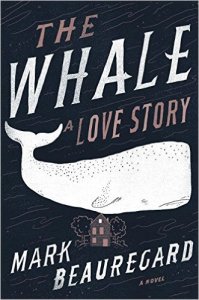
The Whale: A Love Story by Mark Beauregard

Careful research supports this story of a love affair between Hawthorne and Melville that birthed a classic.

the whale

In 1850, Herman Melville was in debt and struggling professionally, particularly with the novel-in-progress he was then calling The Whale. That summer, on a family trip to the Berkshires, he met the older, successful author Nathaniel Hawthorne, and began a relationship that would be passionate and painful, fraught and inspirational. Mark Beauregard explores the intimate friendship between these two literary legends in The Whale: A Love Story.

Based on primary sources including letters and journals, and meticulously researched, this novelization follows the historical record closely, as detailed in an epilogue. Hawthorne’s letters to Melville, lost to history, are re-created here using his other letters and journal entries; Melville’s letters to Hawthorne, however, are reprinted faithfully (with few, documented exceptions). Melville dives deeper into debt to move to the Berkshires and be near Hawthorne. As they discuss cerebral, spiritual and literary matters, grow close and suffer estrangements, Beauregard charts a full-blown love affair. In this telling, Moby-Dick is a labor of love and obsession directed not at a whale but at a man. Melville’s novel (which was dedicated to Hawthorne) continues to compel and confound readers today, and The Whale: A Love Story offers one possible explanation for its tortured mysteries.

In Beauregard’s fittingly emotive account, Melville is preoccupied and fervent, and Hawthorne is changeable, by turns sensitive and cool. Set against a literary community that helped define American letters of the time, this high-spirited story evokes a singular relationship and the complexity of Moby-Dick.


This review originally ran in the June 17, 2016 issue of Shelf Awareness for Readers. To subscribe, click here, and you’ll receive two issues per week of book reviews and other bookish news.


Rating: 7 flashes of lightning.

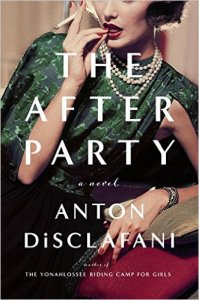
The After Party by Anton DiSclafani

The particular culture of 1950s Houston high society is the setting for this disturbing story of friendship and secrets.

after party

Anton DiSclafani’s The After Party opens in the 1950s in Texas in the world of the oil-rich. Narrator Cece has a loving marriage and a baby boy. Her best friend, Joan Fortier, lives the night life, although at 25 she is nearing the end of her prime in this glittering culture of money, power and conformity. In flashbacks, Cece reveals the way the Fortiers took her into their home and–almost–their hearts, and Joan’s mysterious vanishing acts.

Cece has always been deeply committed to serving the needs of Joan. She may rankle at being called a handmaiden, but she can’t help it: Joan has that effect on her. The girls have been best friends since kindergarten, and when Cece is left parentless as a teen, she moves into the Fortier estate, in the closed community of opulent River Oaks, an exclusive neighborhood in Houston.

Cece is obsessively devoted; Joan is carelessly, selfishly wild; and River Oaks is chilling in its regimentation: “We all served the same pimiento sandwiches, from the same recipe, at luncheons.” DiSclafani’s (The Yonahlossee Riding Camp for Girls) depictions are impeccable. Readers familiar with Houston will recognize landmarks like the legendary Shamrock Hotel, and note DiSclafani’s pitch-perfect rendering of River Oaks. The After Party is a puzzle with carefully modulated tension; Joan’s disappearances and carefree disdain for luxury perplex Cece, and the reader, until the final pages. Characterization, strong sense of place and the painful riddle of friendship form a novel that is vibrant, sensitive and suspenseful.


This review originally ran in the May 24, 2016 issue of Shelf Awareness for Readers. To subscribe, click here, and you’ll receive two issues per week of book reviews and other bookish news.


Rating: 7 high dives.

Enchanted Islands by Allison Amend

A woman with a modest past turns unlikely spy in the Galápagos in this evocative fictionalized history.

enchanted islands

Allison Amend’s Enchanted Islands is based on the life of a woman named Frances Conway, who lived with her husband, Ainslie, on the Galápagos Islands for several stretches in the 1930s and ’40s. Aside from her memoirs, which reveal only the day-to-day mechanics of her life, little is known about her. In Amend’s imaginative, richly detailed novel, Frances comes from a large, poor family of Polish Jewish immigrants in Duluth, Minn., where her lifelong friendship with a girl named Rosalie begins. The girls are in many ways opposites: Rosalie is from a relatively well-off family of better-established German immigrants; she is coddled, sexually precocious and selfish. As teenagers, the two run away together to Chicago, where a serious betrayal causes them to part ways.

When they reunite in middle age, Rosalie is married to a wealthy man and has a mansion filled with sweet children. Frances has recently married the tall, handsome, charismatic Ainslie Conway, but it is an arrangement orchestrated by Naval Intelligence, their shared employer. Ainslie is being sent to the Galápagos to keep an eye on suspected German spies, and Franny is part of his cover. The falsehood of their relationship pains Franny, and Ainslie has more secrets than just the nature of his profession. Still, the years on Floreana Island–one of the Islas Encantadas, as the Galápagos were once called–are the happiest of her life.

“You’re not allowed to read this–I’m not even really allowed to write it,” begins Enchanted Islands, Franny’s fictional third memoir. In her own words, she tells her life story with emotional resonance: confusion at Rosalie’s behavior as a teenager, bitterness and jealousy at her cruelties, a quiet if resentful acceptance of an unexciting life, and then exhilaration as she discovers Ainslie and stimulating new work, and rediscovers her old friend Rosalie. The narrative is colorful and sensually bursting, from the wet laundry that dominated her childhood home to the creatures and climate of Floreana, a changeable, isolated place both tropical and desert. These details are engrossing and lush, while the realities of World War II are recalled in dreamier terms; Franny is either far away on the island for much of it, or back at home in San Francisco feeling detached and lost without Ainslie. Her no-nonsense voice–by turns aggrieved, resigned, distraught, clever and wise–is the perfect foil to the fantastical nature of her life.

Amend offers strong, nuanced characters and a potent backdrop. Her prose is lovely without being overbearing, and her dialogue is impeccable, effortlessly evoking the characters’ lovable eccentricities and less lovable faults. With a wide-ranging, adventuresome plot and a humbly engaging protagonist, Enchanted Islands is a gorgeous piece of historical fiction.


This review originally ran in the May 3, 2016 issue of Shelf Awareness for the Book Trade. To subscribe, click here.


Rating: 7 camotes.

Fever at Dawn by Péter Gárdos, trans. by Elizabeth Szász

This historical novel of the hard-won love of two Holocaust survivors is based on the experience of the author’s parents.

fever at dawn

Péter Gárdos’s Fever at Dawn is a novel based on the lives and love of his parents. It spans less than a year, beginning in July of 1945. In that brief time, Gárdos evokes worlds of love and pain.

Miklós is a 25-year-old Hungarian Jew, an idealistic journalist and dreamy poet, just released from Bergen-Belsen concentration camp at the end of World War II. In the opening pages, he’s aboard a ship that will take him and 223 other survivors to Stockholm, to convalesce in Swedish hospitals under the administration of the Red Cross. In that first scene, Miklós collapses on deck. He is very ill with tuberculosis and is told he has six months to live. Undeterred, he requests from the Swedish Office of Refugees a list of women survivors who, like him, are being nursed in Sweden. He asks that they be from his region of Hungary and under 30. From his hospital bed in a “barracks-like wooden hut,” he writes 117 identical letters to these women. He gets 18 replies, and gains several pen pals, but only Lili captures his heart.

Over the next several months, Miklós and Lili correspond, exchanging stories from their past lives and their respective hospital settings hundreds of kilometers apart. Miklós asks for a picture of Lili, but is careful not to mention that he has virtually no teeth. Both make new friends: Miklós has Harry, the resident Don Juan, and a larger group of loyal comrades, while Lili has two confidantes. These secondary characters contribute to the budding romance in various ways. Fragments from the lovers’ letters supplement a narrative lively with humor and antics–at the men’s dorm in particular–as well as the continuing calamity of the war. In December, they manage to meet: Miklós travels all day for a brief visit, hoping to declare his love and be answered.

Gárdos draws this story in part from his parents’ letters, which his mother presented to him after Miklós’s death. Fever at Dawn, told in Gárdos’s first-person voice, is a sweet love story framed by horror. The war is over, but the bad news continues to trickle in. The Hungarians living in Sweden are displaced in every sense, seeking loved ones, scraping joy out of a bleak day-to-day existence. Miklós is repeatedly reminded of his six-month sentence, his time dwindling; but he is determined, after all he’s survived, to marry.

At once heartrending and lighthearted, this romance covers enormous ground in love and war, joy and tragedy, humor and pathos. Fever at Dawn, with its historical backdrop, will win over many readers.


This review originally ran in the March 24, 2016 issue of Shelf Awareness for the Book Trade. To subscribe, click here.


Rating: 7 scraps of cloth.

La Sagouine by Antonine Maillet, trans. by Wayne Grady

Humor, humility, and subtle wisdom pour from this rich translation.

sagouine
Antonine Maillet (Pélagie-la-Charrette; Don l’Orignal) is perhaps best known for La Sagouine, an icon of Acadian literature, translated from the French by Wayne Grady in this new edition. In the simplest of formats, the protagonist’s voice and life story are evoked with delightful realism. La Sagouine, as she calls herself, is a singular personality.

…Click here to read the full review.


This review was published on March 2, 2016 by ForeWord Reviews.


5 hearts


My rating: 7 poutines râpées.