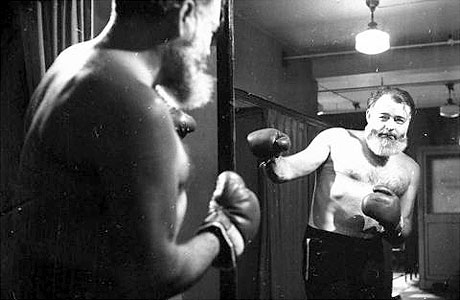
Teaser Tuesdays: Hemingway’s Boat: Everything He Loved in Life, and Lost, 1934-1961 by Paul Hendrickson

Teaser Tuesdays is a weekly bookish meme, hosted by MizB of Should Be Reading. Anyone can play along! Just open your current read to a random page and share a few sentences. Be careful not to include spoilers!

Ohhh you guys, I almost tear up just thinking about this guy. I’m a big fan of Hemingway’s work, and an amateur scholar of his life; he was such a fascinating, complex, difficult, sad man. I adore him and I love to read what he wrote, and what others have written about him. And Hendrickson is doing it for me! This is a great book, aside from my personal obsession with the subject. More to come (I’ve gushed too much already). Now for your teaser, from page 287 of my galley copy.

To me, the mentions suggest that even or especially up in Michigan, even for an exuberant boy who’s not yet seventeen, getting your sleep is crucial, and not only for physical reasons. Without it, darkness is already visible, if just barely.

I like how he evokes the darkness here. As Hendrickson notes (and every Hem scholar knows!), not only Ernest himself would die by suicide, but also his father, two (or maybe three) of his siblings, and his granddaughter.

This quotation comes from an uncorrected advance proof and is subject to change.

the value of fiction

I want to share with you something that I wrote, oh, in 2007 or thereabouts. (I am resisting the urge to edit myself. It is a strong urge.) And then I think I will respond to myself. And hopefully you will share your thoughts, too.

My best friend is self-educated, and claims that he reads only non-fiction because he sees no value in studying fiction. He thinks that fiction’s purpose is entertainment, and he wants to learn new facts and better understandings of the world, and thus needs to read non-fiction. I like to counter with, for example, Harriet Beecher Stowe’s Uncle Tom’s Cabin. This book is fiction, but I think it’s pretty clear that its purpose is to teach and educate and hopefully to change minds about one of the most important issues of the last century.

One of my favorite books is Ernest Hemingway’s For Whom the Bell Tolls. This book is fiction, but closely based on the author’s experiences. It served an important purpose: it taught readers that the Spanish Civil War, and by extension war in general, is not one-sided and has no “right” side to it; once violence has begun, innocents on both sides will suffer and everyone finishes with blood on their hands. (I hope Hemingway will forgive me for brutally simplifying this masterly work for my purposes here.)

Upton Sinclair’s The Jungle is another great example of fiction that performed important social functions. Although Sinclair’s concerns began by centering on social issues, food safety turned out to be an enormous beneficiary of his work, as public response was enormous. Historical perspective on this book in its time helps us to understand its significance; however, just reading the novel without context would give a person new respect for the purposes of fiction.

The question of whether Mark Twain’s The Adventures of Huckleberry Finn should be taught in high schools strikes me as a parallel to my friend’s complaint about fiction. It is clear to me that this work should be taught to high school students because, while it is fiction, it brings to light some extraordinarily important and very real questions. For example, Huck’s relationship with Jim and the development of their friendship addresses the humanity of slaves and the moral rectitude of this American institution. The racial slurs need to be read by high school students – with the right guidance – to teach beyond the idea that they are wrong, to why they are wrong.

Thus, the question of whether to teach Huck Finn is the same as the larger question, why read fiction? (For that matter, if it’s not worth reading, why write it?) I find the study of literature (fiction and otherwise) to be pleasurable as well as important, so I take it upon myself to argue on its behalf. My assertion is that just because a story is not true, does not mean it can’t hold massive significance on wildly important issues. For that matter, if fiction were truly and solely for entertainment as my brother asserts, one could argue that there is value in this purpose as well. Humans need entertainment to draw their minds off of the problems of our world; to blow off steam; to relax and/or exercise our minds. If fiction served no higher purpose than these, it would still be worthwhile to write, and read, and study, fiction. However, I find that fiction can serve the purposes of, for example, bringing a nation’s and a planet’s attention to dire social issues: the enslavement of blacks by whites; the wage slavery of many white and nonwhite immigrants to the United States; the corruption and lack of hygiene in a meatpacking industry; and the damage inflicted by massive violence on a people. I continue to bring my friend works of fiction to read.

Urges to edit this piece of writing aside, I stand by my original position. On the other hand, I’ve also written before about the perils of reading historical fiction for educational purposes. While my friend has not specifically used this argument (that I recall), I think it’s an important concern. If we read really convincing, accurate, moving, memorable historical fiction, I think we run the risk of taking it as fact. Even the most discerning and aware reader (even me!) could end up with blurred lines in her subconscious about what she learned in a nonfiction vs. a fiction book. Once I learn a “fact,” it can be hard to call up its source, especially years later. This is especially concerning for someone like my friend in question, who is a highly intelligent man and who likes to have serious debates. I think he feels the importance of being able to cite one’s sources.

So I acknowledge the dangers of confusing high-quality historical fiction with fact. And even more confusing are the books that are billed as nonfiction and get questioned years after the fact (ahem, James Frey and Greg Mortenson). How’s a person to keep it all straight? Don’t even get me started on the library patron who was SURE, and could not be convinced otherwise, that John Grisham only writes nonfiction books. Everything in The Firm happened, she says. I couldn’t talk her out of it. (This is why the front of the book says, “This is a work of fiction…”)

So I do respect some of the challenges. My position hasn’t changed; if anything, I feel more strongly than ever that fiction is important. Some of the fiction I see doing good work in my day-to-day job is not even what we might call Important Fiction – it’s a lot of Louis Lamour, Danielle Steel, Debbie Macomber, and James Patterson, in fact. I work in a cancer hospital where my little library provides leisure reading for people experiencing incredible difficulties, great pain, or great fear. If reading Nora Roberts/J.D. Robb improves their day, I rate the value of even this pop/genre/fluffy/call-it-what-you-will fiction very, very high. My favorite examples are still Huck Finn, The Jungle, and the like. (Also Slaughterhouse-Five…) But it goes beyond such Important Books. Fiction can be beneficial, enlightening, world-changing, and uplifting in so many ways. Also, it can be fun. What’s so bad about that?

I’m not the first to ask this question or to try to answer it; and I’m certainly not the most eloquent, articulate, thorough, or exhaustive. Have you seen any great examples of answers to the question, “what is the value of fiction?” Do you have a great answer? I would love to hear (read) it. Do you disagree? I would be interested to read your argument on either side.

On a related note, I’m still hoping to find time to tackle Mightier than the Sword: Uncle Tom’s Cabin and the Battle for America by David S. Reynolds. Maybe I’ll have something new to contribute soon!

fitting it all in

This is a lovely problem to have, in the scheme of things, I think. I have too many reading materials! Here am I with a pen & paper, trying to plan & schedule how I will get all of these read in the time allotted. Sigh. Here’s what I’m up to these days…
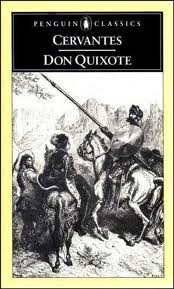
Don Quixote, by Cervantes, trans. J.M. Cohen

I’m pleased with myself for getting into this chunky classic, and a bit surprised at what easy reading I’m finding it. Quite entertaining, in fact. But unfortunately, due to other commitments (ahem, a number of galleys and 1 scheduled readalong) I think it will have to be put down for a little while! Luckily, it reads as a series of short adventures and therefore I think it will tolerate being put down and picked up pretty well.
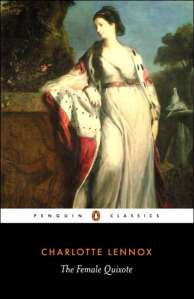
The Female Quixote, by Charlotte Lennox

To follow on the heels of Don Quixote, hopefully quickly. Don’t know what I’m getting into but I’ve been excited about the idea of this companion-read for quite a while.
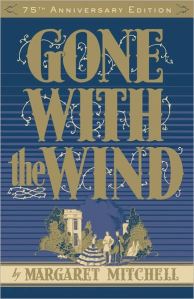
Gone with the Wind by Margaret Mitchell

The Great Gone With the Wind Readalong is being hosted by The Heroine’s Bookshelf‘s blog. I have been meaning to read this book for the last several years (and funny that I made it that far in life without putting it on the list any earlier). I tried to resist the temptation of this readalong, but I couldn’t do it. I like Blakemore’s approach to the rest of the books in The Heroine’s Bookshelf, that I have read, and I like the idea of having companions. So here we go, kids. This is when my reading plate begins to look perhaps a bit overfull, because…

I have some galleys to review, too.
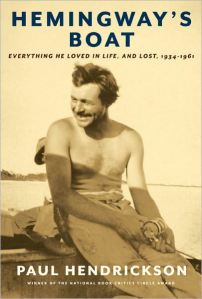
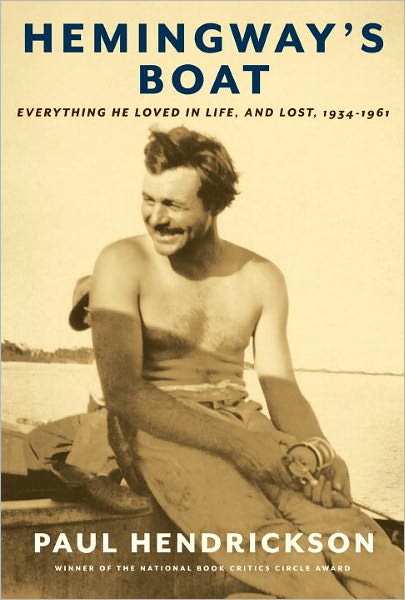
Hemingway’s Boat: Everything He Loved in Life, and Lost, 1934-1961, by Paul Hendrickson

If you’ve been reading my blog for any time at all you’re probably aware that I adore Hemingway’s writing and am fascinated by his life. I’m so excited about this one!

On Bicycles: 50 Ways the New Bike Culture Can Change Your Life, by Amy Walker (Editor)

Another based on my personal affinity, this time for bicycles. I don’t know much about this book but hope to find it wonderful.

The Barbarian Nurseries, by Héctor Tobar

A novel of multicultural Los Angeles and hidden family histories.

Into the Silence: The Great War, Mallory, and the Conquest of Everest, by Wade Davis

The product description claims, “Beautifully written and rich with detail, Into the Silence is a classic account of exploration and mountaineering, and a timeless portrait of a few iconic men.” That was enough to get me interested.

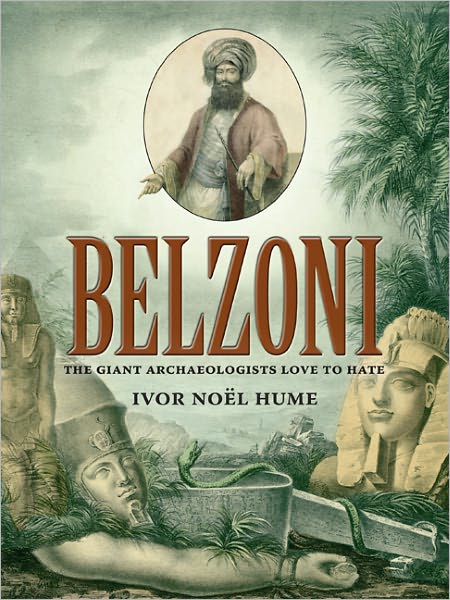
Belzoni: The Giant Archaeologists Love to Hate, by Ivor Noël Hume
A Bitter Truth: A Bess Crawford Mystery, by Charles Todd
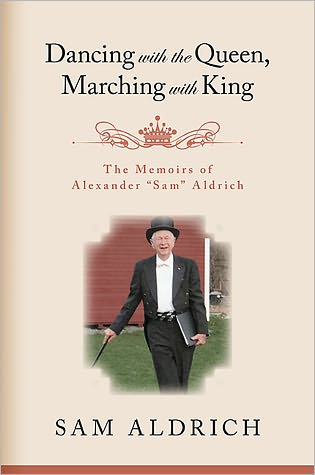
Dancing with the Queen, Marching with King: The Memoirs of Alexander “Sam” Aldrich, by Sam Aldrich
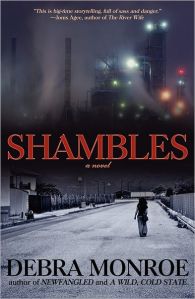
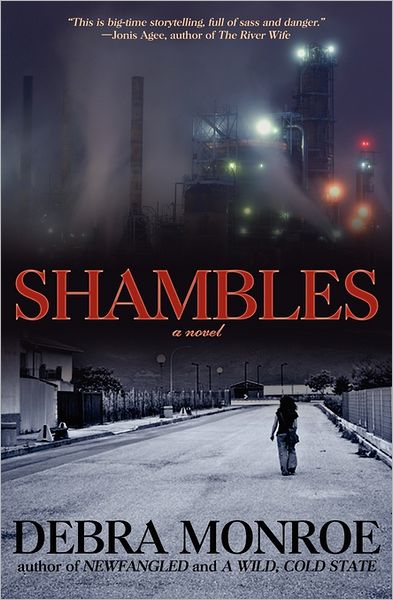
Shambles, by Debra Monroe
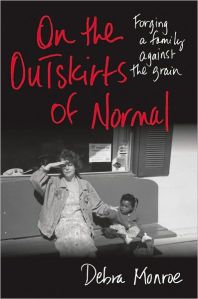
On the Outskirts of Normal, by Debra Monroe
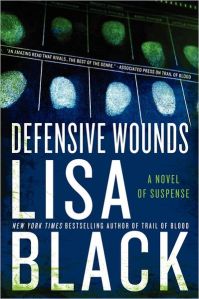
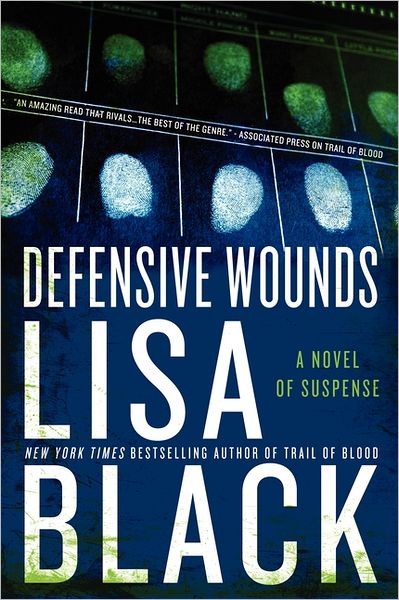
Defensive Wounds: A Novel of Suspense, by Lisa Black

…and I’m also trying to reread Othello and The Taming of the Shrew before I go see both plays in the next week and a half.

Whew! That should keep me busy! What are you reading lately? Any of these excite you?

how to build a home library

Katie over at cakes, tea and dreams published a lovely post the other day called a library of friends. She won me over by opening with a lovely quotation from Anne’s House of Dreams (one of the sequels to Anne of Green Gables, for those not in the know), which I recognized immediately – what fun. (Go read it over there.) And then she tells us about her home library, and asks, “How do you curate your library?”

Well. Unlike Katie, whose very ordered methods and selectivity I admire, I don’t have it all thought out quite that well. My home library consists of a few broad categories.

  • Classics and academic works from high school, college, and grad school. I have very few, if any, what you might call “textbooks” – they tend to be classic lit or philosophy. I confess that relatively few of these have been or will be reread, but I guess I like to have them there for reference or to remind me of what I’m supposed to know. Of course, a handful of these are among my favorite books and have enjoyed several rereads: the Iliad, the Odyssey, the Oresteia (all from high school). Others I’ve been pleased to reread, like Vanished Arizona by Martha Summerhayes, and The Courage of Their Convictions by Peter Irons (from college).
  • Classics, more generally. Shakespeare, Nabokov, Fitzgerald, Hemingway (of course), Austen, the Brontes, and Toni Morrison are all well represented, along with a number of singles. These aren’t going anywhere.

my Hemingway library

  • Genre fiction. I see no point in owning this sort of thing, really! I have very, very, very rarely purchased a mass market paperback copy of a thriller or murder mystery novel. These, in my opinion, should flow freely through the world, just as they do in the hospital where I work – share and share alike. Yes, human nature sometimes gets in the way of this. But mostly, I am happy with my mother handing me a book, or picking one up at work, and then leaving it somewhere when I finish – especially when traveling. My method of lightening the load is to carry many books at the beginning of a trip, and then leave them behind in hotels, train stations, or on trains, etc., as we go. For this reason I obviously wouldn’t take with me a book I meant to keep! But for genre fiction, I find this a good policy. I have tended to have trouble getting rid of these books (when not traveling), but working at a library has helped. I just donate them to my work library. Still have a number of genre paperbacks on my shelves, though; I think my problem is inertia. If a book has been on my shelves for long enough, it is unlikely to leave without good reason.
  • Special interest: I have books about beer and books about bikes, and just a few books about dogs. These are few, but important, and treasured.
  • ARCs? (Advanced Reader Copies – for review.) Not so much. I don’t tend to get attached to these unless they’re especially good, and generally they would have to be something other than genre fiction, too. I’m more likely to keep nonfiction/biography, because of the chance of referring back to it.
  • Good-looking older hardback books, either in beautifully good condition, or battered into an especially charming state. I have a weakness for these.
  • TBR!!! (to be read. you knew that, right?) As I’ve written before, I have a whole bookshelf of TBR books. :-/ These come from all kinds of sources. Some of them are given to me (physically) by friends (hi Fil, Amy) or my mother; many are given to me (as ideas) by friends, other book bloggers, bestseller lists, and (sigh) perhaps my greatest weakness, the book buying I do for the work-library. Also there’s my ever-expanding TBR list.

So I guess my conclusion is, I don’t have a terribly well-ordered method of deciding what to add to the library. Hypothetically, I like Katie’s plan of considering each book carefully as one that I will want to own, reread, refer to, and/or loan out. It should meet some sort of standard for inclusion on my illustrious shelves. In reality, however, I have a touch of the hoarder in me. ANY book is liable to end up on the shelf, at least until I find a good home for it. I recently purged: one book that had broken in three pieces and was only genre fiction in the first place, went into paper recycling, and I think I took another 8 or so to work to donate. How’s that for a purge? Single digits. Sigh. Of course, you could help me out by commenting on what to get rid of!

Katie makes an excellent point about bookstores and our need to support them. I don’t do very well at this. I agree with the principle, but don’t seem to get out there much. Mostly, this is because I work at a library, and have my city’s public library system at my fingertips (online). I just don’t find much reason to make new purchases, these days. When I do, I’m loyal to my local Half Price Books. Hey, it’s still a brick-and-mortar!

I think it might be a good project to try and have a more carefully curated home library. I love the idea of everything on my shelves being something I stand behind, found memorable, and could recommend. (Or, is still waiting TBR. This is why I like having a separate bookshelf. “See, these I know are good. These I’m not sure about yet.”) I have a ways to go. But this is a good project! And it would benefit my work-library, too.

How about you? How do you curate?

hemingWay of the Day: on writing


From Flavorwire’s “Weird Writing habits of Famous Authors”:

“Hemingway famously said he wrote 500 words a day, mostly in the mornings, to avoid the heat. Though a prolific writer, he also knew when to stop. In a letter to F. Scott Fitzgerald in 1934, he wrote,

I write one page of masterpiece to ninety-one pages of shit. I try to put the shit in the wastebasket.

I have also reproduced for you the picture Flavorwire used to accompany this quotation. I like. Thank you Flavorwire.

hemingWay of the Day: on cooking trout


This one was chosen as a fine example of how Hem can make me, at least, taste and smell what he writes about. Also, he makes my mouth water.

The Swiss, too, have a wonderful way of cooking trout. They boil them in a liquor made of wine vinegar, bay leaves, and a dash of red pepper. Not too much of any of the ingredients in the boiling water, and cook until the trout turns blue. It preserves the true trout flavor better than almost any way of cooking. The meat stays firm and pink and delicate. Then they serve them with drawn butter. They drink the clear Sion wine when they eat them.

It is not a well-known dish at the hotels. You have to go back in the country to get trout cooked that way. You come up from the stream to a chalet and ask them if they know how to cook blue trout. If they don’t you walk on a way. If they do, you sit down on the porch with the goats and the children and wait. Your nose will tell you when the trout are boiling. Then after a little while you will hear a pop. That is the Sion being uncorked. Then the woman of the chalet will comes to the door and say, “It is prepared, Monsieur.”

Then you can go away and I will do the rest myself.

from “Trout Fishing in Europe,” printed in The Toronto Star Weekly, November 17, 1923

hemingWay of the Day: author insults

Thanks to Shelf Awareness for this interesting item today.

Recently, Flavorwire gave us The 30 Harshest Author-on-Author Insults in History. It might be worth your time to go check them all out, but I had to share with you a few of my favorites.

Numbers 15 and 14 are a back-and-forth:

15. William Faulkner on Ernest Hemingway:
“He has never been known to use a word that might send a reader to the dictionary.”

14. Ernest Hemingway on William Faulkner:
“Poor Faulkner. Does he really think big emotions come from big words?”

…to which I give an lol. My meager attempt to appreciate Faulkner was pathetic, but I blame him entirely – or maybe my choice to try The Sound and the Fury first, I don’t know. I *may* give him another try someday. If I do, it will definitely be a different title. It should go without saying that I side with Hemingway on this one, in terms of the end-result-value of their work – although it is also true, I have never used a dictionary in my readings of Hem. (I do use a dictionary when I read sometimes, though.)

I also liked this one:

9. Truman Capote on Jack Kerouac:
“That’s not writing, that’s typing.”

I think this is in the same spirit as #15, above. And again, I loved On the Road and so disagree; but the witty jab makes me smile, all the same.

There are some other clever ones there, too. I encourage you to go poke around and tell me, which ones made you smile? Or get angry? Or feel justified?

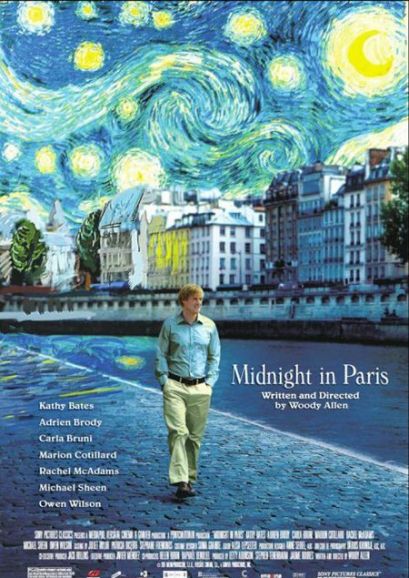
guest review: movie: Midnight in Paris, from Mom (2011)


A new guest reviewer! I asked my mother to share her thoughts about the movie we saw together, initially thinking she could help me develop my own review; but I think she merits her own post here.

Paris is sweet and softly lit in the late hours of the 1920’s, but the hard truth of the present is clear. The plot of Midnight in Paris concerns a trip to Paris by our hero with his fiancé and her parents – a family of snobby rich American tourists who don’t like Paris most of the time – like when it rains – and focus mostly on shopping. The story has our hack Hollywood writer dreaming of the pure Paris artistic air and following the path of Hemingway or Fitzgerald. He wanders the streets at midnight, and gets in a taxi to the twenties.

Woody Allen’s twenties Paris is a spectacle. It’s a fun romp, and adorable. What fun it must be to put together the words of the great Americans who were there in the bars and Gertrude Stein’s salon. He throws out the lines and the audience laps it up, especially the fun poked at Papa.* We share the lives of these artists who didn’t know where they were going, didn’t know that they lived in the Golden Age, and it’s our lovely secret. It’s also the secret of our hero, who is clearly the alternative Woody Allen. He tries to milk his opportunities, getting advice from Stein, schmoozing with the Fitzgeralds, and romancing Picasso’s girl. He even considers staying, but we’re a bit hopeful that he might grow up.

Salvador Dali is a grand character, super-mustachioed and enigmatic. Hemingway is larger than life – but isn’t that what he really was? Cole Porter appears, and Zelda and Scott Fitzgerald are all that they must have been, gay, charming, and ready to dash off at a whim, probably into the abyss. Luis Buñuel gets a film concept from his own future, through our hero/fan. Gertrude Stein rules her salon and there is no doubt that she’s the regent.

It was never going to work out for the couple, and if this is a spoiler, you’re missing the gorilla in the bedroom. It’s a little silly that this innocent was ever attracted to the scolding fiancé we see. The plot is obvious, but we’re here for the fun. Paris is every artist’s dream and muse; we love those dreamers who sucked up life when it was at its best. There’s a carpe diem moral here, and idealism waiting to be tested. Also just good looking.

*I think this is a poke at me, too. I was eating up Papa’s lines – yes ridiculous, but true to life! I may take him too seriously. 🙂

Thanks Mom, you did it beautifully.

movie: Midnight in Paris (2011)

EDIT: You can check out my mother’s review too here.


I saw this one weeks ago; I don’t know what’s taken me so long. Maybe I was up too far past my bedtime in order to see it, and lost it in my dreams. It was a lovely night out with my mother (while Pops is off traveling the world) and a really delightful movie; we both enjoyed it very much.

You’ve heard of this one. It’s the Woody Allen movie in which Owen Wilson takes on the Woody-role, a young man named Gil, traveling in Paris on business, who wants to sink into 1920’s Paris and finally write his novel. His materialistic and unsympathetic (in both senses) fiancé, Inez, thinks this is ridiculous; she wants him to hurry up and get back to making oodles of money writing the Hollywood scripts that he feels are soul-killing. Amid his dreaming about the perfection of interwar Paris, with its meeting of literary and artistic minds, Gil finds himself actually transported there via vintage Peugeot. He plays and parties with Hemingway and the Fitzgeralds, gets his manuscript reviewed by Gertrude Stein, and takes on Pablo Picasso as a romantic competitor – among a flurry of other storybook meetings.

Corey Stoll as Hemingway

I bet you can guess what got me in the door for this one. That’s right, Hemingway. I’m so easy. 🙂 Really, though, it was a remarkable little journey through time and space. The introductions to various famous artists were thrilling; the romantic mood was dreamy. After putting in our time with the obnoxious fiancé, we get to see Gil find romantic satisfaction in the end – it’s a classic romantic comedy in that sense, but it’s so much more. It’s a poignant statement about nostalgia, with each generation or era longing for another. And it’s a charming jaunt, a who’s who of 1920’s artists. For me, it was something of a wake-up call, too, to the fact that my knowledge of this era is built around my Hemingway obsession: I knew the famous names more or less only as they relate to Papa, sigh. I should be better educated. Oh, and I thought the Fitzgeralds were rendered very truthfully (to the best of my knowledge) and really very charmingly, in their own insane and endearing way.

Overall a dreamy and very pleasant adventure. If more movies made me feel this way, I would go to more movies.

hemingWay of the Day: on bicycles

It is by riding a bicycle that you learn the contours of a country best, since you have to sweat up the hills and can coast down them. Thus you remember them as they actually are, while in a motorcar only a high hill impresses you, and you have no such accurate remembrance of country you have driven through as you gain by riding a bicycle.

from Battle for Paris, printed in Collier’s on September 30, 1944