book beginnings on Friday: Everybody Behaves Badly: The True Story Behind Hemingway’s Masterpiece The Sun Also Rises by Lesley M. M. Blume

book beginnings

Thanks to Rose City Reader for hosting this meme. To participate, share the first line or two of the book you are currently reading and, if you feel so moved, let us know what your first impressions were based on that first line.

Guess what brought me to this one. It’s been a while since I read The Sun Also Rises (first discovered in Mrs. Smith’s English class in high school, which began my Hemingway admiration). I wonder if I’ll find time for a reread…

everybody behaves badly

I think these opening lines set the scene nicely – or the atmosphere of Hemingway’s life and fame, if you will.

In March 1934, Vanity Fair ran a mischievous editorial: a page of Ernest Hemingway paper dolls, featuring cutouts of various famous Hemingway personas. On display: Hemingway as a toreador, clinging to a severed bull’s head; Hemingway as a brooding, café-dwelling writer (four wine bottles adorn his table, and a waiter is seen toting three more in his direction); Hemingway as a bloodied war veteran.

I wonder how much that page of paper dolls would be worth now!

This quotation comes from an uncorrected advance proof and is subject to change.

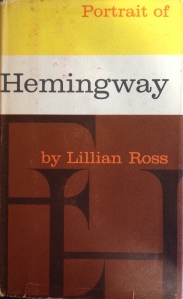
Portrait of Hemingway by Lillian Ross

Portrait of HemingwayLillian Ross originally wrote her ‘Profile’ of Ernest Hemingway for The New Yorker, where it was published on May 13, 1950. In book form, it becomes a ‘Portrait,’ and other than the addition of a delightful preface, I’m not sure what the difference is; the opening pages of my first edition note that Portrait originated as Profile, but there is no indication that the text of both is not the same.

The dust cover offers context.

When Miss Ross wrote this Profile, she made several literary innovations, one of which was to compose a portrait entirely in terms of action… She attempted to put down only what she had seen and heard, and not to comment on the facts or express any opinions or pass any judgments… In her writing for The New Yorker she has raised this severely objective method to an art.

We’ll examine that premise shortly.

The Portrait runs 42 pages: long for a magazine article, but perfectly lovely as a brief glimpse in this format. Let me start where the book does, though. I date the preface to 1961: that is the publication date of this first edition printing; the preface does refer to the reception to her Profile in the magazine, and it refers to Hemingway’s death of July 2 of that year. In it, Ross explains how she got to know Ernest Hemingway and his fourth and final wife, Mary, how they corresponded with each other as friends, and how the profile came about: on a brief stay in New York City on his way to Italy, Hemingway invited Ross to come and hang around with him on various errands, over the course of three days. She wrote up those experiences, and gave Mr. and Mrs. H. the chance to mark up her manuscript before she submitted it. She then describes the responses to her profile. Most readers loved it, she said, but some “reacted violently, and in a very complicated fashion.” Some of these disliked Hemingway’s personality (not an uncommon reaction to the man) and thought the piece backed up their views. Others didn’t like the man as represented in the piece (also understandable), and thought “either Hemingway had not been portrayed as he was or, if he was that way, [Ross] shouldn’t have written about him at all.” She assumes that Hemingway’s death has corrected some of these disapproving interpretations, which I found a little odd, but no matter. Finally, she continues the work of profiling Hem by describing the kind of letter-writer and friend he was. The preface introduces the profile nicely because it gives context to the relationship between writer and character.

And the profile (portrait) itself is indeed wonderful, and as promised, follows Hemingway closely: from arriving at the airport, to the airport bar, to the hotel, where the Hemingways order up caviar, champagne and Marlene Dietrich, who visits with photos and stories of her grandbaby. Then it is late in the next morning, and Ross is awakened by an antsy Hemingway who demands she come over and listen to him talk; more champagne, and she accompanies him on his errands while Mary goes on hers. They buy Papa a coat and other small items at Abercrombie & Fitch. The next morning again, Patrick (the middle Hemingway son) has joined the party, which goes to the Met to “look at pictures” for a few hours, followed by lunch back at the hotel with Charles Scribner (Hemingway’s longtime editor). The story ends mid-lunch.

Ross relates this series of anecdotes as scenes, blow by blow, in real time. It is true, as promised, that this is a portrait “in terms of action,” but I wouldn’t call it “severely objective.” For starters, there is the question of what you put in and what you leave out – because obviously Ross didn’t report every cough and sigh and rustle of a pant leg that took place in three days. She writes, “Patrick told me that he’d just as soon spend the whole day looking at pictures.” And a couple of pages later, Hem gets tired and asks Patrick, “don’t you think two hours is a long time looking at pictures?” and “everybody agreed” and the party moved on. Choosing to put in these contradicting statements says a lot about both Hem and Patrick, and I don’t believe for a moment that that was a mistake.

Too, word choice is always telling, I think. In the nature of this excellent piece my mother sent me the other day, consider the sentence: “He moved in and took the room.” Who can objectively say that Hemingway took the room? No, Lillian Ross is communicating something outside of objectively observable events here. I’m not saying I don’t like it: I do, in fact, very much. But I don’t think it’s entirely accurate to claim that the author is not present in her work – here, or ever.

That’s just a quibble with the dust jacket, though. This vignette is packed with great representative moments. I’ve already shared a few (here, here). Or how about this for a Hemingway speech:

…I was ashamed because I had not written any novels. So I wrote ‘The Sun’ when I was twenty-seven, and I wrote it in six weeks, starting on my birthday, July 21st, in Valencia, and finishing it September 6th, in Paris. But it was really lousy and the rewriting took nearly five months. Maybe that will encourage young writers so they won’t have to go get advice from their psycholoanalysts. Analyst once wrote me, What did I learn from psychoanalysts? I answered, Very little but hope they had learned as much as they were able to understand from my published works. You never saw a counter-puncher who was punchy. Never lead against a hitter unless you can outhit him. Crowd a boxer, and take everything he has, to get inside. Duck a swing. Block a hook. And counter a jab with everything you own. Papa’s delivery of hard-learned facts of life.

Seriously, he’s sort of simultaneously a genius and a walking cariacature. I understand perfectly why those readers thought Ross was making fun of Hemingway; this kind of speech reads that way. I also believe he spoke it. And I like him even while recognizing that he was a blowhard, could be a jerk, and struggled to contain his overcompensating machismo. But I get why others don’t. This is sort of in line with that post I wrote.

I had a wonderfully fun time reading the essence of Hemingway in this perfectly pitched profile. Very enjoyable, and a quirky piece of journalism. Do look it up.


Rating: 8 glasses of champagne.

hemingWay of the Day: bravado in metaphor

It has been far too long since I presented a hemingWay of the Day! Lillian Ross’s Portrait of Hemingway provides good material, though. I just offered a teaser last week, and here we are again.

I started out very quiet and I beat Mr. Turgenev. Then I trained hard and I beat Mr. de Maupassant. I’ve fought two draws with Mr. Stendhal, and I think I had an edge in the last one. But nobody’s going to get me in any ring with Mr. Tolstoy unless I’m crazy or I keep getting better.

This is classic: bragging, bravado, hypercompetitive attitude towards writing, all packaged in a boxing metaphor. Oh, Papa.

Teaser Tuesdays: Portrait of Hemingway by Lillian Ross

Teaser Tuesdays is a weekly bookish meme, hosted by MizB of Should Be Reading.

I have read some good books lately – wait til you hear about Lily and the Octopus, oh man – but I’m not sure there’s anything as pleasing and comfortable for me as coming back to Hemingway.

Portrait of Hemingway
This profile was originally published in The New Yorker in 1950, and follows the man closely for two days. That’s it: an anecdote in the life. There is also a most interesting preface, but I will leave that for my review. These are the lines I wanted to share with you today.

He always woke at daybreak, he explained, because his eyelids were especially thin and his eyes especially sensitive to light. “I have seen all the sunrises there have been in my life, and that’s half a hundred years,” he said. He had done considerable revision that morning on the manuscript [of Across the River and Into the Trees]. “I wake up in the morning and my mind starts making sentences, and I have to get rid of them fast – talk them or write them down,” he said.

I feel like that sometimes, too. His sentences are better, though.

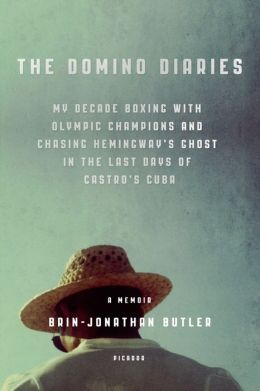
The Domino Diaries: My Decade Boxing with Olympic Champions and Chasing Hemingway’s Ghost in the Last Days of Castro’s Cuba by Brin-Jonathan Butler

An amateur boxer’s love affair with Cuba.

domino

Brin-Jonathan Butler first traveled to Cuba as a teenager, hoping “to find a boxing trainer and to meet the guy from The Old Man and the Sea.” He accomplished both goals and over the years that followed made repeated trips, seeking Cuban boxing, baseball and literary heroes, as well as the mysteries of the sequestered island. Eventually, Butler’s fixation on Cuba inspired a forthcoming documentary, Split Decision, about Cuban athletes’ difficult choices between staying and leaving. In The Domino Diaries, he confesses that the project was partly an excuse to stay, having become “homesick for a place [he] wasn’t born to.” His memoir further unravels the relationship he’s formed with this nation.

His escapades make for fine writing and include a tryst with Fidel Castro’s granddaughter and an interview with boxing legend Teófilo Stevenson that results in Butler’s being banned from Cuba. The Domino Diaries is a memoir of boxing heroes and political strife, a study of Castro’s legacies and Cuba’s “Special Period” of economic crisis, and an ode to the grace, joy and sadness of Cuban culture; it is also the personal story of Butler’s own traumas and his mother’s escape from Hungarian communist rule. These threads necessitate some meandering, but the resulting musing tone Butler employs is elegiac and quite effective. Rather than an exhaustive survey of the large and thorny topic of Cuba’s economy, politics and culture, Butler’s memoir is a rambling exploration, appealingly written in a distinctive voice and peppered with wisdoms phrased with lovely wit.


This review originally ran in the June 26, 2015 issue of Shelf Awareness for Readers. To subscribe, click here, and you’ll receive two issues per week of book reviews and other bookish fun!


Rating: 7 cigars.

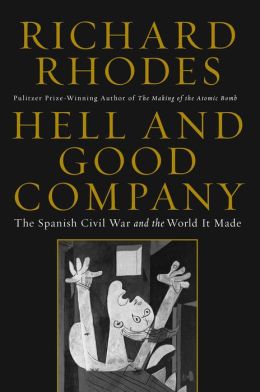
Hell and Good Company: The Spanish Civil War and the World it Made by Richard Rhodes

The Spanish Civil War, and its medical, military and artistic contributions to modernity.

hell

The Spanish Civil War was a precursor to World War II, and served as a practice field where medical and military leaders experimented with new technologies and refined strategies. Creative minds from around the world drew inspiration and horror from the conflict, yielding Picasso’s Guernica, Hemingway’s For Whom the Bell Tolls, Miro’s El Segador and Orwell’s Homage to Catalonia. In Hell and Good Company, Richard Rhodes (The Making of the Atomic Bomb) examines the Spanish Civil War not in exhaustive chronology or complex international intrigue–although both are present–but in its gifts, good and bad, to the world that followed.

As Germany and Italy begrudgingly contributed to the Spanish nationalist (fascist) side, and the Soviet Union just as reluctantly supplied the republicans, new military technologies met old. Advances in aircraft were matched by new strategies, including “carpet bombing,” a term used for the carnage at Guernica. In response, doctors and nurses from Spain and abroad innovated as well: while reliable blood typing and preservation for blood banking had been under development since World War I, safe transfusions in the field were born in the Spanish Civil War, as was the autochir (a mobile, sterile surgical unit).

Rhodes follows various individuals, famous (Hemingway, Picasso) and less so (volunteer doctors, nurses and soldiers from around the world), providing a vivid, wrenching view of war, art and love. While it scrutinizes world-changing new technologies and ways of life, Hell and Good Company is also a fine, accessible introductory history of the Spanish Civil War, and an evocative human story.


This review originally ran in the February 6, 2015 issue of Shelf Awareness for Readers. To subscribe, click here, and you’ll receive two issues per week of book reviews and other bookish fun!


Rating: 7 bombs.

hemingWay of the Day & Teaser Tuesdays: Hell and Good Company by Richard Rhodes

hembut2

Teaser Tuesdays is a weekly bookish meme, hosted by MizB of Should Be Reading. hemingWay of the Day is my own.

hell

I was drawn to Hell and Good Company because of my interest in the Spanish Civil War, which in turn was born of my love of Hemingway, of course. So it’s natural that I’d be drawn to the lines that concern him. Sorry I’m so predictable! Hem is not the main star of this book – far from it – but I had to share these few lines.

About the Hotel Florida:

Its primary attraction was hot water. Such comfort, hardly available anywhere else in Madrid, came at a price: the Florida was directly in the line of fire from the nationalist artillery on Garabitas Hill in the Casa de Campo. Ernest Hemingway recalls people “paying a dollar a day for the best rooms in the front” of the hotel. “The smaller rooms in the back, on the side away from the shelling,” where Hemingway stayed, “were considerably more expensive.”

I like this for its dry humor, but also for its evocation of the strange circumstances of the war in Madrid: that life was carrying on, that Hemingway and others were visiting the front & literally dodging bullets by day and holding champagne parties by night in this hotel, where the best rooms had become the worst but otherwise things were carrying on.

And more about Hemingway, from poet Stephen Spender:

“A black-haired, bushy-mustached, hairy-handed giant,” Spender describes him, adding that in his behavior “he seemed at first to be acting the part of a Hemingway hero.” Spender wondered “how this man, whose art concealed under its apparent huskiness a deliberation and delicacy like Turgenev, could show so little of his inner sensibility in his outward behavior.”

This captures Hemingway nicely, and perhaps what draws me back to him as well: that he is so macho, so obnoxiously obsessed with being his own hero, also has that sensitivity & artistic talent, but feels the need to hide it. There’s nothing so fascinating to me as that interior conflict.

Of course, stay tuned for my review of this book, which I assure you (despite the above) is not nearly as Hemingway-obsessed as this blogger is.

This quotation comes from an uncorrected advance proof and is subject to change.

hemingWay of the Day: on the menu

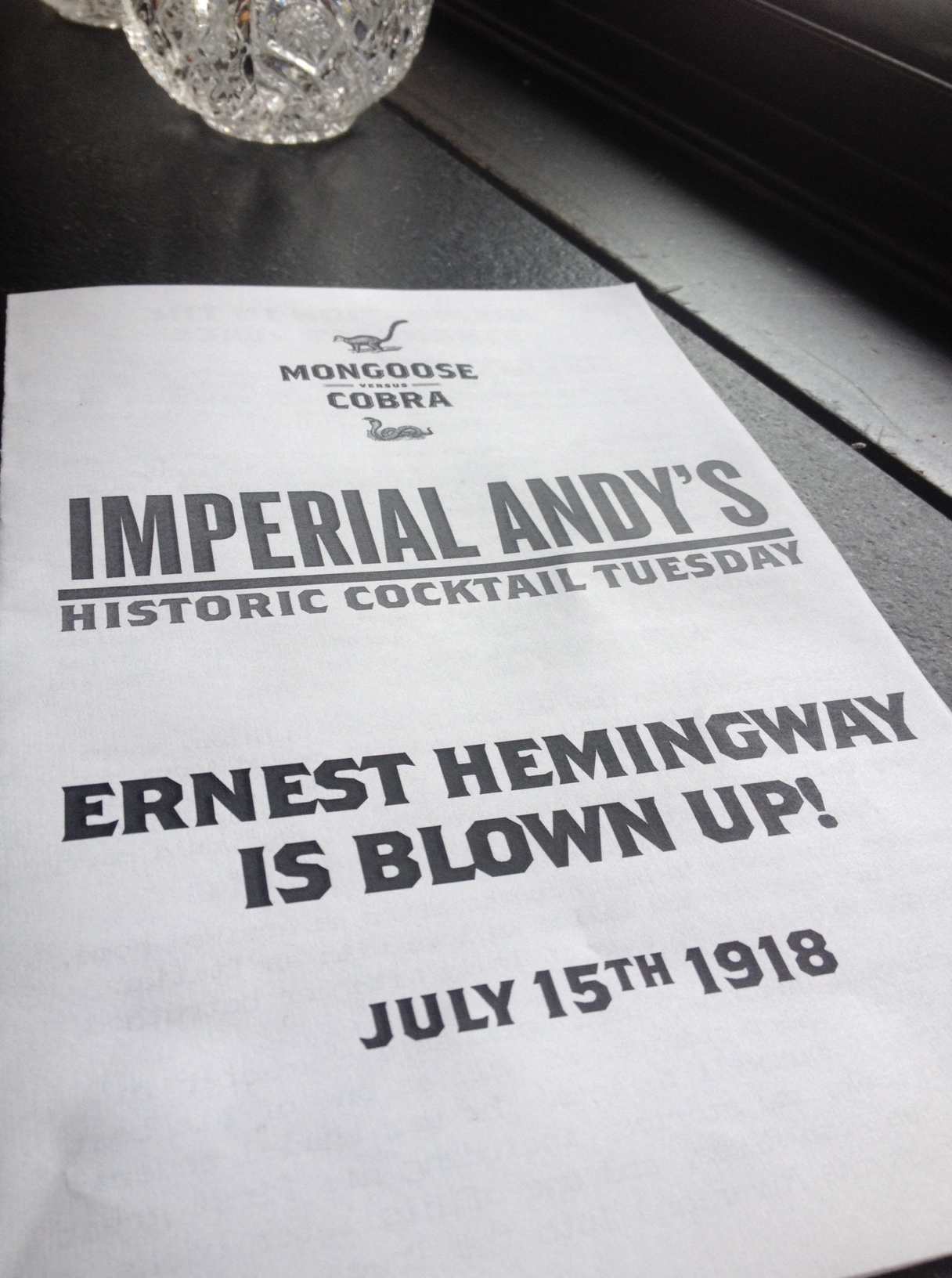
My favorite bar has an every-Tuesday-night event called Imperial Andy’s Historical Cocktail Tuesday. Andy is my friendly British bartender. He finds a historical event coinciding with each Tuesday’s date, makes up four themed cocktails to go with it, and produces a one-off menu telling the story. I have long wanted to be a part of one. Many months ago I used the book my mother gave me (for Christmas?), A Reader’s Book of Days, to find a Hemingway event: July 8, which fell on a Tuesday in 2014, was the day (night) he was injured in WWI, which led to his meeting the nurse he fell in love with, who would jilt him, who would be the model for the novel A Farewell to Arms for which he is so well known. This event would also be a big part of his self-myth. I’ve had my short write-up of this historical event and its significance waiting since maybe January for July to come along so I could cue Andy to do a cocktail list for it. Obviously the possibilities are endless! Well, I ended up having an un-reschedule-able appointment on that Tuesday evening; I was pretty disappointed. But the week before, I dropped my piece of writing off with Andy anyway. He’s become a great friend. I said hey, if you use this, would you just save me a copy of the menu please? He said he would push the historical event back a week if I could make the following Tuesday! Which I could.

On Tuesday, July 15, I walked into the bar and he had his menu ready for me – but it stated the date of Hemingway’s injury as July 15! I said, you didn’t even acknowledge your rewriting of history! Won’t somebody call you on this?? He said, Julia, there’s only one customer I know who would call me on this, and I think I’m safe from that person tonight. Why? It’s YOU, Julia. Oh. Okay. (I’ve made a note to check every Tuesday’s historical event for accuracy from now on.)

I enjoyed the drinks. And while we talked over drinks, we somehow came around to the concept of the green man. I told him Kingsnorth’s story as I remembered it offhand from an article my father sent me some months back (Andy being logically at least a little interested as a historical cocktail man as well as a Brit), and I sent him the link to the article too. And then, just on a whim, I looked up the date of the Battle of Hastings: October 14, 1066. Guess what day of the week October 14 falls on this year. You got it. That will be another Imperial Andy’s Historical Cocktail Tuesday. Too bad that’s not the week my father was planning to be in town… maybe he can reschedule.

photo

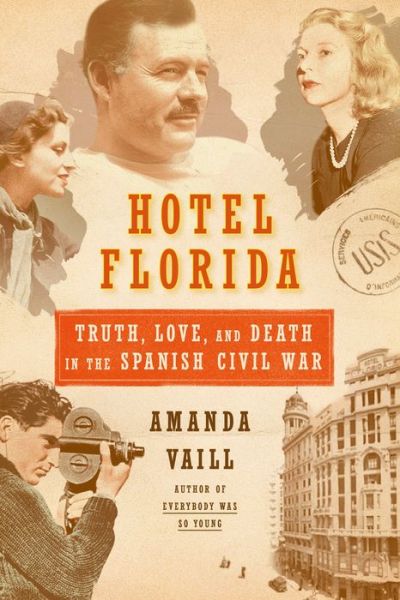
Hotel Florida: Truth, Love, and Death in the Spanish Civil War by Amanda Vaill

Vaill’s story of three love affairs, set against the Spanish Civil War, yields a nuanced perspective on war journalism and romance.

florida

During the Spanish Civil War, Madrid’s Hotel Florida was a meeting point for war correspondents, press officers and foreign intellectuals. Amanda Vaill (Everybody Was So Young) uses the hotel as a focal point to examine the war through the lives of three men and three women. These six individuals–all leftists of various stripes and pedigrees, converging on Spain from all over Europe and the U.S.–allow Vaill to range freely through the history of the war, which raged from 1936 to 1939.

Vaill follows her subjects chronologically, shifting locations through Francisco Franco’s rebellion against the Popular Front government and the events that led up to the Spanish Civil War. Arturo Barea of Madrid serves as a censor for the Propaganda Department, finding his leftist politics and commitment to truth well matched by his new assistant Ilsa Kulcsar, who comes from an Austrian resistance cell and speaks many languages. Meanwhile, Ernest Hemingway feels stifled in Key West; a new war to cover provides him with an excuse to get away from his wife and find fresh material to revive his stagnant writing. The attractive young journalist he’s just met, Martha Gellhorn, is also eager to get to Spain. Finally, a young man named Endre Friedmann is exuberantly pursuing his passion for photography in Paris when he meets the charming Gerta Pohorylle. They set off for Spain together with their ideals on their sleeves. Taking new names–Robert Capa and Gerda Taro–they will find fame and love and change the face of war photography forever. One of them will die on Spanish soil.

In addition to explaining the complexities of the Spanish Civil War, Hotel Florida lives up to its grand subtitle. Vaill examines the meaning of truth as conceived by each of her six players–writer, journalist, translator, censor, press officer, photographer. Their romances, all born of war, and the deaths to which they bear witness bring emotion and heartbreak. Buttressed by plentiful research, Vaill’s prose exhibits touches of Hemingway’s own writing style and a gift for narrative that keeps Hotel Florida accessible and engaging.


This review originally ran in the April 15, 2014 issue of Shelf Awareness for the Book Trade. To subscribe, click here.


Rating: 8 ideals.

better to burn out than fade away?

As you know, I’ve recently begun reading Wallace Stegner’s Crossing to Safety. I started with the biographical note (unattributed), and the introduction, which is by Terry Tempest Williams, a friend of Stegner’s. These prepared me well: I began with just a hint of what the story was about, and felt like I got to know the author just a little. I like Williams, so that connection felt good, too. Before beginning to read the novel itself, I was reminded of Norman Maclean. The tone of voice in Williams’s short intro, and in the biographical note, is gentle and loving and matches the tone in which people write about Maclean. And it got me thinking about a very different sort of author.

Ernest Hemingway always thought of himself as a future famous writer, beginning when he was very small; his self-image was one step ahead of his actual place in the world, but he was never mistaken. He designed & intended his identity as the larger-than-life author-man archetype, and then he lived into that legend. (He convinced us to varying degrees, of course, but I don’t think we need argue that he didn’t live the story he’d written for himself.) He then died just shy of his 62nd birthday of a self-inflicted double-barreled shotgun blast to the head while his wife slept a few rooms over. His late years were tormented by mental illness, paranoia, and an increasing and overwhelming distress that he was failing to fulfill his potential. But all his life he fought his demons, and there’s plenty of evidence that suicide was on his mind many decades before he pulled the trigger.

By contrast, Norman Maclean lived to be 87 (and published 2 very important books and a number of essays). Wallace Stegner lived to be 84 (and published 28 books). In their art they both exude a sense of calm, and in late life commanded a quiet, loving respect in their peers and, in death, in their survivors that Hemingway does not. So my question is this. Would Hemingway have chosen for himself a long life, a quiet, respected, accomplished old age, surrounded by contentment? Or would he have joined Kurt Cobain in quoting the Neil Young lyric, that it’s “better to burn out than fade away”?