Is This a Cry for Help? by Emily Austin

As its protagonist wrestles with grief and challenges to intellectual freedom, this inspiring and very funny story showcases the power of love and libraries.

In the opening scene of Emily Austin’s fourth novel, a librarian named Darcy narrates her response to a patron watching porn in the library (mainly, per policy, to leave him be). From here, Darcy’s story unfolds to grapple with love, grief, mental health, the importance of libraries, and the navigation of personal, professional, and public relationships. Is This a Cry for Help? continues in the vein of Austin’s winsome work (Everyone in This Room Will Someday Be Dead; We Could Be Rats) with a disarmingly candid narrative voice, outrageous humor, and serious thinking on tough topics.

Darcy has a good life. At her public library, she gets to help a messy cross-section of humanity: not only the toddlers, book clubs, and precocious teens she originally imagined, but also people who lack stable housing or who struggle with substance abuse or mental illness, job seekers, immigrants, and people with opinions different from her own. She has a wonderful wife with whom she shares her authentic self, two cats, and a lovely home. But when Darcy learns of the death of her ex-boyfriend Ben, she is thrown off balance. The disruptions to her carefully organized life are often hysterically funny even as they are harrowing and tragic.

Darcy has just returned to work after a two-month leave of absence following a mental breakdown brought on by the news of Ben’s death. “Before this happened, if someone told me they were off work on stress leave, I might have been judgmental too. Now I understand that issues intensify when we smash them down into our boots.” She is not at her strongest for the new challenge of an alt-right self-appointed journalist harassing the library and Darcy for what he deems a series of moral infractions, including the porn-watching patron. Her community holds an array of political views and opinions on topics as personal as Darcy’s identity as a lesbian, and these values will be called into question by an attempted book ban.

Darcy’s first-person narration lets the reader see her puzzle through the motivations of those around her, parsing social cues and questioning her own choices. Since the breakdown, she’s been seeing a therapist (a process she finds “hokey,” but she’s making an honest effort), and she is well served by her earnest analysis of the actions and motivations of herself and everyone around her. “I’m not just thirty-three; I’m twenty-seven. I’m eighteen. I’m nine. I was just born. And I have to carry all of those versions of myself, the feelings they have, and the mistakes they’ve made, everywhere I go.” Thoughtful and self-aware, if often awkward, Darcy strives intentionally to live as best she can. Is This a Cry for Help? portrays a stressful period in her life, but one she ultimately inhabits with wisdom and grace. Hilarious, wrenching, endearingly odd, Darcy’s story is both enlightening and somehow comforting.


This review originally ran in the November 10, 2025 issue of Shelf Awareness for the Book Trade. To subscribe, click here.


Rating: 8 pigeons.

repost: No Son of Mine by Jonathan Corcoran

This is a repost of an earlier review, because this moving book has just become available today.


Disclosure: Jon has taught as guest faculty in my MFA program. I admire his work and he is a dear friend.


I found this memoir remarkable. It encompasses much in terms of its time span and the bigger events in the world, and Jon accomplishes something special by being raw and vulnerable, and never self-indulgent. I think the struggles he portrays here will offer something to any reader, because we are all struggling to navigate even the closest of relationships. I am impressed by the writing in terms of that larger storytelling and meaning-making, as well as line by line.

Corcoran grew up in a small town in West Virginia that is just a few minutes’ drive from where I live now. (It’s always a little exciting to read a place written well that you personally know, and I did enjoy that part here. Elkins is not perfect, but I think this author has handled it with respect for both positive and negative qualities.) As a gay kid, he suffered in the town, in the evangelical church his family attended, and in his family itself. He did some secretive explorations of sexuality in West Virginia (not too dissimilar, I think, from those in The Rope Swing, which is however fiction), but did not live as an openly gay man until he left for college at Brown University. Coming from poverty, Brown was both a great accomplishment and a shock: a wider world, but rarified, and Jon was a foreigner to many of his peers and professors there. It’s at Brown that he met Sam.

In his second year at Brown, Jon is in Portland, Maine, with his boyfriend, Sam, meeting Sam’s family for the first time. It’s his twentieth birthday when his mother calls, seething with what she’s discovered. Jon confirms that he is gay. “You are no longer my son,” she says, and she hangs up. This leaves him traumatized, trying to finish college with no financial or emotional or any other kind of support, with no family, and no options, surrounded by Ivy League administrators whose understanding of what all this means is so poor that he is advised to take a year off and travel. His mother spends the next six months calling in the early morning and waking him up to tell him he will die of AIDS or go to hell, or both.

Jon and his mother spend years–fifteen years, the rest of her life–being estranged and trying again, having massive, blow-up fights and years of silence, and abuse and toxicity and cautious attempts at peace and acceptance. Her bad behavior is horribly, shockingly bad. But tangled up with the bad is the fact that this is his mother, his caretaker, whom he has loved, and who still (somewhere, twistedly) loves him, and misses him when they are on the outs. It’s a level of trauma that’s hard to fathom if you haven’t lived it. But as a narrator, he does a good job of describing its effects, including a mistrust of memory and various physical ailments. It also poses some challenges for his relationship with Sam, which will continue until they eventually marry, and into the present.

This is a memoir of trying to reconcile a parent that the narrator loves, his memories of her and of his hometown, with the pain inflicted at the hands of that same person (and place). It’s all a puzzle, to question the causes, to wonder how much forgiveness is due to such a figure. It’s a memoir that is also an assay, both a personal narrative and an exploration of ideas. “…some part of my brain is perpetually trying to explain her actions, to find the root cause for them, and what this really comes dangerously close to is the notion that her actions have an excuse, that if I searched hard and long enough the hurt and pain she caused me can be written away. But she hurt more, a voice says, and I don’t doubt that. So here I am, operating the world’s worst justice system from the recesses of my brain.” “I do not know how to balance all the pain she caused with all the pain she felt.”

There’s a lot to appreciate here, and a lot of wisdom that I think will help just about anybody. Not to say answers, but wise observations about one man’s experience. Most of us are wrestling with difficult, tangled-up relationships where abuse and love meet; many of us are struggling with what to take and what to leave about a family or a place. “I hear her laugh, hear the crinkle of her dyed-blonde hair. I rub her cracked feet, feel her hand on my back. I smell her nicotine fingers. There is her cup of Lipton tea in the little ceramic mug that is white with flowers around the brim. I taste the milky black tea. And I say, I don’t want to lose this all. I don’t want to lose what made me.” There is also some lovely writing here. If the story itself is often difficult, there’s a remarkable amount of grace, beauty, and hope. I think it’s a book for anybody and everybody. Thank you, Jon, for sharing so much in a way that feels both raw and wide-open, and careful and thoughtful. I’m awed.


Rating: 9 paper bags.

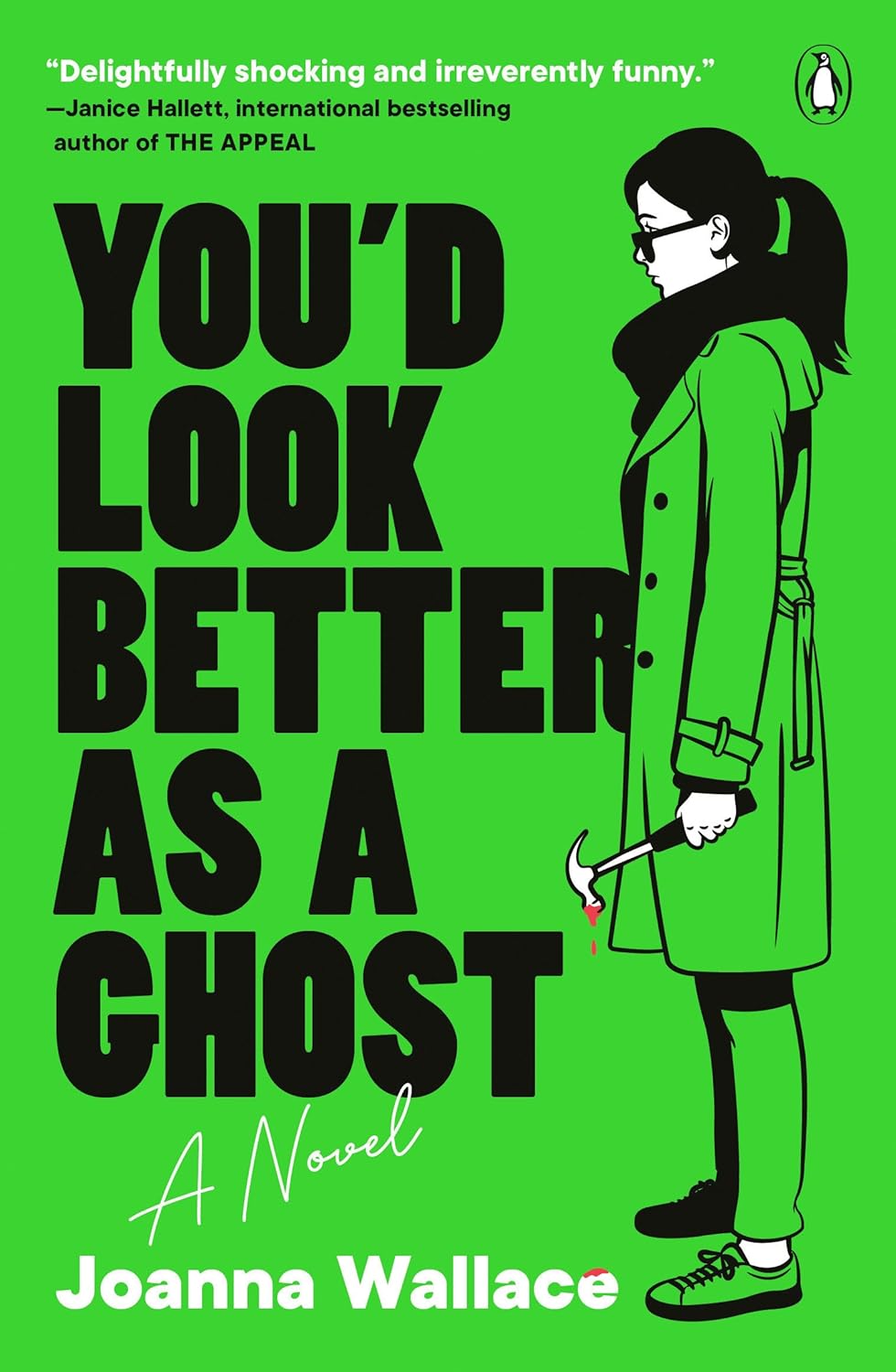
You’d Look Better as a Ghost by Joanna Wallace

Plot twists and a weirdly relatable serial killer offer readers a wild ride in this darkly comic thriller of grief and murder.

Joanna Wallace’s first novel, You’d Look Better as a Ghost, combines black humor and a realistic portrayal of grief with a serial killer, with whom readers are surprisingly inclined to empathize. This oddball story is both grim and unexpectedly entertaining.

When readers first meet narrator Claire, she is standing awkwardly at her father’s funeral, wondering at the strange behavior of the “serious-looking men in serious black suits… standing seriously too close and staring at me. Are they waiting for me to talk?” She assesses their comments, taking everything literally, contemplating human idiosyncrasies. She’s not all that good with people, and she’s also deeply grieving.

It’s not just grief. Claire has always struggled with the habits of those she calls “ordinary people,” a group she does not identify with. “Whenever I’m unsure of how I’m expected to respond, I use a cliché. Even if I’m not sure what it means, even if I use it incorrectly, no one ever seems to mind.” She lives alone outside of London, painting, running on her treadmill, and now wrestling with the loss of her father following a painful battle with early-onset dementia, psych wards, and abusive care homes. Her late father seems to be the one person she’s ever felt close to; flashbacks to childhood sketch a chilly if not disturbing portrait of her mother. Plagued by migraines, Claire gets a doctor’s referral to a bereavement counseling group. “I may not have cried, drunk to excess or wrung my hands in disbelief since Dad died but I’ve definitely become more reckless with my kills.”

Oh, yes: Claire is also a serial killer. She struggles with “ordinary people” to the extent that she often feels the need to end their lives, a process for which she enjoys taking her time. Her new bereavement group offers her potential outlets for her creativity, as well as new challenges.

In Claire’s witty, deadpan voice, You’d Look Better as a Ghost revels in dark humor. A new acquaintance “asks whether I want anything to eat. A slice of chocolate cake. That’s what I really want. But I’m mindful of the fact that I killed this woman’s sister fairly recently and the cake is ridiculously overpriced. So, I order a shortbread biscuit instead. Feels like the decent thing to do.” Claire has some very firm ideas of propriety; for example, pairing wellies with a kilt bothers her considerably more than dismemberment does. But the novel also deals seriously with the protracted grief of losing a loved one to dementia, and the potentially redemptive power of true friendship. Amid much irreverence, its themes are genuinely heartfelt and even sweet. This debut is fresh and unforgettable.


This review originally ran in the January 29, 2024 issue of Shelf Awareness for the Book Trade. To subscribe, click here.


Rating: 7 mugs of soup.

No Son of Mine by Jonathan Corcoran

Disclosure: Jon has taught as guest faculty in my MFA program. I admire his work and he is a dear friend.


Also, I am teasing you about a book that will not be published for months (April 1 of this year, no foolin’), but I’ll repost then to remind you.

Now on to the show.


I found this memoir remarkable. It encompasses much in terms of its time span and the bigger events in the world, and Jon accomplishes something special by being raw and vulnerable, and never self-indulgent. I think the struggles he portrays here will offer something to any reader, because we are all struggling to navigate even the closest of relationships. I am impressed by the writing in terms of that larger storytelling and meaning-making, as well as line by line.

Corcoran grew up in a small town in West Virginia that is just a few minutes’ drive from where I live now. (It’s always a little exciting to read a place written well that you personally know, and I did enjoy that part here. Elkins is not perfect, but I think this author has handled it with respect for both positive and negative qualities.) As a gay kid, he suffered in the town, in the evangelical church his family attended, and in his family itself. He did some secretive explorations of sexuality in West Virginia (not too dissimilar, I think, from those in The Rope Swing, which is however fiction), but did not live as an openly gay man until he left for college at Brown University. Coming from poverty, Brown was both a great accomplishment and a shock: a wider world, but rarified, and Jon was a foreigner to many of his peers and professors there. It’s at Brown that he met Sam.

In his second year at Brown, Jon is in Portland, Maine, with his boyfriend, Sam, meeting Sam’s family for the first time. It’s his twentieth birthday when his mother calls, seething with what she’s discovered. Jon confirms that he is gay. “You are no longer my son,” she says, and she hangs up. This leaves him traumatized, trying to finish college with no financial or emotional or any other kind of support, with no family, and no options, surrounded by Ivy League administrators whose understanding of what all this means is so poor that he is advised to take a year off and travel. His mother spends the next six months calling in the early morning and waking him up to tell him he will die of AIDS or go to hell, or both.

Jon and his mother spend years–fifteen years, the rest of her life–being estranged and trying again, having massive, blow-up fights and years of silence, and abuse and toxicity and cautious attempts at peace and acceptance. Her bad behavior is horribly, shockingly bad. But tangled up with the bad is the fact that this is his mother, his caretaker, whom he has loved, and who still (somewhere, twistedly) loves him, and misses him when they are on the outs. It’s a level of trauma that’s hard to fathom if you haven’t lived it. But as a narrator, he does a good job of describing its effects, including a mistrust of memory and various physical ailments. It also poses some challenges for his relationship with Sam, which will continue until they eventually marry, and into the present.

This is a memoir of trying to reconcile a parent that the narrator loves, his memories of her and of his hometown, with the pain inflicted at the hands of that same person (and place). It’s all a puzzle, to question the causes, to wonder how much forgiveness is due to such a figure. It’s a memoir that is also an assay, both a personal narrative and an exploration of ideas. “…some part of my brain is perpetually trying to explain her actions, to find the root cause for them, and what this really comes dangerously close to is the notion that her actions have an excuse, that if I searched hard and long enough the hurt and pain she caused me can be written away. But she hurt more, a voice says, and I don’t doubt that. So here I am, operating the world’s worst justice system from the recesses of my brain.” “I do not know how to balance all the pain she caused with all the pain she felt.”

There’s a lot to appreciate here, and a lot of wisdom that I think will help just about anybody. Not to say answers, but wise observations about one man’s experience. Most of us are wrestling with difficult, tangled-up relationships where abuse and love meet; many of us are struggling with what to take and what to leave about a family or a place. “I hear her laugh, hear the crinkle of her dyed-blonde hair. I rub her cracked feet, feel her hand on my back. I smell her nicotine fingers. There is her cup of Lipton tea in the little ceramic mug that is white with flowers around the brim. I taste the milky black tea. And I say, I don’t want to lose this all. I don’t want to lose what made me.” There is also some lovely writing here. If the story itself is often difficult, there’s a remarkable amount of grace, beauty, and hope. I think it’s a book for anybody and everybody. Thank you, Jon, for sharing so much in a way that feels both raw and wide-open, and careful and thoughtful. I’m awed.


Rating: 9 paper bags.

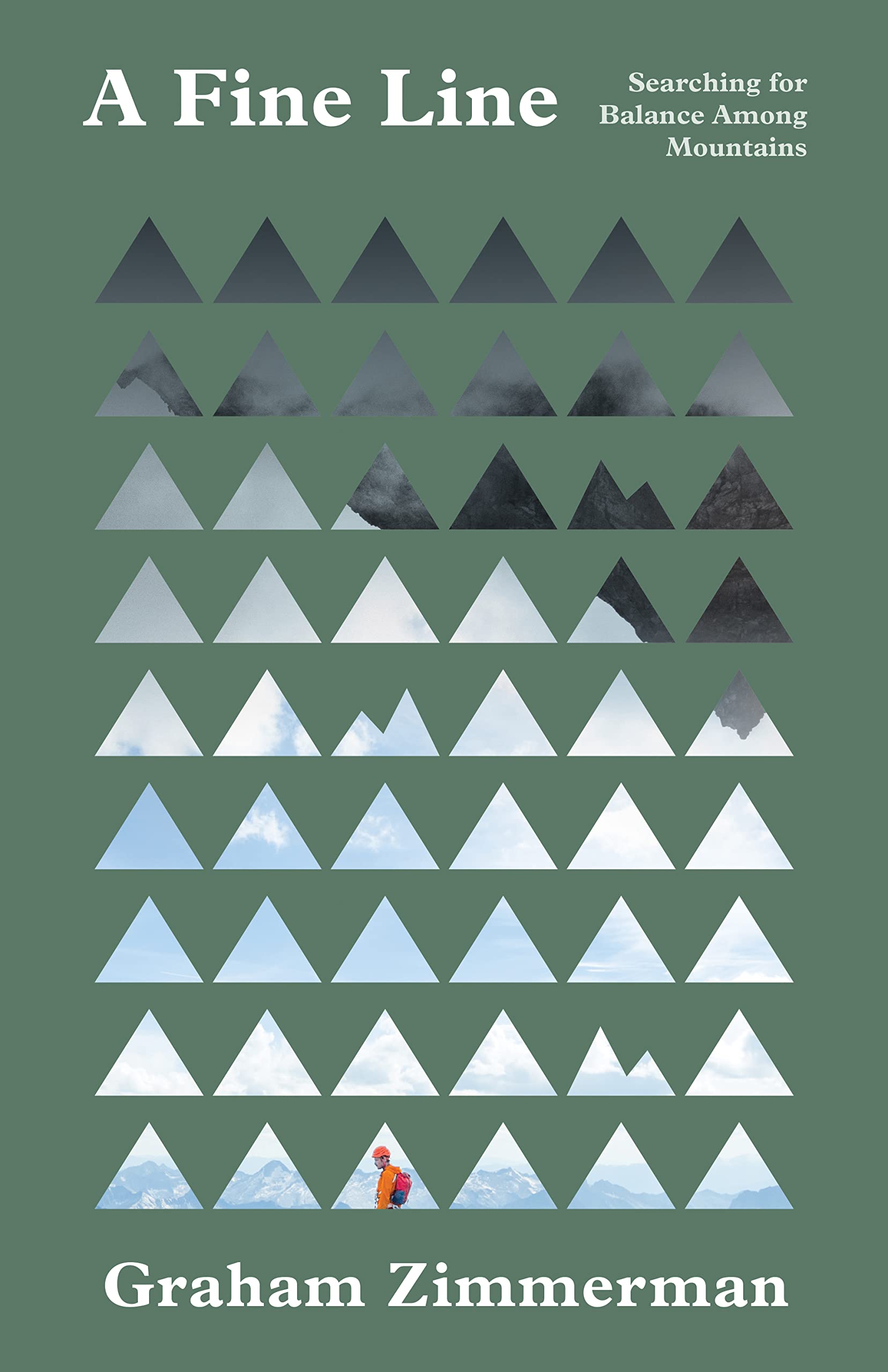
A Fine Line: Searching for Balance Among Mountains by Graham Zimmerman

Alpine climber Graham Zimmerman’s memoir, dense with lessons learned and offered, recounts how he sought balance between his sport and the other elements of life.

Graham Zimmerman felt strongly about climbing from his earliest experiences growing up in the Pacific Northwest, and by age 25 was an avid and accomplished international alpinist with his dreams focused on nothing else. But injury, loss, climate change, and a yearning for connection have forced him to consider how to combine his love for alpine ascents with social and environmental pursuits. A Fine Line: Searching for Balance Among Mountains is his thoughtful story of climbing communities in broader context, and his philosophies for a life well lived.

Not yet 40 at its writing, Zimmerman acknowledges “this is not a complete work,” calling his book “a signpost along the way.” It is still dense with lessons learned and offered, however. At just over 200 pages, A Fine Line reads quickly, many of its action sequences adrenaline-filled as Zimmerman recounts climbs with varying levels of success. It is also a neatly organized memoir, with the tensions between climbing and everything else appearing early. Following a major award, he experiences a significant fall, injury, and lengthy recovery, emphasizing the dangerous nature of his passion and his financial insecurity. The women he attempts to date react poorly to months-long absences on risky expeditions. Frequently climbing at high altitudes amid shrinking glaciers also alerts Zimmerman (trained in geology and glaciology) to the impacts of human-caused climate change. And the young alpinist wrestles with loss, as numerous fellow climbers–his friends–die in the mountains. A mentor cites what he calls the “100-year plan”: to make decisions that will set one up to live to be 100. “I was 26 and only occasionally thought about turning 30, let alone ticking over into triple digits,” Zimmerman reflects. “Do I have a death wish…? No, just a case of severe myopia.” This plan, and meeting the fellow athlete whom he would marry, reset the narrator’s views on risk. Over time he comes to focus on being not just a better climber, but a smarter, safer one: “It hadn’t been more time in the mountains that had set me up for success; rather, it was a stable relationship and being surrounded by positive influences.”

As its subtitle forecasts, A Fine Line is about finding balance between an extreme sport in remote natural settings and “actual life in the lower regions.” As a crafted work of memoir, the book mirrors that achievement with its own balance between gorgeously written adrenaline rushes and philosophic reflections about intentional living, healthy relationships, athletic ambition, and service to human communities and the natural world. Obviously for fans of extreme outdoor sports, Zimmerman’s debut is also recommended for readers seeking wisdom and balance in any pursuit.


This review originally ran in the August 4, 2023 issue of Shelf Awareness for the Book Trade. To subscribe, click here.


Rating: 7 pitches.

Walk the Darkness Down by Daniel Magariel

Grim but with a final upward turn, this novel of loss, grief, and strained bonds investigates human connections and disconnections.


In Walk the Darkness Down, Daniel Magariel (One of the Boys) introduces a couple separately torturing themselves through grief and eventually coming together again.

Marlene and Les, who live in a small, troubled town on the Atlantic coast of the United States, lost their young daughter years ago. In suffering, they mistreat each other. Les is a commercial fisherman on an offshore scalloping boat with a crew of other men; punishingly hard physical labor, camaraderie, and violence combine in a cocktail that helps distract him from his loss. Marlene drives the streets at night, mining memory, searching for the deep and searing pain that will help her remember. During his brief stays at their apartment, they repeat a pattern: Marlene breaks the bedroom door and Les fixes it. When Les is offshore, she picks up local sex workers and brings them home to clean them up and feed them. One of these encounters develops into something resembling friendship, just as Les’s crew fractures and the dangers of his work increase. Marlene clips newspaper articles about freak natural occurrences: mass deaths of red-winged blackbirds and horseshoe crabs; new migrations of American bullfrogs; wildfires, droughts, and the widening of tornado alley. As their two lives approach new crises, Marlene and Les must chart a course out of self-destruction.

Magariel’s prose is as quietly lovely and evocative as his subjects are bleak. “The woman settles into her chair, and Marlene proceeds to lay bare the details of her face. The worry lines of her forehead Marlene excavates with a pass over the brow.” His settings showcase realistic detail, and both beauty and damage: fecund coastlines and wetlands, the harsh sea, an old family home, and garishly decorated working-class bars. Marlene and Les treat one another with alternating callousness and tenderness; Les’s relationships, especially on the boat (with what Marlene calls his “other family”), reveal a memorable form of rough, ungentle love.

Relationships across great distances–physical and psychic–are a central concern of this novel, which is focused on how its characters handle pain. “You got to abide with your darkness as if it were a scared child that wakes up in the middle of the night and needs to be walked back down to bed,” Marlene’s newest acquaintance asserts, but each character wrestles with hurt in their own, often-wounding ways.

Stark and tragic, Walk the Darkness Down offers a harrowing view of individual and familial suffering–with empathy and, ultimately, with hope.


This review originally ran in the June 6, 2023 issue of Shelf Awareness for the Book Trade. To subscribe, click here.


Rating: 7 lobsters.

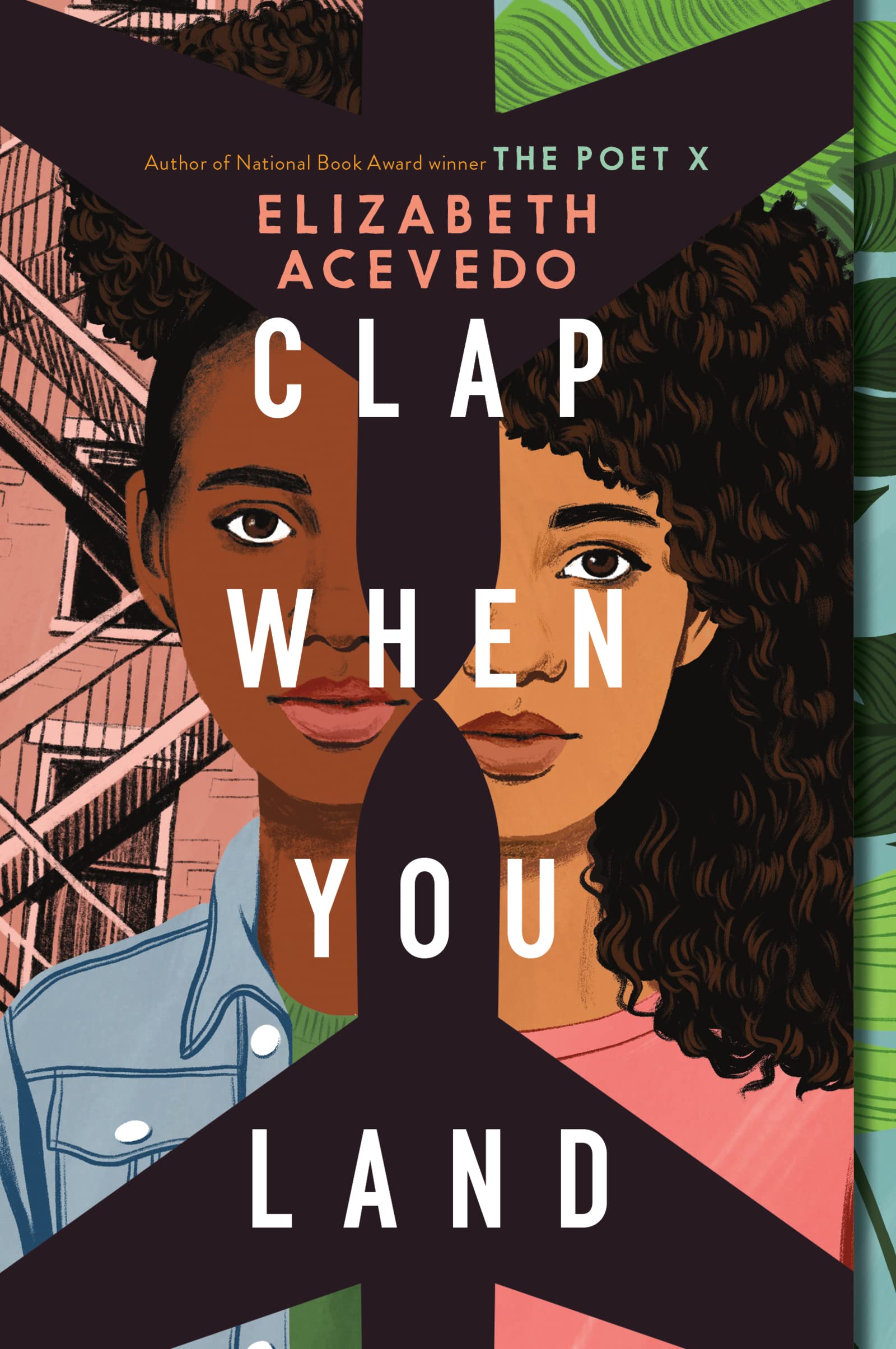
Clap When You Land by Elizabeth Acevedo

Clap When You Land is a novel in verse, in two alternating perspectives. Camino lives in a village in the Dominican Republic with her Tía, who has raised her since her mother died some years ago. Her father lives in New York, and comes to stay each summer for several months. Camino loves her father, and feels loved in return; he supports her and her Tía better than they could afford to do on their own, with the small funds raised by Tía’s doctoring duties. She’s a healer and midwife, skilled with herbs and prayer, and Camino wants to follow in her footsteps, but take it a step further: her dream is to study medicine at Columbia University. Meanwhile, Yahaira lives in New York City with her parents. She’s a former chess champion, but she’s given it up, which has put a rift between her and her father. The two girls are just two months apart in age, approaching 17. They have the same father, but they don’t know it until after he is killed in a plane crash, traveling from his home with Yahaira to spend the summer in the DR, as he does every year.

In their alternating chapters, we see two teenaged girls wrestle, first, with their futures: Camino is concerned about where to go with her life if her father doesn’t help her get to the States. Her options in the DR are few, and there is a predatory young man after her. Yahaira is upset because she’s discovered that her father had a secret – although it’s not the big one she’s about to learn, that she has a sister. Each girl has a best friend: Camino’s is about to give birth, and Yahaira’s is also her partner. We see them both struck by the loss of a father that each loved and admired. And then we see them hit by another shock: they’ve lost a father, but each has gained a sister. What will they do with that knowledge?

I like the questions raised by the twinning of the two girls, what each might have been under different circumstances, what is conveyed by certain advantages. (Camino’s household is better off than most in her village, but still much poorer than Yahaira’s unremarkable middle-class home in Morningside Heights.) At its heart, this is a story about family love, grief, and forgiveness. It’s lovely told in simple verse: easy to read but also contemplatively paced, dealing as much with emotions as events. As a YA novel, I think it would be well suited to thinking about loss for young people, or for any of us.

Papi’s two families, and his keeping the girls in the dark about each other’s very existence, isn’t much dealt with: the character is dead before we meet him, so we only see him in their memories, and he never gets to justify his choices. That’s rather more complicated.

Another thread involves the crashed airplane, which is based on the real American Airlines flight 587. Both the fictional and the real flights left New York headed for the DR filled with Dominican-Americans; the Dominican community in New York was badly shaken by its loss, and that’s a large part of what inspired Acevedo to write this novel (as described in her Author’s Note). That community-wide impact is well described here, which I think is a service.

Sad, thought-provoking, but also a beautiful honoring of a community.


Rating: 7 bachata songs.

Maximum Shelf: Let Us Descend by Jesmyn Ward

Maximum Shelf is the weekly Shelf Awareness feature focusing on an upcoming title we love and believe will be a great handselling opportunity for booksellers everywhere. The features are written by our editors and reviewers and the publisher has helped support the issue.

This review was published by Shelf Awareness on May 17, 2023.


Two-time National Book Award-winner for Fiction Jesmyn Ward (Men We Reaped; Navigate Your Stars; The Fire This Time; Sing, Unburied, Sing; Salvage the Bones) takes a different direction with her fourth novel, Let Us Descend: it’s her first historical narrative. Beautifully written and heartrending, Ward’s story sensitively handles grief, love, and recovery. On a rice plantation in the Carolinas, an enslaved teenager named Annis narrates as she works alongside her beloved mother. Mama is a source of comfort and strength even as her finger bones are “blades in sheaths.” Annis says, “The first weapon I ever held was my mother’s hand.” This steely woman teaches Annis lessons of combat learned from her own mother, one of thousands of warrior wives to an African king, tasked with both protection and elephant hunting. “In this world, you your own weapon,” she tells her daughter, and Annis will need to be.

Annis’s father is the plantation owner who owns her and her mother. Annis has half-sisters in the big house. “My sire’s house hulks; its insides pinned by creaks,” and her “sallow sisters” have a tutor to read to them, to teach them the texts of ancient Greece, about bees and wasps and Dante’s Inferno: “The tutor is telling a story of a man, an ancient Italian, who is walking down into hell. The hell he travels has levels like my father’s house.” Let Us Descend‘s title is a nod to Dante, and a cue to the reader to notice hells, descents, and journeys south. Annis listens and learns. Through her natural gifts, her own interest, and with her mother’s help, she becomes skilled in foraging: herbs, mushrooms, medicinal plants, and simple foods. She learns to befriend the bees she hears her sisters’ tutor speak of.

Then Annis’s father chooses to sell her mother south. The “Georgia Man” takes her away in a line of stolen people for the long walk to market. Annis falls into a near-fatal grief at being left without the most important person in her life, until a kind friend pulls her back to the surface. But soon, Annis and Safi, her friend-turned-lover, are sent on the same walk with the Georgia Man. From the plantation where she was born, Annis makes a death march to a New Orleans slave market and is sold to a cruel lady whose Louisiana sugar plantation marks a further descent, into a new level of hell. Others will uplift her along the way, but she never shakes the excruciating grief for her mother.

Along the way she gains and loses friends, and meets a spirit: Aza controls the storms and winds, and has stolen the name of Annis’s maternal grandmother, the warrior Mama Aza. “Aza’s hair a living thing: scudded clouds, the setting sun lighting them on fire. She leans forward and a breeze blows from her. Feels like the slap of a freshly washed linen on my face, snapping in a cool wind.” The spirit seeks her own identity and self-importance in relation to others, and has locked onto Annis’s maternal line as a way to achieve this: she models herself after the grandmother Annis never knew, and her use of the name Aza represents both connection and theft. That Annis refers to enslaved people like herself as “stolen” adds a layer to Aza’s use of the name.

Less centered around plot and character than Ward’s previous novels, Annis’s story is more elemental and thematic, dealing primarily with grief, forces of nature and human evil, villains and allies. The spirits she meets–chiefly Aza, but others as well–are closely associated with natural forces. “Another spirit, white and cold as snow, walks the edge of the river; it hungers for warmth, for breath, for blood, for fear, and it, too, glances against the enslaved stolen and feeds. Another spirit slithers from rooftop to rooftop before twining about wrought iron balconies outside plaçage women’s bedrooms, where it hums, telling the bound women to portion out poison in pinches over the years, to revolt, revolt, revolt.” These spirits can help but also harm, offer but also take away; they may represent another form of attempted ownership, as Aza has taken Mama Aza’s name. In a magical-realism twist, Annis finds these spirits widen her world beyond her immediate suffering to other timelines and possibilities.

Just as Ward’s title refers to Dante’s story of a descent into ever-deeper levels of hell, her hero makes a parallel, nonconsensual descent into the deeper South, into pain and suffering and sorrow, and into the worsening and worst of humanity. The novel moves with Annis from the Carolinas to Louisiana, and in story, back to Africa, where Mama Aza established the fighting spirit she would pass on.

Ward gives Annis’s voice a raw strength and musicality. After she is imprisoned in an underground cell by a particularly sadistic plantation owner, Aza tells her, “When you were up north, your sorrow choked your song. Swallowed it down. Even so, it hummed. But the walk changed it. The further you went, the more it rose until the woman put you down in the earth. Then it shrieked.” Attention to descriptive detail emphasizes Annis’s close relationship to place, and the importance of the land itself (not least in supplementing the enslaved people’s painfully meager allotted diet). “The water reaches in every direction, duckweed bright and green, floating on the murky wet. Cypress, fresh with rain, shimmers.”

As much pain, struggle, torture as there is in these pages, there are also various forms of love, and great strength, power, and personal reclamation. Let Us Descend ends with surprising hope. “How the whitewash of starlight would buoy them along. How they dance with the rocking deck. How them sing.” With this novel, Ward’s talent continues to deepen and glow.


Rating: 6 broad, glossy leaves.

Come back Friday for my interview with Ward.

Maureen by Rachel Joyce

Following The Unlikely Pilgrimage of Harold Fry (2012) and The Love Song of Miss Queenie Hennessy (2014), the recently released Maureen completes a trilogy of novels about pain, loss, forgiveness, self-discovery, and kindness. [This review contains spoilers for the previous two books.] I love, among other things, that these books explore self-knowledge later in life, that it’s not just the young people who grow and find themselves.

This is a slim novel, just beyond novella length. The events of Pilgrimage and Love Song are past – that is, Queenie’s illness and death, and Harold’s surprising (to everyone including himself) walk across England to visit her at the end of her life. Harold and his wife Maureen are living quietly again. He found some peace on his walk, but Maureen not so much. The absence of their son David, whose suicide at age 20 is now fully thirty years past, is still a daily haunting for her. (We don’t get access to Harold’s interior here; this story is told in close third person in Maureen’s perspective. In her eyes, however, he lives a simple, happy life, playing drafts with neighbor Rex and birdwatching.) It has come to Maureen’s attention, via a postcard from Kate (Harold’s friend from his walk), that Queenie had a garden, that her garden was famous, and that she had a monument to David in it. This information has bothered Maureen enough that Harold has finally told her to just go on and make the trip. Maureen opens with her hitting the road – she will drive, not walk, thank you – while fretting about Harold’s ability to use the dishwasher or find a mug.

This is therefore Maureen’s own version of Harold’s big journey. Hers is shorter but in some ways she’s less well-equipped, being a less intrinsically nice person. Not to say she’s entirely unlikeable; our access to her interior means we can appreciate how difficult all of this is for her, and her own painful knowledge that she’s doing the wrong thing (the not-nice thing, frequently) even as she’s doing it. She’s a prickly person, but she feels a lot of pain, and knowing this goes a long way.

I won’t give away too much about Maureen’s travels. It’s a hard time. She’s not great at asking for help, and she does run into some difficulties. (Rex, offscreen, remains deeply loveable. Is there a Rex book??!) But she makes efforts, and they are terribly rewarding for her readers and rather for her, too. In the end, I think we see that she gains from the experience.

The Harold trilogy (if you will) are quiet, British stories, about older people suffering life’s small and large injustices, troubles and traumas. Even Maureen, easily the most challenging of the three, tugs hard at my feelings. These are very feeling books.


Rating: 8 sandwiches.

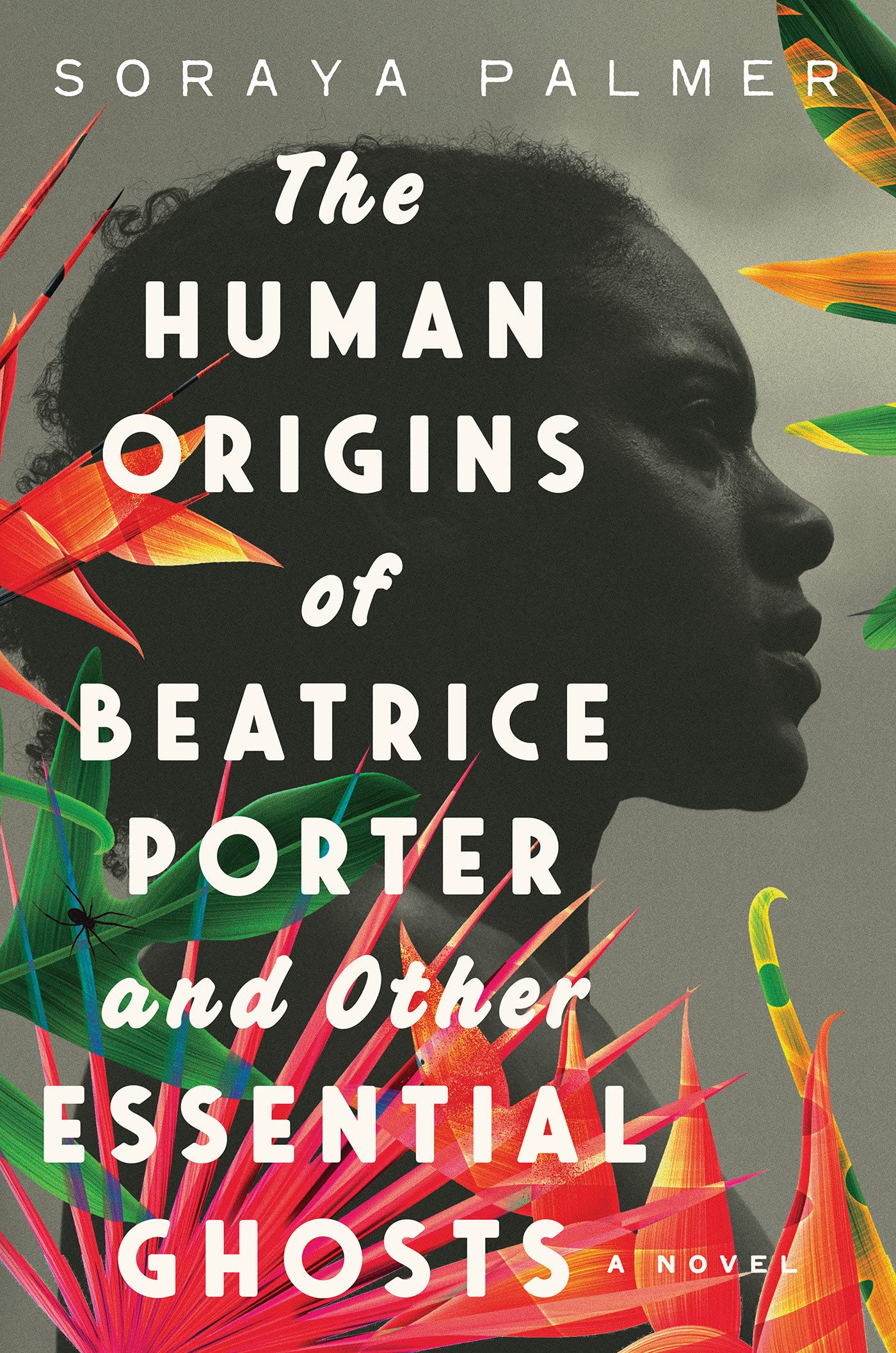
The Human Origins of Beatrice Porter and Other Essential Ghosts by Soraya Palmer

A fracturing family in Brooklyn with roots in Jamaica and Trinidad navigates love and loss in this debut novel influenced by Caribbean folktales and the power of stories.

The Human Origins of Beatrice Porter and Other Essential Ghosts is Soraya Palmer’s first novel, a phantasmagoric interweaving of family and folktale. Readers first meet two sisters, Sasha and Zora, when they are young girls in Brooklyn’s Flatbush, dealing with the household complexities of their father Nigel’s violence and infidelity and their mother Beatrice’s headaches and distance. Soon this timeline meanders to visit Nigel and Beatrice as children in Jamaica and Trinidad, respectively, and then as a young couple. These individual and family histories blend with folktales of Anansi (spider, god, man, woman, trickster storyteller), demons and exorcisms. The Rolling Calf haunts butchers, and Mama Dglo is the protector and mother of the ocean and “all things water,” among other mythical tales. The narrator of these time-jumping tales, with the repeating refrain “Let me tell you a story,” is mysterious, driven by motivations not always clear nor necessarily reliable–but always concerned with the power of storytelling itself: “You see I am what they call Your Faithful Narrator, found in places the West calls fairy tales, what men call gossip, what children call magic.” Small actions can be revolutionary: “They realize there is nothing more dangerous than a story with an owner that no one can touch.”

In the 1990s and 2000s, Sasha discovers chest binding as she navigates gender and sexuality. Zora studies her book of Anansi stories and hones her craft (that of her namesake) in her diary. As much as the sisters love each other, their respective self-explorations push them apart. In different ways, Nigel and Beatrice separate but remain intertwined. Caribbean and West African folktales continue to influence each of these threads until they come together again in Trinidad with a 106-year-old grandmother, several reunions, an ending and a new beginning. None of these characters is entirely innocent or faultless, but they are finely drawn with compassion and compelling, colorful pasts. Love and family contain both beauty and pain in this telling.

Palmer imbues her novel with both snappy pacing and deep feeling in a lovely prose voice with music and poetry behind it. The Human Origins of Beatrice Porter has big things to say about sisterhood and family; race, sexuality and class; life and death; and above all, the power of storytelling. “Why do we remember some stories more than others? And what happens to the ones that we forget? Let me tell you a story.” The result is wide-ranging and thought-provoking–but also an immersive and sumptuous read. Palmer shines.


This review originally ran in the March 3, 2023 issue of Shelf Awareness for the Book Trade. To subscribe, click here.


Rating: 7 Apple J’s.