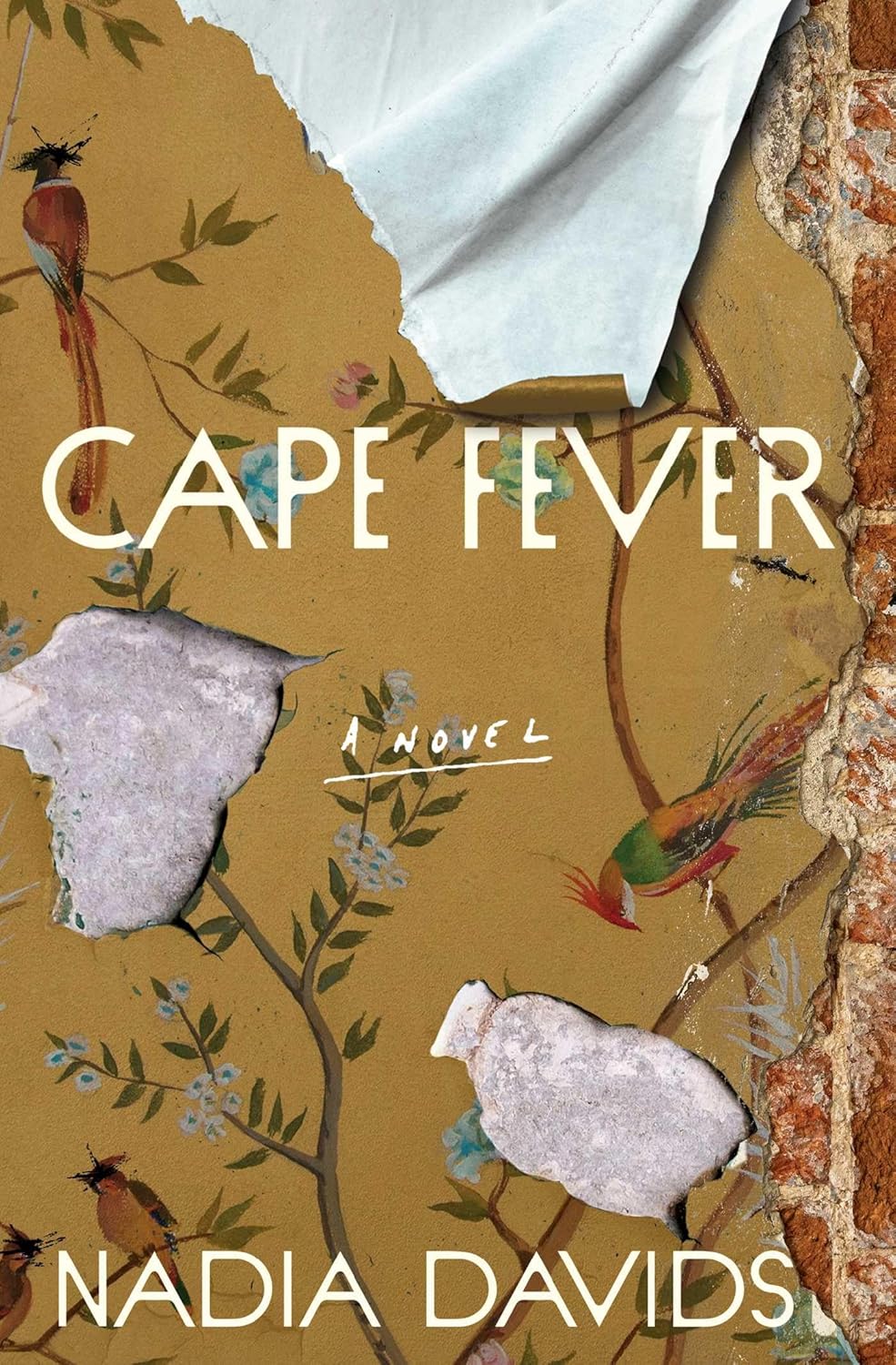
Cape Fever by Nadia Davids

A lonely colonial woman offers to write letters to the fiancé of her maid and the two become disturbingly intertwined in this evocative gothic tale of race, class, and spirits.

“I come highly recommended to Mrs. Hattingh through sentences I tell her I cannot read.” South African novelist Nadia Davids’s twisting gothic drama Cape Fever, her U.S. debut, opens by highlighting narrator Soraya’s ability to read, which she keeps from her employer. Soraya goes to work for the settler Mrs. Hattingh in 1920: hired as a combined cleaner and cook, the younger woman understands that the elder is not as wealthy as she wishes to appear. In the colonial city in which Mrs. Hattingh reigns over a large, lonely home, Soraya’s close-knit, loving family lives in the nearby Muslim quarter; Soraya is permitted by her employer to visit only rarely. Her father is an artist in religious calligraphy, creating beautiful works of prayer and devotion. The word “proclaim,” he instructs her, is “also read, recite. You see? For us, to read, to recite, is one,” and “The person is a pen. The person is paper.” Soraya’s fiancé, Nour, is an accomplished scholar who works on a farm while saving for teachers’ college.

There are moments in which Soraya feels something like fellowship with her employer, when she intuits that “every woman, rich or poor, madam or maid, dreams of escape.” But working for and living with Mrs. Hattingh, under power structures bigger than the individual, is deeply unpleasant. “She’s never understood the scale of what she wants and asks for.” Soraya retreats, in her small room, into the stories and characters that have come to her all her life: the Gray Women, as she terms the spirits that she alone can see; a seawoman with ink for blood; a woman who makes a baby out of soap. She finds Mrs. Hattingh’s house is teeming with spirits.

Mrs. Hattingh introduces a new comfort and stressor when she offers to write to Nour on Soraya’s behalf. As one woman takes the voice of the other–and intercepts the correspondence that arrives in return–their identities blur in disturbing ways. Soraya holds what she can of her own life in private and cherishes her visits to her family’s home, until even these are forbidden. In the increasingly claustrophobic manor, the tension between the two women builds, resulting in complex layers of psychological intrigue amid themes of class, race, love, grief, and haunting. In Soraya’s compelling voice, Davids blends mysticism, quiet power and resistance, and pain born of a long stretch of history in this unsettling tale of suspense. Cape Fever is beautiful, discomfiting, and moving.


This review originally ran as a *starred review* in the October 28, 2025 issue of Shelf Awareness for the Book Trade. To subscribe, click here.


Rating: 7 pickled lemons.

Girls with Long Shadows by Tennessee Hill

Identical triplet girls are linked to tragedies across generations in this evocative first novel set along the swampy Texas Gulf Coast.

Tennessee Hill’s first novel, Girls with Long Shadows, is a dreamy, atmospheric tale of sisterhood and coming-of-age in the fictional town of Longshadow, on the Texas Gulf Coast. Nineteen-year-old triplets Baby A, Baby B, and Baby C were orphaned when their mother died in childbirth; their father’s identity remains a mystery. But they have always known family in the form of their loving but distant Gram (“Manatee” to the townsfolk, for her swimming prowess) and their adopted, nearly deaf younger brother, Gull. The whole town looks askance at the girls, spookily identical and associated with their mother’s early death. The family’s golf course, Bayou Bloom, provides respite, and the bayou itself (where Gram takes a daily swim, joined sometimes by one or more of the girls) offers a connection to nature, its fecundity and floods. Then one fateful summer, an act of violence, combining desire and objectification, ruptures the triplets, the family, and the town.

A tautly plotted Southern gothic, Girls with Long Shadows takes a distinctive perspective in Baby B’s elegiac narration. “That weekend something gurgled beneath, rattled us where we stood.” And: “Even before the worst of what that summer would bring was upon us, I began to mourn the girls we had been.” Baby B speaks as “we” as often as “I.” Only a few people other than themselves can tell the girls apart; even the boys they date may not make the effort. And intermittently the perspective shifts to a “Front Porch Chorus,” in which the town speaks collectively, observing the girls from without: “They’re a blur we never bothered to untangle.” This lack of distinction is both a wound for the triplets and an indelible part of their identity. They feel each other’s sensations and know that this is a boon. Without that link, they would be less themselves. In the eyes of the town, however, they are less human for being undifferentiated, more object or mirror. “All those boys touching all of us at the same time, hands on hands on bodies on hands. It wasn’t even that Pete was the one touching me, it was all of them, their inability to leave us be.”

Encompassing a single summer in the dripping, humid South, Hill’s haunting debut deals in lyricism and tragedy as it considers the harm done to young women by the outside gaze.


This review originally ran in the March 31, 2025 issue of Shelf Awareness for the Book Trade. To subscribe, click here.


Rating: 7 bikini tops.

Mexican Gothic by Silvia Moreno-Garcia

I really enjoyed Gods of Jade and Shadow, with the caveat for sensitive readers to beware a certain amount of gore and darkness. This one is imaginative, compelling, and surely fulfills its claims to the horror genre; but some of those more horrifying elements started to push my tolerances, which are famously high (though not limitless). I’d thought about putting this in white text, like I do spoilers, but I think it deserves a proper trigger warning: this novel not only deals in sexual contact without consent, but those scenes were heightened – at least in my feelings – by a mind-control element that caused the nonconsenting party to enjoy what was happening, as it was happening (although not before or after). This gave me a unique ‘ick’ I’d perhaps not encountered before. And in considering the book now, I find that part of the experience is overshadowing the rest for me.

It’s a good story, and well executed. I like the setting – beginning in 1950s Mexico City and then moving to a classically disturbing, possibly haunted, gothic mansion in disrepair, high in the misty rural Mexican hills. I like the details, including society’s dos and don’ts and the dresses and accessories of a popular, pretty, privileged young woman, our protagonist, Noémi Taboada. She’s plucky, thinks for herself, is unwilling to settle for a young woman’s few destined roles. These days, she’s thinking she’d like to study anthropology in graduate school. She’s well read, and also loves a party, a nice dress, and a fawning young man (and preferably a new one on a regular schedule). I like her.

Her cousin Catalina is a bit different, more demure, a few years older, enchanted by fairy tales and romance, which is how she ends up married to the enigmatic Virgil Doyle. Married, and spirited away to the yet more enigmatic estate known as High Place, on an abandoned silver mine. Where Noémi is to visit, and perhaps to rescue her.

High Place is bad news, its residents sinister (and dedicated to eugenics, ick again), its history very mysterious. Noémi is up for a lot, but this place may get the best of her. There’s always Francis, a Doyle cousin who might – on and off – be an ally. There’s a creepy old cemetery (of course), and something strange going on with the mushrooms. There are actually some really interesting ideas at play. But, like I said, the special ick I found here challenged me quite a bit.

I’ve left the rating at a 7. It’s a well-done story. But it’s left me feeling not so great. I’m intrigued enough to keep on checking out Moreno-Garcia’s backlist.


Rating: 7 cards.

Maximum Shelf: House of Cotton by Monica Brashears

Maximum Shelf is the weekly Shelf Awareness feature focusing on an upcoming title we love and believe will be a great handselling opportunity for booksellers everywhere. The features are written by our editors and reviewers and the publisher has helped support the issue.

This review was published by Shelf Awareness on January 4, 2023.


Monica Brashears’s House of Cotton is an engrossing coming-of-age novel about ghosts, mothers and the struggle to survive. It is also a novel of the lingering challenges of race and class. Brashears’s prose style is sharp and incisive, and the entrancing, distinctive voice of her protagonist is by turns weary, sardonic and yearning. A haunting story and unusual perspective make this a memorable and thought-provoking debut.

Magnolia Brown is 19 years old when her grandmother, Mama Brown, dies. Her absent mother struggles with substance abuse and an abusive partner, so that leaves Magnolia more or less alone in the world, fending off a lecherous landlord (who is also deacon at her grandmother’s church) and struggling to get by. She works the night shift at a Knoxville, Tenn., gas station, where she tries to care for Cigarette Sammy, the muttering man who goes through the trash outside (“the only other Black person I see on this side of town”), between one-and-done encounters executed by her Tinder persona, Carolina Nettle. It’s a tenuous living, and she misses Mama Brown terribly. One night “a whistling man with blood-smeared hands” walks into the gas station. “Hearing a man whistle when he walks in a place he don’t own ain’t natural. Like finding a chipped tooth on concrete. An omen.” When he returns from the bathroom after cleaning his hands, she sees the man is polished, manicured, smooth-talking, wearing good cologne. Cotton offers Magnolia a modeling job, but she’s wary; Magnolia knows omens. But she’s also broke, and quite possibly pregnant.

At the address he gives her, Magnolia finds the Weeping Willow Parlor, a funeral home run by Cotton and his gleefully friendly, drunk Aunt Eden. The pair is eccentric: Cotton needs to constantly finger a piece of pocketed twine to remain calm; Eden is something of an alcoholic and firmly does not believe in ghosts. They are wealthy, and culturally foreign to Magnolia.

Cotton and Eden Productions offers Magnolia a most unusual modeling job: they provide families with lost or missing loved ones a final contact, a side business something like a séance. With Eden’s uncanny funeral-home makeup skills and Magnolia’s amateur acting, Magnolia will play the part of the dead. She’s used to pretending; it has long been her coping mechanism: “When I get this way, when I feel like kudzu is wrapped tight around my ribcage and I’m bleeding a bright heat, I like to slip inside my head.” She slides smoothly into Cotton and Eden’s world and their comfortable, decadent habits: cocktails at all hours, joyriding in the hearse. She moves into the funeral home, lets Eden apply pale body paint to allow her to become missing white women and men, and begins saving her money. The ghost of Mama Brown checks in with Magnolia: knowing, comforting, but judging as well. Reading a letter Mama Brown left her, Magnolia knows “[S]he ain’t left me. I ain’t seen her, but she sits by me. Unseen but real as humidity.” Soon the ghost will be seen as well.

Magnolia’s life becomes split. At the Weeping Willow, she lives in ease and has money to spare, but feels estranged from the very different world Cotton and Eden come from. The relationship is transactional, and she’s always acting, even when the makeup is off. And then there is Mama Brown’s home, where the garden (the place Magnolia still meets her Tinder dates) grows out of control. By tending the needs of the rich white folks who help support her, Magnolia has literally let her own house get out of order. Her caretaking of Cigarette Sammy has become disrupted. Cotton’s requests get weirder and weirder, and Mama Brown’s ghost expresses concerns about Magnolia’s choices, which have affected Mama Brown in the afterlife. The worldly and otherworldly pressures mount.

Set in the grand Weeping Willow Parlor, complete with secret passageways and haunted by Magnolia’s much-loved but literally disintegrating grandmother, House of Cotton pits traditional gothic elements (the haunted castle, women in distress, death and decay) against contemporary questions about race and class and the persistent legacy of slavery. It shares the genre’s sense of suspense and foreboding, but Magnolia’s struggles are very realistic. Her first-person narration brings an immediacy to the events, and an intimacy that’s advanced by her frank voice and turns of phrase. On its face, this is an intriguing ghost story with a compelling, beleaguered protagonist. In its layers, there is much more at stake.

“I am a tattered quilt of all the women before me. I am a broken puzzle,” Magnolia states, but she is clearly a survivor as well. Despite her many fears, she is somehow fearless in pursuing the truest version of herself. Brashears excels in strong characters and deeply felt emotions, and in a robust sense of place: Knoxville shines as both urban and cultural setting and in the details of its natural world. Brashears offers a fresh new perspective on Appalachia and the American South, and Magnolia’s rich voice will echo with readers long after the pages are closed.


Rating: 7 missing fingernails.

Come back Monday for my interview with Brashears.

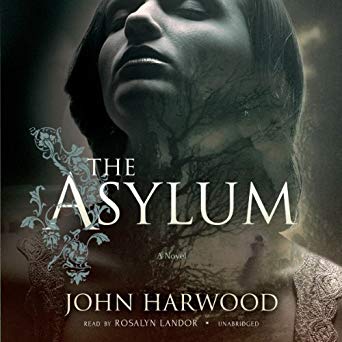
The Asylum by John Harwood (audio)

This is a Victorian gothic mystery/psych thriller, and how it ended up in my iPod is another mystery which I cannot explain. I hit ‘play’ on it on a whim, and listened to the tracks from disc 1 and then there were no more. I was involved enough that I then went and paid for the audiobook (which I never do), and now I’m left unsatisfied with my purchase.

Georgina Ferrars wakes up in an asylum (a madhouse, she surmises, although the doctor in charge demurs at the term), with no memory of the past several weeks. She’s told she checked in under the name Lucy Ashton; her L.A.-monogrammed valise supports that claim. When Dr. Straker telegrams her uncle, the reply comes immediately: Georgina Ferrars is here at home. Your patient is an imposter.

It’s an engaging enough opening, and what unfolds from here continues to intrigue. It seems Miss Ferrars has a double, a new friend (or long-lost something-or-other?) named Lucia Ardent (note the initials), and the two look just alike. The question now is which is whom? Miss Ferrars is missing her two prized possessions: a dragonfly brooch that was a gift from her father to her mother; and a writing case, with her journal inside. If that journal could only be found, we might learn what happened in the missing weeks…

Solid plot so far, then. I found it a little bit exasperating to listen to the distraught young lady who (how Victorian) is wont to become faint at every shock, but okay, it’s part of the period setting. When the diary is located, we start learning more about the Ferrars/Ardent/Ashton history; here connections and plot lines get increasingly twisted, and I’m afraid Harwood got his threads a little entangled. There is a major reveal that just did not follow for me – I didn’t see how we made the logical leap – and, because I was listening to the audiobook while driving, I wonder if it was my fault, if I just missed a crucial moment. But I did go back and re-listen to some parts. And, too, a number of other readers on Goodreads were left confused as well. I’m inclined to think that if a larger portion of your readership missed something, maybe it’s on the writer and not the readers. (I have experienced this as a writer – I put the fact in, but everybody missed it – and even though I put the fact in, if they all missed it, I didn’t do my job properly.)

At any rate, the final third or so of the book – the protracted denouement – was far less compelling, and less believable, than what came before. Our heroine is alternately the fainting Victorian weakly woman, and a surprisingly scrappy, clever one; these quick shifts back and forth and back again did not ring true. The quickly complicating plot threads got too incredible for me. The final action scene, followed by the final proposal and answer, topped out the ridiculousness; it was a major letdown. Oh, and – spoilers in white text here; highlight to read – there’s a lesbian incest thread, for good measure.

Full credit for that first disc’s worth of tracks pulling me in; and more than half the book kept me engaged. After that, I was just hanging on out of increasingly incredulous curiosity about how this silliness would wrap up. Not particularly recommended. As I learned on Goodreads, Harwood has his fans, and some of them loved this book; some would recommend others of his over this one. I won’t be trying him again, but you’re welcome to.


Rating: 6 windows.

Rebecca by Daphne du Maurier

Here’s yet another book I can’t believe I waited so long to read! I struggle to categorize this book. I think I thought it was genre romance, and I still tend to shelve it that way, but I also feel that sells it short. (Sorry, romance readers. Bear with me. I’m not trying to be ugly.) Of course, categorization is often problematic, and often doesn’t do a book justice. But we persist in trying to do it, for several good reasons. Labels are helpful in describing a book to your friends, and grouping like items together on a shelf assists browsing. So, I thought Rebecca was romance, or romantic suspense, as it says right on the cover of my paperback copy. And to me, this sounds like genre fiction: readable, easy, even “light”, entertaining, and in accordance with a known structure or format. Not a bad thing – I love a lot of genre fiction (although mostly mystery, and not romance). But I’ve also heard this book referred to as a classic. I’ve seen it written about and referred to repeatedly as a standard of sorts. My curiosity grew, and I had to pick it up.

And what a delicious little treasure it is! From the first page, I was transfixed. The mood is outstanding. I had only the vaguest of notions that something bad happened in this book, and I could feel the ghostly mist creeping unseen around my shoulders from literally the first few sentences. There is an air of foreboding that is absolutely unexplainable, as the plot proceeds in an outwardly staid and steady fashion. How does she do it?

Our narrator, who I believe remains unnamed throughout, is living a painfully awkward underprivileged youth when she meets a striking and tragic widower who abruptly proposes to her after a brief quasi-courtship. (This is not a spoiler, I don’t think, or not a very bad one. It is fairly well known from the first pages.) Anticipating this proposal was great fun for me. She accompanies him back to his famous (or infamous?) estate, and the legacy of the dead first wife looms.

Now I shall stop telling you the story. I might have known this much going in (at a maximum) and it was a real pleasure to breathlessly turn pages in ignorance of what was to come. It is suspense, people, as the cover says! If you haven’t read this, avoid spoilers with great care! And go get yourself a copy immediately! Here, you can borrow mine. (The library has several.)

The suspense is outstanding. The narrator’s awkwardness occasionally gets a little frustrating but it’s so REAL – my frustration is entirely realistic because she is realistic. The bad-guy characters are infuriatingly, in a juicy-delicious fictional way. The striking husband remains tragically striking, sort of admirable and obnoxious by turns, but I suppose the romance part drew me in, because I was right there with the nameless wife, wanting him to love us. And the background moodiness, the ghost-story feel, the gothic mists about my shoulders were entirely pleasurable.

I wish I could read this book again for the first time! I know du Maurier has written much else. I hope it is up to this standard because I thought it was outstanding. Genre fiction? I don’t know, I’m stumped, but whatever it is, it’s worth reading.