The Women Who Changed Photography: And How To Master Their Techniques by Gemma Padley

Gemma Padley’s The Women Who Changed Photography: And How to Master Their Techniques delivers brief, punchy profiles and incisive assessments of what is revolutionary about these underappreciated photographers. In short chapters, Padley presents 50 women–some well-known, some all but unknown–from all over the world, born from 1799 through 1992. Profiles and portraits are followed by photographs, with Padley’s instruction on how to mimic what is special about the work. This includes technical advice (how to combine and blend portraits; hand-tint a photo; play with angles, color, and flash) and the conceptual (how to use photo stories to raise awareness on an issue). Photographers include Anna Atkins, who “privately published the first book to be illustrated using photography,” and Anne Wardrope, the “first woman in America to photograph her own nude body.” They work in documentary, portraiture, art, photojournalism, and cover war, fashion, conservation, and more. Wide ranging and diverse, with fascinating storytelling, these contents are visually stunning and technically detailed, and will please readers with a variety of interests.


This review originally ran in the November 5, 2024 gift issue of Shelf Awareness for Readers. To subscribe, click here, and you’ll receive two issues per week of book reviews and other bookish fun.


Rating: 7 apertures.

rerun: Soundings: The Story of the Remarkable Woman Who Mapped the Ocean Floor by Hali Felt

Please enjoy this time capsule from August of 2012.

I’m so glad I picked this book up (and bought it for the library where I work). It sounded like just the sort of thing I appreciate: a biography of a little-known historical figure who made an important contribution to the world as we know it but was herself forgotten. In this case, the “remarkable woman” of the subtitle is Marie Tharp, whose meticulous study and cartography of the ocean floor established the concept of plate tectonics that science now recognizes as fact, but was at best a blasphemous and ridiculous notion before Tharp came along. Her achievements, however, were minimized by a scientific culture in which women did not belong. This biography is additionally appealing to me for its mood: author Hali Felt takes a whimsical, dreamy, almost fanciful tone at times. She describes her own attraction to Tharp’s story (born in part of Felt’s mother’s, and her own, fascination with maps) and the relationship she felt to her subject. She dreams of Tharp coming to her to explain the mysterious and unspoken parts of her life. This book is nonfiction, but it’s honest, personally related, and warm.

There is also an enigmatic love story of sorts hiding within Soundings: Tharp’s career and life were both tied to a man named Bruce Heezen. Heezen was her coworker, then her technical superior; but they shared a partnership in work, in science, in discovery, and apparently in all things. It is known that they were a couple, although they never married and the details of this side of their relationship are very few.

Felt follows Tharp from her childhood with a science-minded father she adored, through her education in English, music, geology, and mathematics, and to her first job in the oil & gas industry (oh, how familiar to this Texas girl). But she was held back: this was the 1940’s, and women in science were mostly expected to make copies, compute numbers, and brew coffee. Eventually Tharp found her way to New York, to Columbia University and the Lamont Geological Observatory. This is where she would meet and work with Heezen and quietly make history.

The science in this book is very friendly and accessible to a general reading public; the story that Felt set out to tell is more that of a woman’s life and accomplishments despite the limitations of her society, than that of tectonic plates per se. For that matter, Felt shows that it was Marie’s combined backgrounds in art as well as science that made her perfectly suited to play the role she did in history. Her meticulous re-checkings of data and attention to detail were indispensable – but so was her interest in visually representing the data available in a way that would show the general public (not just academics) what she’d discovered. So her achievement was artistic as well as scientific. Soundings does make the science side clear, but doesn’t dwell, and is never dry. Rather, Marie Tharp comes to life: she is a precocious child; an ambitious, able, frustrated student; a dedicated scientist; a life partner; an eccentric aging woman caught up in her own past, campaigning to honor and preserve the legacy of her other half.

Hali Felt was honest about the role she plays in the story she relates. She begins in her Introduction by briefly describing her own attraction to maps, and then follows a chronological format, beginning with Tharp’s childhood and following her life, and eventually her death. And then Felt returns to the story: her discovery of Marie Tharp’s existence, her interest, her decision to follow that interest, her research, her relationships with the living descendents of Tharp and Heezen’s world (the “Tharpophiles”), and in the Acknowledgements at the end, she even hints at the process by which she came to write and publish this book. I found all of these Felt-related details interesting too.

In a word, this is a lovely biography, and the style and tone of it may be my favorite part.


Rating: 9 double-checkings of data.

I remember it fondly.

Frighten the Horses by Oliver Radclyffe

Oliver Radclyffe’s memoir, Frighten the Horses, is an arrestingly forthright and open account of self-realization, a portrait of a transgender experience that is beautiful, honest, and raw.

After an absorbing, funny opening scene, Radclyffe rewinds to a less happy time. Readers accompany him on a difficult path as he spent the first four decades of his life trying to live up to expectations. His British upper-class childhood was privileged but disjointed. On brief occasions in boarding school, art school, and while riding motorcycles, he felt like one of the boys, but never felt he truly fit in. He became a housewife of status, then immigrated to the Connecticut suburbs and soon found himself raising four children and a golden retriever puppy. But something had always been off, and the memoir moves back and forth in time to portray Radclyffe’s anxiety and soul-searching. He eventually comes out as lesbian, divorces, and comes out as a transgender man.

These events and discoveries are presented in scenes with color, detail, and dialogue, and Radclyffe’s writing style is smooth, relatable, and effortless to read. With humor and compassion for himself and others, Radclyffe describes his own resistance to and acceptance of his gender and sexuality as he wrestles with the complexities of gender identity, sexual orientation, feminism, class, and family dynamics. This disarming, gorgeously written, and generously vulnerable memoir uses imagery to great effect. In sharing this individual narrative, Radclyffe expands and advances the way trans experiences are represented in literature. Smart and incisive, Frighten the Horses is unforgettable.


This review originally ran in the September 20, 2024 issue of Shelf Awareness for Readers. To subscribe, click here, and you’ll receive two issues per week of book reviews and other bookish news.


Rating: 9 steps.

Come back Friday for my interview with Oliver Radclyffe! I’m really excited about this one.

Cactus Country: A Boyhood Memoir by Zoë Bossiere

This hard-edged, incisive memoir of gender-fluidity in a desert trailer park offers an essential perspective.

Memoirist Zoë Bossiere writes, “I see a lone, barefooted boy with short blond hair walking along the road in Cactus Country… looking for something despite feeling uncertain it could ever be found.” At age 11, Bossiere moved with their parents to a trailer park on the outskirts of Tucson, Ariz. Before leaving Virginia, Zoë gets a short haircut “like a boy’s.” “I’d thought I might need to go by a new name to pass as a boy in Tucson. But it quickly became apparent I was the only Zoë most people I encountered had ever met… so I kept it.” Cactus Country: A Boyhood Memoir tells of living as a boy in the desert, struggling with gender, class, and a shortage of options for self-expression, and eventually taking a great leap in leaving for a wider world.

Although Bossiere’s father introduced them as a daughter, they were on the whole able to make a fresh start in Cactus Country, inhabiting a long-held dream of boyhood. The version of masculinity they found in the desert is characterized by stoicism, camaraderie, and violence, as they learned from the trailer park’s revolving cast of boys and men how to perform toughness through acts of cruelty and self-defense. Especially as their body entered puberty, Bossiere struggled with gender expression in a world where they never encountered the concept of transgender, and the only queer role model they met insisted on a gender binary and harbored suspicions about bisexuality. Bossiere for a spell accepted the feminine identity assigned by the outside world, without settling into a self-identity that felt right. After a troubled childhood and young adulthood, it was by studying creative writing that they eventually saw a way out of the Tucson area and into new spaces, geographic and otherwise, including the concept of genderfluidity.

Cactus Country is a wise and wonderfully crafted memoir, treating its characters and subjects with compassion in the face of assaults, addictions, dysfunction, and violence. The desert and Bossiere’s experiences there are stark and severe but also include earnest attempts at connection. They must leave Cactus Country to grow and to find their truest self, but it’s only by returning in memory that their journey begins to feel whole. After a childhood as harsh as the desert sun, they write tenderly about place and a past “where broken boys with sunburned faces could be beautiful, kings worthy of inheriting the place they called their home. A place where a Cactus Country boy would always be a Cactus Country boy.”

Gorgeously written, thoughtful, and tough, this memoir of gender and a hardscrabble coming-of-age in the American Southwest excels at nuance.


This review originally ran in the March 19, 2024 issue of Shelf Awareness for the Book Trade. To subscribe, click here.


Rating: 7 paloverde beetles.

A Wounded Deer Leaps Highest by Charlie J. Stephens

In a town beset by poverty and violence, an unusual child turns to the natural world for comfort in this novel of suffering and tenderness.

A Wounded Deer Leaps Highest is a heart-wrenching first novel by Charlie J. Stephens that incorporates moments of beauty in a traumatizing coming-of-age tale. In the 1980s, eight-year-old Smokey Washington lives with their mother in Moss River, Oregon, a small town beset by poverty, violence, and a shortage of options for improving one’s lot, but surrounded by vibrant natural life. As Smokey’s situation worsens, they turn increasingly toward that outside world, seeking solace in dirt, deer, and trees. The tragedies that befall Smokey and their family and neighbors will disturb even jaded and strong-stomached readers, but notes of stark truth and tenderness filter through. A will to live pervades these pages from beginning to end.

Moss River is inundated with violence against women and children, from the opening scene (“Stop TJ, you’re hurting me”) through a PBS special about the death of a mother gazelle (“It’s just the rules of nature”), and throughout Smokey’s childhood. Smokey’s mom dates a series of men who hurt her and hurt Smokey, a child who engages with animals and the outdoors more than with people, and who doesn’t fall into a gender binary. With a friend, Smokey wonders, at the sound of a gunshot, “which of the men we know might have shot the gun and who he might have shot. We worried about our moms with their bruises and their need….”

Stephens gives the child narrator a wise, inquisitive voice that feels perfectly suited to Smokey’s age and distinctive personality. Through Smokey’s point of view, readers follow an increasingly grim story, dreading the multiplying wounds that begin to feel inevitable. While Mom tries to care for Smokey, she cannot always protect them; nevertheless, she is a woman with moments of startling, defiant strength.

Smokey’s descriptions and perspective are insightful, often surprising, and lovely. Mom drinks steaming coffee and smokes Lucky Strikes; Smokey wonders if “evaporating the things she loves is her most practiced spell.” Smokey sees her as a crow in her black jacket; for themself, they hope to grow up and become a deer. In a world with few apparent escape routes, the woods hold great appeal. “I want to spend more time low to the ground…. I want my animal body. I want to get it back.”

A Wounded Deer Leaps Highest offers a harrowing and wholly realistic story of suffering, but also a message about resiliency, the healing power of nature, and simple survival. “Being alive can sometimes feel like a miracle, even as you let it go.” Stephens’s debut will shock its readers with love, pain, and fresh perspective.


This review originally ran in the February 2, 2024 issue of Shelf Awareness for the Book Trade. To subscribe, click here.


Rating: 7 darting eyes.

The Divorcées by Rowan Beaird

In this sparkling, lushly imagined first novel set on a “divorce ranch” outside 1950s Reno, Nev., women yearning for simple freedoms forge bonds that offer new hope and new dangers.

Rowan Beaird’s first novel, The Divorcées, draws readers into a singular historical time and place: the so-called “divorce ranches” surrounding Reno, Nev., in the 1950s. State laws allowed for quick and painless divorce–an exception at the time–for Nevada residents of just six weeks. In Beaird’s lushly imagined, compassionate novel, Lois has chosen to leave a loveless marriage. She travels, funded grudgingly by her unloving father, from Chicago to Reno, where she is installed at the Golden Yarrow with a handful of women like her, putting in their six weeks before being able to divorce: young to middle-aged, with some financial security but limited options, choosing to leave husbands who have been unfaithful, abusive, or simply disappointing. Among these women, Lois has the unprecedented experience of making friends.

Pressed into the back seat of a ranch vehicle traveling to a local bar or casino, swimming laps in the ranch pool, and over cocktails, she begins to form bonds, eventually with one woman in particular. Greer Lang is beautiful, forceful, magnetic, and she seems to think Lois is special, too. Under the spell of this connection, Lois blossoms into a new version of herself, empowered and titillated. But what will happen when her six weeks are up? Will she retain her new self and her new friend? At what cost?

Lois is more comfortable with life in the films she loves, having excelled at “[s]tories as currency” since she was a child. She lies to make her way through a world that does not value an independent, solitary woman, especially one not drawn to marriage or motherhood. Nights out at cowboy bars and casinos offer a thrilling, glittery freedom she’s never had before. At the Golden Yarrow, though this is not the ranch’s purpose, Lois sees that there just might be another way. “She feels like a tree unknotting itself in the soil and also someone tending to it, trying to buckle its roots and train its branches to grow upward in clean, graceful lines.”

Beaird’s writing is lovely, noting “the unwashed windows and marigolds, this tender detritus of curling magazines and loose powder” in the women’s rooms, the casinos “coated with cigarette ash and slivers of orange peel, stained with spit and spilled gin.” Her protagonist is perceptive: “Perhaps [young girls will] learn something none of the ranch’s guests had until after they were wed, and be better for it.” She sees “the marks of men” on abused women and imagines other possibilities, paths at the ranch “cracking open to her like different branches of a tree.” The Divorcées is tender and compassionate, wise and incisive, and gorgeously rendered, even in heart-rending moments. Lois’s journey of growth and exploration forms a masterful and unforgettable debut.


This review originally ran in the January 16, 2024 issue of Shelf Awareness for the Book Trade. To subscribe, click here.


Rating: 8 common desert flowers.

Heavy: An American Memoir by Kiese Laymon

Kiese Laymon’s Heavy is everything they say it is. I’ll start with some adjectives from Roxane Gay’s front-cover blurb: “astonishing. Difficult. Intense. Layered.” Some books – well-regarded, reviewed by smarter, better-qualified folks than me – are hard to write about. I can only add my voice to the chorus.

I think I’d already begun hearing about Laymon when I read an essay of his in Oxford American, which featured (if I remember) Outkast and his Grandmama. I was impressed then and I knew I needed to read this; I’m just sorry it’s taken me this long.

Laymon comes from Missisippi, raised by his mother and grandmother with infrequent contact with his father. He comes from financial insecurity, and a black* American experience that knows it is wildly insecure in the face of white America. His mother and father are both politically minded, and he has plenty of exposure to questions about race and racial (in)justice, but no exposure to the kinds of questions that bother him from a young age: questions about gender and sexuality and safety, consent, bodies, sexual violence, physical health, eating, economic insecurity, housing discrimination, memory, honesty and lies. He has to pursue these questions himself, and while Heavy is the story of his coming-of-age, it’s much more about figuring out how to interact with some of those questions. Truthfulness, bodies, relationships. How to love responsibly, as he puts it.

*I am following his use of the little-b black here even though that’s a change for me.

I did not want to write to you. I wanted to write a lie. I did not want to write honestly about black lies, black thighs, black loves, black laughs, black foods, black addictions, black stretch marks, black dollars, black words, black abuses, black blues, black belly buttons, black wins, black beens, black bends, black consent, black parents, or black children. I did not want to write about us. I wanted to write an American memoir.

That’s his first paragraph. The book is written in the second person to a specific reader: his mother. The narrator and his mother love each other hard, but there is a lot of harm in their love. The reader gets to see young Kiese grow up, from age eleven or so (it jumps around a bit) to an adult professor earning tenure (in traumatizing fashion) at Vassar College. He keeps his reader up to date on body weight, as he tries to cope with his pain by eating his way up to 319 pounds and then by punishing his body with exercise and anorexia down to 150-something pounds. “I knew, and worried, about how much I weighed and exactly how much money I had every day of my life since I was eleven years old.” The title is not only about body weight, although that’s certainly part of it. It’s about the heaviness of life and responsibility. “To white folk and the police, you will always be huge no matter how skinny you are,” his mother tells him.

I love how carefully he cares about words. His mother pushed him to speak a certain way, to keep him safe: no contractions when talking to white people and police. But he defends the unique language that he and his friends use in school, rebelling in their majority-white eighth grade year by using speech patterns that make sense differently. His mother, an academic, has pushed his writing and revision since childhood, but he’s choosing a different language than the one she pushes. “I realized telling the truth was way different from finding the truth, and finding the truth had everything to do with revisiting and rearranging words. Revisiting and rearranging words didn’t only require vocabulary; it required will, and maybe courage.” WHEW. This book begins and ends with short sections titled respectively ‘Been’ and ‘Bend.’ He writes at the beginning, in ‘Been,’ to his mother: “I am writing a different book to you because books, for better and worse, are how we got here, and I am afraid of speaking any of this to your face.” There’s something powerful in writing down what’s that hard to say.

Heavy is artful, lyric, deathly serious, loving, stark. When Laymon becomes a young professor, he catalogs the ways in which he fails his students, and it’s absolutely raw and horrifying, and therefore brave. (I and most of us have failed worse.) It’s radical, in both senses, and I’m going to have to keep thinking about it. I didn’t do this book justice here. Go read it.


Rating: 8 miles.

Dear Sister: A Memoir of Secrets, Survival, and Unbreakable Bonds by Michelle Horton

The heartbreaking story of a woman incarcerated for killing her abuser, told by her sister, highlights systemic wrongs and the resilience of a family in trauma.

Dear Sister: A Memoir of Secrets, Survival, and Unbreakable Bonds is a harrowing story, a call to action, and a love letter between sisters.

In their 20s, Michelle Horton and her sister, Nikki, were very close, working together to raise Nikki’s two children and Horton’s son. Horton thought she knew everything about her sister’s life, and so was entirely caught off guard by the emergency call. Her niece and nephew’s father was dead. Nikki had killed him. He had been abusing her horrifically for years, and many members of the community had known it, had been working actively to get Nikki out. Horton was told to come and pick up her sister’s children, ages two and four, immediately.

In the months and years that followed, Horton’s life was consumed by the work of single-parenting three children while raising money for her sister’s legal defense, becoming an amateur expert on criminal law and the psychology of abuse, and advocating for survivors’ rights. The high-profile 2019 case of Nikki Addimando resulted in her conviction of second-degree murder and a sentence of 19 years to life in prison. Despite extensive evidence, the judge concluded that Nikki was not a victim of abuse.

Horton’s narrative (with supporting evidence) is available elsewhere, but she additionally brings to her memoir a close, personal account of Nikki’s trauma and that of the three children involved, the deep connection between sisters, and the continuing failure of the legal system adequately to handle abuse victims when they appear as criminal defendants. Horton delves into the sisters’ childhood, including earlier instances of abuse, and the culture in which so many–including the author–failed to recognize the signs of Nikki’s suffering. Keeping silent about her abuse did not serve Nikki in the end, but Horton observes that other victims will not be encouraged by Nikki’s experience to speak up.

The stories Horton relates are heartbreaking. She does not shy away from graphic descriptions of the brutal abuse Nikki experienced, which some readers will find difficult to read. These details do not feel gratuitous, but rather central to the painful but necessary account Horton offers. Her concern extends beyond her own family, to other victims of intimate partner violence who enter the justice system as criminals. Dear Sister is not only Horton’s story and Nikki’s story, but also an urgent appeal for reform. Heartfelt, disturbing, but ultimately hopeful, this memoir is an important part of an ongoing conversation, and a tribute to sisterhood.


This review originally ran in the November 20, 2023 issue of Shelf Awareness for the Book Trade. To subscribe, click here.


Rating: 7 half-tubes of toothpaste.

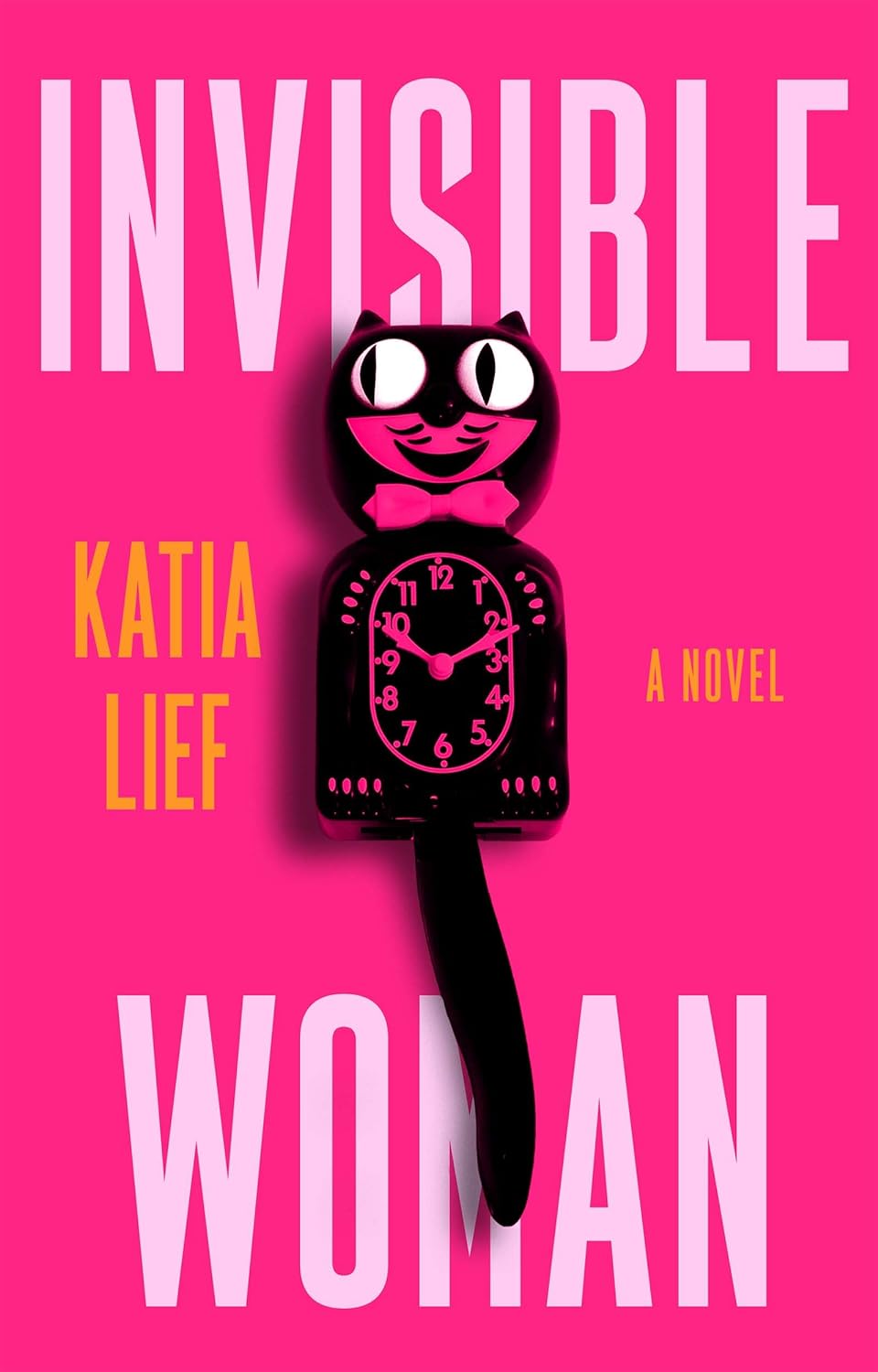
Invisible Woman by Katia Lief

A woman troubled by old crimes and loss reaches out to an old friend, with disastrous consequences in this chilling commentary on gender in society.

With Invisible Woman, Katia Lief (Five Days in Summer; The Money Kill) follows a woman navigating professional life, family, friendship, and societal roles, attempting to reconnect with an old friend whose path diverged from hers decades ago. Their stories are individually compelling, as well as offering questions relevant to the #metoo era.

Joni Ackerman had been a pioneering filmmaker in the 1980s and ’90s, and her best friend and former college roommate, Val, was a promising up-and-coming actor. A secret trauma caused the two young women to grow apart; Joni married, had children, and slowly slid beneath the surface of her husband’s sparkling career in television. The novel opens in 2018, when a fresh film-industry scandal emerges that sends Joni looking for her friend. Joni feels that the time has come to speak out about an old crime, but Val wishes to remain in obscurity, and Joni’s husband, Paul, wants to let sleeping dogs lie. Joni wrestles with her long-lost friendship over a significant divide of time and suffering. Her marriage has been strained for years, and a recent cross-country move has left her isolated. She dives into the novels of Patricia Highsmith, in editions long ago given to her by Val, for comfort and escape, but as real life grows darker and weirder, Highsmith’s gritty psychological thrillers start to feel all too close to reality.

The concerns of Invisible Woman are firmly rooted in #metoo, #timesup, and the historical and continuing challenges of women in the entertainment industry. Joni loves her daughters but grapples with what it’s cost her career to become a mother: early in the novel, she’s invited to appear at a film retrospective in a series called “Lost and Forgotten.” She struggles with personal and family difficulties, and with alcohol. Highsmith was a strong influence on Joni’s highly regarded work in film, but also threatens her tenuous grasp on reality. Readers will root for Lief’s carefully crafted protagonist, even as her decisions become increasingly irrational.

Invisible Woman twists and turns, its escalating dangers alternating with fresh reveals, as momentum builds to a breaking point. Joni is compulsive, troubled, but sympathetic; Val is less central but exerts a force of her own. Characters develop quickly from disagreeable but benign to chilling and dangerous; some readers will find this atmospheric novel engaging and disturbing enough to lose sleep. A literary psychological thriller, cultural study, and heartbreaking story of friendship and loss, Joni’s unforgettable story involves layers of lies and the dangers of self-sublimation. Lief chills, entertains, and challenges.


This review originally ran in the October 27, 2023 issue of Shelf Awareness for the Book Trade. To subscribe, click here.


Rating: 7 years.

Among the Bros: A Fraternity Crime Story by Max Marshall

This investigative narrative of fraternity members turned drug dealers–and worse–exposes unsavory aspects of college life.

Among the Bros: A Fraternity Crime Story is Max Marshall’s investigation into the series of arrests and criminal charges related to fraternities at the College of Charleston in South Carolina and the individuals involved. A press conference during the College of Charleston’s 2016 summer break caught the attention of Marshall, a journalist, recent college graduate, and fraternity member himself. Mug shot photos showed five fraternity members and three friends. “They looked like guys who put in time at the gym, and maybe at the beach, and definitely at the putting green,” Marshall writes. These eight young men were accused of selling a variety of controlled substances, including Xanax, which, as police chief Greg Mullen put it, seemed to be “a drug of choice right now.” According to authorities, this case was also related to the recent murder of another fraternity member. Intrigued, Marshall follows the story of those eight arrests and the changing cultural identity of Greek organizations in the United States.

Among the Bros focuses on Mikey Schmidt, a Kappa Alpha, to whom Marshall spoke via a series of contraband cell phones as Mikey served 10 years without parole. Age 21 at the time of his arrest, Mikey is one of the flashiest characters in the story Marshall unearths, and he receives the most serious sentence of the group. He and his best friend, Rob Liljeberg III (also a Kappa Alpha), form the backbone of Marshall’s reporting. They put human faces on an investigation into the intersection of Greek life, drug dealing, and criminal activity by a particularly privileged and overwhelmingly white male demographic.

Over the course of four years, Marshall consulted police files, court transcripts, and other documents, and conducted more than 180 interviews with 124 sources. The narrative he presents is sad, deeply disquieting, and often sordid. The fraternity members he interviews all deny using date-rape drugs but allow that others around them do. He meets with one fraternity alumnus who describes mixing gin, Mountain Dew, Xanax, and cocaine–and then tries to sell Marshall his financial planning service. “When I asked an SAE [Sigma Alpha Epsilon] what his friends did the weekend after the Mother Emmanuel killings, he said, ‘Things just aren’t going to stop…. As insensitive as it sounds, it’s still Friday.'” The portrait these anecdotes paint is not flattering, but Marshall remains compassionate, sympathizing with the pull of belonging, and the promise of like-minded friends.

Among the Bros finishes without moral lessons or final conclusions, instead aiming to clearly report events that will disturb most readers. Combining excellent journalism and deftly paced storytelling, this chilling tale lifts a veil on a decadent and troubling lifestyle.


This review originally ran in the September 8, 2023 issue of Shelf Awareness for the Book Trade. To subscribe, click here.


Rating: 7 brand names I had to look up.