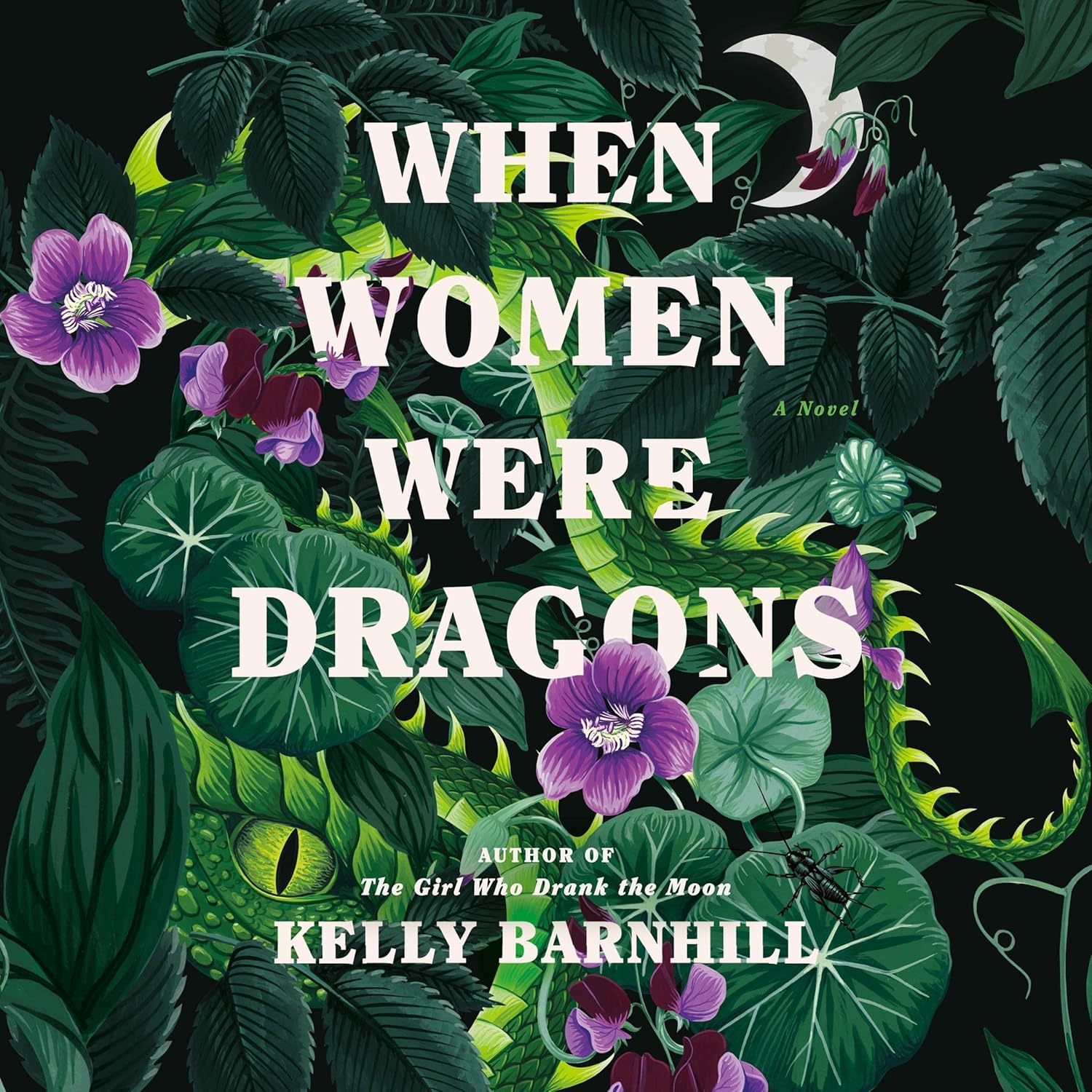
When Women Were Dragons by Kelly Barnhill (audio)

I don’t recall where I got this title from, but I loved this book, and am grateful to whatever review or list sent it my way. Also to my lovely partner who gifted it to me for the long drive from Texas to West Virginia.

When Women Were Dragons: Being the Truthful Accounting of the Life of Alex Green–Physicist, Professor, Activist. Still Human. A memoir, of sorts is a living, breathing tale, ever expanding, filled with metaphor that reshapes itself with the reader’s interpretation. It opens with a strange letter from a Nebraska housewife in 1898 to her mother, shortly before the woman spontaneously dragoned. Next we have an excerpt from the opening statement given by Dr. Henry Gantz to the House Committee on Un-American Activities in 1957. Then we get into the first-person narration of Alex Green, who will tell most of this story, with brief insertions mostly from Dr. Gantz’s work – bit of an epistolary format. (The audiobook is narrated by Kimberly Farr, as Alex Green, and Mark Bramhall, as Dr. Gantz, which I thought was a great choice.) “I was four years old when I first met a dragon. I didn’t tell my mother. I didn’t think she’d understand.”

I think this must be right around 1950. Alex grows up in small-town Wisconsin, in a pretty 1950s world: there are many things we just don’t talk about, including cancer, menstruation and most aspects of girlhood and womanhood, what to expect on one’s wedding night, diversity in sexual orientation and gender expression, our feelings, and dragons. When Alex is a little girl, her mother goes away for some time – months – and no one explains or even acknowledges the change; likewise when her mother returns, gaunt, weak, different (she doesn’t even smell right). The reader understands better than little-girl Alex when her mother’s chest is glimpsed, missing breasts, two scars like smiles. This world is recognizably our own except for the dragons. Women in this world can dragon (that’s a verb), or become dragons, at which point they sometimes eat their husbands (this seems to happen frequently with very unlikeable, not to say abusive, husbands) before flying away. Dragoning is a poorly understood phenomenon because, as with much that is female or feminine, society judges it too shameful to examine, and science mostly averts its gaze. Dr. Gantz is a rare exception: he believes in the scientific mandate to learn, whatever truths are revealed. Biology should never be shameful. His research articles and responses to an oppressive world are useful seasonings to this story, and he is himself a delightful character, alongside the heroic librarian Mrs. Gyzinska.

And oh, Alex’s auntie Marla, a wonderful woman who comes and cares for her while her mother is away in cancer treatment, a big powerful woman who flies airplanes during the war and works as a car mechanic and wears men’s clothes and takes very little shit, and who we lose to the Mass Dragoning of 1955. When Marla dragons, she leaves behind an infant daughter, Alex’s cousin Beatrice, who from here on is raised as Alex’s sister. Such is the gaslighting of Alex’s family and world that she learns to really believe – almost – that she has no aunt, that Beatrice has always been her sister. (Echoes of 1984. We have always been at war with Eastasia.) And boy, the time Alex has raising her younger sister, Beatrice, a delightful dragon of a child if there ever was one.

Despite all I’ve just thrown at you, I’ve barely scraped the surface of this remarkable novel. It contains many stories and many layers, much that is very recognizable from our ‘real’ world, and lots of potential metaphors to ponder. I wondered at different times if dragoning were a metaphor for menstruation; for puberty; for “un-american activities” (certainly, HUAC seems to conflate them); for simply being independent, self-determining, and female (except that those who dragon are overwhelmingly but not universally girls and women). This story tackles the way we handle difference, and especially gender, sexuality, and gender expression. It contains such maddening (if entirely realistic) renderings of sexism that it was sometimes hard to listen to. It contains transcendent moments of personal discovery, joyful academic inquiry, love and coming-of-age, and some lovely iterations of family and built family, which I always appreciate. “Sometimes,” confides Alex at an advanced age, “the expansive nature of family takes my breath away.” There is such good fun; I especially liked the line “If that dragon was hoping for sympathy, she was crying in front of the wrong teenager,” which I got to share with my favorite dragon-loving teenager. It considers the looping of time and relationships. It’s got science and wonder, a bit like A Tale for the Time Being, but I liked this better. I’m a bit over the moon about it, and am giving it a perfect score. Also, I loved the audio format, with the one caveat that I wish I could pull more quotations that I loved.

Do give it a go, and let me know what you think.


Rating: 10 military-issued boots.

Elektra by Jennifer Saint (audio)

I made a 2,500 round-trip drive recently, so check out a few *audiobooks* for the first time in quite a while. I had a blast with them!

I’d been just recently telling a friend my paraphrased-from-memory version of the curse on the house of Atreus, so when I went looking for an audiobook, I was delighted to find Jennifer Saint’s Elektra, read for us by Beth Eyre, Jane Collingwood, and Julie Teal. (It looks like I put this one on a wish list based upon my interview with Claire North aka Catherine Webb.) I liked that this was a retelling with, if you will, a modern angle – told from the points of view of the women – but it is not a modern retelling; it’s still set in the ancient Greek and Trojan world. The three women who narrate their intersecting stories are Cassandra, Clytemnestra, and Elektra. The latter gives her name to the novel, perhaps, because she is the one who survives to its end.

I think this is the most in-depth telling I’ve encountered of Cassandra’s story, in which she, a princess of Troy, becomes a priestess in Apollo’s temple and undergoes the conflicting honor and agony of his gift of prophecy, and his curse that no one will ever believe her (always correct) prophecies. She then sees her city destroyed – sees it in advance and experiences it in real time – and is taken as a war prize by the Greek king-of-kings Agamemnon (who, in all tellings I’ve ever found, comes across as a consistently unlikeable man). Her life ends not long after his does, although with a little different nuance in this version.

[Here, an aside. These events, lying somewhere between myth and, in some cases, *possible* history, originate in an oral tradition. There are many versions, but all are translated at this point across both language and transcription; there are many retellings, but it seems there can be no single, original, authoritative one. I like how freeing this is: there is no reliably “correct” version of Cassandra’s story, or any of them, which I think offers a liberty to riff.]

Clytemnestra has always been a puzzler. She kills her husband (using some deceit, and after cheating on him); she has usurped power in a man’s world; many, especially the more traditional versions, paint her in an unsympathetic light. More modern perspectives point out that one of her greatest crimes may be that she holds power with confidence – she possesses traits that tend to read positively when they belong to men. And it’s not always remembered and pointed out that she kills her husband because he killed their firstborn daughter – sacrificed her to the gods for the fair winds needed to sail for Troy. That sacrifice, or murder, is in turn painted differently depending on whether the storyteller believes in the gods’ need for sacrifice (and the Greeks’ need to sail for Troy). What is one young woman’s life against glory in battle for all the greatest warriors ever, etc., etc. The same dual and dueling perspectives apply to Clytemnestra’s famous sister, Helen of Sparta / Helen of Troy. There the great question will forever be: did Paris abduct her? Or did she leave her husband and run away with another by choice? Victim, or whore? (A shocking number of ambiguities in Greek myth turn on the question of sexual consent.) Clytemnestra remains a difficult character in Jennifer Saint’s version of her story. Her grief over the loss of Iphigeneia is sympathetic; her desire for revenge feels righteous, if perhaps bloodthirsty. But because of the third point of view Saint gives us, we’re also aware of how fully she orphans her remaining three children in her singlemindedness about the one she’s lost.

Elektra is herself single-minded and bloodthirsty, and this is the essence of the curse on the house of Atreus: each killing, meant to set right the last, only sets the next one in motion. Clytemnestra means to avenge Iphigeneia by killing Agamemnon; Elektra feels it necessary to avenge Agamemnon by killing Clytemnestra. She has lived her life in father-worship, mostly in the absence of that father (and again, I’ve not read of anybody who spent time around Agamemnon and liked him). It’s notable to me that both Clytemnestra and Elektra show signs of finding some nuance, rather late in the game for it to make a difference. But I think that’s the curse again, inexorable.

I liked the choice, on audio, of three different readers for the three parts. I’m not sure I ever learned the voices well enough to tell from the first few syllables who we were with, but the changes always nudged me to listen for context clues (which take no time at all).

I always appreciate revisiting these stories that I’ve been taking in, in various forms, for most of my life. I love that they are both familiar and always new – every version offers a fresh perspective or a new take, and each encounter I have enriches the later ones; it’s such a genuine pleasure for me to spend time in this known but changing ancient world. ‘Pleasure’ is a strange word, of course: these stories are full of blood and death and rape (so much rape). But I seem to have a great appetite for the big themes, the continual question of predetermination and personal choice, these gods who are capricious and silly and lustful and jealous and awfully human, although immortal. It’s just always captured me. I loved Jennifer Saint’s contribution to my understanding of these stories.


Rating: 7 old dogs.

Her One Regret by Donna Freitas

A young mother confesses regret in this satisfying, dynamic mystery that is also a rousing conversation starter about an experience of motherhood still treated as taboo.

Donna Freitas’s Her One Regret explores what one of her characters calls “the last taboo of motherhood.” At once a rocket-paced crime tale of suspense and a thoughtful examination of cultural dictates about motherhood, this novel of women’s lives and relationships excels as both entertainment and a call to difficult but necessary conversations.

In a brief introductory section, readers meet Lucy in the parking lot of a supermarket in Narragansett Beach. On a gorgeous, early fall afternoon, she loads groceries alongside her nine-month-old daughter, Emma. Then begins Part I: “The First 48 Hours.” Lucy has vanished; Emma is found, alone, crying, but perfectly fine, in the parking lot. The small Rhode Island community is horrified, united in a search for the missing mother. But then it is revealed that Lucy had recently confided in her best friend, Michelle, that she regretted having Emma. She had fantasized about staging her own disappearance. The community and the nation erupt in harsh judgment. Is Lucy a kidnapping victim, or on the run? Is she a monster? What do we make of a woman who regrets motherhood?

The rest of Freitas’s narrative jumps between the lives of four local women. Lucy is seen mostly in memory, or as a symbol. Michelle is devastated by her best friend’s disappearance, in love with her own role as mother, but galvanized to defend her friend. Lucy had tried to tell Michelle what she was suffering, but “Michelle did the thing everybody does with mothers: dismiss their feelings as not real. Michelle gaslit Lucy, kept gaslighting her. She hadn’t meant to.” Diana, a retired detective, is drawn to Lucy’s case and its similarities and differences from other vanished women. And then there is Julia, whose baby is the same age as Emma: “Julia keeps waiting for the moment she’ll feel bonded to her son, that miracle other women talk about when connection and unbelievable love will flood her person and overcome the dread, the sadness, the resistance. But it never happens.” Julia, an artist who can no longer bring herself to create, sees herself in Lucy, shares the fantasy of escape, and now watches as the world on social media condemns her parallel self. Her desperation feels like an emergency no one around her will acknowledge.

Freitas (Consent; The Nine Lives of Rose Napolitano) relates these lives and quiet–or in Lucy’s case, suddenly very public–struggles with nuance and compassion. Her One Regret is purposefully thought-provoking and a riveting mystery–a masterpiece of duality, not soon forgotten.


This review originally ran in the September 5, 2025 issue of Shelf Awareness for the Book Trade. To subscribe, click here.


Rating: 8 sketches.

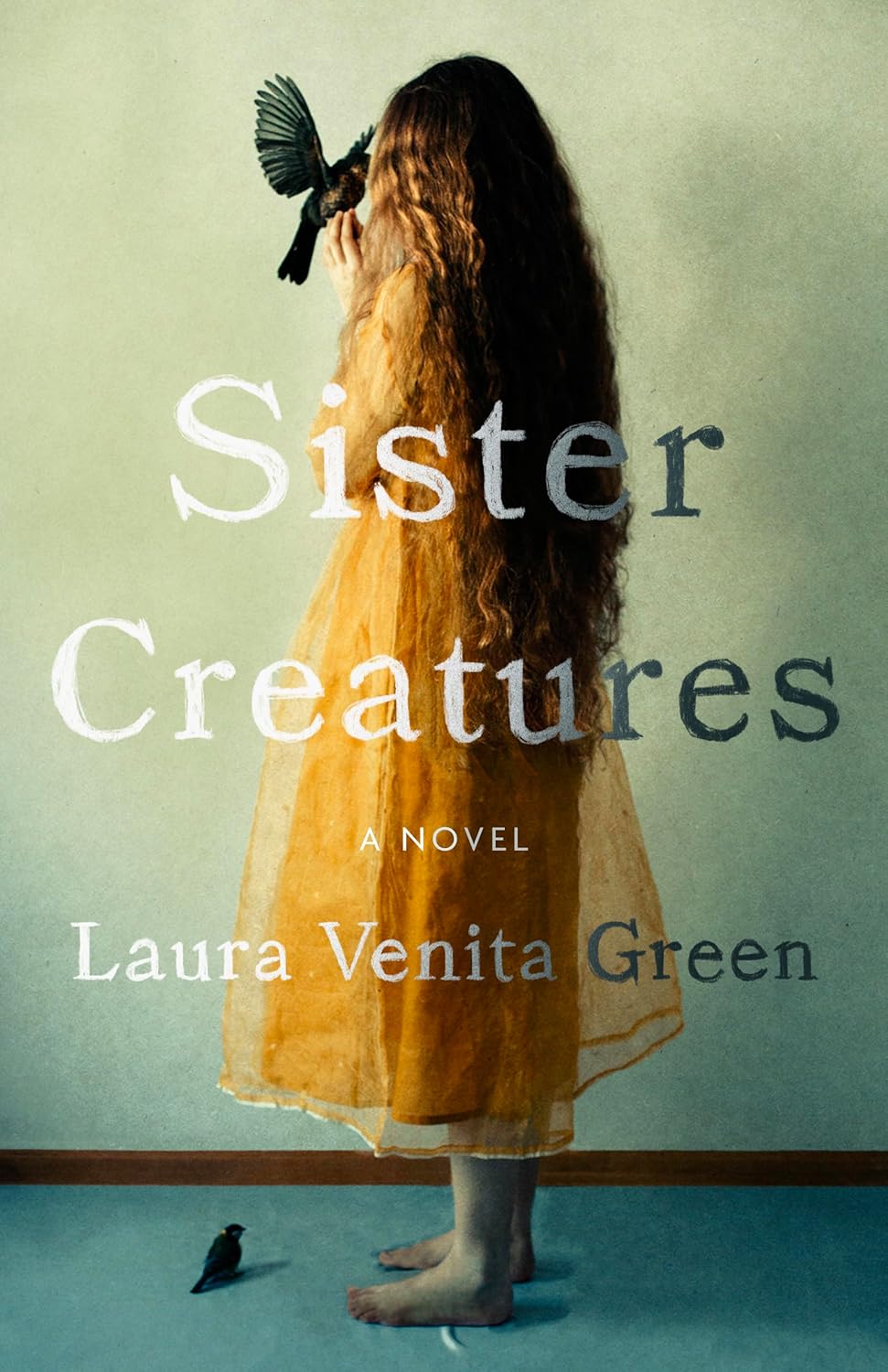
Sister Creatures by Laura Venita Green

From rural Louisiana to locations around the globe, the same problems and secrets follow a quartet of girls-become-women in this arresting, unnerving, and wise debut novel.

With Sister Creatures, Laura Venita Green invites her reader to navigate a shape-shifting world, beginning in rural Louisiana and ranging overseas and into starscapes and imagination. Rotating among a small group of girls and women, this imaginative narrative muddies the line between the novel’s real world and a fictional one within it. The result is dreamy, often disturbing, and hauntingly unforgettable.

In the opening scene, Tess uses her isolated job as a live-in nanny to hide away from the life she feels has already cratered, at age 20, with her heavy drinking. A neighboring teenager, Gail, makes a disquieting appearance: she is clearly not well, perhaps in danger, but rejects Tess’s half-hearted offer to help. The older girl “hat[es] how relieved she felt not to have to deal with anything.” Gail’s plight becomes a legend to the other characters until she makes a reappearance as an adult at the novel’s end. Meanwhile, Tess grows up and has a daughter of her own, lives around the world as part of a military family, but struggles to escape the problems she hid from in Pinecreek, La. Her former best friend, Lainey, leaves Louisiana as well, resulting in permanent banishment at the hands of a troubled younger sister. Another young woman, Olivia, wrestles with the local options, characterized as “Jesus and booze,” and with a sexuality not likely to be tolerated there. And then there is a recurring character whose entire reality seems in question. While they all choose to leave Pinecreek, the struggles that originate in their shared hometown follow these characters to Munich, Baltimore, New York City, and beyond.

In their parallel comings-of-age, and across generations, Green’s characters thread their paths between love and spite, affection and abuse. Their loose connections and jumps in chronology reward close attention, contributing to a slightly off-balance reader experience that is very much a part of the novel’s atmosphere. Sister Creatures blurs the concepts of reality and of right and wrong. Are the woods–of Louisiana, Maryland, or Bavaria–sanctuary or threat? Who is real and who is made up? Green’s narrative offers a strong literary bent, as characters interact with “The Yellow Wallpaper,” old fairy tales, misogyny, motherhood, and their own creative pursuits. They hurt each other, but they help each other, too; this is a novel ruled by nuance and surreality as well as the all-too-real.

Sister Creatures is often unsettling, but pairs moments of great sweetness alongside discomfiting ones. This novel remains thought-provoking long after its final pages.


This review originally ran in the August 12, 2025 issue of Shelf Awareness for the Book Trade. To subscribe, click here.


Rating: 7 cut-out musical notes.

VenCo by Cherie Dimaline

I waited too long to get to this one that was recommended by Liz. Punch line: I think the title’s ‘Co,’ which felt corporate to me, turned me semi-consciously away from this book for a while. (I’ve had it on the shelf for maybe years, since Liz told me I should read it.) And… that’s very much the point, in the novel. As the cover shows (I’ve been looking at just the spine all this time!), ‘VenCo’ is a hidden-in-plain-sight reworking of CoVen. As in witches. Hidden behind a corporation. Very clever. So clever I missed out on reading this great book for longer than I should have. (Facepalm.)

I also read this book immediately following one called Lessons in Magic and Disaster, which is yet to be published so you haven’t seen my review yet, but keep your eyes peeled, because the two books back-to-back could not have been more perfectly paired. Chef’s kiss.

Okay, so here we are in VenCo, beginning with a prologue, “The Oracle Speaks.” Three women in three luxury vehicles pull up outside an understated building in Los Angeles. We get descriptions as they head inside, and the descriptions are a juicy, lovely start. They are the Maiden, the Crone, and the Mother, and together they form the Oracle. They are concerned about time; it’s running out; the circle must be formed under tight deadlines, but the sixth witch is a doozy, they assure each other. Cut to chapter one, “The Legacy of Lucky St. James.” Here we meet Lucky, who is struggling in Toronto. The orphaned (adult) child of an absent father and an alcoholic, but compelling, mother, Lucky lived with and was cared for by her lovely grandmother Stella until the roles reversed and now it would be more accurate to say that Stella, with dementia, lives with and is cared for by Lucky. The younger woman is scraping by, about to be evicted, dubiously employed, unsure how she’ll continue to provide for Stella. Cut again, in chapter 3, to Meena Good, a witch and leader of a coven-to-be, in Salem, Massachusetts. (Yes, we do see how predictable that sounds, but bear with us.) Meena’s group of five witches is introduced from here, until their path intersects with that of Lucky (who reminds me very much of someone Chuck Wendig would create), and the delightful, messy Stella. Every one of these characters is an absolute joy. Even though their story has much darkness and cynicism, they are steeped in and practicing love, just as hard as they can. Except for the one really evil character, who I haven’t mentioned at all yet.

It’s expansive and wonderful: I love how the magic fits neatly into a world we mostly recognize as absolutely and realistically our own. (I love the way Salem, Mass. is handled, the self-aware nod to what a perfect town this is for witch-hunting, ha, but also really.) The stakes are sky-high, the women are doing their best with conflicting goals, they are balancing loyalties and loves and basic survival needs. The future (we hope) coven is something we’re all rooting for.

I found this an easy world to get lost in and felt genuinely sad when the pages closed. I’ve already ordered more from the same author.


Rating: 7 spoons.

Wildfire Days: A Woman, a Hotshot Crew, and the Burning American West by Kelly Ramsey

This beautifully crafted memoir features both dramatic action and deep soul-searching by a woman on an elite wildland firefighting crew.

Kelly Ramsey’s Wildfire Days: A Woman, a Hotshot Crew, and the Burning American West is a memoir of wildland firefighting and gender, but also of trauma, family, and navigating love and life at any age.

Ramsey’s expertly structured narrative shifts in both place and time, beginning with a hazardous fire event in her firefighting career, then moving to where she started that career (the Klamath River and its surrounds in Northern California), then a Kentucky childhood and her parents’ story. She paints a portrait of her mother that is a masterclass in the single-paragraph capsule profile. “Raised in a home where someone might vacuum a spill from the front lawn, my mom grew into an inquisitive, determined woman who was in the right almost as often as she believed she was.” Ramsey’s father was an alcoholic, eventually homeless and lost, whose absence caused the grief she may have been fighting along with the extreme challenges of becoming a wildland firefighter and other, still more self-destructive behaviors. This introspection occurs in flashbacks and fragments alongside the main timeline in which Ramsey, in her late 30s and after a wildly varied life, joined the Rowdy River Hotshots.

Hotshots live in barracks or on the road, sleeping on the ground as often as not, packed into a crew transport with their firefighting gear, working shifts that sometimes stretch to 24 hours in tremendously hazardous conditions. They hand-dig firebreak lines, run chainsaws and carry swamp brush, and hike vertiginous slopes under loads that can exceed 70 pounds, often amid active fire. The only woman on the crew her first season (and the first in nearly a decade), Ramsey was also one of the smallest and one of the oldest. She and “the boys” wrestled individually and collectively with how to treat her difference while integrating her into a crew that was necessarily tightknit: they relied on each other for survival.

Showcasing lovely writing and storytelling, Wildfire Days contains just enough firefighting and fire suppression policy history to contextualize Ramsey’s personal journeys. Ramsey is far from a saintly character, and she portrays her own less flattering moments clearly: worrying over her tendency to smile and people-please; her fear that she aligned herself with her male fellows in singling out the next woman to join the crew. This honesty is refreshing. Not a hero, Ramsey lets readers see her earnest and imperfect strivings. Her growth by the memoir’s end is ongoing, but impressive. “Here was the secret I kept stumbling upon: that our deepest wounds were the fertile soil of our growth. New life tended to spring from bitterest ash.” Tense action, fraught self-examination, pain, triumph, and romance make Wildfire Days propulsive and unforgettable.


This review originally ran in the May 8, 2025 issue of Shelf Awareness for the Book Trade. To subscribe, click here.


Rating: 8 smiles.

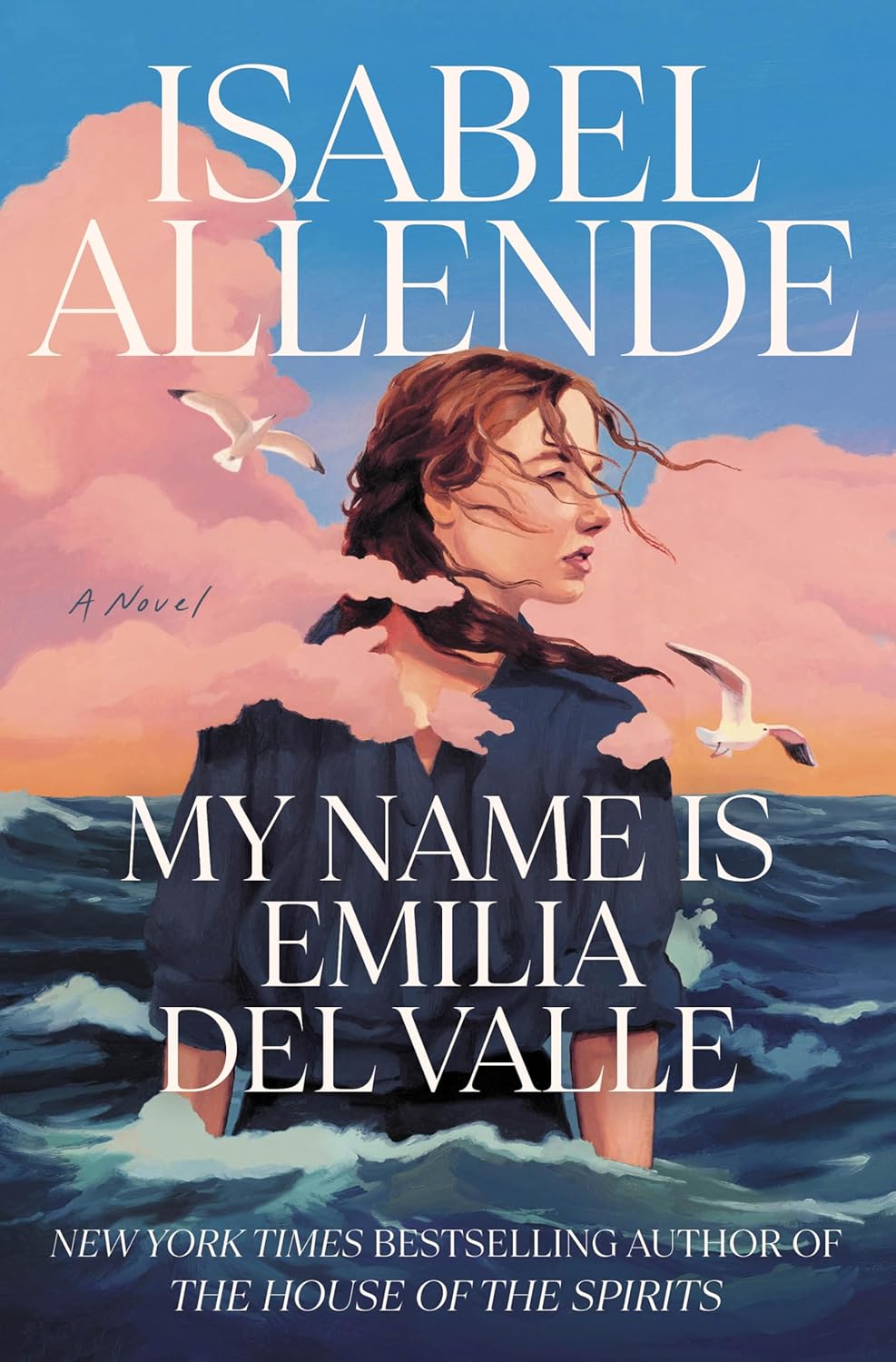
My Name Is Emilia del Valle by Isabel Allende, trans. by Frances Riddle

A daring young woman and groundbreaking reporter journeys from San Francisco to Chile in the 1890s to investigate a civil war and her own roots in this stirring novel by the celebrated Isabel Allende.

Isabel Allende brings the experience of more than 20 books to My Name Is Emilia del Valle, a swashbuckling tale of the life and adventures of a young woman born in San Francisco in the 1860s. Emilia’s story is exciting, empowering, and inherently feminist, as she travels from California to her father’s native Chile during that country’s civil war, bucking social norms and going wherever she’s told she can’t.

A young Irish novice named Molly Walsh is about to take vows as a nun when she is seduced and abandoned, pregnant, by a Chilean aristocrat. Devastated, she accepts a marriage proposal instead from a colleague and friend in San Francisco’s Mission District, who will be the devoted stepfather, “Papo,” to her child. Molly remains bitter toward the absent father, del Valle, but Emilia lacks for nothing in the loving household where her mother and Papo teach the Mission District’s children, provide bread to the poor, and support her unusual goals.

Emilia first makes a living by writing sensational dime novels of “murder, jealousy, cruelty, ambition, hatred… you know, Papo, the same as in the Bible or the opera” (under a pen name, of course). Next she decides to become a journalist, launching a newspaper career, soon traveling to New York (where she takes her first lover and otherwise broadens her worldview) and then abroad: Emilia journeys to Chile to cover the civil war as a reporter for San Francisco’s Daily Examiner. Female reporters are vanishingly rare, but as war correspondents, unprecedented; and Emilia del Valle writes under her own name. She is also motivated to fulfill her mother’s lifelong wish to track down her biological father, del Valle. Emilia finds great danger as well as the opportunity to define her identity for herself. The adventures she encounters along the way fill Allende’s pages with violence, love, high society, and human interest.

As she has in previous acclaimed novels, Allende (The House of the Spirits; Inés of My Soul; Maya’s Notebook; The Japanese Lover) applies riveting storytelling to an exploration of history through the lens of a fictional heroine. Allende’s language, and Frances Riddle’s translation, is evocative in its descriptions of Chile’s lovely landscapes, a young woman’s complicated love for her family, and the horrors of the battlefield, with which Emilia will become painfully familiar. This enthralling novel leaves Emilia, still young, in a position of some uncertainty: readers may hope for more from this plucky protagonist in a possible sequel.


This review originally ran in the April 3, 2025 issue of Shelf Awareness for the Book Trade. To subscribe, click here.


Rating: 7 stitches.

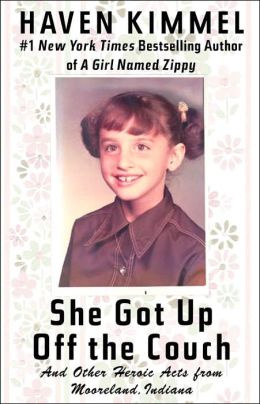
rerun: She Got Up Off the Couch by Haven Kimmel

I have never stopped thinking about this masterful character profile / biography / memoir / feat of creative nonfiction by Havel Kimmel, and I’m very pleased to share it with you here, again. There was also a reread post, from when I was doing my MFA, and even as I write these words, I wish I had time for a reread now. (I am, for the record, really enjoying TJ Klune’s latest, so no regrets there, and stay tuned. Here’s to authors we love who keeping writing new work.)

couchThis book follows A Girl Named Zippy, and I adore Kimmel’s explanation in her Preface: that she would definitely never write a sequel to Zippy, but that people kept on asking her if her mother ever got up off the couch; and here we are. This is an extension of that first memoir, then, with the focus being not on the girl called Zippy (Haven Kimmel herself) but on her mother, who in that first volume was a somewhat shapeless woman who mostly inhabited the couch and read a lot, talked on the phone, watched television, and didn’t worry too much about her children. This is told not unlovingly, but as fact. Zippy’s childhood is on balance awfully joyful and fun, and although a critical adult’s eye might point out lots of points of minor neglect, she clearly loves her family very much. This tone is continued in She Got Up Off the Couch. The family and each of its members is still, realistically, flawed, but lovable and well-loved. Kimmel’s brother is now mostly absent, with a family of his own; her sister marries and has two babies; her father finds work as a sheriff’s deputy (or similar job title); but her mother’s is the great change of this second memoir. This was, what, the late 1970’s I suppose, in a tiny Indiana town of a few hundred people. Zippy’s dad, Bob Jarvis, holds the keys: her mother Delonda doesn’t know how to drive. This will work as a fine metaphor (and indeed is part of the literal action), as Delonda calls a phone number on a television commercial to look into going to college. She wrangles a ride into the next town over for an entrance exam, which places her out of fully 40 hours of college credits. Under Bob’s clear disapproval – he says of the woman who takes Delonda to her test, “time was, a woman wouldn’t have gotten in a man’s marriage that way” – she persists in attending classes, studying, reading, talking to new people, and in 23 months, graduates summa cum laude – and continues on to graduate school. Eventually she earns a Master’s degree in English and becomes a high school teacher. This is all a stunning change. Along the way, to get to school and back, she learns how to drive and purchases a vehicle that is, in itself, a good joke.

She Got Up Off the Couch also follows the format of A Girl Named Zippy: chapters jump around, more as connected anecdotes than as clear narrative. Each chapter stands alone admirably as a hilarious or heartfelt – usually both – nugget of tears, joy, preadolescent confusion, and filial love. [In fact, as soon as I finish writing this review I’m off to read my favorite chapter out loud to Husband, if he’ll let me, while he smokes a brisket in the backyard. If you’re curious, it’s called “Treasure,” and is about a hippie college student hiking cross-country who camps out in the Jarvis backyard for a few days. It’s hilarious and heart-wrenching.] It’s a great structure, this anecdotal style. If I ever write my own mother’s biography, which I keep dreaming about, I have something similar in mind. Yes, there are odd characters that the reader of just one chapter would wrinkle her forehead at; but this is true of the whole book, too. Zippy has had an odd and happy life, and that’s exactly why we enjoy reading about it.

Zippy herself, naturally, also grows and changes in this book. Delonda is our star and makes the most life-changing journey. Kimmel writes in her preface, “I will never do anything half so grand or important,” and I know exactly what she means: the decision of Delonda and other women of her time who broke out of where they were told they belonged have done something for the women of my generation that we are now saved from having to do, if that makes any sense. It is something I’ve long felt about my own mother. But I was saying that Zippy continues to grow up: we see more of her engaging and eccentric friends, Rose and Julie Ann, and we meet a new friend, Jeanne Ann. And when she gets a nephew and then a niece, Zippy becomes hopelessly devoted. The blizzard that sweeps through when her niece is long overdue and panics the family is, again, funny and riveting at the same time.

I’ve now read everything that Haven Kimmel has written except for every single one of her blog posts, and that one children’s book. I hope she is getting to work right now on another book – fiction or non, more Haven Kimmel, stat.

I love it. Funny, true, humble, real.


Rating: 9 cherry-red polyester suits.

The Mists of Avalon by Marion Zimmer Bradley

I received a special copy of this book from one of my very best friends. It was originally published the year after I was born – not new, but an important classic. The Mists of Avalon is a ~900 page retelling of the legends of King Arthur, his Companion Knights, including Sir Lancelot, and the Round Table – but from the perspectives of the women involved, including Queen Guinevere (here Gwenhwyfar), Arthur’s mother the Queen Igraine and her sisters, Queen Morgause and Avalon’s Lady of the Lake Viviane… and most centrally, Arthur’s half-sister and lover, Morgaine, who we have also known as Morgan la Fay or Morgaine of the Fairies, and Viviane’s sometime successor as Lady of the Lake. Among others. (Sorry. These name changes are a bit to follow. Lancelot here is Lancelet, etc.)

I generally stay away from books of this length in recent years – I don’t know when I last read a book of 900 pages. It took some adjustment around paid reviews and deadlines, but I’m grateful I was able to find time for this one. It took a little over two weeks, while crocheting a blanket (!) and spending days on an excavator in the woods! But was worth every minute. I enjoyed being able to sink into a story this sprawling, which does call for some in-depth engagement, as we follow generations and lifetimes, a quite convoluted family tree, and shifting allegiances (and names).

My own background with the Arthurian legends is weak, although I definitely loved T.H. White’s The Once and Future King when I was young (high school? earlier still? that one over 600 pages), and I remember an illustrated book of the tales of the knights of the Round Table at some point… I have a loose sense of the romance and idealism of Arthur, Guinevere, Lancelot, and Camelot, but brought no muddied plotlines to this reading. It seems The Mists of Avalon is understood partly as corrective to Morgaine’s reputation as evil sorceress from previous tellings.

There’s no question that Bradley’s is a big, complicated, engrossing story. Its prologue begins with a brief, italicized reminiscence of Morgaine’s from later in her very long life; these retrospective views will punctuate the book. Then we move (with book one, “Mistress of Magic”) to Igraine, who will be mother to both Morgaine and Arthur, when she is a teenaged bride to the much older and coarse Duke Gorlois of Cornwall. Igraine was raised on Avalon, that magical, misty island where an ancient, pagan, woman-centered religion has long been fostered. She has some priestess training and some of the Sight, but it’s been her duty to be a wife and a mother: her daughter Morgaine is Gorlois’s child, and she will later marry Britain’s High King Uther and have a second child who will become the fabled King Arthur. So we begin with Morgaine’s infancy and before Arthur’s birth. I will begin fast-forwarding here… much has been written about this book, and you don’t need my plot summary.

Morgaine will become a priestess of Avalon, and she will become very powerful indeed, but will have to serve the Goddess in ways that pain her deeply. In four parts – “Mistress of Magic,” “The High Queen,” “The King Stag,” and “The Prisoner in the Oak,” we see her play the role of the maiden, the mother, and the crone. She is fierce in her protection and promotion of the religion in which she is trained. It is central to the story of Arthur’s reign, in this telling, that (under Gwenhwyfar’s influence) he shepherds Britain toward a homogenous Christian faith, away from a diversity of indigenous traditions, including the goddess cult of Avalon, and Morgaine fights that transition mightily. Her story is, I think, a tragedy, and includes strong threads of that classic tragic element, hubris (a term Arthur invokes once).

Bradley has chosen to tell this story mostly in a series of close-third-person perspectives, so that the reader can see the thoughts and feelings of one character and then another (the exception being those italicized first-person moments with an older Morgaine), so that we understand that each is dealing with insecurities and ultimately, mostly, good intentions, which heightens the sense of tragedy: that both Arthur and Morgaine want the best for Britain, that Viviane knows she will hurt her beloved niece Morgaine but feels it necessary for the greater good. It is a very fine literary trick to set up no absolute villains or heroes, but rather to offer us flawed humans who try hard and fail. It is hard, though, not to sympathize with the side that wishes to preserve its tradition as one of several, rather than the one that wants to squash out all but one religion.

There are many plot threads, romances, love affairs, couples that produce children (all-important heirs) and those that don’t. There are many themes, a number of which involve women’s various roles in society: to bear children, to be chaste, to support their mates, to participate in political machinations (or not), to be involved in one religion or another. An important difference between the rites of Avalon and those of Christianity centers on sex, which is either a grievous sin in all contexts except strict (marital) reproduction, or a beautiful celebration of life, the natural world, the God and the Goddess coming together. [Same-sex encounters are not many, but also not absent. No surprise that Avalon and Christianity handle them in different ways.] Morgaine’s tradition is inherently feminist, and at odds with Christianity, in that it holds that women belong to no man and may take lovers as they choose and as serves their worship and their life’s work.

This is a work of fantasy (as in magic and sorcery), and a classic retold, as well as historical fiction, as Arthur’s legend offers a version of how the Great Britain we know today came to be. Bradley’s work offers another take, in which a brave woman undertakes to defend indigenous traditions in a time of political and religious upheaval. The outcome, I think, doesn’t change much, but the way we view the different players involved matters a great deal. It’s also, of course, about human relationships. Morgaine, Arthur, Gwenhwyfar and Lancelet go back to childhood together, and there is a refrain late in the book of recalling the few of them who had once been young together. There’s a pretty strong thread of sympathies between friends, lovers, enemies, and those who move between those categories, even when they wind up killing one another.

Bradley’s storytelling is absorbing. It was easy to fall into a world very different from my own here, in the details of women’s lives in royal castles – dark, monotonous, filled with gossip and spinning and sex that’s not entirely consensual, even for privileged women – and in the rapture of Avalon’s powerful priestesses. The mysticism of that religion, the spell of Goddess-blessed sex, and the strong feelings of characters willing to die for their beliefs are all evocatively told. The romance, intrigue and pathos of that famous love triangle between Arthur, Gwenhwyfar and Lancelet is powerful and discomfiting. Heavier scenes are as well written as the light-hearted and humorous ones; Bradley’s characters’ humanity is always present. It was a hell of a journey, and I’m glad to have made it.

Whew. Thanks, Liz.


Rating: 8 scabbards.

rerun: Dirt Work: An Education in the Woods by Christine Byl

Because I still talk about and think about Dirt Work, and because (I still can’t believe my good fortune) I now get to build trails for a living, it feels right to talk again about this transcendent book. I hope I get time to reread it someday. Original publication and review from 2013. For more, check out Lookout, which also got a 10 (and those are rare).

Christine Byl opens her memoir with the pleasant scene of herself and three fellow crew members, crusty and dirty, having a post-hitch beer at a small-town Montana bar. A young woman approaches and asks how she keeps up with the boys, one of whom volunteers that it’s all they can do to keep up with her.

She then backs up and tells the story of how she got there. Like many young women in our culture, Christine was expected and expecting to go to college, to do cerebral work and keep her hands (literally) clean; but a summer gig held her, and she reveled in physical challenges, in learning new things, in the mechanical world. Eventually she reveled in her hardening muscles and her expertise, in surprising men with her ax-work and in mentoring other young women coming up in the “matriarchy” of trail work (still predominately male) within Glacier National Park.

After six seasons in Glacier, alongside boyfriend and eventual husband Gabe (a delightful character: mostly off screen, but clearly a capable young man in his own right, and clearly happy to stay lovingly out of Christine’s way), she does return to graduate school, in Alaska. But during the summers she still works on building and maintaining trails, this time in Denali. Christine and Gabe come to love Alaska – yes, even the winters: there is a delightful passage arguing that the light summers are in some ways harder than the dark winters, and I made both my parents (recently moved from the Mexican to the Canadian border) read it. They settle a few miles outside the borders of Denali National Park, and Christine finds a balance between the cerebral – she gets an MFA in fiction, and writes this beautiful book; and the physical – she and Gabe now run their own independent trail-building company.

So many things to love in this book; where to begin? As a sometimes volunteer trailworker myself, I don’t pretend to know 2% of what Christine does; but I might know just enough to appreciate what she loves about it, and what a challenge it can be. I still haven’t mastered the efficient, all-day ax swing myself, but I’d like to. Also, I have a friend named Susan who I’ve written about before, who has a great deal in common with this author. (I briefly wondered if “Christine Byl” was a pseudonym.) Susan, like Christine and apparently like many trail workers, has an advanced degree but chooses to labor for a living; she’s a woman in what is clearly a man’s world, and is half of an independent trailbuilding company. I get the impression that while it’s hard work, Susan and her husband Ryan wouldn’t do anything different.

Christine writes beautifully about the phenomenon of choosing to do physical work when she could be keeping her hands soft. She writes about the well-intentioned questions her family asked, about when she was going to get a “real job”: she says that they have confused happiness with orthodoxy. (I can only imagine how many of us can sympathize with that concept!) She writes about the “sorority” of men in trailwork, and the way that pulls women together; she writes about the pride she feels when upending male expectations of her blonde head and small frame. As a writer, and clearly a gifted one, she structures this book as solidly as she would a bridge or retaining wall. Each of 6 chapters is represented by a tool (axe, rock bar, chainsaw, boat, skid steer, shovel), a location (North Fork, Sperry, Middle Fork, Cordova, Denali twice) and a locale (river, alpine, forest, coast, park, home). Within those chapters she roves and rambles, musing on natural phenomena, social relations, her own body and personality, strengths and shortcomings, and then returns to tool and place to ground herself. The structure of this book, then, is both well-anchored and floating, and I found that it worked very well.

I was charmed by Christine Byl’s honesty; her love of place; her range of experiences and understanding of two worlds, that of universities and that of woods; and of course her lovely writing. She’s hard as nails, with two hernia surgeries and a preference for outhouse over indoor plumbing. She’s brash and can tend towards a loud and dirty mouth (that makes two of us), but she’s got a soft core. I like her; I’d like to be her friend, and of course I’d really love to learn from her.


Rating: 10 pulaskis (my personal favorite trailwork tool).

So good.