Mink River by Brian Doyle (audio)

mink riverMy second Brian Doyle novel (following Martin Marten, which was one of the best I read in 2015) was also outstanding. Mink River shares much of the subject matter and setting: it takes place in a rather larger small town on the Oregon coast, with a cast of delightful people and animals, all of whom make up a web and community of life and values in which human and nonhuman creatures carry equal weight. It covers an enormous swath of life experiences, truly profound in that sense, but also humble in its small physical scale: a few families and friends form the core of this novel, which is both quaint and all-encompassing.

Centrally, Worried Man and Cedar are the two members of the Department of Public Works in the fictional town of Neawanaka. Worried Man has a wife, Maplehead; a daughter, No Horses; an son-in-law, Owen; and a grandson, Daniel, whose hair forms three braids, of red and black and brown. Cedar does not know his personal history. He remembers nothing before the day Worried Man and Maplehead pulled him out of the river where he was drowning. They make a motley family circle, of which Cedar and Owen are as much a part as the other, blood relations. There is also a mean old man who beats his children, now just the younger two boys, as the elder boy and girl are adults who fish for a living. A young couple learning about each other. An upstanding policeman and his wife, who struggle to express their feelings for one another. The doctor; the old nun; and of course Moses, the crow, whom the nun taught to speak and who is capable of carrying on quite complex philosophical discussions with his human friends. (Crows are very smart, you know.)

The family at the center provides a lovely blend of cultures – the indigenous Salish people represented by Worried Man and Maplehead, and the Irish, by Owen. Worried Man and his son-in-law each speak some of their people’s respective dying tongues, and both pay homage to what that represents; both make efforts to pass their knowledge along. Both cultures also offer a legacy of love of stories, which Daniel inherits. As Owen relates, while telling of his grandfather who survived the Hunger in Ireland:

You can eat stories if you have to. A good story is a very good thing to eat. If you have a true story and some good water, you’ll be all right, he would say…

Sometimes, he would tell stories about stories. The stories of children are green, he would say, and the stories of women are blue, and the stories of men are red…

You can eat an infinite number of stories. No one can ever eat too many stories.

A lovely quotation, and of course fitting for a novel about everything in life.

As well as these human cultures, like Martin Marten, this story addresses the bond between human and nonhuman cultures, as best embodied by Moses the philosopher-crow. Bears and birds and the river itself are given voices and agency, although not strictly personified: the bear is not a person at all, but a bear.

Doyle continues to exhibit spellbinding, lyrical language, and his sentences can flow and flow and flow on, as if they will eventually reach the sea. This book was very enjoyable to listen to, read by narrator David Drummond. It was a trade-off: probably I missed some nuance and detail in favor of that lovely sound. But I felt this was a worthwhile trade-off. Sound is one of Doyle’s great strengths – but so is story. He has it all. Loveable, complex, diverse characters, realistic setting, sweeping large plot, philosophy, and poetry, all in one. Absolutely recommended as ever.


Rating: 8 shared bottles of beer.

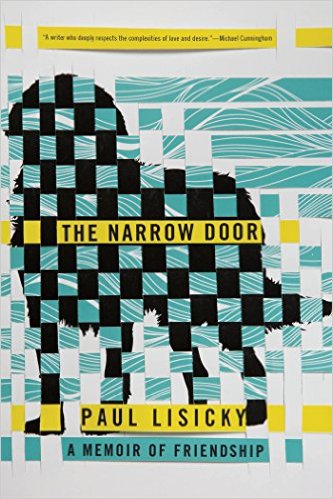
The Narrow Door by Paul Lisicky

The Narrow Door is literary, smart and poignant, an extended eulogy for a friend and a meditation on friendship.

narrow door

The Narrow Door is a striking memoir of love and loss by Paul Lisicky (Lawnboy; The Burning House). At its center are the life and death of Denise, Paul’s longtime best friend; in parallel, Paul and his husband slowly pull apart and finally break up. The ups and downs of these two relationships define the story Lisicky tells, but they also give him space to muse on larger questions: the craft of writing, competition among writers, the meaning of love and events in the larger world.

Paul met Denise in the early 1980s, when they were both teaching assistants at Rutgers. They became fast friends, talking on the phone for hours, sharing the pain and joy of writing. Denise becomes a published novelist first, but Paul’s later success threatens her. A tender passage about “Vincent” and Gauguin, about the painters’ competitive feelings and their wrecked friendship, helps Paul deal with his struggle with instincts leaning both toward and away from competition with Denise. This is only one example of the wide range of Lisicky’s subject: the Deepwater oil spill and the Haitian earthquake likewise influence his reactions to Denise’s cancer diagnosis and other immediate concerns. Paul and Denise are Joni Mitchell fans, and their story is guided by her music. When a hotel in Atlantic City is demolished, Lisicky writes, “It comes down as a person would…. I take it personally.” These disparate threads are tied together expertly, with tenderness, in careful prose.

Paul’s husband, identified simply as M, is a successful poet and has his own, weaker friendship with Denise. He supports Paul when she dies, but soon after, the couple begin their drift apart. The Narrow Door employs a disordered chronology, in sections headed by year: 1983, when Denise and Paul’s friendship is budding; 2008, when she dies; 2010, when Paul and M are at their rockiest; and times in between, as these relationships grow, change, climb and descend. When he fights with Denise, Lisicky considers losing a friend, as opposed to breaking up with a lover: “Sure, it might feel like rage, but aren’t rage and love part of the same water?”

This is an artistic work, poetic and layered and carefully structured. The tangled sequence of events emphasizes the ever-changing nature of relationships and emotional reactions. Lisicky’s tone is sometimes elegiac, sometimes gently humorous, and consistently introspective, questioning. The Narrow Door is not a long book; nonetheless, it requests the reader’s measured consideration of language, pitch, philosophy and emotion. This portrait of a friend in all her complexities is lyrical, intellectual and occasionally challenging. In an austere mood, Lisicky avoids the idea of comfort for its own sake but asks, “Couldn’t there be some rigor to comfort?” The Narrow Door answers with both, in a compelling package.


This review originally ran in the January 4, 2016 issue of Shelf Awareness for the Book Trade. To subscribe, click here.


Rating: 8 cups of coffee.

Paulina & Fran by Rachel B. Glaser

A novel about two young art students, the thrills they enjoy and the wounds they inflict on themselves and each other.

paulina and fran

Rachel B. Glaser (Pee on Water; MOODS) focuses on two memorable, magnetic characters in Paulina & Fran, a novel of the challenges in friendship and love, beginning in a New England art school.

Paulina is flamboyant, wildly sexual and capable of great cruelty toward her friends. She attacks the world with a confident demeanor but is secretly plagued by an inability to get what she wants, because she doesn’t know what that is. Fran is more self-contained, a talented painter but lacking commitment, easily swayed by the love and approval of others. On a school trip, the two are drawn together, owing in part to their lack of other social options, but the bond they form is remarkably powerful, even hypnotic, on both sides. The mesmerizing spell is broken when Fran ends up dating Paulina’s ex-boyfriend, setting into motion a series of mutually destructive events that follow the two women–and collaterally the helpless boyfriend–well past graduation.

Paulina can be repellently vicious, while Fran is merely lost; both will occasionally try the reader’s patience, but both are finally sympathetic. These are finely detailed, compelling, complex young adults facing archetypical trials: work and art; sex, devotion, obsession and betrayal; the cavernous future; and how to be oneself and be a friend. Their journey is often funny and sometimes horrifying, filled with pretentious art “crits” (critiques), thrift store fashion and homemade hair products. Paulina & Fran is both a glittering, raucous ride and a thoughtful depiction of life: painful and ecstatic.


This review originally ran as a *starred review* in the September 8, 2015 issue of Shelf Awareness for Readers. To subscribe, click here, and you’ll receive two issues per week of book reviews and other bookish fun!


Rating: 7 crits.

The Secret Place by Tana French (audio)

secretI think I will call it a great credit to Tana French that even though this novel took me months to finish, due to my much-reduced audio-listening time, I never lost the thread or lost interest. It can be hard to read a book that slowly, over that much time. But The Secret Place is gripping, compelling, peopled by fine, interesting, and distinctive characters; it lent itself pretty well to this less-than-ideal reading (listening) schedule.

French’s dedicated readers will recognize several characters from earlier novels, although these books do not exactly form a series. The central detective in The Secret Place is Stephen Moran, who has been relegated to the depths of the Cold Cases unit, where he is not particularly happy. Then a gift is dropped in his lap: Holly Mackey, who was but a little girl in Faithful Place, is now 16 years old and boarding at a chi-chi girls’ school called St. Kilda’s. She brings Moran a card stating that the writer knows who killed Chris Harper, found murdered last year on St. Kilda’s grounds.

Moran takes this card to the Murder squad, where he has ambitions, and begins working with Detective Antoinette Conway, a prickly, defensive sort. The two form an unlikely, tentative team, and the rest of the novel covers a single, very long day they spend on campus at St. Kilda’s, solving the case.

Or at least part of it does. The Secret Place is split into two narratives, which alternate chapters: the story of Moran & Conway’s single long day, and the last 18 months or so in the lives of Holly Mackey and her three girlfriends. Holly, Selena, Julia and Becca are very, very close. They all knew Chris Harper, some more closely than they’ve let on to the police; their friendship and their lives are caught up in the case, and Moran knows it. As Moran & Conway work the case, the second narrative brings readers up to date in the girls’ lives.

As an audio production, this is effectively played by two readers, a male reader for Stephen Moran’s story and a female third-person narrator of Holly and her friends’ lives. The latter narrative is ghostly, compelling, and mystical; there are magical elements, although of course this is a realistic story; the magic is simply that of youth.

Moran is a sympathetic character who wants badly to “make it,” to fit in in Murder, to have a partner, to have a friend. He is sensitive and self-conscious, yearning. The girls wield their own self-referential magnetic power, very much evocative of the strange world of teenagerhood. Friendship, its meaning and its powers, are very much the central themes of this story.

In short, Tana French has done it again. Her characters are mesmerizing, both realistic and spell-binding. The plot is twisty: beware thinking you know where she’s headed! I love this stuff. Keep it coming.


Rating: 7 earbuds.

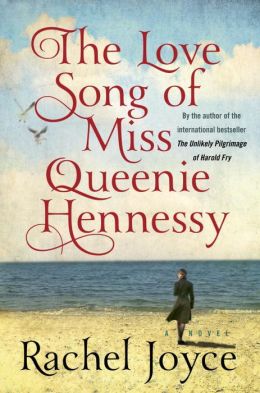
The Love Song of Miss Queenie Hennessy by Rachel Joyce

A companion to The Unlikely Pilgrimage of Harold Fry, and every bit as affecting, sweet and sad.

love song

Rachel Joyce’s The Unlikely Pilgrimage of Harold Fry won many fans with its bumbling but likable protagonist and his improbable journey across England and through his own troubled life. Harold appears off-screen in The Love Song of Miss Queenie Hennessey, in which Queenie replies to the postcards he sent her in Pilgrimage. Readers will be delighted to rediscover the action of the first book, from a very different perspective and with considerable added detail on Queenie’s side. Those considering Pilgrimage should definitely start there, as Love Song comprises one big spoiler. However, it’s not necessary to have read the first to enjoy this second novel.

Love Song begins when Queenie receives Harold’s first postcard. She has written to him from hospice care, sharing the news of her impending death. Harold sets out to visit, asking her to await his arrival. Queenie is startled and alarmed. She has kept an old secret from Harold that she had intended to take with her; she now decides she needs to come clean.

Joyce alternates among three timelines: in real time, as Queenie waits for Harold while composing a long letter of explanation; their separation 20 years ago, when she fled life’s complications; and their original meeting and developing friendship. While the present-day setting is inarguably dour, the action in all three stories is fresh, compelling and deeply emotional, and Queenie’s fellow residents create a charming little world of their own. Just as in Pilgrimage, a major revelation at the end amplifies the impact of an already powerful book.


This review originally ran in the March 10, 2015 issue of Shelf Awareness for Readers. To subscribe, click here, and you’ll receive two issues per week of book reviews and other bookish fun!


Rating: 8 painted nails.

The Neighborhood Playhouse presents A Year With Frog and Toad

the first book

the first book

You know I love to go to the theatre. I noticed a poster around Christmas for this production, which is based on a series of children’s books I remember, the Frog and Toad adventures written & illustrated by Arnold Lobel. I loved the idea of a play built on these sweet, simple stories, and the price was right. When I had time to think of it a little more, I wondered if “children’s theatre” was really something I wanted to see; but they did bill it as being fun for adults, too. Shrug. My parents and I went on a Sunday afternoon… and I’m so glad we did!

frog and toadFrog and Toad’s adventures have made it to musical theatre, and only five actors play all the roles: Frog and Toad, of course, are joined by a menagerie of birds, moles, turtle, lizard, snail and squirrel, which roles are shared between the other three. We thought the musical format was “inspired” (my dad’s word), but it turns out to be the inspired choice not of The Neighborhood Playhouse but of Lobel’s daughter, who commissioned the piece in 2000, according to Wikipedia, which also points out that this is a popular choice for community theatre groups, as we saw here. It is really sweet, and cute – in the spirit of the original books. Frog and Toad are neighbors and good friends, and share an entirely good-hearted, caring day-to-day life. They interact with the other woodland creatures in good-hearted ways; it is positively heartwarming (cynics beware), and in musical form, both hilarious and charming. I found it ran a little long for the age group that formed the audience, at nearly two hours. But the performances – singing, dancing and acting – were quite seriously good, far better than the under-10-years crowd would have required, I suppose, and plenty impressive to those of us adults unaccompanied by babes. My favorite character was Snail.

I think it’s great that TNP is out there producing such quality, affordable theatre; and I liked the venue, the Bellingham Theatre Guild, an intimate setting in a former church. I will be looking for more. Hooray for the new hometown!

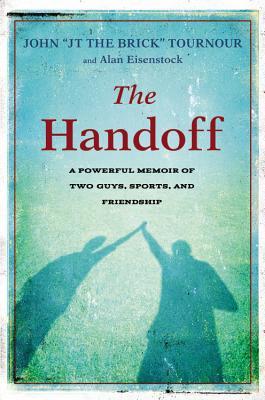
The Handoff: A Memoir of Two Guys, Sports, and Friendship by John “JT the Brick” Tournour

An earnest remembrance of a friend and the wisdom he passed on to a sports talk radio anchor.

handoff2

After a fun-filled, full-speed youth as president of his fraternity and, later, working as a professional cold-calling stockbroker, John Tournour finds his true calling: sports talk radio. He starts out as a listener calling in, then gets his own show but has to pay for airtime, gradually working his way up until one day he gets a fateful call. Andrew Ashwood mentors John, now known on the air as “JT the Brick,” through an ascending career, and they become the closest of friends. When Andrew is diagnosed with cancer, JT naturally gets the call to be his chemo buddy and “main go-to guy.”

Though The Handoff begins with JT’s childhood, we know from the beginning that Andrew will be its focal point. JT failed to take notes on Andrew’s every word in those final months, realizing only in hindsight that he was not only modeling how to live–and how to die–but also sharing all his life lessons, on and off the air.

JT may be macho and manly–this is smack-talk sports radio, after all–but he is heartfelt and emotional in relating his love for Andrew and his appreciation of everything his friend had to offer. Although sports radio is JT’s passion and the background for his friendship with Andrew, his readers need not know or even much care about sports (or radio) to empathize. The Handoff is a memoir of life and loss, but foremost of friendship.


This review originally ran as a *starred review* in the August 23, 2013 issue of Shelf Awareness for Readers. To subscribe, click here, and you’ll receive two issues per week of book reviews and other bookish fun!


Rating: 6 callers.

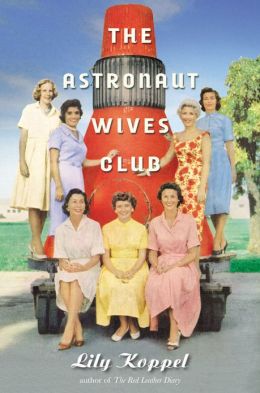
The Astronaut Wives Club by Lily Koppel

astronautThe US space program began in 1958, with an original group of seven astronauts. Their seven wives were expected to be the classic 1950’s perfect housewives; and that blissful domestic harmony was considered as important a job qualification for the men as was their athleticism and stamina. (Later rounds of astronauts would be highly educated engineers and technologists; the early ones emphasized physical attributes a little more.) The Astronaut Wives Club studies those original seven wives, and later additions which swelled the group toward 50. Lily Koppel examines the lives of these women and their husbands: marital dramas, difficulties with the press, lifestyles, tragedies, and lives after NASA was done with them. She interviewed the available surviving women. It comes across as a truthful depiction of them: women whom, unlike their husbands, we have surprisingly never thought to study until now.

The first space program was based out of Cape Canaveral in Florida, moving to Houston (my hometown and current place of residence) in 1962. It was fun to read about the early suburbs of Clear Lake and Friendswood, which I’m familiar with in slightly different forms today. A guide at the front of the book to “the astronaut wives” groups them by wave: the original seven (Mercury), the new nine (Gemini), the fourteen (more Gemini and Apollo), and the nineteen that came in 1966. The original seven are those we get to know the best, and their influence would remain on those that followed, but even the later waves of wives receive good personal treatment. From 1950’s stereotyped domesticity to the hesitant beginnings of women’s lib (which, unsurprisingly, came later to Space City wives than to certain segments of the population), these women tended to stick together, presenting a united front against the intrusive media and comforting each other in times of tragedy. But there was also competition: just as their husbands competed for the honors of “firsts” (outer space, moon orbit, moon walk), their wives had to compete to present the proper image on husband’s behalf. And as later waves of wives rolled in, the earlier ones were, perhaps predictably, a little distrustful of newcomers; they had worked hard to establish a tight-knit, protective club that still had its own internal issues to boot.

Koppel treats these women with sensitivity and respect. Their stories, and their collective story, is moving, poignant, and brought to life. On the night I finished this book, I dreamed about the astronaut wives. I can’t tell you much about my dream, because it faded so quickly, but I had been planning a trip, and I think I was consulting with the wives about some of my plans. I don’t dream about many books I read (at least not that I can recall), so this should be taken, probably, as a vote of confidence in the reality and staying power of what I’d read.

The Astronaut Wives Club is a well-deserved first look at a particular and unique group of women in history. As a bonus, it’s a fun glimpse into Americana of the 1950’s, 60’s, and 70’s. There is almost no science involved, so if you’re looking for the specifics of space technologies, look away; this is the homebound perspective on the man on the moon. While they suffered widowhood, divorce, and even suicide, this group of women is charming, funny, likeable, and amusing. I found it fascinating to consider this period through its unsung background heroes.


Rating: 7 Valium.

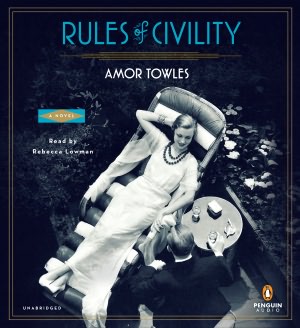
Rules of Civility by Amor Towles (audio)

I have one to proselytize for, friends. Rules of Civility will certainly make the list of the greatest books I discovered in 2012.

The book opens with the story’s narrator, Katey, and her husband Val at an art opening in 1966. A few pages set the scene and the style of this book – and oh, the style! – before we’re whisked back into Katey’s reminiscences, beginning just a few hours before the new year of 1938 will be rung in. She and her best-friend-and-roommate, Eve, are out on the town, and they meet a man who buys them champagne for the toast at midnight. And then we follow Katey through the year.

Katey’s life changes a great deal in 1938, in all its aspects: career, home life, relationships, love, aspirations, her understanding of herself and of her world. I don’t want to mention any more of the plot, because I found such joy in discovering its twists myself, and you should too.

This book has many strengths. Its story is interesting: a single year, 1938, in the life of an ambitious young woman in New York City. And there are such surprises that I dropped my chin on my chest more than once. But the plot alone would not have made the book what it is. The characters are strong as well: Katey is pretty fabulous, as are a number of others. But neither is this the shining facet that draws the eye. I think the real victory is in the writing. You may have noticed (and I hope you’ve forgiven me) that I used not one but three teasers to whet your interest (here and here). It’s very evocative: I could see, hear, smell the New York City described; and further, I felt all the emotions Towles wrote. Driving to and from work and listening to this story (and Rebecca Lowman’s masterful, perfect narration), I arrived at my destination confident and optimistic, hopeful for the future, downcast, flabbergasted, or whatever that chapter called for. It was one of those very rare books that engaged me completely, made me lie awake at night worrying, wishing for certain events to transpire, caring deeply about fictional characters. It was amazing. And of course I have no great understanding of 1938 New York City; but Towles (and Lowman) have me utterly convinced that it sounded and looked and smelled and tasted exactly as described here.

And while I’m praising the writing, the style with which Katey’s voice comes alive, I must praise the reading of this audio version as well. Lowman has a frank, languid tone that feels precisely right for Katey; I love that she slows down. Her pacing is sometimes indolent and sometimes despairing, but it always adds to the sense of nostalgia in the beautiful piece of art that is Rules of Civility.

Oh, and it’s worth adding too that Katey is a reader, and literary references abound, which enriches the overall effect considerably for me and perhaps for you too.

Without having given away much plot, then, I assure you that the setting, the sense of style, and the writing on display in Rules of Civility are all remarkable. This will definitely be one of the best books I read this year, and the audio version is superb. Run out and get a copy.


Rating: 9 martinis.