Dandelion is Dead by Rosie Storey

A grieving sister finds that hope, silliness, angst, and even love may be possible amid loss in this astonishing first novel.

Rosie Storey’s debut, Dandelion Is Dead: A Novel About Life, is a glittering riot of grief, laughter, missed connections, absurdities, and the joys and pains of life’s many facets. From one unexpected turn to the next, this story will keep readers emotionally engaged and yearning alongside its protagonist.

Poppy Greene is 37 years old and deep in mourning. It has been 231 days since her older sister, Dandelion, died “and, somehow, it was spring again.” Dandelion had been wild, irrepressible, author of all the sisters’ adventures; without her, Poppy (a professional photographer, ever the observer) is unmoored. Going through her sister’s phone, she clicks on a dating app and, on a whim, answers a message from a year-old match. When Jake asks for a date on Dandelion’s 40th birthday, it feels like fate, or magic, or Dandelion’s mischievous hand from beyond the grave. Poppy does not set out with the purposeful intention of impersonating a dead woman (nor of cheating on her longtime boyfriend, Sam), but she finds Jake incredibly magnetic, and soon begins a romantic relationship in her sister’s name. Dandelion Is Dead alternates between Poppy’s close third-person point of view and Jake’s, revealing his own intense attraction to the woman he knows as Dandelion, and his own past traumas. Poppy and Jake are both awkward, ungraceful, and heartfelt in their romance; both commit dishonesties that threaten everything they value.

The aptly named Storey excels at whimsy, delightful comedy, and pathos. Her plot is composed of debilitating losses, madcap adventures, treacheries, secrets, love, and striving. The profound charm and appeal of Poppy and Jake lie in their contradictions. They suffer terrible losses and make poor choices; they are capable of both sweetness and betrayal. The cast is enriched by Poppy and Dandelion’s lifelong friend Jetta (and her loyal husband); the young son Jake is devoted to, and his masterfully nuanced ex-wife; Poppy’s unsympathetic boyfriend; and of course, the mythic Dandelion herself. While its subtitle feels accurate, this debut is also clearly a novel about grief. Poppy learns that if she is going to find a fulfilling life after losing her sister, she must grapple with her own mistakes and those of her loved ones, even those she’s lost. Dandelion Is Dead is a scintillating achievement in emotional range, humor, and wisdom. Poppy Greene thinks she is the less magnetic sister, but no one who meets her will easily forget her.


This review originally ran in the November 7, 2025 issue of Shelf Awareness for the Book Trade. To subscribe, click here.


Rating: 8 Twisters.

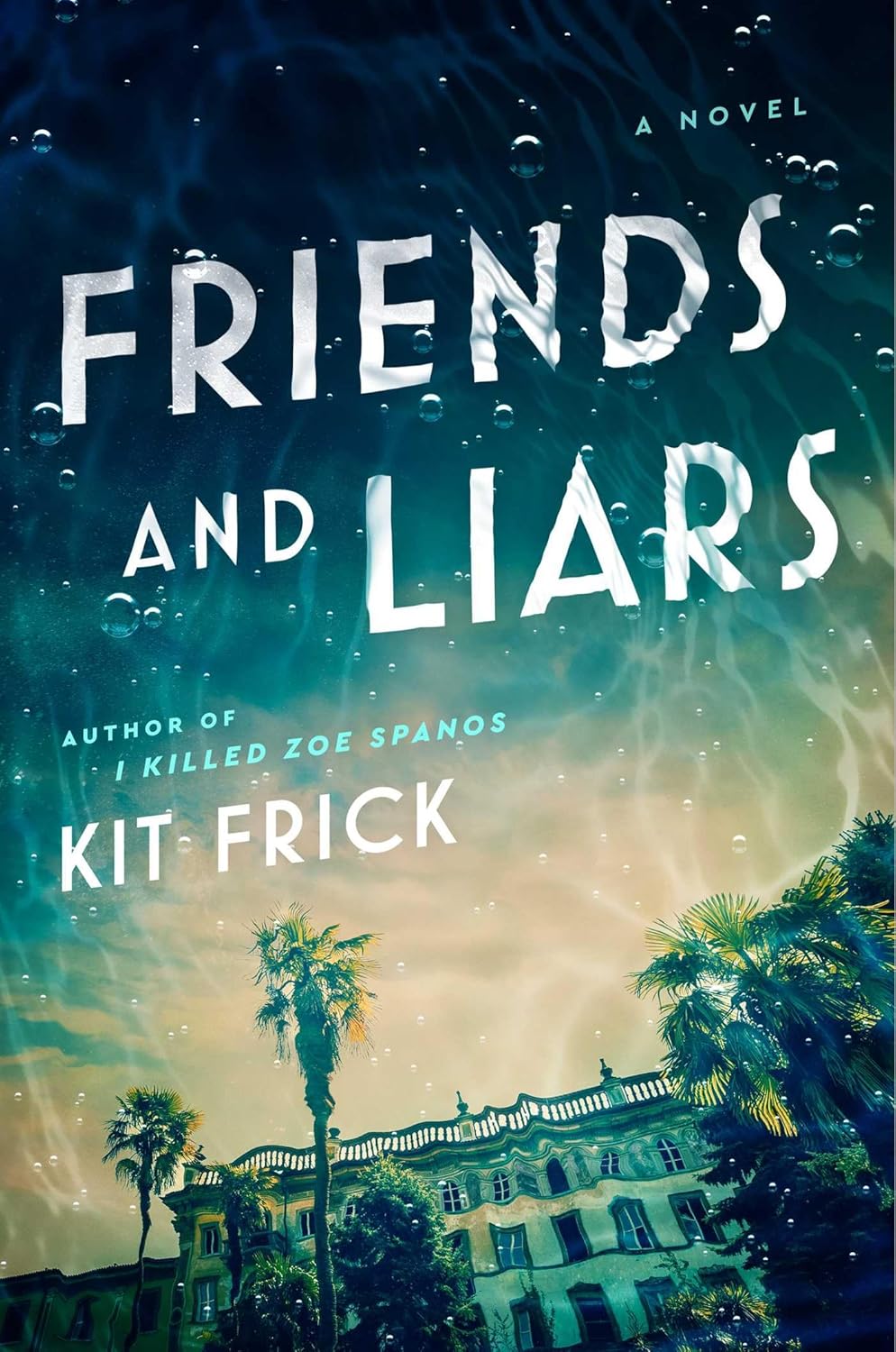
Friends and Liars by Kit Frick

Estranged college friends are drawn back to the palatial Italian estate where old secrets are buried and one of them died in this electric tale of friendship, deceit, and suspense.

Friends and Liars by Kit Frick (I Killed Zoe Spanos) sees a foursome of estranged friends reunite at a luxurious private Italian palazzo for an extravagant weeklong vacation to remember their fifth, heiress Clare Monroe. Clare was 21 when she drowned in Lake Como on New Year’s Eve. Now she would be 27.

Luca, Harper, Sirina, and David gather for an itinerary organized (and paid for) by Clare’s family, the famous and secretive Monroes of Hollywood. Luca is foundering in small-town Florida, recently dropped by his sugar daddy for a younger model. Harper has a nearly five-year-old son with her perfect husband, and she’s the only one of the group to have settled down directly after college. Sirina is hard at work building her acting career. And David–Clare’s boyfriend at the time of her death–is enjoying a successful career in directing, with another girlfriend whose father is well-connected. The friends still care for each other, but have been out of touch since that terrible New Year’s Eve. Clare’s tragic death is all bound up with secrets that each of them would rather not confront again–the lies and betrayals that contributed to her demise.

But, for various personal reasons, none is able to resist the invitation to return to the Palazzo Mella for another series of opulent events orchestrated by Clare’s icy Aunt Catherine. Immediately, their uneasiness is intensified by the appearance of taunting “gifts” and notes left for them in the guest quarters. The message is clear: someone knows what happened on that New Year’s Eve and has come for revenge. The old friends must band together and face their own worst behaviors to solve a compound mystery: Who knows what they’ve each done? Who is preying upon their guilt? What really happened that night, and who will pay for it now?

Friends and Liars achieves a delicious balance of emotional complication, layered deceptions, and consummate psychological drama. Lush with the accoutrements of affluence and charged with the machinations of aspiring creatives, the lavish setting near Bellagio distills to a locked-room mystery. The surviving Monroes, a few family friends, Clare’s four ride-or-die college buddies and their two plus-ones, as well as the household staff, make for colorful suspects in a plot with rising stakes. Heart-racing suspense, compelling characters and relationships, and great danger add up to a highly satisfying puzzle of a novel, which saves surprises for its final pages.


This review originally ran in the October 3, 2025 issue of Shelf Awareness for the Book Trade. To subscribe, click here.


Rating: 7 Paper Planes.

Her One Regret by Donna Freitas

A young mother confesses regret in this satisfying, dynamic mystery that is also a rousing conversation starter about an experience of motherhood still treated as taboo.

Donna Freitas’s Her One Regret explores what one of her characters calls “the last taboo of motherhood.” At once a rocket-paced crime tale of suspense and a thoughtful examination of cultural dictates about motherhood, this novel of women’s lives and relationships excels as both entertainment and a call to difficult but necessary conversations.

In a brief introductory section, readers meet Lucy in the parking lot of a supermarket in Narragansett Beach. On a gorgeous, early fall afternoon, she loads groceries alongside her nine-month-old daughter, Emma. Then begins Part I: “The First 48 Hours.” Lucy has vanished; Emma is found, alone, crying, but perfectly fine, in the parking lot. The small Rhode Island community is horrified, united in a search for the missing mother. But then it is revealed that Lucy had recently confided in her best friend, Michelle, that she regretted having Emma. She had fantasized about staging her own disappearance. The community and the nation erupt in harsh judgment. Is Lucy a kidnapping victim, or on the run? Is she a monster? What do we make of a woman who regrets motherhood?

The rest of Freitas’s narrative jumps between the lives of four local women. Lucy is seen mostly in memory, or as a symbol. Michelle is devastated by her best friend’s disappearance, in love with her own role as mother, but galvanized to defend her friend. Lucy had tried to tell Michelle what she was suffering, but “Michelle did the thing everybody does with mothers: dismiss their feelings as not real. Michelle gaslit Lucy, kept gaslighting her. She hadn’t meant to.” Diana, a retired detective, is drawn to Lucy’s case and its similarities and differences from other vanished women. And then there is Julia, whose baby is the same age as Emma: “Julia keeps waiting for the moment she’ll feel bonded to her son, that miracle other women talk about when connection and unbelievable love will flood her person and overcome the dread, the sadness, the resistance. But it never happens.” Julia, an artist who can no longer bring herself to create, sees herself in Lucy, shares the fantasy of escape, and now watches as the world on social media condemns her parallel self. Her desperation feels like an emergency no one around her will acknowledge.

Freitas (Consent; The Nine Lives of Rose Napolitano) relates these lives and quiet–or in Lucy’s case, suddenly very public–struggles with nuance and compassion. Her One Regret is purposefully thought-provoking and a riveting mystery–a masterpiece of duality, not soon forgotten.


This review originally ran in the September 5, 2025 issue of Shelf Awareness for the Book Trade. To subscribe, click here.


Rating: 8 sketches.

A Galaxy of Whales by Heather Fawcett

I needed this little break in between heavier reads, and I love knowing I can turn to Heather Fawcett to scratch that itch. A Galaxy of Whales is offered for readers ages 8-12, and features 11-year-old Fern, who is having a difficult summer. Her best friend Ivy has been pulling away from her, spending more time with other friends. Her family’s business, Worthwhale Tours, is in some trouble. Their main rivals, Whale of Fortune, are also their next-door neighbors, the Roys; and 11-year-old Jasper Roy is especially annoying to Fern. Her one-year-older brother Hamish is always buried in a Space Dragons book – also annoying. Worst of all, Fern still misses her father. “Maybe if your dad had died three years and two months ago, you shouldn’t be sad enough to cry anymore.” She’s not sure.

Then she learns about the youth wildlife photography contest. It’s perfect: if she wins, her photo will be on the front page of the paper. It might be enough to win Ivy back. The prize money could help the family business. She could defeat Jasper, who wants to enter the contest as well, despite not being into photography at all. And photography is absolutely Fern’s thing – the thing she shared with her father, whose camera and gear she takes with her everywhere, who taught her everything she knows. She has to win.

Just off Fern’s little Pacific Northwest town of Goose Beach, on the Salish Sea, there is a famed pod of endangered killer whales that she knows is just the right subject for her award-winning shot. But they’re hard to track, and time is running out. Fern tries to work together with Ivy, who is clearly not all that interested. She tries to work with Hamish, who is decidedly indoorsy, not a natural wildlife photography assistant. Finally, she resorts to working with Jasper, the enemy – unless he’s becoming her new best friend.

In this momentous summer between fifth and sixth grades, Fern learns a lot about family, friendship, whales, astronomy, and how to continue to navigate grief. A Galaxy of Whales offers these lessons organically and sweetly, in just the sort of package I was looking for: wholesome and loving.


Rating: 8 ice cream sandwiches.

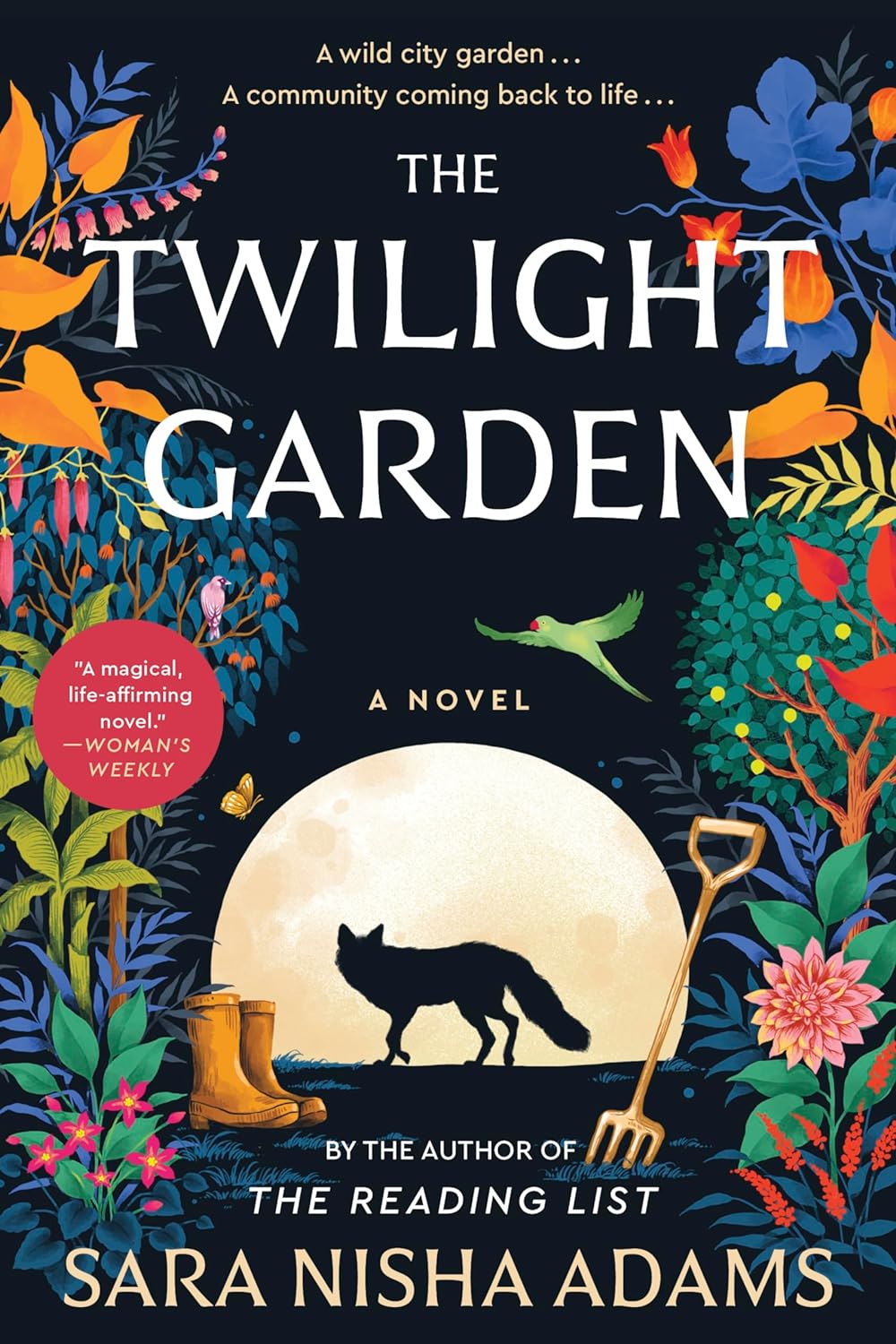
The Twilight Garden by Sara Nisha Adams

From the author of The Reading List comes a pleasingly similar, sweet novel of unexpected connections. In a shared garden in London, two sets of neighbors in two timelines (2018-19 and the 1970s and 80s) navigate conflict, build community, share love and struggles, and grow flowers, food, and strong bonds. It’s an optimistic story, which I perhaps don’t get enough of in my life.

I’m thinking of both this and Adams’ first novel as sort of meet-cute, enemies-to-friends stories, with rom-com sweetness but where the relationships that form are not romantic. Rather, neighbors and community members come together, across diversity in age, gender, sexuality, and race, and form deep and meaningful friendships and built families, caring for each other in profound but not romantic ways. There are romances among the cast of characters, but not in the relationships whose trajectory defines the novel. I’m thinking of these as non-romantic love stories, a genre I’ve not thought about before but am trying to define here.

We first meet two neighbors in contemporary London. Winston is a young Indian immigrant who has lived in his rental home for some years with his partner, Lewis, although their relationship seems to be drawing to a close. He’s lonely, disconnected, and a bit depressed, although his work in a nearby convenience store offers a wholesome and healthy dose of community connection. “He was always chatting to customers in the shop, but when it came to the neighbors on his road, he barely knew faces, let alone names.”

Bernice has just moved in next door, newly divorced, with her ten-year-old son Seb. She is white, well-off, privileged, uptight. Because chapters alternate between their perspectives, the reader knows that each is suffering their own private pains, but to one another, Winston and Bernice are each the nightmare neighbor. Their conflict centers around a shared garden, which Winston has treated as a private sanctuary and Bernice views as a death trap for her son. This garden, now in disrepair, transports readers back to the earlier timeline and two additional protagonists.

Maya first moved in (to what is now Winston’s home) with her husband Prem when they were newly arrived from India. They were soon joined by a daughter, Hiral. Next door (in what is now Bernice and Seb’s home) an older woman named Alma lived in the house she’d been raised in. Initially prickly, and permanently ornery, Alma becomes a dear friend to Maya’s family, a relationship that began in the garden. Alma is a very serious gardener and a bit of a control freak, but Maya encourages her to accept help from their community, and they wind up very much a neighborhood hub for food, fellowship, work, mutual support. In Winston and Bernice’s time, mysterious missives inspire the feuding neighbors to attempt reawakening the rich shared garden of years past, and the bonds of community come, slowly, along with it.

This story is deeply sweet, perhaps approaching what my mother would call ‘precious,’ but never getting there. There are no bad guys, although there are some bad behaviors; instead, these are humans who suffer and sometimes handle it poorly, but feel badly about it and try harder next time. The loves (familial, friendly, and romantic) are real and deep. I cried several times. It felt wholesome and good. There is tremendous diversity here in several senses, and closeness is possible across all those lines when humans reach out and make efforts, or when there is real need. It’s a lovely, hopeful version of the world, and I’m here for more of it.


Rating: 9 banana leaves.

Sipsworth by Simon Van Booy

A friendship between a widow and a mouse brings outward ripples of positivity in this surprising, compassionate comfort read.

Simon Van Booy’s Sipsworth is a delightfully funny, poignant, surprising novel about an octogenarian widow who has all but given up when she finds an unusual reason to reinvest in life. The story takes place over two weeks, in private spaces, and features events that on the surface appear small in scale, but have far-ranging consequences and meaning for its human and nonhuman protagonists, with whom readers cannot help but fall in love.

Helen Cartwright had lived abroad for six decades when she returned to the English village in which she was born and raised. Her beloved husband and cherished son have both died, and she now lives alone, sad, reclusive, in a pensioner’s cottage. “Life for her was finished. She knew that and had accepted it. Each day was an impersonation of the one before with only a slight shuffle–as though even for death there is a queue.”

“Then early one morning, something happens.” Helen brings in a neighbor’s rubbish, to go through it on her own time; something reminded her of her son. She has inadvertently also brought in a tenant: a mouse, which initially repulses her. On an inexplicable impulse, she begins to feed it, to keep it safe, and her choice to care for something beyond herself will lead her to leave the house, to interact with people (librarian, hardware storekeeper), and to the terrible realization that if she dies now, the mouse will starve in the enclosure she has designed. “For the first time in many years, against her better judgment,” Helen is “not dying.” Unexpectedly, the accidental company of the mouse she calls Sipsworth forces Helen to rediscover the world and a reason to live.

Helen begins by caring for Sipsworth in material ways (food, water, shelter) but winds up caring in broader ways. She talks to him, in remarkably confessional terms. They learn to trust one another. But it is not until a true emergency that the lessons of “a lost wish… granted” become clear. And it is only late in the book that a vital truth of Helen’s own life is revealed.

Van Booy (Father’s Day; The Presence of Absence; The Sadness of Beautiful Things) tells Helen’s story in unadorned prose that however frequently offers lovely images and metaphor. Sipsworth features unassuming, deeply likable characters in an essentially quiet, simple tale. Sweet but not saccharine, tender, loving, and funny, this story of unlikely friendship and late-life new beginnings will charm any reader who has ever loved or lost.


This review originally ran in the February 29, 2024 issue of Shelf Awareness for the Book Trade. To subscribe, click here.


Rating: 8 unsalted cashews.

Her Majesty’s Royal Coven by Juno Dawson

This very sweet story of witches, female friendship, intrigue, and coming of age was recommended by Liz. It’s a fun combination of some pedestrian features of regular life – government bureaucracy, for example – with witchcraft and magic. We first meet a group of young girls on the cusp of being inducted into the adult witch’s world of the coven; then we flash forward to find them navigating that adult world in very different ways. Witches can be people of color and queer people, struggling with what that means for any of us in the real, mundane world, as well as the parallel prejudices and oversights of witches (who might be magic but are also just people). Niamh is mourning her late fiancé and just wants to keep her veterinarian practice going smoothly, but she also can’t turn down a young warlock (or witch) in need. Elle has all but renounced her powers, enjoying her cookie-cutter life as wife and mother, until her teenaged daughter shows signs that she’s got powers of her own. Leonie runs an important intersectional coven, with the support of her beloved girlfriend Chinara, but Chinara wants a baby and Leonie’s not sure she’s ready. And Helena… well, her role as High Priestess of Her Majesty’s Royal Coven may be her logical due. Or it may be just a bit much for her. A dire prophecy appears on the horizon, and these four old friends will be hard pressed to handle it each in her own way, to say nothing of how they relate to one another.

It’s really a clever, charming, smart, modern story. These four very different women are just muddling through life as any of us does, magical powers notwithstanding. They parent, find romance, make hard choices, try to do good, and maintain important old friendships – or let them go when they no longer serve. They have to wrestle with bigotry, and they fight for what’s right. They are sweet and strong. And this novel is the first in a trilogy! Thanks for the recommendation, Liz.


Rating: 7 kittens.

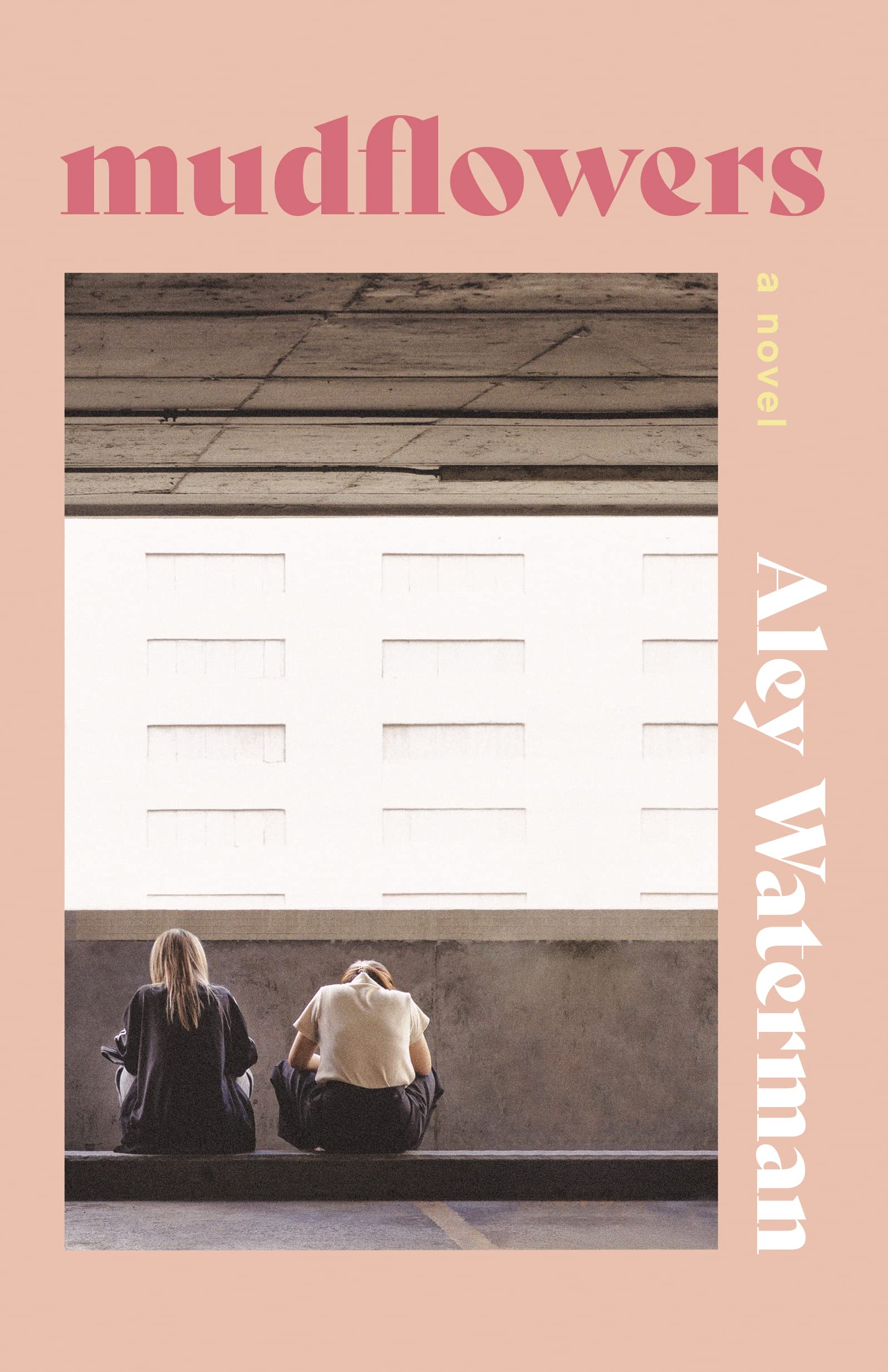
Mudflowers by Aley Waterman

In this reflective debut, young artists in Toronto form a love triangle with both transcendent and painful results for all.

Aley Waterman’s sensitive first novel, Mudflowers, follows a young woman exploring intimacy, biological and built families, and art. A love triangle twists and reshapes itself, with both trauma and revelation. “I wanted so badly to love in a good way,” says Sophie, the protagonist and narrator, 27 years old and a Newfoundland native who recently moved to Toronto, where she lives with a misogynistic writer and her best friend since childhood. He is a beautiful man named Alex who is also her on-and-off lover. Sophie sees Maggie reading her poetry at an event and is immediately swept away. Maggie is talented and enigmatic, “with big eyes full of wide highways.” The two become close friends and, sometimes, lovers.

Sophie creates glass mosaics for wealthy patrons, Maggie writes, and Alex works on indie films. They are young artists scraping together livings in a big city, taking drugs amid art events and the bar scene. They slide frankly and openly in and out of sexual relationships. Sophie obsesses over her mother’s death. Alex’s mother left when he was 12, their parallel losses an unspoken understanding. The addition of Maggie to their close relationship, forming a trio, acts as a magnetic force that both imbalances and strengthens the bond. Secrets surface, and the balance shifts again.

Mudflowers follows Sophie to an artist colony at a castle in France and eventually home to Newfoundland. Place is important to this thoughtful protagonist, who is given to contorted philosophic musings. Newfoundland is “the only place I had been to where there is enough space and isolation and distance from the world for people to really be themselves without even thinking about what that meant.” Earlier, she notes that “in cities so many lives are wildly proximate to each other, just divided by a wall here or a door there, but each wall determined some sort of fate, keeping us organized and away from one another.” She wonders: “What if the people who should be most important in life were just separated by a wall, and what if that wall meant those people never met!” Sophie has met the people most important to her, but keeping them together will be another feat.

Sophie’s physical travels are dwarfed by the scale of her cerebral and emotional movements, as she tortuously navigates desire and fear. She is preoccupied with art, how to love, and purposeful attention. “[W]as it how beauty was directed or how it was received that was most important?” she ponders. “How are you supposed to be a real person when you’re also supposed to be the woman inside of someone else’s mind?” She also often considers mothers and their absences: “Maybe we all need more mothers than we have,” she thinks. “Maybe we all need as many mothers as we can get.” Mudflowers is thought-provoking, expansive, and raw.


This review originally ran in the August 22, 2023 issue of Shelf Awareness for the Book Trade. To subscribe, click here.


Rating: 7 birds.

Nine Liars by Maureen Johnson

The fifth Stevie Bell novel, and the last to date, although I saw that Johnson is writing more.

Stevie’s back at Ellingham, with most of her friends: Janelle, Vi and Nate are there as well, hard at work on their college applications, while David is away at school in London. Stevie is struggling: she lacks focus except when hyperfocused on a case, and right now there’s no case. “[Hers] was a good brain, but it had only two modes–fog and frenzy.” She’s not functioning well at ‘just’ going to school; she pines for David, and she’s unmotivated. She can’t wrap her head around the college stuff at all. (I begin to think that there’s something diagnosable about Stevie, between her unfocused/hyperfocused poles and her difficulties with social cues, but that’s not my job and she’s fictional. That’s Johnson’s job.) To save the day, a drunken late night call from David sets up a trip for Stevie and her friends to visit London: ostensibly for a little study abroad but mainly, obviously, for the couple.

There’s a cold case – Stevie’s specialty. It involves nine friends who called themselves ‘the Nine’ when they were college students back in the 1990s, and they are obviously counterparts to Stevie and her crew in some respects. There is also Stevie’s evolving relationship with David, her troubles relating to other humans in general, her detective mastermindedness, and everyone’s anxiety about college applications.

I had some frustrations about this novel. I’m disappointed in Stevie, and in David, and frankly, in Johnson as well. [Mild spoilers follow.] In this installment, Stevie makes a big error in her friendship with – well, with all of them, but particularly with Janelle. It is in line and in theme with the title, and the themes of the case she’s working on (which she points out to us herself, in case we’d missed it): the friend group who’ve experienced the murders (two in an old cold case and one present-day missing) are guilty of lying, and so is Stevie. Her crime against Janelle feels so serious to me, and I’m dreading Janelle busting her because I know Stevie’s life is going to change so profoundly when that friendship takes the blow. And then it just fizzles out, like, oh, everything is fine. I feel that Stevie doesn’t suffer consequences appropriate to her misstep. I was dreading the consequence; but when she gets to skip it, I feel that the author has let us down. I feel it was out of character for Janelle to respond the way she did.

And then comes David’s big bonehead move at the end. I guess it’s not entirely out of character, nor out of character for dumb teenagers. But I feel the let-down pretty hard. This one is less about inconsistency, at least, and more about my frustration with the character himself. My bigger gripe here (especially after it’s been a few days) is about the cliffhanger she’s left us on! (I think it was book two that also ended on a big one. But I was already holding book three! And book six doesn’t even exist yet!)

If anything, my frustrations are because I feel so much love for this series, so all is not lost yet. But I am now anxious for the next book in more ways than one.


Rating: 6 and a half slices of doner kebab.

Juno Loves Legs by Karl Geary

In this bittersweet coming-of-age story, scrappy childhood friends from Dublin’s outskirts grow tenuously into young adults with only one another for support.

Juno Loves Legs is a sensitive, scarred coming-of-age story by Karl Geary (Montpelier Parade) set in a troubled housing estate and nearby Dublin in the 1980s. Amid poverty, a harsh and judgmental Catholicism, family dysfunction and personal torment, preteens Juno and Seán form an unlikely but sturdy friendship that will carry them through trauma and violence and–if they’re lucky–into a wider, freer life.

Juno’s harried mother takes in sewing alterations for the neighbors, who look down on her family’s poverty and cheat her out of her meager pay. Her father drinks his days away. “Mam shouted up at him; he shouted down at her. They were two mouths and I was their ear.” Her older sister is absent following her own particularly awful childhood. Catholic school is a trial for a girl as headstrong and underprivileged as Juno. “We were beaten. A sour-smelling odour emerged from Father before he was done. And even Sister’s hands were crimson.” Then she meets Seán, who is shockingly clean but whose home life is equally, if differently, disturbed. For his awkward height she dubs him Legs, and they form an alliance, until an extraordinary act of violence tears everything apart. Years later in Dublin, with new troubles, the young adult versions of these childhood friends attempt a beautiful, possibly doomed, second start.

Juno’s first-person voice is angry, indignant, righteous, both jaded and pitifully innocent: at 12 she sets out to save the family by calling in the small debts owed her mother by their neighbors, but in her temper botches the job. She blusters to hide her vulnerability, where Legs leaves his tender side open and allows the blows to land. Not only the world at large–strangers, predatory adults, a grimly punishing Catholic church, the big city–but their own families are hopelessly cruel to these misfit children: Juno for her poverty, Legs for his sexuality. (A kind librarian provides an appealing single point of light.) They are stronger together, and their bond is artless, crude and true. This is in part a story about the families we build for ourselves: an ode to friendship in which the friends may still not survive. Geary’s young protagonists will face shocking pains before the ending, which glimmers with a touch of hope.

Juno Loves Legs is tender and heartbreaking. Young friendship takes on all the world’s challenges–love, art, family, the simple and overwhelming task of survival–with tragic, poignant results. Readers will find Juno’s bravado and Legs’s persistent sweetness unforgettable.


This review originally ran in the March 23, 2023 issue of Shelf Awareness for the Book Trade. To subscribe, click here.


Rating: 7 small debts.