Homegoing by Yaa Gyasi

I’ve had this one on my list(s) for a while now, but as it increasingly appeared in credits from books I enjoyed – as inspiration, as research, as most admired – I knew I needed to get to it sooner. Homegoing deserves the accolades. It’s both expansive and easy to read, in how beautifully it flows – although the subject matter is not generally easy.

There’s a helpful family tree in the front matter, as in These Ghosts are Family (which is one that refers to this book in an interview with the author at the end). This lets readers track the connections as we move through generations. Each chapter is titled for the character it focuses on, and each character appears in the family tree; they are featured chronologically across centuries. At the head of this tree is a woman called Maame who lived in what is now Ghana in the mid-1700s. We slowly learn that she had two husbands and two daughters at two different points in her life in Fante and Asante territories respectively. The daughters, Esi and Effia, did not know about each other, and their lives led in different directions. Near the novel’s beginning they are found under the same roof but in very different circumstances: one as the wife of a white British slaver, the other imprisoned in the dungeon underground. One is able to stay in her home region (Gold Coast as a British colony), while the other is kidnapped and carried across an ocean to become a slave in America. Later chapters follow their descendants until more or less contemporary times – everyone on the family tree gets a focus chapter except for Maame herself, whose story we learn only in pieces. These lives are filled with color and detail and struggle and pain, and love and music and beauty; in every iteration they continue to witness racism, colorism and the enduring legacies of slavery and colonialism, in different ways. I of course failed to mark the quotation that said so eloquently how the same prejudices were ongoing but in subtler and more insidious ways in later times than they had been in slavery’s heyday.

Homegoing is a beautiful, absorbing novel. Every one of the featured lives is so finely wrought, I spent at least half the book lost in each of them individually; it took me most of the book to begin anticipating their connections, although I was aware of those connections all along. They are all filled with such detail and richness, but it is possible that earlier chapters stand alone more securely than later ones. Some readers call this a novel in connected stories, and I do feel that each character’s story is a whole work in itself. But there’s no question in my mind that it is more novel than collection.

Aside from realistic portrayals of lives across a remarkable span of years and locations, Gyasi also offers threads of something mythic or otherworldly: there are persistent suggestions that this family may be cursed by ill luck and fire, and its members may have a special gift of foresight. Indeed, some coincidences are difficult to explain. On the more real-world side, Homegoing is very much about the legacy of slavery from African roots to American “improvement” of the system. It has big thoughts and observations to make while still being first a story about individual people.

The New Yorker is rather harder on this book in Laura Miller’s review, and I confess that she has some points, particularly about typing in the American characters versus the African ones. The larger impression I walk away with is much more positive than Miller’s seems to have been. But I am entirely on board with her optimism about Gyasi’s future work.


Rating: 9 cocoa nuts.

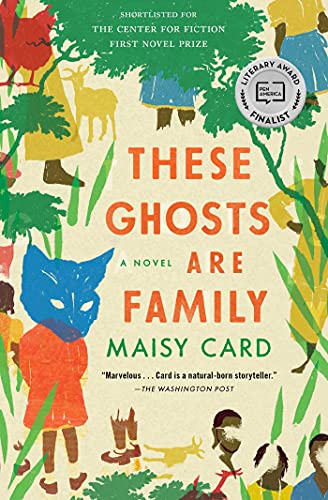
These Ghosts Are Family by Maisie Card

This was a fascinating journey. These Ghosts Are Family follows a family for generations, from slavery in Jamaica, through emancipation and decades of struggle with old class systems, immigration to London and New York, through permutations of relations, including a fresh start with a new identity (or, if you like, identity theft). The timeline jumps around and the focus and point of view shift, so that readers see this extended family at different times and from different perspectives. Issues of class, race and colorism and the relationships between privileged and less privileged classes, including but not limited to enslavement, will be obvious themes; we know that rape and issues of gender arise under these conditions too. The characters are infinitely fascinating. I was not so much expecting the question of supernatural elements: duppies or ghosts and Ol’ Hige, “a Caribbean version of a vampire story.” By the book’s end, I was left reeling with all the possibilities. There is plenty of heaviness: children abused, spouses failing to see eye to eye, parents and children letting each other down. But there are some quietly loving relationships scattered throughout. As I close the final pages, I’m a bit at a loss because there’s so much to consider. (And because we ended with a decidedly weird trio of spooky vampire children living in the woods.)

The book begins with a family tree, which I did refer to throughout. It presented me with a confusion that was answered on the first page. I’m going to spoil that one here because, again, first page of the novel (and it’s also given away on the back of the book and in most blurbs): the aged Stanford Solomon reveals, on his deathbed, that in fact he is (or was) also Abel Paisley, presumed dead some thirty-five years ago, at which point he took the identity of his friend Stanford. “Stanford” has both a wife and daughter and another daughter out of wedlock, all in New York; Abel left behind a wife and two children in Jamaica when he supposedly died. Stanford/Abel’s revelation obviously affects those around him. But I’m going to diverge from the blurbs here, and say that this is not the event around which the book revolves, and by its end, Stanford is by no means the central character. Rather, he is one branch on the family tree that is the book’s center. He’s just one link, and I don’t think he earns the role the blurb says he plays. Rather, I find the book more about larger patterns – slavery, class and race and colorism following slavery, migration and immigration, gender roles, the persistent damages of all these institutions and systems, trauma, and family dynamics. It’s about the multiple generations of this single family, for sure, but their combined story is very much about those larger patterns and systems. There’s nothing preachy or intentional-feeling about this, but the Paisley/Stanford family is inextricable from larger issues. I put Stanford/Abel at its center only in that he opens the book and occurs at the more-or-less center of the family tree as we find it here. The book ends somewhere very different, and that feels right.

In between, the story is told by numerous voices spanning some 200 years. That multiplicity of voices was a great choice for this story. (I have just said the same about a brilliant novel whose review is still forthcoming: Lookout by Christine Byl.) I love the kaleidoscopic or triangulated perspective on events offered by the different views. And for a novel whose focus is so broad – generations of a family across continents, countries, and centuries – it makes sense to move around like this. I guess such a big story told by one voice (with some kind of time-traveling power, I suppose) would be a different kind of accomplishment, and I can imagine it done beautifully, but Card’s choice feels just perfect here. The multiple voices also allow her to give us different dialects, which add to the texture and richness of the whole.

This adventure into these varied lives is expertly done, not always comfortable because of the subject matter, but engrossing and well worth the immersive experience. Card is a talent.


Rating: 7 names.

The Minuscule Mansion of Myra Malone by Audrey Burges

This captivating novel of miniature furniture and big themes braids strong friendships, romance, family ties and the importance of stepping outside of one’s comfort zone.

Audrey Burges’s The Minuscule Mansion of Myra Malone charmingly combines threads of magic, whimsy, romance, grief and loss in a debut novel of great feeling.

Readers first meets 30-something Myra in 2015 in the Arizona mountains, where she lives in the attic of her late grandfather’s cabin. She is regularly visited by her best friend Gwen, who forms Myra’s main link with the outside world–along with the website by which hundreds of thousands of followers know the Mansion, Myra’s life’s work and greatest love. She inherited the large, highly detailed, finely wrought miniature (don’t call it a dollhouse!) from her beloved step-grandmother, Trixie, who, along with Grampa Lou, taught her sewing, woodworking, painting and sculpting. “I know what gemstones look like water and what pen can draw the most convincing chain stitch on a washcloth that’s too small to sew. I can be eclectic or traditional, modern or romantic, and the Mansion absorbs those dreams into its walls.” In flashbacks, the novel also reveals a very young Myra in her loving relationship with Trixie, until the older woman’s tragic death on Myra’s fifth birthday. Other chapters introduce a woman returning to her stately home in Virginia in the 1930s. And in 2015 Virginia, a young man named Alex discovers Myra’s website, “The Minuscule Mansion of Myra Malone,” and the miniature Mansion itself, which is, shockingly, a perfect match to the riverside family estate where he lives alone.

Interspersed with chapters alternating between Arizona and Virginia are short essays that Myra posts on her blog: “I’ll set out with the simplest plans, a minor tweak, and wind up with a choice between full-scale renovations and a shift of perspective. An attitude adjustment or a gut job.” These many threads form a rich portrait of several easy-to-like characters.

Myra still grieves the loss of her Grandpa Lou and especially Trixie, whose skills in making miniatures she honors in continuing to curate the Mansion, painstakingly redecorating room by room. She is a recluse, but the Mansion’s website offers a rare and rich connection to the outside world; her followers view the Mansion as both escape and refuge. Then Myra is threatened with eviction, and her carefully guarded small world tilts. Things begin moving around in Alex’s home and in Myra’s miniature version–piano music emanating from a room without a piano; things that go bump in the night. The keepers of both houses must reassess their relationships to their homes and to the larger world, and it may take more than Gwen’s prodigious business savvy to save the Mansion.

Burges carefully constructs her plot with as much quirkiness and love as any of Myra’s miniatures. With sympathetic characters, high stakes and winning miniature chifforobes, The Minuscule Mansion of Myra Malone is dreamy, sweet and satisfying.


This review originally ran in the November 29, 2022 issue of Shelf Awareness for the Book Trade. To subscribe, click here.


Rating: 8 hairpin legs.

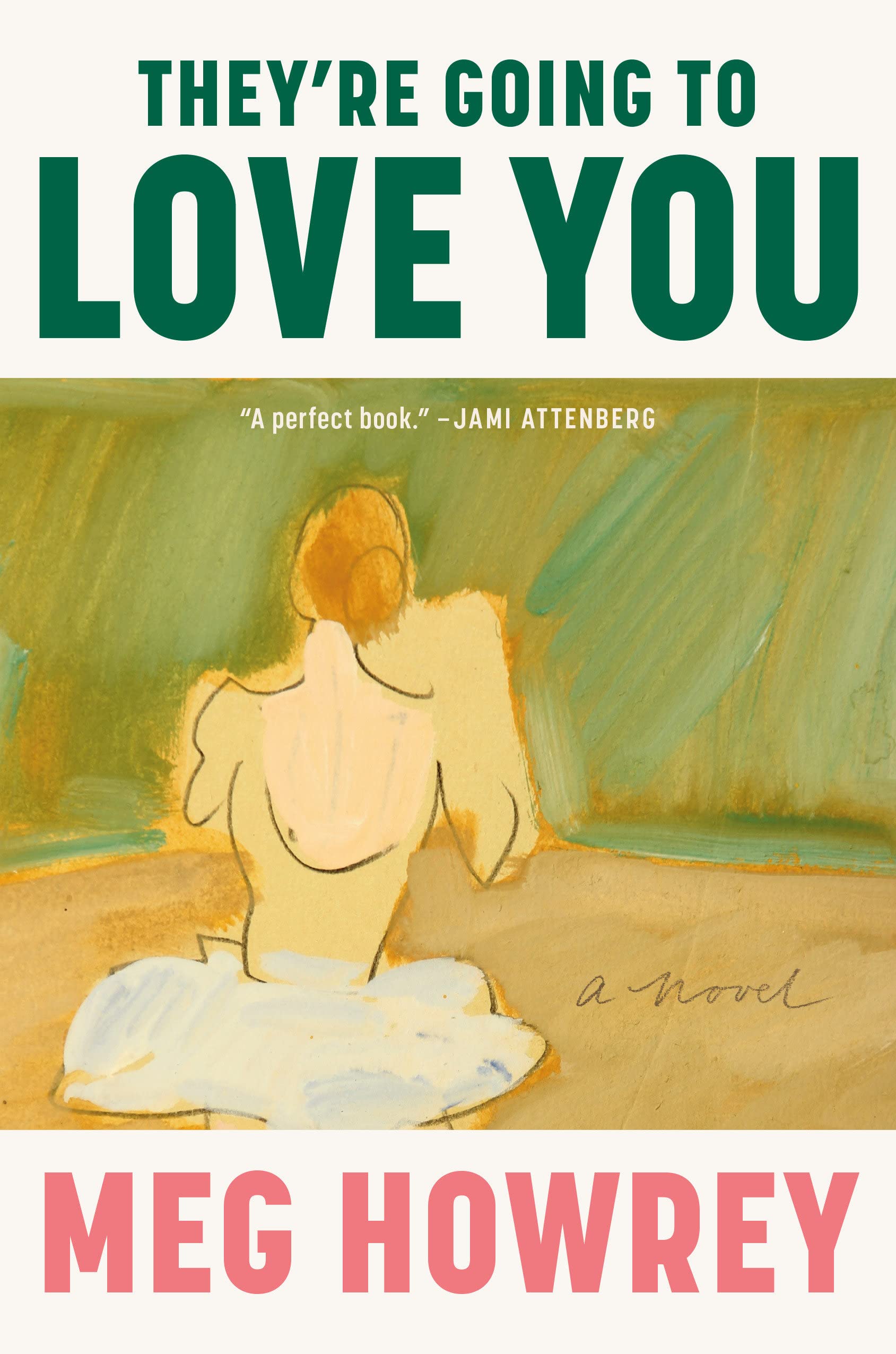
They’re Going to Love You by Meg Howrey

This gorgeous, heartbreaking novel movingly evokes family ties and betrayal, love and forgiveness against a backdrop of professional ballet.

They’re Going to Love You by Meg Howrey (Blind Sight; The Cranes Dance) is an unforgettable novel of scintillating beauty and heart-buckling pain about ballet, loyalty, forgiveness and the many forms of love.

Carlisle grows up feeling distant from her mother, with whom she lives most of the time in Ohio, and with a deep and yearning love for her father and, even more, for her father’s partner, James. When she stays with Robert and James at their Bank Street apartment in Greenwich Village, Carlisle basks in the arts education James shares with her. She’s been born into ballet: her mother a former professional dancer, her father briefly the same before managing ballet companies and festivals. James still teaches ballet. Carlisle loves dance and works hard, but tops six feet tall in high school, “the height that–for a woman–is rarely allowed to pass without comment in the outside world, let alone the ballet one.” (There may be other shortcomings as well.) By her early 40s, she is one of the first women to make it as a successful-but-struggling choreographer. She’s been estranged from Robert and James for 19 years when she gets the call that her father is dying.

The estrangement began with a betrayal that takes most of the novel to reveal. Carlisle’s first-person narrative bounces between the present, as she delays and eventually travels back to Bank Street to her father’s deathbed, and the past, her coming-of-age years as a visitor to Bank Street during the 1980s AIDS crisis. James is a mentor and a hero. “My father, I love, and James I sort of want to be. Maybe I mean: have?” It is a young person’s love, pure, ardent and jealous, wrecked by a mysterious episode that shapes the rest of Carlisle’s life–absolutely including her choreography career. Naturally, along with James’s news about Robert’s pending death comes a big opportunity to compose a modern version of the classical ballet Firebird. Carlisle both knows this is a big chance (maybe the big chance) and resists it. The reader will understand before Carlisle does that Firebird and her relationship with her father are part of the same wound.

Meg Howrey’s writing is dazzlingly, mind-bendingly good, and so true it hurts. She considers ballet, music, the artist’s drive to create, being a woman in a man’s world, desire and betrayal, family and the bottomless, haunting hunger to belong (“Are any of these questions danceable?”; “Emotions have a way of collecting and hardening inside us, like neglected grease. We are all smoking stoves”; “There might be undanceable truths.”) Her prose can be as funny and pithy as it is poignant and grand. They’re Going to Love You tackles a broad range of themes, but Howrey is superlatively up to the task. As Carlisle grows from longing, awkward youth to lonely, gifted working artist, Howrey conjures “all this gorgeous, unrepeatable wreckage” in spectacular fashion. Readers will laugh and cry and be changed.


This review originally ran in the October 13, 2022 issue of Shelf Awareness for the Book Trade. To subscribe, click here.


Rating: 9 gorgon pearls.

Mother Country by Jacinda Townsend

To crib a disclosure I found over at Tor.com: “The author is a friend, but if I didn’t like her book, I just wouldn’t review it here.”


And what, after all, to make of a choice?

Shannon is an American woman traveling, for the second time, in Morocco with her husband Vladimir, “a man she felt she could never know from Adam.” They have their troubles: Shannon suffers severe chronic pain following a serious car wreck; she is hiding substantial student and medical debt from her husband, who is wealthy, distant and not terribly likeable. They are unable to get pregnant (for layers of reasons and with layers of results, including Shannon’s increasing baby fever). Shannon is privileged but more or less miserable, between the pain, her marijuana habit (hidden from Vladimir), the traumas of her own upbringing, and her desire for what she can’t have. She feels a bit lost, “but it was a nice lost, like being found was just around the corner in some dusty recess of the medina.”

Souria is a teenager from Mauritania, where she has been beset: her mother dead, she is kidnapped and enslaved; escapes, is enslaved again, escapes again; arrives in Marrakech friendless and pregnant, where the abuses persist until she escapes to begin a hard, simple life under her own power in Essaouira, “that frat boy of Moroccan cities” on the coast. She names her daughter Yumni, “good fortune. Success in this life,” and the child is happy and deeply loved.

To Shannon’s American eyes, however, she appears dirty and free-ranging on the sidewalks outside the shop where Souria works. And so the older, richer woman just… takes her. Vladimir’s money and their American passports transform Yumni to an American adopted daughter. The two women look remarkably alike; the child looks like her adoptive mother, such that the other parents in Louisville assume she is Shannon’s own.

I love this novel for its use of repeated lines and concepts, and questions about the nature of choice. The two threads, which eventually meet, are mostly told in the close third person perspectives of Shannon and Souria, although we get brief glimpses of Vladimir and of Yumni (later Mardi). These two main characters are well developed, but I judge them not equally sympathetic: Shannon’s life has certainly been difficult, but I judge her more harshly in the end than I do Souria, who’s had fewer options. There are parallels, though, and both women have the complexity of being neither martyr nor villain. The stories are well told, and the plot is heartbreaking, but the novel is character driven in the end, as well as being about those choices we are cued to in the first line. Secondary characters are delightfully drawn as well, which I always appreciate.

The title teases us, at first, to think about the Black American couple traveling to Africa, but it’s also a hint to themes about motherhood. The child at center winds up with something like two mothers, although a little short on fathers – her biological father is more or less a rapist and more or less unknown, and Vladimir is neither cut out for nor in love with the role. Shannon’s mother is not a benevolent force, and the loss of Souria’s mother when she was young is directly linked to what happens to her from then on. The country of Morocco is important as setting, as cultural backdrop, as a place where Shannon and Vladimir can take what they want. (I also happen to know it’s an important place in the life of the novelist, which maybe doesn’t figure in the novel, except that this writer knows her subject well.)

There are capital-I Issues here, like trafficking, colorism, American privilege, and meditations on motherhood. I don’t find the ethical question to be terribly puzzling – I think kidnapping is wrong whether it’s Souria or her daughter being taken. White Americans adopting African babies creates a problematic picture that’s too easy; I appreciate Shannon’s more complicated role as Black American, and with her own traumas and challenges. The male-female relationships are both beautifully drawn and upsetting in how universally problematic they are.

Jacinda Townsend has perhaps topped her lovely, musical Saint Monkey. This is a beauty, and timely, wise, and real.


Rating: 8 bears.

Motherthing by Ainslie Hogarth

Mothers and motherhood haunt this alarming, dark, weirdly funny novel of family ties and the power of just the right recipe to heal all wounds.

Ainslie Hogarth’s Motherthing is a grim, disturbing novel of family drama and mental illness, yet a bizarrely funny glimpse into one woman’s mind. In its opening pages, Abby, who narrates, and Ralph have recently moved in with Ralph’s mother, Laura, hoping to nurse her through her depression. But instead, Laura takes her life, Abby purloins Laura’s coveted opal ring and Ralph falls into despair. “Because even though he’d been strong when we’d moved in, strong enough to move in–equipped with resources he’d downloaded from a website called the Borderline Parent, and a swear-on-your-life promise from me that I could handle this temporary uprooting–being near her stirred rotten dangerous things inside him.”

Abby, very much in the throes of dealing with her own mother’s shortcomings and abuse, has identified Ralph as part mother, part god, the “Perfect Good” in her life and “the most genuinely good person in the entire world.” “Ralph would make eggs too, not specially because I was there, but because a person has eggs for breakfast. And soon, I remember thinking, clutching fistfuls of duvet to steady my overwhelming joy, I would be a person too.” In flashbacks to her childhood, she recalls a beloved couch she calls Couchy Motherthing, and constantly circles and ponders the ideal mother figure; she relies on a cookbook “for the mothers of good, happy, wholesome families, with lots of mouths to feed. And that’s the kind of mother I am too, even if I’m not yet”–because Abby desperately wants to have a child of her own, to embody the kind of mother that neither she nor Ralph got to have. She works at a nursing home where she considers her favorite resident her “baby” and, simultaneously, the perfect mother she never had. This fantasy is disrupted by the appearance of the woman’s real daughter, which might just push Abby over the edge. Because paired with her nurturing impulse, Abby secretly harbors intense rage, “murder so much more manageable right now than creating a whole entire family.” Her love verges on violence.

Hogarth (The Boy Meets Girl Massacre (Annotated)) rocks readers via Abby’s turmoil, her swings from devotion to fury, self-loathing to self-aggrandizement. Motherthing keeps readers as unstable as its narrator, struggling to manage the traumas and the waves of emotion. Abby copes with a focus on a few objects that she imbues with special significance: Laura’s ring (symbol of rejection, as Laura judged her daughter-in-law “more of a Kay Jewelers type than a vintage-family-heirloom type”), Abby’s cookbook and the recipes she hopes will save Ralph (an obsessed-over jellied salmon and an unusual iteration of Chicken à la King). The result of these roiling thoughts and images is a darkly comic, kaleidoscopic novel of unhealthy fixations, love, murder, the gifts and wounds that family can inflict and one woman’s fight to save herself.


This review originally ran in the August 4, 2022 issue of Shelf Awareness for the Book Trade. To subscribe, click here.


Rating: 6 little dogs next door.

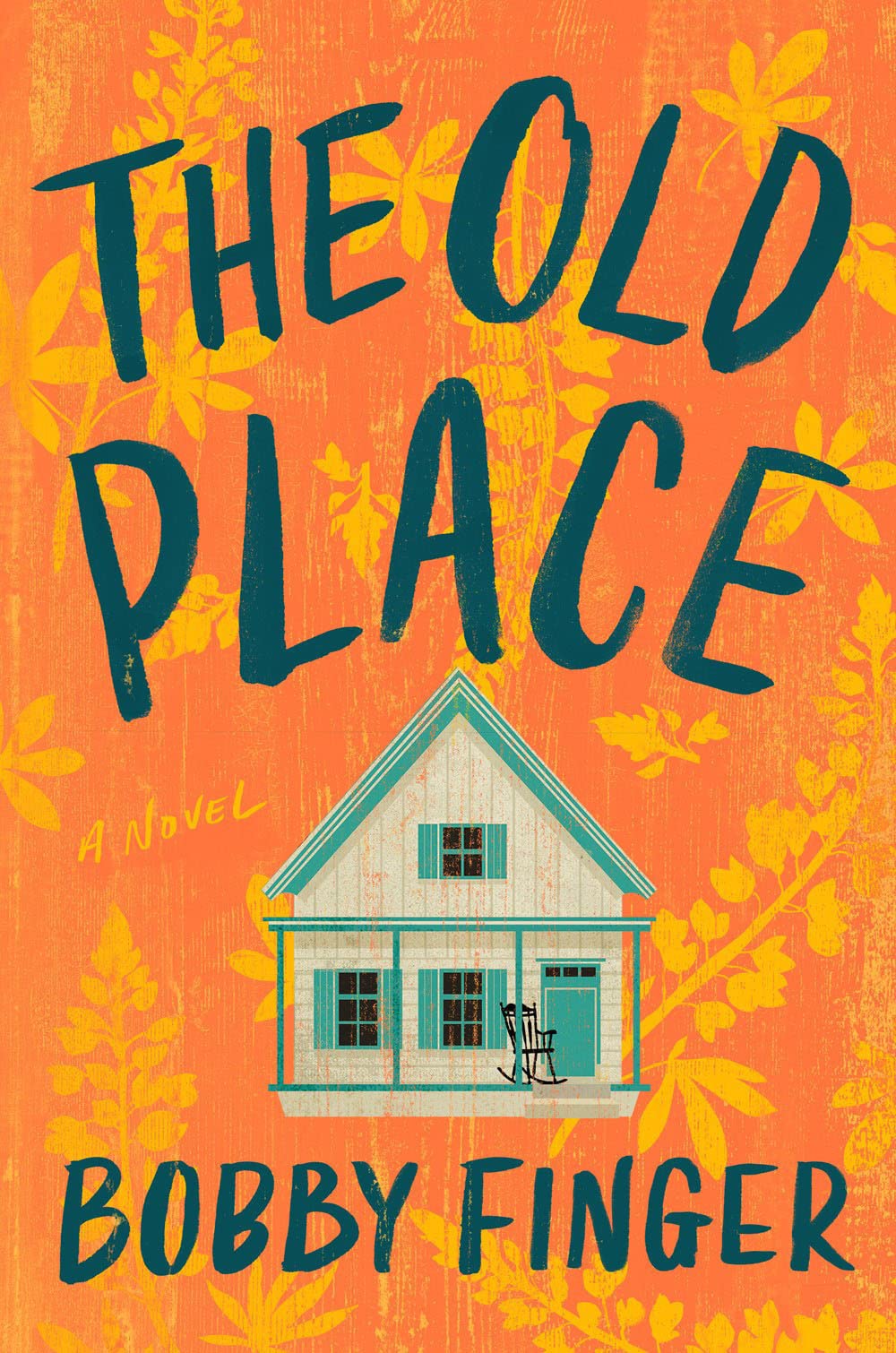
The Old Place by Bobby Finger

An irritable retiree in a small Texas town stars in this sweet, poignant story about community, secrets and all the ways to love.

Bobby Finger’s unforgettable debut novel, The Old Place, hits the rare and satisfying double note of harrowing and delightful. Roughly 90 minutes outside of San Antonio, Tex., a recently retired schoolteacher navigates various relationships and juggles old secrets in the kind of small community where everyone thinks they know everything about everybody else. Mary Alice Roth is a compelling, although decidedly prickly, protagonist; secondary characters only sweeten this heart-wrenching, warm-and-fuzzy small-town drama.

In the opening pages, Mary Alice is furious at being forced out of her job, and at the young woman–new to town and newly wed into an old family–hired to replace her. She tentatively renews her friendship with neighbor Ellie, hinting at one of the novel’s first slow reveals: the two women (one widowed, one divorced) had sons the same age who were also best friends, until a double tragedy. As readers puzzle over the deaths of Mary Alice’s husband and son, her (also long-estranged) sister, Katherine, shows up unannounced and unwelcome, all the way from Atlanta. Mary Alice continues her practice of bullying and haranguing the local ladies in preparation for the annual church picnic (“All the money spent there, whether on raffles or games or rides or food, went to Him whether you believed or not”). Katherine prods her to take responsibility for an old wrong, and together they reopen old wounds. Ellie privately nurses a new romance, only adding to the ever-twisting mysteries and secrets. Mary Alice’s replacement, the newcomer, offers a refreshing outside perspective as a native New Yorker who is as surprised as anyone at how much she loves her new home.

The Old Place muses over the stereotypes of a town like Billington, Tex., where privacy is scarce and prejudices persist, but where forgiveness and even redemption may just be possible. Mary Alice is a difficult woman to like, but the people who surround her–and the life she’s lived–keep her from being pure villain. By the novel’s second half, everyone is more nuanced than they originally seemed, and the fictional Billington feels as multifaceted and significant as any real hometown. Finger is expert at the careful disclosure of one secret after another, and his characters capture hearts and imaginations. His novel beautifully profiles the iconic small town, both holding it accountable and celebrating its quiet humanity. “Even a town in decline never really stops growing. People may leave, but their stories remain, reverberating in the bones of all those left behind.” At its heart, The Old Place is about the way people relate to one another: family, neighbors, new and old friends. The messiness, pain and grace of these relationships are candidly portrayed in a story that will inspire laughter and tears, making this debut a memorable achievement indeed.


This review originally ran in the July 26, 2022 issue of Shelf Awareness for the Book Trade. To subscribe, click here.


Rating: 8 tubs of potato salad.

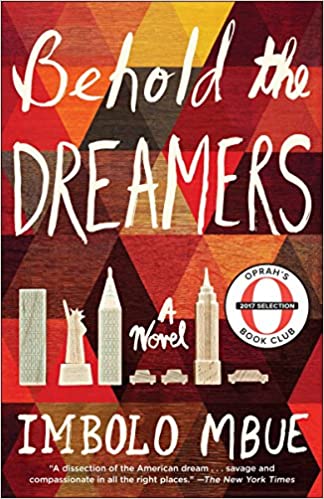
Behold the Dreamers by Imbolo Mbue

This book found its way onto my bookshelf and lived there a while before I picked it up, at which point I didn’t even know what it was about. I purposefully avoided even flipping it over to read the back-cover blurbs and went in thoroughly blind. Early on, it’s about a family of immigrants from Cameroon to New York City, beginning to make their way there, and I began to have a bad feeling – for a novel to work, there has to be conflict, right? I wanted things to be easy for this family (a couple and their young son), but I just knew (because of how stories work) that something had to go wrong. I was tempted to flip the book over, but I resisted, and I’m really glad they did. That’s going to affect how I write this review: I’m glad I kept my ignorance and experienced the story as an innocent, so to speak, and I want that for you too. I absolutely recommend this book.

If you’re game for just a little more information, here are some observations in white text (highlight to read): The father/husband figure in this story feels very fortunate to get work as a chauffeur for an important figure at Lehman Brothers. Well, that name alone tells us a lot about where the plot turns, doesn’t it. Near the end I found myself strongly reminded of Upton Sinclair’s The Jungle (a book that’s very important to me). There’s a hint there, too. These remarks are only as spoiler-y as the back-cover blurbs, FYI.

I will say that our central characters are Jende and Neni Jonga, the Cameroonian immigrants, and eventually their counterparts, Clark and Cindy Edwards, who are white New Yorkers of great wealth. The two families become somewhat intertwined, and it is to Mbue’s great credit that despite enormous differences, they conflate as well. A Q-and-A with the author at the back of my paperback tells us that Mbue didn’t necessarily set out to do this work, and did not find empathy for the Edwardses easy. It’s not empathy that lets anyone off of any hooks either, though.

It might be said that this is a book about immigration politics (or any number of other capital-I Issues: capitalism, race and American racism), but I think it’s true – and I think it’s a strength – that it’s about the Jongas first (and secondarily the Edwardses), and about those Issues only because they are the ones that the Jongas live through, if you will.

It’s a beautifully told, absorbing story to get lost in. Each character has a distinctive voice, and even though none is a saint, they all earn our compassion. Mbue is an impressive writer and I was pleased to spend this time with her characters.


Rating: 8 bacon-wrapped shrimp.

Sundial by Catriona Ward

This unnerving novel of family history and impossible choices is part ghost story, part terrifying reality.

Catriona Ward (The Last House on Needless Street) places mundane, everyday frustrations alongside profound chills in a novel of family, tough choices, secrets and terror. “It’s the chicken pox that makes me sure–my husband is having another affair.” At the beginning of Sundial, readers wonder what feels just a little off about the suburban household where Rob and her husband, Irving, bicker and feud and raise their two daughters, Callie and Annie. Irving has a nasty temper; Rob is bitterly frustrated: “These days I don’t understand why anyone bothers to watch soap operas or go to movies. Living is enough. It is so intense and painful.” Annie is a sweet, docile child; Callie has a discomfiting fascination with murder and death. When the bones of small mammals begin to show up in Callie’s room, Rob feels that things have gone far enough, and takes her elder daughter away for a spell–to Sundial, Rob’s family home in California’s Mojave desert, an abandoned hippie commune and site of terrible unnamed wrongs.

Through flashback-style stories Rob tells Callie, readers learn of Rob’s past: she had a twin sister named Jack, and the sisters shared an unusual upbringing, surrounded by half-wild dogs, scientific experiments, wayward graduate students and shadowy, evil acts. Something dark lived or lives in Rob, or Jack, or Callie, or possibly all of them, and it gradually dawns on readers that Rob is mulling the unthinkable choice to save one daughter or the other. Her secrets come out only slowly and in fits and starts, and it’s often unclear what is imagined, what is paranormal and what is plain human malice. “It’s possible to feel the horror of something and to accept it all at the same time. How else could we cope with being alive?” The novel’s perspective shifts between Rob then, Rob now and Callie, so a character may appear innocent in one chapter and dangerous in the next. At least one of these narrators is surely unreliable, but it takes until the final pages to piece together the unsettling enigma of Rob’s family history and the possible futures for her girls.

With the special horror of creepy children and the very real torture of abusive adults, Sundial serves up a deeply, deliciously disturbing family mystery, populated by ghost dogs and misguided scientists as well as apparently nonthreatening neighbors. A slow burn leads into a quick ratcheting up as this psychological horror deals its final blows.


This review originally ran in the January 6, 2022 issue of Shelf Awareness for the Book Trade. To subscribe, click here.


Rating: 7 cinnamon candies.

An Odyssey: A Father, A Son, and an Epic by Daniel Mendelsohn

What is Odysseus, in the end – the hero whose final act of vengeful violence is compared, by means of another memorable simile, to a bard stringing his lyre – but the poet of his own life?
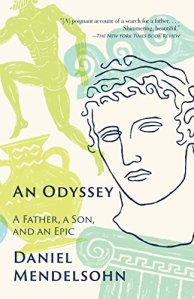
This is the first book I read in 2022, and I feel sure it will make the year’s best-of list, so that’s an excellent start. Another happy synchronicity: I bought this book based off a review I read, but find that Mendelsohn is also the author of a book I’ve had on my shelf for a few years, from a grad school reading list I never got to: The Lost: A Search for Six of Six Million. After this read, that one just moved up the list.

An Odyssey is a memoir focusing on a father/son relationship and a journey, both a literal one and the figurative path to greater understanding facilitated by a yet more famous Odyssey. Daniel Mendelsohn’s father Jay is eighty-one years old the spring he asks his son Dan if he can sit in on his undergraduate seminar course on Homer’s Odyssey. Dan says yes, and together with a small group of college freshmen, father and son explore a work of classic literature and, as Dan sees it, their own relationship. Just after the course ends, they go together on a Mediterranean cruise that follows Odysseus’s presumed route home from the Trojan War. A year later, Jay would be dead.

I bought this book because I read a lovely review of it (which I now cannot find. I thought it was Shelf Awareness but apparently not), but then it sat on my shelf for some time, I think because the concept sounded a little precious, a little pat. And it could have been, in the wrong hands, but Daniel Mendelsohn was the right writer for this story, and I’m so glad. For one, he has a deep expertise in Homer and indeed in the classics – as I briefly (in high school) aspired to do, he learned Greek and Latin sufficient to read Homer, Ovid and Virgil (etc.) in their original forms, just for a start. He is the kind of thoughtful, introspective student of relationships and families that I most appreciate as a writer. He has the nuance to handle such a premise – father and son study the Odyssey and take a trip together – with the subtlety it needs. Talk about a book matched to its reader: Homer, parent/child relationships, contemplative memoir… and a focus on teaching. The result is a beautiful book that I’ll be thinking about for a long time.

Here are a few lines that made me pause.

I was going to read Greek, the Iliad and the Odyssey, the elaborately unspooling Histories of Herodotus, the tragedies constructed as beautifully as clocks, as implacably as traps…

How lovely – and makes me think of Amy Leach’s “Pea Madness.”

And so ring composition, which might at first glance appear to be a digression, reveals itself as an efficient means for a story to embrace the past and the present and sometimes even the future – since some ‘rings’ can loop forward, anticipating events that place after the conclusion of the main story. In this way a single narrative, even a single moment, can contain a character’s entire biography.

A single moment containing a character’s entire biography feels like why I read and write.

About competing literary interpretations,

Whatever else it may mean, the fact that both of these hostile camps could make use of the same examples to prove diametrically opposed interpretations suggests a truth about how all of us read and interpret literary texts – one that is, possibly, rooted in the mysteries of human nature itself. Where some people see chaos and incoherence, others will find sense and symmetry and wholeness.

Following a half-page discussion of the etymology of a certain word that I care about,

In time, this wistful word nostos, rooted so deeply in the Odyssey‘s themes, was eventually combined with another word in Greek’s vast vocabulary of pain, algos, to give us an elegantly simply way to talk about the bittersweet feeling we sometimes have for a special kind of troubling longing. Literally this word means ‘the pain associated with longing for home,’ but as we know, ‘home,’ particularly as we get older, can be a time as well as a place. The word is ‘nostalgia.’

This takes me immediately to a Jason Isbell song (forgive the whiplash), “Something to Love,” and the line “don’t quite recognize the world that you call home.” Naturally, this is a song about art and creativity, and it is sung in the voice of a parent speaking to his child. The idea that two people a generation apart – parent and child – necessarily come from different worlds, because of the way the world changes over time, has been a powerful one for me in the last decade or so.

Here’s another passage that gets to the heart of some of (again) my own thinking about parents.

If only they knew the real him, I thought. Glancing around at the others as they listened to Daddy, at the charmed smiles on Brendan’s and Ksenia’s faces, and then back at his face, relaxed and open, mellow with reminiscence, a face so different from the one he so often presented, at least to his family, I wondered suddenly whether there might be people, strangers he had met on business trips, say, bellhops or stewardesses or conference attendees, to whom he showed only this kindly face, and who, therefore, would be as astonished by the expression of contempt that we knew so well as we were by the rare glimpses of the other, softer side. How many sides did my father actually have, I asked myself, and which was the ‘real’ one? Perhaps this expansive and charming person, so different from the crabbed and coiled man whom only a month or two earlier, I ruefully thought, my Odyssey students had come to know, this song-singing old gentleman who could be so affable and entertaining with total strangers on a ship in the middle of the sea, was the person my father had always been meant to be. Or, perhaps, had always been, although only with those others, the bellhops and stewardesses. Children always imagine that their parents’ truest selves are as parents; but why? ‘Who really knows his own begetting?’ Telemachus bitterly asks early in the Odyssey. Who indeed. Our parents are mysterious to us in ways that we can never quite be mysteries to them.

On teaching:

It was from Fred that I understood that beauty and pleasure are at the center of teaching. For the best teacher is one who wants you to find meaning in the things that have given him pleasure, too, so that the appreciation of their beauty will outlive him. In this way – because it arises from an acceptance of the inevitability of death – good teaching is like good parenting.

This feels like a revelation but also something I recognize because I already understood it. It gets at why passion and excitement make for good teaching. And there’s a profundity to the idea that teaching is about what lives on beyond us. Although shortly after, he’ll make the point that teachers never know who they will reach with which lesson, because these things take years to reveal themselves; just as our own teachers rarely know who they have reached. I think again of Mrs. Smith, who introduced me in high school to Homer and Hemingway.

These moments go on and on. I love a book that offers both lovely lines and thought-provoking ideas.

The only critique I’d make of this exquisite work is some minimizing or simplification of women, especially by contrast to another recent read, Natalie Haynes’s excellent Pandora’s Jar, which was one of the best books I read in 2021, and helped inspire this read. (I regret that my weird reading-and-review schedule has reversed the order in which they appear here.) Haynes set out to address the roles and reputations of women in the Greek myths, and Mendelsohn concerns himself with fathers and sons, so, fair enough. But there were a few moments where I felt Mendelsohn missed a chance to see certain issues of gender, such that it felt like an oversight to me. It’s up for debate, of course, what agency Odysseus gets for his affairs with Calypso and Circe and his flirtations with Nausicaa and others (as opposed to the-gods-made-him-do-it), but to credit his “allegiance to his wife… withstand[ing] the seductive attentions of various goddesses and nymphs” seems a bit rich. I missed a more nuanced treatment of gender relations, both in Homer and in Mendelsohn’s own life. But perhaps this is unfair, considering his stated focus on male relationships.

I’ll be thinking about An Odyssey for a while.


Rating: 9 doors.