Walk the Darkness Down by Daniel Magariel

Grim but with a final upward turn, this novel of loss, grief, and strained bonds investigates human connections and disconnections.


In Walk the Darkness Down, Daniel Magariel (One of the Boys) introduces a couple separately torturing themselves through grief and eventually coming together again.

Marlene and Les, who live in a small, troubled town on the Atlantic coast of the United States, lost their young daughter years ago. In suffering, they mistreat each other. Les is a commercial fisherman on an offshore scalloping boat with a crew of other men; punishingly hard physical labor, camaraderie, and violence combine in a cocktail that helps distract him from his loss. Marlene drives the streets at night, mining memory, searching for the deep and searing pain that will help her remember. During his brief stays at their apartment, they repeat a pattern: Marlene breaks the bedroom door and Les fixes it. When Les is offshore, she picks up local sex workers and brings them home to clean them up and feed them. One of these encounters develops into something resembling friendship, just as Les’s crew fractures and the dangers of his work increase. Marlene clips newspaper articles about freak natural occurrences: mass deaths of red-winged blackbirds and horseshoe crabs; new migrations of American bullfrogs; wildfires, droughts, and the widening of tornado alley. As their two lives approach new crises, Marlene and Les must chart a course out of self-destruction.

Magariel’s prose is as quietly lovely and evocative as his subjects are bleak. “The woman settles into her chair, and Marlene proceeds to lay bare the details of her face. The worry lines of her forehead Marlene excavates with a pass over the brow.” His settings showcase realistic detail, and both beauty and damage: fecund coastlines and wetlands, the harsh sea, an old family home, and garishly decorated working-class bars. Marlene and Les treat one another with alternating callousness and tenderness; Les’s relationships, especially on the boat (with what Marlene calls his “other family”), reveal a memorable form of rough, ungentle love.

Relationships across great distances–physical and psychic–are a central concern of this novel, which is focused on how its characters handle pain. “You got to abide with your darkness as if it were a scared child that wakes up in the middle of the night and needs to be walked back down to bed,” Marlene’s newest acquaintance asserts, but each character wrestles with hurt in their own, often-wounding ways.

Stark and tragic, Walk the Darkness Down offers a harrowing view of individual and familial suffering–with empathy and, ultimately, with hope.


This review originally ran in the June 6, 2023 issue of Shelf Awareness for the Book Trade. To subscribe, click here.


Rating: 7 lobsters.

Clap When You Land by Elizabeth Acevedo

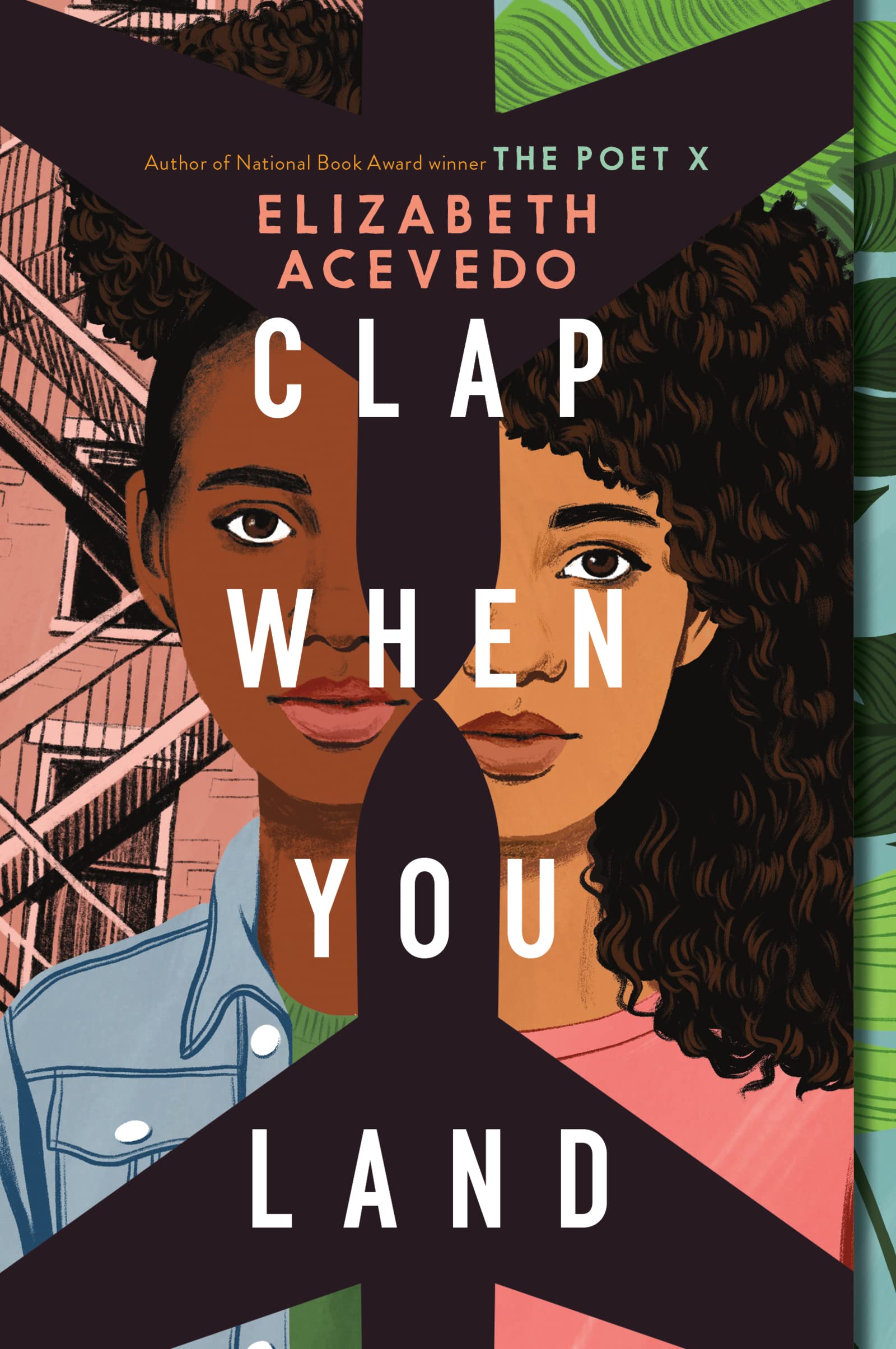
Clap When You Land is a novel in verse, in two alternating perspectives. Camino lives in a village in the Dominican Republic with her Tía, who has raised her since her mother died some years ago. Her father lives in New York, and comes to stay each summer for several months. Camino loves her father, and feels loved in return; he supports her and her Tía better than they could afford to do on their own, with the small funds raised by Tía’s doctoring duties. She’s a healer and midwife, skilled with herbs and prayer, and Camino wants to follow in her footsteps, but take it a step further: her dream is to study medicine at Columbia University. Meanwhile, Yahaira lives in New York City with her parents. She’s a former chess champion, but she’s given it up, which has put a rift between her and her father. The two girls are just two months apart in age, approaching 17. They have the same father, but they don’t know it until after he is killed in a plane crash, traveling from his home with Yahaira to spend the summer in the DR, as he does every year.

In their alternating chapters, we see two teenaged girls wrestle, first, with their futures: Camino is concerned about where to go with her life if her father doesn’t help her get to the States. Her options in the DR are few, and there is a predatory young man after her. Yahaira is upset because she’s discovered that her father had a secret – although it’s not the big one she’s about to learn, that she has a sister. Each girl has a best friend: Camino’s is about to give birth, and Yahaira’s is also her partner. We see them both struck by the loss of a father that each loved and admired. And then we see them hit by another shock: they’ve lost a father, but each has gained a sister. What will they do with that knowledge?

I like the questions raised by the twinning of the two girls, what each might have been under different circumstances, what is conveyed by certain advantages. (Camino’s household is better off than most in her village, but still much poorer than Yahaira’s unremarkable middle-class home in Morningside Heights.) At its heart, this is a story about family love, grief, and forgiveness. It’s lovely told in simple verse: easy to read but also contemplatively paced, dealing as much with emotions as events. As a YA novel, I think it would be well suited to thinking about loss for young people, or for any of us.

Papi’s two families, and his keeping the girls in the dark about each other’s very existence, isn’t much dealt with: the character is dead before we meet him, so we only see him in their memories, and he never gets to justify his choices. That’s rather more complicated.

Another thread involves the crashed airplane, which is based on the real American Airlines flight 587. Both the fictional and the real flights left New York headed for the DR filled with Dominican-Americans; the Dominican community in New York was badly shaken by its loss, and that’s a large part of what inspired Acevedo to write this novel (as described in her Author’s Note). That community-wide impact is well described here, which I think is a service.

Sad, thought-provoking, but also a beautiful honoring of a community.


Rating: 7 bachata songs.

Hedge by Jane Delury

In this profound novel about love, loss, and choices, a summer’s exciting work and exhilarating affair will reverberate through the lives of a deeply likeable protagonist and her family for years.

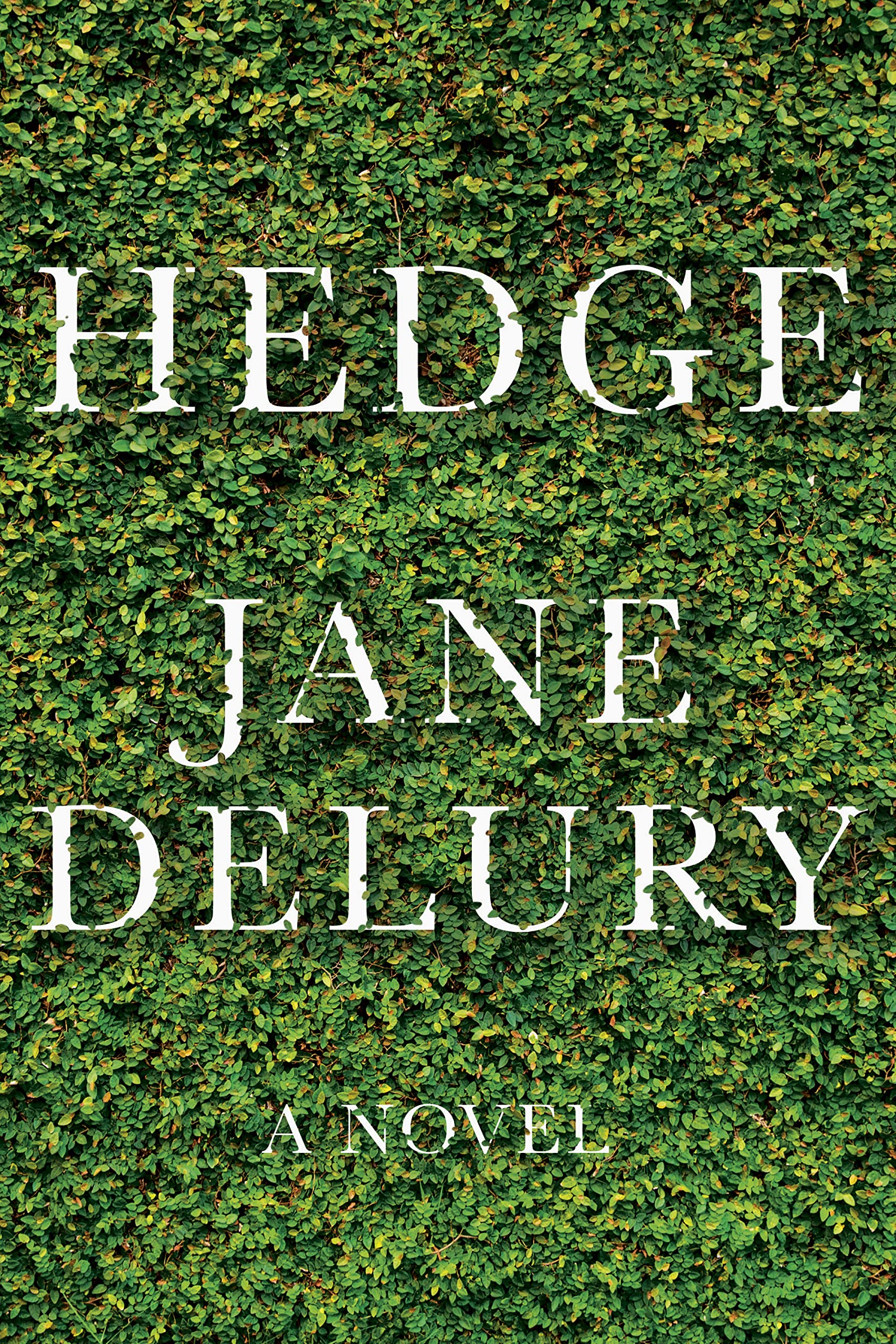
Hedge by Jane Delury (The Balcony) is a roller coaster of a novel about family, creation, love, and shifting priorities, lush with detail and delicately rendered. Readers will be thinking of Delury’s protagonist long after these pages close.

Maud is a garden historian, “with her odd mix of botany, archaeology, history, and practical gardening skills,” and she loves her work. Originally from California, she was well suited to England, both London (where she finished her education) and the countryside, but reluctantly returned to the United States for her husband Peter’s career. When Hedge opens, Maud is at work on a restoration project in New York’s Hudson Valley. It is beautiful, stimulating work, and she is likewise stimulated by the company of Gabriel, a handsome, intriguing archeologist at work on the same site. Her two daughters, Ella and Louise, are about to join her for the rest of the summer. Peter remains in California: the couple has separated “both geographically and maritally,” and Maud plans to make this separation permanent and legal, but their girls don’t know this yet. On the cusp of an affair with Gabriel, she feels enlivened, awakened by his attention, her own physicality, the thrill of discovering flower beds from the Civil War era and the turning of the earth. She allows herself to dream of what a new life could look like for her as well as for the scotch roses, lilac, clematis, and honeysuckle she plants. But when the girls arrive from California, 13-year-old Ella suffers a trauma that snowballs into life-changing events for all involved.

The idyll in New York ends suddenly, and Maud’s next months and years are spent dealing with hard choices between undesirable outcomes. She wrestles to balance meaningful work and practicalities; lustful, soulful connection, and the mundane compromises of marriage; her own needs and those of her children. “You could comfort yourself with statistics, tell yourself that a twenty-year relationship was a good run. After all, when marriage was invented, no one lived this long. But it was still a jagged gash through your life, even if it was what you wanted.” Delury’s prose is finely detailed, saturated with color and feeling; Maud’s passion for her work is as substantial and sympathetic as her love for her daughters. Both a quiet domestic tale and a novel of surprising suspense, Hedge cycles from hopeful to harrowing and back again. Maud is nurturing and steely, riveting and unforgettable.


This review originally ran in the May 8, 2023 issue of Shelf Awareness for the Book Trade. To subscribe, click here.


Rating: 7 slices of pepperoni.

Maximum Shelf: Let Us Descend by Jesmyn Ward

Maximum Shelf is the weekly Shelf Awareness feature focusing on an upcoming title we love and believe will be a great handselling opportunity for booksellers everywhere. The features are written by our editors and reviewers and the publisher has helped support the issue.

This review was published by Shelf Awareness on May 17, 2023.


Two-time National Book Award-winner for Fiction Jesmyn Ward (Men We Reaped; Navigate Your Stars; The Fire This Time; Sing, Unburied, Sing; Salvage the Bones) takes a different direction with her fourth novel, Let Us Descend: it’s her first historical narrative. Beautifully written and heartrending, Ward’s story sensitively handles grief, love, and recovery. On a rice plantation in the Carolinas, an enslaved teenager named Annis narrates as she works alongside her beloved mother. Mama is a source of comfort and strength even as her finger bones are “blades in sheaths.” Annis says, “The first weapon I ever held was my mother’s hand.” This steely woman teaches Annis lessons of combat learned from her own mother, one of thousands of warrior wives to an African king, tasked with both protection and elephant hunting. “In this world, you your own weapon,” she tells her daughter, and Annis will need to be.

Annis’s father is the plantation owner who owns her and her mother. Annis has half-sisters in the big house. “My sire’s house hulks; its insides pinned by creaks,” and her “sallow sisters” have a tutor to read to them, to teach them the texts of ancient Greece, about bees and wasps and Dante’s Inferno: “The tutor is telling a story of a man, an ancient Italian, who is walking down into hell. The hell he travels has levels like my father’s house.” Let Us Descend‘s title is a nod to Dante, and a cue to the reader to notice hells, descents, and journeys south. Annis listens and learns. Through her natural gifts, her own interest, and with her mother’s help, she becomes skilled in foraging: herbs, mushrooms, medicinal plants, and simple foods. She learns to befriend the bees she hears her sisters’ tutor speak of.

Then Annis’s father chooses to sell her mother south. The “Georgia Man” takes her away in a line of stolen people for the long walk to market. Annis falls into a near-fatal grief at being left without the most important person in her life, until a kind friend pulls her back to the surface. But soon, Annis and Safi, her friend-turned-lover, are sent on the same walk with the Georgia Man. From the plantation where she was born, Annis makes a death march to a New Orleans slave market and is sold to a cruel lady whose Louisiana sugar plantation marks a further descent, into a new level of hell. Others will uplift her along the way, but she never shakes the excruciating grief for her mother.

Along the way she gains and loses friends, and meets a spirit: Aza controls the storms and winds, and has stolen the name of Annis’s maternal grandmother, the warrior Mama Aza. “Aza’s hair a living thing: scudded clouds, the setting sun lighting them on fire. She leans forward and a breeze blows from her. Feels like the slap of a freshly washed linen on my face, snapping in a cool wind.” The spirit seeks her own identity and self-importance in relation to others, and has locked onto Annis’s maternal line as a way to achieve this: she models herself after the grandmother Annis never knew, and her use of the name Aza represents both connection and theft. That Annis refers to enslaved people like herself as “stolen” adds a layer to Aza’s use of the name.

Less centered around plot and character than Ward’s previous novels, Annis’s story is more elemental and thematic, dealing primarily with grief, forces of nature and human evil, villains and allies. The spirits she meets–chiefly Aza, but others as well–are closely associated with natural forces. “Another spirit, white and cold as snow, walks the edge of the river; it hungers for warmth, for breath, for blood, for fear, and it, too, glances against the enslaved stolen and feeds. Another spirit slithers from rooftop to rooftop before twining about wrought iron balconies outside plaçage women’s bedrooms, where it hums, telling the bound women to portion out poison in pinches over the years, to revolt, revolt, revolt.” These spirits can help but also harm, offer but also take away; they may represent another form of attempted ownership, as Aza has taken Mama Aza’s name. In a magical-realism twist, Annis finds these spirits widen her world beyond her immediate suffering to other timelines and possibilities.

Just as Ward’s title refers to Dante’s story of a descent into ever-deeper levels of hell, her hero makes a parallel, nonconsensual descent into the deeper South, into pain and suffering and sorrow, and into the worsening and worst of humanity. The novel moves with Annis from the Carolinas to Louisiana, and in story, back to Africa, where Mama Aza established the fighting spirit she would pass on.

Ward gives Annis’s voice a raw strength and musicality. After she is imprisoned in an underground cell by a particularly sadistic plantation owner, Aza tells her, “When you were up north, your sorrow choked your song. Swallowed it down. Even so, it hummed. But the walk changed it. The further you went, the more it rose until the woman put you down in the earth. Then it shrieked.” Attention to descriptive detail emphasizes Annis’s close relationship to place, and the importance of the land itself (not least in supplementing the enslaved people’s painfully meager allotted diet). “The water reaches in every direction, duckweed bright and green, floating on the murky wet. Cypress, fresh with rain, shimmers.”

As much pain, struggle, torture as there is in these pages, there are also various forms of love, and great strength, power, and personal reclamation. Let Us Descend ends with surprising hope. “How the whitewash of starlight would buoy them along. How they dance with the rocking deck. How them sing.” With this novel, Ward’s talent continues to deepen and glow.


Rating: 6 broad, glossy leaves.

Come back Friday for my interview with Ward.

A History of Burning by Janika Oza

Janika Oza’s A History of Burning is a stunning multigenerational saga that follows a family and a community who move during the years 1898 to 1992 from India to Kenya to Uganda, to Canada and the U.K., and beyond. In nearly a dozen voices, Oza’s debut novel illuminates immigration patterns and pain alongside familial joys and sorrows.

Readers first meet 13-year-old Pirbhai in Gujarat, India; he is, as the oldest son, fierce with the need to provide for his family. In exchange for a coin and the promise of opportunity, he unwittingly sells himself into labor on the railroad the British are building in East Africa. Pirbhai builds a family and a community with other Indian Africans; his children and grandchildren feel buoyed by the strong ties but sometimes limited by the strictures of tradition and duty. After Ugandan independence, anti-Asian sentiment drives them out of the only country they have known. Pirbhai’s son, Vinod, thinks there must be a “third possibility–not African, not Indian, but something beyond borders, an identity forged over decades of scattering apart and, miraculously, finding repair.” Each generation struggles in a new place, the tight-knit family always navigating change and searching for a place to call their own. Oza’s gorgeous prose is lush with detail–colors, flavors, emotions–and saturated with loveliness and pain, “the messy, the beautiful, the wild improbable light.” A History of Burning admirably charts how–by the time Pirbhai’s descendants plant seeds in Canadian soil–history, both personal and collective, is formed from the stories we tell and the silences we allow to remain.


This review originally ran in the May 5, 2023 issue of Shelf Awareness for Readers. To subscribe, click here, and you’ll receive two issues per week of book reviews and other bookish news.


Rating: 8 matunda.

The Very Secret Society of Irregular Witches by Sangu Mandanna

I no longer remember where I got this recommendation, but it was a *great* one.

In the opening pages we meet Mika Moon, a young Indian-born witch living in modern-day England. She was raised by a quickly-turning-over series of tutors and nannies, who were in turn employed by an elder witch named Primrose. Primrose is the keeper of the Rules for witches: in a nutshell, witches live in secret and in minimal contact with one another, because witches together mean too much magical dangerously combining in small spaces. Mika is lonely. As a relief valve for her enthusiasm for witchiness, she releases videos on her YouTube channel in which she brews potions and casts spells: it’s not meant to be taken seriously, of course. So she’s alarmed to be caught out by a strange offer to tutor three young witches at a mysterious estate called Nowhere House.

Mika struggles to balance her own strong desire for companionship, community, even family, and her passion for her work, with her grudging respect for Primrose’s Rules. Three little witches in one space should be very dangerous indeed, especially because (like young skunks!) they’re not yet in full control of their powers. Nowhere House turns out to be magical in many ways for Mika, though. She is just beginning to find the kind of kinship she feared would never be an option for someone like her – someone different – when it turns out there are still more layers of secrets than she’d realized.

The Very Secret Society of Irregular Witches is a lovely book. With themes involving outsiderness and the search for belonging, the risks of relating to other people, built families, passion for one’s calling, and every kind of love, it’s a beautiful, affirming study in humanity. Central characters show a nice diversity in age, ethnicity and sexuality. Especially with its realistic, fully-formed child characters, it feels like it wants to be friendly to young adults (such positive messages!), and I was going to classify it as such for nearly 300 pages – at which point there occurred a pretty heavy sex scene, so keep that in mind.

I’d recommend this to anyone – even kids if you’re ready to expose them to sex! – and am anxious to see more from Mandanna. I am so charmed.


Rating: 9 star fragments.

The Storied Life of A. J. Fikry by Gabrielle Zevin

Another winner from Liz. It felt for a split second like it was going to be a bit too easy a meet-cute, but things got immediately complicated for the better.

The first thing the reader sees at the start of Part I is a brief annotation to Roald Dahl’s story “Lamb to the Slaughter,” by an A.J.F. (we assume, the title character). These annotations begin each chapter, but it takes a while to discern their intended destination or use.

Next is a chapter starring Amelia Loman, whom we meet painting her nails yellow on a ferry ride from Hyannis to Alice Island. She has a mild hangover but still feels upbeat about the appointment she’s ferrying toward: she’s a new publishing sales rep going to call on A.J. Fikry, proprietor of Island Books. Amelia is a likeable character, but A.J. – first encountered through her eyes – is prickly. I was surprised to learn that he is just thirty-nine years old, because my first impression was of a crusty old curmudgeon of a shopkeeper (a ‘type’ I recognize from bike shops, but bookstores will do just as well). He certainly fits the type, just younger than I’d originally guessed. And after that first chapter, Zevin wisely takes us from Amelia’s focus (in the close third person) to A.J.’s. I love a jerk whose bad behavior is suddenly complicated and made sympathetic by backstory.

A.J. has suffered a major loss, and he is a jerk – or at least he’s coping poorly – but then the unexpected strikes. It’s not Amelia, as I’d originally thought. It’s something a little different, and my synopsis stops here.

The Storied Life of A.J. Fikry is delightful. It has grumpy but endearing book nerdiness; earnest, messy human emotion; the complications of grief and loss and family; whimsy and mishaps; and yes, a little romance. Also, a bookshop in a small town, with all the social drama and love and support that that can entail. It’s definitely on the sweet side, approaching precious, but never saccharine; I’m pretty sure when Liz recommended it she acknowledged that it would be best read in a mood for something sweet and light-ish, but it’s not the least bit fluffy, and even involves a sequence about the line between fiction and memoir and does it even matter? I read it in a single day and wish it had lasted longer. I could sink into the world of A.J. et al much further. I am off to see what else Zevin has written. Do recommend.


Rating: 8 vampires.

Maureen by Rachel Joyce

Following The Unlikely Pilgrimage of Harold Fry (2012) and The Love Song of Miss Queenie Hennessy (2014), the recently released Maureen completes a trilogy of novels about pain, loss, forgiveness, self-discovery, and kindness. [This review contains spoilers for the previous two books.] I love, among other things, that these books explore self-knowledge later in life, that it’s not just the young people who grow and find themselves.

This is a slim novel, just beyond novella length. The events of Pilgrimage and Love Song are past – that is, Queenie’s illness and death, and Harold’s surprising (to everyone including himself) walk across England to visit her at the end of her life. Harold and his wife Maureen are living quietly again. He found some peace on his walk, but Maureen not so much. The absence of their son David, whose suicide at age 20 is now fully thirty years past, is still a daily haunting for her. (We don’t get access to Harold’s interior here; this story is told in close third person in Maureen’s perspective. In her eyes, however, he lives a simple, happy life, playing drafts with neighbor Rex and birdwatching.) It has come to Maureen’s attention, via a postcard from Kate (Harold’s friend from his walk), that Queenie had a garden, that her garden was famous, and that she had a monument to David in it. This information has bothered Maureen enough that Harold has finally told her to just go on and make the trip. Maureen opens with her hitting the road – she will drive, not walk, thank you – while fretting about Harold’s ability to use the dishwasher or find a mug.

This is therefore Maureen’s own version of Harold’s big journey. Hers is shorter but in some ways she’s less well-equipped, being a less intrinsically nice person. Not to say she’s entirely unlikeable; our access to her interior means we can appreciate how difficult all of this is for her, and her own painful knowledge that she’s doing the wrong thing (the not-nice thing, frequently) even as she’s doing it. She’s a prickly person, but she feels a lot of pain, and knowing this goes a long way.

I won’t give away too much about Maureen’s travels. It’s a hard time. She’s not great at asking for help, and she does run into some difficulties. (Rex, offscreen, remains deeply loveable. Is there a Rex book??!) But she makes efforts, and they are terribly rewarding for her readers and rather for her, too. In the end, I think we see that she gains from the experience.

The Harold trilogy (if you will) are quiet, British stories, about older people suffering life’s small and large injustices, troubles and traumas. Even Maureen, easily the most challenging of the three, tugs hard at my feelings. These are very feeling books.


Rating: 8 sandwiches.

Old Flame by Molly Prentiss

A young modern woman explores and redefines her roles as advertising copywriter, creative writer, friend, daughter, lover, partner and mother in this exquisitely detailed rendering.

Following Tuesday Nights in 1980, Molly Prentiss presents another ambitious and brilliant novel. Old Flame stars a young woman seeking connection in busy New York City and picturesque Bologna, while wrestling with its many permutations.

Emily is performing a life. She’s about 30 years old, has graduated from bartending to a “real job” writing advertising copy for an iconic department store. She has a boyfriend and “a shitty but workable basement apartment in Williamsburg that, because of my real-job salary, I did not have to share.” She steals time at work to read poems and even do a little writing, but her lofty artistic goals aren’t coming together in the gaps between witty headlines about bras and descriptions of leather satchels. She perpetually feels the absence of her mother, who died in childbirth, and the shortcomings of her rigid, distant adoptive mother.

As the novel opens, Emily’s creative department is finalizing the Women’s Book, a biannual catalogue, and Emily is moving from just-work-friends to real-friends status with Megan, a graphic designer. Megan sends Emily a drawing, Emily responds with a short story, and the two are off and running on a truly creative project: The Other Women’s Book, Emily proposes, and Megan responds: YES. In quick succession, a troubled affair, a layoff and a wedding invitation both cement the women’s friendship and upend their circumstances. More or less spontaneously they travel together to Italy, where Emily spent an important year abroad when she was about 20. And in Italy, an unplanned pregnancy and a devastating fight with Megan shatter Emily’s tenuously structured life.

Old Flame considers the particular challenges of being a young artist in New York, balancing the kind of work that pays (“the magnet was capitalism, but I couldn’t see that then”) with the kind that inspires. It considers feminism and appearances, how people see themselves versus how others see them: in literal terms, Emily’s boyfriend is a photographer, and she questions the pictures he takes of her and the ones he displays in his studio; figuratively, of course, the possibilities multiply. Prentiss is a master of detailed descriptions, character studies, highly specific lists and meaningful settings. New York is hectic, fast-changing and inspirational; Bologna is romantic and somehow simultaneously disorienting and comforting. Emily’s deepest struggle is in navigating personal relationships: as a romantic partner, a daughter, a friend, a mother. By novel’s end, she will have learned a little about what these roles mean.

With Old Flame, Prentiss offers a sensitive story, gorgeously detailed and painfully realistic, about the lives and ordeals of women and artists, and what it means to seek and shape connection in the modern world. Filled with both snark and wisdom, this novel is a gift of love and forgiveness.


This review originally ran in the March 17, 2023 issue of Shelf Awareness for the Book Trade. To subscribe, click here.


Rating: 7 pajama shirts.

The Human Origins of Beatrice Porter and Other Essential Ghosts by Soraya Palmer

A fracturing family in Brooklyn with roots in Jamaica and Trinidad navigates love and loss in this debut novel influenced by Caribbean folktales and the power of stories.

The Human Origins of Beatrice Porter and Other Essential Ghosts is Soraya Palmer’s first novel, a phantasmagoric interweaving of family and folktale. Readers first meet two sisters, Sasha and Zora, when they are young girls in Brooklyn’s Flatbush, dealing with the household complexities of their father Nigel’s violence and infidelity and their mother Beatrice’s headaches and distance. Soon this timeline meanders to visit Nigel and Beatrice as children in Jamaica and Trinidad, respectively, and then as a young couple. These individual and family histories blend with folktales of Anansi (spider, god, man, woman, trickster storyteller), demons and exorcisms. The Rolling Calf haunts butchers, and Mama Dglo is the protector and mother of the ocean and “all things water,” among other mythical tales. The narrator of these time-jumping tales, with the repeating refrain “Let me tell you a story,” is mysterious, driven by motivations not always clear nor necessarily reliable–but always concerned with the power of storytelling itself: “You see I am what they call Your Faithful Narrator, found in places the West calls fairy tales, what men call gossip, what children call magic.” Small actions can be revolutionary: “They realize there is nothing more dangerous than a story with an owner that no one can touch.”

In the 1990s and 2000s, Sasha discovers chest binding as she navigates gender and sexuality. Zora studies her book of Anansi stories and hones her craft (that of her namesake) in her diary. As much as the sisters love each other, their respective self-explorations push them apart. In different ways, Nigel and Beatrice separate but remain intertwined. Caribbean and West African folktales continue to influence each of these threads until they come together again in Trinidad with a 106-year-old grandmother, several reunions, an ending and a new beginning. None of these characters is entirely innocent or faultless, but they are finely drawn with compassion and compelling, colorful pasts. Love and family contain both beauty and pain in this telling.

Palmer imbues her novel with both snappy pacing and deep feeling in a lovely prose voice with music and poetry behind it. The Human Origins of Beatrice Porter has big things to say about sisterhood and family; race, sexuality and class; life and death; and above all, the power of storytelling. “Why do we remember some stories more than others? And what happens to the ones that we forget? Let me tell you a story.” The result is wide-ranging and thought-provoking–but also an immersive and sumptuous read. Palmer shines.


This review originally ran in the March 3, 2023 issue of Shelf Awareness for the Book Trade. To subscribe, click here.


Rating: 7 Apple J’s.