Are You My Mother? by Alison Bechdel

motherI am deeply impressed by Alison Bechdel: her self-awareness, her fraught journey through her life and her relationship with her mother, her psychoanalysis and her work in this book (and, I’ll wager, her earlier Fun Home, which I haven’t read but have heard lots of good things about. I’ve put it on the list). This is a memoir of her mother, at first glance; but it’s more self-involved than that, although I don’t mean that in a bad way. That’s just what this book is. It’s the story of her writing a book about her mother, and it’s that book; it’s really a book about herself, then.

It is also a graphic memoir, which is not a format I’ve spent much time on, as I find it a little exhausting to follow; I guess I’m a traditionalist when it comes to my reading matter! I prefer traditional fonts, and certainly hard-copy rather than electronic (well, there are the audiobooks…). I’ve read very few graphic works, and although I’ve enjoyed them all, I tend to find them a little more effortful. On the other hand, though, I sped through these 289 pages easily in an afternoon. Seeing Bechdel’s visual version of herself, her mother, and her other characters (a father, two brothers, two psychoanalysts, a few girlfriends) added to the experience; so, props on the format as well, as it turns out. (This is where I’ll note that Alison Bechdel is also the author of the esteemed comic strip, Dykes to Watch Out For, and a whole pile of books of said comic.)

I feel the need to address a personal element of my reading this book. I have aspired for a handful of years now to write a book about my own mother. And it was my mother who gave me this book – I believe after she went to an author reading at a bookstore? – with a nudge toward writing my own version. This is funny to me now that I’ve read Are You My Mother?, because for one thing, Bechdel’s mom was less than pleased with her efforts (is there a joke in there, Mom?); also, the book I envision, hope, one day to write is not very much like this one. No criticism there, of course. I dream of something a little more like Haven Kimmel’s mother-book, She Got Up Off the Couch. That is, I want to tell my mother’s story (unavoidably mediated through the lens of being her daughter), because I think her life story needs telling. Bechdel’s need was admittedly a little more self-focused. She quotes Virginia Woolf more than once: about To the Lighthouse, “I suppose that I did for myself who psycho-analysts do for their patients. I expressed some very long felt and deeply felt emotion. And in expressing it I explained it and then laid it to rest.” And that is what Bechdel is working on doing through this memoir: psychoanalyze herself, and put her emotions to rest. At the end, it feels like she does, at least a little.

She is quite involved in the idea of psychoanalysis, and does quite a bit of her own research; in addition to relationships with two different analysts, she reads Freud and some lesser-knowns; her personal favorite is one Winnicott. She opens each chapter with a dream, then sets it in the timeline of her life and discusses what it might mean. It’s an interesting lens, and not one I’m familiar with. I’m not ready to go get analyzed, myself, but I came away respecting Bechdel’s process. Some of the papers she studies and quotes from are overly academic for what I was looking to get out of this book, but that’s okay; I let them flow over me and stayed on track with what Bechdel was up to, which was what I was looking for.

I found Bechdel funny, personable, sympathetic, and authentic. I’m glad for her in what she gained through this process. I expect to come back to this book for some thoughts on my own work, if/when I ever get that far; for now, it was a rewarding read. And I’ll be looking for Fun Home. For feminists, lesbians, mothers, daughters, or people with relationships to solve – I recommend this deftly drawn work of emotion and searching. Thank you, Alison.


Rating: 7 sessions.

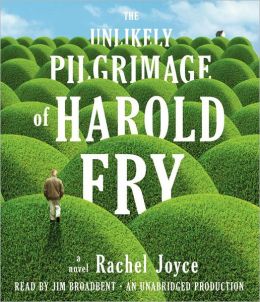
The Unlikely Pilgrimage of Harold Fry by Rachel Joyce (audio): finished

haroldDon’t forget to also see my earlier reviews of the first third and second third of this book.

Naturally, Harold Fry continued to be excellent. I love this book. The sad bit where we left him off in my last review, where he was dogged by misguided followers (yes, I believe I mean that literally, too), was sad; but it came to an end. Harold of course ends up on his own again, which is mostly his natural state in this story. But he won’t finish that way. I don’t want to report any more plot points. This book ends on a hopeful note, and everyone – not only the few characters you might think early on, but everyone – ends up growing and learning.

Rachel Joyce’s strengths definitely include her wry writing voice, which is really very funny. Harold is often self-conscious, but Joyce never is. Her characters are very real and well put together; even the most minor of walk-ons is defined precisely in just a few words. There are larger truths as well. For example, I was struck by the statement of relativity here:

How could he say all this? It amounted to a lifetime. He could try to find the words, but they would never hold the same meaning for her that they did for him. My house, he would say, and the image that would spring to her head would be of her own! There was no saying it.

None of us shall ever know exactly what the others have been through! Oh the humanity!

Incidentally, I was right in my big guess about the big secret. Work that one out for yourselves.

I fell in love with Harold, and with Maureen, and with Rex (Rachel Joyce, is there another book with Rex in it? please please??), and with all the smaller players. I felt so close to these people, these real people living quiet lives – or even lives of quiet desperation, you might say. I am very impressed with this story of ordinary people doing small, private things, that also managed to be a very large story about The Human Situation (that’s an Honors College course I took as a freshman, FYI). The wisdom that is communicated in humble packages is extraordinary. Harold is a star, and Rachel Joyce is my new hero. I can’t wait to see what she does next.

Highly recommended; and the audio read by Jim Broadbent is absolutely grand as well. One of the best of the year to date, without a doubt.


Rating: 10 yards of blue duct tape.

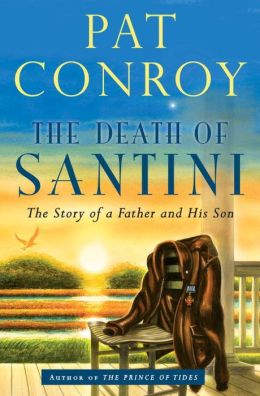
The Death of Santini by Pat Conroy

A remarkable ode to the real-life inspiration behind one of the most hated fathers of American literature and film.

deathsantini

With The Death of Santini, Pat Conroy returns to the autobiographical roots of one of his first successes, the 1976 novel The Great Santini. In this memoir, he recalls his father, a larger-than-life Marine hero who was an abusive monster to his family, from the perspective of decades passed. This is, he promises, the last story he’ll tell of his father–and of his mother, the beautiful false Southern belle.

Conroy’s style and ability to portray time and place are as mesmerizing and evocative as ever; the painful, neurotic (or, as he frequently says, “f-ed up”) family dynamics among the seven Conroy children and their mythically proportioned parents are peppered with humor. After his brother Tom’s suicide, for example, the family is at first shocked to realize that the funeral cards list the information for another brother, Tim, but then they razz him mercilessly. Another sibling notices the animosity their sister has for Conroy and reflects how hard it must be to hated so much. “No, I hate all you guys that much,” Tim says, to which brother Jim replies, “Shut up, Tim. You’re dead.”

As Conroy takes us through his convoluted relationship with a man he hated and feared, but eventually loved and felt close to (more or less), his gift for storytelling makes his story perfectly understandable and sympathetic. Don Conroy never ceased denying that he was falsely accused, but he softened over time and, it seems, in his dying years finally learned how to be a father.


This review originally ran in the November 5, 2013 issue of Shelf Awareness for Readers. To subscribe, click here, and you’ll receive two issues per week of book reviews and other bookish fun!


Rating: 8 poems.

Weeds: A Farm Daughter’s Lament by Evelyn Funda

A memoir about the loss of the family farm, and everything it means to the child of immigrant farmers–and to us all.
weeds
Evelyn Funda’s mother escaped Nazi-occupied Czechoslovakia in a wine barrel, eventually landing in the United States. Her father was the son of Czech immigrants, early homesteaders who sought to make farmland of the Idaho desert. The family farm never felt like it would be Evelyn’s: this “farm daughter,” unwelcome among the tractors and irrigation pipes, would leave to become a college professor. Her musing memoir opens in the fall of 2001 with a triple tragedy: the sale of the family farm; her father’s cancer diagnosis; and her mother’s death, closely followed by her father’s.

Weeds is an elegy, an academic’s personal tale of research and disillusionment, and Evelyn’s own story–with hints of a botanist’s or social historian’s study. (The chapters are named for weeds, beginning with dodder, which she long misheard as “daughter,” when her father cursed the unwelcome growth.) The pursuit of her mother’s joyful youth in a series of cities and countries, of the truth of her grandfather’s apocryphal tales, of her parents’ romance and of the history of her own hometown takes Evelyn to dusty library stacks and to small Czech villages, where she meets dozens of cousins and examines old bones.

Meditative and lyrical, Weeds smoothly braids weeds with family. Funda is sometimes frustrated along the way, but finally satisfied with the personal history she builds for herself–and the conclusion that, even in exile, one can find a sense of place and of belonging.


This review originally ran in the September 6, 2013 issue of Shelf Awareness for Readers. To subscribe, click here, and you’ll receive two issues per week of book reviews and other bookish fun!


Rating: 7 kolaches.

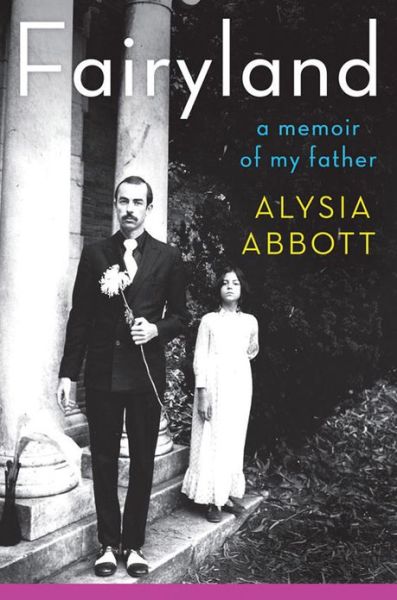
Fairyland: A Memoir of My Father by Alysia Abbott

A daughter’s tender memoir of her father’s life as a single gay man in 1970s Haight-Ashbury.

9780393082524_p0_v2_s600

When Alysia Abbott was two years old, her mother was killed in a car accident. Her father, Steve, moved her across the country to raise her alone as a gay man and single father in 1970s San Francisco–a pioneer in several senses. Alysia’s childhood and teen years took place against the backdrop of a magical Haight-Ashbury district filled with creative, adventurous people like her father (a poet and political activist), recreational drugs and minimal supervision.

Their father-daughter relationship was loving but rocky. When Steve develops AIDS and his health begins to plummet, he calls 20-year-old Alysia home from her studies in Paris and New York City to nurse him, a full-circle caretaking demand that she resents at the time.

Fairyland is foremost a daughter’s memoir of a much-loved parent. She continues to become acquainted with him through her research, most notably in reading copious notebooks filled with his poetry and journal entries. She colorfully renders an iconic epoch in San Francisco, together with the city’s gay culture and politics, and the early days of the nationwide gay rights movement. Alongside beautiful characterizations (often morphing into eulogies), Alysia paints a stark image of the AIDS epidemic and the Reagan administration’s non-response to it. As a personal story and as a portrayal of an era, Fairyland is powerful, loving, authentic, and contains Steve’s artistic legacy in its lyricism. It acknowledges Steve’s impact on Alysia–and both their shortcomings–with gratitude and grace.


This review originally ran in the June 7, 2013 issue of Shelf Awareness for Readers. To subscribe, click here, and you’ll receive two issues per week of book reviews and other bookish fun!


Rating: 9 brightly colored t-shirts.

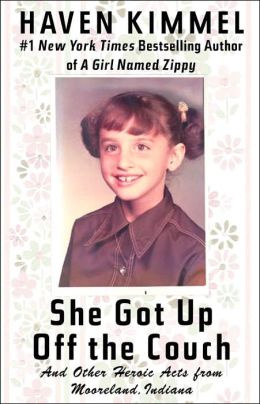
She Got Up Off the Couch by Haven Kimmel

couchHavel Kimmel aka Henrietta Krinkle, you are still my favorite.

This book follows A Girl Named Zippy, and I adore Kimmel’s explanation in her Preface: that she would definitely never write a sequel to Zippy, but that people kept on asking her if her mother ever got up off the couch; and here we are. This is an extension of that first memoir, then, with the focus being not on the girl called Zippy (Haven Kimmel herself) but on her mother, who in that first volume was a somewhat shapeless woman who mostly inhabited the couch and read a lot, talked on the phone, watched television, and didn’t worry too much about her children. This is told not unlovingly, but as fact. Zippy’s childhood is on balance awfully joyful and fun, and although a critical adult’s eye might point out lots of points of minor neglect, she clearly loves her family very much. This tone is continued in She Got Up Off the Couch. The family and each of its members is still, realistically, flawed, but lovable and well-loved. Kimmel’s brother is now mostly absent, with a family of his own; her sister marries and has two babies; her father finds work as a sheriff’s deputy (or similar job title); but her mother’s is the great change of this second memoir. This was, what, the late 1970’s I suppose, in a tiny Indiana town of a few hundred people. Zippy’s dad, Bob Jarvis, holds the keys: her mother Delonda doesn’t know how to drive. This will work as a fine metaphor (and indeed is part of the literal action), as Delonda calls a phone number on a television commercial to look into going to college. She wrangles a ride into the next town over for an entrance exam, which places her out of fully 40 hours of college credits. Under Bob’s clear disapproval – he says of the woman who takes Delonda to her test, “time was, a woman wouldn’t have gotten in a man’s marriage that way” – she persists in attending classes, studying, reading, talking to new people, and in 23 months, graduates summa cum laude – and continues on to graduate school. Eventually she earns a Master’s degree in English and becomes a high school teacher. This is all a stunning change. Along the way, to get to school and back, she learns how to drive and purchases a vehicle that is, in itself, a good joke.

She Got Up Off the Couch also follows the format of A Girl Named Zippy: chapters jump around, more as connected anecdotes than as clear narrative. Each chapter stands alone admirably as a hilarious or heartfelt – usually both – nugget of tears, joy, preadolescent confusion, and filial love. [In fact, as soon as I finish writing this review I’m off to read my favorite chapter out loud to Husband, if he’ll let me, while he smokes a brisket in the backyard. If you’re curious, it’s called “Treasure,” and is about a hippie college student hiking cross-country who camps out in the Jarvis backyard for a few days. It’s hilarious and heart-wrenching.] It’s a great structure, this anecdotal style. If I ever write my own mother’s biography, which I keep dreaming about, I have something similar in mind. Yes, there are odd characters that the reader of just one chapter would wrinkle her forehead at; but this is true of the whole book, too. Zippy has had an odd and happy life, and that’s exactly why we enjoy reading about it.

Zippy herself, naturally, also grows and changes in this book. Delonda is our star and makes the most life-changing journey. Kimmel writes in her preface, “I will never do anything half so grand or important,” and I know exactly what she means: the decision of Delonda and other women of her time who broke out of where they were told they belonged have done something for the women of my generation that we are now saved from having to do, if that makes any sense. It is something I’ve long felt about my own mother. But I was saying that Zippy continues to grow up: we see more of her engaging and eccentric friends, Rose and Julie Ann, and we meet a new friend, Jeanne Ann. And when she gets a nephew and then a niece, Zippy becomes hopelessly devoted. The blizzard that sweeps through when her niece is long overdue and panics the family is, again, funny and riveting at the same time.

I’ve now read everything that Haven Kimmel has written except for every single one of her blog posts, and that one children’s book. I hope she is getting to work right now on another book – fiction or non, more Haven Kimmel, stat.

I love it. Funny, true, humble, real.


Rating: 9 cherry-red polyester suits.

A Girl Named Zippy by Haven Kimmel

zippyHaven Kimmel wins again. This is her best-known and best-selling book, and her first memoir, and my first of her nonfiction. It is everything I had hoped for. She’s hilarious. She communicates a rather modestly lived mid-American existence in such a way that it is compelling, interesting, and occasionally involves small-scale tragedies; and at the same time it is recognizable as the lives of all of us. But on the other hand, make no mistake: Kimmel’s life as a small girl called Zippy (for her high speeds) is frequently bizarre. She was apparently funny-looking, with eyes too close together, and as a baby she was bald for an unusually long time, save a tuft of hair on the top of her head. She did not speak a single word until she was nearly three, when she began (we are told) with complete sentences. As in her novels, Kimmel introduces fully realized canine and other animal characters that her reader comes to love.

I would read anything Haven Kimmel writes; but I am especially excited about She Got Up Off the Couch, her memoir of her mother. Said mother is a character in Zippy who receives relatively little treatment, but is hinted to possess hidden depths, and I can’t wait to get to know her in my next read. Kimmel’s father, a funny, likeable mischief-maker, is a little more heavily featured. Her brother continues the theme of odd, amusing relatives. Friends from the neighborhood and from school, the local storekeeper, the old lady in the haunted house next door, and various teachers are described in brief sketches that make me giggle and paint a complete portrait in a paragraph.

A Girl Named Zippy is very, very funny; occasionally sad; insightful, beautifully written, and long on pathos. Tomorrow, come back around for quotations from a few of my favorite passages.


Rating: 8 science fiction novels.

Crossing the Borders of Time by Leslie Maitland (audio)

crossingCrossing the Borders of Time is a grand, sweeping story, combining history and tragedy with romance, and to top it off it’s nonfiction. Leslie Maitland grew up with the legend of her mother Janine’s great love, a man named Roland that she had to leave as a teen during World War II, when as a Jew she fled Europe with her family for the United States by way of Cuba. Roland was a French Catholic and had to stay behind, but the young couple pledged to marry as soon as they could. Janine’s family cooperated with the war to keep the two apart until Janine married an American man and had two children; her troubled marriage weathered several storms, but she always remembered Roland wistfully. As the book opens, Leslie’s father Len is dying, as Leslie heads off with trepidation on a journey to find the lost Roland and give her mother another chance at love. The author reads this audio version herself – a phenomenon with which I have had 100% success, continued here with Leslie’s own heartfelt recollections, and her relation of Janine and Roland’s stories complete with the French and German (and Spanish) accents that season their lives.

The iPod can be misleading when it comes to audiobooks. I don’t even remember loading this one into my gadget, and I certainly hadn’t remembered its length, so I was surprised as it unfolded into no fewer than 15 discs’ worth, about 19 hours. However, it was well worth the time spent. Maitland makes no pretense about the romance of this story – that is, that it is a love story, but also that she approached with a sense of romance, despite her training as a journalist. She occasionally has to stop herself and try to pull back, and question whether she’s behaving rationally, as she searches for the mythologized Roland. But this is a personal matter rather than a professional one, and it’s no surprise that she feels strongly, having grown up hearing about her mother’s first love.

Nevertheless, much of the tale is told in flashback, and in journalistic style, as Maitland reports the lives of her forbears: her great-grandparents Simon and Jeanette; her grandparents, Sigmar and Alice; and Janine, born Johanna (Hanna or Hannele) in German-held Alsace. As Alsace exchanged hands between France and Germany over the years, so Janine/Hanna struggled to define herself, as her parents’ first escape from Nazi Germany takes them just over the border from Freiburg into the French town of Mulhouse where she first met Roland. She would call herself French rather than German from that point forward. As Maitland’s story reaches her own era, her first-person voice reappears: she tells us her own perspective on her parents’ marriage, how distant her father, how conflicted her feelings about that beloved parent when he leaves for another woman and then comes back home again.

When the narrative fully inhabits the modern day and Maitland’s own perceptions, the pace picks up; what has been a history becomes a race against time as Janine ages and Roland remains elusive. Perhaps it is not too much of a spoiler to say that he is finally located; as a coworker of mine pointed out, there likely would not have been a book if Maitland had been unable to find him. But the final fates of our romantic hero and heroine are not straightforward, so you’ll still have to read the book to find out how it all concludes!

One of the greatest strengths of Crossing the Borders of Time has to be Maitland’s tone. I appreciated the air of nostalgia that permeates her telling of Janine’s history before and during the war; she combines journalistic style (citing sources, noting the odd inconsistency, describing an interviewee) with the emotional daughter searching for her mother’s legend. And if she lapses into the sentimental and romantic as things draw to a close, I don’t think she owes us an apology; I found this voice compelling and convincing, and entertaining.

Narrative nonfiction with emotion, but also a commitment to truth, always makes for a fine way to learn history. I found this an enjoyable, evocative, feeling story.


Rating: 7 hidden telegrams.