Haven by Ani Katz

In a masterpiece of tension, set within a lavish island community for the corporate select, a disappeared infant calls into question everything one mother thought she knew.

Ani Katz’s Haven is a chilling story about an apparent utopia that is anything but. As Caroline boards a ferry with husband Adam and infant son Gabriel for an exclusive getaway on a lovely island enclave, she is, first of all, relieved. After a trying period of his unemployment, Adam’s job with corporate giant Corridor gives him the means to join an elite group of friends and coworkers in a spaceship (Caroline’s description) of a house on the outskirts of Haven, a longtime home of the rich.

Caroline has never quite understood what it is that Corridor does–something with “infrastructure”–but she’s grateful that Adam is employed and seemingly less depressed. Now she hopes to relax, get to know Adam’s friends a little better, perhaps strengthen her bond with Gabriel, maybe even get some artistic inspiration back. Ever since becoming a mother, her photography has suffered. She attempted a project about motherhood, but “was getting bored with her baby as a subject.” Even on the island, seeking subjects, she worries: “What if she never made an interesting photograph again?” But in Katz’s tautly plotted psychological thriller, it turns out that photography may be the least of Caroline’s concerns.

Caroline’s roommates for the summer, Adam’s Corridor colleagues, indulge in eating and drinking to excess and unfamiliar, unnamed drugs, but they also coo over Gabriel and give Caroline the occasional break for a proper shower. She is trying to lean into the novel, luxury experience. The island’s wider inhabitants, however, strike her as being just a little off. Tinkly laughter, choreographed dance, and uncanny children degrade into shadowy threats: angry islanders, old rituals and sacrifice, and corporate surveillance. Then comes the nightmarish morning when Caroline wakes up and Gabriel is gone. As she searches for her son and the truth of what happens in Haven, she will come to question even the rules, and the people, she thinks she knows best.

If Haven ever begins to feel like it might trend toward the formulaic, be assured that Katz (A Good Man) is about to twist her tricky narrative again, always catching Caroline, and readers, unawares. This masterpiece of tension turns absolutely terrifying by its finish. Technology, hubris, deception, and mistrust combine in an unsettling corporate dystopia that asks what ends would justify which means. Riveting, thought-provoking, and ever surprising, Haven is not for the easily unnerved.


This review originally ran in the December 23, 2025 issue of Shelf Awareness for the Book Trade. To subscribe, click here.


Rating: 6 hats.

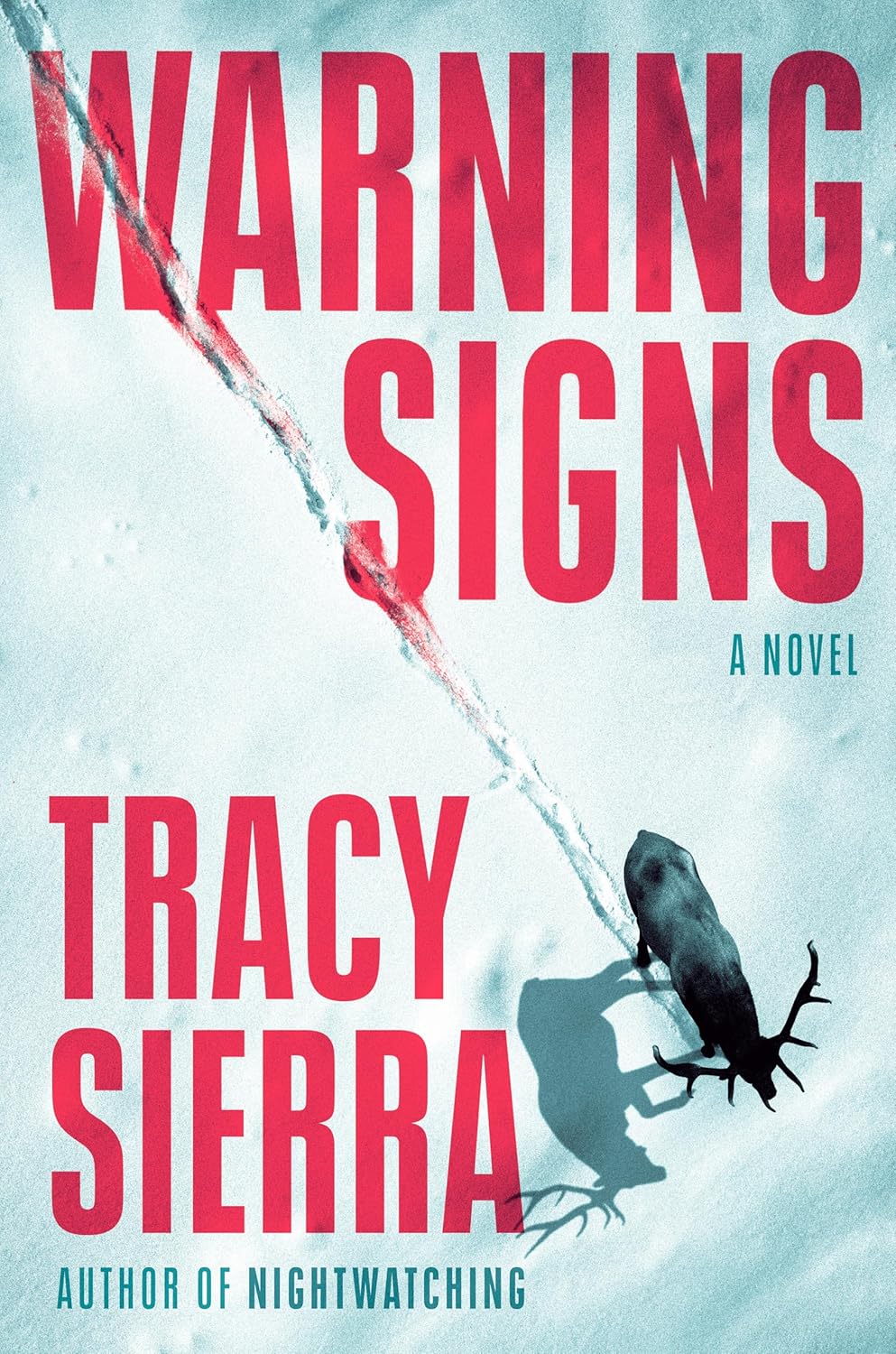
Warning Signs by Tracy Sierra

A young boy faces a variety of dangers when he enters deep snow and high mountains with his father in this enthralling novel of horror, suspense, and psychological intrigue.

Tracy Sierra (Nightwatching) conjures a terrifying narrative with Warning Signs, in which a 12-year-old boy grapples with hazards on several levels. This novel of horror and abuse is both enthralling and thought-provoking, liable to keep the reader up all night for a single-sitting read or to inspire nightmares–all worthwhile for the masterful handling of serious topics.

Chapter one introduces Zach, aged 11, his younger sister, Bonnie, and their mother, Grace. They are skiing uphill into the mountains of the American West, toward a hut where they will meet with other friends. Grace, an expert outdoorswoman, educates her young children in assessing avalanche risks, in survival, and how to manage fear. Chapter two jumps forward a year. Zach is 12, headed into the same mountains with his father, Bram. Bonnie has stayed home with a nanny; Grace is gone, for reasons not immediately explained. Where Grace was kind and patient, Bram is visibly short-tempered and exasperated. Zach fears him. They are to meet a group of men and boys at a backcountry ski hut for a fathers-and-sons ski trip, organized by Bram for the purpose of securing investments from the wealthier men he envies and courts. Zach has a role to play, but has always failed his father so far, never the rough-and-tumble, thick-skinned son Bram desires. Ironically, Zach’s skiing and outdoor survival skills (thanks to his mother) far surpass Bram’s, an imbalance that will matter in the coming days.

Over the long weekend, Warning Signs ratchets up the tension until it seems it can carry no more–and then ramps it up again. Zach is aware of at least three distinct threats: the perils of the natural world, including a very real risk of avalanche; his father’s irascible self-interest and capacity for cruelty; and a mysterious creature stalking the dark and treacherously cold high-altitude woods. Bram’s gathered group of men and boys presents a dangerous combination of skill and ignorance, hubris and machismo; Zach possesses good training and instincts, but as their youngest member, will be overlooked and ignored in an irony of Greek-tragedy proportions. Through it all, Zach (in close third-person perspective) continues to mull the absence of the dearly beloved Grace, and approach the horrifying truth about her loss.

With its triple-punch of terrors natural, human, and unknown, Sierra’s sophomore novel is truly and profoundly frightening. Beyond the fine art of the horror or thriller novel, Warning Signs also considers domestic abuse and control, class and ambition, and how we try to care for those we love. Discomfiting, chilling, and unforgettable.


This review originally ran in the December 2, 2025 issue of Shelf Awareness for the Book Trade. To subscribe, click here.


Rating: 8 lost mittens.

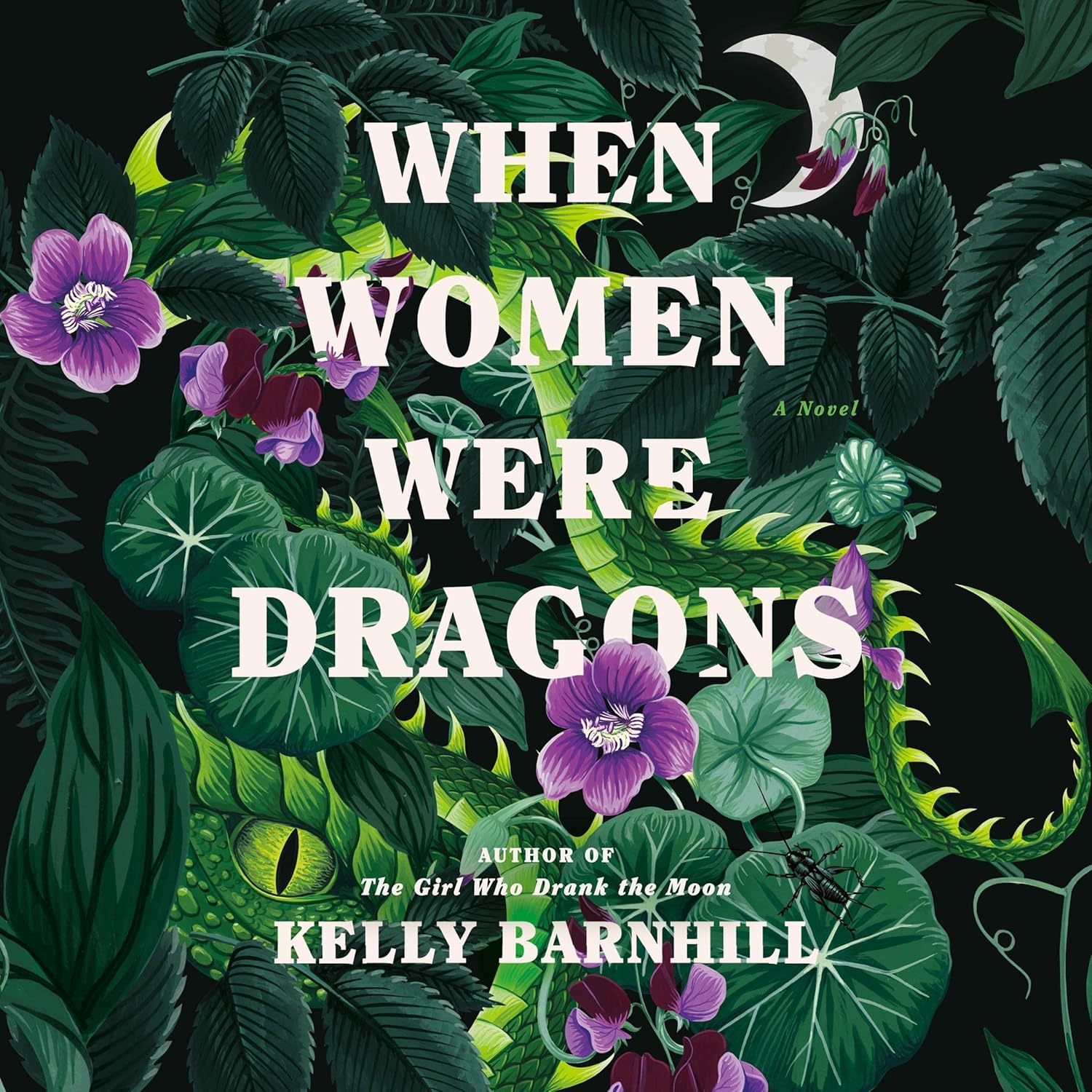
When Women Were Dragons by Kelly Barnhill (audio)

I don’t recall where I got this title from, but I loved this book, and am grateful to whatever review or list sent it my way. Also to my lovely partner who gifted it to me for the long drive from Texas to West Virginia.

When Women Were Dragons: Being the Truthful Accounting of the Life of Alex Green–Physicist, Professor, Activist. Still Human. A memoir, of sorts is a living, breathing tale, ever expanding, filled with metaphor that reshapes itself with the reader’s interpretation. It opens with a strange letter from a Nebraska housewife in 1898 to her mother, shortly before the woman spontaneously dragoned. Next we have an excerpt from the opening statement given by Dr. Henry Gantz to the House Committee on Un-American Activities in 1957. Then we get into the first-person narration of Alex Green, who will tell most of this story, with brief insertions mostly from Dr. Gantz’s work – bit of an epistolary format. (The audiobook is narrated by Kimberly Farr, as Alex Green, and Mark Bramhall, as Dr. Gantz, which I thought was a great choice.) “I was four years old when I first met a dragon. I didn’t tell my mother. I didn’t think she’d understand.”

I think this must be right around 1950. Alex grows up in small-town Wisconsin, in a pretty 1950s world: there are many things we just don’t talk about, including cancer, menstruation and most aspects of girlhood and womanhood, what to expect on one’s wedding night, diversity in sexual orientation and gender expression, our feelings, and dragons. When Alex is a little girl, her mother goes away for some time – months – and no one explains or even acknowledges the change; likewise when her mother returns, gaunt, weak, different (she doesn’t even smell right). The reader understands better than little-girl Alex when her mother’s chest is glimpsed, missing breasts, two scars like smiles. This world is recognizably our own except for the dragons. Women in this world can dragon (that’s a verb), or become dragons, at which point they sometimes eat their husbands (this seems to happen frequently with very unlikeable, not to say abusive, husbands) before flying away. Dragoning is a poorly understood phenomenon because, as with much that is female or feminine, society judges it too shameful to examine, and science mostly averts its gaze. Dr. Gantz is a rare exception: he believes in the scientific mandate to learn, whatever truths are revealed. Biology should never be shameful. His research articles and responses to an oppressive world are useful seasonings to this story, and he is himself a delightful character, alongside the heroic librarian Mrs. Gyzinska.

And oh, Alex’s auntie Marla, a wonderful woman who comes and cares for her while her mother is away in cancer treatment, a big powerful woman who flies airplanes during the war and works as a car mechanic and wears men’s clothes and takes very little shit, and who we lose to the Mass Dragoning of 1955. When Marla dragons, she leaves behind an infant daughter, Alex’s cousin Beatrice, who from here on is raised as Alex’s sister. Such is the gaslighting of Alex’s family and world that she learns to really believe – almost – that she has no aunt, that Beatrice has always been her sister. (Echoes of 1984. We have always been at war with Eastasia.) And boy, the time Alex has raising her younger sister, Beatrice, a delightful dragon of a child if there ever was one.

Despite all I’ve just thrown at you, I’ve barely scraped the surface of this remarkable novel. It contains many stories and many layers, much that is very recognizable from our ‘real’ world, and lots of potential metaphors to ponder. I wondered at different times if dragoning were a metaphor for menstruation; for puberty; for “un-american activities” (certainly, HUAC seems to conflate them); for simply being independent, self-determining, and female (except that those who dragon are overwhelmingly but not universally girls and women). This story tackles the way we handle difference, and especially gender, sexuality, and gender expression. It contains such maddening (if entirely realistic) renderings of sexism that it was sometimes hard to listen to. It contains transcendent moments of personal discovery, joyful academic inquiry, love and coming-of-age, and some lovely iterations of family and built family, which I always appreciate. “Sometimes,” confides Alex at an advanced age, “the expansive nature of family takes my breath away.” There is such good fun; I especially liked the line “If that dragon was hoping for sympathy, she was crying in front of the wrong teenager,” which I got to share with my favorite dragon-loving teenager. It considers the looping of time and relationships. It’s got science and wonder, a bit like A Tale for the Time Being, but I liked this better. I’m a bit over the moon about it, and am giving it a perfect score. Also, I loved the audio format, with the one caveat that I wish I could pull more quotations that I loved.

Do give it a go, and let me know what you think.


Rating: 10 military-issued boots.

Dandelion is Dead by Rosie Storey

A grieving sister finds that hope, silliness, angst, and even love may be possible amid loss in this astonishing first novel.

Rosie Storey’s debut, Dandelion Is Dead: A Novel About Life, is a glittering riot of grief, laughter, missed connections, absurdities, and the joys and pains of life’s many facets. From one unexpected turn to the next, this story will keep readers emotionally engaged and yearning alongside its protagonist.

Poppy Greene is 37 years old and deep in mourning. It has been 231 days since her older sister, Dandelion, died “and, somehow, it was spring again.” Dandelion had been wild, irrepressible, author of all the sisters’ adventures; without her, Poppy (a professional photographer, ever the observer) is unmoored. Going through her sister’s phone, she clicks on a dating app and, on a whim, answers a message from a year-old match. When Jake asks for a date on Dandelion’s 40th birthday, it feels like fate, or magic, or Dandelion’s mischievous hand from beyond the grave. Poppy does not set out with the purposeful intention of impersonating a dead woman (nor of cheating on her longtime boyfriend, Sam), but she finds Jake incredibly magnetic, and soon begins a romantic relationship in her sister’s name. Dandelion Is Dead alternates between Poppy’s close third-person point of view and Jake’s, revealing his own intense attraction to the woman he knows as Dandelion, and his own past traumas. Poppy and Jake are both awkward, ungraceful, and heartfelt in their romance; both commit dishonesties that threaten everything they value.

The aptly named Storey excels at whimsy, delightful comedy, and pathos. Her plot is composed of debilitating losses, madcap adventures, treacheries, secrets, love, and striving. The profound charm and appeal of Poppy and Jake lie in their contradictions. They suffer terrible losses and make poor choices; they are capable of both sweetness and betrayal. The cast is enriched by Poppy and Dandelion’s lifelong friend Jetta (and her loyal husband); the young son Jake is devoted to, and his masterfully nuanced ex-wife; Poppy’s unsympathetic boyfriend; and of course, the mythic Dandelion herself. While its subtitle feels accurate, this debut is also clearly a novel about grief. Poppy learns that if she is going to find a fulfilling life after losing her sister, she must grapple with her own mistakes and those of her loved ones, even those she’s lost. Dandelion Is Dead is a scintillating achievement in emotional range, humor, and wisdom. Poppy Greene thinks she is the less magnetic sister, but no one who meets her will easily forget her.


This review originally ran in the November 7, 2025 issue of Shelf Awareness for the Book Trade. To subscribe, click here.


Rating: 8 Twisters.

Maximum Shelf: A Far-Flung Life by M.L. Stedman

Maximum Shelf is the weekly Shelf Awareness feature focusing on an upcoming title we love and believe will be a great handselling opportunity for booksellers everywhere. The features are written by our editors and reviewers and the publisher has helped support the issue.

This review was published by Shelf Awareness on October 30, 2025.


M.L. Stedman (The Light Between Oceans) awes and transports readers with the astonishing A Far-flung Life, a sweeping family drama spanning the latter half of the 20th century. Layers of tragedy and compelling, nuanced characters are set against a vast, indifferent landscape in Western Australia.

The MacBride family has run a sizable sheep station for generations, with quiet success, in a dispersed but close-knit community whose respect they have earned. “The MacBrides had the touch, it was said: sensible but shrewd, careful but not mean.” The novel opens with landscape, scenery, and color: red earth, blue sky, dust-green vegetation, the “straight vermilion line” of a road through sparse trees. Against this backdrop, three MacBride men travel “like unpacked Russian dolls” in a Bedford pickup truck across the expanse of their sheep station, “nearly a million arid acres.” Phil drives, accompanied by his sons, Warren and Matt, and a trailer full of sheep. It is fitting that the reader meets this landscape before its human inhabitants; Stedman will consistently reinforce that contrast. It is early 1958, and the date, January 10, will reverberate through the MacBride family history for years to come.

Phil MacBride has known since his feet could reach the pedals not to swerve to avoid a kangaroo. But under the January sun, he makes a fateful error. Back at their homestead, hours later, Phil’s wife, Lorna, and daughter, Rose, open their door to two policemen, from whom they learn of lives both ended and hanging in the balance. The consequences of the crash that opens Stedman’s masterful novel will tumble and tangle MacBride lives for generations. Amid unspeakable tragedy and threads of hope, a note of whimsy cuts through: also introduced in this opening chapter is the outright oddity of a fully rigged pearling lugger. The subject of legend, the boat abides in its own structure, known as “Monty’s shed,” for the late Montgomery MacBride, Phil’s uncle, who won the vessel in a bet but never got to sail it. The MacBrides maintain the tradition of oiling its timbers, keeping spiders and termites at bay, and placing a beer in its bow every year on Monty’s birthday. Matt MacBride–thrown from the truck on that January day–as a younger son, was destined not to inherit the sheep station but to make his own way in a larger world. He had longstanding goals and dreams springing from Monty’s boat. Now everything has changed; but the pearling lugger remains in its shed, storing potential.

A Far-flung Life follows the remaining MacBrides as they continue to scrape life and livelihood out of a hardscrabble home with fragile concepts of morality and honor, and the power of love. They weather births and death, secrets, and scandals both experienced and kept hidden. Throughout every loss and recovery, their fate remains tied up with the land: “Our lives come and go like these gold-rush towns. We arrive, we grow, we thrive, then we’re gone. Then the forgetting happens, and once-solid foundations are barely traces in the earth, from unguessable lives. Whole communities and the ties that bound them are blown away with the dust.” Stedman excels at description of both landscape and the human experience, and alternates applying this close attention to the events in her characters’ lives and to the larger world in which they live. “In the end, we’re all looking for a place to ride out the storm of life. Among all these husks of houses and fossils of trees, we are like hermit crabs, borrowing a shelter for a time, and moving on.”

As the MacBrides carry on after the crash, their lives will continue to call upon big themes, including inexorability and change, innocence, and the handling of painful truths. Stedman generally employs a shifting close third-person perspective, allowing her reader to see through one character’s eyes and then another’s, finding out at different points what they know. This careful reveal not only of events, but of various characters’ knowledge of events, is central to the complexity of the MacBrides’ secrets. Another significant theme is the tension between memory and forgetting. One young character, in asking questions that his elders can’t or won’t answer, coins a term, “forgetment,” for what is forgotten–“the opposite of a memory.” This concept recurs throughout a plot that revolves around what its protagonists can’t remember and what they wish they didn’t.

Like the heartrending The Light Between Oceans, the MacBrides’ story interrogates ideas of right and wrong in specific and complicated cases, and the experience of humans writ small against a vast landscape. “This land has seen improbable things: the evolution of marsupials and monotremes; of flightless birds and animals that fly. It’s seen continents split and islands arise. It’s seen oceans turn to desert and desert turn to glaciers. And it’s watched people drag their little lives across its surface, flat and unforgiving.” By the end of this epic and wrenching family saga, readers will care deeply about lives that are “destined to join the vast ocean of human forgetments.” Heartbreaking and painfully beautiful, A Far-flung Life will haunt and comfort long past its final page.


Rating: 8 goannas.

Come back Monday for my interview with Stedman.

Forty Acres Deep by Michael Perry

A loan from a dear friend, from one of his favorite authors, and I can see why. This novella-length story was absolutely grim, but often funny, too, and deals with some serious messages. I don’t do this often, but let me give a big **content warning** for suicide.

It begins:

Harold had come to consider the accumulating weight of snow on the farmhouse roof as his life’s unfinished business. Daily the load grew… on his heart, his head, the creaking eaves.

A few paragraphs later:

She died a month ago, and he hadn’t plowed the driveway since.

That sets the stage pretty well for us, and all on page 1 (no spoilers). Harold has lived on the same farm all his life, inherited from his father, in a vague midwestern setting where they get a lot of snow. They were dairy farmers, but the economics of that lifestyle got increasingly hard, and then the barn burned – with the cattle in it – a trauma as well as a financial blow. He turned to beef cattle, although one hard winter, with he and the wife both down with the flu, he had to send them to market at the worst time of year, and thus got out of that business. He tried cash crops, but the prices dropped out of beans and corn, too. He leased the land to a farmer who never showed up in person; instead he sent “hired-hand agronomists with wands and laptops and satellite-guided monster machines.” There is a definite note of ‘things these days’ and ‘good old days,’ phrases against which Harold – to his own derision a part-time follower of philosopher and poetry – consciously rebels. He is an old, straight, white man, and he notes his own prejudices and old-fashioned attitudes, and actively interrogates them.

“She” was his wife, and when she dies, Harold wraps her in blankets and puts her out on the porch. He can’t bring himself to face the world. Instead he shovels the walk to the chicken coop, cares for the hens and eats their eggs with canned beans, almost his only remaining provision. He runs the kerosene-powered torpedo heaters, pointed up at the pole barns’ roofs, hoping to keep them from collapsing under the weight of the snow. He ruminates, contemplates, checks remembered quotations in his old philosophy texts. We see him visit town just a few times, where he has a minor but meaningful interaction with a barista whose context could hardly be more different from Harold’s. (It doesn’t take much interaction to hold significance for Harold, who mostly speaks only to his chickens, or himself.)

Harold is an interesting character. When he discovered Montaigne as a teenager: “instead of what he expected a French philosopher might write about, he found references to sex and farts. This was silly and appealed mostly to his dumb teen prurience, but it also implied that philosophy might be accessible and relevant even for a horny rube in barn boots.” He is both country farmer and philosophy student, both privileged old white guy and actively interested in the pronouns, the rainbow flag, and the new ways of thinking. He knows he’s not accomplishing anything big here, but I think you’ll join me in respecting his small curiosities.

Perry is a masterful writer. Harold’s story is almost unrelentingly, deeply depressing – that’s hardly a strong enough word. Nothing goes right, everyone he’s ever cared for is dead, there is nothing left to hope for. His story is also extremely funny: Harold possesses a remarkable sense of humor, and Perry renders it in prose that often surprises while commenting (cynically, of course) on the American condition. “Another yoga-panted woman was griping down at him from her Denali over how much he undercharged for digging her prairie restoration patch.” “After sundown the horizon to the west glowed with encroaching fitness center, brewpubs, and mitotic apartment complexes.” Even as the snow-buried landscape obscures, buries, kills, it is beautiful, and so is this book: both story and line-by-line writing. Harold has a hell of a vocabulary, too. He makes fun of himself for knowing how the meaning and spelling of ‘jejune’ but not how to pronounce it (me neither, Harold). Echolalia, misophonia, cotyledon, vermiculite, hyperacusis, exudation, popple whip.

One of Harold’s last backhoe jobs was for a wealthy architect who hired him to rearrange a set of decorative boulders amidst the shrubbery surrounding a cavernous riding stable. Afterward, when they were settling up, Harold said, “Nice pole barn.” He truly intended the compliment. The architect stared at him blankly for a beat, then, as if dictating from behind a lectern, declared, “It is a custom barndominium-slash-hippodrome.” Harold waited for the slow grin that would concede the absurdity of the extravagant jargon, but after an uncomfortable straight-faced silence, the man slipped an iPhone from his velveteen corduroys and said, “Do you accept Apple Pay?” Omnipresent, Harold thought, were the signs that contemporary culture was leaving him the dust. “Nope,” said Harold, and handed the man an invoice scribbled out on a carbon paper slip.

Lest you think this is overly crabby: Harold (and therefore, obviously, Perry) is aware of his own part in this caricature. At an entirely separate set of reflections, “You are being petulant, he thought. And grandiose.” He excels at the unwieldy, surprising, barking-laugh-out-loud list: “the world’s privileged hordes were content to skate along on… the secondhand grease of star-spangled draft-dodgers peddling hot water heaters, bald eagle throw rugs, and resentment.” Etc.

It’s not all this wordy. “At first light every tree branch, every blackberry cane, every stick and stem was a hoarfrost wand. The sky was clear, the air was still, and sunlight splintered every which way.” It can be as clean and smooth as snow-covered fields, where every tool or piece of garbage is softened over into something vague and beautiful.

This is a masterful piece of art. Extremely grim and dour, but beautiful.


Rating: 9 pictures.

The Gallagher Place by Julie Doar

In this moody debut novel, new and old crimes on her family’s estate in upstate New York force a quietly struggling woman to confront loyalties and conflicts among family and friends.

Julie Doar’s first novel, The Gallagher Place, investigates old and new mysteries within a compelling family drama set in a striking landscape.

Protagonist Marlowe Fisher is an illustrator living on the Upper West Side and a loner, even surrounded by her powerful family and their estate. When she and her two brothers, as adults, discover a body on their property, the case reopens old wounds. Decades earlier, Marlowe’s childhood best friend vanished without a trace. The freshly murdered man and the long-missing teenaged girl do not initially appear linked, but the surrounding community has long harbored suspicions about the wealthy Fishers. Marlowe has always yearned to know what happened to Nora, although that desire presents new conflicts, having come under investigation once again.

The Fishers have always used the Gray House in upstate New York as a weekend and holiday retreat, “a wholesome family sanctuary to escape the crowded city life and the bittersweet pain of growing up too fast. A haven, her father sometimes called it. If that was the case, why did bad things still happen?” And bad things do happen, especially the disappearance of Nora Miller. Marlowe has never had another relationship as meaningful as her friendship with Nora, a local girl and an honorary, if part-time, fourth Fisher sibling, who wished desperately to escape her rural roots. Marlowe feels strongly: “Nothing mattered as much as the two of us.” The loss of Nora has shadowed Marlowe’s life ever since, culminating in a carefully hidden drinking problem.

The recent murder, and accompanying investigation into Nora’s disappearance, is both galvanizing and disturbing. As Marlowe embarks on her own inquiries, more thoroughly than ever before, she not only refreshes old pains but discovers new risks. To search for Nora means to interrogate her own memory, to learn uncomfortable truths about herself and her family, to confront class differences, privilege, and inheritances. This discomfiting process takes place in two timelines, against the backdrop of Dutchess County, N.Y., in the summers of the 1990s (when Nora and Marlowe were teenagers) and in the present winter of 2018. The Fisher property defines Marlowe’s greatest trauma and coming of age; she remains devoted to “the spirit of landscape” that inspires her art. A strong sense of place is central to this chilling novel about old secrets and what one might choose to uncover or keep hidden. The Gallagher Place is dramatically atmospheric, expertly paced, and haunting.


This review originally ran in the October 10, 2025 issue of Shelf Awareness for the Book Trade. To subscribe, click here.


Rating: 7 gifts.

The White Hot by Quiara Alegría Hudes

Delightful, unpredictable, and often harrowing, this mother-daughter tale of growing and learning will keep any reader riveted.

With The White Hot, Quiara Alegría Hudes (My Broken Language; Pulitzer Prize-winner for the play Water by the Spoonful) offers an expansive, surprising coming-of-age story about both a mother and a daughter. The novel opens on Noelle’s 18th birthday, when she receives an envelope. “It wasn’t the handwriting that dinged memory’s bell so much as the pen’s feral indentations.” Since she was 10, when her mother disappeared, Noelle has lived with her father, stepmother, and two half-brothers in New Jersey. Readers have just met the teenager when the voice shifts. “Dear Noelle… I am not going to send this,” the letter begins. What at first masquerades as an interlude quickly takes over the book. Breathlessly, alongside Noelle, readers take in April Soto’s story.

“That awful day began with your classroom art show.” At age 26, April is weary. Her 10-year-old daughter is precocious, an artistic and academic genius, and disturbingly observant of her mother’s shortcomings. Their household comprises four generations of Soto women: Abuela Omara (who emigrated from Puerto Rico), Mamá Suset, April, and Noelle, “not a speck of dust–or man–in sight.” April is undone by her child’s gimlet eye, her own unrealized potential, her lack of options, and daily drudgery, and in the wake of a scene at the dinner table, she simply walks away from their Philadelphia home.

What follows is an epic and astonishing journey of self-discovery. April muses on the influence of Hermann Hesse, Charles Mingus, sex as revelation, violences witnessed and perpetrated; she undertakes a wilderness trek (profoundly unprepared in sandals and sequins), and experiences painful, blissful realizations via blisters and hunger. She tells her child she knows her leaving was a betrayal, but hopes she has also offered choice. By book’s end, the briefest return to Noelle’s own 20s presents a full-circle perspective of the parallels in these two lives, and the significant differences.

April’s narrative is astounding and vibrant. In her best and worst moments, she describes being cracked open, experiencing epiphanies: “She felt an un-looming, a separation into threads, some of which rose and drifted through nearby windows whose unseen inhabitants shimmered inside her, too.” These, as well as the mundane, yield stunning, lightning-bolt prose: “Within this deluge, the frog and the oak, the tuba and congregants were not discrete phenomena but native to each other, and I to them. That I of all creatures should be tapped for a glimpse? A bewilderment.” The White Hot is wide-ranging, thought-provoking, tender, and raw–unforgettable.


This review originally ran in the September 23, 2025 issue of Shelf Awareness for the Book Trade. To subscribe, click here.


Rating: 7 olives.

The Language of Ghosts by Heather Fawcett

With this, I have read all of Fawcett’s published books (although I do have Agnes Aubert’s Mystical Cat Shelter on preorder). Sad day.

The Language of Ghosts, offered for middle grade readers, continues to please. In the opening pages, young Noa is sorely grieving the recent death of her mother, queen of Florean. Her brother Julian is newly crowned king although just a teenager. Florean is an archipelago nation, long ruled by the Marchena family of which Julian is now the eldest. The Marchenas are all magicians, and Julian, like his mother, is a dark mage: this means that instead of speaking just one magical language (like most magicians in their realm), they have multiple languages. Julian is completely unique in that he can speak all nine. The Princess Noa, at eleven, is unique among the Marchenas for having no magic at all. In this opening scene, we find her dashing out of the banquet hall in tears at the presentation of their late mother’s favorite dessert (raspberry sundae). Hiding with her emotions in her closet that night, Noa is able to avoid the assassins who come to kill her and her little sister, five-year-old Mite; together the three siblings escape a violent coup in a small fishing boat and set up housekeeping on a new island. Whew.

Fast forward two years. Julian, a powerful magician but with very little think-first instinct, strategy, or perhaps even common sense, is much assisted by his younger sister Noa, who has no magic but lots of strategy, planning, and organizational skill. Cataloging, listing, and mapping are among her passions. Young Mite has two interests: insects and getting dirty. Well, and food. Operating as a king-in-exile with a small but important following, Julian both relies on Noa’s talents and also tends to discount her. Mite follows her around endlessly. The reader might surmise that the smallest Marchena has been through some trauma and finds constant contact with a sibling comforting; Noa is just annoyed.

Julian has enchanted the island of Astrae so that it moves, like a large ship, piloted by his loyal former-pirate captain Kell. They’ve been roaming the seas, taking back Florean one island at a time, but under constant threat by the usurper king, Xavier. Noa, the star of this story, is hard at work on two missions: to get her brother back on the throne where he belongs. And, privately, to prevent the dark magic he wields from turning him to darkness. The Marchenas discover that Xavier is on the hunt for a weapon that could take Julian down: one or more lost magical languages. Our young royal siblings know that they must get there first. Imagine everyone’s surprise when it turns out that, of all people, previously non-magical Noa is the only one who can speak the language of death. She is herself split between puffed-out pride at her new power, and a desperate desire to speak to her mother again. And to save Julian and the Florean kingdom, of course.

The Language of Ghosts showcases Fawcett’s best features. These are three rather ‘normal’ siblings, underneath all the magical and royal trappings: they have three distinct personalities and sets of skills and interests, and are experiencing different phases of childhood. They clash constantly but love each other dearly. Meanwhile, they dwell in a world that emphasizes Fawcett’s imaginative powers, with magical languages, dragons, illusions, sea monsters, betrayals, intrigue, and a wide array of wonderful cakes. Noa is engaged in learning some of the most important lessons of growing up, including the idea that even when we want the best for our loved ones, we can’t control them. I love the nuance Fawcett gives her young characters. Like the others, this is a book that manages to be funny and silly, heartfelt, harrowing, and wholesome. I would follow this author anywhere.


Rating: 8 mouthfuls of octopus pie (throwback to The Islands of Elsewhere).

Her One Regret by Donna Freitas

A young mother confesses regret in this satisfying, dynamic mystery that is also a rousing conversation starter about an experience of motherhood still treated as taboo.

Donna Freitas’s Her One Regret explores what one of her characters calls “the last taboo of motherhood.” At once a rocket-paced crime tale of suspense and a thoughtful examination of cultural dictates about motherhood, this novel of women’s lives and relationships excels as both entertainment and a call to difficult but necessary conversations.

In a brief introductory section, readers meet Lucy in the parking lot of a supermarket in Narragansett Beach. On a gorgeous, early fall afternoon, she loads groceries alongside her nine-month-old daughter, Emma. Then begins Part I: “The First 48 Hours.” Lucy has vanished; Emma is found, alone, crying, but perfectly fine, in the parking lot. The small Rhode Island community is horrified, united in a search for the missing mother. But then it is revealed that Lucy had recently confided in her best friend, Michelle, that she regretted having Emma. She had fantasized about staging her own disappearance. The community and the nation erupt in harsh judgment. Is Lucy a kidnapping victim, or on the run? Is she a monster? What do we make of a woman who regrets motherhood?

The rest of Freitas’s narrative jumps between the lives of four local women. Lucy is seen mostly in memory, or as a symbol. Michelle is devastated by her best friend’s disappearance, in love with her own role as mother, but galvanized to defend her friend. Lucy had tried to tell Michelle what she was suffering, but “Michelle did the thing everybody does with mothers: dismiss their feelings as not real. Michelle gaslit Lucy, kept gaslighting her. She hadn’t meant to.” Diana, a retired detective, is drawn to Lucy’s case and its similarities and differences from other vanished women. And then there is Julia, whose baby is the same age as Emma: “Julia keeps waiting for the moment she’ll feel bonded to her son, that miracle other women talk about when connection and unbelievable love will flood her person and overcome the dread, the sadness, the resistance. But it never happens.” Julia, an artist who can no longer bring herself to create, sees herself in Lucy, shares the fantasy of escape, and now watches as the world on social media condemns her parallel self. Her desperation feels like an emergency no one around her will acknowledge.

Freitas (Consent; The Nine Lives of Rose Napolitano) relates these lives and quiet–or in Lucy’s case, suddenly very public–struggles with nuance and compassion. Her One Regret is purposefully thought-provoking and a riveting mystery–a masterpiece of duality, not soon forgotten.


This review originally ran in the September 5, 2025 issue of Shelf Awareness for the Book Trade. To subscribe, click here.


Rating: 8 sketches.