Creative Nonfiction, issue 56: Waiting (summer 2015)

You can read my review of the previous issue here.

waiting“True stories, well told.” In this issue, they are stories concerned with waiting, whatever that might mean to the writer. (A few craft-related essays are also included.) Unsurprisingly, I am very impressed with the stories CNF chose to publish.

There’s not much not to love here, beginning with Editor Lee Gutkind’s opening piece about all the waiting that goes on in his and my line of work; Dinty W. Moore’s ponderings on the genre name “creative nonfiction” (I am an unrepentant Moore fan); and the essay “Waiting and Wading through Story” by Maggie Messitt, about immersion research and storytelling and the lessons she’s learned from other writers. But I was really blown away by this issue’s winning essay: I agree wholeheartedly with their choice of Joe Fassler’s “Wait Times” as winner of the Best Essay Prize. If you read nothing else in this magazine, please go read this story. It is heartrending and thought-provoking and disturbing, and I’ve thought about it at least daily for more than a week since reading it. It’s about a medical emergency experienced by his wife.

I found Judith Kitchen’s “Any Given Day” harder to love, and I’m sorry to say that, because I’ve heard such wonderful things about her (and have her Half in Shade waiting on my TBR shelf), not least from Gutkind in his opening piece. She died last fall of cancer, and this piece is in part about that ending. But the form of it – loose, amorphous, wandering – didn’t quite work for me. Just a personal reaction; perhaps you’ll find it mindblowing, and I’d love to hear if you do. Certainly she is a fine artist. But this piece didn’t work for me quite so well.

“Lost and Found” by Josephine Fitzpatrick was more a straightforward narrative piece, and call me simple-minded but that struck me more forcefully. Fitzpatrick’s brother went missing in Vietnam when they were both teenagers, and this is the story of waiting for him to come home or for his story to be somehow resolved, for many decades. It is of course touching and thoughtful and, I think, potentially helpful for others suffering from “ambiguous loss” (see also Sonya Lea’s outstanding Wondering Who You Are). Mylène Dressler’s “End Over End”, about coming to surfing as a mature adult and finding the stoke, finds a good balance between cerebral wanderings and narrative.

Following essays and stories about waiting, Sangamithra Iyer’s “The Story Behind the Story,” about searching for her grandfather’s history as civil servant turned activist in Burma, is a touching and instructive piece, not least in its realization that “not getting the story was part of my story, too… the loss of memories, the erasure of our histories, is part of the narrative of many of us children of the diaspora.” I love this concept.

Rachel Beanland’s “Required Reading” was another revelation, about handling the loss of her father by reading numerous memoirs of others’ losses. This strategy was deemed strange or not shared by others but made sense to her, helped her, and this makes sense to me, too. Look, I just said something similar, above, about “Lost and Found” and Wondering Who You Are. This is a short but powerful essay and it contains lots of titles and snippet-quotations that I’m marking for later.

I always look forward with intrigued anticipation to “Pushing the Boundaries,” the section of each issue that includes an “experiment in nonfiction.” This time it is Nathan Elliot’s “An Honest Application,” a response to the part of an immigration application that asks him to justify and place a value on the marriage that hopes to qualify him for permanent Canadian residence. His actual written response is short and simple, but it is accompanied by lengthy footnotes that include all the emotion and indignation he couldn’t put in his application. It is genius – I loved it – and I love as well the story of love that he has to tell.

There were others, but these are my favorites. You can view these pieces and more, or buy the whole issue (do that!) here.

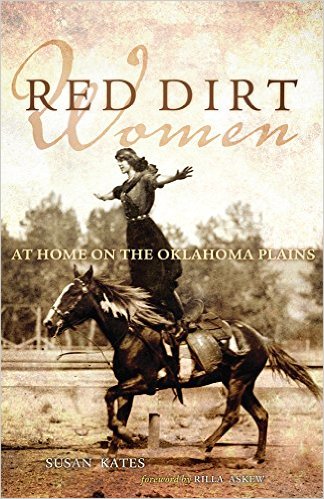
book beginnings on Friday: Red Dirt Women: At Home on the Oklahoma Plains by Susan Kates

Thanks to Rose City Reader for hosting this meme. To participate, share the first line or two of the book you are currently reading and, if you feel so moved, let us know what your first impressions were based on that first line.

red dirt women

My first review for Concho River Review is of this slim collection of stories about Oklahoma’s diverse and powerful women. It is a fine and auspicious beginning book, and in that spirit, today’s book beginning:

In her chronicle of life in Kenya – one of the great grasslands of the world – Isak Dinesen explains that it is impossible to live any place for a time and remain unaltered by one’s surroundings. “It does not even make much difference,” she says, “whether you have more good or bad things to say of it, it draws your mind to it, by a mental law of gravitation.”

You know I am a little obsessed by a sense of place, and that is very much at the heart of this collection, as this Ohio native comes to feel at home on Oklahoma’s dusty plains. Good stuff. I am glad to be able to recommend this book to you. Happy weekend, friends.

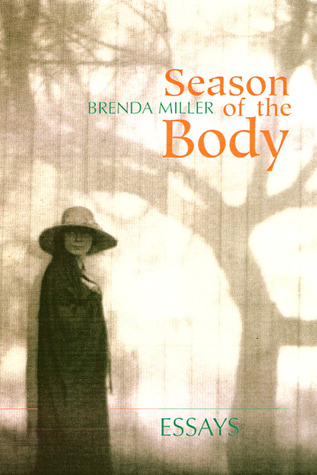
Season of the Body by Brenda Miller

season of the bodyBy one of the authors of Tell It Slant, Season of the Body is a collection of lovely essays which showcase Miller’s extraordinary, often poetic prose. She writes intimately about her own body and love affairs; two miscarriages when she was twenty which resulted in her inability to have children, and her feelings about that inability over the course of a life; her explorations in spirituality; different forms of family; and art. Her writing is sensual and muscular. I wonder if I use those words to describe it because the title, Season of the Body, cued me to do so. I think they ring true.

Without going back to investigate whether this is literally true, I am left with the impression that these essays run more or less chronologically in terms of the time in Miller’s life that they handle. So we meet her first as a young woman, dealing with the medical side of two miscarriages, and exploring her maternal ancestry and Jewish heritage. We see her pursuing relationships that work out more and less well; she becomes a godmother to a friend’s child, and wishes for her own. Later, we see her reflecting back from a certain distance. These essays also carry her through space, and because a sense of place is important to me, that intrigues me – all the more so because Miller and I now live in the same town, so I see some of her vistas out my own windows.

The fineness of this writing is indisputable. It is emotionally very powerful and evocative, and an extraordinary showcase for what language can do; her essays should really be read at least twice, for their content and again for their music. As craft, these essays are exemplary. In terms of their subject matter, they really got me thinking about the idea of the universal in personal writing. Writers of creative nonfiction are urged to find the universal in the personal story. I found myself sometimes distant from the sort of physical flesh of these essays: spiritual questing and yearning for babies are not experiences that resonate with me. I had to stop to consider how Miller’s writing did and didn’t speak to me. But I continued to feel pulled into the story, for the beauty of the writing as much as anything else. A friend characterized the themes of this collection a little less physically than I did: he cited “hope deferred and fractured desire.” In these terms, the stories Miller tells are much more universal, and maybe that’s where I responded to them, too.


Rating: 7 photographs.

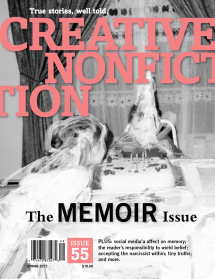
Creative Nonfiction, issue 55: The Memoir Issue (spring 2015)

Full disclosure: I am a fan of the folks over at Creative Nonfiction. I’ve taken one of their classes (and think I’ll do another this winter), and I attended their conference in Pittsburgh last month (also excellent!). This post is about the magazine, which comes out quarterly. Summer 2015 is “The Memoir Issue,” fatter than usual at just over 100 pages, and filled with memoir stories and essays about the genre. I read it from cover to cover, but wanted to share a few of my favorite pieces.

cnf memoirLee Gutkind’s “From the Editor” column asks, “What’s the (Personal) Story?” It’s brief, but a fine backdrop to creative nonfiction and the rise of the memoir. If you ever get a chance to hear Lee speak, expect to be entertained; I enjoyed his energy at the conference, where he helped us all wake up first thing in the morning with his extraordinary energy and enthusiasm. Next, Robert Atwan contributes an essay called “Of Memory and Memoir,” in which he argues that we’d benefit from a better understanding of how memory works (and doesn’t work), in a world where the memoir is so popular and ubiquitous. I think this is an interesting challenge; memoir is often, and appropriately I think, concerned with the line between truth and perspective, and the failure to remember perfectly. I don’t know if we can expect to solve the mystery of our imperfect memories, but Atwan does well to consider the problem.

And then there are the memoir essays themselves, of which I had a few favorites. “Do No Harm” by Kelly Fig Smith won the magazine’s prize, and naturally makes my list. She tells the story of a terrible tragedy that hits her family, and the hospital experience that came with it; it’s about perspective and compassion, I think. “Steps” by Scott Loring Sanders recounts the hike shared by a newly sober father, a young son, and their two dogs; it’s about mistakes and rehabilitation. Gina Warren’s “Girl on Fire” observes the difficulties of caregiving. The final essay, “The Grief Scale,” is by Suzanne Roberts, who wrote Almost Somewhere, a book I rated 6 small but important steps. This essay is better, I think. I like how she circles back at the end to reference the story she thought she was writing, was trying to write; but what we are treated to is instead the story that flows out of her, about being griped at on an airplane, and losing or fearing to lose our loved ones. I found it very effective.

Finally, “The Perils of Perfect Memory” by Daphne Strassmann questions our new reliance on social media and its effects on memory and memoir. Were we better off keeping our memories to ourselves, letting them brew and cure inside us before releasing them on the world? And in “Pushing the Boundaries,” Rolf Potts offers a different format, of found texts assembled in a piece he calls “Age, Formative,” which is powerfully disturbing.

These are just a few of the pieces I found most intriguing; the whole issue is definitely worth taking in. You can view parts of it or buy it here.

“How to Write Like a Mother#^@%*&” by Elissa Bassist & Cheryl Strayed

I have not read Cheryl Strayed’s Wild. But I did take seriously the recommendation of this piece that I found at creativenonfiction.org, and yes, I own this mug.

9

It would take me almost as many words to summarize and praise this article as are included in the article, so I shall exercise restraint and say: go read this now; it is excellent. Thank you, Cheryl & E-Bass.

Untangling the Knot: Queer Voices on Marriage, Relationships & Identity, edited by Carter Sickels

An incisive and enlightening examination of same-sex marriage within the wider context of LGBTQ needs.

untangling

Untangling the Knot: Queer Voices on Marriage, Relationships and Identity assembles pieces from diverse contributors, college professors and blue-collar workers, some established writers and some never before published. Edited by Carter Sickels (The Evening Hour), these extremely sharp essays offer a startling array of perspectives on the fight for same-sex marriage in the United States, rendering a deceptively simple concept–that the needs of the LGBTQ community range far beyond marriage–fully and feelingly. Published as the Supreme Court agrees to hear arguments about same-sex marriage on a nationwide level, Untangling the Knot is profoundly eye opening, even for readers well informed on the subject.

Essays cover the reasons why marriage is important to some members of LGBTQ communities, addressing questions of medical decision-making, finances and insurance, child rearing, equality. Others protest what Ben Anderson-Nathe calls a “rhetoric of sameness”: the argument for marriage rights based on the idea that queer families are just like straight ones. Jeanne Cordova illustrates why choosing a single issue is damning for a movement. Joseph Nicholas DeFilippis writes that the continuing assumption that marriage is the highest form of family does a disservice bigger than the queer community, affecting straight people as well. Several contributors argue against legal rights, benefits and protections being tied to marriage at all. Some suggest better uses for organizational resources: homelessness, health care, anti-discrimination, and aid to trans people, the poor and queer people of color.

With Sickels’s synthesizing introduction, these sympathetic, well-informed essays show that the fight for same-sex marriage is deeply complex and only one issue in the fight for inclusiveness and equality.


This review originally ran in the March 3, 2015 issue of Shelf Awareness for Readers. To subscribe, click here, and you’ll receive two issues per week of book reviews and other bookish fun!


Rating: 8 nontraditional arrangements.

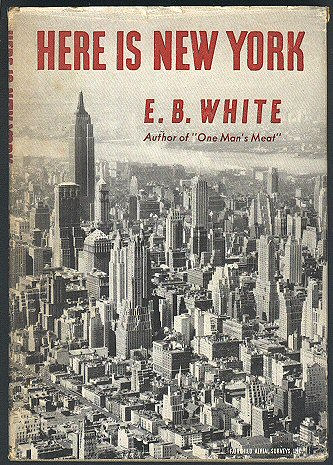
Teaser Tuesdays: “Here is New York” by E.B. White

Teaser Tuesdays is a weekly bookish meme, hosted by MizB of Should Be Reading.

here is new york

I’ve heard about this essay over the years, and have finally gotten around to reading it for a class I’m taking. I think it’s quite lovely and expressive, and I suspect it still rings true in the New York of 2015, though E.B. White wrote it in 1949. I especially loved this line:

And the fan takes over again, and the heat and the relaxed air and the memory of so many good little dinners in so many good little illegal places, with the theme of love, the sound of ventilation, the brief medicinal illusion of gin.

I think it is the illusion of gin that did it for me.

You can read the full essay here.

“Total Eclipse” by Annie Dillard (from Teaching a Stone to Talk)

I began by thinking I could review this essay, but I can’t. Annie Dillard and the force of these words here are too much for my limited powers of communication. Read this and wonder.


(As usual from that excellent source of excellent things, Liz.)

book beginnings on Friday: Untangling the Knot, edited by Carter Sickels

Thanks to Rose City Reader for hosting this meme. To participate, share the first line or two of the book you are currently reading and, if you feel so moved, let us know what your first impressions were based on that first line.

untangling

This is an essay collection, Queer Voices on Marriage, Relationships and Gender. I found it quite eye-opening and recommend it highly. From the introduction by editor Carter Sickels, a beginning for you:

I’m writing this the day after Oregon has legalized gay marriage, and I can’t stop looking at the pictures of people lined up at the courthouse or listening to the interviews of couples who’ve been waiting for this moment for ten, twenty, thirty years. Today, Portland is a city of celebration.

There is a ‘but’ coming, though. Stick around: it is interesting and enlightening.

This quotation comes from an uncorrected advance proof and is subject to change.

Worn Stories by Emily Spivack

A meditative collection of short, accessible memoirs documenting the meaning of clothing.

worn stories

Emily Spivack’s fascination with the past lives of clothing led her to create a website, wornstories.com, on which she collects “sartorial memoirs” from friends, family, acquaintances, celebrities and everyday strangers. Now her book, Worn Stories, assembles those accounts. They are short, and generally recorded as told to Spivack but are occasionally written by the contributor. Each brief narrative is accompanied by a photograph of the item, against a white background, adorned at most by a clothes hanger. The text describes how the speaker came to own the article, or what took place in and around it that made it worth keeping–sometimes for decades. A dress, a pair of shoes, a hat or accessory conveys an emotion or an experience: love, loss, accomplishment. They may symbolize a place or a time in a life, or remind us of what we don’t want to forget.

These vignettes are at turns hilarious (humorist John Hodgman’s long-sought Ayn Rand dress or trucking manager Pamela Jones’s party dress), silly (reporter Jenna Wortham’s sequined top) and poignant (creative ambassador Simon Doonan’s Lycra shorts or writer/bartender Kelly Jones’s tie-dyed wrap skirt). Some have historical significance: Holocaust survivor Dorothy Finger had an ill-fitting suit made from a piece of wool fabric that was the only thing she saved from her life in Poland.

Spivack speaks directly to her reader only in a brief introduction. The collection of contributors’ reports forms a whole that is entertaining, thoughtful and loving of the universal tales we have to tell about the garments we carry through our lives.


This review originally ran in the August 29, 2014 issue of Shelf Awareness for Readers. To subscribe, click here, and you’ll receive two issues per week of book reviews and other bookish fun!


Rating: 8 stains.