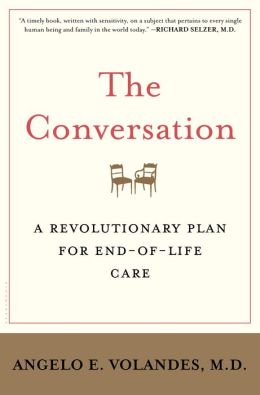
The Narrow Door by Paul Lisicky

The Narrow Door is literary, smart and poignant, an extended eulogy for a friend and a meditation on friendship.
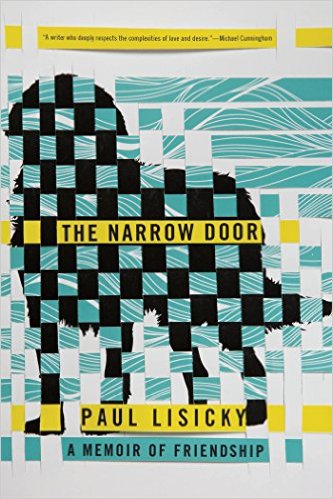
narrow door

The Narrow Door is a striking memoir of love and loss by Paul Lisicky (Lawnboy; The Burning House). At its center are the life and death of Denise, Paul’s longtime best friend; in parallel, Paul and his husband slowly pull apart and finally break up. The ups and downs of these two relationships define the story Lisicky tells, but they also give him space to muse on larger questions: the craft of writing, competition among writers, the meaning of love and events in the larger world.

Paul met Denise in the early 1980s, when they were both teaching assistants at Rutgers. They became fast friends, talking on the phone for hours, sharing the pain and joy of writing. Denise becomes a published novelist first, but Paul’s later success threatens her. A tender passage about “Vincent” and Gauguin, about the painters’ competitive feelings and their wrecked friendship, helps Paul deal with his struggle with instincts leaning both toward and away from competition with Denise. This is only one example of the wide range of Lisicky’s subject: the Deepwater oil spill and the Haitian earthquake likewise influence his reactions to Denise’s cancer diagnosis and other immediate concerns. Paul and Denise are Joni Mitchell fans, and their story is guided by her music. When a hotel in Atlantic City is demolished, Lisicky writes, “It comes down as a person would…. I take it personally.” These disparate threads are tied together expertly, with tenderness, in careful prose.

Paul’s husband, identified simply as M, is a successful poet and has his own, weaker friendship with Denise. He supports Paul when she dies, but soon after, the couple begin their drift apart. The Narrow Door employs a disordered chronology, in sections headed by year: 1983, when Denise and Paul’s friendship is budding; 2008, when she dies; 2010, when Paul and M are at their rockiest; and times in between, as these relationships grow, change, climb and descend. When he fights with Denise, Lisicky considers losing a friend, as opposed to breaking up with a lover: “Sure, it might feel like rage, but aren’t rage and love part of the same water?”

This is an artistic work, poetic and layered and carefully structured. The tangled sequence of events emphasizes the ever-changing nature of relationships and emotional reactions. Lisicky’s tone is sometimes elegiac, sometimes gently humorous, and consistently introspective, questioning. The Narrow Door is not a long book; nonetheless, it requests the reader’s measured consideration of language, pitch, philosophy and emotion. This portrait of a friend in all her complexities is lyrical, intellectual and occasionally challenging. In an austere mood, Lisicky avoids the idea of comfort for its own sake but asks, “Couldn’t there be some rigor to comfort?” The Narrow Door answers with both, in a compelling package.


This review originally ran in the January 4, 2016 issue of Shelf Awareness for the Book Trade. To subscribe, click here.


Rating: 8 cups of coffee.

Memento Mori: The Dead Among Us by Paul Koudounaris

Photographs of memento mori from around the world illustrate rich relationships with death.

memento mori

Paul Koudounaris (The Empire of Death) presents phenomenal photographs and a fascinating survey of death across cultures and history with Memento Mori: The Dead Among Us. His text is concise but effective, allowing his photography to take the lead. Images are gorgeously rendered in large format and across full spreads. They feature ossuaries, charnel houses and intricate, artistic arrangements of bones, mummies and decorated skeletons from various cultures.

Koudounaris portrays the Torajans of Indonesia, who place their dead in caves, and after the coffins disintegrate, arrange the bones decoratively; the Aymara Indians of Bolivia, who keep treasured skulls in their homes and ask them for advice; and the elaborate, even decadent, Catholic ossuaries created in response to Protestant reforms. Buddhists gilded certain mummies; Rwandans set up memorial vaults. Wrapped in a blue satin cover, with more than 500 illustrations, Memento Mori offers a striking tribute to many ways of remembering and honoring death and the dead.


This review originally ran in the November 27, 2015 issue of Shelf Awareness for Readers. To subscribe, click here, and you’ll receive two issues per week of book reviews and other bookish fun!


Rating: 7 perspectives.

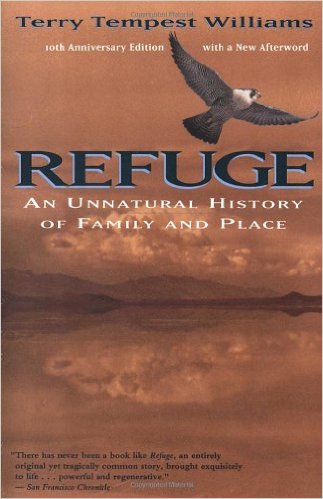
Refuge: An Unnatural History of Family and Place by Terry Tempest Williams

I am slowly, painfully discovering that my refuge is not found in my mother, my grandmother, or even the birds of Bear River. My refuge exists in my capacity to love. If I can learn to love death then I can begin to find refuge in change.

refugeWhen I read this book, I was continually reminded of the first Terry Tempest Williams book that I loved, as a child: Pieces of White Shell. I knew immediately that I would need to follow this book with a reread of that one. For me, Refuge is the more personal, more intimate, more grown-up and more exacting version of the kinds of things I found in Pieces of White Shell. I think I found this one more difficult, more thought-provoking and challenging; the other was both sparer, and offered clearer, more accessible comforts. Refuge is stripped, exposed pain. If there are balms for its wounds, they are more complex. Pieces of White Shell is metaphorical, symbolic, spiritual, seeking wisdom and humbly finding some of it; Refuge is bared emotions and loss. It is many birds. Each chapter is headed by the name of a bird – burrowing owls, killdeer, sanderlings, avocets and stilts, on and on – and by a level of Great Salt Lake.

Over the years in which the story of Refuge takes place, Great Salt Lake rises beyond its usual depths and boundaries. I learned in this reading that this Lake is shallow and covers a great area; therefore a few feet of rise can cover miles, and cause great destruction. Terry Tempest Williams saw her mother die of cancer as she saw her beloved Bear River Migratory Bird Refuge overtaken by saltwater, the birds displaced and many of them lost. In Refuge, she meditates on both losses and the relationship between them, how the Refuge offers refuge to her and to her mother, how they are linked – birds and women (clearly presaging her later When Women Were Birds), people and place (Terry’s Mormon family with the Great Basin and Utah), the cancer that runs in her family (“the clan of one-breasted women”) and their home (neighboring nuclear test sites).

Refuge involves nature, of course, and Terry educates us with precision about the birds she loves. It involves people, and society, and our interactions. It is beautifully written, with poetry, and with liberal gaps in which the reader may draw her own connections. Terry has an imaginative and generously interpretive mind, more so than mine.

The cancer process is not unlike the creative process. Ideas emerge slowly, quietly, invisibly at first. They are most often abnormal thoughts, thoughts that disrupt the quotidian, the accustomed. They divide and multiply, become invasive. With time, they congeal, consolidate, and make themselves conscious. An ideas surfaces and demands total attention. I take it from my body and give it away.

She finds wisdom in the world, as her mother and grandmother did; and of course, centrally, she finds refuge, which is not quite to say recovery or redemption, although those arguments can be made.

Terry Tempest Williams is a lovely writer. The story of her mother’s life and death, their relationship, and the difficulties and beauty of letting go, are all well accompanied by the pain and beauty of the migratory birds of the Great Basin that Terry knows well.


Rating: 7 phalaropes.

Teaser Tuesdays: Refuge by Terry Tempest Williams

Teaser Tuesdays is a weekly bookish meme, hosted by MizB of Should Be Reading.

I am pleased to have found the time, finally, to pick up more work by Terry Tempest Williams. Refuge is her well-regarded memoir of her mother’s life and death within the region of Great Salt Lake, in Utah.
refuge

Today I chose a few lines that not only tell succinctly what this book is about, but speak to me personally as I work through my own relationship to place.

Most of the women in my family are dead. Cancer. At thirty-four, I became the matriarch of my family. The losses I encountered at the Bear River Migratory Bird Refuge as Great Salt Lake was rising helped me to face the losses within my family. When most people had given up on the Refuge, saying the birds were gone, I was drawn further into its essence. In the same way that when someone is dying many retreat, I chose to stay.

I am, of course, very excited about this book, as Terry Tempest Williams consistently impresses me. I am also already planning to reread one I loved as a kid: Pieces of White Shell. So look out for that one to come.

Teaser Tuesdays: Memento Mori: The Dead Among Us by Paul Koudounaris

Teaser Tuesdays is a weekly bookish meme, hosted by MizB of Should Be Reading.

This year I am writing a gift review of Memento Mori, a big, beautiful coffee-table-style art book about reminders of death, or the dead, across cultures and years.

memento moriToday’s teaser sets up the concept that “our” (modern, Western) cultural approach to death is not the only one.

Leaving the village, I asked the guide if it was considered unusual to keep mummies in the home. His response was unforgettable. No, he did not find it unusual, because when he was a boy, he and his brothers slept in the same bed as the mummy of their grandfather.

The author is visiting Tana Toraja, a region in Sulawesi, Indonesia. As he’ll show, their practice of embracing the dead, preserving them and keeping them around as respected or beloved family members, is actually common in world history. Koudounaris’s informative writing is fascinating, but I admit the real feature here is his breathtaking photographs of memento mori. Stick around for my review to come around the holidays.

This quotation comes from an uncorrected advance proof and is subject to change.

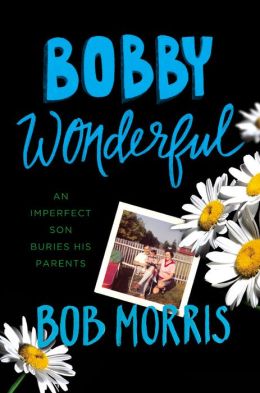
Bobby Wonderful: An Imperfect Son Buries His Parents by Bob Morris

A son’s memoir of love and endings, despite his shortcomings and mistakes.

bobby wonderful

Bob Morris (Assisted Loving; Crispin the Terrible) loved his parents very much, even if he was not always the ideal son. His older brother, Jeff, played that role; Bob was less reliable.

When his mother died, her last garbled word was his name: Bobby. As his father died several years later, he cried out: “Wonderful!” As Morris relives and reconsiders those difficult experiences–caring for each of his parents (more or less), witnessing and helping to make decisions about the ends their lives–he pairs those final words to make the title of his searingly candid memoir, Bobby Wonderful.

Morris is on a much-needed vacation in Scotland, tasting whiskies and forgetting his cares, when he gets the call to come home for his mother’s last days. His first reaction is resentment; the scarf he brings her as a souvenir is a knockoff of the first one he considered. Still, he was there, with Jeff. In the years that follow, Morris helps his father learn to date again and encourages his independence, in part because Morris is busy trying to enjoy his own life. When his father attempts suicide, though, Morris is forced to face uncomfortable questions about his father’s end-of-life wishes, his own devotion and what it means to be a good son.

Morris’s struggles are sensitively told, deeply moving and highly relevant in a world where more and more people face situations like his. Bobby Wonderful is a gift of a book: an often funny but also perfectly serious contemplation of living and dying well.


This review originally ran in the June 12, 2015 issue of Shelf Awareness for Readers. To subscribe, click here, and you’ll receive two issues per week of book reviews and other bookish fun!


Rating: 7 performances.

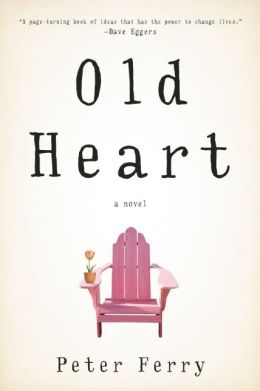
Old Heart by Peter Ferry

A sweet, tender story of a decades-old, dreamed-of romance and the less elegant realities of aging.

old heart

Peter Ferry (Travel Writing) crafts a wise and delicate novel of aging, love and autonomy in Old Heart.

Tom Johnson is an old man. He has been widowed, and thereby freed from a troubled marriage, for a number of years. His adult children have begun pressuring him to sell the house in Illinois and move into a home. The motives of his son the gambling addict are suspicious; his daughter’s are likely pure. His eldest child, who had Down syndrome, was Tom’s best friend, but his death has given Tom the opportunity to pursue an old mystery. And so Tom plots to run away, leaving no clues behind save a note for his family: “I am not coming back.” He then travels to the Netherlands to track down a Dutch woman he knew during World War II, with whom he had “invented love.” He knows the chances of finding Sarah alive are poor, but he is driven nonetheless. “This is my life, whatever is left of it,” he writes in the note to his children.

The half-hidden narrator of Old Heart is Tom’s granddaughter Nora, a graduate student who had just begun recording the story of Tom’s return from the war and the beginning of his long-lived but unhappy marriage. When Tom makes his escape, Nora is the only one he takes into his confidence, and she relates parts of his story from her perspective. In other chapters, he chronicles his personal history–the parts where he meets and loves Sarah–in long letters to Nora. Throughout, the question of Tom’s mental competence looms over his narrative.

Of course, upon his arrival in the town where he knew Sarah, Tom does not find what he hoped he would; what he finds instead is far more complicated. In the winding path he travels–from Illinois to Eindhoven, and from dream to reality–Tom instead learns a lot about what he wants, what he has the right to expect from his life and where he’s come from. And despite his age, he continues to grow, and finds a chance to love.

Old Heart is earnest and, yes, occasionally sentimental, but also pensive and eventually enlightened. It is at once a romance, a meditation on the complications of end-of-life independence and the responsibilities of family, and a lovely personal history. In a slim, unassuming read, Ferry opens intriguing questions and introduces his reader to complex and deeply likable characters. The result is delightfully warm and universally appealing.


This review originally ran in the June 4, 2015 issue of Shelf Awareness for the Book Trade. To subscribe, click here.


Rating: 8 decisions.

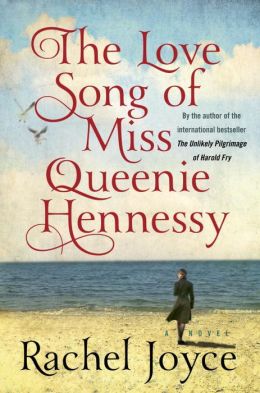
The Love Song of Miss Queenie Hennessy by Rachel Joyce

A companion to The Unlikely Pilgrimage of Harold Fry, and every bit as affecting, sweet and sad.

love song

Rachel Joyce’s The Unlikely Pilgrimage of Harold Fry won many fans with its bumbling but likable protagonist and his improbable journey across England and through his own troubled life. Harold appears off-screen in The Love Song of Miss Queenie Hennessey, in which Queenie replies to the postcards he sent her in Pilgrimage. Readers will be delighted to rediscover the action of the first book, from a very different perspective and with considerable added detail on Queenie’s side. Those considering Pilgrimage should definitely start there, as Love Song comprises one big spoiler. However, it’s not necessary to have read the first to enjoy this second novel.

Love Song begins when Queenie receives Harold’s first postcard. She has written to him from hospice care, sharing the news of her impending death. Harold sets out to visit, asking her to await his arrival. Queenie is startled and alarmed. She has kept an old secret from Harold that she had intended to take with her; she now decides she needs to come clean.

Joyce alternates among three timelines: in real time, as Queenie waits for Harold while composing a long letter of explanation; their separation 20 years ago, when she fled life’s complications; and their original meeting and developing friendship. While the present-day setting is inarguably dour, the action in all three stories is fresh, compelling and deeply emotional, and Queenie’s fellow residents create a charming little world of their own. Just as in Pilgrimage, a major revelation at the end amplifies the impact of an already powerful book.


This review originally ran in the March 10, 2015 issue of Shelf Awareness for Readers. To subscribe, click here, and you’ll receive two issues per week of book reviews and other bookish fun!


Rating: 8 painted nails.

The Conversation: A Revolutionary Plan for End-of-Life Care by Angelo E. Volandes, M.D.

A physician’s fervent quest for better information about medical options for patients nearing their end, and the steps necessary to make those choices clear.

conversation
In The Conversation: A Revolutionary Plan for End-of-Life Care, Angelo Volandes, a medical doctor for decades, focuses on the extensive, intensive, intrusive medical interventions that patients routinely receive at the end of life, many of which extend life by a matter of hours or days or not at all, while decreasing its quality substantially. He earnestly argues that every patient should be offered the option to choose among three broad categories of care: life-prolonging, limited medical and comfort care–in other words, the choice between quantity and quality of life. The Conversation advocates for all patients and families to receive information about what end of life care looks like within these three categories, and firmly states the importance of patients, families and medical professionals having what he calls the Conversation about end-of-life wishes openly and often.

To make these points, Volandes describes his upbringing as the child of Greek immigrants and the impact it has had on his life: from his start as a student of Socrates and a Greek diner cook, his stint as a philosophy major and then his work as a medical practitioner, he has been interested in what good life (and good death) are. Appropriately, Volandes neither attempts nor claims to be impersonal or unemotional about this charged topic; rather, he brings his personal and professional experiences as well as research to his impassioned argument.

The majority of the book is devoted to stories of patients, families and circumstances–and Volandes’s own attempts, good and bad, at approaching the Conversation. With names changed, these are real-life anecdotes of choices made with more or less preparation and knowledge of what a decision will entail, or what an incapacitated patient would have wanted. The last quarter of the book is composed of several appendices and a lengthy, narrative notes section, all of which provides substantive hands-on advice aimed variously at the patient, or the patient’s spouse or children. The Conversation is a how-to manual, enlivened by engaging–if occasionally painful–true stories. Volandes makes his points succinctly and convincingly and offers readers the tools to make change within their own lives.


This review originally ran in the January 6, 2015 issue of Shelf Awareness for the Book Trade. To subscribe, click here, and you’ll receive two issues per week of book reviews and other bookish fun!


Rating: 7 people.

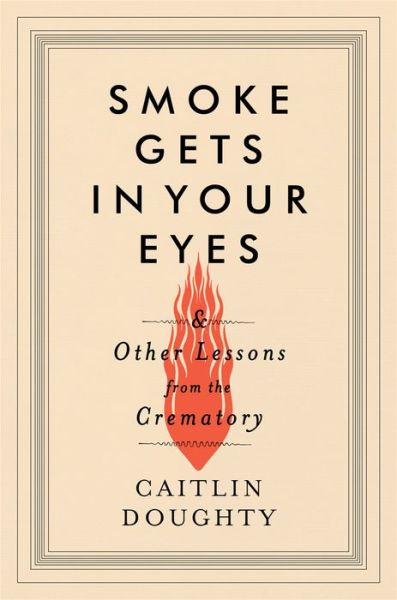
Smoke Gets In Your Eyes (& Other Lessons from the Crematory) by Caitlin Doughty

A young woman’s mortuary career and enthusiasm for death inform an entertaining and thought-provoking memoir.

smoke

At 23, Caitlin Doughty had an undergraduate degree in medieval history and a lifelong fascination with death. Interested in turning her preoccupation into a profession after a move to the Bay Area, she found it surprisingly difficult to get a job in the mortuary business without relevant experience, but eventually secured a position as crematory operator at Westwind Cremation & Burial in Oakland, Calif. In just a few months of working with her deadpan boss Mike, socially awkward body-transport driver Chris and jovial embalmer Bruce, Caitlin learned a great deal, as she relates in her debut, Smoke Gets in Your Eyes.

She learned how to cremate bodies (do the larger people early in the day, babies at the end), what exactly happens after the oven (bones have to be ground down in a special blender to create the uniform ashes the family expects) and how to pick up a recently deceased body from a family at home (mostly, keep your mouth shut). She learned that dead people aren’t really scary, once you get used to them, and came to believe that wired jaws and copious makeup are less attractive and less respectful than simply letting the dead look–and be–well, dead.

In her memoir of “lessons from the crematory,” Doughty shares tidbits of research into the death rituals and mythologies of other cultures throughout history: Tibetan sky burial, the dutiful cannibalism of the Wari’ people in the jungles of Brazil, ancient Egyptian embalming techniques. She points out a central difference between contemporary Western practices and theirs: the Wari’ and others conform to a system of beliefs, where our so-called modern death-disposal techniques arise from a fear of mortality and a need to hide dead things away. In her experience at Westwind, and later in mortuary school, Doughty developed her own value system, emphasizing an honest relationship with our mortality and a frank acceptance of and love for our dead.

Doughty’s research, musings and anecdotes about the crematory are charmingly conveyed in an earnest yet playful voice, brimming with surprising humor as well as insight. Her coming-of-age tale encompasses love and life (and death), and her appeal for a new cultural approach to the end of life is refreshingly frank and simple at the same time that it is profound. Despite addressing a subject that will strike some as morbid or unpleasant, Doughty is an engaging and likable narrator,and Smoke Gets in Your Eyes is thoughtful and approachable.


This review originally ran as a *starred review* in the August 21, 2014 issue of Shelf Awareness for the Book Trade. To subscribe, click here.


Rating: 8 dresses.