Teaser Tuesdays: Refuge by Terry Tempest Williams

Teaser Tuesdays is a weekly bookish meme, hosted by MizB of Should Be Reading.

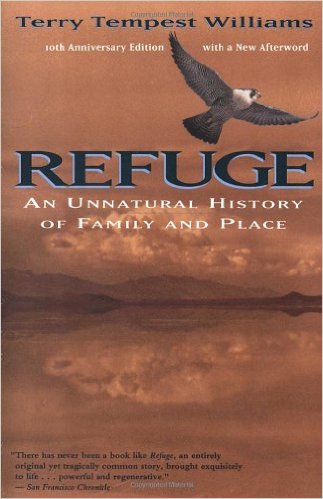
I am pleased to have found the time, finally, to pick up more work by Terry Tempest Williams. Refuge is her well-regarded memoir of her mother’s life and death within the region of Great Salt Lake, in Utah.
refuge

Today I chose a few lines that not only tell succinctly what this book is about, but speak to me personally as I work through my own relationship to place.

Most of the women in my family are dead. Cancer. At thirty-four, I became the matriarch of my family. The losses I encountered at the Bear River Migratory Bird Refuge as Great Salt Lake was rising helped me to face the losses within my family. When most people had given up on the Refuge, saying the birds were gone, I was drawn further into its essence. In the same way that when someone is dying many retreat, I chose to stay.

I am, of course, very excited about this book, as Terry Tempest Williams consistently impresses me. I am also already planning to reread one I loved as a kid: Pieces of White Shell. So look out for that one to come.

Teaser Tuesdays: Memento Mori: The Dead Among Us by Paul Koudounaris

Teaser Tuesdays is a weekly bookish meme, hosted by MizB of Should Be Reading.

This year I am writing a gift review of Memento Mori, a big, beautiful coffee-table-style art book about reminders of death, or the dead, across cultures and years.

memento moriToday’s teaser sets up the concept that “our” (modern, Western) cultural approach to death is not the only one.

Leaving the village, I asked the guide if it was considered unusual to keep mummies in the home. His response was unforgettable. No, he did not find it unusual, because when he was a boy, he and his brothers slept in the same bed as the mummy of their grandfather.

The author is visiting Tana Toraja, a region in Sulawesi, Indonesia. As he’ll show, their practice of embracing the dead, preserving them and keeping them around as respected or beloved family members, is actually common in world history. Koudounaris’s informative writing is fascinating, but I admit the real feature here is his breathtaking photographs of memento mori. Stick around for my review to come around the holidays.

This quotation comes from an uncorrected advance proof and is subject to change.

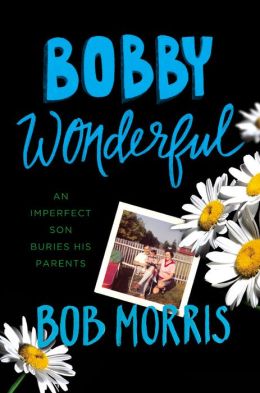
Bobby Wonderful: An Imperfect Son Buries His Parents by Bob Morris

A son’s memoir of love and endings, despite his shortcomings and mistakes.

bobby wonderful

Bob Morris (Assisted Loving; Crispin the Terrible) loved his parents very much, even if he was not always the ideal son. His older brother, Jeff, played that role; Bob was less reliable.

When his mother died, her last garbled word was his name: Bobby. As his father died several years later, he cried out: “Wonderful!” As Morris relives and reconsiders those difficult experiences–caring for each of his parents (more or less), witnessing and helping to make decisions about the ends their lives–he pairs those final words to make the title of his searingly candid memoir, Bobby Wonderful.

Morris is on a much-needed vacation in Scotland, tasting whiskies and forgetting his cares, when he gets the call to come home for his mother’s last days. His first reaction is resentment; the scarf he brings her as a souvenir is a knockoff of the first one he considered. Still, he was there, with Jeff. In the years that follow, Morris helps his father learn to date again and encourages his independence, in part because Morris is busy trying to enjoy his own life. When his father attempts suicide, though, Morris is forced to face uncomfortable questions about his father’s end-of-life wishes, his own devotion and what it means to be a good son.

Morris’s struggles are sensitively told, deeply moving and highly relevant in a world where more and more people face situations like his. Bobby Wonderful is a gift of a book: an often funny but also perfectly serious contemplation of living and dying well.


This review originally ran in the June 12, 2015 issue of Shelf Awareness for Readers. To subscribe, click here, and you’ll receive two issues per week of book reviews and other bookish fun!


Rating: 7 performances.

Old Heart by Peter Ferry

A sweet, tender story of a decades-old, dreamed-of romance and the less elegant realities of aging.

old heart

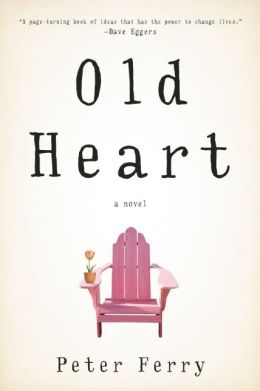
Peter Ferry (Travel Writing) crafts a wise and delicate novel of aging, love and autonomy in Old Heart.

Tom Johnson is an old man. He has been widowed, and thereby freed from a troubled marriage, for a number of years. His adult children have begun pressuring him to sell the house in Illinois and move into a home. The motives of his son the gambling addict are suspicious; his daughter’s are likely pure. His eldest child, who had Down syndrome, was Tom’s best friend, but his death has given Tom the opportunity to pursue an old mystery. And so Tom plots to run away, leaving no clues behind save a note for his family: “I am not coming back.” He then travels to the Netherlands to track down a Dutch woman he knew during World War II, with whom he had “invented love.” He knows the chances of finding Sarah alive are poor, but he is driven nonetheless. “This is my life, whatever is left of it,” he writes in the note to his children.

The half-hidden narrator of Old Heart is Tom’s granddaughter Nora, a graduate student who had just begun recording the story of Tom’s return from the war and the beginning of his long-lived but unhappy marriage. When Tom makes his escape, Nora is the only one he takes into his confidence, and she relates parts of his story from her perspective. In other chapters, he chronicles his personal history–the parts where he meets and loves Sarah–in long letters to Nora. Throughout, the question of Tom’s mental competence looms over his narrative.

Of course, upon his arrival in the town where he knew Sarah, Tom does not find what he hoped he would; what he finds instead is far more complicated. In the winding path he travels–from Illinois to Eindhoven, and from dream to reality–Tom instead learns a lot about what he wants, what he has the right to expect from his life and where he’s come from. And despite his age, he continues to grow, and finds a chance to love.

Old Heart is earnest and, yes, occasionally sentimental, but also pensive and eventually enlightened. It is at once a romance, a meditation on the complications of end-of-life independence and the responsibilities of family, and a lovely personal history. In a slim, unassuming read, Ferry opens intriguing questions and introduces his reader to complex and deeply likable characters. The result is delightfully warm and universally appealing.


This review originally ran in the June 4, 2015 issue of Shelf Awareness for the Book Trade. To subscribe, click here.


Rating: 8 decisions.

The Love Song of Miss Queenie Hennessy by Rachel Joyce

A companion to The Unlikely Pilgrimage of Harold Fry, and every bit as affecting, sweet and sad.

love song

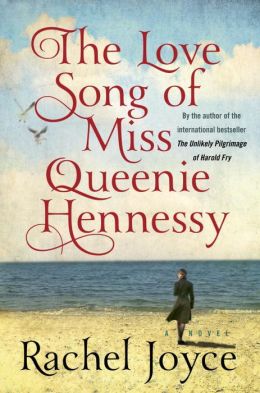
Rachel Joyce’s The Unlikely Pilgrimage of Harold Fry won many fans with its bumbling but likable protagonist and his improbable journey across England and through his own troubled life. Harold appears off-screen in The Love Song of Miss Queenie Hennessey, in which Queenie replies to the postcards he sent her in Pilgrimage. Readers will be delighted to rediscover the action of the first book, from a very different perspective and with considerable added detail on Queenie’s side. Those considering Pilgrimage should definitely start there, as Love Song comprises one big spoiler. However, it’s not necessary to have read the first to enjoy this second novel.

Love Song begins when Queenie receives Harold’s first postcard. She has written to him from hospice care, sharing the news of her impending death. Harold sets out to visit, asking her to await his arrival. Queenie is startled and alarmed. She has kept an old secret from Harold that she had intended to take with her; she now decides she needs to come clean.

Joyce alternates among three timelines: in real time, as Queenie waits for Harold while composing a long letter of explanation; their separation 20 years ago, when she fled life’s complications; and their original meeting and developing friendship. While the present-day setting is inarguably dour, the action in all three stories is fresh, compelling and deeply emotional, and Queenie’s fellow residents create a charming little world of their own. Just as in Pilgrimage, a major revelation at the end amplifies the impact of an already powerful book.


This review originally ran in the March 10, 2015 issue of Shelf Awareness for Readers. To subscribe, click here, and you’ll receive two issues per week of book reviews and other bookish fun!


Rating: 8 painted nails.

The Conversation: A Revolutionary Plan for End-of-Life Care by Angelo E. Volandes, M.D.

A physician’s fervent quest for better information about medical options for patients nearing their end, and the steps necessary to make those choices clear.

conversation
In The Conversation: A Revolutionary Plan for End-of-Life Care, Angelo Volandes, a medical doctor for decades, focuses on the extensive, intensive, intrusive medical interventions that patients routinely receive at the end of life, many of which extend life by a matter of hours or days or not at all, while decreasing its quality substantially. He earnestly argues that every patient should be offered the option to choose among three broad categories of care: life-prolonging, limited medical and comfort care–in other words, the choice between quantity and quality of life. The Conversation advocates for all patients and families to receive information about what end of life care looks like within these three categories, and firmly states the importance of patients, families and medical professionals having what he calls the Conversation about end-of-life wishes openly and often.

To make these points, Volandes describes his upbringing as the child of Greek immigrants and the impact it has had on his life: from his start as a student of Socrates and a Greek diner cook, his stint as a philosophy major and then his work as a medical practitioner, he has been interested in what good life (and good death) are. Appropriately, Volandes neither attempts nor claims to be impersonal or unemotional about this charged topic; rather, he brings his personal and professional experiences as well as research to his impassioned argument.

The majority of the book is devoted to stories of patients, families and circumstances–and Volandes’s own attempts, good and bad, at approaching the Conversation. With names changed, these are real-life anecdotes of choices made with more or less preparation and knowledge of what a decision will entail, or what an incapacitated patient would have wanted. The last quarter of the book is composed of several appendices and a lengthy, narrative notes section, all of which provides substantive hands-on advice aimed variously at the patient, or the patient’s spouse or children. The Conversation is a how-to manual, enlivened by engaging–if occasionally painful–true stories. Volandes makes his points succinctly and convincingly and offers readers the tools to make change within their own lives.


This review originally ran in the January 6, 2015 issue of Shelf Awareness for the Book Trade. To subscribe, click here, and you’ll receive two issues per week of book reviews and other bookish fun!


Rating: 7 people.

Smoke Gets In Your Eyes (& Other Lessons from the Crematory) by Caitlin Doughty

A young woman’s mortuary career and enthusiasm for death inform an entertaining and thought-provoking memoir.

smoke

At 23, Caitlin Doughty had an undergraduate degree in medieval history and a lifelong fascination with death. Interested in turning her preoccupation into a profession after a move to the Bay Area, she found it surprisingly difficult to get a job in the mortuary business without relevant experience, but eventually secured a position as crematory operator at Westwind Cremation & Burial in Oakland, Calif. In just a few months of working with her deadpan boss Mike, socially awkward body-transport driver Chris and jovial embalmer Bruce, Caitlin learned a great deal, as she relates in her debut, Smoke Gets in Your Eyes.

She learned how to cremate bodies (do the larger people early in the day, babies at the end), what exactly happens after the oven (bones have to be ground down in a special blender to create the uniform ashes the family expects) and how to pick up a recently deceased body from a family at home (mostly, keep your mouth shut). She learned that dead people aren’t really scary, once you get used to them, and came to believe that wired jaws and copious makeup are less attractive and less respectful than simply letting the dead look–and be–well, dead.

In her memoir of “lessons from the crematory,” Doughty shares tidbits of research into the death rituals and mythologies of other cultures throughout history: Tibetan sky burial, the dutiful cannibalism of the Wari’ people in the jungles of Brazil, ancient Egyptian embalming techniques. She points out a central difference between contemporary Western practices and theirs: the Wari’ and others conform to a system of beliefs, where our so-called modern death-disposal techniques arise from a fear of mortality and a need to hide dead things away. In her experience at Westwind, and later in mortuary school, Doughty developed her own value system, emphasizing an honest relationship with our mortality and a frank acceptance of and love for our dead.

Doughty’s research, musings and anecdotes about the crematory are charmingly conveyed in an earnest yet playful voice, brimming with surprising humor as well as insight. Her coming-of-age tale encompasses love and life (and death), and her appeal for a new cultural approach to the end of life is refreshingly frank and simple at the same time that it is profound. Despite addressing a subject that will strike some as morbid or unpleasant, Doughty is an engaging and likable narrator,and Smoke Gets in Your Eyes is thoughtful and approachable.


This review originally ran as a *starred review* in the August 21, 2014 issue of Shelf Awareness for the Book Trade. To subscribe, click here.


Rating: 8 dresses.

Five Days at Memorial: Life and Death in a Storm-Ravaged Hospital by Sheri Fink (audio)

five daysWell. This one is a lot to tell you about.

Sheri Fink is an award-winning journalist and holds both a PhD and an MD. In Five Days at Memorial, she examines fateful, famous and controversial events at Memorial Hospital in New Orleans in the five days following 2005’s Hurricane Katrina. Forty-five bodies were recovered from the hospital, with about 9 of them (depending on your source) suspected of having been euthanized by hospital staff during evacuations. I had been looking forward to reading this book but was leery going in, because this subject was clearly going to be emotionally fraught, depressing, poignant. I was quickly mesmerized, though: these events, while troubling and difficult to take in, fascinated me deeply. I have been increasingly interested (outside my reading of this book, for some time now) in the subjects of end-of-life, advanced directives, and our culture’s approach to death. And I am always intrigued by ambiguity, situations in which it is clear to see black-and-white or right-and-wrong. If ever there were such a situation, this is it.

Roughly the first half of the book is dedicated to relating the events of these five days, as revealed by Fink’s investigations. (Recall, as I mentioned in my book beginning, that she describes her copious research. I am fairly well convinced of its virtue.) We get to know a number of characters in the story: doctors, nurses, managers and administrators, patients and their family members. We know the ending, in a sense: the hurricane will be far worse than anyone imagined; the hospital will not be evacuated in one, two, three or four days; there will be crimes investigated. But the way the events unfold were unfamiliar to me in their details. Although this is a journalistic account, Fink also imbues it with suspense, which feels very natural: imagine the terror felt by those inside the hospital throughout. Not knowing the whereabouts or well-being of friends and family, isolated by rising floodwaters, without electricity, and plagued by rumor (on which more in a minute), a number of those inside Memorial feared for their lives. And some lost their lives.

The second half of the book describes the investigation of one doctor and (centrally) two nurses. Dr. Anna Pou was eventually called before a grand jury, which (some two years after Katrina) declined to indict her for multiple counts of second degree murder. In this section, we meet new characters, most notably two investigators who work as a comfortable team together. Fink also explores the history of euthanasia as a concept in different cultures and different legal understandings today, and the approach of bioethics, as well as post-Katrina attempts to establish emergency standards for triage, including the allocation of limited resources that will save some lives while ending others.

I was impressed by Fink’s style. I felt, in the end, that she let the facts (as she discovered them) stand alone. Many times throughout it felt like Fink’s voice spoke on one side of this painfully difficult controversy, but pages later she lent that voice to the other side, so that the effect was… shall I say, appropriately discomfiting. The fact is, I strongly feel, that none of us can perfectly know what happened in those five days, what anyone’s real motivation or intention was, and probably that none of us has the right entirely to judge actions taken in such profoundly weird circumstances.

Many questions remain, and I can easily understand and sympathize with divergent views: family members whose loved ones were (allegedly, possibly) euthanized are angry that they weren’t evacuated; hospital workers with no options left to them felt it was better to euthanize than to abandon patients to die slowly, painfully, and alone. I see it both ways. But the details, I think, are lost to me – someone who lived none of it, who’s just read the book. Dr. Pou, it appears, does not find this book’s treatment fair at all. While it’s true that Fink doesn’t exonerate her, I felt that she wasn’t condemned, either. It’s just… so complicated.

One of the more disturbing elements, to me, was the power of rumor and euphemism in the hospital and the accusations bandied about afterward. Doctors and nurses allegedly spoke of “making patients more comfortable,” or said “we won’t leave any living patients behind.” I don’t see how these vague phrases can be used to accuse someone of murder (or euthanasia, or what you like) – what if they literally just meant make someone comfortable? What if they meant that we will evacuate all living patients, thereby leaving none behind? I don’t think these statements necessarily point to killing people – certainly not beyond a reasonable doubt. And then the rumors: New Orleans after the storm saw violent crime and looting, but not (writes Fink) to the extent that it was rumored, within the hospital and more generally. Some of this fear and rumor was racially charged. Such a circumstance serves no one well.

In fact, the most damning evidence in Fink’s book for me was not the evidence that euthanasia had taken place – frankly, my value system allows for euthanasia as a fine option in certain circumstances – but the evidence that other hospitals faced similar challenges (loss of power, rising waters) and functioned better. I can’t recall the name at this moment (and the audiobook format is bad for looking up such things), but there was a hospital under analogous conditions that ran regular shifts – encouraging staff to sleep when not caring for patients – and sternly disallowed the spreading of rumors. (I think the phrase was something like “if you didn’t see it, don’t say it.”) Memorial saw a decidedly higher level of panic, and that was one of its critical failures. This can’t possibly be Dr. Pou’s fault: she’s just one person, incapable alone of preventing or inciting panic. In fact, as Fink presents it, if she did commit certain acts, she wasn’t alone; she was just singled out in investigations.

I can draw no conclusions after reading (listening to) this book, other than to say I think it was well told – visceral – and I am emphatic about the persistent ambiguity of this situation. In other words, I can’t judge, and I think it’s a little outrageous that anyone would try to. But I guess the justice system feels it has to try…

Narrator Kirsten Potter was well up to this task; full credit for the narration. I enjoyed this format for this book, but the major drawback for journalistic work is that I can’t flip back and check names, dates, etc.

Recommended, if you’re up for some tough topics and hearing about suffering.


Rating: 8 sleepless nights.

Crossing to Safety by Wallace Stegner

crossing to safetyIn the fine tradition of For Whom the Bell Tolls and Of Mice and Men, Crossing to Safety borrows its title from poetry – in this case, Robert Frost. I find this an interesting tradition; it does not always necessarily yield greater meaning, at least not for me (perhaps if I were better with poetry!), but I’m sure it does say something about the author and his tastes, and maybe about the book itself as well.

Crossing to Safety is a novel of four people, told in first person by one of them. At the beginning, our narrator Larry Morgan and his wife Sally have just traveled to Vermont to visit old friends; it becomes clear fairly quickly that Charity Lang is dying, attended by her husband Sid. These four have been best friends for decades, although they haven’t always been as close (especially geographically) as they’d like. Before spending much time in the Vermont of the present, Larry begins remembering their youth together.

Larry and Sally were newlyweds and new graduates during the Depression, when Larry got a one-year post teaching English at the University of Wisconsin at Madison. It’s not much – not much money, and not much security for the future; but they’re young, Sally is pregnant, and this is the Depression; they will take whatever they can get. Larry is determined to produce as much writing as possible. He wrings every moment out of every day: eating, sleeping, teaching, prepping for his classes, and writing. They meet another young couple, the Langs, and are impressed with Charity’s warmth and 1000-watt smile, Sid’s open heart and intellect, and not least, their money. Both Sid and Charity come from backgrounds entirely different from Larry’s and Sally’s; but despite being very wealthy, Charity’s ambition for Sid’s academic career makes the Langs no less dependent upon the university’s approval than the Morgans are. Strangely, despite vastly different financial circumstances (and during the Great Depression, when these things matter possibly more than ever), the foursome is able to form a singular bond. The Langs are generous without seeming to be; they honestly take pleasure in sharing, or need to share, and the Morgans receive gracefully and understand that they are giving a service, as well.

In fact, one of the main messages of this novel is that of this uniquely strong and loving friendship, which while it does contain some jealousies and insecurities, handles them with such grace that they don’t seem to matter; but another of its main messages, for me, was about class. It’s every bit as rare and surprising to me that such a wealthy couple and one that needs to work so hard for its money could be so close, and I think that’s at least as powerful a point as the first one.

Crossing to Safety is a quiet novel, in terms of having relatively little action. Arguably the greatest challenge faced by our foursome – certainly, by the Morgans – is Sally’s near-death from polio, which cripples her permanently; and yet this action takes place off-screen, as it were. Where many of the past memories are presented in flashback form, Sally’s experience is merely referred to. In other words, while there are certainly evocative, moving events in the lives of the Langs and Morgans, Crossing to Safety is overwhelmingly contemplative and rearward-facing: quiet, more than anything.

And yet, as Terry Tempest Williams quotes in her introductory piece to my edition, and as Stegner writes as Larry Morgan, this story is not dramatic in the sense of big reveals, cheating spouses, or large conflicts. And that’s okay – it’s beautiful, in fact, as a celebration of friendship (even while acknowledging flaws and hiccups) and life itself. The latter part of the book deals with end-of-life issues, and perhaps because I work in a hospital for a living, I found this section particularly thought-provoking. Here, as throughout, none of our foursome handles things perfectly, but we can still love them all.

Crossing to Safety is quiet and loving and lovely as a representation of marriage, friendship, ambition, contentment, and end of life. Stegner is a beautiful writer; I’m won over.


Rating: 9 picnics.

The Death of Santini by Pat Conroy

A remarkable ode to the real-life inspiration behind one of the most hated fathers of American literature and film.

deathsantini

With The Death of Santini, Pat Conroy returns to the autobiographical roots of one of his first successes, the 1976 novel The Great Santini. In this memoir, he recalls his father, a larger-than-life Marine hero who was an abusive monster to his family, from the perspective of decades passed. This is, he promises, the last story he’ll tell of his father–and of his mother, the beautiful false Southern belle.

Conroy’s style and ability to portray time and place are as mesmerizing and evocative as ever; the painful, neurotic (or, as he frequently says, “f-ed up”) family dynamics among the seven Conroy children and their mythically proportioned parents are peppered with humor. After his brother Tom’s suicide, for example, the family is at first shocked to realize that the funeral cards list the information for another brother, Tim, but then they razz him mercilessly. Another sibling notices the animosity their sister has for Conroy and reflects how hard it must be to hated so much. “No, I hate all you guys that much,” Tim says, to which brother Jim replies, “Shut up, Tim. You’re dead.”

As Conroy takes us through his convoluted relationship with a man he hated and feared, but eventually loved and felt close to (more or less), his gift for storytelling makes his story perfectly understandable and sympathetic. Don Conroy never ceased denying that he was falsely accused, but he softened over time and, it seems, in his dying years finally learned how to be a father.


This review originally ran in the November 5, 2013 issue of Shelf Awareness for Readers. To subscribe, click here, and you’ll receive two issues per week of book reviews and other bookish fun!


Rating: 8 poems.