The Favor by Nora Murphy

I really enjoyed this thought-provoking drama. I wondered about that word, ‘enjoy,’ but I did, despite the tough subject matter. The story is well told and it made me think, and talk with a handful of friends about, some very tricky real-life issues we’re all facing in different ways. It had momentum; I was always glad to find time to read more, and sad when it ended. I did find the ending a little bit anticlimactic, for a book with such high tension and high stakes, but I’m still a fan.

The bulk of the book is told from the perspective of two women, Leah and McKenna. They don’t know each other, but they live parallel lives, a short distance apart, in a suburb between Baltimore and DC. One is a lawyer, married to a lawyer, and the other is a doctor, married to a doctor; both have recently become unemployed, following the machinations of their respective husbands. Both are in coercive, abusive relationships. Both were formerly independent, strong, professional women, outwardly successful and attractive in a certain traditional style: fit, blonde, white, put together. Both are now living in an utter nightmare from which they see no escape. That’s when Leah sees McKenna at the liquor store, follows her home, and watches through a kitchen window as a scene unfolds that she recognizes intimately. After a brief spell of observation, Leah sees McKenna’s husband throw her to the floor and begin kicking her in the stomach. Leah shoots him dead.

Mild spoiler there, but these are the events that set off the rest of the novel. McKenna has been suddenly, unexpectedly, and in the most shocking fashion set free of the abuse and control that may well have killed her. She is under police investigation; she is also liberated. Leah is not. The Favor unfolds from there.

There are strong echoes to Strangers on a Train, as well as important differences. We start with an archetypal issue, a sort of classic model of intimate partner violence: male on female, married, with the husband being of sufficient social standing and social skill that if his wife were to make accusations, she is unlikely to be believed. Manipulation, both of the wife and of the surrounding community. And then there are some fascinating moral questions. Self-defense would be one thing (although, I’ve read, such women killing in self-defense are rarely believed in court), but one woman killing in defense of another is still shakier ground… And then there is the inaction of friends and family, when by outward appearance nothing was wrong in a picture-perfect happy marriage, and simultaneously, asked head-on about that marriage, all admit to a sense (at least) of unease. It all gets very sticky very quickly. This work of fiction (authored by a lawyer with significant experience in domestic partner violence) is written in gripping fashion; I felt the pull of the plot, and concern for these characters, to the very end. It was compelling content, well told.

I would just add that this kind of violence and coercive control happens to all kinds of people, in all kinds of relationships – all sorts of combinations of gender roles, across race, ethnicity, education and professional status, social and economic class. Murphy has focused here on one ‘type’ of abusive relationship, but this is only one.

I found this a very engaging book and it’s led to some conversations with friends. Do recommend.


Rating: 7 empty bottles.

The Divorcées by Rowan Beaird

In this sparkling, lushly imagined first novel set on a “divorce ranch” outside 1950s Reno, Nev., women yearning for simple freedoms forge bonds that offer new hope and new dangers.

Rowan Beaird’s first novel, The Divorcées, draws readers into a singular historical time and place: the so-called “divorce ranches” surrounding Reno, Nev., in the 1950s. State laws allowed for quick and painless divorce–an exception at the time–for Nevada residents of just six weeks. In Beaird’s lushly imagined, compassionate novel, Lois has chosen to leave a loveless marriage. She travels, funded grudgingly by her unloving father, from Chicago to Reno, where she is installed at the Golden Yarrow with a handful of women like her, putting in their six weeks before being able to divorce: young to middle-aged, with some financial security but limited options, choosing to leave husbands who have been unfaithful, abusive, or simply disappointing. Among these women, Lois has the unprecedented experience of making friends.

Pressed into the back seat of a ranch vehicle traveling to a local bar or casino, swimming laps in the ranch pool, and over cocktails, she begins to form bonds, eventually with one woman in particular. Greer Lang is beautiful, forceful, magnetic, and she seems to think Lois is special, too. Under the spell of this connection, Lois blossoms into a new version of herself, empowered and titillated. But what will happen when her six weeks are up? Will she retain her new self and her new friend? At what cost?

Lois is more comfortable with life in the films she loves, having excelled at “[s]tories as currency” since she was a child. She lies to make her way through a world that does not value an independent, solitary woman, especially one not drawn to marriage or motherhood. Nights out at cowboy bars and casinos offer a thrilling, glittery freedom she’s never had before. At the Golden Yarrow, though this is not the ranch’s purpose, Lois sees that there just might be another way. “She feels like a tree unknotting itself in the soil and also someone tending to it, trying to buckle its roots and train its branches to grow upward in clean, graceful lines.”

Beaird’s writing is lovely, noting “the unwashed windows and marigolds, this tender detritus of curling magazines and loose powder” in the women’s rooms, the casinos “coated with cigarette ash and slivers of orange peel, stained with spit and spilled gin.” Her protagonist is perceptive: “Perhaps [young girls will] learn something none of the ranch’s guests had until after they were wed, and be better for it.” She sees “the marks of men” on abused women and imagines other possibilities, paths at the ranch “cracking open to her like different branches of a tree.” The Divorcées is tender and compassionate, wise and incisive, and gorgeously rendered, even in heart-rending moments. Lois’s journey of growth and exploration forms a masterful and unforgettable debut.


This review originally ran in the January 16, 2024 issue of Shelf Awareness for the Book Trade. To subscribe, click here.


Rating: 8 common desert flowers.

Dear Sister: A Memoir of Secrets, Survival, and Unbreakable Bonds by Michelle Horton

The heartbreaking story of a woman incarcerated for killing her abuser, told by her sister, highlights systemic wrongs and the resilience of a family in trauma.

Dear Sister: A Memoir of Secrets, Survival, and Unbreakable Bonds is a harrowing story, a call to action, and a love letter between sisters.

In their 20s, Michelle Horton and her sister, Nikki, were very close, working together to raise Nikki’s two children and Horton’s son. Horton thought she knew everything about her sister’s life, and so was entirely caught off guard by the emergency call. Her niece and nephew’s father was dead. Nikki had killed him. He had been abusing her horrifically for years, and many members of the community had known it, had been working actively to get Nikki out. Horton was told to come and pick up her sister’s children, ages two and four, immediately.

In the months and years that followed, Horton’s life was consumed by the work of single-parenting three children while raising money for her sister’s legal defense, becoming an amateur expert on criminal law and the psychology of abuse, and advocating for survivors’ rights. The high-profile 2019 case of Nikki Addimando resulted in her conviction of second-degree murder and a sentence of 19 years to life in prison. Despite extensive evidence, the judge concluded that Nikki was not a victim of abuse.

Horton’s narrative (with supporting evidence) is available elsewhere, but she additionally brings to her memoir a close, personal account of Nikki’s trauma and that of the three children involved, the deep connection between sisters, and the continuing failure of the legal system adequately to handle abuse victims when they appear as criminal defendants. Horton delves into the sisters’ childhood, including earlier instances of abuse, and the culture in which so many–including the author–failed to recognize the signs of Nikki’s suffering. Keeping silent about her abuse did not serve Nikki in the end, but Horton observes that other victims will not be encouraged by Nikki’s experience to speak up.

The stories Horton relates are heartbreaking. She does not shy away from graphic descriptions of the brutal abuse Nikki experienced, which some readers will find difficult to read. These details do not feel gratuitous, but rather central to the painful but necessary account Horton offers. Her concern extends beyond her own family, to other victims of intimate partner violence who enter the justice system as criminals. Dear Sister is not only Horton’s story and Nikki’s story, but also an urgent appeal for reform. Heartfelt, disturbing, but ultimately hopeful, this memoir is an important part of an ongoing conversation, and a tribute to sisterhood.


This review originally ran in the November 20, 2023 issue of Shelf Awareness for the Book Trade. To subscribe, click here.


Rating: 7 half-tubes of toothpaste.

Maximum Shelf: House of Cotton by Monica Brashears

Maximum Shelf is the weekly Shelf Awareness feature focusing on an upcoming title we love and believe will be a great handselling opportunity for booksellers everywhere. The features are written by our editors and reviewers and the publisher has helped support the issue.

This review was published by Shelf Awareness on January 4, 2023.


Monica Brashears’s House of Cotton is an engrossing coming-of-age novel about ghosts, mothers and the struggle to survive. It is also a novel of the lingering challenges of race and class. Brashears’s prose style is sharp and incisive, and the entrancing, distinctive voice of her protagonist is by turns weary, sardonic and yearning. A haunting story and unusual perspective make this a memorable and thought-provoking debut.

Magnolia Brown is 19 years old when her grandmother, Mama Brown, dies. Her absent mother struggles with substance abuse and an abusive partner, so that leaves Magnolia more or less alone in the world, fending off a lecherous landlord (who is also deacon at her grandmother’s church) and struggling to get by. She works the night shift at a Knoxville, Tenn., gas station, where she tries to care for Cigarette Sammy, the muttering man who goes through the trash outside (“the only other Black person I see on this side of town”), between one-and-done encounters executed by her Tinder persona, Carolina Nettle. It’s a tenuous living, and she misses Mama Brown terribly. One night “a whistling man with blood-smeared hands” walks into the gas station. “Hearing a man whistle when he walks in a place he don’t own ain’t natural. Like finding a chipped tooth on concrete. An omen.” When he returns from the bathroom after cleaning his hands, she sees the man is polished, manicured, smooth-talking, wearing good cologne. Cotton offers Magnolia a modeling job, but she’s wary; Magnolia knows omens. But she’s also broke, and quite possibly pregnant.

At the address he gives her, Magnolia finds the Weeping Willow Parlor, a funeral home run by Cotton and his gleefully friendly, drunk Aunt Eden. The pair is eccentric: Cotton needs to constantly finger a piece of pocketed twine to remain calm; Eden is something of an alcoholic and firmly does not believe in ghosts. They are wealthy, and culturally foreign to Magnolia.

Cotton and Eden Productions offers Magnolia a most unusual modeling job: they provide families with lost or missing loved ones a final contact, a side business something like a séance. With Eden’s uncanny funeral-home makeup skills and Magnolia’s amateur acting, Magnolia will play the part of the dead. She’s used to pretending; it has long been her coping mechanism: “When I get this way, when I feel like kudzu is wrapped tight around my ribcage and I’m bleeding a bright heat, I like to slip inside my head.” She slides smoothly into Cotton and Eden’s world and their comfortable, decadent habits: cocktails at all hours, joyriding in the hearse. She moves into the funeral home, lets Eden apply pale body paint to allow her to become missing white women and men, and begins saving her money. The ghost of Mama Brown checks in with Magnolia: knowing, comforting, but judging as well. Reading a letter Mama Brown left her, Magnolia knows “[S]he ain’t left me. I ain’t seen her, but she sits by me. Unseen but real as humidity.” Soon the ghost will be seen as well.

Magnolia’s life becomes split. At the Weeping Willow, she lives in ease and has money to spare, but feels estranged from the very different world Cotton and Eden come from. The relationship is transactional, and she’s always acting, even when the makeup is off. And then there is Mama Brown’s home, where the garden (the place Magnolia still meets her Tinder dates) grows out of control. By tending the needs of the rich white folks who help support her, Magnolia has literally let her own house get out of order. Her caretaking of Cigarette Sammy has become disrupted. Cotton’s requests get weirder and weirder, and Mama Brown’s ghost expresses concerns about Magnolia’s choices, which have affected Mama Brown in the afterlife. The worldly and otherworldly pressures mount.

Set in the grand Weeping Willow Parlor, complete with secret passageways and haunted by Magnolia’s much-loved but literally disintegrating grandmother, House of Cotton pits traditional gothic elements (the haunted castle, women in distress, death and decay) against contemporary questions about race and class and the persistent legacy of slavery. It shares the genre’s sense of suspense and foreboding, but Magnolia’s struggles are very realistic. Her first-person narration brings an immediacy to the events, and an intimacy that’s advanced by her frank voice and turns of phrase. On its face, this is an intriguing ghost story with a compelling, beleaguered protagonist. In its layers, there is much more at stake.

“I am a tattered quilt of all the women before me. I am a broken puzzle,” Magnolia states, but she is clearly a survivor as well. Despite her many fears, she is somehow fearless in pursuing the truest version of herself. Brashears excels in strong characters and deeply felt emotions, and in a robust sense of place: Knoxville shines as both urban and cultural setting and in the details of its natural world. Brashears offers a fresh new perspective on Appalachia and the American South, and Magnolia’s rich voice will echo with readers long after the pages are closed.


Rating: 7 missing fingernails.

Come back Monday for my interview with Brashears.

Memorial Drive: A Daughter’s Memoir by Natasha Trethewey

A former U.S. Poet Laureate remembers her mother, and wrestles with her brutal murder, in compelling and feeling style.

Natasha Trethewey, two-term United States Poet Laureate, forges a serious, poignant work of remembrance with Memorial Drive: A Daughter’s Memoir. Trethewey’s mother, Gwen, is the focus of this book: the daughter’s memories and what she’s forgotten, and, pointedly, the mother’s murder at the hands of her second ex-husband. The murder took place just off Memorial Drive in Atlanta, Ga.; the aptly named thoroughfare runs from downtown to Stone Mountain, monument to the Confederacy, “a lasting metaphor for the white mind of the South.”

Trethewey is the daughter of an African American mother and a white Canadian father. Their marriage was illegal; she was born just before the Loving v. Virginia Supreme Court case that struck down laws banning interracial marriage. Memorial Drive begins with her upbringing in Mississippi with her doting extended maternal family, necessarily recounting her early understanding of race and racism. This happy period ends abruptly with mother and daughter’s move to Atlanta, when Trethewey’s parents divorce. Atlanta has its strengths, such as a vibrant African American community, but very quickly, Gwen meets the man who will become her second husband. From the beginning, Joel is a sinister figure. Twelve years later, 19-year-old Trethewey returns to Atlanta from college to clean out her mother’s apartment after Joel brutally murders Gwen.

While this central event is harrowing, Memorial Drive does not focus only there. Trethewey ruminates on memory and forgetfulness, and recalls her developing love for and skill with metaphor, language, writing. Back home in Mississippi, her great-aunt “would appear each day at the back door, singing my name through the screen, her upturned palm holding out toward me three underripe figs… she was teaching me the figurative power of objects, their meaningful juxtapositions.” During the painful retelling of her stepfather’s physical abuse of her mother, Trethewey resorts to the second person, a whole chapter delivered to her younger herself. Concluding: “Look at you. Even now you think you can write yourself away from that girl you were, distance yourself in the second person, as if you weren’t the one to whom any of this happened.” Memories of her mother often appear as images, offering symbolic interpretations of the 12-year gap left by trauma. While Trethewey does pursue forensic exploration (transcripts of recorded phone calls between Gwen and Joel, as well as a visit to a psychic), this memoir is more introspection than true-crime investigation. And it is gracefully and gorgeously rendered, as befits a poet of Trethewey’s stature.

Trethewey declines to offer a neat conclusion, but she succeeds in making meaning from pain. Memorial Drive is loving and elegiac, disturbing and incisive.


This review originally ran in the June 18, 2020 issue of Shelf Awareness for the Book Trade. To subscribe, click here.


Rating: 7 lost records.

No Visible Bruises: What We Don’t Know About Domestic Violence Can Kill Us by Rachel Louise Snyder

This thoroughly researched examination of the domestic violence epidemic is chilling but deeply important and surprisingly accessible.


Journalist Rachel Louise Snyder used to think of domestic violence as “an unfortunate fate for the unlucky few,” a hardwiring gone wrong. But then an acquaintance offered a new perspective: that this is a social epidemic, one it is possible to prevent. No Visible Bruises: What We Don’t Know About Domestic Violence Can Kill Us is the product of copious, immersive research, an investigation into a universal and insidious violence and what can be done about it.

Snyder presents her findings in three parts, ordered as “The End,” “The Beginning” and finally “The Middle.” That is, she first studies what intimate partner violence looks like at its conclusion: homicide and regrets that various systems (judicial, law enforcement, advocacy, etc.) couldn’t do more. Next, she investigates the beginning of such violence. Abusers often come from abusive home environments and, along with their victims, grow up in a society that values stoicism, control and violence in men, submissiveness and emotional labor in women. “The Middle” examines how services are provided to victims of domestic violence, and what changes should be considered.

No Visible Bruises sounds like an appallingly dark read, and it’s true that the content is deeply disturbing. But by focusing on case studies–individuals’ stories–Snyder returns humanity to the horrifying larger issue. These cases (including familicides, or murders of entire families, as well as homicides, private terrorism and abuse of all stripes) are indeed awful stories, but told with such compassion and curiosity, they turn out remarkably accessible.

In repeatedly facing the stereotypes and assumptions she brought to her research topic, Snyder gains credibility with her reader. She applies extra attention to breaking down those myths she once believed: for example, that “if things were bad enough, victims would just leave.” Her years of research and immersion in the subject–riding along with law enforcement, shadowing advocates and interviewing survivors, families and abusers alike–lend her further authority. Snyder holds concern for abusers as well as their victims. She spends time with men involved in prevention campaigns, former abusers working to reset patterns and forge new ways to relate. She comes to see that shelters are not the answer, even while noting how much good they’ve done since the early days of recognizing domestic violence.

Perhaps most importantly, she gives context to the apparently senseless horror, placing domestic violence in relationship to issues of economics, education, employment, the criminal justice system and other, more “public” types of violence. The result is an impressive body of knowledge about domestic violence in the United State: what it looks like, its terrifying prevalence, what works and what doesn’t in trying to stem the tide. No Visible Bruises speaks with urgency about solving a problem that, however invisible, affects us all.


This review originally ran in the April 15, 2019 issue of Shelf Awareness for the Book Trade. To subscribe, click here.


Rating: 7 calls.

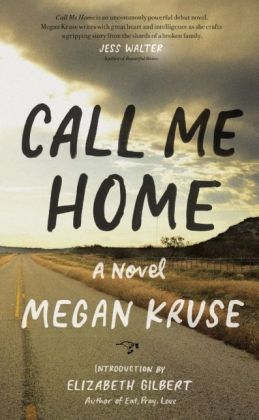
Call Me Home by Megan Kruse

A family story, in multiple voices, of pain and love and the journey to safety.

call me home

In her debut novel Call Me Home, Megan Kruse undertakes sprawling topics including guilt, sex, domestic violence and the complicated love of siblings, parents, children and lovers, in settings across the United States. These ambitious themes and clearly wrought characters are gorgeously rendered in feeling prose.

Amy moved from small-town Texas to small-town Washington state as an 18-year-old newlywed, before he began to beat her. The action of Call Me Home begins years later, alternatingly told in the third-person perspectives of Amy and her son Jackson, and first person by Jackson’s little sister Lydia. Amy tries to leave with her children, repeatedly, but to permanently escape her abusive husband she has to choose just one child to save. Eighteen-year-old Jackson finds himself on the streets of Portland, Oregon before taking work on a construction crew in Idaho. Amy and Lydia hide out at a shelter in New Mexico, then find their way to Amy’s hometown, where 13-year-old Lydia meets her grandmother for the first time. Flashbacks throughout the narrative also portray Amy’s marriage and abuse and the children’s early lives.

Call Me Home offers lovely descriptions of natural settings in Washington, Idaho and Texas, but central are the powerful themes and ugly realities of domestic violence, Jackson’s challenges as a gay teen navigating unfamiliar streets and country, and the shared and unique traumas of Amy, Lydia and Jackson. Kruse’s evocative, often lyrical language serves her subjects well, so that what results is not unleavened pain but painful beauty, even hope.


This review originally ran in the March 10, 2015 issue of Shelf Awareness for Readers. To subscribe, click here, and you’ll receive two issues per week of book reviews and other bookish fun!


Rating: 8 garbage bags.

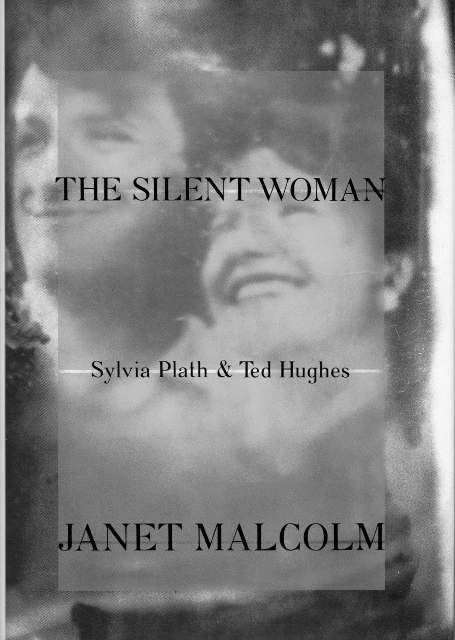
The Silent Woman: Sylvia Plath and Ted Hughes by Janet Malcolm

silentThis was a very interesting read, and not exactly what I’d expected; but it is in line with my own previous Janet Malcolm read, Iphigenia in Forest Hills. As I said on Tuesday, this is not a biography as I thought; it is rather an examination, if not an excoriation, of biographies generally. The life of Sylvia Plath is chosen as a vehicle for Malcolm’s argument, her journey and study toward developing that argument, and she does make an appropriate vehicle. She is a sensation, what with her suicide and all; she has living family members (notably her husband, sister–in-law, and her mother; she also has children, but they are only referred to by others, and don’t show their own faces) to be hurt by biographical portrayals which naturally handle their lives as well, often less than gently; and the biographies that have been written of her have tended to viscerally choose sides. Some are in the pro-Plath camp: she was a fine talent, tormented and abused by her evil husband Ted Hughes and her mother; others are pro-Hughes: he was a saint, she was a terror.

[Here is where I want to point out that this book was published in 1994, so the living relatives Malcolm writes about and that I’m referring to were living then. Plath’s mother Aurelia died in 1994; but in the present tense of this book, she is alive. Hughes died in 1998. I can’t confirm Olwyn Hughes’s status; I am therefore tempted to presume she is going strong.]

Very briefly: you know Sylvia Plath? Troubled poet, author of The Bell Jar? She was married to poet Ted Hughes, had two children, and was separated from him when she made her second suicide attempt, which was successful, by putting her head in an oven and gassing herself. Ted and his sister Olwyn have controlled her literary estate, with Olwyn playing the active role and ferociously defending his reputation.

Janet Malcolm traveled in 1991 to England to meet with Olwyn Hughes, and several Plath biographers, to talk about the Plath legacy and the ways in which it has been mismanaged. While the various parties differ on how, why, and when, I think they will all agree that it has been mismanaged. The biographical processes and products have been fraught with bitterness and poisonous resentments and failures of compassion, of put-yourself-in-someone-else’s-shoes. I am undecided as to what side I’m on, and Malcolm has something to say about this failure to choose sides.

The writer, like the murderer, needs a motive. Rose’s book is fuelled [sic] by a bracing hostility toward Ted and Olwyn Hughes. It derives its verve and forward thrust from the cool certainty with which… she presents her case against the Hugheses… If it had been impossible for Rose to take a side, her book would not have been written; it would not have been worth taking the trouble to write. Writing cannot be done in a state of desirelessness. The pose of fairmindedness, the charade of evenhandedness, the striking of an attitude of detachment can never be more than rhetorical ruses; if they were genuine, if the writer actually didn’t care one way or the other how things came out, he would not bestir himself to represent them.

(The male pronouns, present throughout, strike me as quite a shame. C’mon, Malcolm, you yourself are a writer who is not a “he” – can you not represent that possibility in your writing?)

Okay, so, point taken; but I didn’t get much of a feel for either Plath’s or Hughes’s point of view, honestly, from what I read in this book, and I’ve read none of the biographies. (Ironically, I was trusting to Malcolm to do that job for me; clearly that was a no-go, although what I received instead was worthwhile.)

Malcolm talks with the pro-Plath biographers and the Pro-Hughes biographers; they run a gamut from academic intellectuals through standers-by, friends and neighbors, and frankly (though Malcolm doesn’t use these words) some who strike me as tabloid-mongers. She reads letters and journals – the published ones, and the ones in archives. She reads manuscripts. She is most interested in the conflicts, the ethical questions, the difficulties – of biography generally (again see this week’s Teaser Tuesday for a perfect expression of this problem), and even more so, the difficulties of biography of a living person or one, like Plath, whose supporting cast is still living. (Or, again, was at the time of this book’s publication.)

It is all very interesting: Malcolm’s arguments, the people she meets – and her interview subjects get some excellent characterization. Considering The Silent Woman as a work of literature in itself, these characterizations are by far Malcolm’s strongest moments. I appreciate the criticisms she makes of biography, and of the delicate situation involved with still-living subjects; a person could almost be convinced that we should wait for everyone to have died before we write up their nasty secrets… but not quite.

Malcolm’s style is decidedly cerebral, classical, academic. She goes heavy on the allusions. This is not necessarily a compliment or a criticism, but read these lines:

The framework of deconstructive, psychoanalytic, and feminist ideology on which Rose has mounted her polemic against the Hugheses gives the work a high intellectual shimmer. There are close to eight hundred footnotes.

I’m afraid we have applied the wrong standard here! I certainly hope we’re not down to counting footnotes… of which, by the way, there are none in this book. There is nonetheless a great deal of theory, and it could get a little trying if that was not what you were there for. Just a head’s up.

Also, this:

In a work of nonfiction we almost never know the truth of what happened. The ideal of unmediated reporting is regularly achieved only in fiction, where the writer faithfully reports on what is going on in his imagination… We must always take the novelist’s and the playwright’s and the poet’s word, just as we are almost always free to doubt the biographer’s or the autobiographer’s or the historian’s or the journalist’s. In imaginative literature we are constrained from considering alternative scenarios – there are none. This is the way is is. Only in nonfiction does the question of what happened and how people thought and felt remain open.

This is off-topic and perhaps not highly relevant to the arguments we’re working on here, but I couldn’t let it pass by. Hello, unreliable narrators?? I guess Malcolm’s area of expertise lies in nonfiction, journalism, rather than literary criticism or *novels* – but really! I was surprised that she would make such a blanket statement that “fiction is true”. Just a few example of classic unreliable narrators that I have read might include Humbert Humbert of Lolita (she wanted it, right?), Chief Bromden in One Flew Over the Cuckoo’s Nest, Nick in The Great Gatsby, that guy from Fight Club, Lockwood from my old favorite Wuthering Heights, and (famously, recently, and for me, unreadably) the two narrators of Gone Girl.

I fear that I’ve been rambling. I find Janet Malcolm’s mind-workings fascinating and thought-provoking, and intelligent; I appreciate all the research she made me do in her vocabulary and allusions (you will see a vocabulary lessons post coming soon). Despite The Silent Woman not being what I’d expected, it was well worth my time; and it did take time, being rather dense. She is not a light read, be aware. I’m still on board for Two Lives, though.


Rating: 6 dictionaries.

Iphigenia in Forest Hills: Anatomy of a Murder Trial by Janet Malcolm

So, Janet Malcolm is a journalist and writes for the New Yorker as well as having published a number of acclaimed works of nonfiction and biography. I have been interested for some time in reading The Silent Woman (biography of Sylvia Plath), and actually own Two Lives (of Gertrude Stein and Alice B. Toklas), although I have not yet read it. Her latest release is Iphigenia in Forest Hills, and I was interested enough to buy it at once, for the library, and to take it to lunch with my on the day of its arrival to start reading it.

First impressions: I guess the cover is boring to you here in image form, but I find it striking and respectable in its simplicity. I wish more books would try this style of straightforwardness; not that I don’t appreciate beautiful, elegant, well-designed covers that involve color and images, but this slim, simple, black book is very eye-catching in a world of graphics.

It starts off very strong. I’ve said before, my kind of nonfiction is narrative style; this is just right for me. Malcolm has a voice in her own story, including occasionally referring to herself: how she would have reacted to a certain question in the jury selection process, for example. Or, later in the book, how she interacted with the families in question during interviews; or her discussion of the different journalists and their interactions during the trial. I like that Malcolm plays a part in the book. It seems more realistic that way. Who can help being a part of the story she writes, especially in a case such as this? Malcolm followed the case for many months. She couldn’t have helped but be involved on some level.

The story is this. NYC is home to a community of Bukharan Jews in a neighborhood called Forest Hills, in Queens. Boy meets girl; they marry, and have a baby girl. Four years later, husband Daniel is murdered while handing off daughter to ex-wife. She stands trial for his murder, along with the man who allegedly fired the gun, as her hired hit man.

There are accusations that Daniel physically abused his wife and sexually abused their young daughter. There is a heated custody battle and suspicions of emotional neglect and attempts to turn her against one parent or another. The event that allegedly pushes the wife to have the husband killed, is that a custody judge chooses to remove the child from her mother’s care and place her with her father. This looks like a crazy decision, since the child barely knows her father and he was not asking for custody, merely visitation rights. There is questionable evidence; both the prosecuting and defense attorneys come in confident of victory. There are issues of culture. I learned a lot about the Bukharan sect of Jews, which I knew nothing about before reading this book.

Iphigenia in Forest Hills reads a little bit like a courtroom-procedural novel of criminal intrigue. Our questions, however, are not finally answered, as they almost certainly would be in a novel. Malcolm is not sure whether Mazeltuv Borukhova did, in fact, hire Mikhail Mallayev to kill her ex-husband Daniel Malakov. (Her title, by the way, is part of what initially attracted me to this book, along with Malcolm’s excellent reputation as an author of biographical nonfiction. It references the story of Agamemnon and his family, which I know best, and love, as told by Aeschylus. Of which, more below.*) I love that Malcolm interviews and interacts with both families and both sides involved in the legal battle, while noting her personal reactions including any bias she sees herself develop. She recognizes and gives weight to emotional reactions and personalities. It’s not a sterile treatment – because our legal justice system is far from sterile. In the end, she doesn’t tell us what really happened, because she doesn’t know. The blurb inside the front cover begins with the defining quotation of the book:

She couldn’t have done it and she must have done it.

So there you have it. A story of ambiguities and questions, beautifully and insightfully told, from myriad angles. My first Malcolm read has come far too late, and I’m more eager than ever to get into more of hers.


*The Oresteia by Aeschylus is a trilogy of ancient Greek tragedies: The Agamemnon, The Libation Bearers, and The Eumenides. I could go on all day; I love ancient Greek drama. But I’ll try to be brief. Iphigenia’s story:

As the Greeks prepare to sail to Troy (to lay seige, in the Trojan War, to recover Helen, wife of Agamemnon’s brother, stolen by Paris), the winds are against them; to appease an angry goddess, they choose to sacrifice Agamemnon’s daughter, Iphigenia. She is brought to the harbor in a wedding dress, believing she will marry Achilles, but instead is killed by her father, who then sails for Troy. Upon Agamemnon’s triumphant return ten years later, his wife (Iphigenia’s mother), Clytemnestra, along with her new lover, entrap and kill Agamemnon.

Thus, Malcolm’s title suggests that the mother in this story, Borukhova, is so angered by the “theft” of her daughter (through custody court, not sacrificial slaughter) by the girl’s father that she has him killed (by a man implied to be her new lover). As I said, I was drawn in by this allusive title. I find the allegory a bit weak in the end: the daughter in Malcolm’s story is not murdered (although there is some question that she might have been raped!); and the title’s implication suggests a bias that Malcolm generally does not profess in the body of the book. But still, it is a dramatic title, one that got my attention; and it makes a larger point, that this tale is one of epic tragedy and does no one good in the end. There is no victor; no one’s lot is improved by these sordid events (as the victim’s father points out repeatedly), regardless of whether Daniel Malakov was a good man and doctor or a deplorable and sick abuser.

I recommend Janet Malcolm’s Iphigenia in Forest Hills; and I also recommend Aeschylus!!