did not finish: The War of the Worlds by H.G. Wells (audio)

The War of the Worlds is a classic, and H.G. Wells is a respected name. I guess I’d only read his The Invisible Man, as a very young (I had assumed, too young) girl; it didn’t resonate much with me. I thought I’d give him a second chance with this sort of landmark work in early science fiction, and I selected the audio version because of the story attached to its original radio production that caused all that panic when people thought the Martians were *really* attacking. But this one was a fail for me. I quit about halfway through.

First, I’ll give you a partial plot synopsis: Our unnamed narrator-character (not to be confused with the narrator of the audiobook, who will be discussed shortly), a resident of the English countryside, describes what seemed to be falling stars but turn out to be giant cylinders fired from a rocket on Mars. These land, every 24 hours, around London and disgorge Martians, who turn out to be better-armed than the locals, technologically superior, and unfriendly. They operate giant tripod-machines that shoot fire and destroy land, crops, vegetation and people. The Brits try to fight back with their inferior weapons but are getting their butts kicked. And then I stopped listening.

The style of narration was dry. I was easily bored; my mind wandered. I think the audio-narrator, Bill Weideman, was part of my problem. For one thing, he has the odd habit of dropping the occasional leading consonant, like so: “we are ‘ill waiting” (for “still waiting”) and the like. I am perplexed at why you would choose someone with such a strange habit of speech to narrate an audiobook; I was frequently confused as to certain words he pronounced in this manner. Another oddity involved accents. This story is set in England, and when the narrator quotes other characters he gives them an English accent (which by the way seemed excessively nasal and frankly annoyed me), but in the voice of the main-character-narrator, no accent was used (meaning, he sounded American to me). I did not learn, in the half of the book I listened to before giving up, if the narrator was in fact American. But perhaps most generally, Weideman and Wells between them created a monotonous, even soporific effect on me. I couldn’t seem to focus on following the story, as the narrator (in both senses) felt emotionless to me. I can understand how the idea of “total warfare,” total destruction of acres upon acres of land and men and women and children were demolished wholesale in a single sweep of the Martians’ weapons, was shocking to this book’s original audience (1898) and that of the radio drama (1938). But in a world that has seen an atom bomb dropped on Hiroshima, perhaps the impact is lessened.

Of course, as is always the case when I read a Great Classic and do not find myself moved, there is the question of whether there’s something wrong with me: what did I miss? I do not discourage you from trying out this well-known and well-respected book (although I might discourage you from trying Weideman’s audio narration). I hope you like it. I did not.

did not finish: The Bar Mitzvah and the Beast by Matt Biers-Ariel

I tried to read this on my trip to Ireland and gave up. Just a few brief notes as to why.

Backstory: the author’s son, at twelve, states that he will not be having a bar mitzvah because he is an atheist. The author still wants him to have a coming-of-age event, and suggest a cycling trip cross-country. Mom, Dad and both sons (the younger is 8 and will ride on the back of his dad’s tandem) start planning, and undertake a cause to attach to the trip: they will ride to Washington, D.C. gathering signatures on a petition to do something about global warming. My interest, of course, is in the cycling angle.

But Biers-Ariel failed to make me care about his admittedly heartfelt and well-meaning journey. The hope for anti-global-warming legislation is sympathetic, but a bit naive. Prosaic prose, simplified concepts, and jokes that fell flat wore on me; I read 53 pages, didn’t care what happened next, and was annoyed by author’s voice, but I wish him well. Did the family make it? You’ll have to read the book to find out for yourself.

did not finish: Alice I Have Been by Melanie Benjamin

I got not quite halfway through Alice I Have Been. I was looking forward to this book; I liked the sound of it. As it turned out, though, I couldn’t get motivated to continue. I wasn’t hating it, I just wasn’t particularly enjoying it, wasn’t particularly engaged, and I have so many books waiting for my attention that I’m trying to be very open to DNF’s. And I didn’t want to keep reading this one; so I’ve moved on to something that might please me better.

I really had two main complaints.

One, I spoke too soon in last Friday’s book beginning. The child-narrator I said sounded believable quickly took a turn in the other direction. Young Alice seems especially quick to empathize with others in ways that I don’t think are realistic for a child her age. For example: receiving a compliment – realizing the giver of said compliment had made her feel special when she so needed to – wondering if he has anyone in his life to provide the same service to him – giving him an awkward and dishonest compliment – musing that “every person, no matter how old, how matter how odd, needed someone like that [to make them feel special] in their lives.” Does that sound like an 8-year-old to you? It does not, to me. Or again, marveling “at how one man could appear to be so different to so many people.” Or being concerned at whether the musicians at a festival had gotten a break for dinner. While these moments make Alice seem very sweet and thoughtful, they don’t ring true for such a young person. Children, I think, are naturally selfish; empathy is something we learn with age. Especially a privileged child like Alice (who unthinkingly accepts her mother’s convention of calling all maids Mary Anne) would be unlikely, I think, to be concerned about meal breaks for musicians of a lower social class.

Second, the subject matter was starting to wear on me. The thesis of Alice I Have Been up to the place where I quit (page 155, if you’re concerned, of 345 in my edition) seems to be that the child Alice was not only the muse but the beloved of the adult Charles Dodgson aka Lewis Carroll. As young as age 8 she adores him, and feels but cannot name a tingling sensation in his presence that later morphs into physical attraction. At 13 she initiates physical touching (totally tame, of course, but definitely inappropriate) and demands that he wait for her until they can be together – this will be when she is 15 and he 35, she thinks (and it appears that this would indeed have been socially acceptable). The short version of which I think is: Dodgson was a pedophile. He went all trembly and ecstatic in the proximity of this 8-year-old child. This was distasteful to me.

A few caveats to this second protest. First, because I didn’t finish this book, I don’t know how things turned out. It may be that Benjamin turns things around and I have a misconception which will never be corrected (because I won’t finish the book). I don’t know. But for my purposes here, I don’t care; I see what I see and I don’t like it. Second, I’m not afraid of reading about pedophiles. I’ve certainly read far worse (graphic, violent, sick) in thrillers, etc. and will do so again. But I didn’t like it here, it wasn’t what I was looking for, and I didn’t feel like reading any further, so I shan’t. That’s all.

A lot of people love this book and perhaps you do (or will) and I wish you all the enjoyment in the world; but in a few days’ investment I was not interested in finishing this book. I’m moving on to something I hope to enjoy more. Come back tomorrow and find out what in the next edition of Teaser Tuesdays. 🙂

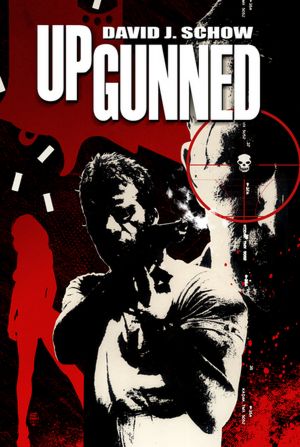
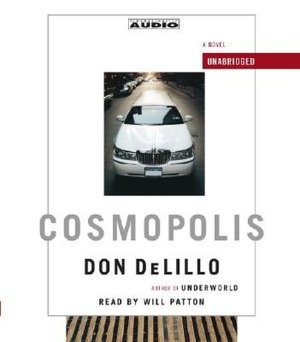
did not finish: Upgunned by David J. Schow and Cosmopolis by Don Delillo (audio)

Just very briefly here, because I didn’t get very far into either…

David J. Schow was the screenwriter of The Crow and Texas Chainsaw Massacre: The Beginning. These credentials are not terribly meaningful to me, not being a fan of horror movies, but they did give me some hope. Upgunned begins with the perspective of a semi-celebrity photographer of the scuzzy, scummy upper crust – drug-addled anorexics and the like. He is kidnapped and forced at gunpoint to take blackmail photos of a local politician. And then the perspective shifts to the man behind the gun.

The plot premise was mildly interesting to me – I can get into a good thriller regardless of framing elements if it’s done right – but the writing and characters didn’t hold up. I found both early characters a little bit cartoonish and overdone, the society in question was just a little too sickening for my taste, and the writing did nothing to redeem it. Nancy Pearl would be disappointed as I quit just 48 pages in, but I couldn’t motivate any further than that.

This DNF review is based on a galley sent to me by the publisher. Many thanks!

I have fond memories of Don Delillo from his amazing White Noise (and also my buddy Jerko is a big fan and I value his opinions). But Cosmopolis didn’t hold up. (And to be fair, Jerko specifically did not recommend it.) I made it maybe an hour in, which I think should count as 50 pages, if only just. 🙂 The story of Eric Packer’s billionaire troubles while wending his way through the city in his limousine (as pictured on the cover) failed to make me feel anything deep. Delillo’s trademark tone of detached despair is there, but the writing feels a little stilted, a little overdeveloped. Mostly though, I just couldn’t get interested in Packer’s fate.

Am I a little disenchanted and difficult-to-please these days? Hey, it’s possible. We all go through those phases. I will point out, though, that I attempted these two DNFs within a week of reading my two most recent additions to the Best of 2011 list: 11/22/63 and The Home-Maker. So maybe everything else pales in comparison. 🙂 At any rate, I’m sure there’s more outstanding reading right around the corner, and I hope the same for you as well!

did not finish: New by Winifred Gallagher

The subtitle of New is “Understanding Our Need for Novelty and Change,” and I was interested; I think I visualized a work of social commentary, on our society’s driving need and demand for bigger and “better”, for “progress” for its own sake. That’s not what Winifred Gallagher has given us, though.

Instead, this is a work of anthropology and psychology, observing the variety of personality types and behaviors present in our human race. She refers to neophobes, neophiles, and neophiliacs. The change-fearing first category, and the adventure-seeking third, make up some 20-30% of our population; the majority of us represent a more moderate reaction to novelty. As a population, this makes us well-suited to survival and evolution and, in fact, explains (says Gallagher) why Homo sapiens survived when our brethren did not: the thrill-seekers pushed us to new and better solutions to the problems of survival, the anxious ones kept us safe, and the majority kept us wisely moving towards new opportunities with intelligent caution.

This phenomenon is explored in our history, in psychological studies, in case studies, in lab studies with other species (those poor mice with the cocaine addictions! very sad), and finally in a look at the “Old Order” (Amish and Mennonite communities) in comparison to the smart-iProduct-tech-gadget-addicted majority population of… where, exactly? It’s my impression that Gallagher is looking at the US or Western world here, but I still somehow feel that she’s overestimated the saturation of smartphones in today’s world. Even in the US I know there are still plenty of us without them (!) and if we’re going world-wide, her supposition gets even more ridiculous. (As an aside, her asseration that “whether you’re rich or poor, black or white, male or female, young or old, expert or beginner, the answer to your question is as close as the nearest computer – a truly democratizing force that’s apparent in any public library,” while true, seems to disregard the fact that those computers are not very nearby to a huge majority of the world’s population, like most of the poor and disproportionately many of the black population; and the libraries are being shut down at alarming rates, so yes, while it’s a “democratizing” force, it’s also not a very forceful force.)

And while the basic idea – that we are either neophobes, neophiles, or neophiliacs, in approximately a 20/60/20 proportion – was an interesting one, I got that from the first six pages. Literally. The rest of the book just bored me, and offered nothing (ha) New. And then there were sentences like this one (this quotation comes from my advanced reader’s copy and is therefore subject to change):

Finally, to the creative personality’s recipe of good intelligence, robust neophilia, self-directedness, and the toughness that he describes as a low level of “harm avoidance,” C. Robert Cloninger, a psychiatrist and neuroscientist at Washington University in Saint Louis who developed the highly regarded Temperament and Character Inventory personality model, would add a big dollop of “reward dependence,” or desire for approval.

And I ask you, are you not bored and thrown off by such a sentence structure? With such a list of such concepts, and such a bit fat clause in the middle, and such jargon? Sigh.

I did not finish New, but I almost did; I read about half the book and then flipped and skimmed the rest pretty thoroughly, so I feel confident in my conclusion that this book has rather little to say but rather many words to say it with. Not for me.


I was sent a copy of this book for review.

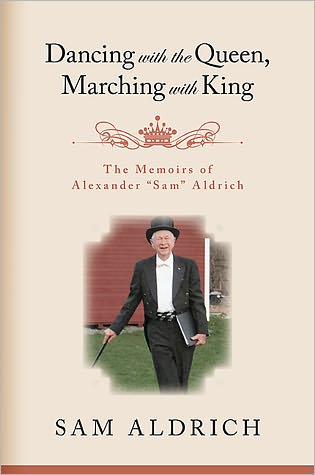
did not finish: Dancing with the Queen, Marching with King by Sam Aldrich

I was sent a galley copy of this book for review, but was not able to stomach it.

Alexander “Sam” Aldrich was born a blue-blood in New York state, silver spoon and all. He received a good classy upbringing, but pursued more philanthropic goals than just earning money as I believe was expected of him. He worked as a lawyer, then in city and state government. His book begins with an explanation of the title: first, a brief account of having danced with the Queen of England at age 25, and then a several-chapters-long narrative of his experience marching with Martin Luther King, Jr. from Selma to Montgomery, in his thirties. In telling of the march on Montgomery, Aldrich is at his strongest; his passion and indignation at injustice comes through. And although I looked carefully, he never claimed to have fully grasped what it was like to be a poor black man in Alabama in the 1960’s.

Throughout, Aldrich’s writing is very poor. He’s clearly writing as he talks; it’s conversational; but it’s also full of grammar mistakes, run-on sentences and the like. A conversational style can be endearing and casual, but this came across as amateurish; surely the State University of New York Press wants to keep its name clearer than this. Yes this is a galley copy, but I’m not talking about a few typographical errors that will be corrected in copy editing; I’m talking about a writing style that made my skin crawl.

Aldrich’s story fell short for me quickly. I made it about halfway through the 270ish pages and felt bored. I fear that the Selma to Montgomery march may have been his greatest moment, and if so, he may have done better to not let it go in the first few chapters. I think his claim to fame is his refusal to be a standard rich guy, but what he did instead did not strike me as so remarkable as to keep this book afloat.

The final straw was reference to the outing, blacklisting, and harassment of communists in the 1950’s, which I thought we were done being proud of; but this 2011 publication toes the McCarthyist party line perfectly. I had been peering suspiciously sideways at Aldrich’s semi-concealed conservative agenda, and coming across this ugliness was the end for me.

Final verdict? I can’t entirely judge, of course, having been unable to even finish the dern thing; but my impression is: a poorly written memoir of a semi-remarkable life, with a partially-concealed political agenda that I personally find abhorrent. Not for me.

did not finish: Split Second by Catherine Coulter

Caveat: I read (part of) an uncorrected advance proof.

I quit on page 59. Supposedly a suspenseful thriller, but I walked away quite contentedly, so you can judge the success of the suspense elements as you will. In only 59 pages, I saw formulaic elements. One example: woman reacts instantly with disdain for man with Bad Reputation, but is uncontrollably drawn to him, as she notes that actually he’s never been anything but sweet to her. Will they end up together? Come on. If I can guess at sub-plot endings before page 59, you’ve lost your audience.

The writing is terrible. “Lucy brewed herself some strong tea, swallowed two aspirin, a good way to prevent a hangover for her, and walked to the study…” The dialogue is slightly better than the third-person narration, but still feels stilted and forced; real people don’t talk like this. Events don’t flow together; the action is choppy. (Yes, uncorrected advance proof. But if a sparkling gem of a thriller comes out of this I’ll eat my pants. And then I’ll criticize the publisher for disservice to the author in releasing a rather awful ARC of a great book.)

Coulter has a huge fan base, and this book will sell, no doubt. I can’t speak to her earlier work – and really I can’t speak to this one as a finished and complete novel, but the first 59 pages of the ARC are uninspiring. Proceed at your own risk.

did not finish: Mañana Forever? Mexico and the Mexicans by Jorge G. Castaneda

I couldn’t do it. I wanted to like this book so much! In fact, I think I should just send you over to Raych’s review of Popular Crime, because I’m about to repeat everything she said, but about a different book. It’s funny how that works.

Mañana Forever? had a great pull for me. I was excited about getting to know “Mexico and the Mexicans” better; I like Mexico and the Mexicans, and I think they’re as apt as any country-and-its-people to make good book-fodder. The first bad sign was the preface, which dragged on and on in academic-speak, which rather goes against the impression I got (from product descriptions) that this books was written for Regular People. It also purported to outline the book’s goal, but instead went round in circles, as if still deciding what that goal might be. It listed and outlined the chapters, then told an anecdote involving H1N1 (the “swine flu”), and then GO chapter one. I began the book frustrated by the preface but ready to move on into the good stuff.

The first chapter nearly killed me. I like the idea of Nancy Pearl’s Rule of 50, but I couldn’t do it. I was too frustrated by chapter 1, which ends on page 33. (Ah, but the preface was 15. Do I get to claim 48 pages? That should be close enough. Really, two pages weren’t going to convince me. I promise.) Castaneda is Mexican-American himself, but just as I don’t belong to the camp that feels it’s okay for black people to call each other the n-word, I didn’t take to the negative lean of this chapter. It’s entitled “Why Mexicans Are Lousy at Soccer and Don’t Like Skyscrapers,” and the answer is, because they’re staunch individualists, always, no exception. Thus, no teamwork (soccer) and no sharing (apartment buildings – which aren’t necessarily synonymous with skyscrapers in my head, but whatever). He’s a bit critical, but more outrageously, he’s pretty vague in his justifications for his argument. When he completely lost me, though, was with math. Excuse me for holding an author of nonfiction (and an established academic, professor, PhD, and former foreign minister, in his third book) to this kind of standard, but. I offer you this sentence.

Out of a total of roughly 1 million homes delivered between 2004 and 2008, 800,000, or 97%, included one or two dwellings per plot, whereas only 32,000, or 3%, were vertical, multifamily homes, or in plain English, apartment buildings or ‘projects.’

1 million = 1,000,000. 800,000 is very easily divided into this number. I see 8 out of 10, is what I see. I’m no math major, but I’m pretty sure that 800,000 out of 1,000,000 is NOT 97%. I’m pretty sure that’s 80%. He lost me there, and lost me more in the next sentence, in which he says x over y “takes up much more space and thus more square feet.” After this, it was all I could do to not take out a red pen and start circling things. (This is a library book.) Rugged individualism is “often nearly always” self-sacrificial and self-destructive, and the chapter closes with this:

The individualism we have rapidly portrayed and criticized is just one of the multiple traits, though perhaps the most important one, that has become no longer just an obstacle, but an insurmountable hurdle to the country’s progress, as well as the heart of its past glory and unending fascination for the foreign regard.

No longer just an obstacle, but a hurdle! Gasp! No, Castaneda, you did not “rapidly” portray. These were the most difficult 33 pages I’ve read in recent memory. Sentences like this one required that I reread; I kept losing my place. This is the kind of writing I’m willing to be pretty forgiving of in galley copies (you know, pre-publication, don’t-quote-from-this-copy, still to be edited), but this isn’t a galley. I’m not sure if you should fire your editor, or if s/he should fire you. You have failed to grasp a reader who was eager to be grasped. The End.

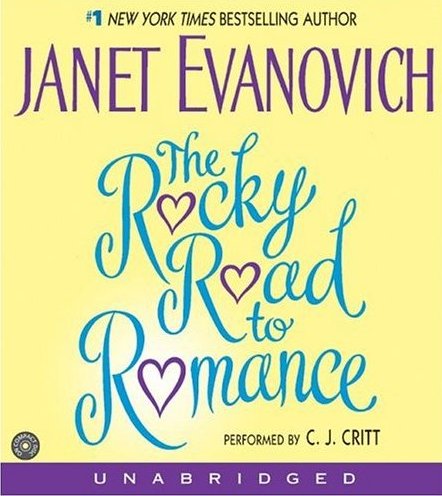
did not finish: The Rocky Road to Romance by Janet Evanovich (audio)

To be fair, I barely even started this audiobook. I was trying to expand my horizons a little bit. I’ve never read anything by Janet Evanovich! –shocking, to many readers of genre pop fiction, as she’s one of the bestselling romance/mystery crossover authors out there. She’s also one of the big names here in my little library. But then again, not so shocking when you consider I’m not a reader of romance, really. I am a huge fan of mystery novels, but hers are known to be cozy, funny, romantic/sexy mysteries, which isn’t my style. But, so. I wanted to broaden my reading world and thought I’d pick up one of hers, just to know what I’m missing.

I’ll give JE the benefit of the doubt and assume I picked the wrong one. To be fair, this is a romance – not mystery – title, and not one of her more popular, just judging from circular numbers in my library.

I didn’t even make it through one cd. What I did get was the beginning of the sparks flying between Daisy – cute, hard-working, quirky – and Steve, boss at one of her several jobs and obligatorily hunky, mysterious, and distant. The dialog and general writing was just so stilted, and the characters so pat, that I couldn’t take it. I was eye-rolling so hard I couldn’t watch the road, which was a hazard, so I hit eject. The narrator, C.J. Critt, didn’t help matters any, but I don’t think I should blame her necessarily; she was playing along with the book.

I’m being completely honest about the fact that I couldn’t stand this audiobook. But note the qualifications: not my genre or my style; and not Evanovich’s star character (that would be Stephanie Plum, of the numbered series starting with One for the Money).

I think I’m still determined to give JE a try, but will aim for a Stephanie Plum mystery next time for sure. (Thanks to my mother, with whom I mostly share reading tastes, and who enjoyed One for the Money although not outrageously much.) This one made me grit my teeth.