Eating Dirt: Deep Forests, Big Timber, and Life with the Tree-Planting Tribe by Charlotte Gill

eating dirtDoubly recommended by the authors of Fire Season and Dirt Work, this one moved to the top of the list.

Eating Dirt is the memoir of a tree planter. Charlotte Gill works seasonally planting trees in the Canadian west. She is employed by a company of tree planters, who contract in turn with big business – mostly logging – to replant sections of clear-cut land, usually. The daily job is to travel out to the plot in question (via beat-up truck, or boat, or by foot), load up one’s bags – a belted & suspendered piece involving two side saddle-bags and one at the rear, at hip height – with seedlings, stomp around on varying surfaces, and use a shovel and one’s hands to repeatedly insert seedlings in soil (clay, gravel, duff). It involves much bending, and the loss of fingernails. They encounter cougars, bears, muck, dirt, rain, bugs, rocks, and unspeakably sore muscles.

Gill has quite a bit in common with Christine Byl of Dirt Work: the dirty, male-dominated outdoor environment, the satisfaction of a job well done in a world populated by trees, twigs, green and brown and wild things. Not to overemphasize these two books’ similarities – because each is unique and lovely on its own and neither is derivative – but they both caused the same combined reaction in me, of yearning jealousy and thankfulness that I don’t do that for a living. What can I say. I love to be outside and wish I spent more days and nights there, but I also fret enough over my bad knees with my office job, and I like taking a shower and feeling clean after being dirty. In fact, the question at the front of my mind as I’ve finished this book is: what did clean mean in those years that make up the majority of human history, in which we didn’t have seemingly endless showers at our command?

Dirtiness aside, Gill writes with humor and wisdom and the kind of occasionally zoomed-out perspective that I like in a nature-based memoir. A little research into the history of earth, trees, and people – and the relationships between them – brings her perspective, that of just one person, into focus within a larger picture. And as a bonus, she’s based in the same general region that my parents recently moved to. We have all been learning about the Pacific Northwest – including the trees of the area – and this book offered some welcome insights to that end.

One of the more surprising subjects of Eating Dirt, for me, was the ambiguous or controversial nature of the work. I read “tree-planting tribe” and expected that it would be all green-ness and good; but as I said in my opening synopsis, Gill’s employers are most often logging companies, banking on the profitability of trees, not their inherent worth as trees themselves.

And we got paid… by the very same business that cut the trees down, which canceled the altruism right out of the equation.

Any good they provide, then, is already offset by those who paid for their planting. It’s not as simple as it seems at first glance, and Gill wastes no time in making that point.

Her voice is gritty, and her perspective not so much unapologetic in general as clear-eyed about its dual nature. She’s funny and clearly likeable – like Byl, someone I’d like to know, although I’d be intimidated by both women’s toughness. I enjoyed what I learned about the world from Gill, but also very much value what she’s encouraged me to think about.

Nature has done its big job. Like a ball thrown up in the air, all has risen, crested, and begun its arc back down into earth. After many years spent outside we come to see this – the parabola – as the contour of life itself. It’s the path the sun takes across the sky. The shape of a story. Ours included. Beginning, middle, and end.

Right up there with some of my favorites of the past few years. Recommended.


Rating: 7 red tree voles.

Writing Is My Drink: A Writer’s Story of Finding Her Voice (and a Guide to How You Can Too) by Theo Pauline Nestor

A writer’s journey, written as a guide for aspiring and developing writers.

writingdrink

Theo Pauline Nestor always wanted to be a writer. But she struggled to find confidence and her writing voice for many years, through two kids and several career changes, before publishing How to Sleep Alone in a King-Size Bed, a memoir about her divorce and its aftermath. In Writing Is My Drink, Nestor returns to memoir with tales from her childhood, formative years and journey toward publication, and confessional forays into her parents’ alcoholism and her more embarrassing moments as an aspiring writer. Readers and writers will appreciate nods to Terry Tempest Williams, Natalie Goldberg and Frank McCourt, whom Nestor temporarily confused with her father.

Writing Is My Drink is also part instruction guide. Each chapter finishes with a short “Try This” piece that offers writing exercises, lists to make and concepts to keep in mind. She coaches when to push oneself and when to be forgiving, and shares the sad news that rejection and bad writing are integral parts of publication and good writing. Now an instructor in memoir writing, Nestor is well placed to offer such advice, and despite her convoluted journey–or perhaps because of it–she has a great deal of wisdom to share with her students.

Writing Is My Drink is by turns instructive, funny, poignant and deeply personal. Nestor’s voice is informal and occasionally self-deprecating, but one of the central lessons she has learned and wants to share is that of trusting oneself. Her story will be an inspiration to readers who seek self-expression.


This review originally ran in the December 27, 2013 issue of Shelf Awareness for Readers. To subscribe, click here, and you’ll receive two issues per week of book reviews and other bookish fun!


Rating: 7 stories told sitting on a barstool.

Kingsolver on Knitting and The Interconnectedness of Life

Barbara Kingsolver has captured my heart with The Lacuna and Flight Behavior. Only fitting, then, that she should make such a charming, truthful, and lyrical submission as this to Orion magazine: “Where It Begins”. I can’t decide which is more valuable and valued: her lovely message, which I won’t sully by summarizing, or her lovely writing, for example:

…banish all possibilities, the winter and the summer, the bare feet under the table, the shattered day undone and dregs of old regard and bitter unsettled tea leaves and the words forever jostling ahead of each other in line, queuing up to be written. Especially those. Words that drub, drub, drub at the skull’s concave inner wall. Words that are birds in a linear flock, pelting themselves in ruined fury all night long against the windowpane.

I am so very happy to hear that words are still drub, drub, drubbing at her skull’s inner wall, because I want them out here.

Enjoy. (Thanks, Pops.)

The Outermost House by Henry Beston

photo (1)This book came to me recommended by Rachel Carson. I’m relatively sure that I came up with this title in my reading of On a Farther Shore, a recent biography of the author of Silent Spring. And by that convoluted path, here we are.

The first thing that struck me about The Outermost House, and certainly the most striking overall, is its similarity to Thoreau’s Walden. I have been describing it as “Walden Pond on Cape Cod.” Henry Beston wrote this book in 1928 about a year he spent, rather by accident, on the island; he had a small, humble cabin constructed on a remote dune for the purpose of visiting more often, and moved in in the fall, thinking he’d be there only a matter of weeks but staying a full year. (My edition also contains a new foreword from 1949.) That Thoreau would be well-known to Beston, his literary descendant of just a few decades in the same region, is clear, even if he weren’t mentioned by name around page 100. The similarities are many (more below), but I don’t mean that to take away from Beston’s work. I think Walden bears some imitation, and Cape Cod is different enough from the Concord locale to justify its own study.

The next thing that struck me is Beston’s comfortable observation that, although “man” has altered & damaged the world mightily, “Nature” is overall impervious, and Cape Cod in specific remains untouched. I congratulate Beston that in 1928 (and ’49) he was able to feel such confidence. Today, sadly, he would not.

Like Thoreau, Beston describes his home in some detail, for its details are hugely relevant to his year on the outer beach. Like Thoreau, he sees his fire as a friend and companion, a major force in withstanding solitude. And like Thoreau, he overstates that solitude, first writing of how very, very alone he was – how very rare was a human face in his year out there in the wild – and in the next breath, shamelessly, noting that he saw his Coast Guard buddies from up the beach almost daily, and walked into town for groceries once or twice a week. Having come to terms with this dissonance in Walden, I just smiled at it. Solitude is clearly relative, and he’s enjoyed far more than I have experimented with.

The Outermost House is perhaps most lyrical and pensive in its contemplation of bird life and waves, and equally thoughtful in its treatment of the Cape Cod locals and the solidarity they feel with wrecked vessels on its shore. He seems to refer to a “god,” although not by name; he is very concerned with “man”‘s relationship to Nature (always the capital N), and how sick we get when we disconnect. These themes are timeless and not dated at all.

For those who enjoyed Walden, this will undoubtedly be a great pleasure. If anything, Beston is less pretentious and self-congratulatory than Thoreau was. His descriptions of the migratory birds of Cape Cod’s seasons are lovely and, I imagine, useful for scientists & natural historians. It’s well-written, short (under 200 pages), and solid.

I will let Beston himself close, with a few of my favorite lines.

Glorious white birds in the blue October heights over the solemn unrest of ocean – their passing was more than music, and from their wings descended the old loveliness of earth which both affirms and heals.

…today’s civilization is full of people who have not the slightest notion of the character or the poetry of night, who have never even seen night. Yet to live thus, to know only artificial night, is as absurd and evil as to know only artificial day.


Rating: 6 tseeps.

Body Counts: A Memoir of Politics, Sex, AIDS, and Survival by Sean Strub

Sean Strub’s earnest, evocative memoir of political activism, coming out and the AIDS epidemic will appeal to diverse readers.

bodycounts

Seventeen-year-old Sean Strub left Iowa City in 1976 to attend Georgetown University and–more importantly for his future–to become an elevator operator at the Capitol Building. He worked to meet as many powerful figures as possible, with his own political career in mind, yet he was haunted by a secret he feared would make him unelectable: he was attracted to men.

Three years later, the colorful, growing gay community of New York City encouraged the aspiring politico to begin to explore his own sexuality and acknowledge it as a permanent feature in his life. As an increasingly “out” gay man, he shifted his focus away from the idea of running for office and became a committed activist in the pursuit of gay rights. Strub’s second passion and skill was for entrepreneurship, and he eventually started up an impressive number of companies, including direct-mail ventures and publications that supported his causes.

In the early 1980s, “gay cancer,” eventually known as AIDS, was suddenly everywhere. Strub couldn’t attend every funeral and memorial service, he writes, but he always made sickbed visits; sometimes he walked the halls of a hospital without a specific friend in mind, reading names on rooms, sure he’d find people who needed him.

Strub had known he was HIV-positive since 1985, when he was given a prognosis of “maybe” two years, but his partner Michael died with no warning, not even getting sick first. The need for AIDS activism to push for quicker access to new drugs and fight discrimination naturally dominated Strub’s attention in the years following his diagnosis and Michael’s death.

In Body Counts, Strub relates the joys and struggles of learning self-love, political aspirations and disillusions, activism and relationships with countless men and women he loves, with cameo appearances by Tennessee Williams, Bobby Kennedy, Gore Vidal and Bill Clinton (among others). Body Counts is a powerfully moving personal memoir with the added value of a fine and feeling primer on the history of gay culture and AIDS in the United States. Strub’s subject matter could have been morbidly tragic, but he retains a sense of humor and celebration, honoring the dead with love and hope. Now an AIDS survivor for nearly 30 years, Strub notes that he is on his way to matching, in same-sex weddings, the number of funerals he attended in the 1980s and ’90s.


This review originally ran in the December 13, 2013 issue of Shelf Awareness for the Book Trade. To subscribe, click here.


Rating: 8 mailings.

Drinking with Men by Rosie Schaap (audio)

drinking with menI picked up this memoir for what I’m sure are obvious reasons. The title alone appeals to me: I am, ahem, a drinker, and a tomboy who’s been most commonly and comfortably in the company of men. Read a blurb, and find out further that Rosie Schaap is a fan of hanging out in bars, which puts her generally in male society; I’m right there with her.

And I was immediately charmed at this audiobook, read by the author in her somewhat gravelly (drinker’s, smoker’s) voice. She opens the introduction by calling herself a serial monogamist when it comes to bars: she becomes a regular at one for a year or years, then moves to another to which she will also be faithful for the medium-long-term. This memoir is organized by bars where she achieved “regularhood” (a status that she points out is even more overwhelmingly male-dominated than bar-drinker-hood generally), and covers the rest of her life – relationships, school, careers, living arrangements – as it relates to the bar, mostly. Her brother, parents, and husband get sketched rather more lightly than do her drinking buddies, for example. Her bars are located in New York City, small-town Vermont, Dublin and Montreal – but mostly New York City, her hometown and persistent home.

As expected, and as her first few lines indicated, I felt a real connection with Rosie. (I consider us to be on a first-name basis, as we would be on our barstools.) Her inexplicable (to some) comfort going to bars alone as a woman struck a note with me: I share that comfort (at the right bar, of course), and confirm her observation that this is rare behavior. I certainly agree that the definition of the best sort of bar is where one can go alone while female – and even read a book, or carry a conversation without shouting. (See here.) I also agree that these bars can come in different shapes and sizes (well, small is the ideal size), and that they overlap, but not entirely coincide, with dive bars. I often felt as if she were speaking right to me – like this is a long-lost sister I’m listening to. How lovely. We should get a drink sometime.

She did lose me for a little while mid-way, when she got enthused about religion and becoming a minister. I couldn’t follow her there; we got separated; and I worried that we had taken permanently distinct roads. But she sort of let that part of her story lapse; I don’t know if that part of her life lapsed, too, but I was certainly okay with the book taking that turn. Personal preference, there.

Rosie’s life has taken a few turns that I think will be familiar to many of us: youthful rebellion, difficulty determining What She Would Do With Her Life, and a troubled marriage. She experience 9/11 as a New Yorker, and lost her father the same season. She moved away a few times, and returned. And she has had some very cool relationships with some very cool bars. I felt very close to her as I experienced what she had written, and as she read it aloud for me. I think that has to be one of the aims of memoir.

As an aside, I had a fun “aha!” moment: as Rosie talked to me, I had a niggling feeling of deja vu. I recalled a story I’d read somewhere, about a young woman in a bar wearing an ugly hat, who was approached by an intimidating biker who wanted to buy her hat for his friend. It was a good story, and I was reminded of it. Sure enough, just as I was wondering, she told it. I figured out that I’d read it in the New York Times Magazine, courtesy of my mother. (You can read it here.)

Schaap’s writing style sort of disappeared for me, which I mean in a good way: that is, that there was no discernible style. It just felt like she was telling her story. I would have enjoyed ten times this length of the same – although on the other hand, she seems to have shared exactly the right amount.

If you’re at all interested in bar culture or women in a men’s world – I recommend Rosie’s story told in her own voice.


Rating: 9 pints.

The Trip to Echo Spring: On Writers and Drinking by Olivia Laing

Laing’s poetic ruminations on the alcoholism of six authors will charm readers of travel writing, biography and literary criticism.

echo spring
Olivia Laing’s The Trip to Echo Spring studies six authors whose lives meet at the juncture of creativity and alcoholism. While Laing (who walked along the river where Virginia Woolf killed herself for her previous book, To the River) acknowledges she had many alcoholic writers to choose from, the half dozen she selected justify and reward her nuanced attentions. Though F. Scott Fitzgerald, Ernest Hemingway and Tennessee Williams have been studied to the point of exhaustion, John Cheever, Raymond Carver and John Berryman have been less comprehensively examined.

Laing’s exploration of these extraordinary men’s lives has many facets. The Trip to Echo Spring, named for the bourbon favored by the maudlin Brick in Williams’ Cat on a Hot Tin Roof, is partly literary criticism–and no lightweight in that department, showing serious attention to her subjects’ works. Meanwhile, the level of biographical detail reveals Laing’s interest in their intersections with one another in life as well as literature. There are hints of travelogue as well, as Laing crisscrosses North America to visit the crucial locations in these writers’ lives, from Hemingway’s Key West to Fitzgerald and Berryman’s St. Paul, Minn., to Port Angeles, Wash., where Raymond Carver finished his life.

The common themes Laing finds in the cities and the bars where these men drank themselves into misery, death, and art include swimming, fluidity and the cleansing properties of sea and stream. She delves into the biology and psychology of of alcoholism, with several forays into Alcoholics Anonymous, and finally touches on her own upbringing as the child of alcoholics. While she focuses on the relationship between writing and drinking, another key part of her journey is personal–but her own history with drunks is only gradually revealed and never takes center stage.

These disparate elements come together elegantly in Laing’s quietly contemplative prose. She is sensitive to the struggles of these tortured men (among them several suicides) and deeply appreciative of their accomplishments, but also clear-headed about their shortcomings and their abusive treatment of others as well as themselves. A lovely piece of writing in its own right, The Trip to Echo Spring is a fine tribute to artists as well as a lament for their addiction.


This review originally ran in the November 20, 2013 issue of Shelf Awareness for the Book Trade. To subscribe, click here.


Rating: 8 bottles.

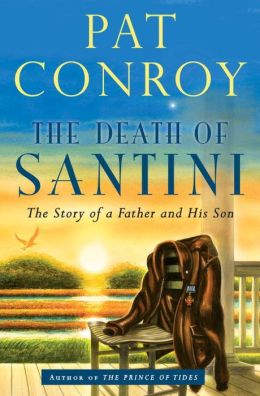
The Death of Santini by Pat Conroy

A remarkable ode to the real-life inspiration behind one of the most hated fathers of American literature and film.

deathsantini

With The Death of Santini, Pat Conroy returns to the autobiographical roots of one of his first successes, the 1976 novel The Great Santini. In this memoir, he recalls his father, a larger-than-life Marine hero who was an abusive monster to his family, from the perspective of decades passed. This is, he promises, the last story he’ll tell of his father–and of his mother, the beautiful false Southern belle.

Conroy’s style and ability to portray time and place are as mesmerizing and evocative as ever; the painful, neurotic (or, as he frequently says, “f-ed up”) family dynamics among the seven Conroy children and their mythically proportioned parents are peppered with humor. After his brother Tom’s suicide, for example, the family is at first shocked to realize that the funeral cards list the information for another brother, Tim, but then they razz him mercilessly. Another sibling notices the animosity their sister has for Conroy and reflects how hard it must be to hated so much. “No, I hate all you guys that much,” Tim says, to which brother Jim replies, “Shut up, Tim. You’re dead.”

As Conroy takes us through his convoluted relationship with a man he hated and feared, but eventually loved and felt close to (more or less), his gift for storytelling makes his story perfectly understandable and sympathetic. Don Conroy never ceased denying that he was falsely accused, but he softened over time and, it seems, in his dying years finally learned how to be a father.


This review originally ran in the November 5, 2013 issue of Shelf Awareness for Readers. To subscribe, click here, and you’ll receive two issues per week of book reviews and other bookish fun!


Rating: 8 poems.

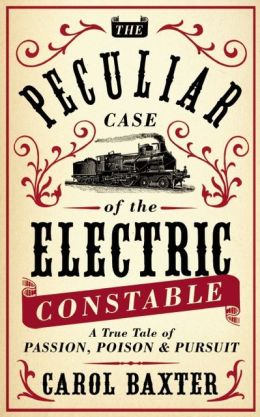
The Peculiar Case of the Electric Constable by Carol Baxter

An exhilarating real-life thriller about the murder that revealed the power of the telegraph.

peculiar electric

Australian historian Carol Baxter melds true crime and science in the gripping The Peculiar Case of the Electric Constable. The electric telegraph (or the “electric constable,” as it was known) was a newfangled, doubtful-looking invention in 1845, when a well-liked young woman was found gasping her final breaths in the small English town of Slough. Fortuitously, Slough was connected by an experimental telegraph line to Paddington Station; when a distinctively dressed gentleman was seen leaving the apparent murder scene and boarding a train, quick-thinking locals sent word along the line. The pursuit by telegraph of a criminal suspect marked a turning point, Baxter argues, and sparked the communications revolution that continues today. That the suspect, John Tawell, was a Quaker made this case still more sensational, and his personal history as a transported convict helped to transfix the public.

This peculiar case involved not only the “electric constable” but also the new fields of toxicology and forensic science. The murder trial riveted the medical and legal professions, setting new precedents; the public, already inspired by poisoning cases, was riveted by the cyanide evidence that “the Quaker murderer” provided. Baxter’s accounts of the telegraph’s technology, the prevailing cultural climate regarding murder and poisonings, contemporary forensic methods and Tawell’s personal history are all worthy of an engrossing thriller. (Her research was meticulous, though, she explains in an author’s note, and all the dialogue attributed and factual.) Expertly told, The Peculiar Case of the Electric Constable is a captivating accomplishment in nonfiction.


This review originally ran in the October 29, 2013 issue of Shelf Awareness for Readers. To subscribe, click here, and you’ll receive two issues per week of book reviews and other bookish fun!


Rating: 7 dark suits.

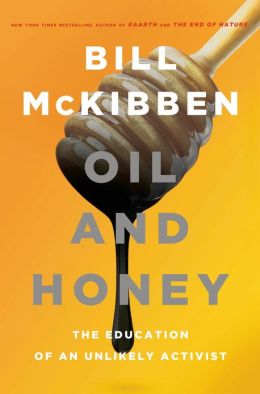
Oil and Honey by Bill McKibben

Highly literate and expert musings on climate change, from home to the global theatre.

oil
Oil and Honey centers partly on climate change, a subject on which Bill McKibben (The End of Nature; Eaarth; founder of 350.org) is expert; but it is also personal in nature, a dualism reflected by the title. McKibben is concerned simultaneously with oil–representing fossil fuel industry practices and climate change–and honey. Having entered into a land-share agreement with his friend, beekeeper Kirk Webster, McKibben finds his home and Webster’s apiaries exerting a gravitational pull just as his political activism draws him far and wide. These two sides of his life–personal and political, local and global, analog and digital–are the focus of this combination memoir and call to action.

The subtitle refers to his journey from writer to activist, by way of 350.org and the Keystone Pipeline–a trip he did not intend but found obligatory. Activist though he may be, McKibben remains a fine writer, evocative, articulate, clever and humble in examining his mistakes. In piercing prose, McKibben unites his longstanding authority on climate change with his novice stature in the world of beekeeping. He muses on the small-scale and private implications of our changing world, which incline him to work with his family and Kirk’s bees in his beloved local community in Vermont; and likewise on the necessity for global action to combat the continuing quest for fossil fuels. Oil and Honey travels the world but always cycles back, like the seasons, to McKibben’s Vermont home, likening global systems to beehives in a manner both profound and lyrical–and important.


This review originally ran in the – issue of Shelf Awareness for Readers. To subscribe, click here, and you’ll receive two issues per week of book reviews and other bookish fun!


Rating: 8 degrees.