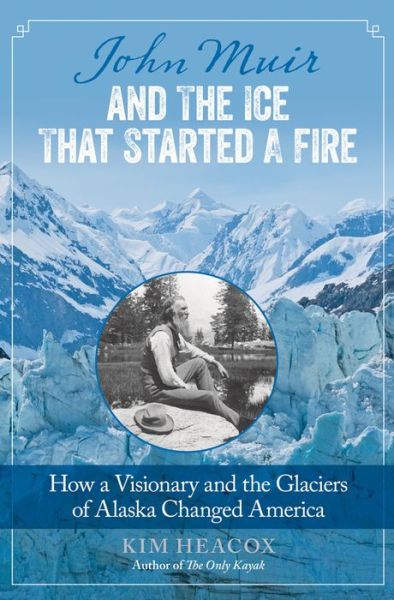
John Muir and the Ice that Started a Fire by Kim Heacox

The carefully researched and engaging story of John Muir, Alaska’s glaciers and the movement they built together.

muir ice

John Muir and the Ice That Started a Fire is neither a straightforward biography of Muir nor a simple study of the global significance Alaska’s glaciers. Rather, Kim Heacox (The Only Kayak) is concerned with the relationship between Muir and the glaciers that rivaled Yosemite in his affections, and the impact that pairing had.

From a humble background in Scotland and Wisconsin, and between stints as a surprisingly apt businessman, Muir lived as a self-described tramp, ardent nature lover and student of flowers, trees, mountains and–upon finally reaching Alaska–glaciers. His famed role as author and activist came late in life, and not easily: he found writing hard work and political activism distasteful, though necessary. However, Muir made perhaps the greatest impact on conservation of any individual in United States history.

Heacox meticulously researched and lovingly describes Alaska’s rivers of ice and Muir’s path toward them, his emergence as writer and preservationist, and his far-ranging influence in legislation, literary legacy and new traditions–including the birth of the conservation movement as we know it. Though often descriptive rather than persuasive, Heacox lends his own voice to the cause in his final chapters: “To debate [climate change] is to give credibility to an argument that shouldn’t exist.” He closes by adding the arguments of Aldo Leopold, Bill McKibben and Derrick Jensen to Muir’s, in the interest of preserving our wild spaces–thereby continuing Muir’s work.


This review originally ran in the April 11, 2014 issue of Shelf Awareness for Readers. To subscribe, click here, and you’ll receive two issues per week of book reviews and other bookish fun!


Rating: 8 little dogs.

A Walk in the Woods by Bill Bryson (audio)

In A Walk in the Woods, Bill Bryson describes his experience on the Appalachian Trail. He and his family had just moved to New Hampshire and he discovered the trail almost literally in his back yard, and decided, what the heck? he’d try walking it. At the last minute, an old friend agrees to join him, to his relief (now he won’t be alone out there with the bears); this old friend turns out to be overweight, a smoker, recently sober, and in no shape for such a lengthy walk in the woods, but they set off nevertheless, beginning to walk the AT in Georgia and headed for Maine.

a walk in the woodsOh, Bill Bryson, you funny, infuriating man. I have had a love-hate relationship, as they say, with this book. Bryson is very amusing, and this is his strongest suit; at his best, he had me giggling aloud on the train during my commute, which I try not to do because that’s weird, right? But he can be downright annoying as well. I’m not sure what he conceives this book actually is; amusing memoir? (For which, grade B+, at least.) Nature tale? (C-, on which more in a moment.) Camping satire? (Please stop.) His ineptitude at the outdoorsiness might be funny to somebody, but I just find it obnoxious and …well, kind of stupid. On the other hand, he hiked the Appalachian Trail for months, you guys, completing nearly 900 miles of it, and I have to respect that, as I’ve never done any such thing. But with such an opportunity to tell us about the AT, he spends a great deal of time telling us what poorly prepared rookie campers he and his friend Katz are; the trail itself is often just background, if even that. The book was 1/3 through before he even mentions a view, let alone describes one; and precious few times from then on. In fact, I think I’ve answered my question: Bryson conceives of this book as an amusing memoir, and the fact that it takes place on the AT is mere coincidence and in no way important to the story he has to tell.

When he rails against our destruction of natural areas and our Park Service’s poor management of those lands, he does a fine job, and I both learned something and enjoyed the polemic; but then he pulls punches, as when writing about tree diseases:

A great tragedy, of course. But how lucky, when you think about it, that these diseases are are least species-specific. Instead of a chestnut blight, or Dutch elm disease, or dogwood anthracnose, what if there was just a tree blight? Something indiscriminate and unstoppable, that swept through whole forests? In fact, there is. It’s called… acid rain.

No, Bryson, it’s called people! Call a spade a spade! Sigh.

Later in the book, when Bryson and Katz (the brunt of all the best jokes) part company temporarily, Bryson shifts focus a bit toward the history of the AT and gets less jokey. I appreciate this content, but it lacks the sparkle of his more humorous writing. In other words, I felt that A Walk in the Woods struggled throughout with an identity crisis.

The audio edition is good, I’ll say that without qualification. William Roberts’s reading is hilarious, and suits Bryson’s writing voice well. The book is absolutely at its best when describing Bryson & Katz’s mishaps on the trail, and only mildly interesting (for those interested in such things) when it leaves their narrative to wander the AT on a more intellectual level. One final pet peeve: as far as I can understand, Katz and Bryson do a lot of littering. Katz repeatedly handles the frustration of his heavy pack by dumping gear, and I don’t think there are garbage cans out in the woods. (I hope not.) There are a cigarette pack and three butts discarded by Katz at an important point. This makes me ANGRY. Littering on the AT?!

Representative quotation:

I had come to realize that I didn’t have any feelings towards the AT that weren’t confused and contradictory.

Me too, Bryson.


Rating: 5 cream sodas.

I wasn’t sure whether to go with 4 or 5; but I did finish the book, so there’s that.

The Empathy Exams by Leslie Jamison

An essay collection that earnestly examines feelings–the author’s and the world’s.

empathy

Leslie Jamison follows her debut novel, The Gin Closet, with an essay collection that has earned her the Graywolf Press Nonfiction Prize. The Empathy Exams opens with Jamison’s experience as a medical actor. In this role, she is given a character, complete with props and not only symptoms, but behaviors: body language, failure to make eye contact, dishonesty. In portraying deception, or a pretended lack of self-knowledge, Jamison contemplates what it is to feel, how we communicate what we feel and what we do with these communications.

While all her essays are linked by the topic of empathy, their subjects range widely. One essay about incarceration deals with a man serving time for mortgage fraud who continues to declare his innocence; another covers the case of the West Memphis Three and the documentaries about them that so moved Jamison as a young woman. “Morphology of the Hit” studies Vladimir Propp’s Morphology of the Folktale, which Jamison calls “a map for storytelling,” and she uses that map to construct a narrative of the random act of violence she experienced in Nicaragua.

Within the context of pain, both injury and chronic illness receive repeated treatment. The Barkley Marathon, a grueling, almost unfinishable race through Frozen Head State Park in Tennessee, is presented both as a subcultural phenomenon and a subtext for pain. Jamison attends a conference for Morgellons patients–who believe they are infested with fibers and foreign matter crawling out of their skin–and the few doctors who will take them seriously; she finds herself responding with such empathy that she is in danger of catching the disease herself. She also leads readers on two “Pain Tours,” closing with the specter of female pain, and female guilt over pain–making the studied choice to apologize for neither.

Throughout these varied topics, Jamison makes references to many thinkers and influences, from Lucy Grealy (Autobiography of a Face), Susan Sontag and Frida Kahlo to her own friends. Her essays often dwell in the theoretical and the academic; she is interested in philosophies, and admits to difficulty experiencing, recognizing and sharing her own emotions–a difficulty that occasionally manifests in pedagogy. However, readers will finish with no doubt she is sincere in her quest to own, identify and comprehend empathy.


This review originally ran in the April 3, 2014 issue of Shelf Awareness for the Book Trade. To subscribe, click here.


Rating: 4 itchy patches.

Not a great rating, right? Reminder: when I write reviews for the Shelf I work to (mostly objectively) state what is of high quality about a book, and who might like it and why; if applicable, I mention who might want to steer clear. When I rate the books here, I am stating my personal reaction. I think Jamison did good research & does some good writing; but the academic & theoretical nature of these essays didn’t appeal to me. I was hoping for a more emotional reaction to the world; and specifically I was interested in the medical acting concept, which received relatively little play time. I wonder if *I* have an essay to write about empathy, based on my experiences working in a cancer hospital. I don’t know that I’m ready to write it right now; but if/when I do, it will be more emotional and less cerebral than these essays here. Not better or worse; but this is how my personal reaction – the personal appeal this book had for me – rates The Empathy Exams.

“The Etiquette of Freedom” by Gary Snyder

wildThis is the first essay in Gary Snyder’s collection, The Practice of the Wild. I’m going to post my thoughts on these essays one by one, as they fit into my reading schedule.

“The Etiquette of Freedom” begins by establishing the vocabulary for a discussion of “practicing” the wild. I think it’s useful for Snyder to explain this use of “practice”: he means it in the way we practice a religion (Zen Buddhism) or we practice yoga. Thus by “practicing” the wild, he tell us (in this book’s new preface), he means “a deliberate sustained and conscious effort to be more finely tuned to ourselves and to the way the actual existing world is.” As my yoga instructor likes to emphasize, this is not about achievement – that’s why we say that we practice. It’s a journey, not a destination.

The central work of this essay is for Snyder to define nature, wild, wildness and wilderness. While it was an interesting exercise, and I learned some history and some Buddhist principles and some biology (I had to look up ‘serows’)… I definitely look forward to some more concrete, applicable, how-to-live advice; or at least some more direct criticisms of our world. Every reader is seeking something different in every reading experiences, of course. In my reading at this time, I’d like something a little closer to our earth than this academic exercise.

However, I am always open to philosophies cleverly expressed: “if the lad or lass is among us who knows where the secret heart of this Growth-Monster is hidden, let them please tell us where to shoot the arrow that will slow it down.” Possibly I’m also partial to criticisms of growth in particular. I also like what Abbey wrote, that “growth for the sake of growth is the ideology of the cancer cell.” Our societal confusion of growth with progress is a pet peeve of mine.

It also occurred to me that this more theoretical and linguistic approach might appeal to my mother the linguist. For example, “language is like some kind of infinitely inter-fertile family of species spreading or mysteriously declining over time, shamelessly and endlessly hybridizing, changing its own rules as it goes.” This is a favorite feature of language, I think, for her and me both.

I found myself seeking a definition of “etiquette” that fits here; he doesn’t mean good manners, does he? I need to find a decent dictionary; mostly the online ones give me just the standard definition, but I’m sure he’s using a more obscure secondary one. Funny, that an essay concerned with definitions would leave this one unanswered. I will use Merriam-Webster’s, “the conduct or procedure required by good breeding or prescribed by authority to be observed in social or official life”, and extrapolate: I think Snyder means that he is seeking the conduct prescribed for practicing a free and wild life, or life in a free and wild world. Not in terms of table manners, then, but in terms of how to live.

What do you think, Pops?

The Drunken Botanist: The Plants That Create the World’s Great Drinks by Amy Stewart (audio)

drunken botanistI’m sure I don’t have to explain to you my interest in a book called The Drunken Botanist. I didn’t even look any further than the title; I requested it from my local library on that alone.

Amy Stewart opens with an anecdote: she was at a convention for “garden writers” when a colleague confessed he didn’t know what to do with a bottle of gin he’d received as a gift. She scolds him for being unaware that a botanist, of all people, should know all about booze: alcohol comes from plants to begin with, after all! I confess I hadn’t thought of it that way, of course, but I continued to be hooked.

The book is organized by: how we make alcohol (fermentation and distillation); what we make it from (alphabetically, agave through wheat); what we flavor it with (herb & spices, flowers, trees, fruit, nuts & seeds); and flavorings and garnishes (herbs, flowers, trees, berries & vines, fruits & vegetables). Throughout are dispersed cocktail recipes, instructions for syrups, infusions and garnishes, and gardening or growing tips. She stops short of homebrew advice, although the practice is alluded to many times. There are also several “bugs in booze” subsections: noble rot, yeast carriers, and the worm in the mezcal.

Stewart seems to have a fondness for hard alcohol: beer and wine get rather cursory treatment by comparison, at least to my eyes. Possibly that’s my bias showing through, and to be fair, beer or wine individually could fill its own book (or many of them – and they’re already out there). I find that she did a much finer job of sampling the wide world of distilled spirits than she did of sampling the wide world of beer or wine; but maybe if I knew more about the distilled spirits I wouldn’t feel that way. Certainly, as a beer lover first and foremost, I was sadly disappointed in her treatment of that category of booze. However, this didn’t badly hurt my feelings about the book as a whole, because there are plenty of good books on beer. That’s not what this book was all about.

I really enjoyed Stewart’s passion, and her drink recipes and tips are much appreciated. In fact, don’t tell him, but I’ve already ordered a print copy of this book for my main bartender, and he will receive this gift with my requests carefully marked within. I also enjoyed the broad education of all the things we make booze from, and some of the wild trivia I learned. I made several notes and/or paused to tell Husband: “did you know there’s a thing called pechuga mezcal? They hang a piece of raw chicken in the air above the still!” “There’s such a thing as a ‘burpless’ celery!” What fun. By no means comprehensive, of course, The Drunken Botanist is still an enjoyable, useful, entertaining introduction to “the plants that create the world’s great drinks” (and the less-than-great ones, too).

I heartily enjoyed Stewart’s book, with the exception of just a few frustrating moments when I wished she’d gone further into the beer bits. (Forgiven, as I said above. But noted: just a few frustrating moments.) However, I would advise against the audio version. For one thing, listening to recipes is not the right way to do it. With the kind of information being related, I think reading is far preferable to listening. And, I got a little lost within her organization of information, too. I think being able to see headings and subheadings would have helped a lot. Finally, while I liked reader Coleen Marlo’s voice and the personality she gave to the reading, I felt that she talked way too fast – quite possibly for any audiobook, but particularly for this one, again, considering its reference-style informational offerings and recipes.

The gardening tips were a little over my head, but your mileage may vary. I wouldn’t say that I have a black thumb, exactly, but the whole program baffles me. I appreciated the introduction I got from A Garden of Marvels, although that one, too, seemed to consider “basic” or “easy” some concepts that lost me. I definitely dig Stewart’s advice, just don’t know if I’ll be growing my own any time soon.

Verdict? Don’t miss this one if you love booze & plants! But get the print copy!


Rating: 8 garden cocktails.

Everything is Wonderful: Memories of a Collective Farm in Estonia by Sigrid Rausing

The personal side of an anthropologist’s year in post-Soviet Estonia.

wonderful

Sigrid Rausing spent a year on a collective farm on the west coast of Estonia in the mid-1990s, doing fieldwork for her Ph.D. in social anthropology. Her time there yielded an academic book, History, Memory, and Identity in Post-Soviet Estonia: The End of a Collective Farm. “Much as [that book] excluded the personal,” she writes, “this book excludes the academic.” Everything Is Wonderful contains Rausing’s remembrances, after nearly 20 years, of time spent in an unusual cultural landscape and the questions that remain with her.

The tone of this slim memoir is quiet and unobtrusive; engaging in participation observation is the anthropologist’s aim. Rausing contemplates the legacies of the Soviet Union in Estonia as a country and a culture, and in the village she lived in. As a parallel, she considers her own cultural identity as a Swede living in England who finds herself at home in a place where Estonian Swedes once made up a sizable and powerful minority, before the Nazis sent them to Sweden in a “perhaps overly collaborative” evacuation.

Rausing’s subjects include the everyday tedium and alcoholism of a small village in a deeply depressed region; they include dream interpretations, and loving descriptions of natural settings, despite the monochromatic winter that occupies most of the year. Interactions with her neighbors and friends are rendered with an eye for irony. Yet for all its bleak detail, Rausing’s work resonates with nostalgia as well. “I was tired, and often hungry,” she recalls, “but even now, twenty years later, I miss those long quiet walks in that melancholy and restful landscape.”


This review originally ran in the March 7, 2014 issue of Shelf Awareness for Readers. To subscribe, click here, and you’ll receive two issues per week of book reviews and other bookish fun!


Rating: 7 “cocktails.”

The Ogallala Road by Julene Bair

An environmentalist revisits the family farm with mixed feelings about water shortages, and finds a love story along the way.

ogallala

Julene Bair left the family farm in the high plains of Kansas for the bigger world of San Francisco, then the solitude of a rock house in the Mojave Desert. She returned pregnant, worked with her father on the farm for as long as she could stand it, then found security in a cowboy town in Wyoming, where she raised her son alone. She returned again to tour the ever-diminishing creeks and springs on foot and to study the Ogallala Aquifer, which the United States relies upon for 30% of its irrigated crops. Next to a big cottonwood, she meets a cowboy who admires Cormac McCarthy–and falls in love.

For most of The Ogallala Road, this cowboy, Wade, accompanies Bair as she struggles to reconcile the wilderness-loving, liberal-minded, Subaru-driving writer she’s become with her roots as a farmer’s daughter of Kansas’s conservative rural plains. The memoir clearly began as the story of a shrinking aquifer and a nation’s (or a world’s) self-destructive hubris, and one suspects Bair is as surprised as readers will be that romance takes so much of the spotlight. Wade embodies everything that both nourishes and infuriates her about Kansas, which is a challenge to their love story.

The farm that has sustained generations of her forebears retains a strong hold on Bair’s heart, and her family’s–and her own–role in depleting the aquifer becomes a central source of conflict. The Ogallala Road meanders through the history of the Cheyenne Indians’ longtime residence in the region, seeking insight into a more balanced relationship with earth and water. “Hang on to your land!” Bair’s father exhorted his children, but under the pressures of a changing world, they’ll consider selling. Bair comments on the difference between growth and progress, and a feeling of connection to the land that she suspects her father would have snorted at, while wrestling with her own guilt. In the end, it is the water, not Wade, that causes her the most pain–but the memoir closes with a tentative note of hope.

In its combination of nature writing, environmental concern and love story, The Ogallala Road is unusual. Bair’s contemplative praise of the high plains and the western deserts, her yearning for a father for her son and her lament for a dying way of life will strike chords for diverse readers.


This review originally ran in the March 7, 2014 issue of Shelf Awareness for the Book Trade. To subscribe, click here.


Rating: 8 million gallons.

A Garden of Marvels: How We Discovered that Flowers Have Sex, Leaves Eat Air, and Other Secrets of Plants by Ruth Kassinger

A charmingly accessible history of botany, full of the strange and wondrous, for readers intimidated by science.

garden of marvels

Ruth Kassinger (Paradise Under Glass) was frustrated by the kinds of mishaps with which many amateur gardeners are familiar: failures to thrive, unexplained deaths, mysterious midseason droopings. So she did what any reasonable science writer would do: research. How do plants really work? In hunting for a simple, layperson’s guide to botany, however, she came up short. Particularly in seeking “the story of the first discoverers of the basic facts of plant life”–that is, a history of botany–she could find only scholarly texts for which “Botany 101 is definitely a prerequisite.” From these frustrations was born the masterful, engaging A Garden of Marvels.

Kassinger’s greatest strength is unquestionably her quirky, conversational tone. She begins with a murder mystery (spoiler: the victim is a kumquat tree) and from these delightful opening lines, even the most science-averse reader will be hooked. While A Garden of Marvels does contain the odd gardening tip, it is more concerned with Kassinger’s travels: she visits farms, conservatories and laboratories around the nation, encountering diverse and eccentric characters she describes with humor and skill.

Her research into human history is likewise revealing: she points out that religious and societal philosophies caused our ignorance of and lack of interest in botany until very recently, and highlights those few pioneering minds whose experiments, observations and strange machineries caught us up. Darwin gets a chapter, and is accompanied by myriad little-known early scientists, all brought to life by Kassinger’s enthusiasm. A handful of relevant illustrations by Eva Ruhl assist along the way.

Kassinger is properly amazed at the science she discovers in nature, as well as the men (“and they were all men”) in history who broke ground with their scientific studies. For some readers, though, she may be a trifle overenthusiastic about the possibilities of genetic modifications of plant life and dismissive of concerns regarding these technologies–although the genetic possibilities in the simple garden petunia are positively mind-boggling.

Topics like plant sex, the history of scientific exploration and the fundamentals of genomics are all equally accessible in Kassinger’s capable hands. That she makes botany so approachable is a feat; that she makes it downright enthralling is almost as miraculous as an adorable photosynthesizing sea slug.


This review originally ran as a *starred review* in the February 24, 2014 issue of Shelf Awareness for the Book Trade. To subscribe, click here.


Rating: 9 different fruits on one tree.

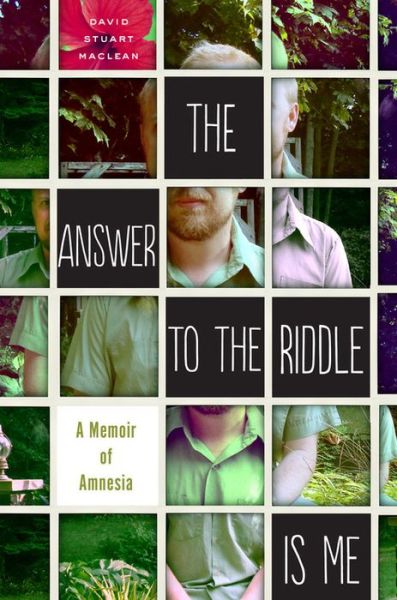
The Answer to the Riddle Is Me: A Memoir of Amnesia by David Stuart MacLean

A memoir from within the mind of an amnesiac, in full terrifying color.

riddle
In the opening scene of The Answer to the Riddle Is Me, David Stuart Maclean “wakes up” in a standing position, in a train station, in a place where English is clearly not the first language. He doesn’t know who he is, where he is or where he was going. A friendly policeman tells him that many tourists there do too many drugs and end up confused; Maclean concludes that he is a drug user and follows as he is told.

This scene is only the beginning of the enormous world of what Maclean can’t remember, and assumptions he’ll be led to make that will often turn out to be false. He was living alone in India on a government grant to aid his work as a novelist when an antimalarial drug he was taking overcame the blood-brain barrier and wreaked havoc. The Answer to the Riddle Is Me is Maclean’s story of amnesia and recovery, with all the false starts, depression, despair and small victories that come with such a trauma. Maclean often wishes himself back in a hospital where he’ll be spoon-fed and his decisions will be made for him, but he slowly, eventually resurfaces.

This heartfelt and painfully candid memoir tracks Maclean in real time, in fractured scenes and then in measured, purposeful steps, and comes with research into the medical issues involved. Readers will be mesmerized by the effort, and perhaps feel as rejuvenated in the end as Maclean does.


This review originally ran in the February 11, 2014 issue of Shelf Awareness for Readers. To subscribe, click here, and you’ll receive two issues per week of book reviews and other bookish fun!


Rating: 7 faces.

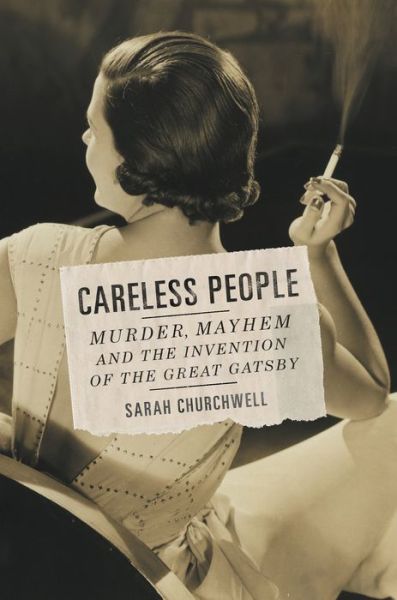
Careless People: Murder, Mayhem and the Invention of The Great Gatsby by Sarah Churchwell

New research and new angles on The Great Gatsby and its place in history.

carelesspeople

Sarah Churchwell (The Many Lives of Marilyn Monroe) takes on F. Scott Fitzgerald’s mythically proportioned masterpiece in Careless People, an expansive study of biography, history, literary criticism and cultural connections. Her inquiries focus on a double-murder involving a socially ambitious lower-class woman and a respected rector, both married but not to each other, found shot to death in each other’s arms. The case captured national attention in 1922, the year Scott and Zelda returned to New York–and the year in which The Great Gatsby is set.

With an appealing, freshly curious manner, original research and newly discovered resources, Churchwell explores the possible connections between Fitzgerald’s experiences in 1922 and what happened at the same time in his most highly regarded novel. She also compares the plot of The Great Gatsby to the real-world action of 1922. In the book, which alternates between the Fitzgeralds’ lives during the period The Great Gatsby came to life with the unfolding of media coverage of the murder case, Churchwell incorporates Fitzgerald’s correspondence, including delightful poems exchanged with Ring Lardner, and lists of slang (including some 70 ways to say “drunk”).

With elements of fun and tragedy–like the lives of its subjects–Churchwell’s study of the Fitzgeralds, The Great Gatsby and the world that birthed it presents new perspectives on a literary icon.


This review originally ran in the January 28, 2014 issue of Shelf Awareness for Readers. To subscribe, click here, and you’ll receive two issues per week of book reviews and other bookish fun!


Rating: 8 unattributed clippings.