The Owl Who Liked Sitting on Caesar by Martin Windrow

A fondly affectionate portrait of a Tawny Owl, tempered by wry wit and British reserve.

owl

Military historian Martin Windrow (Our Friends Beneath the Sands) never considered himself an animal lover. But to aid his recuperation after a skydiving accident, Windrow allowed his brother to acquire for him an unusual pet. Wellington, a Little Owl (“this is a species, not a description”), was more than he had bargained for, and too much for his London flat; when Wellington escaped, Windrow found himself shamefacedly relieved. Convinced to try a different species, he made a second attempt with a Tawny Owl hatchling he named Mumble, and they became fast friends.

The Owl Who Liked Sitting on Caesar is in large part a loving memoir of a dearly departed and singular companion. Windrow also shares his research into the biology, history, folklore and usual habits of the Tawny Owl and its strigine relations. He repeatedly stresses the amateur nature of these studies, but nonetheless imparts wisdom and praise for this corner of the animal kingdom, as well as for his friend of 15 years.

Mumble is an endearing juvenile, a feisty adolescent, and initially tolerant of visitors, but eventually too prickly to admit her master’s friends. Windrow moves out of London and into the country to allow her greater freedom, and watches her personality and customs change as she ages, molts and nests. It has taken nearly 20 years after Mumble’s demise for him to reopen the tender subject of her life, drawing on diary entries that recorded her vocalizations, eating habits, grooming and quirks. Fans of loving memoirs about pets, accessible science writing and dry humor will be charmed by Windrow’s love letter to Mumble.


This review originally ran as a *starred review* in the June 13, 2014 issue of Shelf Awareness for Readers. To subscribe, click here, and you’ll receive two issues per week of book reviews and other bookish fun!


Rating: 7 HHS (hoot and head shots).

Are You My Mother? by Alison Bechdel

motherI am deeply impressed by Alison Bechdel: her self-awareness, her fraught journey through her life and her relationship with her mother, her psychoanalysis and her work in this book (and, I’ll wager, her earlier Fun Home, which I haven’t read but have heard lots of good things about. I’ve put it on the list). This is a memoir of her mother, at first glance; but it’s more self-involved than that, although I don’t mean that in a bad way. That’s just what this book is. It’s the story of her writing a book about her mother, and it’s that book; it’s really a book about herself, then.

It is also a graphic memoir, which is not a format I’ve spent much time on, as I find it a little exhausting to follow; I guess I’m a traditionalist when it comes to my reading matter! I prefer traditional fonts, and certainly hard-copy rather than electronic (well, there are the audiobooks…). I’ve read very few graphic works, and although I’ve enjoyed them all, I tend to find them a little more effortful. On the other hand, though, I sped through these 289 pages easily in an afternoon. Seeing Bechdel’s visual version of herself, her mother, and her other characters (a father, two brothers, two psychoanalysts, a few girlfriends) added to the experience; so, props on the format as well, as it turns out. (This is where I’ll note that Alison Bechdel is also the author of the esteemed comic strip, Dykes to Watch Out For, and a whole pile of books of said comic.)

I feel the need to address a personal element of my reading this book. I have aspired for a handful of years now to write a book about my own mother. And it was my mother who gave me this book – I believe after she went to an author reading at a bookstore? – with a nudge toward writing my own version. This is funny to me now that I’ve read Are You My Mother?, because for one thing, Bechdel’s mom was less than pleased with her efforts (is there a joke in there, Mom?); also, the book I envision, hope, one day to write is not very much like this one. No criticism there, of course. I dream of something a little more like Haven Kimmel’s mother-book, She Got Up Off the Couch. That is, I want to tell my mother’s story (unavoidably mediated through the lens of being her daughter), because I think her life story needs telling. Bechdel’s need was admittedly a little more self-focused. She quotes Virginia Woolf more than once: about To the Lighthouse, “I suppose that I did for myself who psycho-analysts do for their patients. I expressed some very long felt and deeply felt emotion. And in expressing it I explained it and then laid it to rest.” And that is what Bechdel is working on doing through this memoir: psychoanalyze herself, and put her emotions to rest. At the end, it feels like she does, at least a little.

She is quite involved in the idea of psychoanalysis, and does quite a bit of her own research; in addition to relationships with two different analysts, she reads Freud and some lesser-knowns; her personal favorite is one Winnicott. She opens each chapter with a dream, then sets it in the timeline of her life and discusses what it might mean. It’s an interesting lens, and not one I’m familiar with. I’m not ready to go get analyzed, myself, but I came away respecting Bechdel’s process. Some of the papers she studies and quotes from are overly academic for what I was looking to get out of this book, but that’s okay; I let them flow over me and stayed on track with what Bechdel was up to, which was what I was looking for.

I found Bechdel funny, personable, sympathetic, and authentic. I’m glad for her in what she gained through this process. I expect to come back to this book for some thoughts on my own work, if/when I ever get that far; for now, it was a rewarding read. And I’ll be looking for Fun Home. For feminists, lesbians, mothers, daughters, or people with relationships to solve – I recommend this deftly drawn work of emotion and searching. Thank you, Alison.


Rating: 7 sessions.

“Tawny Grammar” by Gary Snyder

And with this post Gary Snyder gets his own tag.

wildEssays from The Practice of the Wild:

  1. The Etiquette of Freedom
  2. The Place, the Region, and the Commons
  3. Tawny Grammar

I am struck, again, at how we encounter the same phrases over and over in this world and in our reading… just days ago I read Land of Love and Drowning, in which certain scenes are set to the song, “Rum and Coca Cola” – generally credited to the Andrews Sisters but originally by Lord Invader. Here it is in the opening pages of Snyder’s essay “Tawny Grammar,” in which he makes the point that music and dance belong to time and place. One time-and-place’s song or dance may be popular in other times and places, but will never belong to them the way – for example – Snyder has formed a memory of dancing with a girl for the first time to this song in 1943. His next point is that, as we established in “The Place, the Region, and the Commons” that we no longer belong to place, “we are not quite sure what our home music is.”

He then takes his reader on a trip to a remote Alaskan village, where he muses with local teacher friends on the question of what it is reasonable, realistic, helpful to teach the children there.

So these children should prepare to be mining engineers? The company will bring its own experts with it. Heavy equipment operator? Maybe. Computers? Computers are in all the schools of the Far North, along with video cameras. There may be more computer literacy in the schools of northwest Alaska than in those of Los Angeles. Even so, there is no guarantee that any school anywhere in the whole world can give a child an education which will be of practical use in twenty yeras. So much is changing so fast – except, perhaps, caribou migrations and the berry ripening.

Good gosh, he wrote this in what year? Still true… my profession, librarianship, has been talking for decades about CHANGE and how we will adapt (the need to be more than people who stamp due dates in books), but this problem is not unique to us. The world is indeed changing so fast; and while I love the idea that caribou migrations and berry ripening may be our constants, and that’s partly true, it’s also true that mass extinctions and climate change have begun to prove him wrong.

He writes about the Inupiaq values posted in the village classroom, and the contradictions we teach our kids: in this case, tribal values vs. external Western societal ones, “one for getting what’s yours, another for being decent.” I am strongly reminded of another few lines – I can’t for the life of me remember who wrote them; was it Doug Peacock? – something to the effect that war is traumatic for our youth because we teach them from the beginning that killing is wrong, right up to the moment we send them out to kill, and then expect them to come home and readjust.

More discussion of our interrelatedness, the importance of social constructs, perspectives, and recognizing the nonhuman world too:

American society… operates under the delusion that we are each a kind of “solitary knower” – that we exist as rootless intelligences without layers of localized contexts. Just a “self” and the “world.” In this there is no real recognition that grandparents, place, grammar, pets, friends, lovers, children, tools, the poems and songs we remember, are what we think with.

He goes on to tell us what he means by grammar, and the importance of language in our interactions with the world, and muse on what language really means. Under the subheading “Nature’s Writing”:

The stratigraphy of rocks, layers of pollen in a swamp, the outward expanding circles in the trunk of a tree, can be seen as texts. The calligraphy of rivers winding back and forth over the land leaving layer upon layer of traces of previous riverbeds is texts.

While this makes for a lovely metaphor, I think he means it – and I understand it – far more literally. “A text is information stored through time.”

I was tempted to play with his Whorfian challenge:

“Is there any experience whatsoever that is not mediated by language?” I banged my heavy beer mug sharply on the table and half a dozen people jumped and looked at us. We had to give up and laugh at this point, since it always seems to come back to an ordinary mystery.

Isn’t that an example of just such a one? Or in other words, if a tree falls in the forest, etc. If we have an experience – a shared but wordless experience – have we experienced it, or shared it, any the less for not discussing it in language?

As much as I enjoyed this essay, which was intelligent, thoughtful, musing, informed, and seasoned by references to the classics and mythologies from around the world (I love this), I found myself wondering if there was a point coming down the line. Of course, there rather was, but it was typically cerebral and conceptual in nature, so I needed Snyder to help me wrap it up. He does so in his conversation with a linguist friend, about whether language is biology, and whether it follows evolutionary lines (sort of, in its own way, but not in the way biology does); and finally by quoting Thoreau and Dōgen. The end point, as I take it, is this: language should not be a weapon, considered as belonging to humans alone and used to differentiate ourselves from the world, but should be considered one of the many ways in which we live in and with rather than above.

I close by asking a question. Do we agree with Snyder in the following suspicion?

Nonhuman nature, I cannot help feeling, is well inclined toward humanity and only wishes modern people were more reciprocal, not so bloody.


Up next, essay 4: “Good, Wild, Sacred.”

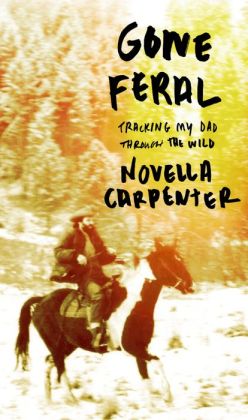
Gone Feral: Tracking My Dad Through the Wild by Novella Carpenter

Back-to-basics urban farmer Novella Carpenter investigates family in her second contemplative memoir.

gone feral

When Novella Carpenter was 36, her father went missing. It turned out to be a false alarm, but the threat of losing him helped Novella realize that, if she was ever to get to know George Carpenter, she might be running out of time, since their relationship had been stuck somewhere between uneasy and estranged for years. Gone Feral: Tracking My Dad Through the Wild charts her journey home.

After a romantic meeting in 1969 San Miguel de Allende, Mexico, her parents embarked on an idealistic European tour before settling on a farm in Idaho in “voluntary poverty.” But the marriage ended when Novella and her sister were five and seven, and their mother moved them to Washington State; Novella didn’t see much of her father after that. Now, three decades later, she has a small urban farm in Oakland, Calif., which she documented in her memoir Farm City. When she and her boyfriend, Bill, decide to try to get pregnant, she wonders about her own genetic legacy. Breeding ducks, chickens and milk goats has taught her the importance of the stock line. In working to become a parent herself, after the scare of George going missing, she goes in search of her father, hoping to build the relationship they never had.

George is still scraping by near the Idaho farm where Novella was born. He’s a regular backwoods curmudgeon, making a meager living by logging and cutting firewood and sharing his cabin with wild animals. She hopes they’ll go fly-fishing, re-creating the romance of A River Runs Through It. Maybe they’ll forage for wild foods or he’ll teach her how to fell a tree perfectly. Instead, he rants about the devils that possess the old family farm and exhibits previously unnoticed signs of post-traumatic stress disorder (the legacy of his service in the Korean War). Novella is disturbed, angered all over again at what she sees as his abandonment, and concerned about the genes she’ll pass on to a child, if she ever succeeds in getting pregnant.

Gone Feral is reflective, as Novella ponders the paradoxes of her upbringing–for example, the liberal hippie value system (hers and her mother’s) that rejects her father the mountain man–and wonders what it is she really wants for her own child. Traveling through the country and her own past teaches her about herself, her origins, and how to build a future that includes father as well as child.


This review originally ran in the May 20, 2014 issue of Shelf Awareness for the Book Trade. To subscribe, click here.


Rating: 5 babies.

guest review: The Worst Hard Time: The Untold Story of Those Who Survived the Great American Dust Bowl by Timothy Egan, from Mom (audio)

Thanks Mom for sending these reading notes.

I’m reading a Playaway version of Worst Hard Times. I picked it up because it’s a World Book Night item, on display at the library when I went to pick up my box of Catch 22 to give away. I was most interested in this audio player-book just sitting on the shelf. (Add earbuds, battery, and stir.)
worsthardtime
It’s a pretty grim picture. Worst Hard Times is the dust bowl story, and follows people’s stories in several of the farms & towns of the worst areas. Egan writes for the NY Times, and recently wrote a scathing attack on the idea that the landslide in Oso was one of those “acts of God” that are so unfortunate but . . . . (Actually there was lots of warning by geologists, an earlier landslide in the last decade, with the logging of the hilltop as the coup de gras).

The Dust Bowl is called the worst man-made disaster of the U.S., and easily understood in hindsight as a tragic result of lack of understanding of natural forces, as well as grasping for even more wealth when the land was giving its riches reliably during the wet years of the Twenties. He gives more details than can be born, almost: the dust swirling, no plates set out until time to use them, wet bedsheets hung up over windows every night, people dying of “dust pneumonia.” The old cattlemen said it was a crime to uproot the prairie grass, and that the land would be ruined – more importantly, to them, even than the loss of the land for cows.

This area, which was called the Great American Desert, was given to the Apaches. When the government decided to give the land to settlers, Texas, especially, made every effort to eradicate the buffalo in order to drive off the Indians.

So, a good story. The reader, not so much. (He’s “an accomplished actor, director and combat choreographer” according to the audio blurb. Huh?) He put a little too much hick into the voices when he quotes them, and, like some readers I’ve noticed, makes women’s voices especially irritating, with a too-high intonation. The most irritating, though – a subjective reaction, I know – is his pronunciation of Boise City as /boyZAY/. Really?

Oh, Mom, I do so get it! The pronunciations from my recent read of Bryson’s A Walk in the Woods are fresh in my mind – unfortunately the only one I can cite specifically is urinal as “your-RYE-null” (very strange!) but there were others, equally odd & distracting. I think I’m more upset by the overly hick accents and the obnoxious women’s voices, though.

Does Egan overtly make the comparison between our hubris & lack of foresight with the Dust Bowl, and same with the recent mudslide (etc. etc.)? Or leave us to figure it out? If the latter, readers like yourself make the connection without difficulty; but I always appreciate the former. If you have a statement, go ahead and make it, please! Stand up for what you think.

I would say yes. I’m not through yet, but he lets a lot of characters say this. He also writes of the preachers who said that people are being punished for some sin, or that prayer & positive thinking will make it all better.

The sodbusters are all from the devil, according to the cattlemen. The saddest part of that is not that they are right, but that the dust dunes and drought ends up killing even the grass that remains.

There’s a scientist who explains it perfectly, and after Roosevelt’s election, he gets put in some government function to help solve the problems. There’s a town where the people agree to follow this guy’s recommendations for saving the land. Don’t remember the details, but hope to see this followed up in a later chapter.

There’s a newspaper owner (Dalhart or Boise City) who stops reporting all the bad stuff. Then he decides the people just need to embrace the situation. Look at the black clouds, the wind, the dead earth, and see the majesty of nature. Nuts! He doesn’t mention embracing all the death.

So I think Egan will have a strong conclusion to this effect.

The roaring boom of prosperity and the miracle of turning land into wheat (=$$) is a big theme. Plain people learning that they could have become rich if they planted every acre. They couldn’t tear up the prairie fast enough. We even have what he calls suitcase farmers, entrepreneurs who come to town and pay someone to rent their land and plant wheat. They just wait around for the harvest and the profits. After the bust and the drop in wheat prices, off they go, with no more interest in the land they have mined. How much hubris can you stand?

This does sound like a good story – though decidedly grim, as you say. I’d like to put it on the (long) list… Thanks for sharing!

The Reef: A Passionate History: The Great Barrier Reef from Captain Cook to Climate Change by Iain McCalman

The Great Barrier Reef is both easily understood and awe-inspiring in this history of its discovery, exploitation and beauty.

reef

With The Reef, Iain McCalman (Darwin’s Armada) has composed “a passionate history” of the Great Barrier Reef, opening with his own long-awaited voyage (part of a reenactment of Captain Cook’s original trip). Following the prologue, he withdraws to the role of historian rather than participant, and chronicles the Great Barrier Reef as known to Western society over the last few centuries.

The Reef is divided into three parts. Beginning in 1770 with Captain Cook and proceeding through later explorers who helped chart the reefs in the 1800s, “Terror” emphasizes the threat the reef posed to ships and their navigators, and the fear of cannibals and others thought to inhabit the area. In Part II, “Nurture,” the reef begins to offer refuge for those seeking to escape civilization or make a fresh start. Europeans are taken in by native islanders, or discover island paradise; naturalists arrive, captivated by the biodiversity and beauty of the area while beginning to realize that coral is a resource that can be exploited. “Wonder” sees the scientific community take an interest, disagreeing about the origins and biology of the reef. Ecology emerges as a new field of study, its proponents seeking to place the reef in the larger context of other natural environments, to study relationships and cause and effect. Individual activists work to defend the unusual and changing ecosystem from mining, oil spills, overfishing and the rough use of tourism.

At the end, we are introduced to nature-loving scientist J.E.N. Veron, nicknamed “Charlie” after Charles Darwin, an engaging character who communicates the final dire message of the Great Barrier Reef’s looming extinction. Returning to the personal nature of his prologue, McCalman’s epilogue speaks to the grim consequences of climate change but holds forth hope as well.

The few images in The Reef include portraits of the personalities involved but not the corals themselves (although McCalman refers his reader to books that offer the latter). This work’s strengths include a coherent structure, friendly narrative style and a reasoned culminating call to action that does not disrupt its primary role as a comprehensive history. Plentiful notes indicate strong research, but McCalman’s writing is accessible to any reader interested in the intersection of science, nature and history. From perceived threat to resource to paradise destination to climate-change indicator–Charlie Veron calls corals “the canaries of climate change”–the Great Barrier Reef is fully explored in this engaging study.


This review originally ran as a *starred review* in the May 6, 2014 issue of Shelf Awareness for the Book Trade. To subscribe, click here.


Rating: 7 dives.

The Inheritor’s Powder: A Tale of Arsenic, Murder, and the New Forensic Science by Sandra Hempel

(Happy birthday today to my handsome Husband!)

inheritorsWhat a juicy title and cover; right up my alley. True crime, history, some light (accessible) science, and a little murder mystery. Yes, please.

Sandra Hempel’s book about the arsenic poisoning epidemic of the early 1800’s, and the advances in forensic medicine and pursued it, is very much in the tradition of The Invention of Murder and The Remedy, obviously. To a lesser extent it also relates to The Peculiar Case of the Electric Constable and The Devil in the White City. I don’t mean to say that Hempel’s work is unoriginal, you understand, but these are the books I’ve read that feed my interest in the subject, and can continue to satisfy yours.

Much of this story was familiar to me, mostly from The Invention of Murder. Britain in the 1800’s saw an increase in crime, particularly murder – or at least an increase in its recognition and efforts to curb it – and the birth of the police force and investigations. The early 1800’s also saw a wild increase in the use of arsenic both as a household solution to just about any ailment, and as a quick and easy way to dispatch one’s fellow human. It was called “the inheritor’s powder” because so many people apparently used it to gain an inheritance ahead of the natural schedule. The growing prevalence of cheap life insurance or “burial clubs” played a role here as well.

This background is conveyed easily and accessibly and, again, is also covered in The Invention of Murder; where The Inheritor’s Powder breaks new ground is in delving into arsenic more deeply, and specifically into one sensational case that illustrates the larger issues. In November of 1833 a well-to-do farm family fell ill after their morning coffee; the elderly patriarch would suffer several painful days before dying, while the others would recover. The local doctor suspected arsenic poisoning almost from the first, and conducted some investigations of his own, including saving samples of the coffee grounds in question and the old man’s vomit. (It was later noted that there was so much vomit around that there may be some question of whose vomit it really was…) “Investigations” and “evidence” were new concepts, and our modern understandings would be incredulous at the attempts, but for his time, this local doc was proactive and scientific in his methods. There was a police inquiry, an inquest, and eventually a trial in which a lazy grandson was acquitted (on questionable grounds); but various members of the family came under suspicion and we still don’t know exactly who or what killed George Bodle.

Hempel details the court case and the public interest that followed it. Charles Dickens gets some play here (again, as in The Invention of Murder), which adds to the macro-view of this issue in society and in history: the literary minds of the day were at least as interested in the arsenic epidemic as anybody else. Hempel also looks into the science of testing for poisoning, or specifically for arsenic. Medical science was at such a stage that it was very difficult to distinguish one malady (say, poisoning by arsenic) from another (say, food poisoning by rotten fish) – and of course this question is separate from the question of whether poisoning by arsenic was intentional and therefore criminal, or accidental. Again, I must stress as Hempel does, arsenic was pretty ubiquitous at the time; people mixed it up and applied or swallowed it in various forms for a wide range of complaints. Chemists (or as we see here, chymists) were hard at work on the issue of testing for the presence of arsenic and various substances; cases like the Bodle murder were influential in moving the science forward.

I found this topic rather fascinating, and it was a good way to get a look at what 1830’s English life looked like. For example, I was interested to read about the conflict over who would pay for the investigations and trial – the local parish? Bodle’s estate? his survivors, or the executors of his will? Nobody wanted to pay; but society couldn’t just let this murder go unpunished, either. This was an issue that wouldn’t have occurred to me.

Hempel’s writing and research are fine, but lack the quirky style, entertaining writing, or personality that make a work of popular history really stand out. For readers interested in the topic, by all means go forth. But this is not enough of a page-turner to convert the dubious.


Rating: 6 grains.

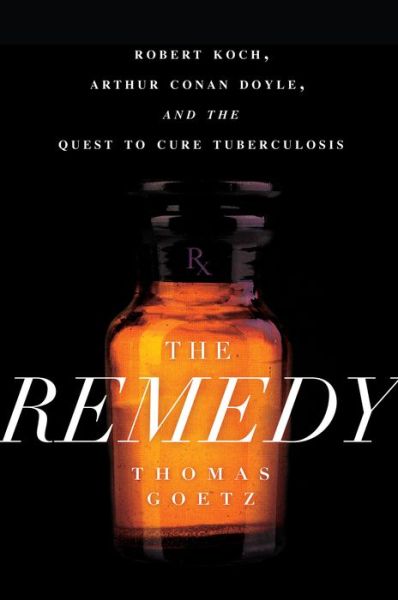
The Remedy: Robert Koch, Arthur Conan Doyle, and the Quest to Cure Tuberculosis by Thomas Goetz

The compelling connection between Sherlock Holmes and the search for a tuberculosis cure.

remedy

Thomas Goetz’s The Remedy achieves a rare feat: serious, accurate scientific writing that is also engaging and entertaining.

In the mid-1800s, the practice of medicine largely resembled groping in the dark. Patients came to doctors “with the hope of a cure but never the expectation of one.” The final decades of that century, however, were marked by extraordinary advances in science, technology and medicine: “germ theory” was developed, infectious diseases were better understood, and more-modern notions of hygiene and sanitation began to catch on. Robert Koch, a provincial German doctor, pioneered experiment design and research standards, and in 1882 he identified the bacterial cause of tuberculosis–the most deadly disease in human history.

Koch attempted to develop a cure for TB, which he presented in Berlin. Despite meticulous empirical methods he had established, Koch’s zeal for his remedy led to his downfall, as his treatment was unprovable. An obscure British doctor and sometime writer, also provincial, was the first to pen an appropriately skeptical response. Despite his criticism, Arthur Conan Doyle was a great admirer of Koch and appreciated his scrupulous observations; in fact, Goetz asserts that without Koch, “there may never have been a Sherlock Holmes as we know him.”

The intersection of Koch and Doyle brought the spirit of scientific discovery to crime detection, and the spirit of investigation to scientific research. Goetz’s exploration of their lives and their impact on the world as we know it is both historically significant and enthralling.


This review originally ran in the April 18, 2014 issue of Shelf Awareness for Readers. To subscribe, click here, and you’ll receive two issues per week of book reviews and other bookish fun!


Rating: 9 dead rabbits.

In addition to my shorter review, above, I’d like to add a few more details. A big part of what I loved about this book was the breadth of scope. For example, to provide his readers with an accurate view of what Koch, Lister, Pasteur, and other scientists of the day were up against, Goetz describes at some length the state of medicine in their time. He warns us against coming too easily to the idea of germs and microbes as self-evident; and funnily enough, I was talking with a friend about this book, and she said just that: isn’t it obvious that surgeons would wash their hands beforehand?? But as Goetz so carefully points out, no, not obvious at all; when first presented as a theory, germs were as ridiculous as the idea that the earth might be round. Etc.

Along with medical background, we learn about the common practices of farming and domestic life; we learn about the lingering national hatred that would have pitted Pasteur and Koch so strongly against one another in the aftermath of the Franco-Prussian War; and about the social constructs that led Arthur Conan Doyle to work so hard at being a doctor when he really wanted to be a celebrated author. (I was reminded of other authors I’ve read about, like Louisa May Alcott: Doyle was always frustrated by the great success of his detective stories in the face of the failure of his more literary novels, just as Alcott was annoyed by the success of Little Women–a book she didn’t like very much. And you know, Doyle killed off Holmes, only to be pressured into his resurrection.)

I suppose I’m a sucker for breadth of scope. Nonfiction that covers history, science, social issues, and literature – and does it in fine literary style, to boot – will always win my heart. Back to the theme of synchronicity that I’m written on before: the older I get and the more of this interdisciplinary study that I encounter, the more I am convinced that this is way we should study history. How many of us found history boring in high school? I did. But once you link music, literature, fashion, politics, science, military conflicts… on and on, once you link all these threads so that the world of the past comes alive – who could not be fascinated? I think we do our kids a real disservice by not embracing this kind of study in their regular schooling.

The Remedy is both a good read, and an examination of a piece of world history whose importance really can’t be overstated.

“The Place, the Region, and the Commons” by Gary Snyder

This is the second essay in Gary Snyder’s collection, The Practice of the Wild. The first was “The Etiquette of Freedom.” I am proceeding, very, verrrry slowly.

wildI found this essay much more accessible than the first, which you may recall I found a little bit dryly academic and theoretical and less useful for reclaiming or repurposing our real world. This one jumps right in with a discussion of what a place means to us, and what it used to mean to us. In human history, there was a time when we were defined by our physical, geographical surroundings; culture was inextricable from the place in which it was set, with mythical explanations for a nearby mountain or a nearby stream, and close cultural understandings of native plants and their uses, etc. This really got me thinking about how disconnected we are now from our place – which of course is Snyder’s point. For instance, pardon my getting personal here, but I have wondered about my own cultural identity in terms of place…

I was born in Texas and have lived here all my life: just shy of 32 years at present. My mother is a native Texan, too, and lived here over 60 years before she left. My father’s parents moved around a lot when he was growing up, so in a way he’s from nowhere; but the family roots have always been in New England (Vermont, mostly), and he clearly identifies with that past, despite having lived in Texas for the majority of his years, too. I’m from the South (maybe not the “Deep South”; under many folks’ definitions, Texas doesn’t generally qualify, or only East Texas does), but I’m also from the fourth-largest city in the country, so I’m no country girl. And I’ve been brought up by radical leftists, so I am politically very much a minority in my home region. As a city girl, I’m also guilty of the removal from my local plants & trees that Snyder cites. I have sometimes had the odd feeling that my father is surprised to find that he’s raised a Southern girl – but he raised his daughter in Texas for all her life, so whence this surprise? I think he thinks of himself as somehow not a Southerner despite all his years here. He was born in the region; spend a few years of elementary, high school, and college years here; he raised his daughter here. Is he not “from” the South because he doesn’t think of himself that way?

Sorry to have gotten sidetracked. What I’m trying to point out is that we no longer have our fingers in the dirt where we were born or live, figuratively or literally; but we used to. And that’s what Snyder is getting at. No wonder we’re confused or distressed; we don’t know who we are any more.

He talks about bioregions, about the naturalness of conceiving borders based on ecosystems, or the area in which a certain plant grows or a certain animal roams. Why draw county lines so that one county stretches over a high mountain pass that allows no travel for part of the year? Better to use that high ridgeline as a boundary line. Etc.

I stood with my climbing partner (Allen Ginsberg) on the summit of Glacier Peak looking all ways round, ridge after ridge and peak after peak, as far as we could see. To the west across Puget Sound were the farther peaks of the Olympic Mountains. He said: “You mean there’s a senator for all this?”

And then he talks about the concept of the “commons,” which ruled for much of human history worldwide. The commons were that land that was usable by all for shared grazing, gathering firewood, building materials, and general foraging; it served as a buffer zone between the absolute wild and the village, therefore allowing the wild to exist in itself, and contributing to the health and well-being of both wild and village. I love the line, “the parts less visited are ‘where the bears are.'” It reminded me of that old-time phrase seen on maps where the known world ends: “here be dragons,” which is charmingly fantastical and filled with possibilities. (There is also a good book by that title.) The commons are about the wild; but they’re also about human society, culture, our relationships with each other – as much as they are about our relationships with the rest of the world, the parts that aren’t human. He writes, “The commons is a level of organization of human society that includes the nonhuman.”

This segues nicely into a discussion of a human compact or contract not only with one another (what we call “society” – the agreement that we won’t kill each other [except in times of war… don’t get me started]), but with the nonhuman world. The idea that we owe something to that nonhuman world, that flowers and trees and newts and grizzly bears and even dirt are entities that we should, must, respect is an idea that I find self-evident; but clearly that isn’t the majority opinion, or we wouldn’t be where we are today. Derrick Jensen knows what I mean.

Of course then Snyder is compelled to tell us about the death of the commons, the enclosing of those common spaces around the world and how and when it took place, and its economical and ecological toll. In search of ever-increasing profits and the famous “growth” we worship, we fenced in the commons, made them private land (or exploitable “public” land), stripped them of resources and exported those resources for money. Now we have less wild, fewer resources, and the rural homeless were sent to the cities to work for wages. Again, I find these arguments easy to agree with – I’m nodding throughout – but not everyone will react that way. Finally, he debunks the “so-called tragedy of the commons,” the idea that if it’s free to all, some will abuse it. He points out that commons are properly not ungoverned, but are governed by the community, and that this model worked for a great many years.

A survival of commons practice in Swedish law allows anyone to enter private farmland to pick berries or mushrooms, to cross on foot, and to camp out of sight of the house.

Can you just imagine!! I can’t, not living in Texas, where we shoot people for setting foot on our property.

I love the bioregional perspective, and I certainly agree that “we need to make a world-scale ‘Natural Contract’ with the oceans, the air, the birds in the sky.” I think he speaks to the beautiful idea of the commons – community-based, in a community that is larger than humankind – articulately and passionately and sensibly. I wish more people would read his work.

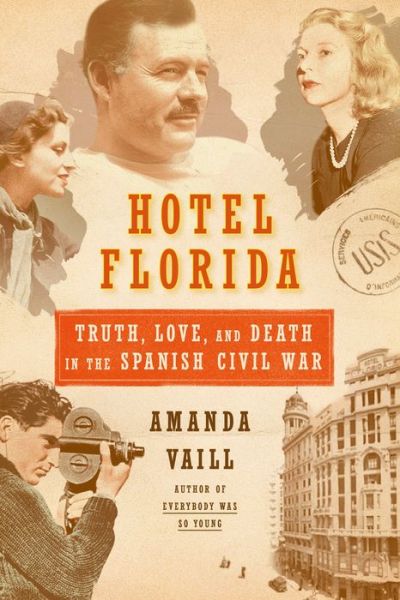
Hotel Florida: Truth, Love, and Death in the Spanish Civil War by Amanda Vaill

Vaill’s story of three love affairs, set against the Spanish Civil War, yields a nuanced perspective on war journalism and romance.

florida

During the Spanish Civil War, Madrid’s Hotel Florida was a meeting point for war correspondents, press officers and foreign intellectuals. Amanda Vaill (Everybody Was So Young) uses the hotel as a focal point to examine the war through the lives of three men and three women. These six individuals–all leftists of various stripes and pedigrees, converging on Spain from all over Europe and the U.S.–allow Vaill to range freely through the history of the war, which raged from 1936 to 1939.

Vaill follows her subjects chronologically, shifting locations through Francisco Franco’s rebellion against the Popular Front government and the events that led up to the Spanish Civil War. Arturo Barea of Madrid serves as a censor for the Propaganda Department, finding his leftist politics and commitment to truth well matched by his new assistant Ilsa Kulcsar, who comes from an Austrian resistance cell and speaks many languages. Meanwhile, Ernest Hemingway feels stifled in Key West; a new war to cover provides him with an excuse to get away from his wife and find fresh material to revive his stagnant writing. The attractive young journalist he’s just met, Martha Gellhorn, is also eager to get to Spain. Finally, a young man named Endre Friedmann is exuberantly pursuing his passion for photography in Paris when he meets the charming Gerta Pohorylle. They set off for Spain together with their ideals on their sleeves. Taking new names–Robert Capa and Gerda Taro–they will find fame and love and change the face of war photography forever. One of them will die on Spanish soil.

In addition to explaining the complexities of the Spanish Civil War, Hotel Florida lives up to its grand subtitle. Vaill examines the meaning of truth as conceived by each of her six players–writer, journalist, translator, censor, press officer, photographer. Their romances, all born of war, and the deaths to which they bear witness bring emotion and heartbreak. Buttressed by plentiful research, Vaill’s prose exhibits touches of Hemingway’s own writing style and a gift for narrative that keeps Hotel Florida accessible and engaging.


This review originally ran in the April 15, 2014 issue of Shelf Awareness for the Book Trade. To subscribe, click here.


Rating: 8 ideals.