All the Wrong Places by Philip Connors

Two disclosures on this one: I read an advanced reader’s copy; and I consider the author a friend.


wrong placesFrom the author of Fire Season which I loved so much (first-ever 10 out of 10 here at pagesofjulia) comes a newer and even more personal story. Connors’s first book was about life as a fire lookout in the Gila Wilderness; we learned a great deal about the author himself, including some of the demons he’s fought in his life; but we also learned a lot about federal fire management (historical and present), the flora, fauna and atmosphere of the Gila, and what it’s like to balance the isolation involved in a profession I’d never heard of before, a profession “in its twilight.” It was both a deeply personal book, and a book about the world.

By contrast, All the Wrong Places is a singularly personal story. As briefly mentioned in Fire Season, Connors had a younger brother named Dan, who killed himself when they were both in their early twenties. Connors has written about this event and its aftermath in a few articles since; and now, in book-length form. I can only imagine it was difficult, writing a book about long-term pain.

This story follows Connors from the University of Montana, where he was enrolled at the time of the suicide, through his years working in New York for the Wall Street Journal (which considering his politics is a serious conflict in itself); his experience there during the events of September 11; and his path to becoming a fire lookout. The essence of the book, the questions it asks and tries to answer, are why? and how do I deal with this; who am I to become in this aftermath? He tries to investigate his brother’s death, his decision and final moments; but more than that question, All the Wrong Places considers what Connors will be in his own life, how this effects him, how to deal & recover. It would be too pat for Connors to put a full stop to that questioning, but he does come to some place of …if not conclusion, maybe a degree of acceptance. If not redemption, peace.

Connors’s writing has many strengths, but in this case, the greatest may be his ability to be sometimes, astonishingly, funny even while handling this shocking pain and terrible tragedy. He remains lyrical in the oddest, or most difficult, circumstances. In studying the collected notes of a man obsessed with McDonald’s, who’d visited over 1,000 of them and scrupulously recorded their nuances:

Their banal repetition had a strange poetry to it, a kind of Whitmanesque list-making for the end of the millennium; in almost every instance he’d noted what he’d eaten, and the thought of all those empty calories, millions and millions of them, staggered me.

This poetic description of the absurd and vaguely ghastly, in itself, is oddly satisfying. There’s something intriguing going on there.

In other words, his writing is as fine as ever, humorous and thoughtful and touching, and I hadn’t realized how much I’d missed his voice, which is thoroughly recognizable and comforting.

But less comforting, again, is the subject matter at hand, so painful, and so personal. It’s astounding to think about baring oneself to this extent to anyone willing to buy a book at a bookstore. I consider Phil Connors a friend: after I loved his first book he wrote to me, we corresponded a bit, and then Husband and I got to meet him in person too. I thought I knew him moderately well, but learned so much more in this book. I wonder how that colors my reaction; it’s closer to home this way. The pain of others can be paralyzing; and frankly it’s easier with a degree of remove, as in my former job at a cancer hospital, where my library patrons were held at a professional distance (even though we talked about some pretty personal stuff). I want to compliment Connors’s “bravery” in telling this story, but that feels too simplistic (and I bet he’d brush off the compliment). I’m getting less eloquent here, I know. Thank you, Phil, for sharing your story. I found it riveting, I’m so glad you’re okay, and even though this may not have been your goal, I think it might help some other people.


Rating: 9 faxes.

I read an advanced reader’s copy of this book, which is subject to changes before publication. All the Wrong Places will be published in February 2015.

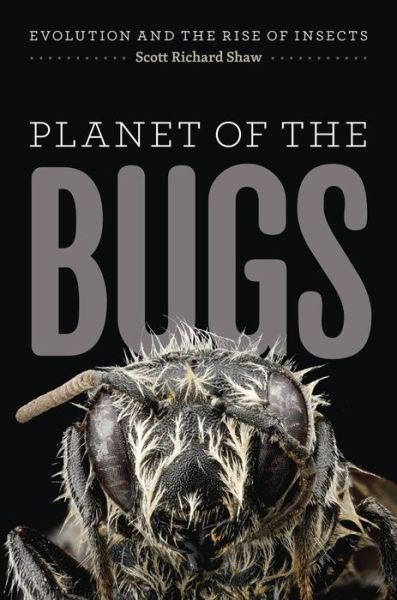
Planet of the Bugs: Evolution and the Rise of Insects by Scott Richard Shaw

An impassioned view of insect evolution and the awesome implications of bugs for all life on earth.

bugs

Scott Richard Shaw has been collecting bugs since he was four. Now a professor of entomology at the University of Wyoming, he shares his passion for these creatures and their cosmological significance in Planet of the Bugs.

The scope of this work is immense. Shaw begins with the Cambrian period, more than half a billion years ago, by examining the sea-dwelling arthropods that first developed body armor and mobility, and then follows them through prehistory and into the modern day. He argues for the predominance of insects, as they are Earth’s most diverse and adaptive animals and thus the best survivors over time. The dinosaurs were impressive, and we like to emphasize the importance of our own human species in earth’s history–he criticizes this human-centrism throughout–but Shaw makes an excellent case that insects “literally rule the planet.”

Planet of the Bugs is packed with intriguing trivia. Parasitic flies feed in turn on the blood of vampire bats; caddisflies are “nature’s most adept architect,” building portable, protective cases for themselves using the natural materials around them; the griffinflies of the Carboniferous period (which looked something like huge versions of the modern dragonfly) had wingspans of two to three feet; female sawflies and wasps choose the sex of their offspring.

Shaw boggles the reader with his enthusiasm and expertise, and reveals a playful side. Among his many encyclopedic turns, he waxes philosophical and indulges in metaphor and even humor, resulting in a surprisingly accessible and entertaining read. A love of bugs is not required.


This review originally ran in the September 23, 2014 issue of Shelf Awareness for Readers. To subscribe, click here, and you’ll receive two issues per week of book reviews and other bookish fun!


Rating: 7 old wings.

So We Read On: How The Great Gatsby Came to Be and Why It Endures by Maureen Corrigan

An impassioned guide to The Great Gatsby by a highly qualified and devoted fan.

so we read on

NPR’s Fresh Air book critic Maureen Corrigan (Leave Me Alone, I’m Reading) didn’t like The Great Gatsby the first time she read it for school when she was a teenager. But after teaching and lecturing about it for decades, her enthusiasm and ardent passion for F. Scott Fitzgerald’s classic novel infuse So We Read On (a title that spins off the novel’s famous closing line).

Corrigan argues that “if there is such an animal [as the Great American Novel], then The Great Gatsby is it.” She feels that many readers who encounter Gatsby for the first time in high school or even middle school are too young and inexperienced to appreciate it fully; many will unfortunately and unnecessarily form a dislike for a book that they might learn to love later in life. She also debunks a widespread interpretation of the novel as a grand, decadent celebration of materialistic American culture; it is, rather, an enormously subtle criticism of a class system that Fitzgerald felt had snubbed him.

In exploring these and other ideas, Corrigan undertakes a close reading of the text, examining language and punctuation and considering the context of the Roaring ’20s, the Lost Generation, Fitzgerald’s literary colleagues (including his “frenemy” Ernest Hemingway) and family (the famous or infamous Zelda). Despite her scholarly method, Corrigan’s work remains resolutely accessible to the everyday reader. Indeed, those who haven’t encountered Gatsby since high school are her intended audience. With humor and even the occasional pun, Corrigan offers the love of a classic novel to any and all.


This review originally ran in the September 9, 2014 issue of Shelf Awareness for Readers. To subscribe, click here, and you’ll receive two issues per week of book reviews and other bookish fun!


Rating: 9 dives.

Worn Stories by Emily Spivack

A meditative collection of short, accessible memoirs documenting the meaning of clothing.

worn stories

Emily Spivack’s fascination with the past lives of clothing led her to create a website, wornstories.com, on which she collects “sartorial memoirs” from friends, family, acquaintances, celebrities and everyday strangers. Now her book, Worn Stories, assembles those accounts. They are short, and generally recorded as told to Spivack but are occasionally written by the contributor. Each brief narrative is accompanied by a photograph of the item, against a white background, adorned at most by a clothes hanger. The text describes how the speaker came to own the article, or what took place in and around it that made it worth keeping–sometimes for decades. A dress, a pair of shoes, a hat or accessory conveys an emotion or an experience: love, loss, accomplishment. They may symbolize a place or a time in a life, or remind us of what we don’t want to forget.

These vignettes are at turns hilarious (humorist John Hodgman’s long-sought Ayn Rand dress or trucking manager Pamela Jones’s party dress), silly (reporter Jenna Wortham’s sequined top) and poignant (creative ambassador Simon Doonan’s Lycra shorts or writer/bartender Kelly Jones’s tie-dyed wrap skirt). Some have historical significance: Holocaust survivor Dorothy Finger had an ill-fitting suit made from a piece of wool fabric that was the only thing she saved from her life in Poland.

Spivack speaks directly to her reader only in a brief introduction. The collection of contributors’ reports forms a whole that is entertaining, thoughtful and loving of the universal tales we have to tell about the garments we carry through our lives.


This review originally ran in the August 29, 2014 issue of Shelf Awareness for Readers. To subscribe, click here, and you’ll receive two issues per week of book reviews and other bookish fun!


Rating: 8 stains.

Smoke Gets In Your Eyes (& Other Lessons from the Crematory) by Caitlin Doughty

A young woman’s mortuary career and enthusiasm for death inform an entertaining and thought-provoking memoir.

smoke

At 23, Caitlin Doughty had an undergraduate degree in medieval history and a lifelong fascination with death. Interested in turning her preoccupation into a profession after a move to the Bay Area, she found it surprisingly difficult to get a job in the mortuary business without relevant experience, but eventually secured a position as crematory operator at Westwind Cremation & Burial in Oakland, Calif. In just a few months of working with her deadpan boss Mike, socially awkward body-transport driver Chris and jovial embalmer Bruce, Caitlin learned a great deal, as she relates in her debut, Smoke Gets in Your Eyes.

She learned how to cremate bodies (do the larger people early in the day, babies at the end), what exactly happens after the oven (bones have to be ground down in a special blender to create the uniform ashes the family expects) and how to pick up a recently deceased body from a family at home (mostly, keep your mouth shut). She learned that dead people aren’t really scary, once you get used to them, and came to believe that wired jaws and copious makeup are less attractive and less respectful than simply letting the dead look–and be–well, dead.

In her memoir of “lessons from the crematory,” Doughty shares tidbits of research into the death rituals and mythologies of other cultures throughout history: Tibetan sky burial, the dutiful cannibalism of the Wari’ people in the jungles of Brazil, ancient Egyptian embalming techniques. She points out a central difference between contemporary Western practices and theirs: the Wari’ and others conform to a system of beliefs, where our so-called modern death-disposal techniques arise from a fear of mortality and a need to hide dead things away. In her experience at Westwind, and later in mortuary school, Doughty developed her own value system, emphasizing an honest relationship with our mortality and a frank acceptance of and love for our dead.

Doughty’s research, musings and anecdotes about the crematory are charmingly conveyed in an earnest yet playful voice, brimming with surprising humor as well as insight. Her coming-of-age tale encompasses love and life (and death), and her appeal for a new cultural approach to the end of life is refreshingly frank and simple at the same time that it is profound. Despite addressing a subject that will strike some as morbid or unpleasant, Doughty is an engaging and likable narrator,and Smoke Gets in Your Eyes is thoughtful and approachable.


This review originally ran as a *starred review* in the August 21, 2014 issue of Shelf Awareness for the Book Trade. To subscribe, click here.


Rating: 8 dresses.

guest review: Fire Season by Philips Connors, from Tassava

reviewYou will recall from way back my original post about this very fine book, and my dad’s review of same. Now I have another to add to the accolades.


fireFrom his website, I’d like to share with you my buddy Christopher Tassava’s review (even with the undeserved praise in that opening line).

My ridiculously well-read friend Julia recommended that I read Fire Season, a book-length essay by Philip Connors on his work as a fire-tower lookout in the mountain forests of New Mexico. Connors’ writing is amazing, evoking both the wildness of his setting (which I now have a deep desire to see firsthand) and the civilized nature of his work, which aims, at its base, to preserve what man values in nature. I loved lines like

Time spent being a lookout isn’t spent at all. Every day in a lookout is a day not subtracted from the sum of one’s life.

which seems as true for my favorite outdoor activity (riding bikes!) as it does for being a lookout.

Connors’ skills at crafting prose are matched by his skills at explaining the American perspectives on fire and on wilderness. Much of the book concerns how the U.S. Forest Service – Connors’ employer – has understood the primordial force of wildfire, and how it has reacted to it. The historical material is fascinating on its own (someone seriously proposed clear cutting the Rockies to prevent fires!) and as context for Connors’ own stints in the watchtower. Not all of the fires he spots garner a response from the Forest Service: some are left to burn acres and miles of forest, contributing to the endless natural cycle of burning and growth.

But Connors also adds his voice to the conversation about what wilderness is, and what it’s for. He comes down in favor of preserving wilderness for its own sake: not as a place for humans to “recharge” but as a place apart from humans and, I thought by the end of the book, better than we are.

Glad you loved it, Tassava! Next up is Dirt Work, which I believe he is also loving. Stay tuned.

from Orion: “Raptorous” by Brian Doyle

The other day, Pops emailed me:

You MUST read this. It is a work of literary richness in a mere page, informative & inspiring, on a subject you will appreciate. I read it twice – I love his word-use here; would you blog about a single-page essay?

I would, Pops!

He added, “notice who & where he is.” From Orion,

Brian Doyle is the editor of the University of Portland’s Portland Magazine in Oregon. His most recent book is The Plover, from St. Martin’s Press.

And the article in question is here.

I certainly agree with the lovely words. How many times could you happily read “hawk-addled and owl-absorbed and falcon-haunted and eagle-maniacal”? (Many times.) Muscles on their muscles! I thought first about my Husband, who loves birds (and has rescued several in and around our backyard). I think Doyle is right that many of us are addled, absorbed, haunted and maniacal about, particularly, birds of prey; but beyond them, as well, I certainly hope.

I also think it’s interesting to consider the etymology of the words “rapture” and “raptor.” I had never given conscious thought to their link, although it’s obvious at a glance, isn’t it? I think of rapture as having a religious connotation; but there’s much more to it than that. Just a few links here. I had not considered the more sinister connection to rape.

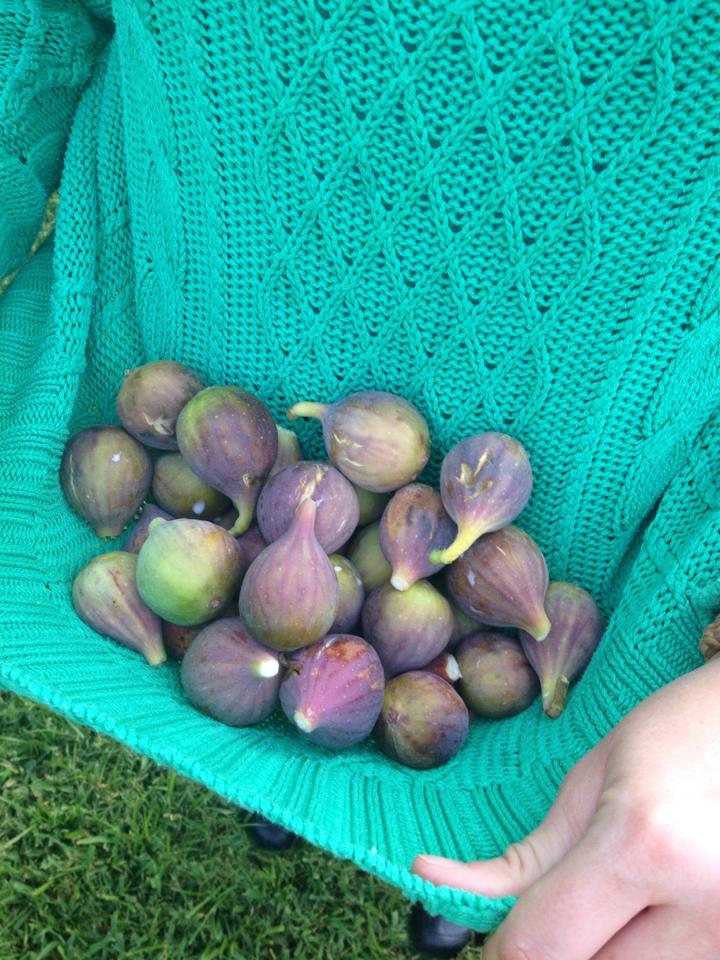
Birds and rapture have a place in my own little bird-world, too. Our backyard has been very active with the birds this summer. Because we’re growing delicious fruits back there, we’ve seen more, and more diverse birds than every before. (The bird bath doesn’t hurt either in dry Houston summers.) We have had lots of grapes growing along the back fence: 10301452_10203853874376171_9205261055523974740_n
and lots of figs:
10453468_10204111061085678_3107840873699884198_n
and a mama with her babies in our young oak tree:
10497046_10204088767568354_5612090893893219405_o
(Of course none of these are birds of prey. I’m being generous in my interpretation of Doyle’s writing, which is clearly about birds of prey specifically. But I think we can appreciate them all… and our little bird farm is encircled by hawks…)

All of this was joined a few years ago by a lovely piece by my aunt Janet, the sculptor. Its title is Rapture, and it was displayed in her home in Austin:
rapture austin
before joining us here in Houston:
rapture houston
to become a part of our backyard landscape (full of birds, although none are pictured here):
10306253_10203808143952939_4179928191057459515_n
(There is a little dog hidden in there, Where’s-Waldo-style, if you look closely.)

Brian Doyle’s ‘raptorous’ writing is well appreciated this season. Thanks, Pops.

Five Days at Memorial: Life and Death in a Storm-Ravaged Hospital by Sheri Fink (audio)

five daysWell. This one is a lot to tell you about.

Sheri Fink is an award-winning journalist and holds both a PhD and an MD. In Five Days at Memorial, she examines fateful, famous and controversial events at Memorial Hospital in New Orleans in the five days following 2005’s Hurricane Katrina. Forty-five bodies were recovered from the hospital, with about 9 of them (depending on your source) suspected of having been euthanized by hospital staff during evacuations. I had been looking forward to reading this book but was leery going in, because this subject was clearly going to be emotionally fraught, depressing, poignant. I was quickly mesmerized, though: these events, while troubling and difficult to take in, fascinated me deeply. I have been increasingly interested (outside my reading of this book, for some time now) in the subjects of end-of-life, advanced directives, and our culture’s approach to death. And I am always intrigued by ambiguity, situations in which it is clear to see black-and-white or right-and-wrong. If ever there were such a situation, this is it.

Roughly the first half of the book is dedicated to relating the events of these five days, as revealed by Fink’s investigations. (Recall, as I mentioned in my book beginning, that she describes her copious research. I am fairly well convinced of its virtue.) We get to know a number of characters in the story: doctors, nurses, managers and administrators, patients and their family members. We know the ending, in a sense: the hurricane will be far worse than anyone imagined; the hospital will not be evacuated in one, two, three or four days; there will be crimes investigated. But the way the events unfold were unfamiliar to me in their details. Although this is a journalistic account, Fink also imbues it with suspense, which feels very natural: imagine the terror felt by those inside the hospital throughout. Not knowing the whereabouts or well-being of friends and family, isolated by rising floodwaters, without electricity, and plagued by rumor (on which more in a minute), a number of those inside Memorial feared for their lives. And some lost their lives.

The second half of the book describes the investigation of one doctor and (centrally) two nurses. Dr. Anna Pou was eventually called before a grand jury, which (some two years after Katrina) declined to indict her for multiple counts of second degree murder. In this section, we meet new characters, most notably two investigators who work as a comfortable team together. Fink also explores the history of euthanasia as a concept in different cultures and different legal understandings today, and the approach of bioethics, as well as post-Katrina attempts to establish emergency standards for triage, including the allocation of limited resources that will save some lives while ending others.

I was impressed by Fink’s style. I felt, in the end, that she let the facts (as she discovered them) stand alone. Many times throughout it felt like Fink’s voice spoke on one side of this painfully difficult controversy, but pages later she lent that voice to the other side, so that the effect was… shall I say, appropriately discomfiting. The fact is, I strongly feel, that none of us can perfectly know what happened in those five days, what anyone’s real motivation or intention was, and probably that none of us has the right entirely to judge actions taken in such profoundly weird circumstances.

Many questions remain, and I can easily understand and sympathize with divergent views: family members whose loved ones were (allegedly, possibly) euthanized are angry that they weren’t evacuated; hospital workers with no options left to them felt it was better to euthanize than to abandon patients to die slowly, painfully, and alone. I see it both ways. But the details, I think, are lost to me – someone who lived none of it, who’s just read the book. Dr. Pou, it appears, does not find this book’s treatment fair at all. While it’s true that Fink doesn’t exonerate her, I felt that she wasn’t condemned, either. It’s just… so complicated.

One of the more disturbing elements, to me, was the power of rumor and euphemism in the hospital and the accusations bandied about afterward. Doctors and nurses allegedly spoke of “making patients more comfortable,” or said “we won’t leave any living patients behind.” I don’t see how these vague phrases can be used to accuse someone of murder (or euthanasia, or what you like) – what if they literally just meant make someone comfortable? What if they meant that we will evacuate all living patients, thereby leaving none behind? I don’t think these statements necessarily point to killing people – certainly not beyond a reasonable doubt. And then the rumors: New Orleans after the storm saw violent crime and looting, but not (writes Fink) to the extent that it was rumored, within the hospital and more generally. Some of this fear and rumor was racially charged. Such a circumstance serves no one well.

In fact, the most damning evidence in Fink’s book for me was not the evidence that euthanasia had taken place – frankly, my value system allows for euthanasia as a fine option in certain circumstances – but the evidence that other hospitals faced similar challenges (loss of power, rising waters) and functioned better. I can’t recall the name at this moment (and the audiobook format is bad for looking up such things), but there was a hospital under analogous conditions that ran regular shifts – encouraging staff to sleep when not caring for patients – and sternly disallowed the spreading of rumors. (I think the phrase was something like “if you didn’t see it, don’t say it.”) Memorial saw a decidedly higher level of panic, and that was one of its critical failures. This can’t possibly be Dr. Pou’s fault: she’s just one person, incapable alone of preventing or inciting panic. In fact, as Fink presents it, if she did commit certain acts, she wasn’t alone; she was just singled out in investigations.

I can draw no conclusions after reading (listening to) this book, other than to say I think it was well told – visceral – and I am emphatic about the persistent ambiguity of this situation. In other words, I can’t judge, and I think it’s a little outrageous that anyone would try to. But I guess the justice system feels it has to try…

Narrator Kirsten Potter was well up to this task; full credit for the narration. I enjoyed this format for this book, but the major drawback for journalistic work is that I can’t flip back and check names, dates, etc.

Recommended, if you’re up for some tough topics and hearing about suffering.


Rating: 8 sleepless nights.

Maximum Shelf: The Mockingbird Next Door by Marja Mills

Maximum Shelf is the weekly Shelf Awareness feature focusing on an upcoming title we love and believe will be a great handselling opportunity for booksellers everywhere. The features are written by our editors and reviewers and the publisher has helped support the issue.

This review was published by Shelf Awareness on June 25, 2014.


mockingbird

Published in 1960, To Kill a Mockingbird spent nearly two years on bestseller lists and won the Pulitzer Prize in 1961. Since then, its impact has been lasting and widespread: Atticus Finch, Scout, Jem and Dill, and Boo Radley are well-known names today, and the novel is still taught (and targeted for removal) in many high schools nationwide. With its themes of racial injustice, gender roles, mental illness, addiction, and class differences–and its remarkable ability to bring humor and compassion to such somber subjects–To Kill a Mockingbird has become an American classic. Its equally famously author, Harper Lee (full name Nelle Harper Lee, Nelle to her friends), is notoriously private. She stopped giving interviews just a few years after the publication of her only novel. Lee’s relationship with Truman Capote has also attracted longstanding interest. The two grew up next-door neighbors, exercising their imaginations and storytelling talents on one another. Lee assisted Capote’s Kansas research project that became In Cold Blood; Capote is rumored to have contributed to Lee’s Mockingbird, but this rumor has always been hotly denied by Lee (and Capote himself never made such a claim).

Over 40 years after the publication of her masterpiece, Nelle Harper Lee continued to quietly reside in the small Alabama town that inspired it, splitting her time between Monroeville, where her elder sister, Alice, still practices law, and New York City. In 2001, a Chicago Tribune reporter named Marja Mills was assigned to seek out an interview. Knowing Lee’s standing policy, Mills nevertheless traveled to Alabama, filed her request and toured the town for a day or two. She dutifully knocked on the door of Alice and Nelle Harper Lee’s home–and was floored when the elder sister opened the door and invited her in.

The development of trust and friendship between Mills and the Lee sisters took time, but even in those first minutes, the relationship was nearly unprecedented. Alice, the more methodical and steady sister, was first to open up. She set up interviews for Mills with the Lees’ friends and acquaintances, calling ahead to let them know it was okay to talk to the journalist, and what was acceptable to share. Nelle was known to those friends as being more mercurial; but eventually she, too, came around to the younger woman, who was cautious and respectful in approaching the famously cagey writer. Remarkably, Mills does not seem to have begun with any special interest in To Kill a Mockingbird or its author; but as a journalist, she was naturally attracted by the story. In the spirit of The Immortal Life of Henrietta Lacks, Mills then immersed herself in a community that was only just willing to allow her access, and built trust haltingly, but eventually with great success.

Alice was in her 90s, Nelle in her 70s, when the three women become friends. But what could have been a problematic age gap was minimized by Mills’s own chronic health condition, which both helps her identify with the older women, and gives her the dubious gift of leave from full-time work. Eventually, she expressed a tentative interest in moving to Monroeville; the Lees encouraged the idea, and she moved in next door to them. What was by then a close, rich friendship continued to develop: on a daily basis, Mills shared morning coffee with Nelle, drove the countryside, fed the local geese and ducks with the sisters (who kept close tabs on their numbers, and worried over missing goslings), and socialized with the Lees’ close-knit and protective group of friends. This included accompanying Nelle to the Southern society events that made the reticent author nervous.

Alice is the keeper of Lee family lore, with a famously accurate memory. Mills’s research is equally concerned with each of the two sisters, and involves their friends as well. The project that became The Mockingbird Next Door was conceived fairly early in the relationship, and in Mills’s telling, Alice and Nelle are willing supporters; they went over her notes together, marking what was to be included and what was to be redacted. (Readers are left wondering how much fell into the latter category.)

The Mockingbird Next Door offers no big reveals, no shocking secrets about the life of Nelle Harper Lee, except perhaps that she is not a hermit or an incorrigible curmudgeon. Rather, she is a kind, down-to-earth woman, a voracious reader, loyal to her sister and friends–who simply prefers that her life not be such a public performance as was that of her famous former next-door neighbor. Told charmingly in the Lees’ southern drawl and with the affection and closeness that the story reveals, The Mockingbird Next Door is quietly admiring and satisfyingly intimate, and will captivate not only fans of Lee’s great American novel, but fans of real people living modest lives in small-town Alabama, or anywhere.


Rating: 7 cups of coffee.

Come back tomorrow for my interview with Mills!

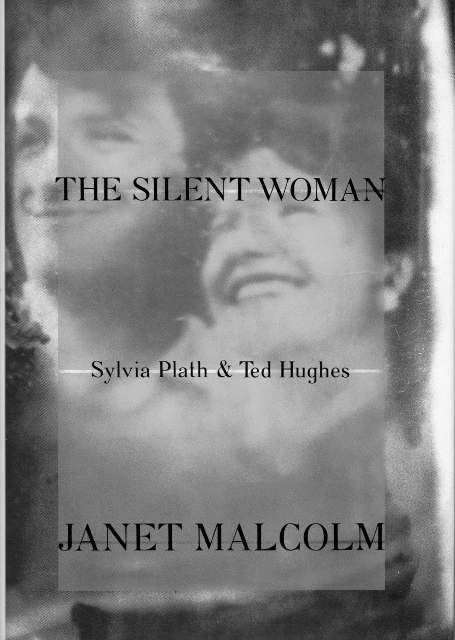
The Silent Woman: Sylvia Plath and Ted Hughes by Janet Malcolm

silentThis was a very interesting read, and not exactly what I’d expected; but it is in line with my own previous Janet Malcolm read, Iphigenia in Forest Hills. As I said on Tuesday, this is not a biography as I thought; it is rather an examination, if not an excoriation, of biographies generally. The life of Sylvia Plath is chosen as a vehicle for Malcolm’s argument, her journey and study toward developing that argument, and she does make an appropriate vehicle. She is a sensation, what with her suicide and all; she has living family members (notably her husband, sister–in-law, and her mother; she also has children, but they are only referred to by others, and don’t show their own faces) to be hurt by biographical portrayals which naturally handle their lives as well, often less than gently; and the biographies that have been written of her have tended to viscerally choose sides. Some are in the pro-Plath camp: she was a fine talent, tormented and abused by her evil husband Ted Hughes and her mother; others are pro-Hughes: he was a saint, she was a terror.

[Here is where I want to point out that this book was published in 1994, so the living relatives Malcolm writes about and that I’m referring to were living then. Plath’s mother Aurelia died in 1994; but in the present tense of this book, she is alive. Hughes died in 1998. I can’t confirm Olwyn Hughes’s status; I am therefore tempted to presume she is going strong.]

Very briefly: you know Sylvia Plath? Troubled poet, author of The Bell Jar? She was married to poet Ted Hughes, had two children, and was separated from him when she made her second suicide attempt, which was successful, by putting her head in an oven and gassing herself. Ted and his sister Olwyn have controlled her literary estate, with Olwyn playing the active role and ferociously defending his reputation.

Janet Malcolm traveled in 1991 to England to meet with Olwyn Hughes, and several Plath biographers, to talk about the Plath legacy and the ways in which it has been mismanaged. While the various parties differ on how, why, and when, I think they will all agree that it has been mismanaged. The biographical processes and products have been fraught with bitterness and poisonous resentments and failures of compassion, of put-yourself-in-someone-else’s-shoes. I am undecided as to what side I’m on, and Malcolm has something to say about this failure to choose sides.

The writer, like the murderer, needs a motive. Rose’s book is fuelled [sic] by a bracing hostility toward Ted and Olwyn Hughes. It derives its verve and forward thrust from the cool certainty with which… she presents her case against the Hugheses… If it had been impossible for Rose to take a side, her book would not have been written; it would not have been worth taking the trouble to write. Writing cannot be done in a state of desirelessness. The pose of fairmindedness, the charade of evenhandedness, the striking of an attitude of detachment can never be more than rhetorical ruses; if they were genuine, if the writer actually didn’t care one way or the other how things came out, he would not bestir himself to represent them.

(The male pronouns, present throughout, strike me as quite a shame. C’mon, Malcolm, you yourself are a writer who is not a “he” – can you not represent that possibility in your writing?)

Okay, so, point taken; but I didn’t get much of a feel for either Plath’s or Hughes’s point of view, honestly, from what I read in this book, and I’ve read none of the biographies. (Ironically, I was trusting to Malcolm to do that job for me; clearly that was a no-go, although what I received instead was worthwhile.)

Malcolm talks with the pro-Plath biographers and the Pro-Hughes biographers; they run a gamut from academic intellectuals through standers-by, friends and neighbors, and frankly (though Malcolm doesn’t use these words) some who strike me as tabloid-mongers. She reads letters and journals – the published ones, and the ones in archives. She reads manuscripts. She is most interested in the conflicts, the ethical questions, the difficulties – of biography generally (again see this week’s Teaser Tuesday for a perfect expression of this problem), and even more so, the difficulties of biography of a living person or one, like Plath, whose supporting cast is still living. (Or, again, was at the time of this book’s publication.)

It is all very interesting: Malcolm’s arguments, the people she meets – and her interview subjects get some excellent characterization. Considering The Silent Woman as a work of literature in itself, these characterizations are by far Malcolm’s strongest moments. I appreciate the criticisms she makes of biography, and of the delicate situation involved with still-living subjects; a person could almost be convinced that we should wait for everyone to have died before we write up their nasty secrets… but not quite.

Malcolm’s style is decidedly cerebral, classical, academic. She goes heavy on the allusions. This is not necessarily a compliment or a criticism, but read these lines:

The framework of deconstructive, psychoanalytic, and feminist ideology on which Rose has mounted her polemic against the Hugheses gives the work a high intellectual shimmer. There are close to eight hundred footnotes.

I’m afraid we have applied the wrong standard here! I certainly hope we’re not down to counting footnotes… of which, by the way, there are none in this book. There is nonetheless a great deal of theory, and it could get a little trying if that was not what you were there for. Just a head’s up.

Also, this:

In a work of nonfiction we almost never know the truth of what happened. The ideal of unmediated reporting is regularly achieved only in fiction, where the writer faithfully reports on what is going on in his imagination… We must always take the novelist’s and the playwright’s and the poet’s word, just as we are almost always free to doubt the biographer’s or the autobiographer’s or the historian’s or the journalist’s. In imaginative literature we are constrained from considering alternative scenarios – there are none. This is the way is is. Only in nonfiction does the question of what happened and how people thought and felt remain open.

This is off-topic and perhaps not highly relevant to the arguments we’re working on here, but I couldn’t let it pass by. Hello, unreliable narrators?? I guess Malcolm’s area of expertise lies in nonfiction, journalism, rather than literary criticism or *novels* – but really! I was surprised that she would make such a blanket statement that “fiction is true”. Just a few example of classic unreliable narrators that I have read might include Humbert Humbert of Lolita (she wanted it, right?), Chief Bromden in One Flew Over the Cuckoo’s Nest, Nick in The Great Gatsby, that guy from Fight Club, Lockwood from my old favorite Wuthering Heights, and (famously, recently, and for me, unreadably) the two narrators of Gone Girl.

I fear that I’ve been rambling. I find Janet Malcolm’s mind-workings fascinating and thought-provoking, and intelligent; I appreciate all the research she made me do in her vocabulary and allusions (you will see a vocabulary lessons post coming soon). Despite The Silent Woman not being what I’d expected, it was well worth my time; and it did take time, being rather dense. She is not a light read, be aware. I’m still on board for Two Lives, though.


Rating: 6 dictionaries.