The Domino Diaries: My Decade Boxing with Olympic Champions and Chasing Hemingway’s Ghost in the Last Days of Castro’s Cuba by Brin-Jonathan Butler

An amateur boxer’s love affair with Cuba.
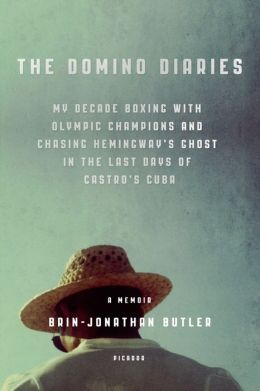
domino

Brin-Jonathan Butler first traveled to Cuba as a teenager, hoping “to find a boxing trainer and to meet the guy from The Old Man and the Sea.” He accomplished both goals and over the years that followed made repeated trips, seeking Cuban boxing, baseball and literary heroes, as well as the mysteries of the sequestered island. Eventually, Butler’s fixation on Cuba inspired a forthcoming documentary, Split Decision, about Cuban athletes’ difficult choices between staying and leaving. In The Domino Diaries, he confesses that the project was partly an excuse to stay, having become “homesick for a place [he] wasn’t born to.” His memoir further unravels the relationship he’s formed with this nation.

His escapades make for fine writing and include a tryst with Fidel Castro’s granddaughter and an interview with boxing legend Teófilo Stevenson that results in Butler’s being banned from Cuba. The Domino Diaries is a memoir of boxing heroes and political strife, a study of Castro’s legacies and Cuba’s “Special Period” of economic crisis, and an ode to the grace, joy and sadness of Cuban culture; it is also the personal story of Butler’s own traumas and his mother’s escape from Hungarian communist rule. These threads necessitate some meandering, but the resulting musing tone Butler employs is elegiac and quite effective. Rather than an exhaustive survey of the large and thorny topic of Cuba’s economy, politics and culture, Butler’s memoir is a rambling exploration, appealingly written in a distinctive voice and peppered with wisdoms phrased with lovely wit.


This review originally ran in the June 26, 2015 issue of Shelf Awareness for Readers. To subscribe, click here, and you’ll receive two issues per week of book reviews and other bookish fun!


Rating: 7 cigars.

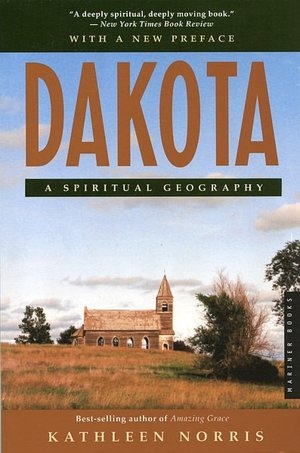
Teaser Tuesdays: Dakota: A Spiritual Geography by Kathleen Norris

Teaser Tuesdays is a weekly bookish meme, hosted by MizB of Should Be Reading.

dakotaWarning: rave review coming. Dakota is an amazing feat of essays exploring ethics, community, a sense of place and belonging and the meaning of home, geography, the unique features of the western Dakotas, and yes, spirituality (a subject usually sure to turn me away). This teaser post is just that, a preview of what I love about this book. For example,

The word ‘geography’ derives from the Greek words for earth and writing, and writing about Dakota has been my means of understanding that inheritance and reclaiming what is holy in it.

or, quoting Benedictine monk Terrence Kardong,

We have become as indigenous as the cottonwood trees… If you take us somewhere else, we lose our character, our history – maybe our soul.

I would love to share the entire 16 pages of “Where I Am,” which include the factoid that

the absolutely temperature range record for the Western Hemisphere [was] set in 1936 when a town in western North Dakota registered temperatures from 60 degrees below zero to 121 above within the same year.

or “Rain,” a single-page poetry-in-prose listing of the types of rain experienced there. Mind-blowing, right?

I am very impressed, and hope you’ll go looking for your copy of Dakota, too. My review is coming.

“The Act of Inverting” at You Are Here Stories

Today I am sending you over to You Are Here Stories, for a short piece of creative nonfiction writing of *mine* that they have chosen to publish. Thanks for checking it out! If you have comments, please consider leaving them there instead of (or in addition to) here.

The Liars’ Club by Mary Karr

Following on The Kiss, I came to The Liars’ Club intrigued to see how the masters do this work. I have a special interest in memoirs about one’s parents, because I want to write one. And Mary Karr is credited with being one of those, during the “memoir craze” of the 1990’s, who got it right (rather than “just” being sensational). (Yes, Angela’s Ashes is coming up, too.)

Mary Karr grew up in a small Texas oil town she calls Leechfield, on the Louisiana border. Her mother was driving through town between husbands when she got a flat tire, and met the tall, bar-brawling oil man who would become Karr’s father. As a child, the author is devoted to her father and enjoys hanging out at the Legion with the beer drinkers; she is dismayed by her maternal grandmother’s coming to stay with the family as she dies of cancer. Her mother has a nervous breakdown and is institutionalized briefly before moving her two daughters to Colorado and divorcing their father, but the family will reunite in Leechfield once more.

“The Liars’ Club” refers to the beer drinking veterans who hang out at the American Legion bar, playing dominoes and pool, drinking and telling stories. It is only one of the worlds perfectly painted by Karr’s descriptive prose, as well as crab boils, neighborhood gossips, binge-drinking horrors, death threats, jellyfish attacks, bonfires and sexual abuse. I like that she uses sensory details in a way that doesn’t feel forced (a laundry list of inputs) but does give the setting immediacy: the sights and smells of an oil refinery, for instance, are unforgettable.

I love the way in which Karr is a character in her own story. She occasionally refers to what others’ memories assert (in contrast to her own) or adds a detail learned later through her research, but overwhelmingly, the perspective is that of little Mary Marlene, a girl who is spunky, prone to fistfights, and none too bright (she’s so modest), but devoted to her family. She reminded me very much of Haven Kimmel’s young self in A Girl Named Zippy – whose sequel, She Got Up Off the Couch, is perhaps my favorite memoir-of-parent to date. I had to remind myself from time to time that this wasn’t Zippy talking.

Evocative prose, easy-reading descriptive writing, and an eye for both detail and pathos make this a special memoir. But what makes it outstanding is a balance between the horrific and the hilarious, that Karr can tell painful stories with vigor and make me smile or giggle one page later. A well-written, exciting and entertaining, heartfelt memoir it absolutely is, and as a reader, I highly recommend it for pleasurable reading. As a writer, I’d like to pull it apart and see how it works, because the result is powerful and apparently effortless, but I bet it has strong bones. Luckily, there’s this book coming out…


Rating: 8 plastic-wrapped dress shirts.

Teaser Tuesdays: The Liars’ Club by Mary Karr

Teaser Tuesdays is a weekly bookish meme, hosted by MizB of Should Be Reading.

I am loving Mary Karr’s well-regarded memoir about growing up in small-town East Texas. She is amazing in many regards, on which more to come soon; but today I want to talk about describing place. I have a special fascination with a “sense of place” in the books I read, whether they are fictional descriptions of real places (James Lee Burke and Michael Connelly, on Louisiana and Los Angeles respectively) or made-up places (Stephen King’s Dark Tower series, or du Maurier’s Manderley), or nonfiction.

liar's clubAs an example of the latter, I think this paragraph-and-a-half near the beginning of The Liars’ Club is as good as it gets.

If Daddy’s past was more intricate to me than my own present, Mother’s was as blank as the West Texas desert she came from. She was born into the Dust Bowl, a vast flat landscape peppered with windmills and occasional cotton ranches. Instead of a kitty for a pet, she had a horny toad. She didn’t see rain fall, she said, for the first decade of her life. The sky stayed rock-white and far away.

About all she later found to worship in Leechfield was the thunderstorms, where were frequent and heavy. The whole town sat at a semitropical latitude just spitting distance from the Gulf. It sat in a swamp, three feet below sea level at its highest point, and was crawled through by two rivers. Any hole you dug, no matter how shallow, magically filled up with brackish water. Even the wide ditches that ran in front of the houses, where I later learned that sidewalks ought to be, were not enough to keep the marsh from burbling up.

This is an astounding piece of writing. So much is communicated, and much of it we take in without even noticing. On the surface, we see that Mother is from West Texas, where it is dry, and East Texas, where the author grew up, is much wetter. But just below that surface, we get a time-frame (implied by the Dust Bowl reference), and a visual cue from “rock-white”: rocks aren’t white everywhere, but now we have a blinding tone for the “blank” West Texas desert. I love that Leechfield is “spitting distance” from the Gulf of Mexico: another reference to wetness; and “was crawled through” by two rivers? That’s a passive voice usage to compete with Hemingway’s famous one that I keep referring to. I like what is implied by that last line: Karr didn’t know about sidewalks til she left town. Not to mention the onomatopoeic effect of burbling…

Creative Nonfiction magazine has a special issue coming out on the theme of Weather. If they get to publish any passages remotely as communicative and deceptively simple as this one, I think they’ll be glad.

The Kiss by Kathryn Harrison

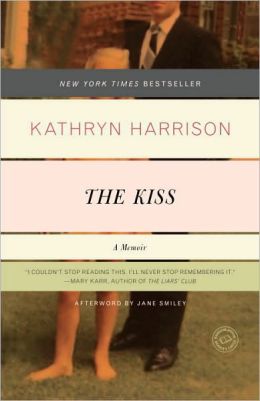
kissThe Kiss came recommended as a powerfully told memoir, the artful representation of a shocking story that does not rely upon its sensational nature to make an impact, but showcases the author’s craft. All this is true, and I am left feeling very impressed and somewhat reeling, from both the story itself and the writing.

Kathryn Harrison was raised by her mother’s parents, her mother an on-and-off presence in her life who never gives her the love she longs for. She meets her father only twice while she is growing up; his third visit, when she has just turned 20, marks the beginning of a new stage. When he kisses her goodbye at the airport, the air goes electric, and they begin an incestuous affair that will last years and cause the rest of her life to wither. Their relationship is obsessive and controlling: in other words, awfully unhealthy, even if they were not father and daughter; and it will damage her forever.

Clearly there is shock value, and the potential for merely prurient appeal. But Harrison does not let the salacious subject matter carry her book. She examines her troubled childhood, her need for love, her search for herself, and sees in hindsight the way she was preyed upon. Her father is a preacher, who argues that God wants them to be together sexually.

I never question his sanity; although I will come to the point where it is less painful to regard my father as crazy than to conclude that he has been so canny in judgment of my character and its frailties that he knows exactly what language to use, what noose of words to cast around my neck.

She studies her story, and muses on it, and the result is a work of craft, not of voyeurism.

It is still disturbing, make no mistake. You will shiver and flinch, because she doesn’t turn away from the ugly bits – and they don’t all involve her father; there is also the one with the kittens, and the scene in which Harrison’s unloving mother takes her to a doctor to have her hymen broken with medical implements. (Seriously.) But it is also, strangely, beautiful. As a writer, I am here to take notes and see how she does this thing: tells this horrifying story with grace and insight and art. I don’t really understand it, although I hope to.


Rating: 8 photographs.

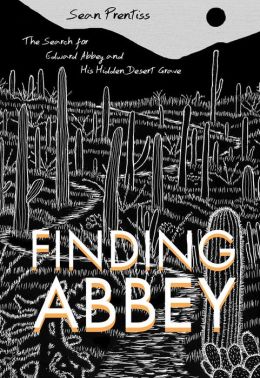
Finding Abbey: The Search for Edward Abbey and His Hidden Desert Grave by Sean Prentiss

A journey to find a famous grave and an exploration of the meanings of environment and home.

finding abbey

After the death of environmental writer Edward Abbey (The Monkey Wrench Gang; Desert Solitaire), four of his friends took his body to the desert near Albuquerque, N.Mex., and illegally buried him in a hidden location. For decades since, the mystery of his final resting place has tantalized Abbey’s fans and followers. Writer Sean Prentiss set out to track down his hero, as related in the thoughtful Finding Abbey: The Search for Edward Abbey and His Hidden Desert Grave.

Prentiss calls on Abbey’s close friends Jack Loeffler, Ken Sleight, David Peterson and Doug Peacock, several of whom inspired characters in Abbey’s fiction. He visits locations that Abbey called home over decades of peripatetic soul-searching. Prentiss does his own exploring, too. Though newly settled in the Midwest for a university job, Prentiss feels enticed by Abbey’s desert Southwest, a region he has also lived and traveled in. As much as he seeks a literal gravesite, or communion with a complicated man, Prentiss equally seeks a home for himself.

Prentiss questions whether he really wants to find the object of his search. “Answers don’t solve questions. Only searching does.” His tone is wondering, and his quest is both personal (where will Prentiss call home?) and universal (what does a sense of place mean to anyone?). His goal might be disrespectful, considering the continued efforts of the Abbey camp to keep the grave’s location a secret, but Prentiss navigates this potential difficulty with sensitivity. While it offers no revelations, Finding Abbey is philosophical, poetic, a creative biography and a loving, evocative celebration of a controversial life.


This review originally ran in the May 15, 2015 issue of Shelf Awareness for Readers. To subscribe, click here, and you’ll receive two issues per week of book reviews and other bookish fun!


Rating: 7 cans of beer.

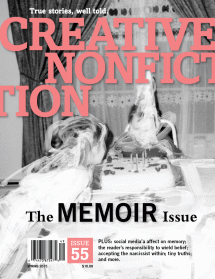
Creative Nonfiction, issue 55: The Memoir Issue (spring 2015)

Full disclosure: I am a fan of the folks over at Creative Nonfiction. I’ve taken one of their classes (and think I’ll do another this winter), and I attended their conference in Pittsburgh last month (also excellent!). This post is about the magazine, which comes out quarterly. Summer 2015 is “The Memoir Issue,” fatter than usual at just over 100 pages, and filled with memoir stories and essays about the genre. I read it from cover to cover, but wanted to share a few of my favorite pieces.

cnf memoirLee Gutkind’s “From the Editor” column asks, “What’s the (Personal) Story?” It’s brief, but a fine backdrop to creative nonfiction and the rise of the memoir. If you ever get a chance to hear Lee speak, expect to be entertained; I enjoyed his energy at the conference, where he helped us all wake up first thing in the morning with his extraordinary energy and enthusiasm. Next, Robert Atwan contributes an essay called “Of Memory and Memoir,” in which he argues that we’d benefit from a better understanding of how memory works (and doesn’t work), in a world where the memoir is so popular and ubiquitous. I think this is an interesting challenge; memoir is often, and appropriately I think, concerned with the line between truth and perspective, and the failure to remember perfectly. I don’t know if we can expect to solve the mystery of our imperfect memories, but Atwan does well to consider the problem.

And then there are the memoir essays themselves, of which I had a few favorites. “Do No Harm” by Kelly Fig Smith won the magazine’s prize, and naturally makes my list. She tells the story of a terrible tragedy that hits her family, and the hospital experience that came with it; it’s about perspective and compassion, I think. “Steps” by Scott Loring Sanders recounts the hike shared by a newly sober father, a young son, and their two dogs; it’s about mistakes and rehabilitation. Gina Warren’s “Girl on Fire” observes the difficulties of caregiving. The final essay, “The Grief Scale,” is by Suzanne Roberts, who wrote Almost Somewhere, a book I rated 6 small but important steps. This essay is better, I think. I like how she circles back at the end to reference the story she thought she was writing, was trying to write; but what we are treated to is instead the story that flows out of her, about being griped at on an airplane, and losing or fearing to lose our loved ones. I found it very effective.

Finally, “The Perils of Perfect Memory” by Daphne Strassmann questions our new reliance on social media and its effects on memory and memoir. Were we better off keeping our memories to ourselves, letting them brew and cure inside us before releasing them on the world? And in “Pushing the Boundaries,” Rolf Potts offers a different format, of found texts assembled in a piece he calls “Age, Formative,” which is powerfully disturbing.

These are just a few of the pieces I found most intriguing; the whole issue is definitely worth taking in. You can view parts of it or buy it here.

“Landspeak” by Robert Macfarlane

Here is another that I cannot improve upon by commenting. Words and places, beautifully composed? I am sold. I’ve heard a lot about Robert Macfarlane but this short piece is all of his writing that I’ve actually read. Clearly I’ll need to find more.

Please enjoy


In the Spider’s Web by Jerome Gold

Striking, deeply honest, and sensitively told, this novel based in real life considers juvenile prisons and all its dramas.

spider

Jerome Gold calls In the Spider’s Web a “nonfiction novel.” In it, he depicts the routines and characters of a prison for juveniles, centering on one young woman in particular. All the events really happened and are drawn from his years working as a rehabilitation counselor at the institution he calls Ash Meadow–some supporting characters are composites, but all the major players are real people; names except his own, places, and some other details are changed to shield identities. As might be expected, the stories Gold relates are often disturbing, but they are beautifully told from a sober and compassionate perspective.

…Click here to read the full review.


This review was published on April 28, 2015 by ForeWord Reviews.

IMG_4538


My rating: 8 points.