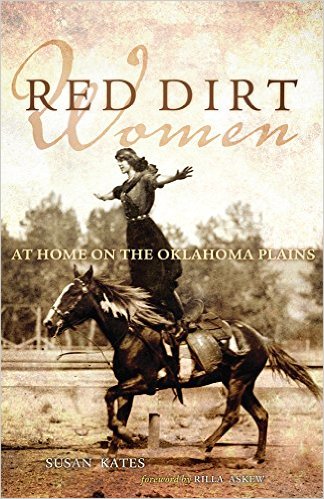
Red Dirt Women: At Home on the Oklahoma Plains by Susan Kates

The reasons so many pioneer women did not desert Oklahoma’s Dust Bowl days are the same reasons Kates was able to find an unlikely peace there, and cannot be succinctly rationalized or explained–except perhaps in this collection of sensitive, thoughtful, grounded musings.

red dirt women

Red Dirt Women is a collection of essays examining the Oklahoma plains and its people, particularly its women, by a transplant who has found home there. Susan Kates is an Ohio native, and professor at the University of Oklahoma. As she relates in these stories, her transition to a dusty otherworld was not always smooth, but over time the Oklahoma landscape and population opened up to her. One message of her collection as a whole is that this place and people are richer than the stereotypes of bonnets and cowboy hats suggest. Kates’s essays vary slightly in their form, but run toward profiles of people and culture. The women she describes include barrel racers, a Vietnamese jeweler, a hippie preschool teacher, gamblers, a birdwatcher, and roller derby players. A brief foreword by Rilla Askew recommends the journey Kates portrays within.

This is just a stub: my full review of Red Dirt Women was published in the fall issue of Concho River Review. You can subscribe or purchase a single issue by clicking that link. Or, don’t hesitate to run out to find a copy of the book itself: I recommend it.


Rating: 8 Queens.

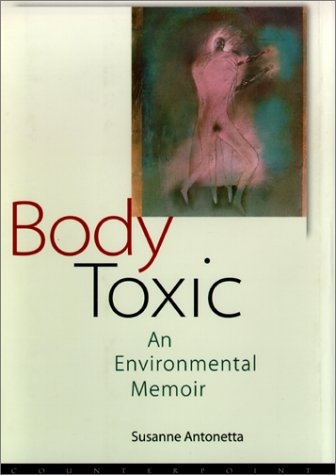
Body Toxic: An Environmental Memoir by Susanne Antonetta

Body Toxic is a striking book, both in the story it has to tell and in the manner in which it’s told. I am impressed, and challenged. It’s complicated.

body toxicSusanne Antonetta grew up in New Jersey, in the Pine Barrens region, a bogland unique in several senses: culturally isolated, and environmentally contaminated on a shocking, unimaginable scale. She and other members of her family have suffered from a list of medical complaints: asthma, endometriosis, a double uterus, growths on the liver, allergies, tumors and cysts, sterility, seizures, manic depression, various cancers; an extremely rare quadruple pregnancy that ended in miscarriage. The families she is descended from include Italian immigrants and those from Barbados, who nevertheless self-identify as English. Both sides of her family exhibit a predilection for silence, non-communication or the glossing over of undesirable details. The legacies Antonetta has inherited, then, are many and complex: cultural (in terms of countries of origin, and the culture of the New Jersey Pine Barrens, and immediate family cultures), environmental and medical (oh, the prodigious and horrifying list), and psychological (mental illness and perspective on the world). Oh, and Susanne Antonetta is not her real name, but an “alter ego”: “I’ve used five or six different pseudonyms in my life. The name I’m using now is not my name but the name of a recovered female relative, a lost woman, and as a recovered woman she’s just a skeleton that must be fleshed out by the same process of fantasizing and filling in that I resist.” Indeed, identity – multiple identities, our attempts to define ourselves and others’ attempts to define us – is another theme throughout.

And that is the complexity of this book, that so much is going on. The story is itself obviously gripping, and brimming with evocative and provocative anecdote. Indeed, Antonetta tells us, “I wrote a piece about the miscarriage and an editor sent it back, calling it ‘raw.’ He suggested I lose the death or the multiple pregnancy, or both… The poem of this body is a bad poem, trite.” The enormous irony, of course, being that she can’t “lose” the death or the multiple pregnancy, or countless other maladies, complaints. All this material aside, though, Body Toxic shines entirely for another reason too: the writing is bold and nuanced, presses and pulls back, reflecting a little the manic depression (or, these days, bipolar disorder) that also waxes and wanes throughout Antonetta’s story. It is, of course, poetic: the author is an acclaimed poet as well, under the name Suzanne Paola.

There are so many threads. Business and government disposed of chemical and radiation waste in Antonetta’s childhood beaches and bogs, through a combination of ignorant, unethical and criminal irresponsibility. (Thus Rachel Carson is named by comparison.) Antonetta’s extended family makes a series of decisions about how to live in this environment, in which they were underinformed but also trusting, stubborn, or willfully ignored the signs. (They mostly still won’t talk about the negative effects.) The family incubates a sexist tradition, favoring the eldest, male grandchild, repeatedly reminding Antonetta explicitly and implicitly of her “place.” She explores her identity as woman: “I spent a lot of my eleventh and twelfth years pining for my menstruation to begin. I can’t remember why”; and later in her inability to reproduce, and what this means for the family at large. (When her family visits relatives back in the Italian community of her father’s origin, his cousin tells him, “You have big children, but I have grandchildren.” There is an implied failure there, which Antonetta ascribes to environmental poisoning, but the family seems to ascribe to Antonetta herself.) There is the fallibility of memory, a theme so common to memoir but one I never tire of, because it – like memory – is different in each interpretation: each memoirist has something new to say. In this case, Antonetta did a lot of drugs, presumably compounding the muddiness of some of her early memories; luckily she was an avid journaler, which allows her to interrogate those documents, artifacts of a young woman she barely knows, itself an interesting and fruitful technique. And then there are all those identities. I love the idea of her father constantly referencing “my daughter” when speaking to her: she finally lets his declarations about that daughter stand, having realized that her father’s daughter is a different person from herself.

I could keep going. This was the challenge and the allure of this book, and the reason I will not quickly forget it: many threads, many layers, told in an ever-evolving voice, ebbing and flowing. The meandering structure made me work to pull it all together, but it was worth it.

I am taking a writing class from the author (under another name, that of the poet, Suzanne Paola) in the coming months, which is why I came to this book in the first place, and now I am both more excited than ever, and intimidated. I recommend Body Toxic for a reading experience to get lost in; for a richly fertile field of topics for discussion with family, book clubs, community groups; for the study of craft; and for the story it (quite disturbingly) tells about the New Jersey Pine Barrens, immigrant experiences, and one woman’s outlandish life.


Rating: 8 newspaper clippings.

Dispatches from Pluto: Lost and Found in the Mississippi Delta by Richard Grant

An occasionally bumbling Brit moves into the Mississippi Delta and delivers a romping survey of the surroundings.

dispatches from pluto

Richard Grant (Crazy River) is “a misfit Englishman with a U.S. passport and a taste for remote places,” a writer and professional peripatetic when he encounters an old plantation home in the Mississippi Delta. Later he will ask, “What sort of idiot goes on a picnic and ends up buying a house?” He then explains.

In Dispatches from Pluto: Lost and Found in the Mississippi Delta, Richard moves, with his girlfriend, from New York City to a spot even the locals find remote. They struggle with home improvements, an enormous vegetable garden and the moral problem they encounter in hunting for their meat. After some hilarious hiccups along the way, they take pleasure in living in large part off the land. Perhaps more challenging are questions of culture: the liberal newcomers are sensitive to their conservative religious neighbors, who are surely suspicious in turn. But from the beginning they manage to bond like family.

Grant narrates the next year with reflection and humor, from electoral politics and absurd local news to learning how to hunt and party like a Deltan. The myriad forms and intensities of racism and racial tension develop into a theme, as Grant pursues diverse friends and acquaintances. But he finds beauty as well as complexity, and concludes, “I had done the thing that modern life conspires against. I had fully inhabited the present without distraction.” Dispatches from Pluto offers a lovely, appreciative and entertaining tour of the strange and rich Mississippi Delta.


This review originally ran as a *starred review* in the October 27, 2015 issue of Shelf Awareness for Readers. To subscribe, click here, and you’ll receive two issues per week of book reviews and other bookish fun!


Rating: 7 armadillos.

Creative Nonfiction, issue 57: Making a Living (fall 2015)

I had a dream that the next issue came and I had not yet reviewed this one. It was stressful. So, I’d better get to it…

CNF-57-Cover-WebcropThe “Making a Living”-themed issue of Creative Nonfiction is as good as ever. (You can read my review of the previous issue here.) And as ever, I have a few favorites. First of all, Ned Stuckey-French’s opening essay “Required Reading” tells of his reliance on Studs Terkel’s Working to inform his work as a union organizer: a communist college graduate, he’d faked a resume that made him look like an appropriate hire as a hospital janitor, leaving off his studies at Harvard and Brown. Terkel’s interviews with “real” working people helped the young activist place himself somewhat within a world of blue-collar workers, where he didn’t really belong. It’s an essay about disillusionment, the value of reading & writing, and yes, work.

Jennifer Niesslein explores why we write for free (some of us; many of us) in “The Price of Writing.” This is a complicated one, of course, and I think it’s important to note that the ability to write for free is a luxury afforded by some financial security. The writer she quotes as saying “I don’t need the exposure. What I need is to pay my fucking rent” (Nate Thayer, in New York magazine) has a fine point. Niesslein responds that “it can’t be about the money, at least not entirely.” I guess the implication is that if it’s going to be entirely about the money, then you need a day job.

But those are just the introductory pieces, responding to the theme in their own ways. Of the essays about making a living, I think my favorite has to be Kevin Haworth’s “Vivaldi,” which links the musicians who played in the orchestras at Auschwitz to the writer’s son, a passionate budding violinist for whom, happily, music will not be a matter of life and death. It is a powerful piece because of the high stakes of the historical thread, and the emotions in the current one, not to mention the larger issues that will continue to link the two. I also really appreciated Beth Tillman’s “Unleaving,” in which she discusses her career as an estate planning attorney, chosen because of her lifelong anxiety about death. I like the slightly different format she uses, and I empathize with her interest in end-of-life issues, and the day-to-day difficulties she relates.

I also continue to be distracted by both the story and the style of “No Exit,” by Karen Gentry. I will just share what Lee Gutkind wrote in his “What’s the Story?” editor’s column:

…Karen Gentry takes a temp job at a company that helps fired executives find new jobs. Part of her job involves giving Meyers-Briggs tests, and the story tells us a great deal about the corporate world and the way people in it can be reduced to types. But that’s also not at all what the story is about. (To tell you more would be to ruin it.)

I’ll leave it at that, as he did. It is a very fine essay.

Finally, “Tiny Truths” is always a treat: tweets using the tag #cnftweet will be considered for this ongoing contest, which features the best 140-character true stories on a revolving basis. I like that they choose not the flowery, poetic ones – that attempt too much language – but the ones that tell devastating or funny stories very, very simply.

Creative Nonfiction is always filled with greatness. You can read some of the content, or better yet, buy this issue here – or by all means consider a subscription. I don’t do much magazine reading because I’m so busy with BOOKS but this one is always worth my time, a gift in the mailbox.

book beginnings on Friday: Body Toxic by Susanne Antonetta

Thanks to Rose City Reader for hosting this meme. To participate, share the first line or two of the book you are currently reading and, if you feel so moved, let us know what your first impressions were based on that first line.

This memoir by a local author and professor at my local university comes highly recommended, and at a glance the subject looks fascinating, too. (Sometimes – I might even say often – excellent writing carries a subject I’m not consumed with; but better to have both.)body toxic A brief blurb reads, “For readers of Refuge, A Civil Action and Silent Spring, comes a harrowing story of a family, a body, and a place: an immigrant family in the Pine Barrens of southern New Jersey, a hauntingly beautiful, hauntingly compromised landscape.” Who is not intrigued? And those titles cited for comparison: wow!

It begins:

In nineteen question-mark question-mark my silent grandfather came to the United States.

He left the hot chatty island of Barbados and because he existed in silence no one knows when he came.

Simple, but a lot has already been communicated; and I love the “hot chatty island.” I am optimistic.

Mot by Sarah Einstein

A brief, quietly powerful memoir of the author’s friendship with a homeless, mentally ill veteran.

mot

Sarah Einstein had worked with the homeless for all of her adult life when she met Mot. After being assaulted at work (at a drop-in center for adults with mental illness), Einstein left her job. Her marriage, just a year old, was faltering. In Mot, a gentle veteran who had lived outdoors for many years, she found a mildness that appealed to her. However, Mot also lived with a slough of harpies, dead ancestors, deities and villains in his head.

In her memoir, Mot, Einstein reflects on this relationship, the trips she took from her home in West Virginia to visit Mot in Amarillo and Oklahoma City, and the time she was able to bring him home with her. In a deceptively simple narrative, readers learn about the pantheon that lives in Mot’s head, a mythology Einstein is only sometimes able to follow. She relates the difficulties of her own marriage, and questions herself as she moves away from direct service. She doesn’t claim to have the answers, although in her epilogue she exhorts her readers to find ways to contribute. Mot is not, however, about helping the homeless at its center: it is about one man’s strengths, his kindness and skills (fixing up old cars, pruning apple trees, building things), and his difficulties in separating reality from those he calls the “Big Guys Upstairs.”

In her lovely, unadorned and unassuming storytelling, it becomes clear that Einstein is herself flawed and troubled. But the glimpse into Mot’s individuality and a rare friendship is illuminating and singular.


This review originally ran in the September 25, 2015 issue of Shelf Awareness for Readers. To subscribe, click here, and you’ll receive two issues per week of book reviews and other bookish fun!


Rating: 7 summer thermostats.

book beginnings on Friday: Wild by Cheryl Strayed

Thanks to Rose City Reader for hosting this meme. To participate, share the first line or two of the book you are currently reading and, if you feel so moved, let us know what your first impressions were based on that first line.

I confess I’m a little surprised that I have finally gotten around to this one. I think I had developed the impression that this was one I could skip, despite public uproar. But my self-study of current creative nonfiction won’t let me abstain any longer. In fact, these opening paragraphs (plus a few) were the focus of a workshop I took recently, so there you are.

wild
And they are a fine few first lines.

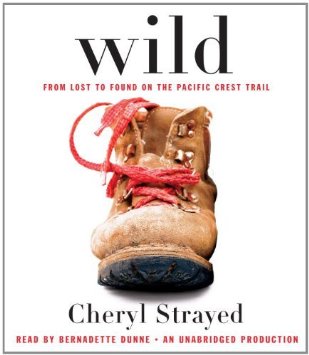
The trees were tall, but I was taller, standing above them on a steep mountain slope in northern California. Moments before, I’d removed my hiking boots and the left one had fallen into those trees, first catapulting into the air when my enormous backpack toppled onto it, then skittering across the gravelly trail and flying over the edge. It bounced off of a rocky outcropping several feet beneath me before disappearing into the forest canopy below, impossible to retrieve. I let out a stunned gasp, though I’d been in the wilderness thirty-eight days and by then I’d come to know that anything could happen and that everything would. But that doesn’t mean I wasn’t shocked when it did.

My boot was gone. Actually gone.

I clutched its mate to my chest like a baby, though of course it was futile. What is one boot without the other boot? It is nothing. It is useless, an orphan forevermore, and I could take no mercy on it. It was a big lug of a thing, of genuine heft, a brown leather Raichle boot with a red lace and silver metal fasts. I lifted it high and threw it with all my might and watched it fall into the lush trees and out of my life.

I love how communicative these opening paragraphs are, how much we learn of the narrator and the setting and her personality.

Who am I to tell you anything new about the much-discussed Wild? I don’t know; we will wait and see, together. Stay tuned. I’m listening to the audio version, by the way, which is good so far. I hope I can keep up the pace a little, is all. Maybe Wild will be the book to force me to listen! Happy Friday, friends.

While Glaciers Slept: Being Human in a Time of Climate Change by M Jackson

A scientist’s personal reflections on climate change and personal loss.

while glaciers slept

“I cannot untangle in my mind the scientific study of climate change and the death of my parents.” M Jackson is a scientist, National Geographic Expert and glacier specialist, but her memoir While Glaciers Slept: Being Human in a Time of Climate Change rarely takes a scientific perspective and never claims objectivity. Rather, Jackson tells the story of losing both her parents when she was a young woman just embarking on life, and the trauma and extended grieving process that resulted.

Following a brief, lovely foreword by Bill McKibben, Jackson poetically conflates her loss with the slow and still mysterious effects of anthropogenic climate change. Her scientific background and explorations of fascinating places–Denali and Chena Hot Springs in Alaska, Zambia with the Peace Corps–inform her writing and yield striking images, as she runs on spongy Alaskan tundra or contemplates cryoconite holes atop glaciers. But it is the personal side of her narrative that allows Jackson to address society’s psychological difficulties with climate change.

Each chapter of While Glaciers Slept is a finely braided essay, considering an aspect of her parents’ lives or deaths alongside a facet of climate change’s challenges. Jackson mourns her mother with the help of Joan Didion’s writing; windmills offer possible “undulating answers” and comfort her on her drive home upon learning that her father is dying. She employs a disordered chronology that slightly disorients her reader, just as Jackson was disoriented. The effect is an evocative, lyrical work of musing and allegory rather than a scientific treatise.


This review originally ran in the September, 4, 2015 issue of Shelf Awareness for Readers. To subscribe, click here, and you’ll receive two issues per week of book reviews and other bookish fun!


Rating: 7 check marks in a dictionary.

book beginnings on Friday: Dispatches from Pluto by Richard Grant

Thanks to Rose City Reader for hosting this meme. To participate, share the first line or two of the book you are currently reading and, if you feel so moved, let us know what your first impressions were based on that first line.

dispatches from pluto

The subtitle, “Lost and Found in the Mississippi Delta,” is what got me. And then there are the first lines:

I was living in New York City when I decided to buy an old plantation house in the Mississippi Delta. It was out in the cotton fields and cypress swamps of Holmes County, the poorest county in America’s poorest state.

Got me: I’m intrigued. The Deep South is an increasingly appealing and intriguing place to me, filled with contradictions and complications. Tell me more!

This quotation comes from an uncorrected advance proof and is subject to change.

All Over But the Shoutin’ by Rick Bragg

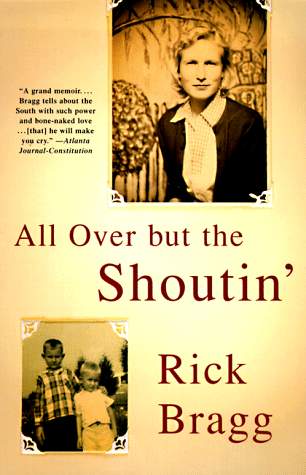
all overRick Bragg’s first book is a memoir of his own life, his upbringing and the road to a successful journalism career with the New York Times, complete even with a Pulitzer. It’s also the story of his family: his father, almost completely absent from Bragg’s life and from the book; his mother, the driving force of grace and hard work and love; his brothers; his people from poor rural Alabama. It’s a beautiful book, humbly honest, piercingly devoted to Momma, and redolent with smells and tastes and sights and sounds. As a way of honoring those he wants to remember and honor – centrally his mother – I think it’s devastatingly effective. It’s also a fine piece of writing, triumphantly fine, and a fascinating story.

People are often driven, with a book like this that is so securely rooted in such a unique place, to make statements about whether it could have been born of any other place. Me, I don’t feel up for that argument. But if Bragg’s skill had come out of Pennsylvania, he would at least have written a very different book.

I loved learning about and learning to love the place Bragg is from – northeastern Alabama – and I appreciate his understanding of nuance, of complicated feelings, of the possibility for both ugly legacies and beautiful virtues coming from the same place.

I found it interesting, and it kept his story from being unrelievedly gorgeous or unrelievedly painful, in a book so filled with “living and dying and that fragile, shivering place in between,” that he is able simultaneously to show that he has lived a charmed life. This was a new concept to me, of such good and ill luck coming in the same breath. For instance, when Bragg became national correspondent in the South, to the New York Times:

It was a marriage so perfect, in my mind’s eye, that I was almost surprised when I got a cold, or stubbed my toe, or got a parking ticket, because such things do not belong in dreams.

Momma used to drag her middle son, who she called Ricky, up and down the rows of cotton on her sack as she picked. He increased the weight of the load she bore, but she loved him, and his brothers, and she did for them as best she could, and this is the story, among other things, of Bragg doing his best by her in return. It’s a deeply sweet story, and although sometimes gruffly told, he never takes that tone when writing about her.

Bragg’s father, on the other hand, was an alcoholic abuser who left his family defenseless repeatedly and apparently without compunction. He was also a traumatized war veteran who on his deathbed gave his son a touching gift and a story. I said earlier that he’s mostly absent throughout, but his shadow is there.

I can’t do this book justice. It’s too good. Go see for yourself.


Rating: 10 assumptions tested.