The Company of Owls by Polly Atkin

A poet and nature writer shares the grace, beauty, and lessons in her quiet observations of “my neighbours, the owls” in this loving memoir.

Polly Atkin (Some of Us Just Fall) brings a poet’s sensibility to a contemplative study of nature and self with her memoir The Company of Owls. From her home in the village of Grasmere in England’s Lake District, Atkin can hear tawny owls calling to one another; on short walks, she feels privileged to watch them hunting, nesting, raising their young. During and after the Covid-19 lockdown, she marveled at their lives, so little known to us, and mused on isolation, companionship, humans’ relationship to the rest of the natural world, and more. Not an ornithologist by training, Atkin feels drawn to her poorly understood subject, associated with both wisdom and death, night-dwelling but sun-loving: “This book is about owls, but it is also about me.”

Atkin, who lives with several chronic illnesses that limit her mobility and ability to work in traditional ways, found herself under lockdown questioning the nature of solitude and our many reactions to it. She made art of Middle English words for aloneness: uplokkid, reclused, onlihede, and solnes, which become chapter titles. “But the more times I wrote the words out, the more shades of meaning leached from my brushstrokes. The more ambiguous I felt my state of seclusion to be, the more ambiguous I felt about isolation.” She related to what she perceives as the owls’ need for both separation and togetherness. In her own insomnia, she connected to their apparent affinity for both darkness and light. “Without other humans to see you and claim you as theirs, you feel less and less like one of them, more and more likely something else. Something nocturnal. Something unbound.” She watched a trio of owlets navigate siblinghood, and worked to resist what felt like anthropomorphism.

This is a classic memoir in its meditative pacing, thoughtfulness, and self-examination. And of course its author, with several volumes of poetry to her name, takes special care with both language and detail. The Company of Owls balances a careful focus on the hyperlocal owls immediately surrounding Atkin’s home, and a survey approach to the history of owls in the region, the humans who study them, and the owls Atkin encounters online via friends and algorithms. Despite the easy assumption (as she notes) that “technology disconnects us from the world around us,” Atkin benefits from a larger world of owls. That wider lens improves her view of what lies just beyond her own home: the Lake District’s tawny owls, in their small movements, births, and deaths. Atkin’s lovely, reflective memoir reminds all readers to slow down, listen, and find joy.


This review originally ran in the November 24, 2025 issue of Shelf Awareness for the Book Trade. To subscribe, click here.


Rating: 7 tourists.

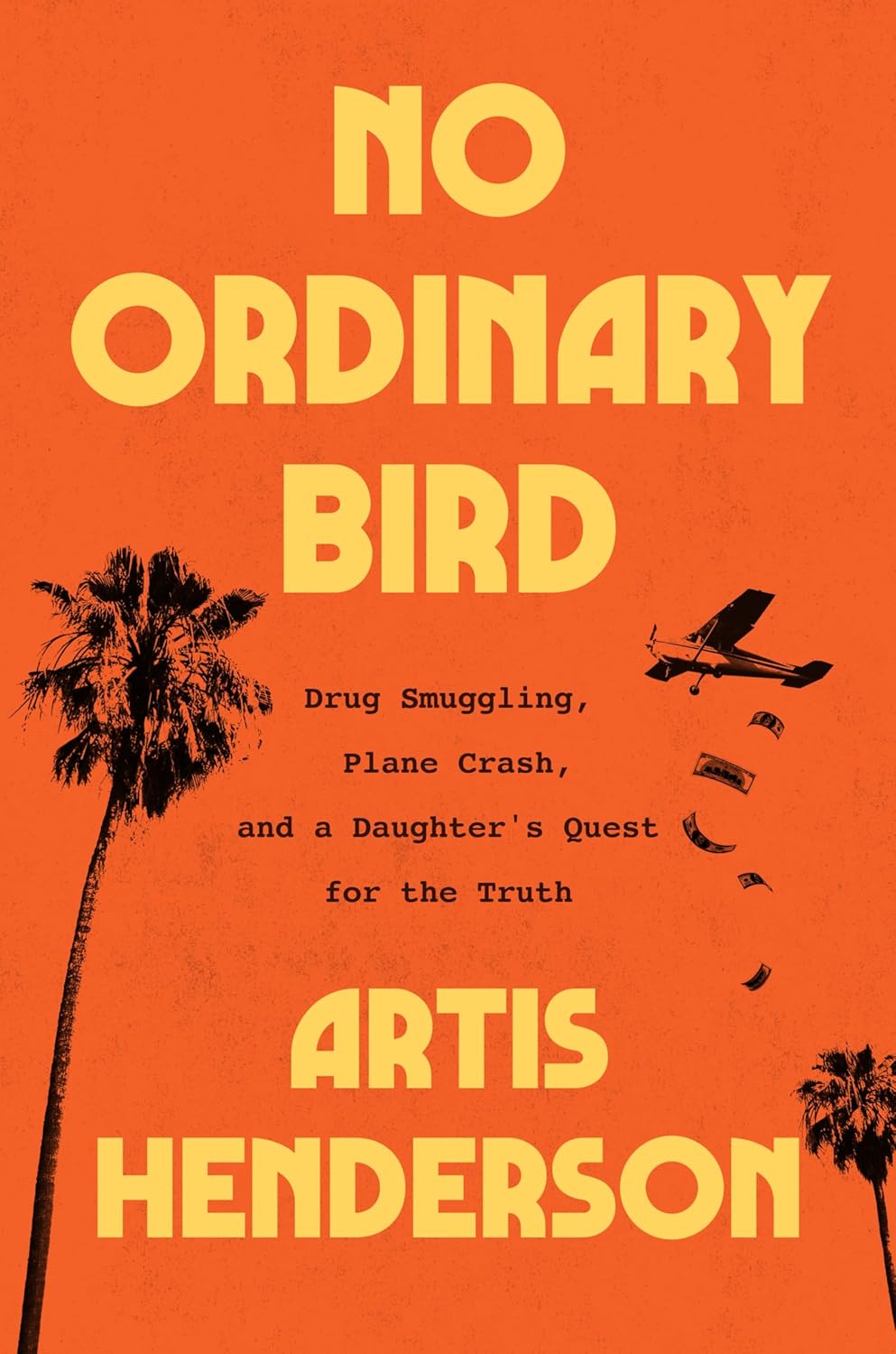
No Ordinary Bird: Drug Smuggling, a Plane Crash, and a Daughter’s Quest for the Truth by Artis Henderson

A daughter’s study of her father’s life and death artfully reveals intrigue, astonishing slices of world history, and a loving but flawed man.

In June of 1985, a small private plane, a Piper Cub, crashed on its owner’s property in northern Georgia. The pilot, Lamar Chester, was killed. His only passenger, his five-year-old daughter, AJ, sustained severe injuries but lived. In death, Lamar escaped prosecution as a marijuana smuggler. His widow, hoping to protect her child, removed the young AJ from the life she’d known, isolating them from family and friends who had been involved in the smuggling business. AJ grew up to be Artis Henderson (Unremarried Widow), who spent decades turned away from her father’s story, interpreting her mother’s silence as shame. Her eventual readiness to examine the truth of her father’s life, their brief but loving relationship, and his end has resulted in No Ordinary Bird: Drug Smuggling, a Plane Crash, and a Daughter’s Quest for the Truth, which combines investigation and personal excavation in a searing, moving memoir.

In their few years together, Lamar made a strong impression on his youngest child, one that has been enriched by her later research. She remembers him as a loving and beloved father, and deeply charismatic, although his attitudes toward women in particular appear problematic through a modern lens. Henderson is thoughtful about such judgments, and careful in considering her father’s upbringing as a factor in his life. And a wild life it was, with an early marriage yielding three surviving children and one lost; divorce and remarriage; and a colorful career as a pilot, smuggler, and ostentatious party boy in 1970s Miami. Increasing profits and outward success allowed Lamar to acquire ever-more-impressive possessions, and he became involved in ever-more-risky ventures, until he faced federal prosecution and the plane crash that killed him.

Henderson’s work is both investigatory and personal: “I’m grappling with this story as much as I’m reporting it.” She loved her father, sympathizes with the demons he faced, and remembers a childhood of “uncomplicated happiness. My father made me feel safe and protected.” She trusts that there was a time when, “to him, the line between the good guys and the bad guys was still very clear,” but also realizes that he made choices that endangered his family and, she concludes, led to his own death. No Ordinary Bird is a loving portrait that benefits from the nuance of understanding that, as Lamar liked to say, “you can’t tell the good guys from the bad guys.” It is both research-based inquiry–involving travel to Miami, Georgia, Colombia, Nicaragua, Iran, and beyond–and also a memoir of family, love, and risk. Henderson excels at the subtlety required by such a story, and her telling is intriguing, painful, and cathartic.


This review originally ran in the July 18, 2025 issue of Shelf Awareness for the Book Trade. To subscribe, click here.


Rating: 8 bear claws.

rerun: Gone to the Woods: Surviving a Lost Childhood by Gary Paulsen

I still think about this book and should find time for a reread. In case you missed it, please check on Gary Paulsen and his wonders (and traumas).

I had not thought of Gary Paulsen in years, until I saw the Shelf Awareness review of this new book. (Hat tip to my colleague Jen Forbus for that review.) Paulsen might have been the first author I really fixated on; I remember setting out to own all his books, and while I didn’t get very far (maybe six or eight of them), I’m pretty sure I wrote “Julie’s Gary Paulsen library” or some such inside the cover of each one, and had them set up on their own little shelf. Early signs of something, there. My favorite was Hatchet, of course, and its sequel; and I vividly remember a scene from the beginning of another book where the narrator watches a… chipmunk? eating another creature, blood down its front… what book was that?

Anyway – when I saw that he’s returned with a memoir of his own childhood, I was sold. And let me tell you. This book had me entranced from the opening lines. I wept.

Gone to the Woods has an innocence and a simplicity built into its writing style and the value system, I think, of its narrator. This makes it accessible to younger readers, but not at all to them alone. I think this is a memoir for everyone. Paulsen tells his story in the third person, calling his protagonist only ‘the boy,’ although the name ‘Gary’ is used once or twice by other characters. This helps to give the boy an elemental quality, like he’s sort of an archetypal boy, although his story is very specific. When the book opens, he is five years old, living in Chicago with his mother in 1944. She has a factory job, and coming from a small farm in northern Minnesota, is “not even remotely prepared to resist the temptations of the big city.” She lives in the bars and does not parent her small son, who she’s trained to perform for the men who try to win her favor. Grandmother hears of this lifestyle and is “critical, then concerned, and finally… past horrified and well into scandalized.” Her solution colors the boy’s method of problem-solving for life: “If it doesn’t work Here, go over There.”

The first adventure of the book, then, is the five-year-old boy’s solo journey by train from Chicago to International Falls, Minnesota. This takes several days and involves a train absolutely jam-packed with severely injured soldiers, smelling of and oozing pain and death, so that the boy is physically ill from it all – because didn’t I say, his father, who he’s never met, is a soldier off in the war. The boy becomes stuck in a train toilet, among other things, and observes out the train window the woods that will become his sanctuary. By the time he arrives at his aunt and uncle’s farm he is wrung out with exhaustion, trauma, and confusion. But the farm will be a perfect place for him, the first place he feels he belongs, is valued, is taught. He’s given his own room and bed. It’s lovely. Then it’s taken away from him.

I’ll stop summarizing here. The boy’s upbringing is one trauma after another, including a few years on the streets of American-occupied Manila, and a continuing absence of parental concern. I appreciate that the narrator is slow to judge his parents, and I think it would have been easy (narratively speaking) to be ugly about the mother’s drinking and many boyfriends, for example, but neither the young boy nor the adult man who writes these lines takes that easy road. (At least until the teenager’s perspective, at which point he thinks of both parents as vipers. But this is about the damage they do to him, rather than some puritanical judgment of mom’s moral choices.) He is an unjudgmental creature in general. Paulsen is wonderfully good at the innocent child’s perspective, elements of which are present in the teenager too.

Trauma after trauma, but with a few bright points, like the aunt and uncle in the Minnesota woods, and a saintly librarian when he is thirteen years old who makes him a gift of notebook and pencil, for whom this book might be considered a gift in return. And the woods and rivers and streams, which are always a bright point. From age five, the boy learns that the woods will allow him to take care of himself, even when he lives in a city again, keeping to the alleys and nights to avoid bullies, and escaping to the stream where he can fish for food or shoot squirrels and rabbits when his parents fail to provide for him. Even in Manila, a city of a certain sort of trauma (truly, the violence and death this child witnesses by his sixth birthday is unfathomable), he finds beauty and human kindness.

At times the events were hard for me to take in, and I wondered if younger readers were really the right audience for this. But on reflection, I think Paulsen offers just enough. I think children might take away what they need from this book – I’m no proponent of censoring life’s pains from kids – and it’s the adult mind and perspective that makes it even harder to read, if that makes sense.

The story is harrowing but also lovely, always riveting, and an important testimonial from a generation that we will eventually lose access to. It is excruciatingly beautiful in how it’s told. The immediacy of traveling with the boy is heart-rending and direct. I can’t imagine how this book could be improved upon.


Rating: 10 willow branches.

The Wild Dark: Finding the Night Sky in the Age of Light by Craig Childs

A longtime nature writer directs his gaze upward with this travelogue and love song for the dark night sky.

Prolific nature writer Craig Childs (The Secret Knowledge of Water; Atlas of a Lost World) takes readers on a journey away from the light with The Wild Dark: Finding the Night Sky in the Age of Light. He’s in search of a clear view of the heavens, stars, constellations, planets, galaxies, and beyond–and all that they stand for–and offers a quest narrative with a circular structure, which starts and ends in that bastion of illumination, Las Vegas, Nev.

Childs teamed up with an old friend and fellow adventurer, Irvin Fox-Fernandez, and together the two men rode loaded off-road bicycles north out of the city, which his friend called “Bortle-hopping.” Bortle, Childs explains, “is a naked-eye scale for determining a night sky’s quality”; in this book, Childs describes moving from Las Vegas’s Bortle 9 to the joys and profundities of Bortle 1, “where only stellar light and backscatter from sunshine in space can be seen.” He chronicles this trip with lyricism, gentle humor, and an obvious passion for darkness preserved, for the human ability to consider something larger than ourselves: “Beaming overhead, they live their lives regardless of how we see them, and for all I’ve heard that stars don’t care, I disagree. I just don’t know what they care about.” As environmental causes go, this one entails an easy fix: just turn the lights off. Referring to mythology, biology, archeoastronomy, and more, Childs makes a strong argument.

Beautifully written, fervent, and lavish in imagery both light and dark, The Wild Dark is a moving call to action.


This review originally ran in the May 30, 2025 issue of Shelf Awareness for Readers. To subscribe, click here, and you’ll receive two issues per week of book reviews and other bookish news.


Rating: 6 ginger cookies.

Mailman: My Wild Ride Delivering the Mail in Appalachia and Finally Finding Home by Stephen Starring Grant

Within the high highs and low lows of rural mail delivery, a laid-off white-collar worker builds new relationships with place, with his neighbors, and with himself.

In 2011, Stephen Starring Grant moved his wife and two daughters back to his hometown of Blacksburg, Va. In early 2020, Grant, the family’s primary wage earner, was laid off from his consulting job. He found himself unemployed at the start of the pandemic in a town that had limited employment options, and with a recent cancer diagnosis to boot. Unable to find anything in his field, he took a job as a rural-route carrier for the United States Postal Service. Mailman: My Wild Ride Delivering the Mail in Appalachia and Finally Finding Home offers his stories and reflections on a year spent in a position he’d never thought much about before.

Grant began with a bit of an ivory-tower complex, as he imagined his intellectual background overprepared him for the simple drudgery of mail delivery (which turned out to be untrue), but he ended with a profound respect for postal and other service workers, and balanced thoughts on class and background. These pages vary in tone, by turns hilarious and thoughtful. Grant describes religious experiences, being threatened at gunpoint, bonding with strangers over their deliveries and finessing their political differences. He discusses types of incompetence (a few months in, he “graduated to the consciously incompetent stage, lost in the burning wasteland of self-awareness that I was really not very good at delivering the mail”) and the intense discomfort involved with learning new things, with great effort and limited success, in adulthood. Musing on the origins and purpose of the USPS, he expresses a nuanced patriotism: “America is the greatest country in the world… America is a steroidal monster… Both versions of America are true.” And, he notes: “Our delivery vehicles were like democracy, the worst of all possible vehicles, except for the alternatives.”

Between indulging in fantasies of delivering the mail with Barack Obama at his side and performing neighborly services like basic car maintenance for favorite people along his route, Grant brought his kids for added help and dropped in on his parents for pancakes. Along the way, he informs the unschooled reader of the process that mail carriers undertake to sort, order, and “case” the mail for delivery, and the hazards: backbreaking labor, the ergonomic disaster of right-hand drive (especially in a left-hand-drive vehicle), extremes of heat and cold, and dog attacks. Via an adventure with unfamiliar blue-collar work, Grant discovered new values, new people, and a new relationship with home. Mailman is a classic memoiristic blend of whimsy, storytelling, and insight.


This review originally ran in the May 22, 2025 issue of Shelf Awareness for the Book Trade. To subscribe, click here.


Rating: 7 Slim Jims.

Wildfire Days: A Woman, a Hotshot Crew, and the Burning American West by Kelly Ramsey

This beautifully crafted memoir features both dramatic action and deep soul-searching by a woman on an elite wildland firefighting crew.

Kelly Ramsey’s Wildfire Days: A Woman, a Hotshot Crew, and the Burning American West is a memoir of wildland firefighting and gender, but also of trauma, family, and navigating love and life at any age.

Ramsey’s expertly structured narrative shifts in both place and time, beginning with a hazardous fire event in her firefighting career, then moving to where she started that career (the Klamath River and its surrounds in Northern California), then a Kentucky childhood and her parents’ story. She paints a portrait of her mother that is a masterclass in the single-paragraph capsule profile. “Raised in a home where someone might vacuum a spill from the front lawn, my mom grew into an inquisitive, determined woman who was in the right almost as often as she believed she was.” Ramsey’s father was an alcoholic, eventually homeless and lost, whose absence caused the grief she may have been fighting along with the extreme challenges of becoming a wildland firefighter and other, still more self-destructive behaviors. This introspection occurs in flashbacks and fragments alongside the main timeline in which Ramsey, in her late 30s and after a wildly varied life, joined the Rowdy River Hotshots.

Hotshots live in barracks or on the road, sleeping on the ground as often as not, packed into a crew transport with their firefighting gear, working shifts that sometimes stretch to 24 hours in tremendously hazardous conditions. They hand-dig firebreak lines, run chainsaws and carry swamp brush, and hike vertiginous slopes under loads that can exceed 70 pounds, often amid active fire. The only woman on the crew her first season (and the first in nearly a decade), Ramsey was also one of the smallest and one of the oldest. She and “the boys” wrestled individually and collectively with how to treat her difference while integrating her into a crew that was necessarily tightknit: they relied on each other for survival.

Showcasing lovely writing and storytelling, Wildfire Days contains just enough firefighting and fire suppression policy history to contextualize Ramsey’s personal journeys. Ramsey is far from a saintly character, and she portrays her own less flattering moments clearly: worrying over her tendency to smile and people-please; her fear that she aligned herself with her male fellows in singling out the next woman to join the crew. This honesty is refreshing. Not a hero, Ramsey lets readers see her earnest and imperfect strivings. Her growth by the memoir’s end is ongoing, but impressive. “Here was the secret I kept stumbling upon: that our deepest wounds were the fertile soil of our growth. New life tended to spring from bitterest ash.” Tense action, fraught self-examination, pain, triumph, and romance make Wildfire Days propulsive and unforgettable.


This review originally ran in the May 8, 2025 issue of Shelf Awareness for the Book Trade. To subscribe, click here.


Rating: 8 smiles.

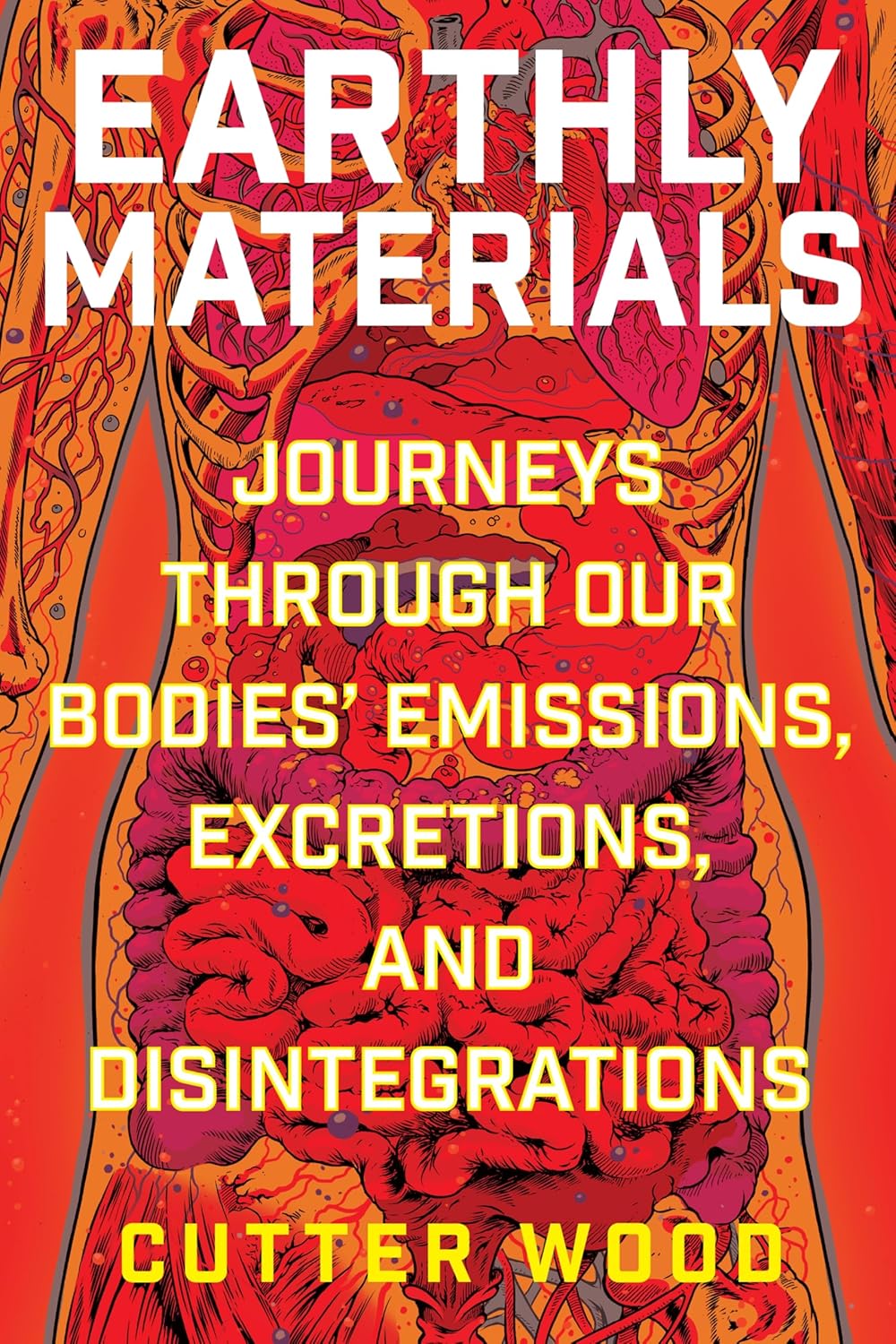
Earthly Materials: Journeys Through Our Bodies’ Emissions, Excretions, and Disintegrations by Cutter Wood

This weird, wonderful exploration considers the social, cultural, and political implications of bodily emissions as well as their science, but shines brightest in its empathetic storytelling.

Cutter Wood (Love and Death in the Sunshine State) offers a spellbinding collection of facts, observations, and musings in Earthly Materials: Journeys Through Our Bodies’ Emissions, Excretions, and Disintegrations. In 12 chapters that might be termed “essays” and Wood calls “stories,” he considers mucus, urine, blood, semen, menses, milk, flatulence, breath, feces, vomit, hair, and tears. While readers will certainly gain new and fascinating scientific knowledge, what makes Earthly Materials so special is storytelling: Wood’s compassionate, funny, earnest explorations through unexpected subject matters adjacent to bodily fluids.

At a lab at the Massachusetts Institute of Technology, he meets impassioned graduate students and views beautiful stellar-like magnifications of mucus, which resemble Hubble Telescope photographs. He discusses the political and financial implications of donating blood and delves into the discomfiting r/NoFap Reddit forum. In the absorbing true-crime case of Formula Mom, a Florida woman is investigated and sentenced to prison for creating a large-scale business that bought and sold infant formula.

Tongue-in-cheek, Wood describes the flatulence customs and practices of the preadolescent male in the Commonwealth of Pennsylvania. To explore vomit, he joins the Soul Quest Ayahuasca Church of Mother Earth and takes its sacrament. These experiences and studies often yield hilarity in Wood’s expert prose: dryly witty, comically verbose, and poignant. Wood finishes with the inexplicable tears of a Wimbledon finalist, in this thought-provoking philosophical study that exemplifies human interconnectedness through the rather surprising lens of bodily fluids and expulsions. Earthly Materials will change the way readers think about the mundane in unanticipated and transcendent ways.


This review originally ran in the May 2, 2025 issue of Shelf Awareness for Readers. To subscribe, click here, and you’ll receive two issues per week of book reviews and other bookish news.


Rating: 7 stills in the brambly Appalachian holler.

rerun: The Wet Engine: Exploring the Mad Wild Miracle of the Heart by Brian Doyle

I was going to tell you that I’ve been thinking about Brian Doyle lately, but I think that’s always so.

I do think about this essay collection a lot.

Please enjoy this review originally from late 2020 (book published in 2005).

I am back again with another Doyle, different this time but totally recognizably him.

Here are the classic Doyle elements of celebration and beauty, but amid so much pain and loss… and I have to admit, the loss of Doyle himself felt very present for me here. I continue to feel it as a significant loss to this world, both because we will get no more of his transcendent writing, and because he just seems to be the most beautiful, loving, joyful, talented person, and we don’t have enough of those; it still hurts me that we’ve lost him. And that was right under the surface of all of these essays for me, in a way that was less true of Chicago, because that book was fiction rather than nonfiction, and also because it is not quite so explicitly about life and death in the way that The Wet Engine is, so the pain was closer to the surface for me, if that tracks.

The wet engine is the heart, often but not always the human heart, and the reason Doyle focuses here is that one heart that is important to him is in danger. His son Liam (age nine at the time of writing) was born with three chambers in his heart rather than four. He had to have several open-heart surgeries when he was an infant, and so his father learned about how hearts work and he got to know some cardiologists and surgeons. And because this father was Brian Doyle, he also did some meditating on the metaphoric meanings of heart, on all the language we use (heartbreak, heartsick, hearts swelling and leaping and failing, hearts held in hands and worn on sleeves), and on mysticism and miracle and mystery and magic. He also does research: Liam’s doctor, Dr. Dave, is profiled in considerable detail, as is Dr. Dave’s wife, Linda, and his mother, Hope. (It is through Hope that we find ourselves in an internment camp – really, a concentration camp – for Japanese Americans during World War II, in Topaz, Utah. Hope was interned there as a teenager with her family for nearly three years; she graduated from high school there. “No, I am not bitter, she says. No. Bitter is no place to be. But I do not forget.”) Shorter profiles explore other doctors and pioneers in medicine and cardiology from around the world, from the early days of the science through the present (like Dr. Dave’s colleague Hagop Hovaguimian, who can never stop working because too many people need his help). The people who people this book come not only from throughout history but from all over the world, which is frequently fun and which reinforces the feeling of enormous scope that Doyle achieves. “The doctor to my left is from Australia. He speaks Australian, a smiling sunny language which takes me a minute to get the pace and rhythm of, but then we get along swell…”

The Wet Engine is a collection of linked essays that explore these and other topics: the humans involved with hearts and their stories; the nature and power of stories; the language and metaphor and soul of the heart, and its place in our mythologies; the science of the hearts of humans and other species; Liam’s own life story, and Doyle’s navigation of it as Liam’s father. Everywhere of course is Doyle’s distinctive voice and style, made up of long lists and emotional appeals and exuberance and vulnerability. There is also God here, and my regular readers know I don’t spend a lot of time reading about God, but Doyle can get away with anything: the tone of reverence is entirely appropriate here, and his explorations (“God is not a person. God is not an idea. God is the engine. God is the beat. We are distracted by the word God…”) I can easily follow. (Also I am reminded of Amy Leach.) And I appreciate that Doyle doesn’t choose just one religious or spiritual angle of approach, but that he’s interested in holiness in a multitude of traditions.

I think what I love most about this book is that it feels like it includes all the disciplines of study. There is theology, and hard science – medicine, zoology, even botany – history, social justice, the arts – music, and his own literary genius, including some superlative descriptive work and expressions of gratitude and pain. I’m pretty interested in interdisciplinarity these days, and I’m assigning my students readings that do this work, including a short passage from The Wet Engine. (Synchronicity: I’d just given them a Joseph Mitchell essay called “Goodbye, Shirley Temple,” and then read that Hope was interned at that camp with Shirley Temple’s gardener. What?? The world is a mystery.) And all of this in Doyle’s own wild style.

I cried a lot, but it’s such a beautiful, instructive book. At scarcely over 100 pages, it is one that would bear lots of study. Again I rave.


Special recognition to Matt Ferrence for making me aware of this book a few years ago, when he assigned “Joyas Volardores,” the sixth essay, for an MFA residency. That one still stands out. Thanks, Matt.


Rating: 9 knobby knees.

rerun: She Got Up Off the Couch by Haven Kimmel

I have never stopped thinking about this masterful character profile / biography / memoir / feat of creative nonfiction by Havel Kimmel, and I’m very pleased to share it with you here, again. There was also a reread post, from when I was doing my MFA, and even as I write these words, I wish I had time for a reread now. (I am, for the record, really enjoying TJ Klune’s latest, so no regrets there, and stay tuned. Here’s to authors we love who keeping writing new work.)

couchThis book follows A Girl Named Zippy, and I adore Kimmel’s explanation in her Preface: that she would definitely never write a sequel to Zippy, but that people kept on asking her if her mother ever got up off the couch; and here we are. This is an extension of that first memoir, then, with the focus being not on the girl called Zippy (Haven Kimmel herself) but on her mother, who in that first volume was a somewhat shapeless woman who mostly inhabited the couch and read a lot, talked on the phone, watched television, and didn’t worry too much about her children. This is told not unlovingly, but as fact. Zippy’s childhood is on balance awfully joyful and fun, and although a critical adult’s eye might point out lots of points of minor neglect, she clearly loves her family very much. This tone is continued in She Got Up Off the Couch. The family and each of its members is still, realistically, flawed, but lovable and well-loved. Kimmel’s brother is now mostly absent, with a family of his own; her sister marries and has two babies; her father finds work as a sheriff’s deputy (or similar job title); but her mother’s is the great change of this second memoir. This was, what, the late 1970’s I suppose, in a tiny Indiana town of a few hundred people. Zippy’s dad, Bob Jarvis, holds the keys: her mother Delonda doesn’t know how to drive. This will work as a fine metaphor (and indeed is part of the literal action), as Delonda calls a phone number on a television commercial to look into going to college. She wrangles a ride into the next town over for an entrance exam, which places her out of fully 40 hours of college credits. Under Bob’s clear disapproval – he says of the woman who takes Delonda to her test, “time was, a woman wouldn’t have gotten in a man’s marriage that way” – she persists in attending classes, studying, reading, talking to new people, and in 23 months, graduates summa cum laude – and continues on to graduate school. Eventually she earns a Master’s degree in English and becomes a high school teacher. This is all a stunning change. Along the way, to get to school and back, she learns how to drive and purchases a vehicle that is, in itself, a good joke.

She Got Up Off the Couch also follows the format of A Girl Named Zippy: chapters jump around, more as connected anecdotes than as clear narrative. Each chapter stands alone admirably as a hilarious or heartfelt – usually both – nugget of tears, joy, preadolescent confusion, and filial love. [In fact, as soon as I finish writing this review I’m off to read my favorite chapter out loud to Husband, if he’ll let me, while he smokes a brisket in the backyard. If you’re curious, it’s called “Treasure,” and is about a hippie college student hiking cross-country who camps out in the Jarvis backyard for a few days. It’s hilarious and heart-wrenching.] It’s a great structure, this anecdotal style. If I ever write my own mother’s biography, which I keep dreaming about, I have something similar in mind. Yes, there are odd characters that the reader of just one chapter would wrinkle her forehead at; but this is true of the whole book, too. Zippy has had an odd and happy life, and that’s exactly why we enjoy reading about it.

Zippy herself, naturally, also grows and changes in this book. Delonda is our star and makes the most life-changing journey. Kimmel writes in her preface, “I will never do anything half so grand or important,” and I know exactly what she means: the decision of Delonda and other women of her time who broke out of where they were told they belonged have done something for the women of my generation that we are now saved from having to do, if that makes any sense. It is something I’ve long felt about my own mother. But I was saying that Zippy continues to grow up: we see more of her engaging and eccentric friends, Rose and Julie Ann, and we meet a new friend, Jeanne Ann. And when she gets a nephew and then a niece, Zippy becomes hopelessly devoted. The blizzard that sweeps through when her niece is long overdue and panics the family is, again, funny and riveting at the same time.

I’ve now read everything that Haven Kimmel has written except for every single one of her blog posts, and that one children’s book. I hope she is getting to work right now on another book – fiction or non, more Haven Kimmel, stat.

I love it. Funny, true, humble, real.


Rating: 9 cherry-red polyester suits.

guest post: “A Letter to Snow” by Victoria Weeks

I really did have a book review for you, promise (ha!), but The Case of the Missing Maid (which was excellent!) will have to wait for Monday. I wanted you to see this post from a friend of mine that went live yesterday. We are seeing all the possible shades of winter here in central West Virginia, and Vicky (who lives a little over an hour away, in the highlands of the Canaan Valley) and I are headed into a weekend of fatbike racing. After a good variety of snow and snow-adjacent conditions at the last three events, this weekend’s race in Garrett County, Maryland is looking like a real crapshoot, with rain, snow, and ice promised over the next few days. So this lovely brief bit of writing feels entirely apt. Please enjoy.

Thanks, Vicky.