Factory Girls by Michelle Gallen

Amid the Troubles in Northern Ireland, a scrappy young woman comes of age in this inspiring, humorous and moving novel.

With Factory Girls, Michelle Gallen (Big Girl, Small Town) delivers a heartrending, funny, blistering and beautiful novel of foreboding and hope. In the summer of 1994, Maeve Murray and her two best friends are on the cusp of escaping their small Northern Irish town for bigger, better and safer things. Maeve is a child of the Troubles: “neighbours shooting neighbours was just the way things had always been for her.” She comes from a poor Catholic family and has been taught to expect little, but she has hopes that her exam results will move her beyond the background that, in her world, defines her. “Nobody as poor as Maeve could afford to have notions about herself. Which was why she treasured them.” Maeve and her friends Caroline and Aoife find summer jobs at a shirt factory in town, hoping to save a bit before going away to college. Exam results loom all summer, in this novel organized by a countdown beginning “74 days until results.”

Caroline has a loving family, and Aoife is downright privileged compared to Maeve’s rather stark upbringing, not only in poverty but with the death of her sister (unexplained for much of the novel) shadowing all her family’s interactions. “Maeve sometimes wondered if [her sister]’d still be alive if she’d failed and stayed in the town.” Factory work is a bit of a miracle in this depressed town, but it comes with unforeseen challenges, like working alongside Protestants, while outside the gates a never-ending war of retaliation is played out by paramilitary groups on both sides. Maeve worries about losing her kneecaps or her life before she ever makes it to London. “The news reports had said the children were ‘lucky,’ for despite being packed together in the parish hall, they’d received only minor injuries…. She didn’t feel lucky when she felt the slap of the explosion.” Alongside wrestling with grueling work making shirts that nobody she knows can afford and fending off her slimy English boss, Maeve will find still greater challenges spring from the factory floor. “It was the factory workers–both Prods and Taigs–who were at the bottom of a very long and merciless food chain.”

Factory Girls takes on class, corruption and the Catholic/Protestant and English/Irish divides; gender and labor rights; female friendships; family disappointments; the specter of opportunity and the puzzle of how to transcend one’s roots without leaving part of oneself behind. This may sound like a heavy, ambitious group of subjects, but Gallen draws delightful, richly rendered characters and imbues her narrative with a vernacular voice that will charm readers and keep them firmly rooted in time and place. This novel is as hilarious as it is heartbreaking: not to be missed.


This review originally ran in the October 25, 2022 issue of Shelf Awareness for the Book Trade. To subscribe, click here.


Rating: 8 crisp sandwiches.

Yolk by Mary H. K. Choi 

This review from Shelf Awareness prompted me to buy and read this book, and it delivered. I felt fully involved and invested in the lives of Jayne and June Baek, Korean-American sisters born in Seoul and raised in San Antonio, Texas, now living as young adults in New York City. They haven’t been close for years, and now Jayne (our first-person narrator) avoids her sister’s phone calls as she does their mother’s, until June tracks her down on a disastrous third-wheel date and demands they meet. June is very sick. Outwardly, Jayne is the sister with more obvious problems – self-loathing, squalor, harmful sexual practices, generally low functioning as an adult (and some more serious issues that are only gradually revealed). Now that they are sharing increasing challenges, the estranged sisters might just come together again.

As an only child, I have always been fascinated by siblings, whose various dynamics I can only watch from outside, generally with jealousy. One of my favorite things about this novel is its intimate, insider look at the sisters’ relationship, which is troubled (but aren’t they all), love and dislike intertwined with violence and yearning. One of Yolk‘s great strengths overall is immediacy and intimacy, how close we feel to Jayne, in all her messes and flaws. I also really appreciated the writing about place. New York feels right to me, but what do I know; brief sojourns home to San Antonio I am in a better position to judge, and I think Choi (who shares geographical background with her characters) gets it just right. The humid night air and the big skies make me a little homesick, too. The tone of young twenty-somethings dealing with all the madness of life feels pitch-perfect.

Choi includes a brief note at the book’s beginning about some difficult subject matter, acknowledging that she shares some of Jayne’s difficulties and that “for those struggling with body image and food, this story might be emotionally expensive for you.” I had to pause at that phrase, emotionally expensive: I like it. “Sensitivity is a superpower,” Choi instructs us. It is not a novel with an overt message, but I appreciated this one.

I also need to note the loveliness of this hardback book as a physical object: I love the design, the dust jacket, what’s under the dust jacket, and the print on the edges of the pages that continues the image on both dust cover and hardcover. It’s a beautiful piece that feels good in the hand and I’m glad to own it.

Sensitive, funny, raw and often painful – I worried a little early on that I’d taken on something sadder than I needed at this time. But Yolk is a beautiful book about love and hope, too, and with a thread of unlikely romance to it as well. I found it delightful and do recommend.


Rating: 8 glasses of water.

Gone to the Woods: Surviving a Lost Childhood by Gary Paulsen

I had not thought of Gary Paulsen in years, until I saw the Shelf Awareness review of this new book. (Hat tip to my colleague Jen Forbus for that review.) Paulsen might have been the first author I really fixated on; I remember setting out to own all his books, and while I didn’t get very far (maybe six or eight of them), I’m pretty sure I wrote “Julie’s Gary Paulsen library” or some such inside the cover of each one, and had them set up on their own little shelf. Early signs of something, there. My favorite was Hatchet, of course, and its sequel; and I vividly remember a scene from the beginning of another book where the narrator watches a… chipmunk? eating another creature, blood down its front… what book was that?

Anyway – when I saw that he’s returned with a memoir of his own childhood, I was sold. And let me tell you. This book had me entranced from the opening lines. I wept.

Gone to the Woods has an innocence and a simplicity built into its writing style and the value system, I think, of its narrator. This makes it accessible to younger readers, but not at all to them alone. I think this is a memoir for everyone. Paulsen tells his story in the third person, calling his protagonist only ‘the boy,’ although the name ‘Gary’ is used once or twice by other characters. This helps to give the boy an elemental quality, like he’s sort of an archetypal boy, although his story is very specific. When the book opens, he is five years old, living in Chicago with his mother in 1944. She has a factory job, and coming from a small farm in northern Minnesota, is “not even remotely prepared to resist the temptations of the big city.” She lives in the bars and does not parent her small son, who she’s trained to perform for the men who try to win her favor. Grandmother hears of this lifestyle and is “critical, then concerned, and finally… past horrified and well into scandalized.” Her solution colors the boy’s method of problem-solving for life: “If it doesn’t work Here, go over There.”

The first adventure of the book, then, is the five-year-old boy’s solo journey by train from Chicago to International Falls, Minnesota. This takes several days and involves a train absolutely jam-packed with severely injured soldiers, smelling of and oozing pain and death, so that the boy is physically ill from it all – because didn’t I say, his father, who he’s never met, is a soldier off in the war. The boy becomes stuck in a train toilet, among other things, and observes out the train window the woods that will become his sanctuary. By the time he arrives at his aunt and uncle’s farm he is wrung out with exhaustion, trauma, and confusion. But the farm will be a perfect place for him, the first place he feels he belongs, is valued, is taught. He’s given his own room and bed. It’s lovely. Then it’s taken away from him.

I’ll stop summarizing here. The boy’s upbringing is one trauma after another, including a few years on the streets of American-occupied Manila, and a continuing absence of parental concern. I appreciate that the narrator is slow to judge his parents, and I think it would have been easy (narratively speaking) to be ugly about the mother’s drinking and many boyfriends, for example, but neither the young boy nor the adult man who writes these lines takes that easy road. (At least until the teenager’s perspective, at which point he thinks of both parents as vipers. But this is about the damage they do to him, rather than some puritanical judgment of mom’s moral choices.) He is an unjudgmental creature in general. Paulsen is wonderfully good at the innocent child’s perspective, elements of which are present in the teenager too.

Trauma after trauma, but with a few bright points, like the aunt and uncle in the Minnesota woods, and a saintly librarian when he is thirteen years old who makes him a gift of notebook and pencil, for whom this book might be considered a gift in return. And the woods and rivers and streams, which are always a bright point. From age five, the boy learns that the woods will allow him to take care of himself, even when he lives in a city again, keeping to the alleys and nights to avoid bullies, and escaping to the stream where he can fish for food or shoot squirrels and rabbits when his parents fail to provide for him. Even in Manila, a city of a certain sort of trauma (truly, the violence and death this child witnesses by his sixth birthday is unfathomable), he finds beauty and human kindness.

At times the events were hard for me to take in, and I wondered if younger readers were really the right audience for this. But on reflection, I think Paulsen offers just enough. I think children might take away what they need from this book – I’m no proponent of censoring life’s pains from kids – and it’s the adult mind and perspective that makes it even harder to read, if that makes sense.

The story is harrowing but also lovely, always riveting, and an important testimonial from a generation that we will eventually lose access to. It is excruciatingly beautiful in how it’s told. The immediacy of traveling with the boy is heart-rending and direct. I can’t imagine how this book could be improved upon.


Rating: 10 willow branches.

How to Order the Universe by María José Ferrada, trans. by Elizabeth Bryer

Through a child’s clever but innocent point of view, this inventive debut novel considers family, hope and the harsher realities of 1980s Chile.

María José Ferrada’s How to Order the Universe offers an imaginative view of Pinochet-era Chile through a child’s eyes, as she assists her father in his work as a traveling salesman of Kramp brand hardware items. The world appears complex, fascinating and a little magical to M, the narrator. Elizabeth Bryer’s whimsical translation from the Spanish feels appropriate to M’s exceptional perspective.

Ferrada’s playful, poignant novel opens with the story of a young man named D, whose “first sales attempt happened the same day a man took a step on the moon.” He meets a beautiful woman. They marry and have a child, M, and so the narrator enters her own story. She begins accompanying D on his sales calls when she is seven. M’s school attendance is sporadic; her work as D’s assistant is important to both of them, and M’s mother is a bit detached. Father and daughter are close, in their dreamy interactions with each other and with a small community of salesmen and shopkeepers. She is treated as a small adult: “in recognition, I think, of the fact that I had grasped the complexities of human beings at such a young age, D showed me how to blow smoke rings. Small rings that crossed the city, expanding and dissolving in the distance.”

M’s narrative voice is solemn, serious. She is a little obsessed with categories and classification. D’s understanding of the world, and therefore M’s as well, involves hammer, nails, the moon and stars. “Every person tries to explain the inner workings of things with whatever is at hand. I, at seven years of age, had reached out my hand, and had grasped a Kramp catalogue.” She studies the organization of items for sale in shops: “I thought that discovering the sequence would bring me a little closer to comprehending the classifications used by the Great Carpenter to order the universe.” M is a precocious philosopher, but also a child, for whom certain realities eventually come as a surprise. When the family circumstances unexpectedly change, “There were two possibilities: A. Precariousness had always been with us, and I’d never noticed. B. Something had changed. Whichever it was, my childhood memories fractured: crack.”

How to Order the Universe is fanciful, sweet and moving, as M gradually registers and questions the changing world she inhabits, wrestling with violence, absence, the ability to make one’s own luck “with well-shined shoes and the right outfit.” Much of this evolution is filtered through her irrevocably changed relationship with D. “We had been deeply united by a catalogue of hardware store products: nails, hammers, door viewers, screws. But that catalogue no longer existed.” This is a beautifully translated, thought-provoking novel of profound themes and childlike wonder.


This review originally ran in the February 8, 2021 issue of Shelf Awareness for the Book Trade. To subscribe, click here.


Rating: 7 door viewers.

We Run the Tides by Vendela Vida

An uncertain adolescent girl narrates a heart-aching tale of coming of age in a city in transition.

We Run the Tides by Vendela Vida (The Diver’s Clothes Lie Empty) is a dreamy, tricky tale of girlhood, secrets and the shifting sands of truth set in mid-1980s San Francisco. This captivating coming-of-age novel asks readers to consider friendship, cruelty, deception and consequences.

Narrator Eulabee begins her story with the first-person plural point of view. “When I say ‘we,’ I sometimes mean the four of us Sea Cliff girls who are in the eighth grade at the Spragg School for Girls. But when I say ‘we,’ I always mean Maria Fabiola and me.” The foursome is close, but it is beautiful Maria Fabiola who enraptures Eulabee and, apparently, everyone else–children as well as adults–in their rarified world. Theirs is a neighborhood of au pairs, chauffeurs and views of the Golden Gate Bridge. “Sea Cliff is for solitude, for when you want to protect yourself from people.” Bad things still happen here, but the community handles them in whispers, while looking away.

Earnest, awkward, devoted Eulabee is perhaps less polished than her friends, or perhaps it only seems so because readers are privy to her insecurities. The trouble begins when she and Maria Fabiola fail to see a minor event in the same way, literally. Did Eulabee miss a small, important detail? Or did Maria Fabiola make it up? The truth almost doesn’t matter; what matters is that the girls are equally firm in their divergent truths. An insignificant moment snowballs until Eulabee’s world is shattered. Lives may be endangered; the foursome disintegrates; nothing will ever be the same again. “I stand there, on the cusp of the ocean and listen to its loud inhale. And then it recedes and takes everything from my childhood with it–the porcelain dolls, the tap-dancing shoes, the concert ticket stubs, the tiny trophies, and the long, long swing.”

We Run the Tides is an enchanting, literary novel, realistic but a little unreal. Vida gives a tender, incisive portrayal of adolescence. The girls’ cruelties are visceral and impermanent, the stressors of Sea Cliff somehow both superficial and profound. Decades later, the events of 1984-85 remain “part of the lore. The newspapers called what happened the Sea Cliff Seizures,” and in adulthood, Eulabee both has and has not outgrown them. Her friends and classmates have moved on; San Francisco has changed. “Symphonies of tiny violins play themselves to shreds.” And Vida’s readers will be changed, too, by this cleverly woven story about honesty, betrayal, charm and illusion, about what matters in youth and what matters always.


This review originally ran in the January 26, 2021 issue of Shelf Awareness for the Book Trade. To subscribe, click here.


Rating: 8 text messages.

The Hare by Melanie Finn

A totally captivating novel to read in as few sittings as possible (beware!), often a bit disturbing or discomfiting, but always engrossing.

We first meet Rosie and Bennett in 1983. They’re on a date, which doesn’t go very smoothly, and highlights their differences. He’s older, far more sophisticated; he comes from money, while she’s a little awkward. (Or maybe just young.) She dutifully takes his cues, but the reader is immediately uncomfortable. Rosie’s perhaps not as uncomfortable as she should be.

We rewind just a bit to gather up her backstory. A childhood of privation in Lowell, Massachusetts; an art scholarship at Parsons School of Design in New York City. She’s a student there when she meets Bennett at MoMA, and is excited and flattered at his attention. And they’re off and running.

Somewhere inside, Rosie had the idea, like a stone buried deep in the Presbyterian loam of her soul, this pregnancy was punishment for being greedy. Her orgasms were rich as chocolate cake or red velvet. Layers of sweetness and dripping icing.

What lovely lines, hm? And a good example of Finn’s expressive writing, and Rosie’s rich interiority. We follow her from here over decades, eventually to rural Vermont; and I don’t think I’ll tell you much of what happens, but she grows and changes and learns so much. She’s a riveting character. While I empathize deeply with Rosie (eventually, Rose) throughout the book, there are times I disagree with or feel disturbed by her perspectives. This perhaps only deepens the connection, though, and my need to see her through.

The Hare is told in close third person, meaning Rosie is ‘she’ rather than ‘I’ but we still see what she sees, which allows for the question of whether she is really a reliable narrator. There are a few types of unreliable ones: there’s the narrator who is being deceitful and lying on purpose, and then there are other kinds, who maybe can’t see their own worlds clearly. Do I see myself the same way that you see me? Can I reliably narrate myself? Tiny spoiler here: Rosie consistently tells us she’s not much of an artist. But some others around her think she might be gifted. Who do you believe?

The visual-arts frame is a neat one – I love this stuff when it’s done right. A certain Van Eyck painting plays a small but pivotal role. And a little more subtly, Rosie’s eye for image, color, line, and perspective have an enormous impact on how we see what she sees. This is a novel with layers to it in a way that I love; I think I’ll be thinking of it for some time.

Gender is central to this book. Rosie’s position in her life, her situation in several senses, and her feelings of powerlessness are attributed to her being a woman. Her gender, and those of other characters, are always and unavoidably related to their roles and relationships. The novel itself is a commentary on gender roles; Rose eventually make explicit commentary, but she was always make implicit observations, too. The back-of-book blurb calls her “an authentic, tarnished feminist heroine,” and I think that’s about right. In some ways this is a coming-of-age story, but lasting far beyond the time in her life that we tend to think of as the coming-of-age time. She’s still growing up, as we all are (I have come to see), and I really appreciated noting that here.

Finn is absolutely expert at mood and atmosphere. We are with Rosie when she feels dread on a Connecticut (I think) back road; luxuriates in a boathouse on a fancy estate on the coast; works in fear, numb and bone-tired, in the snowy Vermont mountains. This is a book to take you out of your own life.

This review has included almost no plot summary. That’s on purpose. I want you to read this work of suspense and be as surprised by events as I was. It’s beautifully thought-provoking, often lovely, and occasionally frustrating (in that Rosie sometimes frustrated me – as I feel sure Finn intends). Haunting. The hare of the title does extraordinarily broad and deep work. I am enchanted.


Rating: 8 duck decoys.

Sophomores by Sean Desmond

A boy begins to find himself as his parents face private battles of their own in this poignant and searching novel.

With Sophomores, Sean Desmond (Adam’s Fall) evokes late-1980s Dallas and its suburbs with eerie precision. A nuclear family–father, mother, son–and the worlds they navigate are full of anxieties, choices and possibilities. Spanning just one school year, this is a novel to get lost in.

In the fall of 1987, Dan Malone is a sophomore at the Jesuit College Preparatory School of Dallas. He belongs to a tight foursome of boys who support each other at school and in their forays with the girls of Ursuline Academy. A bit tortured by his shyness in both areas, Dan’s interior workings are self-consciously earnest but endearingly real. “Dan felt a sudden awareness, a shimmering sense of discovery, that his journal, the newspaper, music, writing, reading, it was all connected with some hidden purpose… The hour when he would take part in the life of the world seemed to be drawing closer, and Dan wanted to think and write and listen to his heart and find out what it felt.”

Dan’s father, Pat, is an airline executive facing a serious industry downturn, culturally Irish Catholic and miserably estranged by his displacement (for work) from his native Bronx. He drinks too much and hides it poorly from his family. He struggles with a recent diagnosis of multiple sclerosis.

Mother and wife Anne provides an essential counterpoint to Dan and Pat’s heavily male worlds. As a devout young woman, Anne had been a novice at Sisters of Charity, but she grew into a worldly, quietly feminist woman, inclined to be contrary in her internal monologues. Still a serious Catholic, Anne argues with the pastor both in her head and via anonymous phone calls.

These three perspectives triangulate to offer a rich, subtle story of family grief and love, teenaged seeking and adult angst. Desmond places crises in the classroom, where Dan strives for growth and recognition from a teacher “legendary for rigor and Socratic curveballs,” on equal footing with the murder trial where Anne serves as juror. Flashbacks to Anne’s and Pat’s pasts illuminate their characters and provide nuance and empathy. Events vary from the absurd (an ill-fated swim team trip) to the profane (one particularly colorful episode in Pat’s fall from grace), but throughout this narrative there is a sense that all of this is somehow serious, important, holy.

Sophomores is a sharp, crystalline look at a few months in the lives of a “regular” family. With a keen gaze, it captures a city in transition and a boy just coming of age. Dan and his parents will stay with the reader long after the story is finished.


This review originally ran in the January 8, 2021 issue of Shelf Awareness for the Book Trade. To subscribe, click here.


Rating: 8 sticks.

Later: My Life at the Edge of the World by Paul Lisicky

Paul Lisicky’s memoir of early ’90s Provincetown illuminates his own coming of age and portrays gay romance under the shadow of AIDS in lyrical, thoughtful prose.

In his searing, lovely memoir Later: My Life at the Edge of the World, Paul Lisicky (The Narrow Door; Lawnboy) looks back at Provincetown, Mass., 1991-1994. It’s a place for a young gay man to find a community; a haven for artists; a belated coming of age; the height of the AIDS epidemic; a place known simply, in the author’s mind, as Town. It is “the edge of the world” both geographically and metaphorically. “Town a lyric bubble outside past and future. Town a dream that rips up all your intuitions about narrative.”

Paul is in his early 30s when he moves to Provincetown as a Fellow at the Fine Arts Work Center, after years of graduate school. Early pages express his difficulty in leaving his mother, breaking up an interdependence. In Town, he finds a community where it feels safe to be openly gay, where sex is readily available. “I’m a good ten years behind them, a hormonal teenager in adult skin.” This is a revelation, but with a heavy-looming shadow. Young men are dropping all around him; Town is also a place to die. “AIDS takes hold of a life, with all of its ideals and aspirations, and throws it to the pavement like a jar.” Even as Paul’s life blossoms, sex and death are interwoven. Later realizes that they will never be separated again.

This is not a memoir purely of loss and mourning, although those themes are always present. Young Paul wants a boyfriend, enjoys flings and explorations, settles down and breaks up. He sees sex and death and politics all around him, the patterns of the summer people (“summer is as wonderful as it is awful”), economic and cultural shifts. The literary life of Provincetown serves as background for his life there, taken as a beautiful given; careful readers will recognize other famous writers even when they are noted only by first name.

Lisicky’s prose showcases his precise ear for language and eye for descriptive detail. “If horniness weren’t narrowing my perception, I’d be able to step back and see how cinematic it is to see these bodies moving–it is like a scene out of Fellini if Fellini had been queer. No wonder the moon likes it here.” Under such loving observation, Town is both microcosm and macrocosm. Later is a personal memoir but also a witness to the way in which the gay male experience is forever, irreversibly changed by disease. “Tender boat, still afloat, even though it’s springing leaks…. As easy to tear open as skin.” This is a book of yearning, of love and sorrow and wanting and, yes, hope: deeply vulnerable and attuned to the divine. To be read for historical context or simply for its stunning truth and beauty.


This review originally ran in the February 27, 2020 issue of Shelf Awareness for the Book Trade. To subscribe, click here.


Rating: 8 ice cream cones.

Meander Belt: Family, Loss, and Coming of Age in the Working-Class South by M. Randal O’Wain

Disclosure: Matt O’Wain is a visiting faculty member at my MFA program and a friend.


I was the son who left, after all, the boy who packed a bag and tramped back and forth across the country in place of stability, but what grounded my wanderlust was the belief that I was never too far from my childhood home, my loving parents. And though I had no right to lament the loss of [that childhood home], the act of boxing it all up or throwing it all out or driving it to Goodwill made me keenly aware that the home I’d been fleeing was the very foundation that allowed me to run.

M. Randal O’Wain’s first book is the essay collection Meander Belt, subtitled “Family, Loss, and Coming of Age in the Working-Class South.” But to me, it is at least as much about home, the competing human urges to settle and to flee, and a sense of belonging.

I said the competing human urges; but within this narrator, the clear winner is the urge to run. O’Wain is originally from Memphis, where his father Chris works as a carpenter and his mother Linda collects the detritus of other lives off curbs. She is a survivor of childhood polio, and sensitive about her distinctive gait. He is a man who values hard work, preferably the manual kind, and while he loves his sensitive younger son, he doesn’t understand him. Matt (as the young narrator is called) doesn’t see a place for himself in the world he’s born into. He idolizes his father, and his older brother, also named Chris, who follows neatly in the older man’s footsteps and fits into his value system: goes to work as a mechanic, steadily builds toward a home and a family, falls asleep alongside their father in front of the television in the evenings. But Matt, from a young age, feels driven to run. At sixteen, he runs away to Montreal; at eighteen, he moves with his band to Olympia, Washington. He has just moved to Oakland, California when his father dies. He has just (finally, improbably) settled down in southern West Virginia when his brother dies.

These are the losses that give Meander Belt its subtitle, and offer the essay collection a certain shape, but I don’t feel they define it. This is a mostly-chronologic memoir-in-essays, and it ranges beyond family and beyond home. The opening essay is an inspired choice: “Mirrored Mezzanine” briefly, beautifully shows the love of a young child for his father, whom he does not understand. “The Junk Trade” explores trauma, sex, and work. With “Thirteenth Street and Failing,” O’Wain considers death. In “Halfway Between,” he recognizes the importance of place and what we lose in the compromise that is growing up. “Memento Mori Part One” (of three) takes up nearly a third of the book; the other seventeen essays vary in length but none compare to this, the long story of a father’s decline and death. Subtitled “Calls in the Night,” one of the movements it charts is ironically a growing closeness between father and the son who moved away.

After three mementos mori, the collection sees O’Wain’s adult life settle in some ways, and several essays tend to sum up, where many earlier essays stuck more closely to narrative storytelling. The essays marking brother Chris’s death, and a new love with Mesha Maren (she of Sugar Run), fit this more expository model. This is not a criticism, though; as the subtitle promised, coming-of-age is the book’s work, and it feels appropriate to see O’Wain’s later years laid out only in service to the whole, if that makes sense. Also, let me note that the essays take various forms throughout; some are segmented with numbered sections, and “How to Walk as a Nontraditional Graduate” uses the second person.

I appreciate these essays because they are both narrative and essayistic, meaning that they search, seek, question, assay. I trust the narrator because he is so honest about his confusion, the ways in which he’s lost in the world, the ways he is surprised by life. This is a narrative voice with a grasp of the difference between the man or boy these events happened to and the writer telling them now, but even now, he doesn’t claim to know all the answers. I also appreciate a writer equally pleased to bring in the voices of Virginia Woolf, DC Comics, and Leonard Cohen to help him see his own life. These reference points serve as cultural markers but also as conversationalists as O’Wain interrogates the past.

I’m very pleased I got to read an advanced copy of this collection, which will be published October 1; look for my interview with O’Wain coming up at Shelf Awareness (and eventually here as well). Meander Belt is thoughtful, brave, and unflinching, and I think it’s a book for every reader who cares about real lives, whether they have much in common with O’Wain’s background or not.

Preorder here.


Rating: 8 cigarettes.

Let’s No One Get Hurt by Jon Pineda

A teenaged squatter with a poet’s heart and a stolen fly-fishing rod struggles to map her own way.

“I know I’m not a woman yet. But I’m also not a girl. I’m a poem no one will ever translate.” With Let’s No One Get Hurt, Jon Pineda (Apology) offers a wild, yearning, strong-willed protagonist and a novel with both tenderness and violence at its core.

“In a few months, I’ll be sixteen, but my body doesn’t know it.” Pearl’s father says she’s 15 going on 50. She lives in an abandoned boathouse with her father and two other adult men. Dox and Fritter are father and son, and Dox remembers Pearl’s mother, from before. Now, they form a family of sorts, subsisting on catfish and crayfish from the river, mushrooms and wild rice from the woods and building scraps from the wealthy subdivision nearby.

Pearl has made new acquaintances: the upper-class boys who live in the development surrounding the golf course near her makeshift home. They drive tricked-out golf carts and shoot their daddies’ fancy shotguns for fun, filming it all for the Internet where they hope to go viral. One of them takes a special interest in her, playing his father’s wealth against her household’s tenuous living. Pearl’s coming-of-age and her troubled liaison with these boys define the novel’s timeline. As she grows up, her old dog, Marianne Moore, prepares to die. (If her father had his way, Pearl would do the right thing and shoot her already.) A former poetry professor who named the dog after one of his favorite subjects, her father also suffers from increasingly poor health. Fritter paints a never-ending mural of pitch black and Dox noodles on his cigar-box guitar.

Pearl’s mother was a scholar who said that “poems were never finished, that they were only abandoned.” Pearl likes to think that maybe all abandoned things are poems. She lives in an abandoned place; maybe she lives inside a poem. As a narrative voice, she fights the urge to see poetry in images and to describe her world lyrically: “I hate that I even see them as wings. They’re just napkins.”

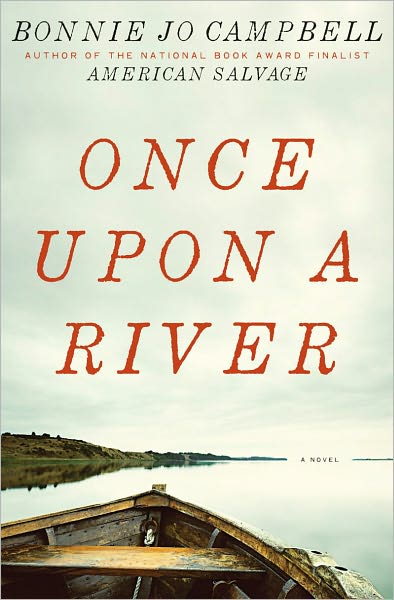
Let’s No One Get Hurt is about race (most pointedly when Pearl unintentionally crashes a Civil War reenactment with Fritter, a dreadlocked, 300-pound black man) as well as class. It is about families and how they hurt and help one another, the mysteries of Pearl’s mother and of the rich boys’ everyday cruelties. “The river waits for me, and that’s all that matters.” As a river-based adventure of difficult adolescence, Let’s No One Get Hurt inevitably recalls Adventures of Huckleberry Finn, as well as Bonnie Jo Campbell’s female-centered Once Upon a River. Pineda’s writing is thick with the lush warmth of the American South and the harshness of a life scavenged out-of-doors, and his teenaged girl’s perspective is spot-on. This novel of exploration, exploitation and the poetry in it all will stun readers of all kinds, especially those who appreciate strong characters and tough choices.


This review originally ran in the March 1, 2018 issue of Shelf Awareness for the Book Trade. To subscribe, click here.


Rating: 8 blue cats.