The Hour of Land: A Personal Topography of America’s National Parks by Terry Tempest Williams

In this phenomenal exploration of U.S. National Parks, Terry Tempest Williams turns her smart, poetic eye to place, history, ecology, the future and how we relate to one another.

hour of land

Celebrated conservationist Terry Tempest Williams (Refuge; When Women Were Birds) commemorates the centennial of the U.S. National Park Service with The Hour of Land: A Personal Topography of America’s National Parks. In 12 chapters, she explores 12 parks, their histories and futures. Ecology forms a natural overarching theme, but Williams’s topics are variously personal, global and political. The places she visits range from Alaska to Maine to south Texas, while her subjects span still broader ground: biodiversity and water shortages; suicide and hopelessness; continuing unrest in U.S. relations with Native Americans; climate change; political prisoners from around the globe; and the legacy of the Civil War. Her writing is poetic, passionate and unexpected.

In each chapter, Williams describes a visit to a specific national park, and then investigates the place and her experience there, sometimes directly through narrative storytelling and sometimes metaphorically. She begins with Grand Teton National Park, where her family has often returned over the decades and generations. The history of that park’s founding and the establishment of the Parks system melds with her family story: “Our national parks are memory palaces where our personal histories reside.” With her father, who spent his career laying pipe for industry and development, and a park superintendent, she tours Theodore Roosevelt National Park in North Dakota. Together they birdwatch and debate the balance between fossil fuel extraction and conservation. In Acadia National Park, Williams muses that parks may be “breathing spaces for a society that increasingly holds its breath.” She finds Gettysburg National Battlefield representative of sustained resentments, pain and violence, and at Effigy Mounds National Monument, she encounters cultural heritage and controversy. To escape the pain of Gettysburg and Effigy Mounds, she heads into the desert, to Big Bend National Park.

Gates of the Arctic National Park in Alaska offers escape from a personal tragedy; Gulf Islands National Seashore, in Florida and Mississippi, reveals that the consequences of the Deepwater Horizon oil spill remain, stinking and stinging. Williams visits the exhibit by artist Ai Weiwei on Alcatraz Island in Golden Gate National Recreation Area; the recently established Cesar E. Chavez National Monument; and, of course, her home landscape of Canyonlands National Park in Utah. In Glacier National Park, where the Tempest family tries to celebrate a birthday by retracing old steps, they are instead nearly killed by in a forest fire that sweeps over the chalet where they lodge. In these travels, Williams finds beauty and distress over the future, and opines, “We continue to evolve and transform who we are in relationship to where we are.”

By turns sad, despairing, and hopeful, even thrilled in the presence of natural beauty, The Hour of Land is emotive, intelligent and well traveled. It is only right that Williams should celebrate the Park Service’s centennial with such a remarkable collection of wisdom and scintillating lines.


This review originally ran in the May 13, 2016 issue of Shelf Awareness for the Book Trade. To subscribe, click here.


Rating: 8 long views.

author interview: Fernanda Santos

photo: Nick Oza

photo: Nick Oza

Fernanda Santos covers Arizona and New Mexico as the Phoenix bureau chief for the New York Times. Her experience as a journalist is broad, crossing two continents, several languages and a range of subjects. Her first book, The Fire Line (Flatiron Books), is about the deadly 2013 Yarnell Hill, Ariz., wildfire that killed 19 members of the firefighting team the Granite Mountain Hotshots. My review is here.

How was writing this book different from newspaper work?

I wanted to write a book because I couldn’t answer the questions that I wanted answered in newspaper stories. I knew that somebody would write about this fire, and I would have tortured myself for the rest of my life for not having had the courage to write it. I called a colleague in New York, and he said, look at every chapter as a story. Can you write a 4,000-, 5,000-word story? And I said yes, I can write that. He said they just all have to connect in the end. And it seemed so simple.

On one hand, it was that simple. But on the other hand, it’s very different than writing a newspaper story. I had complete control over it. In newspapers, the editors get hold of your text and shape it, or send it back to you and ask for more of this or that, because they want to drive a specific point. With the book, I kept waiting for the moment when the editors would get my chapters and start telling me where to go and what to do next, and it never came. When I was halfway through, I sent it to Colin Dickerman, my editor at Flatiron. I didn’t even know if I’d written something that resembled a book. And he said, there’s a lot of great material here, great reporting, but it’s a little confusing. Why don’t you do an outline? And I thought, oh! I guess that would help! With the outline, everything was easier. I set deadlines for each chapter. I only had a certain amount of book leave, and I didn’t want to jeopardize the job that I really love. So I assigned myself these stories, like my friend told me, and pursued the deadlines as if an editor was there to enforce them. And all of a sudden it flowed, just naturally evolved from one chapter to the next. A lot of the skills I used were developed over those years writing newspaper stories.

How did you gain access to these men’s families, and their trust?

I approached it very differently than I would if I were to just write a story about the deaths. I was not looking for a quote, or a quick couple of lines to throw in a story to define a character. I really wanted to understand who these men were, and I figured the best way to do that was if I got to meet their families. I had a friend in common with the wife of Andrew Ashcraft. I asked this friend to reach out to her, and we met. Then she referred me to her mother-in-law, who was close to another mother, who was close to another family, and the word started to get around. I guess they liked me. They said I had a lot of patience, and I was very interested in learning their stories.

I wrote letters to other families. I explained what the book was about, why I wanted to talk to them, and I said that although I had their addresses, I had not gone knocking on their doors because I didn’t want to add to their anguish. I wanted to leave them in control. I wanted them to reach out to me, and say if, when and where. And before I realized it, I had met everybody.

I also went to the fire academy in Prescott, where a lot of the Hotshots trained, and some of them taught; one of them, Eric Marsh, helped found the academy. I did the basic training, and then another course, and I’m actually going back to a third. I wanted to understand the world they inhabited, because wildland firefighting is a very small world, very tight. Once I went through the academy I could understand better what former members of the crew and families of the men had told me.

fire lineI love that you explore so many facets of this story: firefighting techniques, the history of fire management in the United States, the science of weather forecasting.

I realized early on I had to explain three things. Readers had to understand what wildland fire is, what it is like to fight a wildfire. They had to understand the very specific conditions of the vegetation in that part of the state, which obviously connects to the bigger issues of the drying of the west, climate change, the warming of the planet. And they needed to understand the characteristics of the storm that hit the fire, that hooked the flames and turned them around on the men. So I spent a lot of time in the National Weather Service office here in Phoenix, and the office in Flagstaff. I hung out with meteorologists, asking questions. They referred me to some texts. And I had two very thick fire policy books that I read, which were very helpful. I met several times with the author of those books, Stephen Pyne. In fact, he read my manuscript to make sure I didn’t embarrass myself.

It was in some ways a relief, when the emotional side of things became hard to deal with–you know, spending six hours with a widow, talking about a husband and a life that in many ways resemble my own. These guys were younger than my husband, but we like to do a lot of the same things these guys liked to do with their wives; we have a child, a lot of them had kids–so you understand the broad outlines of a life at home. Emotionally, that is very hard. There were times that I really looked forward to sitting down with a meteorologist and talking about science. It gave me a break, and recharged me so I could go back and sit down with another family for hours and talk about whatever they wanted to talk about. My husband says that I report with my heart first, which is why sometimes I come home a total wreck. I hope that’s what comes through.

Was it easy to return to your work for the Times?

It was not easy. I went from an environment where I was in complete control, and I took the story as far as I wanted to take it, to an environment where I have limits to the stories I write, the amount of time I can spend, even the way I write them. I remember telling my editor after one frustrating story, how is that I can write a book and I can’t write a story? And he said you can write both, but you can’t write a story as if you are writing a book.

I miss my book. It’s very weird, but I miss the intimate connection that I had with that story.

This was very rewarding, then.

It’s interesting. I’m from Brazil. I came here as an adult, I’d never written a story in English, I went to graduate school, I’ve been at the Times 10 years, and now I’ve written a book about wildfires. A very American story, in some ways. It was such an empowering experience for me, as a person. We know all the conventions, the boxes people try to fit us into. You’re a woman, you’re an immigrant, you’re a Latina; therefore you’re expected to know about immigrants, Latinos, parenting. Not about firefighters, a real man’s world. Because English is not my first language, how dare I write a book? Those were the things in my head. What are you thinking? Why did you get yourself into this? I had all these battles with myself, and I obviously overcame them, because I wrote the book. To me, that was such a priceless experience. My daughter is six, and I’ve been talking to her about what people say you can and can’t do, what girls can’t do. And in Latin culture we’re very respectful to authority. So I’m telling her, sometimes you have to break the rules. Sometimes you have to try something that people think you’re never going to be able to do, so you can prove to them that you can. It really taught me a lot about how far I can go.


This interview originally ran in the May 10, 2016 issue of Shelf Awareness for Readers. To subscribe, click here, and you’ll receive two issues per week of book reviews and other bookish news.

Maximum Shelf author interview: Paul R. Ehrlich

Following Thursday’s review of The Annihilation of Nature, here’s Paul Ehrlich: Stories of Extinction.


Paul R. Ehrlich is the Bing Professor of Population Studies and the president of the Center for Conservation Biology at Stanford University. Among his more than 40 books are The Population Bomb and Human Natures: Genes, Cultures, and the Human Prospect. He is one of three authors of The Annihilation of Nature, along with Gerardo Ceballos, one of the world’s leading ecologists and a professor at the Institute of Ecology at National Autonomous University of Mexico (UNAM), and Anne H. Ehrlich, a senior research scientist emeritus at Stanford University. Anne Ehrlich is the coauthor of Extinction: The Causes and Consequences of the Disappearance of Species and The Dominant Animal: Human Evolution and the Environment. Ceballos is the author of Mammals of Mexico and Diversity of Mexican Fauna.

ehrlich
What is meant in your subtitle by the phrase “human extinction”?

There’s not the slightest question in anybody’s mind of why we’re facing an extinction crisis, both of populations and of species, and that’s human activities. It’s not extinction of humans, it’s humans forcing birds and mammals to extinction.

How does the three-author cooperative process work?

First of all, Gerardo’s first language is Spanish, mine is bad English and Anne’s is excellent English. Usually Gerardo, or I, or Anne will sketch out a chapter, depending on where our expertise lies. I will edit it the first time around and ask Gerardo to explain some things–his English is excellent, by the way; no one has any trouble understanding him or understanding what he writes–but it’s not colloquial enough in places. Then Anne goes through and replaces all my split infinitives and stuff like that. It’s really an ongoing process. Gerardo is more in charge of the photographs in this particular book–he’s a wonderful photographer on his own, he’s published many books of photographs. We all have students and others who’ve helped us. None of us publishes anything in areas that are even slightly controversial without having a lot of colleagues go over it, and of course we had that done for this book, too.

Anne Ehrlich

Anne Ehrlich


The cooperative writing process is three equal parts. The effort is equal, but we all have somewhat different talents and do somewhat different things.

Who is your target audience for this book?

Our target audience is intelligent people who read books. It’s not highly technical, but it’s not dumbed down in any way. We hope to make it both an attractive book and one that’s good reading. The whole idea is to introduce people to what we’re losing. The average person on Wall Street has never seen a natural ecosystem or, say, the animals on the plains of Africa, and can’t really picture what’s going on. We hope to get people to picture what we’re losing and get them to do something about it.

What does “climate disruption” mean, and why use that phrase rather than the more familiar “climate change”?

Gerardo Ceballos

Gerardo Ceballos


We adopted that phrase from the one used by Obama’s science adviser John Holdren, who’s a close friend of ours. He pointed out that it isn’t just warming–that we are changing the entire climate. Things like the frequency of hideous storms are going to increase, and not every place may get warmer: some places may get cooler. “Disruption” is more accurate than “global warming,” and even “climate change” doesn’t carry the implication of speed. We know the climate has always changed, and most people, certainly the people who will read this book, would know that there were ice ages and things like that. So one of the big issues that’s highlighted by using “climate disruption” is that the change is rapid. Getting older does not disrupt your life, but if you get married or divorced, that’s disruptive. That’s the main reason for using “disruption.”

Presumably many endangered species of birds and mammals didn’t fit into this book. How did you choose which species to discuss?

We chose the ones, first of all, that we know best. One of the problems, covered by a paper I was just involved in that got a lot of publicity, is trying to figure out whether or not we can prove beyond a shadow of a doubt that we’re experiencing a mass extinction. One issue is that there are not enough biologists to track all the species we think may be endangered or, in fact, gone. For this book we wanted a good variety of birds and mammals–the organisms most people relate to and certainly the ones we know most about in these terms. For instance, I’ve spent a lot of my life working with butterflies, but there are very few butterfly populations where we know enough about what’s happening to say anything statistical about the rate of extinction. But birds and mammals we know. We know which ones we know interesting stories about, and there are a wide variety of them in a wide variety of circumstances. So this isn’t an attempt to analyze what’s happening to all birds and mammals, but rather to take a bunch of interesting examples and tie them into why it really counts.

What about animal species beyond birds and mammals, and extending into plants–what is the scope of mass extinction relative to the story told in your book?

The scope of the mass extinction is vast, but population extinctions are the absolutely critical thing. There are a whole series of reasons not to wipe out the only other living things we know about in the universe: one, of course, is just that they’re interesting, fascinating and beautiful, but many people would consider it more important that they’re working parts of our life-support systems. The importance of population extinctions is easily illustrated. If we could somehow miraculously preserve one population of every species on the planet, just one, permanently, we would lose no species diversity–but we’d all be dead in a few weeks, because we utterly depend on having lots of populations to provide us with what are called ecosystem or natural services. For example, honeybees are involved in producing something like $18 billion of agricultural produce in the United States–critical to giving us a much more varied and nutritious diet. If they all died out, we’d be in deep trouble, even though they could persist in, say, Italy and Africa and we would not have lost a species, but we would have lost a vast number of populations. And population extinctions necessarily go on at a much higher rate than species extinctions, because no species goes extinct until every one of its populations has been driven to extinction.

The stories that we tell in this book make up maybe 5% of the relatively well-known stories of species extinctions. But there are many more: for instance, we didn’t look at most of the so-called threatened species, the ones that the International Union of Conservation of Nature considers to be in great danger but they’re not sure exactly how much. In other words, we’ve taken the ones where we know a lot about the endangerment, we know a lot about the distribution, and where they have really interesting stories. If you look at mouse lemurs in Madagascar, we’ve discovered that there are many more different ones than people thought 25 years ago. I think it went from something like two species to 12. That also means that it added substantial endangerment. If there were only two species, the chances of losing either one were relatively small. When we discover there are really 12, all of a sudden there’s more endangerment. But the danger there is the same as the danger everywhere–destruction of habitat is the main thing–so it wouldn’t be interesting to tell the stories of 12 mouse lemurs. We felt it was better to find the most interesting stories to tell.


This interview originally ran on September 23, 2015 as a Shelf Awareness special issue. To subscribe, click here, and you’ll receive two issues per week of book reviews and other bookish fun!


Author photos: Gerardo Ceballos courtesy Instituto de Ecología, UNAM; Anne Ehrlich by Anne Hammersky; Paul Ehrlich courtesy of the author.

Maximum Shelf: The Annihilation of Nature: Human Extinction of Birds and Mammals by Gerardo Ceballos, Anne H. Ehrlich and Paul R. Ehrlich

Maximum Shelf is the weekly Shelf Awareness feature focusing on an upcoming title we love and believe will be a great handselling opportunity for booksellers everywhere. The features are written by our editors and reviewers and the publisher has helped support the issue.

This review was published by Shelf Awareness on September 23, 2015.


annihilation of nature
Three academic scientists–Anne H. Ehrlich and Paul R. Ehrlich of Stanford University and Gerardo Ceballos of National Autonomous University of Mexico–come together in a plea to halt Earth’s sixth mass extinction. The attractive, large-format The Annihilation of Nature: Human Extinction of Birds and Mammals contains original illustrations by Ding Li Yong and 83 color photographs to accompany the authors’ heartfelt arguments about the value of global and regional biodiversity and the danger of extinction that currently faces so many species.

As stated in the preface, the goals of this project are to share the dire conditions with the general public, and convince that audience of the relationship between the continuing health of these diverse species and human well-being. In pursuit of these objectives, the authors have chosen to highlight mammals and birds specifically, because they are visible, sympathetic and thus likely to appeal to human compassion. The Annihilation of Nature is plainly written, well-organized and filled with arresting images.

Ceballos, Ehrlich and Ehrlich begin by describing the incredible richness of Earth’s diverse forms of life, which they call a “legacy”–humanity’s duty to protect and appreciate. They outline the planet’s previous five waves of mass extinction and their natural causes, making the point that the present sixth event is different in that it is caused by human actions. The current time period is called by many scientists “the Anthropocene,” in which “a huge and growing human population has become the principal force shaping the biosphere (the surface shell of the planet’s land, oceans, and atmosphere, and the life they support).” To illustrate the interrelatedness of human actions with every natural system, basic concepts such as the food chain are reviewed. The bulk of the book is then devoted to four chapters on extinct birds, endangered birds, extinct mammals and endangered ones. A combination of illustrations and photographs brings the reader’s attention to the long-gone dodo and the passenger pigeon, and species in need of conservation like the Philippine monkey-eating eagle and the New Zealand kakapo (a nocturnal flightless bird). Extinct mammals include the baiji–a freshwater dolphin endemic to China, called the “goddess of the Yangtze”–and the Tasmanian tiger, a marsupial predator with several unique physical features including striped patterning and rearward-facing pouches on individuals of both sexes. Mammals in danger today include a variety of large species: whales, big cats (lion, tiger, cheetah), bears, apes, rhinoceros and elephants, joined by the small but scrappy Tasmanian devil.

All life forms in an ecosystem are intricately interconnected. When gray wolves were reintroduced to Yellowstone National Park, their impact was profound and widespread: elk populations came under control and trees such as aspen, willow and cottonwood began to recover. The health of the willow helped beavers to rebound and beavers in turn improved riparian conditions and contributed to healthy populations of fish, waterfowl, amphibians and reptiles, as well as regulating stream flow. Songbirds have returned to the park in greater numbers with its new tree growth. Smaller predators have declined in numbers, which in turn increases numbers of small prey and then of mid-level predators like foxes and bald eagles. All these benefits came from the reintroduction of one keystone predator.

Having shared the remarkable and evocative profiles of so many creatures, the authors make their central point in chapter 8, “Why It All Matters.” Here they lay out the many human-caused factors that contribute to species extinction and population extinction, including habitat destruction; chemical pollution and plastic debris; the introduction of non-native species and diseases; legal hunting and illegal poaching for meat or valued body parts such as tusks, horns and organs; and killing because of competition for food sources (the Sumatran orangutan, which vies with farmers for fruit) or because some species are seen as pests (crop-raiding Asian elephants) or predators of livestock (the gray wolf). Finally, climate change is deemed a major cause of ecological upheaval and extinction. If forced to choose a number-one factor, the authors name toxic pollutants, but climate change “may be the most threatening problem ever faced by humanity” and “climate change alone could be sufficient to finish the sixth great extinction now under way.”

Finally, Ceballos, Ehrlich and Ehrlich argue that biodiversity must be valued and protected for many reasons, from the aesthetic and ethical through the services they provide to the world’s ecosystems and to humans: dispersal of seeds, insect and pest control, pollination and the sanitation role of scavengers such as vultures. Keystone species are described as those with an outsized impact on their environment. In an impassioned final chapter, the authors touch on means to conserve threatened species, including the question of direct or personal action versus institutional change. They consider ethical questions, such as whether to allow limited sport hunting of African elephants to help fund their conservation, and end with a message of hope, despite the dire picture painted by most of the book. “If we could just adopt a global policy of humanely and fairly limiting the scale of the human enterprise, gradually reducing the population size of Homo sapiens, curtailing overconsumption by the rich (while increasing needed consumption by the poor), then we might leave some room for the natural systems all humanity depends on.”

The Annihilation of Nature shows a deft hand with the complexities of its subject, as when wind turbines–good for the reduction of fossil fuel use–turn out to threaten insectivorous bats and the endangered California condor, or in discussing the economic inefficiency of allowing a species to die off to the brink of extinction (or even paying subsidies to kill them, as with the black-tailed prairie dog) and then spending millions to conserve the same species. This is a beautifully produced, deeply moving, powerful story that communicates what it intended to, with great emotional impact.


Rating: 7 extant individuals.

Come back on Monday for my interview with Paul Ehrlich.

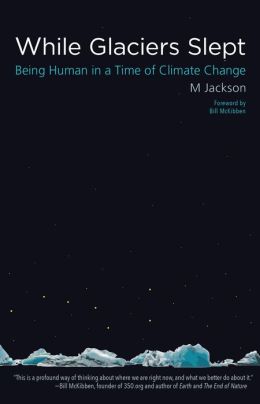
While Glaciers Slept: Being Human in a Time of Climate Change by M Jackson

A scientist’s personal reflections on climate change and personal loss.

while glaciers slept

“I cannot untangle in my mind the scientific study of climate change and the death of my parents.” M Jackson is a scientist, National Geographic Expert and glacier specialist, but her memoir While Glaciers Slept: Being Human in a Time of Climate Change rarely takes a scientific perspective and never claims objectivity. Rather, Jackson tells the story of losing both her parents when she was a young woman just embarking on life, and the trauma and extended grieving process that resulted.

Following a brief, lovely foreword by Bill McKibben, Jackson poetically conflates her loss with the slow and still mysterious effects of anthropogenic climate change. Her scientific background and explorations of fascinating places–Denali and Chena Hot Springs in Alaska, Zambia with the Peace Corps–inform her writing and yield striking images, as she runs on spongy Alaskan tundra or contemplates cryoconite holes atop glaciers. But it is the personal side of her narrative that allows Jackson to address society’s psychological difficulties with climate change.

Each chapter of While Glaciers Slept is a finely braided essay, considering an aspect of her parents’ lives or deaths alongside a facet of climate change’s challenges. Jackson mourns her mother with the help of Joan Didion’s writing; windmills offer possible “undulating answers” and comfort her on her drive home upon learning that her father is dying. She employs a disordered chronology that slightly disorients her reader, just as Jackson was disoriented. The effect is an evocative, lyrical work of musing and allegory rather than a scientific treatise.


This review originally ran in the September, 4, 2015 issue of Shelf Awareness for Readers. To subscribe, click here, and you’ll receive two issues per week of book reviews and other bookish fun!


Rating: 7 check marks in a dictionary.

The Story of My Heart by Richard Jefferies, as rediscovered by Brooke Williams and Terry Tempest Williams

An exceptional meditation on nature and “soul-life,” republished after many years out of print and contextualized for modern minds.

story

In a dusty Maine bookstore, writer Terry Tempest Williams (When Women Were Birds) and her husband, Brooke Williams, picked up an unfamiliar book that they quickly came to love: The Story of My Heart by English naturalist Richard Jefferies, originally published in 1883. As Brooke writes, “classic works of literature need to be rediscovered and reinterpreted every age for their clues to contemporary issues.” This new edition of Jefferies’s autobiography includes an introduction by Terry and Brooke’s commentary following each chapter.

Don’t be fooled by its small size. This is a book to be taken slowly and savored, because all three of its wise and pensive authors demand and deserve careful consideration. Here is Walden, but more mystical, and with no room to criticize the author for returning to wealthy drawing rooms between his stays in the woods. Jefferies has been characterized as a nature writer and a mystic; in Brooke’s words, “Jefferies writes less specifically about the natural world surrounding him, but in great detail the path his mind takes through that original world.” The Story of My Heart is a philosophical, wondering and wandering, musing, personal ode to the natural world and human potential. The Williamses make his contemplations relevant by analysis–for example, applying the context of climate change–but also explore a more intimate connection, as Brooke ponders the nature of his obsession with this book.

Both literal and spiritually minded readers can appreciate this remarkable collaboration through the counterpoint of Brooke’s responses to each chapter and the timeless thoughts in the original work.


This review originally ran in the November 18, 2014 issue of Shelf Awareness for Readers. To subscribe, click here, and you’ll receive two issues per week of book reviews and other bookish fun!


Rating: 9 leaves of thyme.

“Tawny Grammar” by Gary Snyder

And with this post Gary Snyder gets his own tag.


wildEssays from The Practice of the Wild:

  1. The Etiquette of Freedom
  2. The Place, the Region, and the Commons
  3. Tawny Grammar

I am struck, again, at how we encounter the same phrases over and over in this world and in our reading… just days ago I read Land of Love and Drowning, in which certain scenes are set to the song, “Rum and Coca Cola” – generally credited to the Andrews Sisters but originally by Lord Invader. Here it is in the opening pages of Snyder’s essay “Tawny Grammar,” in which he makes the point that music and dance belong to time and place. One time-and-place’s song or dance may be popular in other times and places, but will never belong to them the way – for example – Snyder has formed a memory of dancing with a girl for the first time to this song in 1943. His next point is that, as we established in “The Place, the Region, and the Commons” that we no longer belong to place, “we are not quite sure what our home music is.”

He then takes his reader on a trip to a remote Alaskan village, where he muses with local teacher friends on the question of what it is reasonable, realistic, helpful to teach the children there.

So these children should prepare to be mining engineers? The company will bring its own experts with it. Heavy equipment operator? Maybe. Computers? Computers are in all the schools of the Far North, along with video cameras. There may be more computer literacy in the schools of northwest Alaska than in those of Los Angeles. Even so, there is no guarantee that any school anywhere in the whole world can give a child an education which will be of practical use in twenty yeras. So much is changing so fast – except, perhaps, caribou migrations and the berry ripening.

Good gosh, he wrote this in what year? Still true… my profession, librarianship, has been talking for decades about CHANGE and how we will adapt (the need to be more than people who stamp due dates in books), but this problem is not unique to us. The world is indeed changing so fast; and while I love the idea that caribou migrations and berry ripening may be our constants, and that’s partly true, it’s also true that mass extinctions and climate change have begun to prove him wrong.

He writes about the Inupiaq values posted in the village classroom, and the contradictions we teach our kids: in this case, tribal values vs. external Western societal ones, “one for getting what’s yours, another for being decent.” I am strongly reminded of another few lines – I can’t for the life of me remember who wrote them; was it Doug Peacock? – something to the effect that war is traumatic for our youth because we teach them from the beginning that killing is wrong, right up to the moment we send them out to kill, and then expect them to come home and readjust.

More discussion of our interrelatedness, the importance of social constructs, perspectives, and recognizing the nonhuman world too:

American society… operates under the delusion that we are each a kind of “solitary knower” – that we exist as rootless intelligences without layers of localized contexts. Just a “self” and the “world.” In this there is no real recognition that grandparents, place, grammar, pets, friends, lovers, children, tools, the poems and songs we remember, are what we think with.

He goes on to tell us what he means by grammar, and the importance of language in our interactions with the world, and muse on what language really means. Under the subheading “Nature’s Writing”:

The stratigraphy of rocks, layers of pollen in a swamp, the outward expanding circles in the trunk of a tree, can be seen as texts. The calligraphy of rivers winding back and forth over the land leaving layer upon layer of traces of previous riverbeds is texts.

While this makes for a lovely metaphor, I think he means it – and I understand it – far more literally. “A text is information stored through time.”

I was tempted to play with his Whorfian challenge:

“Is there any experience whatsoever that is not mediated by language?” I banged my heavy beer mug sharply on the table and half a dozen people jumped and looked at us. We had to give up and laugh at this point, since it always seems to come back to an ordinary mystery.

Isn’t that an example of just such a one? Or in other words, if a tree falls in the forest, etc. If we have an experience – a shared but wordless experience – have we experienced it, or shared it, any the less for not discussing it in language?

As much as I enjoyed this essay, which was intelligent, thoughtful, musing, informed, and seasoned by references to the classics and mythologies from around the world (I love this), I found myself wondering if there was a point coming down the line. Of course, there rather was, but it was typically cerebral and conceptual in nature, so I needed Snyder to help me wrap it up. He does so in his conversation with a linguist friend, about whether language is biology, and whether it follows evolutionary lines (sort of, in its own way, but not in the way biology does); and finally by quoting Thoreau and Dōgen. The end point, as I take it, is this: language should not be a weapon, considered as belonging to humans alone and used to differentiate ourselves from the world, but should be considered one of the many ways in which we live in and with rather than above.

I close by asking a question. Do we agree with Snyder in the following suspicion?

Nonhuman nature, I cannot help feeling, is well inclined toward humanity and only wishes modern people were more reciprocal, not so bloody.


Up next, essay 4: “Good, Wild, Sacred.”

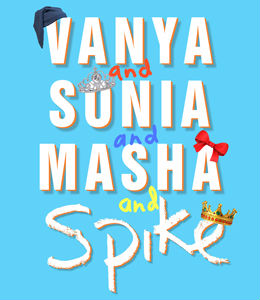
Alley Theatre presents Vanya and Sonia and Masha and Spike

vanya

Husband was kind enough to accompany me to the theatre again, our second play at the Alley this year. (See Fool from a few months back.)

Vanya and Sonia and Masha and Spike references Chekhov; but no familiarity with his work is required to enjoy this one. Vanya and Sonia are aging siblings – she’s adopted, they will remind you a few times – still living together in the family home, mostly bickering with one another and dissatisfied with their lives (particularly Sonia, who is casually mentioned as being bi-polar). Their sister Masha is a successful actor – less so on the stage, more so in the movies, particularly sexy slasher flicks; but she is aging, too, and feeling less secure about her sex appeal and professional future. When Masha comes to visit this time, she brings Spike: a much younger aspiring actor and a hot piece of male flesh inclined towards taking his clothes off. This habit is the source of some laughs, as everyone onstage is entranced by his beauty (Vanya as well as his sisters is attracted to men); but as Nina points out late in the play (I paraphrase): Spike is beautiful; it’s a shame about his personality.

Oh yes, Nina. The cast of six is rounded out by a beautiful young neighbor girl, Nina, also an aspiring actor and a huge fan of Masha’s; and the housekeeper, Cassandra. Cassandra is a real hit: like her Greek namesake, she is cursed to make predictions that are… often right, more or less; but that are disregarded. She is a strong personality and a great stage presence, and provides still more comic relief. The play is not short on laughs, in fact, despite some heavy subject matter: depression and late-life regrets; family dynamics; climate change and politics; a rapidly changing and-not-always-for-the-better world. I was struck by a line (again I paraphrase) about how there are now 900 (or some such number) television channels available, and you can always find a news channel that tells you what you already believe. Late in the final act we are treated to that classic, the play-within-a-play, written by Vanya and performed by Nina, which takes place in the post-climate-change-apocalypse, when humans are extinct.

It got a little long-winded here and there, I confess; I think Husband appreciated the fart jokes and lighter, always-accessible humor of Fool better than this one. There were some tangents. But I appreciated every one! I highly recommend this mashup of serious topics, comic relief, and plentiful references to literature and the arts. The actors were strong, too. I heard a few missed lines – just a few, just barely – but was still very impressed by the personalities. Cassandra and Sonia were real standouts; I was especially struck by the arc achieved by Sonia, from dumpy house-bound depressive through an exhilarating costume party to actually making plans to go out on a date. I cheered her on. And Spike’s portrayal in the near-nude was both hilarious and, yes, attractive.


Rating: 8 molecules.

The Reef: A Passionate History: The Great Barrier Reef from Captain Cook to Climate Change by Iain McCalman

The Great Barrier Reef is both easily understood and awe-inspiring in this history of its discovery, exploitation and beauty.

reef

With The Reef, Iain McCalman (Darwin’s Armada) has composed “a passionate history” of the Great Barrier Reef, opening with his own long-awaited voyage (part of a reenactment of Captain Cook’s original trip). Following the prologue, he withdraws to the role of historian rather than participant, and chronicles the Great Barrier Reef as known to Western society over the last few centuries.

The Reef is divided into three parts. Beginning in 1770 with Captain Cook and proceeding through later explorers who helped chart the reefs in the 1800s, “Terror” emphasizes the threat the reef posed to ships and their navigators, and the fear of cannibals and others thought to inhabit the area. In Part II, “Nurture,” the reef begins to offer refuge for those seeking to escape civilization or make a fresh start. Europeans are taken in by native islanders, or discover island paradise; naturalists arrive, captivated by the biodiversity and beauty of the area while beginning to realize that coral is a resource that can be exploited. “Wonder” sees the scientific community take an interest, disagreeing about the origins and biology of the reef. Ecology emerges as a new field of study, its proponents seeking to place the reef in the larger context of other natural environments, to study relationships and cause and effect. Individual activists work to defend the unusual and changing ecosystem from mining, oil spills, overfishing and the rough use of tourism.

At the end, we are introduced to nature-loving scientist J.E.N. Veron, nicknamed “Charlie” after Charles Darwin, an engaging character who communicates the final dire message of the Great Barrier Reef’s looming extinction. Returning to the personal nature of his prologue, McCalman’s epilogue speaks to the grim consequences of climate change but holds forth hope as well.

The few images in The Reef include portraits of the personalities involved but not the corals themselves (although McCalman refers his reader to books that offer the latter). This work’s strengths include a coherent structure, friendly narrative style and a reasoned culminating call to action that does not disrupt its primary role as a comprehensive history. Plentiful notes indicate strong research, but McCalman’s writing is accessible to any reader interested in the intersection of science, nature and history. From perceived threat to resource to paradise destination to climate-change indicator–Charlie Veron calls corals “the canaries of climate change”–the Great Barrier Reef is fully explored in this engaging study.


This review originally ran as a *starred review* in the May 6, 2014 issue of Shelf Awareness for the Book Trade. To subscribe, click here.


Rating: 7 dives.

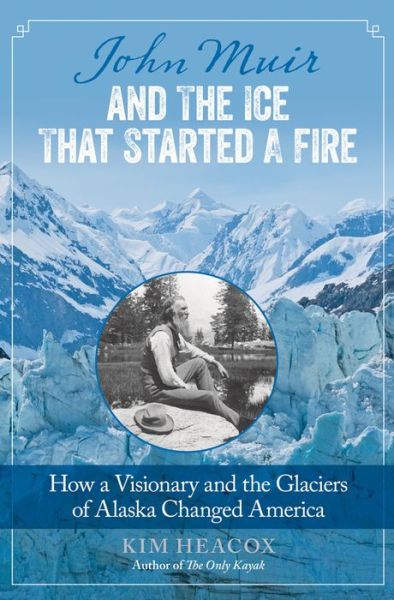
John Muir and the Ice that Started a Fire by Kim Heacox

The carefully researched and engaging story of John Muir, Alaska’s glaciers and the movement they built together.

muir ice

John Muir and the Ice That Started a Fire is neither a straightforward biography of Muir nor a simple study of the global significance Alaska’s glaciers. Rather, Kim Heacox (The Only Kayak) is concerned with the relationship between Muir and the glaciers that rivaled Yosemite in his affections, and the impact that pairing had.

From a humble background in Scotland and Wisconsin, and between stints as a surprisingly apt businessman, Muir lived as a self-described tramp, ardent nature lover and student of flowers, trees, mountains and–upon finally reaching Alaska–glaciers. His famed role as author and activist came late in life, and not easily: he found writing hard work and political activism distasteful, though necessary. However, Muir made perhaps the greatest impact on conservation of any individual in United States history.

Heacox meticulously researched and lovingly describes Alaska’s rivers of ice and Muir’s path toward them, his emergence as writer and preservationist, and his far-ranging influence in legislation, literary legacy and new traditions–including the birth of the conservation movement as we know it. Though often descriptive rather than persuasive, Heacox lends his own voice to the cause in his final chapters: “To debate [climate change] is to give credibility to an argument that shouldn’t exist.” He closes by adding the arguments of Aldo Leopold, Bill McKibben and Derrick Jensen to Muir’s, in the interest of preserving our wild spaces–thereby continuing Muir’s work.


This review originally ran in the April 11, 2014 issue of Shelf Awareness for Readers. To subscribe, click here, and you’ll receive two issues per week of book reviews and other bookish fun!


Rating: 8 little dogs.