The Black Count by Tom Reiss

blackcountThis poor book got picked up and put down repeatedly as I dealt with other reading deadlines. It took me two and a half months to read! But I kept coming back. The Black Count came recommended by The World’s Strongest Librarian, and I bought it at Elliot Bay Books in Seattle when I got to finally meet in person my awesome editor at Shelf Awareness, Marilyn. So good vibrations unite in this read.

The “black count” is the father of Alexandre Dumas, author of The Three Musketeers and The Count of Monte Cristo. Much of Dumas’s work, it seems, was based on his father’s life and unique and outlandish experiences. I had not known that; I suspect many readers don’t. Tom Reiss’s work is a biography of Alex Dumas (the father: I will call him Dumas throughout), with an eye to the legacy expressed by the novelist (son: I will call him the novelist), and some background on the French Revolution. Napoleon figures rather heavily in Dumas’s later story and military career.

Dumas was born in Saint-Domingue, which is modern day Haiti, to a black slave mother and a white French father. His father went back and forth somewhat on Dumas’s place in the world, at one point selling his son into slavery but eventually giving him a good education, fancy clothes, and place in French society. He is a physical prodigy early on, adept at horseback riding and fencing, and his military career is illustrious from the beginning. Dumas is an ardent republican, enthusiastic about the revolution, not least because – and here I learned something I probably should have known – the French Revolution was decidedly liberal on its attitude towards black citizens, giving them near-equal or equal rights, privileges and access – at least for a time. Slavery was abolished in France, although the extent to which abolition applied to the colonies varied. And unfortunately, this egalitarianism was short-lived.

The dark-skinned soldier worked his way remarkably quickly up to general of a division, and gave admirable performances in actual hand-to-hand combat: something, then as now, that high-ranking officers often avoid. His feats are literally the stuff of legend, and those military stories are some of Reiss’s stronger moments, naturally. If history is to be believed, Dumas was absolutely worthy of the tales that his novelist son would spin. [Is history to be believed? Reiss did his own research and looked at all the ancient scraps of paper from the time; accounts tend not to vary; the case looks good. But from this historical distance, I think there must always be a question.]

Dumas married for love and had three children, the first of whom died in childhood. His star was rising when Napoleon came to power. Napoleon is the villain of this story, as he is encapsulated in the villain of The Count of Monte Cristo: he rolled back and reversed the Revolution’s racial equity advances, and considered Dumas a formidable rival, apparently because of Dumas’s great accomplishments; the latter seems to have done nothing actually wrong. Dumas is taken as a prisoner of war in Italy and has a miserable time there, which again plays into The Count of Monte Cristo. (Look for enjoyable, comical descriptions of Dumas’s highly formal correspondence with one of his jailers.) It does not appear that Napoleon is actually to blame for this period in Dumas’s life, although possibly he could have done more to get him freed sooner. Following his POW imprisonment, Dumas’s health never recovers; he loses his commission under Napoleon’s racist regime; and he dies when his youngest child, the novelist, is only four years old. The novelist’s glorified view of the father he remembers as Herculean will never be moderated.

As a historian, Reiss is perhaps a bit credulous of Dumas’s perfection. In a description of the soldier’s last hours, there is a priest called, which the novelist is careful to point out could not have been for confession, as his father had never committed even a single regrettable act in his lifetime. This seems like too extreme a statement to stand unquestioned – haven’t we all done something regrettable? …Especially those of us whose career was based on killing people? Dumas had a reputation for humane victory and protection of the defeated from looting, which is admirable. But I have a little trouble stomaching this unqualified hero-worship.

Reiss also unfortunately descends into dryness rather regularly. I several times considered giving up the book; but then I’d give it another go and eventually be mesmerized again by the narrative. He’s at his best when he lets his own story, of researching the book, creep onto the page; or lacking that, when he lets a primary source or Dumas-the-novelist pen a few lines. I should also note that my very slow, stop/start method of reading this book (almost unheard of for me) almost certainly made the story move a little more slowly and more disjointedly. I regret that, and it might have gone a little better otherwise. But I think it’s worth stating that things can get a little slow in the middle. Also, Reiss is happy to go quite a few pages without telling us who one of his characters is, and expect us to remember him. Again, better if you read it all straight through quickly. If you aren’t doing it that way, beware this small problem.

All in all, though, I did find myself motivated to finish the book, and I was rewarded. The Black Count is a good primer on the French Revolution and on Napoleon as well, and the sections that portray exploits in battle are lively. Readers looking for a great deal of insight into Dumas-the-novelist’s work will be at least a little disappointed; but I am definitely putting this book down with a renewed interest in rereading The Count of Monte Cristo, which I loved in high school.

A little dry in the middle, but a mostly-accessible history of the French Revolution and one of its forgotten heroes, with a nod to a very fine novelist who adored his father.


Rating: 5 trees of liberty.

A Little History of Literature by John Sutherland

An easily grasped primer on our finest wordsmiths, from Homer through the Bröntes, Proust and Kafka.

literature

John Sutherland (Lives of the Novelists) tackles an impressively broad subject in A Little History of Literature. Beginning with Homer and The Epic of Gilgamesh, Chaucer and Shakespeare, he hopes to instruct his reader in literature–what it is, where it’s been and where it might be headed.

Sutherland takes us from a childhood of “reading… under the blanket, with a torch, after lights out,” and the genesis of children’s literature, through the modern developments that brought us Fifty Shades of Grey and genre divisions. Even as he recounts the historical details behind Beowulf or the birth of the King James Bible, he skips forward to reference current trends, markets and buying habits, relating them to centuries-old forces. Major works from many centuries are joined by digressions into the history of printing, of copyright and of books themselves.

Sutherland presupposes a certain background among his readers: “much of what many of us know about science comes from reading science fiction,” for example, or his description of “many” or “most” children growing up reading at home. He also focuses, with few exceptions, on Western literature, although he does make a conscious effort to call attention to the role of women writers within that tradition. These issues aside, this slim book makes for a necessarily cursory review of literature’s greats–and the loving treatment by an expert, presented in easily understood terms, will please both novices and established readers looking to dip back into well-loved works.


This review originally ran in the November 19, 2013 issue of Shelf Awareness for Readers. To subscribe, click here, and you’ll receive two issues per week of book reviews and other bookish fun!


Rating: 6 historical trends.

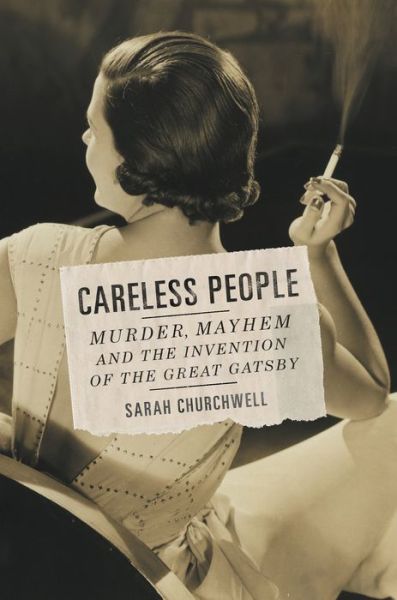
Teaser Tuesdays: Careless People by Sarah Churchwell

Teaser Tuesdays is a weekly bookish meme, hosted by MizB of Should Be Reading.

carelesspeople

I am very excited about this book, which studies The Great Gatsby in terms of the world Fitzgerald inhabited when he wrote it, and in terms of the landmark year (literarily and otherwise) of 1922 in which he set this, his best-known work. I am trying not to say too much for now, but it is enjoyable. I’ll share a tidbit.

At the end of Chapter Six, Nick and Jay Gatsby walk out among the debris, a “desolate path” of fruit rinds and discarded party favors and crushed flowers, exposing the waste and decay. Gatsby admits that Daisy didn’t enjoy herself and Nick warns him against asking too much of her. “You can’t repeat the past,” he tells Gatsby. “Can’t repeat the past?” Gatsby cries incredulously. “Why of course you can!”

…which I think evokes the mood of The Great Gatsby quite well. Stay tuned.

This quotation comes from an uncorrected advance proof and is subject to change.

Antigone by Sophocles, trans. by Dudley Fitts and Robert Fitzgerald

oedipusThis is the third play in a trilogy. Please see my write-ups of the first two: Oedipus Rex and Oedipus at Colonus.

I have studied Antigone in some depth before, also in Fitzgerald’s translation, and I enjoyed it immensely again. The action is this: brothers Eteocles and Polyneices have done battle for the kingship of Thebes, and both have been killed, Eteocles within the city walls and Polyneices, attacking from without. Now king again, Creon – uncle to Antigone, Ismene, Eteocles, and Polyneices – decrees that Eteocles will be buried with full honors but Polyneices will not, because he was a traitor who attacked his own city. You have no doubt noticed the great significance of the oracles I’ve named so far in these plays: the gods were a very real, very important part of life in the ancient Greece represented in these works. One of the deeply serious principles at play in their culture would have been honoring one’s family, and respectfully burying one’s dead. Therefore, Antigone doesn’t hesitate to defy Creon’s royal decree – on pain of death – and bury her brother. She is caught, captured, makes no denial, and is sentenced. Creon is too cowardly to order her death, so he orders her locked in an underground cell and fed; whether she lives or dies, he says, is no fault of his.

The real conflict here is between god’s man and man’s law. Antigone asked Ismene to assist her in burying their brother but Ismene refused, citing man’s law as dominant; Antigone takes it as a given that god’s law, regarding the burial of one’s dead relatives, is superior. When Antigone is caught, Ismene changes her opinion, begging to be put to death with her sister, but Antigone refuses her this honor: she didn’t earn it. Creon, for his own reasons, refuses to punish her: he has begun to dread the consequences of his stiff policy, in light of public sentiment sympathizing with Antigone’s cause. From being steadfast and confident in his decree in the beginning, Creon is increasingly worried that he may be wrong; but – in another theme of the play – he is too proud (or has too much hubris) to back down. His son Haimon is engaged to marry Antigone, and comes to Creon to ask for her pardon – not because he is “girlstruck,” but because he cares for his father’s fate. This is the first of several warnings that Creon should heed; the next comes in the form of the respected seer Teiresias. Ironically, Oedipus had failed to listen to Teiresias in Oedipus Rex, and Creon will make the same mistake here. The Chorus eventually convinces Creon to pardon Antigone and bury Polyneices, but this decision comes too late. When the party arrives at Antigone’s cell, she has killed herself; Creon is there just in time to see his son Haimon do the same. This is a classic tragedy, in terms of its fatal flaw – Creon’s hubris in thinking to rule against god’s law, and then in his reluctance to admit he was wrong and change his policy – resulting in the death of his family. Because, oh yes, his queen wife (Haimon’s mother) also kills herself when she hears the news. Whew.

To me this is by far the strongest of the three plays. I noted a number of iconic lines that I felt the need to share with you. In fact, these lines taken together serve somewhat to give a feel for the action of this play, which is most importantly internal action: Creon is stiff and unbending; Creon doubts himself; Creon reverses. It is a conflict between moral stances. Also, as you can see, there is a feminist undertone here as well – represented not least by Creon’s idiocy.

Ismene to Antigone when Antigone asks her to disobey Creon’s rule:

We are only women,
We cannot fight with men, Antigone!

Same scene, Ismene to Antigone again:

Impossible things should not be tried at all.

Creon, arrogantly scolding Antigone for what he ironically sees as her pride in disobeying him:

She has much to learn.
The inflexible heart breaks first, the toughest iron
Cracks first, and the wildest horses bend their necks
At the pull of the smallest curb.

Creon again, betraying the real reasons for his reluctance to reconsider his stance:

Who is the man here,
She or I, if this crime goes unpunished?

And even worse – still Creon:

Whoever is chosen to govern should be obeyed –
Must be obeyed, in all thing, great and small,
Just and unjust!

(Just and unjust? Did you really mean to say that, Creon?)

If we must lose,
Let’s lose to a man, at least! Is a woman stronger than we?

Haimon, giving his father good advice:

It is not reason never to yield to reason!

Just a few of my favorite lines. I hope they communicate the power and drama in this short but very moving play.


Rating: 8 birds of augury.

Oedipus at Colonus by Sophocles, trans. by Dudley Fitts and Robert Fitzgerald

oedipusThis is the second play in a trilogy; see the first, Oedipus Rex, here.

At the opening of Oedipus at Colonus, 20 years have passed, during which Oedipus has wandered in exile with his daughter Antigone as faithful companion and caregiver. He initially hoped for a sentence of death from Creon, but was given banishment instead. He arrives near Athens hoping for asylum, as his second daughter Ismene appears with news. Thebes is experiencing conflict: the two sons of Oedipus, Eteocles and Polyneices, are fighting for the kingship. An oracle has instructed that Oedipus can help; but he refuses, even when Polyneices shows up to ask for his father’s blessing. Oedipus resents that his sons heartlessly allowed him to be turned out of the city. Although he wanted death in the beginning, he has since decided that his crimes were unknowing – he killed his father in a fair fight, not knowing who the man was, and defending his life; and he married his mother not knowing his relationship to her, only knowing that she was a queen whose favor he had won. And he resents the life he’s earned by his innocent crimes. At Colonus, he meets Theseus, king of Athens, who defends Oedipus and his daughters against the treachery of Creon. Following another oracle that says Oedipus will bring peace and glory to the city that offers him refuge, Theseus welcomes Oedipus to die there at Colonus.

This middle play (the only one that I had not read before) was in some ways the quietest of the three, and apparently the least known. It was followed, in my edition, by a commentary that Oedipus Rex lacked. This commentary described the principles of translation ascribed to by Fitzgerald, and gave some background information on Greek theatre and tips for presenting this in the modern era. I found it useful. I was probably least moved by Oedipus Colonus; but it did portray the loving relationship between Antigone and her father (brother) that helps establish her love of family, which we will see so strongly in Antigone. She is growing as a character; she did not speak in Oedipus Rex, and in this play she is a speaking character but still subordinate to her father’s needs. She is kidnapped, apparently helpless to defend herself, but her strength is increasing as her father’s life ends.


Rating: 5 holy places.

Oedipus Rex by Sophocles, trans. by Dudley Fitts and Robert Fitzgerald

oedipus“The Oedipus Cycle” is made up of three plays by Sophocles: Oedipus Rex, Oedipus at Colonus, and Antigone. I cannot remember at this moment what motivated me to read or reread these plays; something else I read, no doubt. I remember Greek tragic drama very fondly from high school, where Mrs. Smith inspired me in many of my present-day literary loves (hello, Hemingway and Homer).

This triptych concerns the mythic curse on the House of Thebes, which I will retell quickly in my own words. Ahead: spoilers. Oedipus was both to the Theban King Laius and Queen Jocasta, but upon his birth, an oracle prophesied that this baby boy would grow up to murder his father and marry his mother. Wishing to avoid this fate, Laius took the boy out in the woods, pierced his heels and pinned them together, and left him to die. Now, this is no way to avoid the fates. Oedipus was raised by a foster father and mother who claimed him as their own, until as a young man he heard this prophecy given, and not wishing to fulfill it against the parents he knew and claimed, he fled them. Along the road on his travels, he came across an older man who wouldn’t yield the road as Oedipus thought proper. They quarreled, and fought, and Oedipus killed the older man (guess who this will turn out to be). He continues on the road to Thebes, a city-state that has just lost its king to a mysterious murder; he solves the riddle of the Sphinx, marries their queen, and happily begets four children.

When Oedipus Rex (or “Oedipus the King”) opens, King Oedipus is struggling to relieve his city of a plague. He must appease the gods, and the oracle tells him the way to do this is to finally avenge the former king’s murder. He agrees that Laius deserves justice – ironically volunteering to serve as his child should: “I say I take the son’s part, just as though / I were his son…” (as translated in my edition by Dudley Fitts and Robert Fitzgerald). And Oedipus curses the murderer, or anyone who would hide his identity, with death or banishment. This will have consequences. The action of the play, the tension and emotion, resides in Oedipus’s earnest cursing of the murderer who turns out to be himself; adding incest to his unknown crimes is too much for him, as his queen (wife, mother) kills herself and Oedipus gouges out his own eyes and puts himself at the mercy of his brother-in-law, Creon. Here the play ends.

There is some ambivalence, at least for me, in identifying the fatal flaw or crime of the tragic hero in this play. (It will be much clearer in Antigone.) Oedipus is indeed guilty of murdering his father and marrying his mother – terrible crimes, to be sure – but he did both unknowingly, and to his knowledge had every right to kill (in self defense) and marry. I think his fatal flaw is at least shared by his parents: the crime was in trying to avoid the predestined fate assigned them all by the gods. This you can’t do! One wonders, if Oedipus had been raised at home, how these things would have come to pass; clearly differently, as he would have known his parents. Presumably he would have been more at fault. But at any rate, the point is made that it is futile to avoid the fate assigned you by the gods. Perhaps his limited responsibility here is what earns Oedipus a somewhat reduced sentence – of which, more in the next installment.

I enjoyed this play for its feeling. The characters are passionate, emotional, and all of this is well evoked by the somewhat dramatic (but this is drama, after all!) but very understandable language. I think Fitzgerald’s translation is excellent; I find it moving, and the atmosphere of building doom and foreboding is exquisite.

Coming up: the next two plays.


Rating: 7 places where 3 roads meet.

The Black Monk and Other Stories by Anton Chekhov (audio)

blackmonkI am tagging this as a did not finish, although I did, in fact, finish two short stories (and barely started a third). I DNF’d the story collection, though. Meaning, I don’t seem to be a Chekhov fan. It’s funny when things turn out that way: when I turn out not to like an author who is Classic, or in this case, revered as one of the best short story writers of all time (I can’t remember where I’ve heard this, but I have. More than once. sigh). But it does happen.

I listened to The Black Monk and Gooseberries. It was remarkable to me how much these stories reminded me of Tolstoy (who, if you recall, I also did not like). I don’t know if it’s Russian writers with shared characteristics, or that they both evoke the same world and that’s what bothers me. At any rate, the Russian society on the estate felt very much like the same background, transferred from Anna Karenina to Chekhov’s short stories.

In The Black Monk, our protagonist visits the estate where he was raised family-like by non-relations. The father figure encourages him to marry the daughter of the estate (so, the sister figure?), and he does. At a party somebody shares the legend of the black monk, who is imaginary but shows up… sometimes, some places. Our protagonist sees the black monk, talks with him, and uses their conversations as fodder for his own writing (oh yes, he is a writer by profession). He gets caught talking to himself (as it seems – he’s talking with his imaginary black monk) and “treated” for his “illness,” which frustrates him. He and the wife split up. The end. This is a story in which nothing much happens, and the black monk bits I found uninteresting. Is this minimalism as a stylistic statement, or something? Is it not what’s there, but what isn’t there? (Like action, personality, conflict?) This is a well-regarded piece of literature, but it passed me right by.

In Gooseberries, a few friends gather and sit around and tell a story: the brother of one of these men, having grown up in the country but found work as a bureaucrat in a city, dreams about retiring to the country. He will have a farm, or something like it; and he will have gooseberry bushes. In time he accomplishes this: he has a country estate, and gooseberry bushes. The brother (who is telling the story, to his friends) visits, and is served gooseberries. The country-aspiring brother praises them highly, but they are in fact bitter. I assume this is the grand symbolic conflict of the story that is meant to impress me, but again I found it banal. Oh, there is some social commentary on the fact that this bureaucrat-brother now professes to be a nobleman and high-handedly distributes buckets of vodka to the peasants on special occasions, pretending grandeur. But again, this is a story in which nothing happens, and I am bored. So I stopped listening.

In many literary cases, we praise the understated. I’m thinking of Cheever’s short story, The Swimmer, and Hemingway’s, Hills Like White Elephants. The under-context of these stories remains pretty well hidden, but they are praised as masterpieces. (I enjoyed both, for the record.) In Hemingway’s story, nothing really happens; but it is still thought-provoking and oh, so emotionally evocative. In Cheever’s, a little more happens; nothing is said about what Cheever really wants to say; but it still works. I wonder if there’s something hidden in The Black Monk that, if explained to me, would make it so much more enjoyable? I suspect not.

Funnily enough, this audiobook I picked up right after The Gunslinger is read by the same narrator, George Guidall. That was an interesting experiment in the different voices and moods a good narrator can evoke. When I thought to notice, I could tell – obviously – that the same man read the two books; but it never would have occurred to me mid-story, because he does a fine job of bringing to life two such different worlds. The fantastic, dramatic made-up world of King’s fantasy series couldn’t be more different than Chekhov’s staid, frustrated Russian society, and Guidall did well by each, so none of my criticism falls on him. I was annoyed by the characters Guidall read; but I think he read them as they were written.


Rating: 2 empty comments.

Teaser Tuesdays: A Little History of Literature by John Sutherland

Teaser Tuesdays is a weekly bookish meme, hosted by MizB of Should Be Reading.

literature

I am quite impressed so far with this truly small introduction to literature, from myth and the oral tradition through the now. It’s a feat.

I chose this teaser for you because I found it impactful – something I’d never thought about before, and yet made perfect sense in the instant I read it. Also a little chilling, but that’s just me.

Why did what we (but not they) call the ‘novel,’ the ‘new thing,’ emerge at this particular time and in this particular place (London)? The answer is that the rise of the novel took place at the same time and in the same place as the rise of capitalism. Different as these two things may seem, they are intimately connected.

Stay tuned for more!

This quotation comes from an uncorrected advance proof and is subject to change.

Go Tell It on the Mountain by James Baldwin (audio)

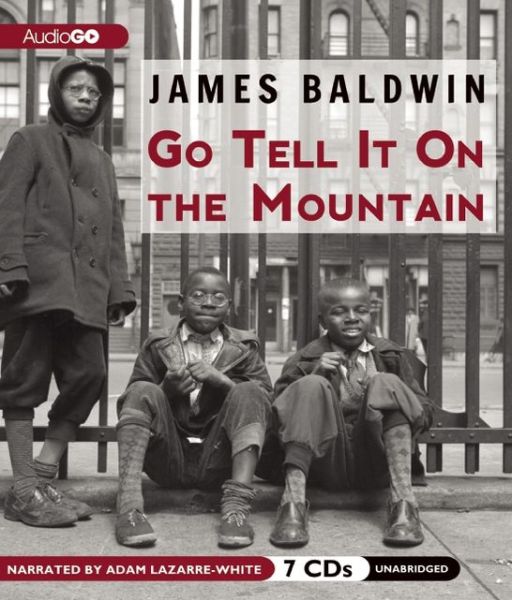
go tell itI come away with the impression that this book had a large, sweeping scope. It is on the surface the story of John Grimes, and takes place in the present over the course of just a day or three, on and around his 14th birthday. His father Gabriel is a deacon in a black church in New York City in the 1950’s, and appears very pious, but beats his wife and children; as his sins add up from there, he comes clear as a hypocrite. The story begins and ends with John and focuses on his relationship with the church or with God; the first and last lines of the book are concerned with his eternal salvation. But in between, we ramble in space and time, and get to know Gabriel in his youth in the South; John’s mother Elizabeth in her youth in the South and in New York City; Gabriel’s sister Florence, who introduced him to Elizabeth; and a surprise character I’ll leave unnamed here. As such, although John is the focus that bookends all the action, this turns out really to be the story of a family and even of a shared experience. I was glad to have the background I gained by reading The Warmth of Other Suns, because like that work of nonfiction, Go Tell It on the Mountain is the story of black Americans moving north in the mid-20th century. It’s concerned with black society’s relationship with the church, and family patterns, and race relations. And it’s for these focuses that I call it “sweeping.”

John is a likeable character in that he feels like a real boy of that age, and my heart goes out to him for the challenges he faces: an overbearing and violent father with the significant authority of the black church in Harlem behind him is no small thing, and the question of his immortal soul and eternal salvation is weighty as well. Clearly I bypassed some of the weight of the religious question, not being able to sympathize with those parts, but I did appreciate the atmospheric nature of the church and the power of that institution in John’s society and in his family life.

Baldwin’s writing is undeniably lovely. I feel a little inadequate because I’m afraid I missed some of the depth of this story, mainly in the religious vein. But what I got, I appreciated, and part of that in this case meant just letting the language flow over me. The narration by Adam Lazarre-White is powerful, dynamic, and dramatic to the right extent; the phrasing feels accurately portrayed, and the cadence of the prayers is well executed and adds a lot to the feel of the story. Full marks for audio performance, and having such a fine narrator read such beautiful words was a grand experience.


Rating: 7 calls to the alter.

Teaser Tuesdays: Go Tell It on the Mountain by James Baldwin

Teaser Tuesdays is a weekly bookish meme, hosted by MizB of Should Be Reading. The idea is to open your current read to a random page and share a few sentences. And try not to include spoilers!

go tell it

I just couldn’t pass up the opportunity to share this passage with you.

He left Fifth Avenue and walked west towards the movie houses. Here on 42nd Street it was less elegant but no less strange. He loved this street, not for the people or the shops but for the stone lions that guarded the great main building of the Public Library, a building filled with books and unimaginably vast, and which he had never yet dared to enter. He might, he knew, for he was a member of the branch in Harlem and was entitled to take books from any library in the city. But he had never gone in because the building was so big that it must be full of corridors and marble steps, in the maze of which he would be lost and never find the book he wanted. And then everyone, all the white people inside, would know that he was not used to great buildings, or to many books, and they would look at him with pity. He would enter on another day, when he had read all the books uptown, an achievement that would, he felt, lend him the poise to enter any building in the world.

Libraries; books; the intimidation of buildings, books, and the grandeur of the New York Public Library; and the power available to a young man who could read all the books uptown. Lovely, and moving.