National Theatre Live presents Treasure Island (2015)

The Pickford Film Center regularly offers this format: live-taped broadcasts from the National Theatre in London, of plays performed on the stage there. I was originally skeptical about the concept; would it translate? The answer is yes, and I will be seeking out more.

treasureI was interested because I have fairly recently read (listened to) Robert Louis Stevenson’s Treasure Island. This adaptation for the stage by Bryony Lavery was astoundingly good – on which more to come; this is mostly a rave review – but I don’t know why I’m always so surprised at how much they change from the original. (This is why they call it an ‘adaptation.’ I know the compression/acceleration is necessary, but I’m always taken aback and disappointed. When will I learn?) In this case, most notably from the start: Jim is parented not by his mother but by a grandmother, both of his parents being dead; and Jim starts out as a gender-bending youth, and then becomes clearly a girl. The former, the grandmother for the mother, remains inexplicable to me. She provided some comic relief; maybe the mother from the original, rather a serious, even dour character, was deemed too sober. But I didn’t find the grandmother so much better as to justify making the change.

Jim as a girl, though, was totally amusing and fun, and provided another element. She’s every bit as boyish as the Jim we know and love; it is mainly just a poke at the original, and an inclusion. I dug it. And the gender-bending confusion here and there is good fun. Maybe it’s strange, that the apparently huge change of the protagonist’s sex bothers me less than the substitution of one female relative for another, but there it is.

This format, of stage-on-film? Completely outstanding. I loved that it captured the best of both worlds: the theatricality of the stage with the informality, convenience, and affordability of the big screen. The music & sound effects were great. And the set! My word, this is the finest set I’ve ever seen onstage: the stage itself was round, and the set lifted up from a flat to a multi-story, and also rotated on demand, so that there was no need for darkened figures hurrying to replace scenery while the audience was distracted: they simply turned the stage around, the actors meanwhile performing in our view, and changed what was behind (or took it underground to change it there). Transitions were perfectly seamless, adding to the drama rather than taking away from the momentum of the play, because there was such a sense of movement, of action. I am blown away.

Jim herself, portrayed by Patsy Ferran, was possibly even more astounding than the astounding set. She was delightfully expressive and sort of puckish, and pulled off that gender confusion early on. Lavery’s adaptation keeps Jim as the narrator of the story, so she speaks directly to the audience lots throughout. I loved the emotion and delivery: action, drama, adventure, humor.

As for some complaint about the “feminist twist”: I have to disagree with the Spectator blog. I don’t feel that the play was feminized aside from the change of Jim’s gender; she goes on no feminist tirades; she’s not a particularly feminine girl by any means. It was more of a nod than anything else, and takes nothing away from Stevenson’s original. The tone of that original is unchanged, except in that this version is a little funnier – which has nothing to do with Jim’s nominal gender. If we’re going to take issue with the fact that the play is not precisely the original novel, I think we have bigger beefs than Jim’s gender, frankly: the ending is changed, for example.

This play was even better than the original book, to which it is not completely faithful – for the best.


Rating: 8 apples.

The Lincoln Theatre presents Romeo and Juliet, the musical

lincolnThe Historic Lincoln Theatre in a town near mine advertised a new musical version of Romeo and Juliet, and I needed little convincing. My parents and I drove down for one of the last productions.

The theatre is beautiful, an old movie house with ornately painted walls, a small lobby and an “art bar” in an adjoining alcove. An orchestra was seated at audience level off to one side of the stage. The music was well performed, and as far as design, it was often a benefit to the play, and sometimes not. The group scenes were fun with the addition of song and dance (the choreography was quite good, playing up the bawdy bits). There were definitely times as well when Shakespeare’s script would have been better spoken than sung – the musical format a little bit forced, you know. Especially in his back-and-forth dialog, his repartee, Shakespeare is pretty near perfect on his own, and those lines should have been left alone. So for the music, a mixed score; but honestly, you’d have to do a lot more than this to mess up Shakespeare, so my criticisms are slight and good-natured; it was great fun to see.

A bigger problem was what I’ll call technical difficulties: our seats were in the second row, with the orchestra curling up along one side of us and the players right in front. They had microphones, but the speakers were behind us. The balance between instrumental music and actors’ voices was badly off: we often couldn’t hear what they were saying or singing at all. (Luckily we know the play well, and the acting makes much clear.) At intermission halfway through we moved well back in the theatre, and the sound quality was so drastically improved – quite good now! – that I’m only sorry we waited that long. We partly missed the balcony scene in that first half. Once the sound issues were resolved by our reseating, I have little to nitpick.

The acting was quite good. Mercutio was outstanding; Juliet’s nurse was great fun; and Romeo and Juliet themselves were, as one would hope, the stars of the show. The actors represented a wide age range, which is again as it should be: Juliet was played by a senior in high school, and though Romeo is listed as a college graduate, he felt plenty youthful for his role. Tybalt is a mere child at 14! But a pretty burly 14, and pulled off the impetuosity required. While Juliet was wonderful – and a fine singer, once I could hear her – I admit Romeo was my favorite actor. He was handsome, dreamy-eyed, romantic and passionate; it was just right.

This play (and so much of Shakespeare) stands the test of time. It was written more than 400 years ago, and I’ve seen it repeatedly, but it’s still so fresh and affecting: every time I ache for Romeo to wait just a little bit longer, for Juliet to wake up in time, for Tybalt to listen to Romeo’s pleas, for Mercutio to recover. And although I had considered myself a little too jaded for this, I admit the romance got to me again, and clearly will the next time I see this play performed. It’s just too good. Shakespeare has his audience wrapped up; the romance and the tragedy are every bit as alive in 2015 as when he wrote these lines in the 1590’s.

There is comedy here, too. I don’t know the histories so well and so won’t comment; but even in his tragedies there is bawdy, physical humor or wordplay. Different interpretations can play these lines up more or less; this one inserted a few pelvic thrusts to good comedic effect.

I don’t want to be too harsh on the musical adaptation; it was often fine and only occasionally the merest bit heavy-handed, but the play as presented by talented actors was outrageously fun and moving and I’d see it again. But I’d sit further back.


Rating: 9 vials for Shakespeare, 8 for the production, 7 for sound.

Treasure Island by Robert Louis Stevenson (audio)

treasureAfter reading Under the Wide and Starry Sky, I was driven to reread Treasure Island. I suspect that I only ever read the Great Illustrated Classics version, in fact: and I loved that series for several years, but I worry now about what I missed. (I reread certain of those classics in full later on, but not all. What misconceptions am I still harboring?) Husband and I first attempted this audio version, read by David Buck, on our U-haul drive cross-country this fall. But the Scottish accent, and the story-within-a-story format, proved too difficult for the big loud truck and our navigation of unfamiliar roads. Fair warning: this is not a criticism of the book (or the audiobook), but it is not the most distraction-friendly listen I’ve encountered.

The story itself is, of course, riveting, once you get into it. It is narrated from a distance of some years by the voice of Jim, who is a young boy (perhaps 12 or so?) in the time of his tale. At his father’s seaside inn, Jim assists in hosting a mysterious sailor we call Billy Bones; Billy is apparently frightened of certain other seafaring men, particularly a one-legged man who wishes him ill. When Billy dies – of fright, after a visit from a band of related ruffians – Jim finds a map within the possessions of the deceased. Local community members Dr. Livesey and Squire Trelawney conspire with young Jim to buy and staff a ship to go looking for buried treasure they believe is indicated on the pirate map.

Here Stevenson securely establishes several tropes of pirate fiction. The cook they install on board their ship is peg-legged Long John Silver, who sings “yo ho ho and a bottle of rum,” talks in the pirate-talk (“aye, matey”), and carries a parrot on one shoulder. The treasure map, marked with an X, takes them to a deserted island, where the shipmates plan a mutiny: Squire Trelawney has haplessly engaged a bunch of pirates for his crew, and they will be captained not by the captain he’s hired, but by Silver himself. By luck, Jim finds out about their scheme in time to warn Trelawney and the doctor, and the three of them take cover – with their honest captain and a few other loyals – on the island, but Silver and his men are bent on treasure and murder. Also by luck, Jim meets a man who identifies himself as Ben Gunn: he was marooned on the same island years ago, by the very same pirates. And he knows where the treasure is.

Originally published as a story for young boys, Treasure Island keeps the pace up and the action quick, after the first few chapters of set-up at Jim’s father’s inn. (Those early chapters do run the risk of wearying the short attention span of young boys and my Husband, though.) The ship’s journey is fraught with danger, but once on Treasure Island the action really ramps up: there are battles, injuries and fatalities, double- and triple- and quadruple-crossings, treasure! and intrigue. I’ll stop with the plotline there. Jim is the unlikely but triumphant hero of this story (again betraying its original audience); by virtue but mostly by luck, he contributes every major piece of action or intelligence throughout. What fun!

Pacing and action are the clear strengths of this adventure tale, which is as it should be. David Buck’s narration is fine – he does voices and accents where appropriate – but I think this version probably missed some opportunity for theatrics that this wildly theatrical story offered. It’s still a great yarn, and sets up a number of recognizable pirate jokes we know and love today. It would still suit young boys well (although look out for a slightly slow start).


Rating: 7 pieces of 8.

The World of Raymond Chandler: In His Own Words, edited by Barry Day

This collection of Raymond Chandler’s reflections and witticisms, edited into themed chapters, will equally satisfy his fans and readers unfamiliar with the noir master.

chandler

Though born in Chicago in 1888, Raymond Chandler was raised in England, so when he returned to the United States at age 24 he felt rather foreign. He had to study and learn what he called the “American” language, but conquered it in writing The Big Sleep, Farewell, My Lovely, The Long Goodbye and many short stories in the noir style–a style he helped perfect. He created the famous Philip Marlowe (an archetypal hard-boiled private investigator who has trouble with the ladies) and wrote screenplays for Double Indemnity, The Blue Dahlia and Strangers on a Train. When he died in 1959, he left a variety of written works behind, and many are respected as classics today. In The World of Raymond Chandler, editor Barry Day (The Noël Coward Reader) compiles Chandler’s published and epistolary writing to form a picture of the man behind Marlowe.

The voice of this book is as much Day’s as his subject’s. Rather than a memoir by Chandler or, as the subtitle might suggest, a narrative told in his words, this is a collection of quotations. Beginning with an excellent brief introduction, Day sketches the major events and publications in Chandler’s life, largely avoiding a standard biography. Selecting from letters and articles, but more often from Chandler’s fiction, Day patches these fragments together with commentary into chapters on themes or common topics of Chandler’s work: cops, dames, Los Angeles, Hollywood. We see Chandler invent the strong sense of place that helps define such writers as Michael Connelly and James Lee Burke today. Day makes the argument fairly successfully that Marlowe’s voice represents Chandler’s, particularly in their later years, as both softened (but not, Chandler insists, mellowed) until Marlowe in The Long Goodbye was “as hollow as the spaces between the stars.”

Chandler fans will be tickled by a great many pithy aphorisms that both describe and exemplify his distinctive style. “To justify… certain experiments in dramatic dialogue… I have to have plot and situation; but fundamentally I care almost nothing about either.” About his preference for small casts, he wrote, “If more than two people were on scene I couldn’t keep one of them alive. A crowded canvas just bewilders me.” And what Day calls the master’s “ground rules” (Chandler labeled them “Casual Notes on the Mystery Novel”) are treasures, including “The mystery must elude a reasonably intelligent reader” and (sadly) “The perfect mystery cannot be written.” At the end of this admiring collection, Day’s reader is left wondering if Chandler came closest.


This review originally ran in the December 2, 2014 issue of Shelf Awareness for the Book Trade. To subscribe, click here.


Rating: 5 disconnected quotations.

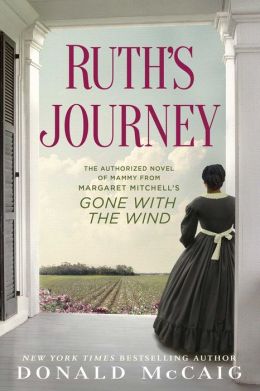
Ruth’s Journey: The Authorized Novel of Mammy from Margaret Mitchell’s Gone with the Wind by Donald McCaig

A familiar, but not unoriginal, expansion on a beloved character from a classic American epic.

ruth

In Ruth’s Journey: The Authorized Novel of Mammy from Margaret Mitchell’s Gone with the Wind, Donald McCaig (Rhett Butler’s People) tells the full story of Scarlett’s beloved nursemaid. He begins in France with Miss Solange, a wealthy heiress who travels to Saint-Domingue (now Haiti). There she takes in a local child to be part servant, part daughter, and names her Ruth, then moves to Savannah. Switching focus to Ruth, McCaig details her eventual brief marriage to a free man in Charleston, years of tragedy and rebellion, and her return to Savannah.

Though McCaig does touch a bit on Scarlett’s well-known story, the bulk of the narrative is focused on Ruth’s early life: the voyage to the U.S., her transition to adulthood, her loves and losses, and the moment she deliberately gives up her name and identity in favor of a new moniker: Mammy. Miss Solange has a daughter, Ellen, who in turn gives birth to the memorable Katie Scarlett O’Hara. Where Scarlett is petulant, Mammy is resilient. Through decades of love, death and betrayal, she consciously puts on a smile. She is cursed to foresee the ugly futures of those she cares for, but, as she repeats to herself, it is not for mammies to speak all that they see.

McCaig echoes the saucy, tongue-in-cheek tone of Mitchell’s classic. Mammy’s story is complex, and she commands respect. Lovers of Gone with the Wind will be the most obvious fans of Ruth’s Journey, but it stands on its own merits as a sweeping epic of time, place and history, thoroughly worthy of its inspiration.


(Final comment: Those readers who were concerned with the racial insensitivity of Mitchell’s original will not find any clear redemption or compensation here; but McCaig’s treatment is respectful and nuanced, certainly no worse and arguably slightly better than the classic in this regard.)


This review originally ran in the October 24, 2014 issue of Shelf Awareness for Readers. To subscribe, click here, and you’ll receive two issues per week of book reviews and other bookish fun!


Rating: 7 husbands.

Teaser Tuesdays: The World of Raymond Chandler: In His Own Words, edited by Barry Day

Teaser Tuesdays is a weekly bookish meme, hosted by MizB of Should Be Reading.

chandler

Yes, it’s true, I just recently did a book beginning; but Chandler is just so quotable (thus this whole book, of course). I couldn’t let this one pass us by.

I write when I can and I don’t write when I can’t, always in the morning or the early part of the day. You get very gaudy ideas at night but they don’t stand up.

That first sentence is unclear: which condition happens always in the morning or the early part of the day? the can, or the can’t? I choose to believe that it is the can; many respected writers (ahem Hemingway) do or did their best work in the mornings. I am certainly a morning person myself. And I like this idea that our nighttime ideas are “gaudy”; I think that’s perfect. I get ideas at night, but they never stand up to sunlit scrutiny. What about you?

This quotation comes from an uncorrected advance proof and is subject to change.

book beginnings on Friday: The World of Raymond Chandler: In His Own Words, edited by Barry Day

Thanks to Rose City Reader for hosting this meme. To participate, share the first line or two of the book you are currently reading and, if you feel so moved, let us know what your first impressions were based on that first line.

chandler

I love the Chandler quotation that opens the lovely introduction to this collection of his writings in little snippets. I had to share.

I’m just a fellow who jacked up a few pulp novelettes into book form… All I’m looking for is an excuse for certain experiments in dramatic dialogue. To justify them I have to have plot and situation; but fundamentally I care almost nothing about either. All I really care about is what Errol Flynn calls “the music,” the lines he has to speak.

I think that is a fine way to note what sets Chandler aside, which is in many ways the quintessential gruff wit of hard-boiled, pulpy dialog. (Or dialogue.) I love it.

This quotation comes from an uncorrected advance proof and is subject to change.

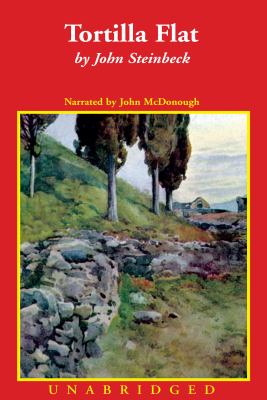
Tortilla Flat by John Steinbeck (audio)

tortillaTortilla Flat is set in the neighborhood by that name in post-WWI Monterey, California, and involves a group of paisano friends. Perhaps I am just being lazy, but I do think that Steinbeck himself can tell you best what the book undertakes. I give you the first paragraph of his Preface:

This is the story of Danny and of Danny’s friends and of Danny’s house. It is a story of how these three became one thing, so that in Tortilla Flat if you speak of Danny’s house you do not mean a structure of wood flaked with old whitewash, overgrown with an ancient untrimmed rose of Castile. No, when you speak of Danny’s house you are understood to mean a unit of which the parts are men, from which came sweetness and joy, philanthropy and, in the end, a mystic sorrow. For Danny’s house was not unlike the Round Table, and Danny’s friends were not unlike the knights of it. And this is the story of how that group came into being, of how it flourished and grew to be an organization beautiful and wise. This story deals with the adventuring of Danny’s friends, with the good they did, with their thoughts and endeavors. In the end, this story tells how the talisman was lost and how the group disintegrated.

And that is, very much, what the book is about.

Danny inherits two houses from his grumpy grandfather upon returning from the war. He is astonished by his good fortune and newfound riches, but also dismayed at the great responsibility of owning property. He takes in friends, one by one by one, and they become a strange, disordered household. It is true that critical readings of this book treat it as an interpretation of the knights of King Arthur’s Round Table; but I think it’s worth pointing out that these men are a rather dirty, devious, and intermittently disloyal version thereof. They steal from each other on occasion; and their main purpose in life is to obtain wine, and drink it. Not necessarily a bad thing. Steinbeck writes as impressively as ever about the wine:

Two gallons is a great deal of wine, even for two paisanos. Spiritually the jugs maybe graduated thus: Just below the shoulder of the first bottle, serious and concentrated conversation. Two inches farther down, sweetly sad memory. Three inches more, thoughts of old and satisfactory loves. An inch, thoughts of bitter loves. Bottom of the first jug, general and undirected sadness. Shoulder of the second jug, black, unholy despondency. Two fingers down, a song of death or longing. A thumb, every other song each one knows. The graduations stop here, for the trail splits and there is no certainty. From this point anything can happen.

You might also call it a picaresque, being full of minor adventures that often run to humor and pathos by turns.

My audio version is narrated by John McDonough, and I like his interpretation very much. The Spanish-in-translation word order and sentence structure gives an accurate paisano feel, and McDonough reflects that in the lilt and rhythm of his speech. (Note that I did not say he puts on an accent.) I enjoyed hearing this story told. I did not always like the players, but that’s not a requirement for liking a book.

I won’t rate this one above the best of the Steinbeck I have read, Cannery Row and Of Mice and Men. But it is recognizably Steinbeck, and worth the time.


Rating: 7 jugs of wine, naturally.

So We Read On: How The Great Gatsby Came to Be and Why It Endures by Maureen Corrigan

An impassioned guide to The Great Gatsby by a highly qualified and devoted fan.

so we read on

NPR’s Fresh Air book critic Maureen Corrigan (Leave Me Alone, I’m Reading) didn’t like The Great Gatsby the first time she read it for school when she was a teenager. But after teaching and lecturing about it for decades, her enthusiasm and ardent passion for F. Scott Fitzgerald’s classic novel infuse So We Read On (a title that spins off the novel’s famous closing line).

Corrigan argues that “if there is such an animal [as the Great American Novel], then The Great Gatsby is it.” She feels that many readers who encounter Gatsby for the first time in high school or even middle school are too young and inexperienced to appreciate it fully; many will unfortunately and unnecessarily form a dislike for a book that they might learn to love later in life. She also debunks a widespread interpretation of the novel as a grand, decadent celebration of materialistic American culture; it is, rather, an enormously subtle criticism of a class system that Fitzgerald felt had snubbed him.

In exploring these and other ideas, Corrigan undertakes a close reading of the text, examining language and punctuation and considering the context of the Roaring ’20s, the Lost Generation, Fitzgerald’s literary colleagues (including his “frenemy” Ernest Hemingway) and family (the famous or infamous Zelda). Despite her scholarly method, Corrigan’s work remains resolutely accessible to the everyday reader. Indeed, those who haven’t encountered Gatsby since high school are her intended audience. With humor and even the occasional pun, Corrigan offers the love of a classic novel to any and all.


This review originally ran in the September 9, 2014 issue of Shelf Awareness for Readers. To subscribe, click here, and you’ll receive two issues per week of book reviews and other bookish fun!


Rating: 9 dives.

Teaser Tuesdays: Tortilla Flat by John Steinbeck

Teaser Tuesdays is a weekly bookish meme, hosted by MizB of Should Be Reading.

tortilla

I am pleased to return to old standbys from time to time. It has been too long since I’ve read any Hemingway. And Steinbeck is another love, one I’ve not explored enough. This audio production of Tortilla Flat, an early novel of his, is going well for me so far. I wanted to share a few lines that I think show what he can do with simple language. Tell me this doesn’t paint a scene – one you’d be happy to inhabit, in fact.

The grace was not quite so sharp to Pilon when he could not tell Big Joe about it, but he sat and watched the treasure place while the sky grayed and the dawn came behind the fog. He saw the pine trees take shape and emerge out of obscurity. The wind died down and the little blue rabbits came out of the brush and hopped about on the pine needles. Pilon was heavy-eyed but happy.

This makes me feel peaceful.