Virtual Read-Out: The Awakening by Kate Chopin

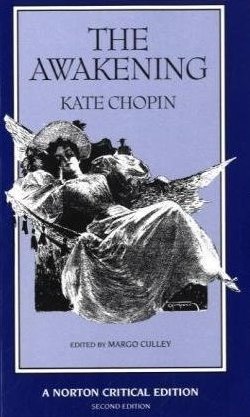
Today I’m “reading out” from Kate Chopin’s 1899 novel The Awakening, in honor of Banned Books Week. [Learn more about the Virtual Read-Out.] Sources vary as to the banning of this book, but ALA does list it on their list of banned classics. Its themes include the struggle of women to escape society’s intentions for us; the main character comes to hold some very unpopular views about the place of marriage, love, and childrearing in her own life. Here is my video read-out!

Thanks, Husband, for playing videographer. 🙂

book beginnings on Friday: Lady Chatterley’s Lover by D. H. Lawrence


Thanks to Katy at A Few More Pages for hosting this meme. To participate, share the first line or two of the book you are currently reading and, if you feel so moved, let us know what your first impressions were based on that first line.

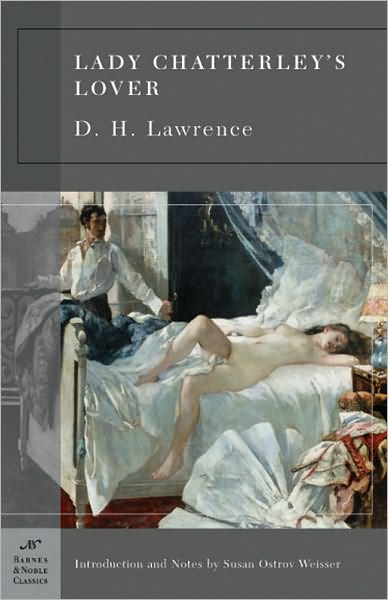
I really enjoyed this classic with The Reputation. I actually had not intended for it to coincide so neatly with Banned Books Week, but it sure did! The back of my B&N edition claims that while it was “quickly banned in England and the United States as pornographic, [it is] sexually tame by today’s standards.” I have to say that it makes my eyes widen here and there, though! I’m not offended; I find it fascinating stuff. But I wouldn’t call it entirely tame. Just tame relative to the 1920’s, is all.

Enough, already. Here’s your beginning:

Ours is essentially a tragic age, so we refuse to take it tragically. The cataclysm has happened, we are among the ruins, we start to build up new little habits, to have new little hopes.

Rather obviously, the tragedy referred to is the first World War, which left England missing the bulk of an entire generation of men, those left behind largely broken and scarred. This fact is centrally important to the action of the book; Lady Chatterley’s husband is lame and impotent as a result of the war, her marital options drastically limited by it. Everyone’s life is irrevocably effected by the missing men.

My review of Lady Chatterley’s Lover posted a few days ago, here.

What are you all reading this weekend?

Banned and Challenged Classics


I love lists of books. I especially love to note which books I’ve read, and which I want to read, on other people’s lists of best books, classic books, Books Everyone Should Read, and suchlike. This book is both timely (hello, Banned Books Week) and fun because it combines two concepts that make me interested in a book: that somebody is calling it a Classic, and that somebody thought it was too racy or thoughtful for people (especially little kids) to read. (This usually recommends a book to me, or at least piques my interest. I’m not weird, am I?)

So here are Banned and Challenged Classics according to the American Library Association. Again, my notations are:

Bold = I’ve read it
Italicized = I’ve started the book, but never finished
Neither = I haven’t picked it up.

1. The Great Gatsby, by F. Scott Fitzgerald
2. The Catcher in the Rye, by J.D. Salinger
3. The Grapes of Wrath, by John Steinbeck
4. To Kill a Mockingbird, by Harper Lee
5. The Color Purple, by Alice Walker
6. Ulysses, by James Joyce
7. Beloved, by Toni Morrison
8. The Lord of the Flies, by William Golding
9. 1984, by George Orwell
11. Lolita, by Vladmir Nabokov
12. Of Mice and Men, by John Steinbeck
15. Catch-22, by Joseph Heller
16. Brave New World, by Aldous Huxley
17. Animal Farm, by George Orwell
18. The Sun Also Rises, by Ernest Hemingway
19. As I Lay Dying, by William Faulkner
20. A Farewell to Arms, by Ernest Hemingway
23. Their Eyes Were Watching God, by Zora Neale Hurston
24. Invisible Man, by Ralph Ellison
25. Song of Solomon, by Toni Morrison
26. Gone with the Wind, by Margaret Mitchell
27. Native Son, by Richard Wright
28. One Flew Over the Cuckoo’s Nest, by Ken Kesey
29. Slaughterhouse-Five, by Kurt Vonnegut
30. For Whom the Bell Tolls, by Ernest Hemingway
33. The Call of the Wild, by Jack London
36. Go Tell it on the Mountain, by James Baldwin
38. All the King’s Men, by Robert Penn Warren
40. The Lord of the Rings, by J.R.R. Tolkien
45. The Jungle, by Upton Sinclair
48. Lady Chatterley’s Lover, by D.H. Lawrence
49. A Clockwork Orange, by Anthony Burgess
50. The Awakening, by Kate Chopin
53. In Cold Blood, by Truman Capote
55. The Satanic Verses, by Salman Rushdie
57. Sophie’s Choice, by William Styron
64. Sons and Lovers, by D.H. Lawrence
66. Cat’s Cradle, by Kurt Vonnegut
67. A Separate Peace, by John Knowles
73. Naked Lunch, by William S. Burroughs
74. Brideshead Revisited, by Evelyn Waugh
75. Women in Love, by D.H. Lawrence
80. The Naked and the Dead, by Norman Mailer
84. Tropic of Cancer, by Henry Miller
88. An American Tragedy, by Theodore Dreiser
97. Rabbit, Run, by John Updike

See, this is interesting: I think I have my highest percentage-read on this book, than of any of the lists I’ve reviewed here so far. (That, and a number of them make My List.) My personal reaction to this list is… wow, these are really excellent books. What a shame that anyone has tried to limit access to them. (And then there’s The Satanic Verses, which I really couldn’t get into. And Faulkner? Ugh, I couldn’t make any headway; although I was trying The Sound and the Fury, which I’ve since heard is not the best first-read.) That, and who the heck challenged The Call of the Wild??

Which books have you read off this list? Which ones are you itching to read? Any you aren’t attracted to?

Great Gone With the Wind Readalong, part 4

Just a reminder, folks: today Part 4 of our Readalong is up for discussion at The Heroine’s Bookshelf. Please do stop by!

Lady Chatterley’s Lover by D. H. Lawrence


Lady Chatterley’s Lover by D. H. Lawrence
I went into this one largely blind. I knew it was a classic, and I knew that its contemporary public found it obscene, even pornographic. But I didn’t know what to expect in the way of style or plot content.

So I’ll begin as if you’re in that same boat. Lady Chatterley’s Lover is set in England, in the years immediately following World War I. (I have found myself reading quite a few books, fiction and non, set in interwar Britain this year; I’m becoming pretty comfortable with this setting.) Our protagonist is a girl named Constance, who has a love affair as a teen while touring in France, but is called home when the war begins. She marries a young man named Clifford Chatterley while he’s on leave; the marriage does not appear to be particularly well thought through. Thus Connie becomes Lady Chatterley. When Clifford returns from the war, he first has to convalesce, and then they move together into his family seat, called Wragby – with Clifford paralyzed from the waist down, impotent, and wheelchair-bound.

To begin with, Connie had a larger, stronger personality than his. Now especially she is tied down, and in the dismal, closed-in environment that is Wragby, bordered by coal mines and their socially inferior, dirty, mean inhabitants. Clifford was arguably never fit to satisfy her, sexually, intellectually, or emotionally; his handicap now finishes that question.

In her malaise and misery, Connie takes a lover, briefly: Michaelis is a playwright, not really socially acceptable but moneyed, and therefore made semi-welcome at Wragby. This affair is not entirely satisfying, though, and following a particular sexual faux pas, Connie cuts him off.

For some time, then, she drags around Wragby, at first caring for Clifford dutifully, but eventually tiring and beginning to like him less. The main action of the book I shall try not to spoil for you, if you have managed to not know for this long. (I didn’t know, and had the pleasure of learning as I read.) But I will tell you that Clifford encourages Connie to get pregnant if she can, and assures her that he’ll acknowledge her child.

I found this book engrossing, after I got used to the style. Lawrence uses colons in odd ways, and with gusto, sprinkling them liberally. It took me a little while to get used to, and I continued to note his colons with amusement. More than punctuation, though, there is a sort of rolling rhythm to the narrative that I had to adjust to; it was lovely once I got going, but just different enough from what I’ve been reading lately to cause a change in pace. I wish I knew better how to Talk Lit and explain what I mean; I’m assuming there’s a term for the style; all I can say is, many classics or older novels have a style and a rhythm that I recognized here and that is different from modern releases.

The voice is third-person but shifts perspectives so that we see out from inside the heads of Connie and of her eponymous lover. There is dialect! I do like dialects, if I can understand them at all, and what they reflect; here, the dialects of various characters reflect social class, which is an important element of the book. One of the ongoing conflicts that Connie and Clifford experience is over social class; Clifford is accustomed to being one of the ruling class and assumes that that is as it should be, while Connie is a little more open-minded. There is discussion of socialism.

The larger theme, however, is a body-vs-mind question. In her youth, Connie and her sister Hilda were stimulated by the intellect of the young men they loved, and Connie continues to share activities of the mind with Clifford at least through the first half of the book. He becomes a fairly successful author, and she assists him in writing stories that make money but are not “important.” Clifford has several old friends – “the cronies” – who come by and have discussions, occasionally including Connie. As the story goes on, though, she finds that stimulating her mind is not enough; she needs to live a physical life, too, and Clifford could never offer her that.

Lady Chatterley’s Lover reminded me very much of Rebecca Harding Davis’s Life in the Iron Mills and Upton Sinclair’s The Jungle. All three describe industry and its workings as if they are characters, animate. In this case, the local coal mines, which Clifford owns and becomes increasingly interested and involved in managing, are a force almost of nature. Their dirt and noise dominate Wragby and depress Connie; work in the coal mines defines several generations of men, and the threat that the mines will close is part of the terror and change of the new post-war England.

This was a beautiful book and I enjoyed it. Connie’s uncomfortable, unfulfilled position and struggle to find herself reminded me, in turn, of Katie Chopin’s The Awakening. It’s an important story to tell, and to read. It’s beautifully written.

But, you ask, what about the SEX?! Okay, I’ll tell you. First of all, the “obscene” and “pornographic” nature of this book is said to have diminished over time, but I still raised my eyebrows several times. There is very frank discussion of body parts, orgasms, and the various ways of achieving them; characters name their genitalia and call them by various terms not considered polite. Despite our new and jaded comfort with sex this is not a PG-rated book. But I thought it was well-done and fairly realistic, and I found several scenes of sexual frankness between lovers who really didn’t know each other very well, that suggest an openness we still haven’t entirely achieved.

Perhaps more shocking to me than the sex talk was the talk of affairs and illegitimate children. Not only Clifford, but Connie’s father, and various well-meaning bystanders comment on Connie not looking very healthy or happy, and recommend that she take a lover, even have a child by another man – they suggest this to her, even occasionally to him. It is taken fairly matter-of-factly. This, to me, was more outlandish than the sex. It’s not hard to see why the 1920’s world rejected this book as inappropriate; it’s still being challenged today all over the country. But as usual in dealing with banned books, I say let the individual decide. If you don’t like reading about body parts, steer clear. But this is a fine book, and you’d be missing something.

Gone with the Wind part 4 (ch. 31-47)


Gone with the Wind by Margaret Mitchell

Follow the Great Gone with the Wind Readalong at The Heroine’s Bookshelf. Today we discuss part 4. [Edit: tomorrow the discussion will continue at the HB blog. Please check back!]

Part 4 of Gone With the Wind brings more troubles Scarlett’s way. Good old Will – whom we couldn’t have lived without – brings her the latest bad news: the new powers of the South are trying to take Tara from the O’Haras by taxing them beyond their means. That is, former overseers, Yankees, carpetbaggers, and the social class that Scarlett used to turn her nose up at. Scarlett is visited by the Slattery girl who she feels killed her mother (Emmie Slattery had typhoid, and Ellen went to nurse her, caught it, and died); her new (former overseer) husband intends to buy Tara. This is one of the greater threats that Scarlett has encountered to date. As Gerald, her Irish father, predicted, Scarlett is finally learning to value the land as much he did.

In her distress, Scarlett runs to Ashley’s side, and begs him to run away with her. She again forces a confession of love from him, and a passionate kiss, but again he balks at leaving Melanie and baby Beau. He’s not brave enough to go with her, and/or, he’s too honorable. My personal reaction is impatience with the concept of honor and bravery over practicality; but this is not conceptual honor we’re talking about here. Ashley has a very real wife and baby who very truly need him, and his love for Scarlett is irrelevant. If he didn’t have the desire (or courage) to marry her in the first place, well, it’s too late now. I think he’s right about that, even though he is sort of pathetically spineless. Sorry, all of you who think Ashley is dreamy; I have trouble respecting his wishy-washiness. At least he knows it, though…

Scarlett’s next move, in desperation, is to dress herself up and throw herself at Rhett Butler’s feet. It’s a ploy that almost works, even though she has to play it in the jailhouse, as Rhett has been arrested for stealing the Confederate treasury. But he rejects her, and she grasps at a straw: her younger sister’s lifelong suitor, Frank Kennedy, is powerless under her charms and marries her when she bats an eye. He turns out to have less money than she expected, though (I’m reminded of Moll Flanders…), and she turns an entrepreneurial hand.

If you’ve been following along at all, it won’t surprise you that Scarlett turns out to be a damn fine businesswoman. She can be ruthless with her competition, dishonest, manipulative, and not shy to use her “charms” to attract business; she has a good head for numbers, and coldly acts in the best interests of those numbers. She’s cleaning up, but also struggling with labor issues. Freed slaves? Irishmen? Prison convicts? All the while, Frank is steaming at home over his wife’s headstrong behavior, which brings disrespect upon him in those oh-so-respectable circles Atlanta society is struggling to rebuild. Scarlett has another baby. Her father dies. She is sending money to Tara, now that she’s doing well, and she has succeeded in saving the farm… Will marries Suellen, even though it was Carreen that he loved, all to save the farm. But oh, the irony, that she’s saved Tara only to be kept away from it by her work in Atlanta.

After Gerald’s death, Scarlett connives to bring Ashley to Atlanta, to work for her. Melanie enters Scarlett’s social circle again, and they live in tense harmony in two houses back-to-back. Rhett Butler turns back up, and he and Scarlett play their usual game: Butler lent Scarlett money after he got out of jail (not even requiring that she prostitute herself, how generous) and now points out that she has broken the conditions of the loan by employing and therefore “helping” Ashley. There is some question about where Frank goes late at night.

And now comes the crescendo. Part 4 builds to one horrifying sequence of events. Scarlett has taken to traveling alone, at night, through the bad part of town, and one night is attacked by two men (one black, one white) who try to rape her. Big Sam (remember him? the head field hand from Tara) rescues her. The men back home, meaning Ashley and Frank, take off and leave Scarlett with Melanie, which she takes as an affront. But it turns out the truth is worse: they are secretly members of the Ku Klux Klan, and have set out to kill her attackers. The Yankee soldiers interrogate the women looking for the Klansmen, and Rhett is the hero of the day: he constructs an elaborate scene of fiction in which the men have been out at a whorehouse all night long. They have killed Scarlett’s attackers, and they get away with it (although at the price of publicly declaring the whoring, which is disrespectful to the wives, Melanie included). But Frank has been killed.

This is where I begin to be really conflicted. On the one hand: Scarlett has been attacked. Two men try to rape her. Her tribal menfolk set out to avenge this attack. I’m emotionally behind them at this point, even though it’s outside the realm of law-and-justice which I do believe in. This part doesn’t read as particularly racist; the two attackers represent both races and apparently receive an equal fate, based on being rapists, not being black or white. But, this is the KKK doing the work. Emotionally, as a reader who’s come to love and cheer for (even in my moments of exasperation) Melanie, Ashley, Scarlett, and Rhett, I’m pleased when they get away with murder, literally. But wait! The Ku Klux Klan killing people in the middle of the night, without benefit of trial, and getting away with it? This is most certainly NOT something that I stand behind.

I think I see what Mitchell is doing here. She has painted these upstanding, moral, white Southern gentlemen, who feel the need to go out and protect their women from rape and abuse. Again, this is easy to get behind. But then she sort of gently blurs these positive portrayals in with the Klan. And I know very different things about the Klan, and I don’t get behind them. This is some kind of propaganda. Shame on you, MM, for making me sympathize. Midnight lynchings = bad.

Here’s another difficult concept from the same passage: Scarlett blames herself, and the town mostly seems to blame Scarlett, for Frank’s death. She was out late at night, alone, in the bad part of town, and she was the victim of an attempted rape, thereby forcing him to go out shooting strangers in the dark, which not surprisingly got him killed. She killed him! She asked for it, and she got what she asked for! And then he died! Her fault!

UGH! The concept of a women ever “asking for” rape or attack is disgusting, and I hope no intelligent person subscribes to it (although I fear that some people still do). And no less, Atlanta’s theory supposes that not only did Scarlett bring rape upon herself, but that she left Frank no choice but to go out on midnight rides for justice, thereby putting himself in harm’s way. I don’t think this follows any better than the asking-for-it theory. Scarlett didn’t want Frank out running after rapists in the dark; we can see very clearly that what she wants most is for him to stay home and comfort her, and make her feel safe with his presence.

So, I had some difficulties with this sequence. I look forward to your responses, too.

But, okay, to get back to the story: the newly widowed Scarlett finally receives the proposition that I, for one, have been waiting for for oh, almost 800 pages. Rhett Butler is in the right position to catch her between husbands (as he says), and they come to an agreement: love is not necessarily present, but they can live happily together, and Scarlett will keep Tara and want for nothing. She will have as big a diamond ring as she pleases. All of this does come true; but, what’s this? Rhett seems to regret his ruling against love as part of the equation. I am holding out hope for some real honest-to-goodness romance at some point in this book…

But as part 4 closes, there’s another question hanging in the air, too. We’ve met Belle Watling a few times, and she’s a decidedly sympathetic character. The madam whose house cleared Ashley et al of murder, and who donated money anonymously to help the Confederate soldiers during the war, and who apparently is supported in part by Rhett Butler, has a child away at school somewhere: a son. And Rhett tells Scarlett he has a child away at school in New Orleans: his ward. Now, I see the foreshadowing. These two children are one, but who is the father of Rhett’s ward in New Orleans?

Part 4 ends with Rhett and Scarlett honeymooning in that very place, so I expect to find out soon. I hope for happiness, prosperity, a quiet settling down. I hope for love and romance, and an answer to my questions about the boy. I feel pretty certain I won’t get them all, though; this book is far too much about heartache and reality to give me all these happy endings. What’s next for Scarlett?

And how did YOU react to the Klan? And come on, y’all, a woman never “asks for” rape.

Gone with the Wind part 3 (ch. 17-30)

Follow the Great Gone with the Wind Readalong at The Heroine’s Bookshelf. Today we discuss part 3.

I’m quite late on this one, as noted before vacation – I hadn’t actually read this part before we set out, so it’s posting after my return. Ho-hum. I should be on track for the last two readings: part 4 on Sept. 26, and part 5 on Oct. 17. For now, you can go check out the discussion of part 3 at the Heroine’s Bookshelf, here. As as aside, Erin at HB is doing a fabulous job of leading these discussions! Not only does she summarize chapters, but she also gives us links for further reading on any number of historical facets of this amazing book.

So. I’m still just devouring GWTW; it’s an epic with momentum, emotional impact, and plenty to think about. It’s entertaining, heart-wrenching, and instructive.

These fourteen chapters are fast-paced and stomach-churning. Scarlett is living in Atlanta as the Civil War really ramps up; casualties increase, and the fervently loyal Southerners begin to face the fact that they can’t win this war. Social niceties that Scarlett (and Melly, and Pitty, and everyone) thought could be relied upon fall apart. Scarlett ends up undertaking some incredible challenges, simply out of necessity: she safely delivers Melanie’s (and Ashley’s) baby, and then grits her teeth and grinds her way home through dangerous, contested territory towards Tara. She enlists Rhett Butler’s help in doing this, but he abandons her – near Tara, but not close enough for safety.

When she gets home, she learns that her beloved mother has died, her two sisters are ill and no more tolerable to her than ever, her father Gerald is no longer a rock but rendered a pathetic simpleton by his wife’s death. Everything falls on Scarlett’s shoulders and, again, necessity births greater strength and skill than she would have thought possible.

I never liked Scarlett, in the sense that I would have wanted to be her best friend; but I always respected her, greatly in fact. Conniving, manipulative, and nasty? Yes. But determined? Oh, yes. And now I respect her more than ever; she’s really pulled it together. She’s my kind of woman, in a way: she doesn’t waste too much time whining, not when it really comes down to it. She rolls up her sleeves, picks her own cotton, earns blisters and calluses and loses weight and saves the farm, when her sisters are ready to roll over and die rather than stand up straight. I respect her immensely.

But I’m also concerned for the vision that Scarlett, and everyone around her, has of some reborn Southland. It’s just not going to happen. (Says I, with the benefit of lots of hindsight!) It’s never going to be the same again. And then Ashley comes home… finally… and Scarlett is still wasting her time pining over him. Just like the reincarnated South she dreams of, her perfect life with Ashley is impossible. I’m frustrated at her slowing down her own progress by mooning over impossibilities.

In response to some of Erin’s discussion points:

The descriptions of war are grotesque and well-done; I can really see and feel and smell the horrors. But I guess I failed to be entirely shocked, if only because this is the reputation of the Civil War in our time. Perhaps Mitchell’s contemporary audience was less clear on this point? I think we all learned in school at least about the idea of the Civil War as awful. But she certainly evokes it viscerally here.

Prissy is a deplorable character – as is Mammy, I must add. I have little patience with the way these slaves are depicted. It’s so obviously stereotyping, using set parts, simplifying these black slave who were – hello!! – real people, like every other population on earth made up of smart, dumb, hard-working, lazy, creative, dull, kind and evil people. My greatest difficulty with this book so far is in the portrayals of the slaves. Does Prissy drive me crazy? Yes. And there’s every chance that somewhere, one specific slave girl had all these characteristics that Prissy does; but it’s just too easy to paint them all with the same brush, and that I do not buy. Mammy’s relief and pride at still belonging to a good family is disgusting, coming from Mitchell’s pen. Pork’s pridefulness on being a “house n*gger” is offensive, to my modern eyes.

Rhett Butler… oh, my. I was at least as disappointed as Scarlett when he proposed, not marriage, but prostitution! (And I wonder if she would really have turned him down, as she planned to, if it had in fact been the former?) I think he’s rather wonderful, and I also think that he and Scarlett are two peas in a pod; she’s self-delusive if she doesn’t see how alike they are. It’s funny, because what she hates in him is what carries her through her own life, too.

The momentum of this section of the book is amazing. I couldn’t put it down. Can’t wait to discuss part 4 with everyone! But some of the portrayals of the south, and of the slaves, are getting a little uncomfortable. What’s next?

The Picture of Dorian Gray by Oscar Wilde (audio)

I am having some trouble writing up my experience with this book. Please bear with me if I ramble.

I struggled with this book, which frankly surprised me a bit. I tend to enjoy The Classics; I expect to enjoy them. I’ve had relatively few failures (ahem, Faulkner and Henry Miller, I’m looking at you). But I fear that Oscar Wilde may not be for me. I listened to this book on audio. Is that the wrong way to do it? It may be my first attempt at a classic in this format. You’d think it would be more accessible this way.

We open with a scene in which Lord Henry is visiting his friend Basil, a painter. They admire Basil’s masterpiece to date, a portrait of a beautiful young man. Basil expresses a deep infatuation with the young man, whom he does not want to share with Lord Henry in any way, not even to tell him his name; but shortly, Dorian Gray appears. His new friend Lord Henry makes him a speech about the glorious and fleeting nature of his (Dorian’s) youth and beauty, which leads Dorian to make a speech (there’s a lot of speech-making, more so than dialog, if you ask me) in which he wishes that he could always be young and beautiful, and his portrait grow old and ugly in his place.

Well. In case you haven’t heard of this famous story, he gets his wish.

Dorian follows other advice of Lord Henry’s, which is not advised. A large part of his new life philosophy involves taking every pleasure one can without considering consequences, seeking beauty. Dorian courts a young woman from the lower classes and then dumps her, resulting in her suicide; this is when he first notices that the portrait has begun to change. It shows marks of sin; there was a “touch of cruelty round the warped lips.” After some agonizing, he decides to go on living an evil and dissolute life, and letting the portrait shoulder the results.

I found my interest fading in and out. Wilde has these moments of brilliant, shining beauty: his descriptions of people can be remarkably fancifully, finely painted. For example, the people Lord Henry finds when he comes in to dinner at his aunt’s:

Dorian bowed to him shyly from the end of the table, a flush of pleasure stealing into his cheek. Opposite was the Duchess of Harley, a lady of admirable good-nature and good temper, much liked by everyone who knew her, and of those ample architectural proportions that in women who are not duchesses are described by contemporary historians as stoutness. Next to her sat, on her right, Sir Thomas Burdon, a Radical member of Parliament, who followed his leader in public life and in private life followed the best cooks, dining with the Tories and thinking with the Liberals, in accordance with a wise and well-known rule. The post on her left was occupied by Mr. Erskine of Treadley, an old gentleman of considerable charm and culture, who had fallen, however, into bad habits of silence, having, as he explained once to Lady Agatha, said everything that he had to say before he was thirty. His own neighbor was Mrs. Vandeleur, one of his aunt’s oldest friends, a perfect saint amongst women, but so dreadfully dowdy that she reminded one of a badly bound hymn-book.

But I found Lord Henry to be entirely intolerable, and Dorian and Basil only slightly less so. When any combination of these three self-centered gentlemen of leisure shares dialog, I want to throw things.

“Harry, you are dreadful! I don’t know why I like you so much.”

“You will always like me, Dorian,” he replied.

I can’t stomach the tone of self-satisfaction. (I wonder if if the voice of the narrator is part of my aversion.) Lord Henry, especially, philosophizes endlessly and meaninglessly. I can’t pay attention to him, no matter how hard I try. He is forever telling his young, impressionable friend Dorian that things will “always” be one way or the other. It irritates me. Perhaps this is Wilde’s point? Maybe I am responding just as he intended me to. I don’t care; I don’t enjoy it.

So to carry on. Dorian hides his portrait and lives a life of sin and pleasure. The storytelling speeds up; we see many years go by while the (anti)hero pursues one indulgence, then another. There are more gems of beautiful, poetic writing in the description of the items Dorian collects, like jewels, tapestries, and music. Here, discussing the lore of the gemstones he collects:

In Alphonso’s Clericalis Disciplina a serpent was mentioned with eyes of real jacinth, and in the romantic history of Alexander, the Conqueror of Emathia was said to have found in the vale of Jordan snakes “with collars of real emeralds growing on their backs.” There was a gem in the brain of the dragon, Philostratus told us, and “by the exhibition of golden letters and a scarlet robe” the monster could be thrown into a magical sleep and slain. According to the great alchemist, Pierre de Boniface, the diamond rendered a man invisible, and the agate of India made him eloquent. The cornelian appeased anger, and the hyacinth provoked sleep, and the amethyst drove away the fumes of wine. The garnet cast out demons, and the hydropicus deprived the moon of her colour. The selenite waxed and waned with the moon, and the meloceus, that discovers thieves, could be affected only by the blood of kids. Leonardus Camillus had seen a white stone taken from the brain of a newly killed toad, that was a certain antidote against poison. The bezoar, that was found in the heart of the Arabian deer, was a charm that could cure the plague. In the nests of Arabian birds was the aspilates, that, according to Democritus, kept the wearer from any danger by fire.

There’s a lilt, a rhythm to that passage, that makes it almost musical, itself.

And through it all, the portrait bears the ugliness of his actions. I guess this is where I say, I had some trouble with all the discussion of the physical manifestation of sin and of goodness; Dorian’s society takes for granted that beautiful people are good and evil people become ugly, so no argument against Dorian’s virtue can be entertained, since he’s so youthful and beautiful even 18 years after the story begins in Basil’s painting studio. This may be one of those fancies one should just accept in fiction, and maybe I was just too grumpy at my other complaints to accept it, but it didn’t work for me. Or, more to the point: perhaps Wilde is actually attacking this very concept, and I’m missing his point. The whole thing grated on me, though, instead of making me think, if that was indeed his intention.

My gripes are numerous, aren’t they? Am I being unfair? There were definitely a few moments of glistening gorgeous writing; but the philosophizing was intolerable, and the dialog was more like a series of monologues, and I just couldn’t buy into the gravity of the ideological arguments. It was all fluffy talk, and I fear Wilde meant for it to be taken seriously.

I spent the bulk of this book waiting for it to be over so I could go on to Truman Capote’s In Cold Blood, which by the way is so far really wonderful. (Timely bonus link: 10 Writers Who Moonlighted as Dandies lists both Wilde and Capote, naturally.) I feel sorry I couldn’t appreciate more of this classic work, but I couldn’t. On the other hand, because of those beautiful bits, and Wilde’s reputation, I sort of wish I could take on this book as a subject of study with an expert – maybe in a college course – and have its quality explained to me. I’m really baffled.

Do you love this book? Can you please explain its redeeming qualities?

Gone with the Wind part 2 (ch. 8-16)

Follow the Great Gone with the Wind Readalong at The Heroine’s Bookshelf. Today we discuss part 2.

I continue to be very impressed. Mitchell is positively painterly in her descriptions of people and places. I love the people, and the clothing, the best. I’m not usually all that interested in clothes but the finery of Atlanta’s Civil War era society scene is awfully colorful, elaborate, and foreign to me. This second part of the book has closed in a little bit, I feel, to relatively few characters: Scarlett, Melanie, Miss Pittypat, and Rhett Butler being the features. Scarlett continues to be a character who is not likeable, exactly (I wouldn’t want to be her friend; not that she’d want to be mine!), but is fascinating and I have to say sympathetic – in the sense that I sympathize with her frustrations, even her desire for simplicity, joy, pleasure, attention. She’s human; I understand her. Melanie is less human because she’s so innocent and trusting; it almost stretches one’s credulity, although I guess Southern ladies were trained to be just that, so maybe it’s historically accurate. Miss Pittypat is definitely a caricature, but a well-formed one.

Captain Rhett Butler I find intriguing. I never did understand Scarlett’s passion for Ashley; he seems to be a pretty face and a romantic ideal, and little else. Pardon me for parroting Gerald, but they’re certainly not suited for one another. Rhett, though, should be just up Scarlett’s alley. He’s got spunk and attitude, not to mention he’s also handsome (several mentions of how BIG he is, too) and has plenty of money. Maybe they’re too much alike, with too much irreverence. Certainly he’s not ready to pay her the kind of attention, flattery, compliments, and silliness that she wants. But I find the prospect of Rhett for Scarlett to be much more exciting than the prospect of Ashley.

We’ve moved a little bit away from the slave characters, too, although we did get a brief sketch of “Uncle” Peter and his control over the household. My memory of Mammy dims, but I’m still bothered by a feeling that she (and many of the slaves depicted as loyal and content in their lot) are painted with a political perspective we no longer find appropriate.

Gone with the Wind continues to be a feat: of beautiful, evocative, fine writing and literary descriptions; of character sketches; of historical fiction with all the details; and of suspenseful drama that keeps me turning the pages. I have lots of other reading to do, so I’m putting this one down til the next readalong date (we discuss part 3 on Sept. 5), but with great difficulty! I am grateful that this readalong finally got me reading this classic. Its fine reputation is deserving.

As usual, don’t forget to stop by The Heroine’s Bookshelf for discussion of part 2, and please do join us if you can!

book beginnings on Friday: In Cold Blood by Truman Capote (audio)

Thanks to Katy at A Few More Pages for hosting this meme. To participate, share the first line or two of the book you are currently reading and, if you feel so moved, let us know what your first impressions were based on that first line.

Ooh, I’m very excited about this one. For some reason, I’ve been hearing a lot lately about this (not new) book and am anxious to get started. We begin:

The village of Holcomb stands on the high wheat plains of western Kansas, a lonesome area that other Kansans call “out there.” Some seventy miles east of the Colorado border, the countryside, with its hard blue skies and desert-clear air, has an atmosphere that is rather more Far West than Middle West.

Okay, well, it’s not a GASPworthy start, but I still feel the pull. For one thing, the idea of “hard” blue skies and “desert-clear” air, and a Far West atmosphere, feels both familiar and alluring to me. I’m all in.

What are you reading?