
The Box in the Woods by Maureen Johnson

The Stevie Bell series continues, but we’ve left Ellingham behind, Stevie having solved the Truly Devious murders (although the world only knows a bit of that story). At this novel’s start, she’s puttering around at home with her parents, selling deli meats and cheeses at the grocery store and cleaning up the salad bar by night. Then she gets an invitation to really go to work: as far as her parents know, she’ll be a counselor at Camp Sunny Pines, but she’s really there to investigate the Box in the Woods murders of 1978, from back when this was Camp Wonder Falls. The tech-bro who’s hired her says he’ll employ her friends, too, which means Nate and Janelle, because David is enjoying his voter registration work in a different (and I’m pretty sure unnamed) part of the country. Stevie’s a bit disappointed, but she respects his mission.

Camp Sunny Pines is an amusing setting. Massachusetts is warm and muggy in the summertime, and Stevie is more cerebral than outdoorsy. She buys into the idea of rugged go-everywhere detectiveship in theory, but she quickly runs out of signature black t-shirts because she has to change them so often – these are sweaty environs, and she’s also doing far more running and biking than she’d like. It’s kind of fun to see her challenged in these ways. Her tech-bro boss does not have a good bedside manner for engaging with the community; Stevie is better at this, but less adept with her personal relationships, and one in particular: David (now her actual boyfriend) finds a reason to come out after all, but Stevie’s responsibilities and preoccupation with the case mean she doesn’t engage all that well with him. He does some driving her around, and tries to have an important conversation, but she’s too checked out. In contrast to what I said about the last few books, I felt sorry for David, who tries to be a good boyfriend and friend, while Stevie’s a bit awkward and inattentive.

I remain baffled by her friendships: Janelle, the purported best friend, is totally rad but much less a day-to-day ride-or-die joined-at-the-hip BFF than Nate, who I feel doesn’t get enough credit.

One of the things that made Nate and Stevie such good friends was their mutual hatred of sharing emotional things. Somehow, they managed to have a deeper bond by staying on the surface–as if they were snorkeling their feelings, floating along side by side, observing all of nature’s wonders without getting close enough to be stung by something under a rock.

That Janelle gets the best friend label is a feature of Johnson’s writing that just confuses me.

But I still love Stevie herself, even in her bumbling. There was, again, a passage that I hold onto as emblematic of her loveable personality. She’s preparing to meet David, and considers fixing herself up a bit, and then just kind of gives up – I love this facet of her, that she’s aware she’s not quite meeting an external social measure of so-called beauty but can’t bring herself to entirely care. (And David doesn’t. It’s fine.) I relate to this entirely.

The mystery is compelling, and I appreciate the final scene, even if the solution is a bit awkward too… I’m really here for Stevie’s clever mind, her interactions with other humans (for better and for worse), and her dear strangeness. I enjoy Johnson’s use of the classic feature wherein the detective just talks it out with her friends and acquaintances, and lets her mind drop things into place. I’m definitely excited about book five.


Rating: 7 crafts.

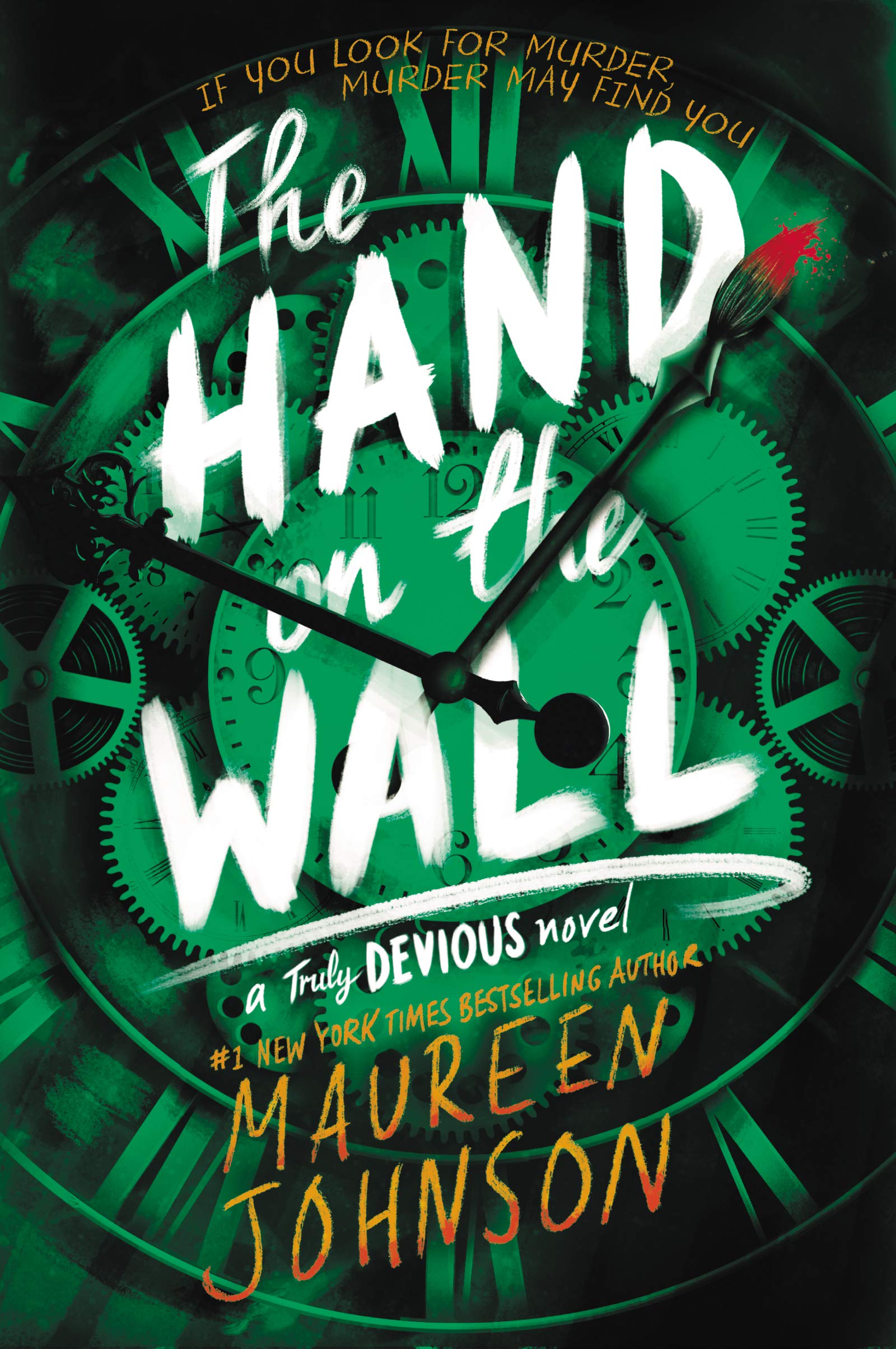
The Hand on the Wall by Maureen Johnson

On a day that I claimed to be overwhelmed with the student papers I had to grade, I also managed to wake up and immediately begin this book… and then stay up til midnight finishing its nearly 400 pages in the same day. I loved Truly Devious and was even more entranced by The Vanishing Stair, which annoyed me with a cliffhanger the night before and sent me directly into this one, book three. My main goal today is not to read a whole book by accident when I’m supposed to be working.

The Hand on the Wall is book three of three in the Truly Devious series – but the Stevie Bell series continues for two more books, a bit confusingly. The Truly Devious murders themselves (aka the crime of the century, the murder/kidnapping at Ellingham Academy in the 1930s) are wrapped up in this book, but newly minted detective hero Stevie apparently continues on. (I haven’t read book four yet! I’m staying strong.) This installment sees the advancing of Stevie’s investigations and her modest decline in terms of personal hygiene and nutrition; the beginning of real fears for her personal safety and/or that Ellingham may indeed be cursed; the continuing friendship and alliance with Security Larry (this is a relationship I have really enjoyed in two books now); and the bumpy evolution of Stevie’s match with the troubled David. I said in my last review that getting to know him a bit better would yield more sympathies, and we do get that here. I still find him a bit obnoxious and don’t appreciate his treatment of Stevie, but they’re making progress.

Stevie grows in her relationships with others. A bit weirdly, the amazing Janelle continues to be identified as Stevie’s best friend, but our hero actually spends more time talking with and confides more in Nate, a hilariously Eeyore-like blocked writer. Janelle is a great friend, but involved in her own love match (that’s going more smoothly than Stevie’s), and it’s actually Nate who ends up fulfilling a day-to-day best-friends role. We have a new friend as well, Mudge, who is loveable if a bit of a cariaciture: he’s here to exhibit exactly how drolly eccentric Ellingham students can be.

Mudge was Stevie Bell’s lab partner–a six-foot-something death-metalhead who wore purple-colored contacts with snake pupils and a black hoodie weighed down with fifty Disney pins, including some very rare ones that he would show off and explain to Stevie as they dissected cows’ eyes and other terrible things for the purposes of education. Mudge loved Disney more than anyone Stevie had ever met and had dreams of being an animatronic Imagineer. Ellingham Academy was the kind of place where Mudges were welcomed and understood.

Security Larry, mentioned above, is a former police detective and becomes a mentor to Stevie in her own work, both cautioning and trying to enforce the rules upon her and gradually, increasingly, viewing her as a peer. He’s great. Several other faculty members develop as well. I very much related to poor Dr. Quinn trying to convince her students to do the readings before class.

I love Stevie more and more. She “would rather eat bees than share her tender inner being with anyone else–she didn’t even want to share it with herself.” She undergoes an actual epiphany (pages 108-109) when she realizes that her weird, awkward self is just a perfectly fine version of a human, and that her own unique combination of qualities is precisely what’s gotten her where she is in life; this is a passage I would like to share with everyone I know, but especially young people and especially girls just making their way and finding themselves. I would follow this protagonist anywhere.

As befits the final book in a trilogy, this one ends on a note of triumph, closure, and hope – perhaps a bit neatly tied up, in fact, but I know there’s another Stevie Bell book to follow. Again, for the sake of my sleep I’m taking a day or two off, but expect more any time now. Maureen Johnson is my new favorite. Thanks again, Liz.


Rating: 9 moose.

The Vanishing Stair by Maureen Johnson

Book two of the Truly Devious series flew by. I stayed up late to finish this one and it ended on a serious cliffhanger, so look for my review of book three to follow this one immediately.

At the close of Truly Devious (for which there are mild-to-moderate spoilers here), The Vanishing Stair opens with Stevie glumly returned home to her parents’ house and her public high school. The gamechanger comes quickly in the form of the despicable Senator Edward King, her parents’ hero and employer and (surprise) the father of her love interest from Ellingham Academy. King has arranged everything for Stevie to return to Ellingham – funding the trip, heightening security following a student’s mysterious death, and convincing her parents of her safety. He wants Stevie, in return, to keep an eye on his wayward son David, with whom Stevie’s not on particularly good terms anyway. She’s thrilled to be back at the school where she feels stimulated: with her friends Nate and Janelle again, working on her life’s greatest passion, the solving of the 1930s Ellingham murders, and yea, David. Quickly a second body is added to the modern Ellingham count. Stevie gains a new advisor, an eccentric academic from the local (Burlington, Vermont) university with a drinking problem and a very nice nephew. David’s moods and attitude toward Stevie continue to swing wildly, hot to cold to nuclear.

The best thing about these books is Stevie herself. She’s socially awkward but mostly doesn’t care; she’s occasionally bothered by her inability to fit in back in the ‘normal’ world (of which Ellingham is not part), but only when she remembers. Despite sometimes showing signs of a standard teenager’s low self-esteem, she generally carries on as herself, unbothered. I like her. She’s an extremely focused detective – perhaps to the point of mild self-neglect, but that’s part of a long tradition of detective types in fiction (a fact she’s aware of). Johnson’s prose is downright funny: after camping out overnight in the school’s yoga studio, Stevie “felt a waffle pattern of yoga blanket on the right side of her face and the faint smell of lavender and patchouli permeating her being. It was like she had been run over by a boulder made of hippies.” Our young hero can be a little bumbling and dense – just like a teenager, no matter how smart. I have a little less patience for David’s antics, perhaps in part because he’s a rich boy? but mostly, I think, because we don’t have the close third person window into his interior self that we have into Stevie’s. He’s a suffering kid, too, and I think if we got inside his head it would be just as sympathetic as hers.

The mystery plot remains compelling: this book focuses in on the riddle that Albert Ellingham left behind on his final day, which the title of this book nods to. We’re learning things, about the historic murders as well as the modern suspicious deaths, but not the big final thing we want to know. Again: this one ends on a mad cliffhanger; I was actually a little peeved, and even more relieved that I already had book three ready and waiting. I recommend you do the same.

Liz was (as ever) 100% correct about this one. I’m pretty sure she said she ripped through the whole series, as I am clearly going to do as well.

These books are recognizably YA in a few ways: teenaged protagonists, a gentle handling of gore, violence, and sexual content, and humor. But the plotting is not too simplified for adult readers to enjoy, and a strong female lead who is still in her teens appeals to this reader at any age. I’m a fan.


Rating: 8 cats.

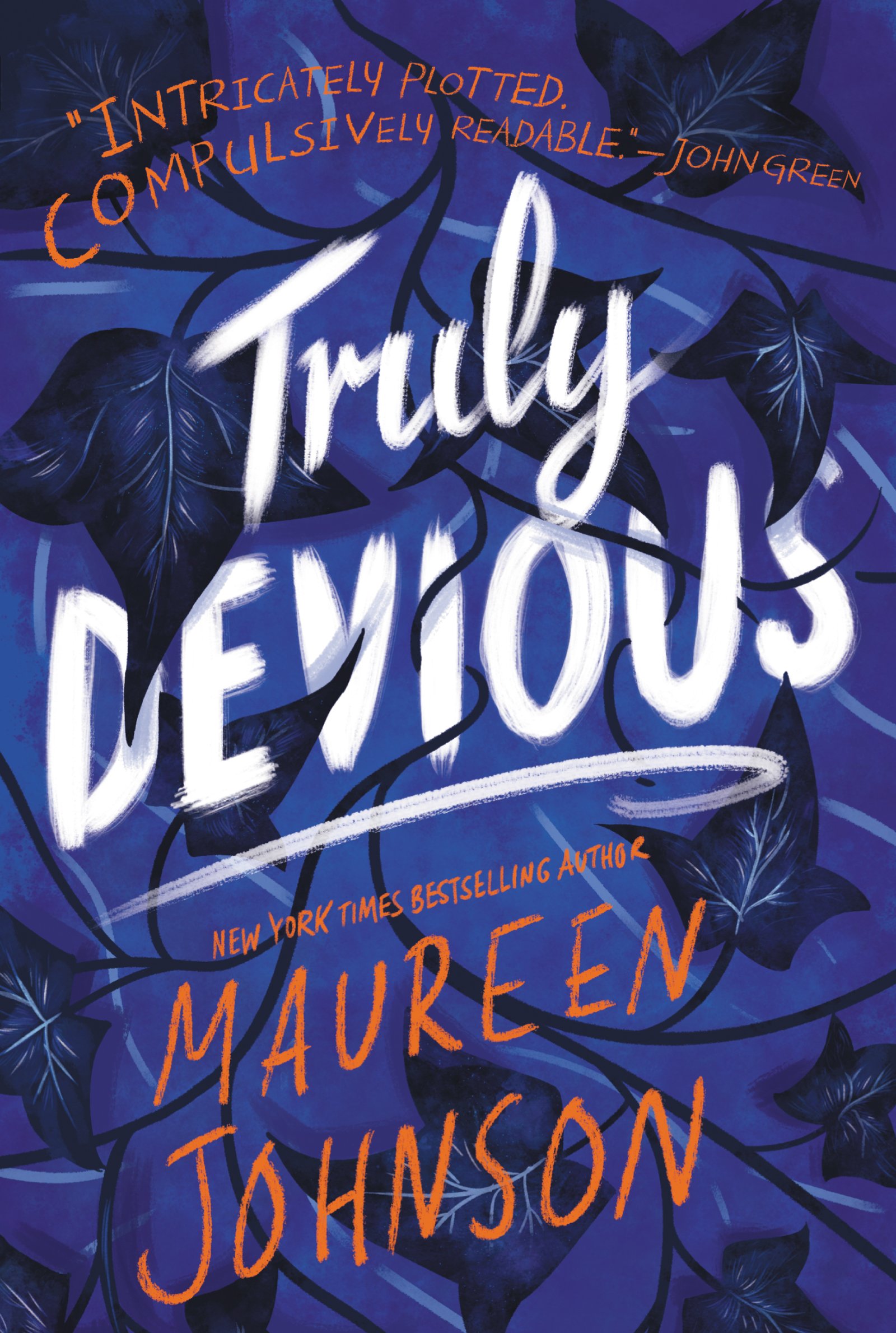
Truly Devious by Maureen Johnson

Yet another gem from Liz, Truly Devious is a positively delightful piece of fun (that also involves murder). It’s for young adults, but easily well-written enough, and sufficiently funny and clever on a few levels, to please adults (like Liz & me).

There are two timelines, although we spend the bulk of the book in one of them. First, in 1935, a teenaged genius is lucky enough to be plucked out of her New York City public school to attend a special new educational experiment in the mountains of Vermont: Albert Ellingham, major mogul, has established the Ellingham Academy to let kids like Dottie pursue the joys of learning in their own ways. Unluckily, a year later, Dottie is murdered at the idyllic Academy, apparently a bystander in a plot to kidnap for ransom Albert Ellingham’s wife and daughter. Readers get a glimpse of Dottie’s final moments, but her assailant is unnamed, undescribed, and genderless.

Much later, more or less in contemporary times (I didn’t notice a year for this timeline?), another teenaged girl is also delighted to be admitted to Ellingham, not despite but because of its murderous history. Stevie Bell, of Pittsburgh, is crime-obsessed: she hopes to become a detective, ideally for the FBI, and the Ellingham Academy murders are her dearest project. The remains of Iris Ellingham (Albert’s wife) were found as well as Dottie’s, but the body of young Alice Ellingham, aged four at the time of her disappearance, has never been found; technically Alice is Stevie’s host and educational benefactor in absentia. Socially awkward Stevie arrives at Ellingham determined to distance herself from her parents (who love her but do come off rather obnoxious, especially with their unfortunate political leanings), begin a new chapter in her life, maybe finally make some friends, and – most importantly – solve the biggest best crime she knows. Each of these goals will turn out to be ambitious, but Stevie is both smart and scrappy. She easily pairs up with Janelle (who hails from Chicago and excels at building machines and gadgets) and establishes a harder-won friendship with even more socially awkward Nate (a published and thoroughly writer’s-blocked novelist). Their dormmate Ellie is a free-wheeling artist who both impresses Stevie and makes her nervous; there is also a famous and spectacularly handsome filmmaker/actor (who however seems not very smart), and a mysterious boy named David who both attracts and repels Stevie.

While we check back in with 1936 (investigation, trial of an apparent straw man, Ellingham’s grief), the modern timeline dominates. Stevie is both a fine amateur detective (in a long literary tradition) and a teenaged girl, grappling with hormones, friendships, school, the sandpaper grip of her parents, and other challenges that will be familiar to all readers, not just those with true crime obsessions and unusual educational settings. By nature of having a female lead, Truly Devious involves some girl-empowerment messaging, but like its handling of nonbinary genders and queer characters, this messaging is simply built into the story, not A Point To Be Made.

Was this was pretty was?
Who knew. This was what a Stevie was, anyway.

Stevie and her friends are lovable above all; also smart, bumbling, funny, painfully awkward, and pleasingly eccentric. There is everything to enjoy.

I finished this book having just ordered book two but it wasn’t here yet and I felt a real sense of loss. I expect to burn right through books two through five, so look out for more Stevie Bell.


Rating: 8 poles.

The Liar’s Crown by Abigail Owen

Pretty sure I got this one from a Shelf Awareness review, and I found it quite enjoyable. It definitely has a YA flavor, but that’s okay: I was entertained, absorbed, transported. I also learned a new label: it’s marked upper YA/NA, and I had to look that up. NA is ‘new adult,’ so that upper YA/NA takes us through late teens and early twenties, I guess. As ever, your mileage may vary, but I think that rating, if you will, makes good sense. For one thing, there’s not only violence but sexual content. Not graphic, but clear enough.

A brief prologue gives us a few details of the alternate world in which The Liar’s Crown is set. Also, there’s a map! The world is Nova, and there are six continents/kingdoms or dominions with their own rulers. Their names give clues as to climate: Savanah, Tropikis, Mariana, Wildernyss, Tyndra, and Aryd. Following the prologue (the birth of twins, and a blessing and a curse), our narrator is Meren. Her twin sister Tabra is princess of Aryd and will be queen once their grandmother dies. Meren’s existence is a secret; she lives in a city distant from the capital city, visiting her sister in the palace only in stealth. She’s been raised by her grandmother’s twin – also a secret. By tradition and heredity, her family line is ruled by queens with secret twin-sister body doubles, who stand in as queen in times of danger. Meren’s life purpose is to serve and protect her sister; she can have no true life of her own. She’s lucky to have a single friend, Cain, heir to a minor authority figure among the desert’s Wanderers. He does not, of course, know her true identity.

Meren and Tabra are 18 when this story begins, with a quick series of events: their grandmother the queen dies. King Eidolon of Tyndra, whom the girls have been trained all their lives to fear, proposes marriage to Tabra, and sends her a unique gift. Meren goes to her sister’s side, to take her place for the coronation, and to reject Eidolon’s threatening proposal; but then she is kidnapped by a man of Shadows, swept across dominions and into a world she never dreamt existed. Her captor is both terrifying and magnetic. He has surely grabbed the wrong princess, thinking he’s got the true heir to the throne; Meren must continue to play the role of Tabra, but her kidnapper is keeping secrets too. They are each responsible for lives beyond their own. They are in awful danger, and they might be falling for each other.

The Liar’s Crown has mystery and intrigue, magical powers and amulets, strange beasts and frightening environments. Meren is navigating the beginnings of love, romance, and sex – her old friend Cain has just voiced his amorous intentions as the man of shadows comes along. She yearns for her own identity (like any eighteen-year-old) but also feels her responsibilities toward her sister, her family, her dominion, her people. She has her own individual desires and also wants the best for her society. She is caught up in the difficulties of friendships, filial and romantic love – as are we all.

Meren is an accurate teenager, and sometimes feels a bit juvenile, which I guess is where I get that YA flavor I mentioned earlier, but that all feels true-to-life; and these themes are certainly universal. The storyline offers suspense, plotting for good and for ill, unknown intentions, the puzzle of whom to trust… there are battles, new alliances and tragic losses, and there are a handful of brief but well-written and compelling scenes of kissing and one memorable sex scene. This book had me looking forward to when I could snuggle back up with it, and that’s always a win. I smell a sequel, and I’m looking forward to it.


Rating: 7 death worms.

Odder by Katherine Applegate, illus. by Charles Santoso

I fell in love with this book as reviewed by a colleague of mine at Shelf Awareness (here), and bought it for the six- and ten-year-old sisters who are my friends. But when it arrived I couldn’t let it go and so I read it first.

It’s every bit as delightful as it sounds in the above review, and I’m so glad I picked it up, and glad that I have young friends to inspire me. I loved the storytelling style: easy-reading, brief, free verse poems that speak plainly but also with lyricism (Odder’s front paws when she was just a pup were “dream-busy / small and soft as / a toddler’s mittens”). I loved Odder, of course, her name and her personality and frank responses to the world. What do I know about sea otters? but this story and characterization felt true to the natural world, and at the same time, offered many lessons applicable to other life forms. “Why simply dive when she could dazzle?” The ocean isn’t about morality, and there are no villains here; after a shark attack, Odder doesn’t blame the shark. “She’s seen enough to know / that this is how life is, / and this is how death comes.” (Spoiler alert: death has not come for Odder yet.) There are some excellent how-to poems: “how to rescue a stranded otter” offers important points about not rushing in; there are two versions of “how to say goodbye to an otter,” for both humans and otters. There’s a neat little poem called “keystones” that teach the meaning of ‘keystone species’ succinctly, which is a fine example of how Odder gives both naturalist lessons and broader ones.

I’m charmed, and so happy I spent some time with this book. Definitely recommend.


Rating: 9 clams.

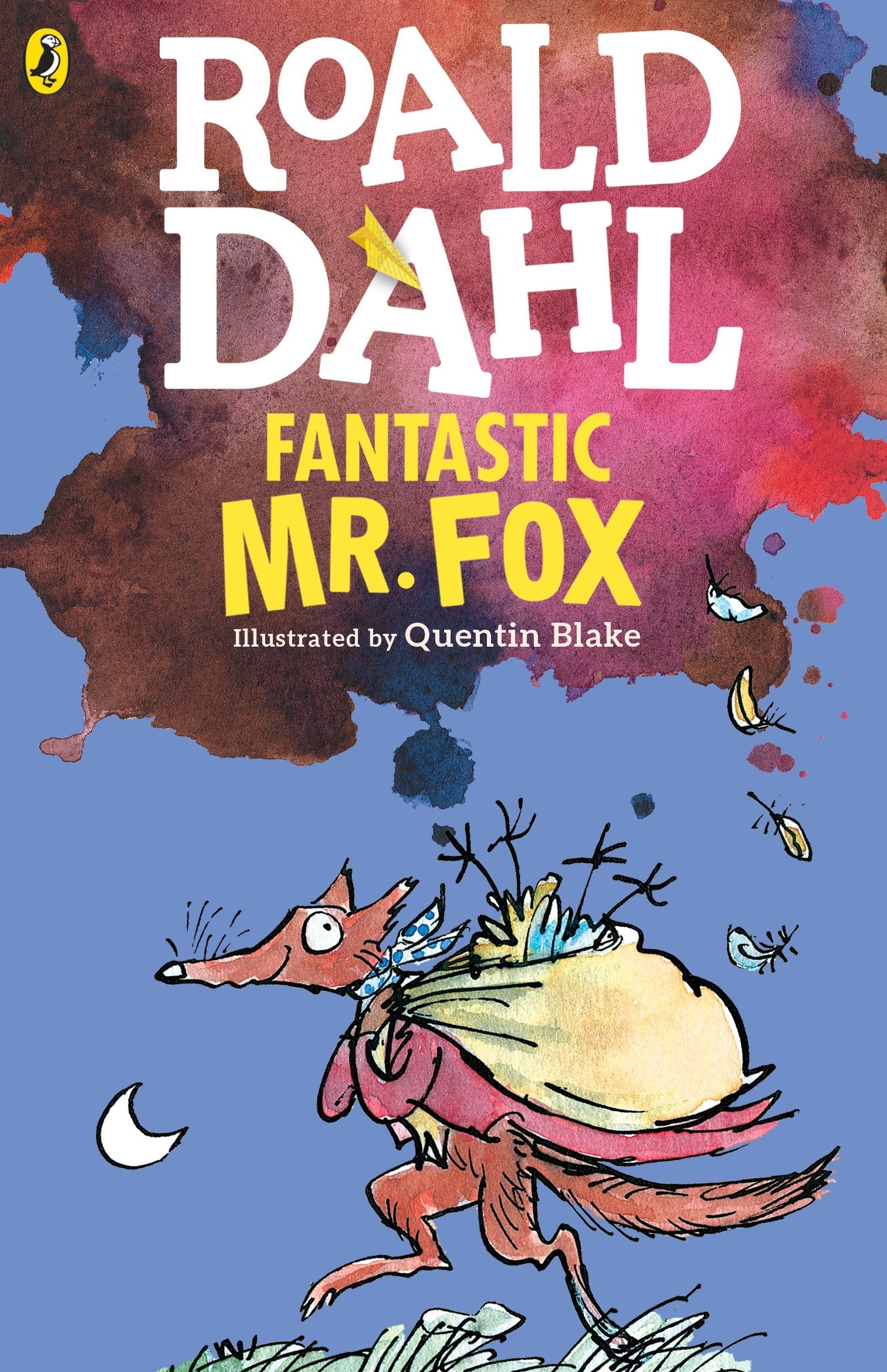
Fantastic Mr. Fox by Roald Dahl

This randomly appeared in my mailbox, and it was a perfectly lovely revisiting of some iconic features of one of my all-time favorite authors. We’re missing one familiar element, which is childhood–instead we root for the clever Mr. Fox, his loving wife Mrs. Fox, and four Small Foxes. Our antagonists are appropriately comical and ridiculous: Farmers Boggis, Bunce, and Bean, whose farms respectively produce chickens, ducks and geese, and turkeys and apples. (Bean, the turkey-and-apple farmer, exists entirely on very strong cider.) The wealthy ruling class has too much but still begrudges Mr. Fox the odd poultry to feed his family. Mr. Fox’s wit is generally enough to keep him out of trouble, until the mean farmers band together and trap his family in their den under siege; then our hero will have to turn twice as crafty to save the day, not only for the Fox family but for the other digging critters of the neighborhood (the families Badger, Mole, Rabbit, and Weasel). There is tension and suspense and a final joyous comeuppance for the bad guys. There is a moral lesson: when Badger worries about stealing, Mr. Fox retorts, “My dear old furry frump… do you know anyone in the whole world who wouldn’t swipe a few chickens if his children were starving to death?” Who, indeed? There are also illustrations by Quentin Blake, whose visions of Dahl’s work have always defined my experience of this author, so that’s perfect.

Thanks, Pops. You were right. This was a treat.


Rating: 8 carrots.

Monday’s Not Coming by Tiffany D. Jackson

This is the story of how my best friend disappeared. How nobody noticed she was gone except me. And how nobody cared until they found her… one year later.

Our narrator is Claudia, who returns home to Washington, D.C. from Georgia (where she spends summers with her grandmother) to enter eighth grade, and finds her best friend Monday has vanished. Monday hasn’t returned Claudia’s letters all summer, and now she can’t track her down by phone or at home. The timeline shifts between a few points before Monday’s disappearance – so that the readers gets to see their friendship – and the time after. Claudia’s first-person narration is heart-breaking: her angst, the drama and despair of teenagerhood, her isolation after losing her only friend (otherwise, social settings like school are not particularly kind to her, at least in her own view), and feels authentically like a fourteen-year-old’s voice. I found it a well-written book in general, with good pacing and tension and a sense of momentum; these 400+ pages flipped easily by.

The story of Monday’s disappearance is a mystery, even though the opening lines (quoted above) foreshadow at least one important element of the final solution. Monday’s Not Coming could fit into a few genres, including amateur detective story, as Claudia searches relentlessly for her friend even when everyone around her encourages her to give up. She begs her parents for help, tries a police detective – even Monday’s older sister tells her to just leave it. The reader slowly becomes aware of some issues Claudia herself faces, which bear on the unique relationship between the two girls – almost a codependence, in fact. Where we come to see that Monday was a strong student, Claudia struggles with her schoolwork, but has an intuitive feeling for color and design; she is a dancer, an artist and a creative thinker. “We lived in our own world,” she recalls, “with our own language and customs. We lived inside a thick, shiny bubble that no needle was sharp enough to pop.” A few reveals keep the plot moving neatly along. I have to say, though, that a final big reveal in the book’s last 50 pages felt like one step too many for this reader. I think it was gripping enough and this may have taken it a hair into the incredible. I don’t think the story needed that final complication.

Back-cover blurbs and promotional copy for this novel point out that its plot is “straight from the headlines,” in which girls of color do indeed disappear with scarcely a ripple in cities like D.C. In this regard, Monday’s Not Coming is firmly rooted in fact. How does a teenaged girl truly vanish without anybody noticing? Well, for one thing, it’s not quite that nobody notices as much as nobody seems to care, which is not less horrifying. It is to Jackson’s credit that the unbelievable is made believable in this narrative (even if I wasn’t a fan of the final wrinkle).

Claudia is a very real and painfully struggling young person, and a compelling narrator; it was an excellent choice to make hers the perspective for this story. Monday is a little bit of a shifting target. We mostly see her, obviously, through Claudia’s eyes, and Claudia comes to doubt her own truth; we are offered an idea that there was another version of Monday than the one Claudia knew (which I think is generally true of humans). Regardless of the ability of a teenaged girl – or any of us – to present multiple faces, Monday is a tragic figure and one we will mourn alongside her best friend. I was disappointed with some of the adults in this story (unavoidably), but they felt real, too. It certainly sheds a light on a very sad real-world issue, as intended. Alongside society’s failings of young women of color, Monday’s Not Coming touches on issues of class, gender representation, sexuality, and various cultural norms. I think it’s a strong choice for discussion groups (classrooms, book clubs) for these reasons.

I really enjoyed reading this one – well, ‘enjoy’ may be the wrong word for such a sad story, but I admired Jackson’s work.


Rating: 7 shades of red.

movie: Everything, Everything (2017)

I loved the book so much that I thought I’d love the movie, but I was wrong. I found it more gooey and less substantial, leaning too heavily on the staring into one another’s eyes and the admittedly compelling romantic trope of the view between two windows. (Also the beauty of both starring actors – and they are beautiful! but not what makes the story work.) The mother character is less warm here, and therefore less sympathetic; the mother-daughter relationship has none of the sweetness that makes it work in the book. It’s all less developed, as is always the case with book-to-movie adaptations. If the novel rose above the potentially juvenile nature of the “young adult” designation, the movie did not.

On the other hand, there was this bookstore shot with an out-of-focus copy of Paul Kingsnorth’s The Wake in the foreground as an Easter egg, so that’s worth some points.

I’m sure this movie is for somebody – perhaps it’s perfect for the young adult audience; it got good audience reviews. I found it too simple and saccharine. I watched the trailer for the movie version of The Sun Is Also a Star and decided to save my money. Oh well.


Rating: 4 books.

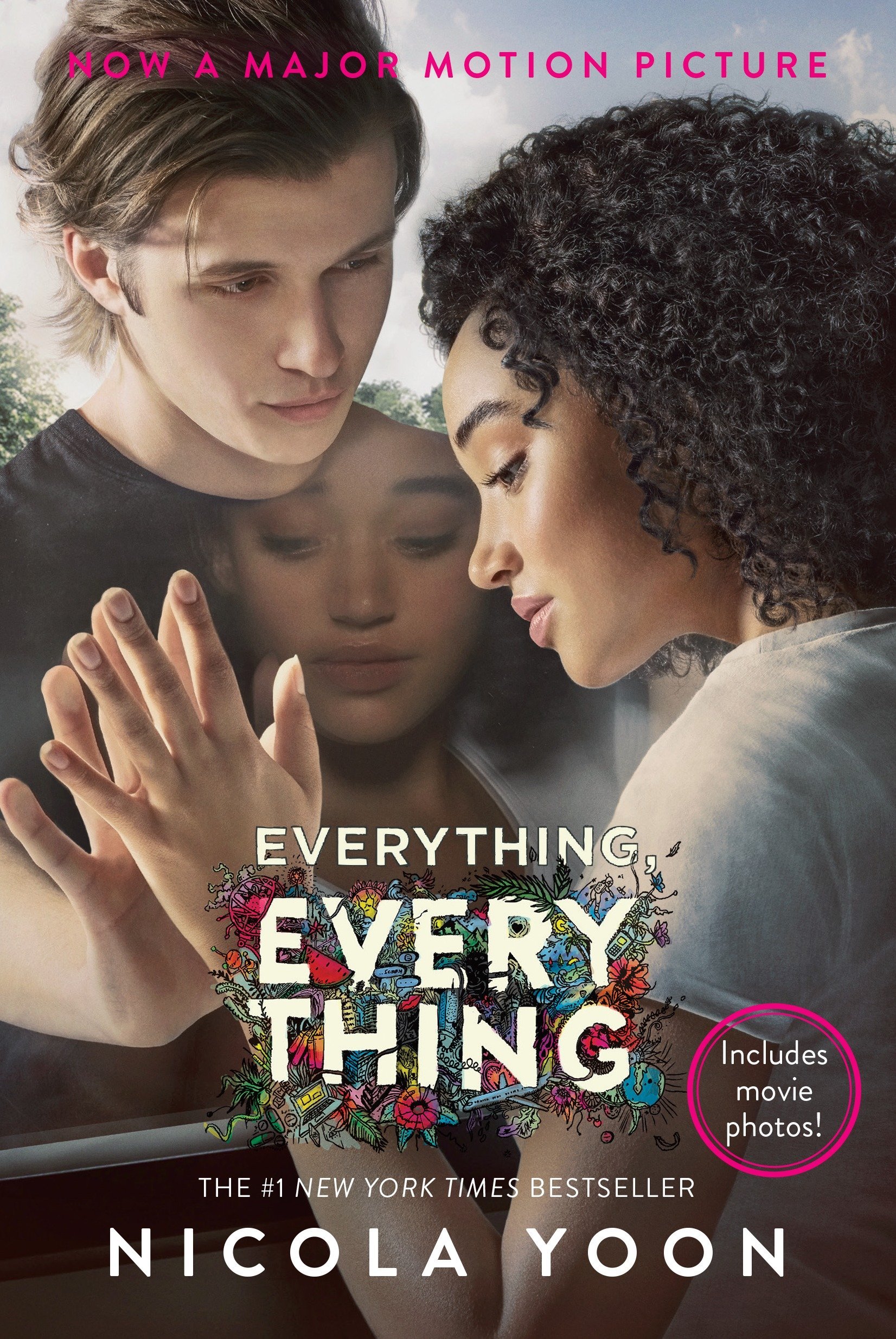
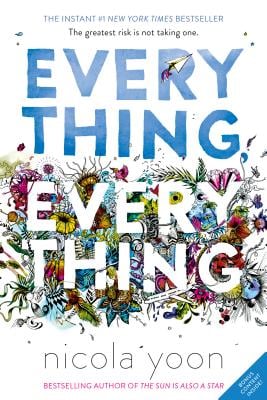
Everything, Everything by Nicola Yoon

After The Sun Is Also a Star I was sold on anything Nicola Yoon. Everything, Everything is her first novel, also a YA romance of star-crossed lovers, heavy on metaphor. I will buy whatever she writes next.

Madeline Whittier is just turning eighteen when we meet her. She lives in an immaculate home, in an entirely white room where “book spines provide the only color” and her best view of the outside world; she hasn’t left the house in seventeen years. She has SCID, or Severe Combined Immunodeficiency, or “bubble baby disease.” Luckily, her mother is a doctor, so she has the best care. She loves her books and goes to school via video calls and the occasional, exhaustively decontaminated visit from her architecture teacher. She has a great relationship with her nurse, Carla, and with her mom; she’s really not unhappy with this life, until a new family moves in next door. Through pantomimes from their windows, and emails, and IMs, Madeline and Olly fall in love.

SCID (a real disease) literalizes several truths about the more universal coming-of-age story. Madeline’s mother wants to protect her, while Madeline begins to chafe at the limitations of that protection. Falling in love involves risk, and necessitates keeping secrets. Throughout this book runs the question of whether love can really kill us or not; for Madeline, perhaps, it literally can. But for Madeline, as for all of us, it is also true that for her to grow into adulthood, she’s going to have to take some risks, and her mother will have to release her grasp a little bit.

The teenaged romance is as enchanted, magical, and absolute as these things really are. Olly is a delightful character, and like the male love interest in The Sun Is Also a Star, he has his own interests and personality to complement Madeline’s. Madeline lives through her books, especially The Little Prince, until her world suddenly grows exponentially larger. Olly is building a fanciful model of the universe on his roof, to escape the trauma of his own home life. They are very sweet with each other, and the whole story is best read in a breathless rush, the way young love happens. Yoon writes lovely, fresh, sparkling prose about universal experiences made specific, detailed, and gorgeous. Her characters are multifaceted and loveable. I feel like I get to disappear into these stories, and I can’t wait for her to write another one.


Rating: 8 rewards.