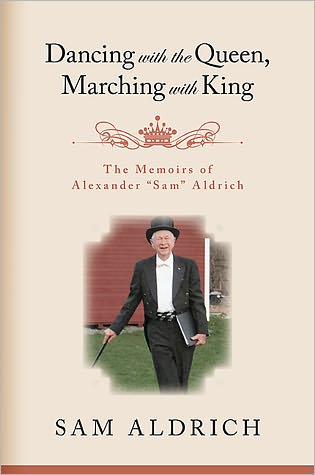
book beginnings on Friday: Dancing with the Queen, Marching with King by Sam Aldrich

Thanks to Katy at A Few More Pages for hosting this meme. To participate, share the first line or two of the book you are currently reading and, if you feel so moved, let us know what your first impressions were based on that first line.
Here’s an interesting memoir that has just crossed my desk.

The two most exciting public events of my life occurred before I turned forty.

In the spring of 1953, when I was only twenty-five, I was invited to attend the opening of the new American Embassy residence in London.

This is your standard, matter-of-fact (auto)biography/memoir beginning. Not much flare, and that does seem to be Aldrich’s style. But! I think he has an interesting enough story to make up for it. We shall see.

This quotation comes from an uncorrected advance proof and is subject to change.

Teaser Tuesdays: Newspaper Titan by Amanda Smith


Teaser Tuesdays is a weekly bookish meme, hosted by MizB of Should Be Reading. Anyone can play along! Just open your current read to a random page and share a few sentences. Be careful not to include spoilers!


Newpaper Titan: The Infamous Life and Monumental Times of Cissy Patterson is a hefty biography of the heiress to the Chicago Tribune dynasty, and formidable newspaperwoman in her own right. Smith covers the family history beginning well before Cissy’s birth in 1881, through her death in 1948. I’m just beginning the book, and actually had never heard of Cissy before, but so far she is proving to be a most interesting subject – meaning, as is usually the case with the most interesting subjects, that she is a controversial and difficult-to-like figure. My teaser comes from page 347:

Although Cissy was the first and only woman editor of any newspaper in the Hearst chain, she was by no means the Chief’s sole female employee. The son of a formidable mother, William Randolph Hearst himself did not share the low estimate of feminine competence that his Washington Herald staff had betrayed when Cissy invaded their city room.

This quotation comes from an uncorrected advance proof and is subject to change.

vacation reading: a series of short reviews

The Strange Case of Dr. Jekyll and Mr. Hyde by Robert Louis Stevenson. Still a good story! Spooky and short, it’s a bit reminiscent of Poe. Action-packed and efficient. I would not have sworn I had read this before, but now I recognize that I have. What a classic. I highly recommend this as a bang-for-the buck, action-packed, early sci-fi spookster with a bit of meditation on the human condition. Not sure if I should count this for the Classics Challenge as its a re-read. :-/


Worth Dying For by Lee Child. (audiobook) Surprisingly good as audio. I wasn’t sure. I’m such a BOOK purist that audio doesn’t always work for me; but it can’t be argued with on a road trip. Part of what made it special, too, is that I got to share it with the Husband, who doesn’t normally read. He got really into it, and we shared this suspenseful adventure together. That’s priceless.

Classic Jack Reacher! He’s such a Rambo. It’s a bit comical in the over-the-top violence and general bad-ass-ness, but I eat it up. It’s great fun. We both enjoy the slight absurdity of it, while also appreciating that we can count on this guy to get it right. And I finally begin to understand, at least a little bit, what was so frustratingly up-in-the-air at the end of 61 Hours. This may be my favorite Reacher novel yet.


The Ballad of Typhoid Mary by J.F. Federspiel. Opening quotation: “Life is strange and the world is bad.” (Thomas Wolfe) This sets the tone.

This is another creepy story. It’s historical fiction, and I have made a note in large letters to read up on the concept of Typhoid Mary and how much we know about her in the real world. She was a carrier of typhoid fever: she never got sick herself, but she made people around her sick, to the tune of several hundred at least. She was a cook, passionate about cooking for people, despite seeming to understand that she was killing them. She wasn’t a serial killer; she didn’t do it on purpose; she just didn’t let it stop her. What can we expect, in an age with poor understanding of hygiene and the spreading of disease, of a poor, uneducated, abused & orphaned young woman with no opportunities who suspects she might, in some way, be responsible for all these deaths around her? This was a fascinating read, and another very short one, too.


The Man Who Mistook His Wife for a Hat by Oliver Sacks.This is a collection of case studies, or short stories, or essays, by a neurologist who also fancies himself a philosopher with literary leanings. It was quite attention-grabbing, and I had to keep putting it down to tell the Husband stories. Reading about brain injuries or anomalies of the brain is infinitely more interesting to me since I had my bad wreck and experienced some brain injury and healing of my own. The most interesting thing about a number of these cases is that these patients often don’t realize that anything is wrong!
Sacks’s approach is to contemplate the relationship between mind, body, and soul, which perhaps too few of our hard scientists do. It still ended up a bit on the hard-science side for me, perhaps; he made a number of references (unexplained) to other hard scientists, which made it a bit less accessible to us laypersons. But I loved the stories, the concepts, possibilities, complexities of the human mind.


In the Woods by Tana French. I’ve been hankering for more of Tana French since reading Faithful Place. I really fell for that Frank Mackey! This one opens with immediately recognizable poetry-in-prose, stark, gritty, and strongly Irish. Then I was disappointed to recognize a familiar story: grown male detective forced to confront unsolved childhood trauma of missing friend(s). Argh! But I guess why mess with a good thing…
Oh man. I stayed up nearly all night to finish this book. (and this, in a place where I LIKE to get up to watch the sun rise!) Same story my head; it did have its plot similarities but it was so gripping and spooky, like a ghost story, except even spookier because there was nothing supernatural at all, just creepily realistic human nature. I can’t wait to get the next book!

Side note: the beautiful, tragic, doomed, perfect friendship reminded me somewhat of One Day by David Nicholls, which had an entirely different tone to it.


Echo Park by Michael Connelly. (audiobook)Another highly enjoy audiobook! This one unabridged, thank goodness. (I realized AFTER we listened to Worth Dying For that it was abridged, and now have to go back and read the book.) Connelly, for all that he’s sort of stark and black-and-white, also strikes me as a poet; I love that Bosch “educates” his ice with vodka. That’s unique! I’ve read this book before, but it’s been long enough that I still enjoyed the mystery. I like all the background or frame elements in Connelly, like the jazz (and I like that the Library of Congress, and some clever librarian there, make an appearance in relation to the jazz), and the audio format took advantage and gave us a few jazz riffs in the background here and there, which was a nice touch. I hadn’t really thought about using music on on audiobook, and actually, there were some other snippets of music added that I didn’t think worked so well; but jazz behind Connelly is a strong choice.


Whatever You Say I Am (the life and times of Eminem) by Anthony Bozza.I put this in the same category as the Hefner biography, actually. These are some highly controversial men, offensive to many if not to all, who have impacted our world; without making a value judgment, I can say I find them interesting to read about. My feelings about Eminem are complicated, just like with Hefner. (I was talking with my Pops the other night along these lines and we put Reagan in the same category but that’s a whole new can of worms.) I haven’t finished this book, am less than halfway through, but I can say I really enjoy the way Bozza puts his reader fully into a time and place. For example, to help place us in the year in which Eminem was working to release his first album, he gives us a full rundown of the musical hits and award winners of the year in various categories, as well as what movies and television were hot. Now, I’m not generally all that up to date on pop culture, but this worked for me; it really evoked a time in my life. I think that works for all of us, because isn’t sound or music second only to smell as a mnemonic? Doesn’t hearing a particular song take to you a time and place? At any rate, I’m enjoying this biographical study of a controversial figure.


And finally, By-Line: Ernest Hemingway. As I’ve said, I’m enjoying reading Hemingway’s usual tone and style, that I know so well, used in journalism. I hadn’t read any of his journalism before. I guess the nonfiction I’ve read would be Death in the Afternoon and A Moveable Feast, and then all that fiction that’s so heavily autobiographical. Any Hemingway I can get, I like.


I’ll keep you up to date on the books I still have to finish; and I have a few Maisie books waiting for me. I might finally be caught up!

finishing Mr. Playboy

Two and a half weeks! Can you believe it? I can’t remember the last time it took me this long to read a book that I was consistently reading and enjoying and staying interested in. It was long! at almost 500 pages. But it was worth my time. Thanks for being patient with me; now we’ll go back to reading shorter books faster!

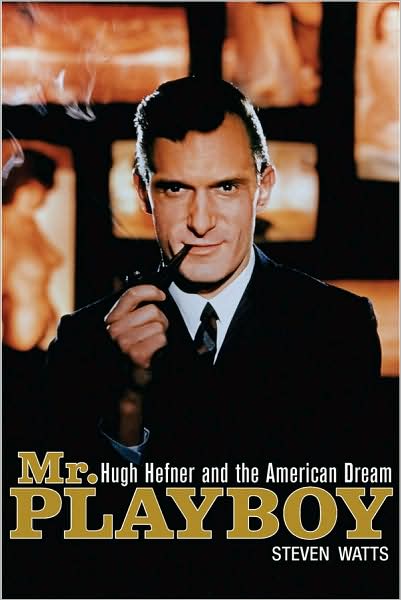
Mr. Playboy: Hugh Hefner and the American Dream, by Steven Watts, was worth all of my two and a half weeks. I learned a lot about Hefner, and the magazine, and the institution (or empire!) that is Playboy Entertainment, Incorporated. I also learned a lot about our nation’s history and cultural changes. I ended up feeling that Watts did treat Hefner sympathetically; he seems to respect Hefner’s place in our history, as a leader of a number of changes we’ve undergone. The conclusion of the books seems to me to be that Hefner was a good guy at heart, who bumbled into some mistakes, but wanted the best for his family, his company, and his country; he had some serious flaws (self-centeredness for sure, and a tendency towards a double standard betwixt the genders) but also learned and grew as a person.

I feel pretty well convinced that he is not a sexist. He put women on equal standing consistently, and before the country did. But of course his relationship with feminism and women’s rights has always been complicated. There are different ways to interpret the beautiful nudes he favors. Are women empowered by being able to show themselves as fully sexual beings, and make their own livings and their own lives? Or does he objectify them? (The argument presented by some “equity feminists” in this book, which I think Watts is sympathetic to, is that men view women as sexual objects, as women view men as sexual objects; the key is not to think that anyone is ONLY a sexual object. It’s a part of all of our identities. It’s an interesting argument.)

I can’t say that Watts gave an entirely fair and objective portrait, but I think that he did criticize Hefner, and share the critics’ arguments. I finished with more or less the same impression of the man that I started with: he’s done a lot of good, some questionable, but largely good, and he’s awfully interesting, complicated, contradictory, and controversial. (and bizarre, and fantastical…) But now I have a much better understanding of my opinion. I think I agree with Watts in the end.

At any rate I found it a fascinating read, and it’s much bigger than the tale of a playboy. It is, in part, also the story of the sexual revolution, consumerism, post-war American culture, the religious right movement of the Reagan decade, gender politics, big business, censorship and free speech, AND a playboy. Hefner’s larger than himself; he really sort of IS the magazine and the company, and saw himself that way from the moment he conceptualized it.

After finishing this book I picked up the January issue of Playboy magazine to finish reading a few articles. The one on the Mexican drug cartels and widespread violence we’re hearing about in the news was pretty disturbing; it’s hard to know, amidst all the news hype, how scared to be, but the Husband and I have been wanting to vacation down south again, and I think we’re going elsewhere, just to be safe. The fiction this month was a short crime story by Walter Mosley, which was a treat. (I see that Playboy is continuing to find quality fiction, something that Watts taught me has been a priority since the beginning.) And finally, I read “The Demise of the Hollywood Tough Guy”, about old movies and the roles we don’t see any more. I think it’s a good magazine, even though the naked women are not my cup of tea. There, I’m on record.

Off to begin something new! Perhaps you’ll get a Teaser Tuesday post this afternoon.

still enjoying Mr. Playboy

It’s a bit odd to not have a new book to tell you about for this long, but Mr. Playboy is such a long one, and I’ve been fairly busy. It was fun to get some engaged responses to Saturday’s post; I was wondering if I might alarm anybody by discussing sex and gender 🙂 but you seem to be a tough bunch. (Or, the offended ones have departed quietly.) Today’s reading proceeded with the battle between Hefner/Playboy and the feminist/women’s lib movement. Watts more or less concludes that Hefner’s camp and the more extreme of the feminists were both a bit far-out in their positions; that nude pictures aren’t as significant a cause for good or evil as was claimed. I don’t know; I think pictures of naked women can be pretty degrading, but I don’t think Playboy does it in a terribly degrading manner. (By which I mean, they go for “pretty” over sordid, and include biographical details, and at least throw a bone towards the idea of these being People, not just bodies.) And most importantly, all the parties involved are consenting adults, and no one is forced to pose OR to look at the stupid pictures, so who cares?

I just wanted to share with you a quotation on this subject, from Joyce Carol Oates. Apparently she was asked by NOW (the National Organization for Women) to avoid boycott publishing in the magazine, which she had done a number of times. This is a somewhat lengthy quote but so professionally done I really do want to share. From page 248-9 of Mr. Playboy by Steven Watts:

I cannot claim to have much interest in the pictorial aspect of PLAYBOY, but I see no reason to focus upon certain pages and deliberately to neglect the very real presence of others. PLAYBOY has published exceptionally fine interviews in recent years (one of them with [feminist] Germaine Greer, who was allowed to be as frank and insulting and critical of PLAYBOY as she pleased), some important articles, and … some very interesting fiction. The stories of mine that appeared in PLAYBOY dealt with male/female conflicts – and in nearly every case, I dramatized the continuing cruelty of the myth of male superiority in such a way that any reader, male or whatever, should have felt some sympathy and understanding for women…

I have never published anything in any magazine on the basis of my agreeing, entirely, with every page of that magazine. In a democratic society, there must by avenues of communication in publications that appeal to a wide variety of people, otherwise writers with certain beliefs will be read only by people with those same beliefs, and change of growth would come to an end. PLAYBOY is astonishingly liberal, and even revolutionary in certain respects…

My personal belief is that worship of youth, flesh, and beauty of a limited nature is typically American and is fairly innocuous … [Y]our anger over PLAYBOY and its hedonistic philosophy is possibly misdirected.

Isn’t she classy? What a great rebuttal, in my opinion. I especially liked her point that diverse publications might get us all reading things that we DON’T agree with, gasp, and what a good idea that is. I’m certainly guilty of reading what I agree with, and I figure we mostly all are. I mean, obviously, what appeals to me is… what appeals to me. But reading the opponents’ position is generally a good idea – maybe you’ll learn something, maybe your mind will be expanded, maybe your mind will be changed ever so slightly, and if not, your own debate points will be strengthened by a familiarity with the opposition’s argument. I think a willingness to read different viewpoints shows intelligence and a comfort with one’s own views. That said, I’m not sure I do a lot of it. :-/ Do you? Do you read ideologies that you disagree with? Could be painful, but it might be brave.

A complicated Saturday of Database Searching and Gender Politics

My word, I don’t know where to begin. It’s been an eventful day.

First the announcement that I am a GEEK. I had the most FABULOUS time today at my first meeting of my Database Searching class today.

(geek)

This is a grad school class I’m taking through my MLS (Master’s of Library Science) alma mater, just for continuing education’s sake. I admit I had some stress about it (and its future impact on my life and free time) this week, but it was a really great way to spend a Saturday morning! I’m excited about the implications of database searching: its logic, the binary nature (of the computerized databases) and creative nature (of the human side: at indexing, and at searching), and our impact, as information professionals, on What The People In General Know. The two instructors in this course (who are both colleagues of mine, lucky me) are remarkable as a teaching team, which is a large part of what makes this course special. They have a really fun rapport: teasing, informal, bantering, intelligent, and expert in the fields of searching and librarianship as well as education. I don’t think I’ve ever seen team teaching done so effectively.

Then I spent several hours with my mother, who hemmed some pants for me (thanks mom, no I still don’t want my own sewing machine, you do a great job). We can never get enough time to catch up. I love you.

Then I came home and the Husband fried some chicken and I read a good bit in Mr. Playboy. (I’m sorry if you’ve been following this blog and waiting for me to move on to a new book. It’s almost 500 pages and I’m now halfway through.)

I still find Hugh Hefner a fascinating and contradictory figure. He’s obviously conflicted within himself; he rebelled against the norms of his youth, and thought he was doing everyone (including women) a great service in liberation. He really DID (I think) do some great services to a number of causes, including (fairly decisively) civil rights, as well as consumerism/materialism (questionable, but the US seems to have accepted this as a Good so who am I to argue), and abortion, divorce, and birth control – perhaps in service of Men Having Sex Freely, but I think he has a point that he’s liberated women somewhat as well. His assistance of women’s lib or women’s rights is a complicated question, though.

I might get a little personal here. Warning.

I was raised by two ardent feminists and children of the 70’s, and COMMUNISTS (omg) among other things. I’m proud of my father for being, still, the greatest male feminist I’ve ever known. My mother, though married (legally, not in a church) still carries her maiden name, as does my secular “god”-mother and two of my three aunts. I support them. When I married, I took the Husband’s name, not because I’m *not* a feminist, but because my path was paved by Karen, Susan, Janet, Laura, and countless of their contemporaries. Through their rebellion, they’ve freed my path to change my last name without feeling that I’ve given up my identity to this Man. (Who was, by the way, surprised that I wanted his name at all.) If I were married in the 1970’s I would have kept my name, I think. My mother and so many other role models have allowed me to complacently take my husband’s name and retain my Self.

So, I read about Gloria Steinem’s exposé in Show magazine of the Playboy clubs. I knew of this in a pop-culture sense: the famous feminist took an undercover position as a Bunny at the NYC club with the purpose of observing and reporting on the objectification of women there. Beware of coming in with a preconceived conclusion: as my Brother Gerber warns me about Barbara Ehrenreich’s Nickel and Dimed: On (Not) Getting by in America, the conclusions are tarnished by the author’s preconceptions. (I LOVED this book and agree with its conclusions, but I share Gerber’s concerns about its mass appeal.) Steinem is an admirable figure. But (says Mr. Playboy by Steven Watts, page 238 and thereabouts) her fellow Bunnies argued that they were liberated, and empowered, by their employment. If sex is power, they were paid to exercise their power, in their own ways. They made money and felt that they chose their own destinies.

I once worked at a local beer bar – which will remain nameless, but my local friends will recognize it. I’m a serious beer enthusiast and have held several beer-expert jobs, and once wrote a local column on the subject. When I served beer at this bar, I wore a plaid miniskirt, knee-high socks, and Mary Janes (later Doc Martens which were also appreciated), and I was told by a manager that “We Sell Sex” which I found very offensive (I am not a prostitute!) but was true in a way. As a tomboy, this was an interesting experience.

(or maybe more like this. librarian style?)

I think I can understand a little bit what the Bunnies meant. In a way, I felt empowered, and excited, by dressing up this way and playing a role. I made some damn good money. I got to talk about beer, over the heads of the men I served. They were impressed. It was fun and profitable and empowering. I also moved on, putting on more clothes by the time I was 24 and finding a professional career well before 30. And, I did this in the 20-oughts (what are we calling those years? 2000-2010), with all the benefits earned by my mother and her contemporaries. We still experienced, and experience, sexual harassment and objectification, but our lives today are easier than my mother’s was in ways I know I can’t imagine.

I think gender politics are extraordinarily complicated. I consider myself one of the easier women I know to understand. I will tell you what I think if you ask. I don’t play any games like saying “nothing” if you ask what’s wrong, when I’m really angry; I don’t encourage the Husband to compliment women I’m jealous of and then punish him for it; I don’t make him guess. (You poor heterosexual men; I think hetero women can be cruelly complicated.) But I’m still complicated: I want to be one of the guys (and I AM a tomboy) and I mostly keep up when we play, but don’t leave me behind and defenseless either, and I want to be a Princess sometimes, too… what’s a poor guy to do? I think that I still sympathize with Hefner. I think he did a lot of good for a number of causes. I think he objectified women, and especially in his private/personal life was rather deplorable in his relationships with women. But a lot of our admirable *public* figures were not admirable private figures; he’s one of these, but not spectacularly so. (I’m a huge admirer of Hemingway. Need I say more?) His impact on Women In Society is very complicated, and that’s all I’m willing to commit to at this time.

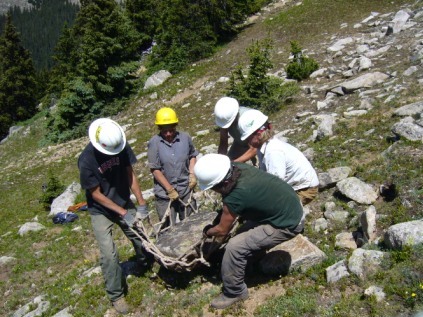
(I am not in this picture. It's a concept representation)


I award you a prize if you’ve made it through this post. Sorry for being long-winded! But I found I had a lot to say today.

I’m off to work on our local trails tomorrow. I’ll be putting on gloves and lifting chunks of sidewalk and I still want to be sexy, and the Husband loves me and will be working alongside. Chew on that. 🙂 Enjoy your Sunday.

61 Hours and Mr. Playboy

Ack! So sorry it’s taken me this long! See what a three-day weekend does for me? No, I didn’t mean it, don’t take them away. It was a GREAT three-day weekend. Yesterday was a stellar day on the mountain bike trails up north (didn’t see another soul!) followed by a sushi pig-out with the Husband, ahhhhh, lovely.

So I just had a hard time catching up today, and I’m sorry this post is so late. I do have things to tell you.

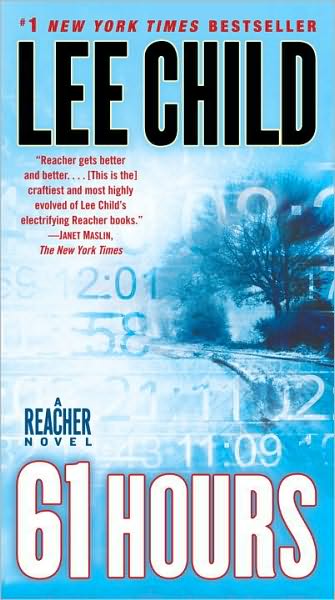
I finished Lee Child’s 61 Hours this weekend, and it was everything I want a Lee Child/Jack Reacher book to be. It was fast-paced and exciting and suspenseful, with a good mystery that I solved myself this time (although I doubted in the final moments, I confess). Reacher was a superman and I was impressed and it was great fun. BUT! I was totally dissatisfied with the ending. It was far too up-in-the-air; I need greater satisfaction than that, greater resolution. I don’t think people read page-turner head-bashing mysteries to be left up in the air; I think we like conclusion! Without spoiling, I hope, let’s say it leaves Reacher’s fate decidedly in question. Luckily I know that the next Reacher book is already out, so either he survives or is reincarnated. That saves Child from some of my frustration. But really, if he were reading this: Mr. Child, you do such a good job. Next time do go ahead and tell us what happened! Ah well, this will just get me into the next one all that quicker. Perhaps this was his aim all along.

Next I started reading Mr. Playboy: Hugh Hefner and the American Dream by Steven Watts. This one has a due date at the big library where I don’t work, so I thought I’d go ahead and get started. Also, it’s a bit of a brick – close to 600 pages, only 450ish of which is the book itself (lots of notes, not a bad sign with a biography).

And it was easy to get into! I observed in last Friday’s book beginning that it had a strong start; seemed readable (what a drag to have to force oneself to follow really dry nonfiction, you know what I’m talking about) and also seemed to approach the subject in the way I was hoping. I’m reading a Hefner biography because I find him a fascinating character: complex, and polarizing, and prolific in his influences. I’m pretty clear that I do admire him, but I know he’s complicated and suspect that not everything about him is admirable. So, I’m looking for a biography to help me understand these complexities.

And I think I’ve found it! First of all, it does turn out to be a very readable book. I sat down and got through 125ish pages in one sitting, which means that by the second sitting I’m more than a third of the way through this brick. That’s an endorsement. I also appreciate Watts’ approach; he’s working to place Hefner in the larger forces guiding the US and all the ways in which our culture was changing during Hefner’s youth. I’m still dealing with the early years of Playboy magazine, barely scraping 1960, so there’s plenty to come. We’re getting to know a number of the characters in his life and in the Playboy commercial empire. I find it plenty entertaining. I like learning about Hefner’s intricacies and contradictions. If you’re looking for a Hefner biography I would recommend this one so far.

It’s a beautiful day because I got up and rode my bike before work this morning. Here’s to pleasurable reading and rain-free mornings to ride. 🙂 I’ll be back more reliably to you tomorrow; til then, enjoy!

book beginnings on Friday: choices

Thanks to Katy at A Few More Pages for hosting this meme. To participate: Share the first line (or two) of the book you are currently reading on your blog or in the comments. Include the title and the author so we know what you’re reading. Then, if you feel so moved, let us know what your first impressions were based on that first line, and let us know if you liked or did not like the sentence.

I’m still working on Lee Child’s 61 Hours but I already gave you a Tuesday Teaser from it, so I’ll refrain from moving backwards to begin it. Instead I’ll give you a few choices on my possible next read.

I still have Mr. Playboy: Hugh Hefner and the American Dream, by Steven Watts, waiting for me to begin. It starts:

“Mention of Hugh Hefner instantly evokes a host of images that dance through the imagination: visions of voluptuous women and uninhibited sex, mansion parties and celebrity entertainers, grotto hot tubs and rounds beds, smoking jackets and sleek sports cars.”

This is a strong start. Nonfiction and/or biography is in danger of beginning in a dull fashion: “Hugh Hefner was born in 1926 in Chicago, Illinois, the elder of two sons born to Grace Caroline and Glenn Lucius Hefner” (thank you wikipedia for the paraphrased perfect example). Beginning instead with imagery and a straightforward reference to Hefner’s notoriety gives me a good feeling about how Watts is going to treat his subject. I like my nonfiction to be nice and readable. I am hoping for a biography that will fairly handle both the notoriety as mentioned, and his cultural rebellion, and his aid to a number of causes of social justice, without taking sides. We shall see.

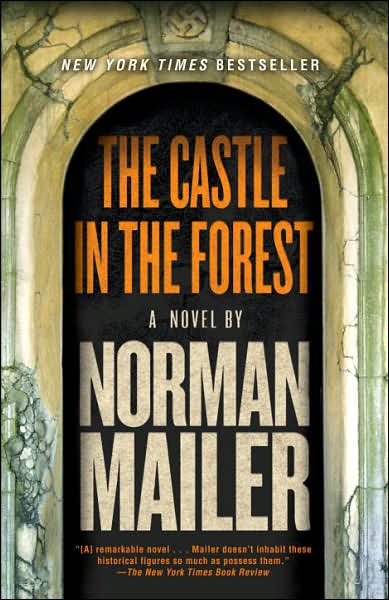
My other option is Norman Mailer’s The Castle in the Forest, which begins:

“You may call me D.T. That is short for Dieter, a German name, and D.T. will do, now that I am in America, this curious nation.”

A matter-of-fact start with a hint of suspense: Why is Dieter in America now? Why does he feel the need to rename himself? What does he find so curious about this nation? I’m excited about beginning my experience with Mailer, and the ambitious subject matter both intimidates and interests me. This book was well-received, so I’m not concerned that the illustrious Mailer will fall short; that’s not what I mean by intimidated; I mean, it’s heavy stuff.

Which book shall I dive into this weekend? Any thoughts?