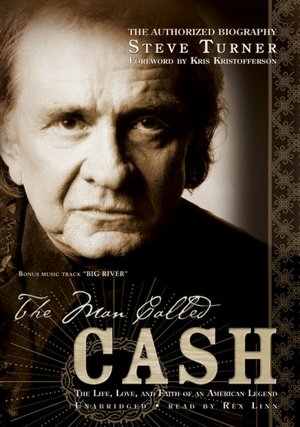
The Man Called Cash: The Life, Love, and Faith of an American Legend by Steve Turner (audio)

How could a biography of Johnny Cash not be extraordinary? (Well, the question of whether we seek out biographies of interesting people, versus interesting biographies of any old people, is another blog post.) I was excited to start this one. But warning, folks: it hits hard, and early. The first chapter is about the death of June Carter Cash after 35 years of marriage to the Man in Black, and I cried.

Johnny Cash is truly larger-than-life, as a celebrity and a public figure as well as in his music career. I’m a fan, but not a scholar of Cash’s life: prior to this book, what I knew of him was general cultural knowledge, or gleaned from his songs and the movie Walk the Line (which I enjoyed). So now I know a great deal more.

He was born in Arkansas and grew up in a town called Dyess (which Cash jokingly refers to as a socialist experiment – it was designed under FDR’s New Deal) in the midst of the Great Depression, and after high school, joined the Air Force and served in Germany; he returned to the South to marry a girl named Vivian whom he had met just weeks before shipping out. Cash and Vivian would have four daughters.

His music career came about in an interesting way. Cash had always been passionate about music, from childhood; his mother shared and inspired this love. He was not particularly gifted as a singer, and he was a mediocre guitar player who mostly learned from his Air Force buddies; but his songwriting did impress his peers from the beginning. Back in the southern US, he teamed up with a few coworkers of his brother’s, and formed Johnny Cash and the Tennessee Two, recorded his first single apparently on the strength of will alone, and… things took off from there. Names like Carl Perkins, Sam Phillips, and Elvis Presley figure in the early years of his career.

The shape of his musical career surprised me the most in the story of Cash’s life. He was always an innovator: he played an integral role in the birth of rock-n-roll; he blended styles and approached subject matter previously deemed inappropriate; and even in the final years before his death broke new ground. But I never realized how sort of unguided and hesitant those innovations were. He needed musicians, producers, and sound engineers around him to help shape his creativity. I say none of this to take away from the genius of Johnny Cash: he was unique, and his art remains unparalleled. I just hadn’t realized that he didn’t do what he did in a vacuum, that he had no great image or plan for his work, that he didn’t see the bigger picture himself. He needed help for that.

On tour in the 1960’s, Cash became close to fellow musical artist June Carter; they carried on an affair until Cash’s divorce from Vivian. During the same period, he struggled with methamphetamine addiction, and June wouldn’t marry him until he was clean, which turned out to be 1968. The drug use came and went for many years, but his marriage to June was steady. They had one child together, John Carter Cash.

I enjoyed learning about Johnny Cash. As it turned out, for me, this book’s greatest strength was its subject: rather than being an excellent biography, it detailed an excellent life. One minor gripe I have is in its handling of Cash’s religious life. Now, let it be said, Christianity played a huge role in Cash’s life: he was devout as a young man; struggled with his faith during the years of drug abuse and adultery; found a stronger religious foundation in his years of happy marriage to June; made a great deal of religious music and spoke publicly of his faith; and in many ways led a truly Christian life in terms of charity, compassion, and standing up for the disadvantaged. Handling Cash’s religious life is obligatory in any biography of the man. However, this biography approaches it from a certain perspective: it takes for granted that Christianity is good, and any strayings from the church are bad. See mentions of Billy Graham as an absolutely virtuous figure; praise of June Carter Cash for her total devotion to her husband (with religious references); and straightforward use of “light” and “dark” or “good times and bad” in reference to Cash’s more and less religious periods.

Author Steve Turner never takes on a voice of his own in his book; and I think that, if he were going to take a religious position as he has, that he should have spoken to that in his own voice. Does that make sense? To write as a Christian is not to write from a journalistically neutral place. The fact is that not all Turner’s readers are Christians; and he has done them a disservice in failing to zoom out to a neutral position from which to view his subject. I feel it would have been more honest to acknowledge a personal perspective.

The Christian leaning did not ruin this book for me; but I noticed it. And in noticing it, I was distracted from the fascinating story Turner had to tell. I guess I should have taken warning from the subtitle of the book: The Man Called Cash: The Life, Love, and Faith of an American Legend. Ah well. Silly me: I thought faith could be covered from a faith-neutral perspective. My final judgment on this question is that if you’re seeking a neutral and non-faith-based reading of Johnny Cash’s life, you should seek elsewhere. There are far too many biographies of this enormous figure to settle for one with such a bias.

Similarly, Turner’s perspective assumes that Cash was basically a good man. His mistakes, his “sins” if you will, his lapses, are all forgiven in advance. Turner turns a fundamentally uncritical eye on his subject. This bothered me far less than the Christian angle; in fact I noticed it far less, for the vital fact that I am a Cash fan who was sympathetic to the assumption that he was a force of good. But that doesn’t make it any less an error of journalistic neutrality. Again, there are different ways to skin this horse. Christians may appreciate this reading; fans may appreciate this reading. Those seeking a neutral and critical examination of Cash’s life should seek elsewhere. The Man Called Cash is a fan’s biography.

How about the narration? Rex Linn reads this book for us, and his deep voice and southern vowel sounds evoke Cash, which is pleasant. But he doesn’t do different voices for different characters at all; and some of the pauses between phrases are disjointed. I got the feeling that there may be some sloppy audio-editing involved. It was fine, but not the finest audio narration I’ve encountered, by a long shot.

I have made three criticisms here: two on the biased perspective of the author as a Christian and as a fan of Cash, and one on the audio reading. I feel these are worth noting. But I still enjoyed the book, again, mainly for the strength of Cash’s life. I recommend it with qualifications. If the issues I’ve outlined here bother you, by all means look for another Cash biographer as there are plenty! But this one does the job, too.

I’ll end with a strength. As I said, the book opens with the death of June Carter Cash in 2003. Her final weeks and those following her death are detailed finely; we get to know the Cash family as affected by losing its matriarch, and it is a beautiful and thorough and moving introduction. Its emotional impact opens the story forcefully. From here, we rewind to Cash’s origins, and then follow his life chronologically; when we come back to June’s death again, we can pass over it more quickly, having studied it earlier, and focus more on its impact on Cash himself. I found this structure very effective and powerful, and I am impressed by Turner’s planning in this regard.

Final verdict: obviously mixed. Draw your own conclusions.


Rating: 5 hit singles.

book beginnings on Friday: The Man Called Cash by Steve Turner

Thanks to Rose City Reader for hosting this meme. To participate, share the first line or two of the book you are currently reading and, if you feel so moved, let us know what your first impressions were based on that first line.

Today I’m pulling this “book beginning” from the foreword to this biography, by Kris Kristofferson:

Johnny Cash is a true American hero, who rose from a beginning as humble as Abraham Lincoln’s to become a friend and an inspiration to prisoners and presidents – respected and beloved the world over for his courage, his integrity, and his genuine love for his fellow man. Like Muhammad Ali, he was bigger than the profession that brought him to the world’s attention, and his spirit transcended the boundaries of ordinary artistic stardom. But he was wonderfully, charmingly human.

The beginning of the book itself is good (although sad); but this beginning of the foreword, by a friend of the man himself, was too good to pass up. I find it’s both personal and touching, and a grand sweeping expression of Cash, all at once.

I’m super excited about this biography, mostly because I am excited about its subject; it also comes recommended from a friend.

And what are you reading this weekend?

On a Farther Shore: The Life and Legacy of Rachel Carson by William Souder

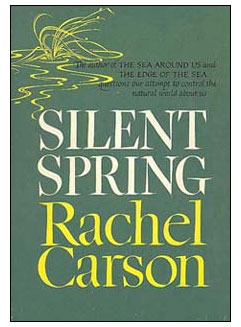
Rachel Carson was born in 1927 and by the 1950’s was the author of several bestsellers, a national hero for her lyrical, literary, scientifically accurate books about the ocean. She also published myriad magazine and newspaper articles, both as a government employee and as a freelance writer. In 1962 she published a somewhat different kind of book. Silent Spring retained the literary style for which she was well loved, but its subject – while still the natural world – took a different tone. Carson wrote about the then-widely-used pesticide DDT and its sinister effects, not just on the insects it claimed to target, but on wildlife generally including many fish and birds (hence the title) and even human life.

The immediate reaction to her book was mixed. Critical reviews were more positive than negative, but the government (to varying degrees) and the pesticide industry (predictably and totally) offered less praise. Carson came under attack as a hysterical nature faddist and Communist sympathizer, even as Silent Spring topped bestseller lists and initiated federal investigations. Today, the ecology and environmental movements credit Rachel Carson and Silent Spring with helping to establish what is now a central issue of our times.

William Souder’s new biography of Carson, published on Silent Spring‘s 50th anniversary, begins with the conjecture that Carson’s name is now “unknown to almost anyone under the age of fifty.” There are a few of us, of course (although I confess my personal poll may not constitute a random sampling), but his point is well taken: in 2012, Carson is less on our minds. But even if DDT is no longer sprayed on kids playing at the beach and the rivers we catch our fish out of, environmental issues are among the most pressing of our day. (I am thinking of climate change, overpopulation, water tables, land use, urban sprawl, species extinction…)

That’s the argument for Carson as a biographer’s subject. Now, how did Souder do? As observed yesterday, his style is rather a traditional one. Souder himself does not enter into the story as a character; he doesn’t give us his own impressions (unless you delve into the Notes at the back of the book, on which more is coming in a later post). I am a fan of the newer style of “creative nonfiction” exemplified most recently at pagesofjulia by Soundings, but that doesn’t mean the straightforward sort of biography is necessarily dry, either.

Souder brings his subject to life. His plentiful research (again see those Notes) clearly and exhaustively outlines Carson’s background and personality, and enigmas. For instance, he notes the weekend in college when she went one two dates with a boy from another school, and then as far as we can tell, never dated again. He writes eloquently of her strange single-mindedness, for example in reading Henry Williamson for his nature writing (which she loved) while totally ignoring his frank Nazi sympathies.

I will mention one angle that I noted as absent: there is nothing in Souder’s book about Carson suffering for her sex in the field of science. This seemed like a natural obstacle for her to have faced as a science writer in the 1950’s and 1960’s, and I wonder at its absence, particularly in comparison to Soundings, where Tharp’s professional limitations as a woman are one of the central issues. Did Carson not feel that she was held back? Did Souder miss something? His work feels thorough. I am hesitant to think he missed such an important angle, but it makes me wonder. There are a few references by her contemporaries to her status as a “spinster,” but even these don’t feel particularly biting. And apparently her critics entirely missed the lesbian question. Carson had a very close female friend for the final 10-12 years of her life with whom she exchanged ardent letters. Whether they had a sexual relationship is not known, although Souder makes the case that it’s unlikely; but that’s irrelevant in looking for contemporary criticism of her for it. It seems like such an obvious way for her detractors to attack her. I just wonder.

Despite my questions about the role sexism might have played in Carson’s career, this biography feels well-researched, thoughtful, and finely wrought. It can also serve as a fairly good quick introduction to the history of ecology, environmentalism, and nature writing: Aldo Leopold, John Muir, and Teddy Roosevelt all get put into context. In fact, context is one of its strengths (again, see yesterday’s post). I feel like I know Carson much better now, which is of course what I was looking for, but it was also an enjoyable read. I recommend On a Farther Shore, because Rachel Carson is every bit as relevant today as ever.


Rating: 7 birds’ eggs.

biographies of parallel lives: Rachel Carson and Marie Tharp; and beyond

Remember when I raved about Soundings, the biography of the woman who mapped the ocean floor? I was enchanted in part by the style in which author Hali Felt evoked her subject, Marie Tharp, as a personality as well as a historical figure. I was also fascinated by the unique persona of Tharp herself, and her role as a woman in science in the 1940’s, 50’s, and 60’s.

And now I’m very pleased to have picked up a new biography entitled On a Farther Shore, by William Souder, about Rachel Carson, for the 50th anniversary of the publication of her groundbreaking book. Silent Spring exposed the tragic truth, that the widely used pesticide DDT was killing not only bugs, but birds and myriad other wildlife, and even humans. Carson is credited with playing a major role in the birth of the environmentalist movement.

These two biographies employ very different styles. Felt is a visible character in the story she tells, of Tharp’s life through the lens of Felt’s research experience, while Souder’s work so far tracks like a traditional biography, with the author invisible. But their subjects share a few obvious similarities. Both were women on the margins of scientific communities that weren’t entirely prepared to let them in, and they were more or less contemporaries (Tharp was born 13 years later than Carson). Both challenged the gender barrier and accepted understandings of their fields. I recognized these parallels when I began reading On a Farther Shore.

But I wasn’t prepared for the confluences and coincidences that came fast and thick in the opening chapters. (I’m only about 50 pages in, so this is far from a final review of Souder’s work. Although I do like it so far!) For one thing, forgive my ignorance: I knew about Silent Spring (I read it when I was a kid), but had not known that prior to that most famous of her books, Carson had been a well-loved and bestselling author of literary writings about the ocean. So, number one: both women were fascinated with the sea. And then came a comparison of Silent Spring, with its unprecedented exposure of an industry that would later be legislated and regulated largely because of the book itself, to one of my all time favorites: Upton Sinclair’s The Jungle. Next I learned that Carson grew up scarcely an hour’s drive away from where Edward Abbey would grow up 20 years her junior. That is a hell of a coincidence.

As I joyfully made these connections (which I know will continue, because our world is all interconnected), I mused. I remember feeling, in middle school, even in high school, that certain subjects were “work,” were chores, weren’t fun, didn’t feel like they were teaching me things I’d need to know or care to know later in life. I liked English but had less use for history. And I also remember when this changed for me, and when learning for its own sake became something I felt passionately about. The light-bulb moment was related to the interconnectedness of all things. That history, biology, political science, and literature were all the same story; that nothing happens in a vacuum, just as Gertrude Stein, mentor and friend to my main man Ernest Hemingway, was a student at the Marine Biological Laboratory in Woods Hole, Massachusetts just a few decades ahead of Rachel Carson. I don’t know about the rest of you, but learning that the world is interdisciplinary and that contemporary figureheads from a variety of textbooks lived in the same world – that Einstein’s life work and philosophy was deeply influenced by his observation of German militarism culminating in Hitler’s rise to power, that the reclusive Harper Lee and the effervescent Truman Capote were buddies, that Mark Twain and the much-younger Helen Keller were close – has been the turning point for me in appreciating so much more reading and learning than I did even 10 years ago.

Recognizing these connections has led to myriad new directions in my own reading. Some of them have been in fiction (I’ve read Gertrude Stein because of her relationship with Hemingway), and many have been nonfiction. In general, I would definitely credit this larger observation with my ever-growing appreciation of nonfiction. I’m sometimes saddened to hear from people who don’t like nonfiction, because they’re missing so much. I suspect they just haven’t met the right style of nonfiction yet; but maybe, too, they haven’t had that light-bulb moment that did it for me.

Does anybody else share this feeling that everything being connected make the world a fascinating place? Has it influenced your reading habits?

Einstein: His Life and Universe by Walter Isaacson (audio)

A.Word.A.Day recently sent me, among other valuable tidbits, a quotation that perfectly describes Einstein (thought I, being in the middle of his biography):

A harmless hilarity and a buoyant cheerfulness are not infrequent concomitants of genius; and we are never more deceived than when we mistake gravity for greatness, solemnity for science, and pomposity for erudition.– Charles Caleb Colton; Lacon: or Many Things in Few Words; Longmans; 1837. Quoted by A.Word.A.Day, August 31, 2012.

And here’s the poster child for that very thought: hilarity and cheerfulness (among other qualities) combined in one of the geniuses of the modern era.

Walter Isaacson is a well-respected biographer. (His other works include biographies of Kissinger, Ben Franklin, and most recently Steve Jobs.) This well-regarded biography of Einstein appears to be very well-researched and thorough, and I thought the audio narration by Edward Herrmann was well-done and well-suited.

What I liked best about this book was its characterization of Einstein, the charmingly rumpled, distracted, unique genius with the twinkling eyes and the mad wild hair who rode a bicycle. There were times I didn’t like Einstein, too: in the course of separating from and later divorcing his wife, he didn’t treat his two sons very well. It felt like he expected them to behave like little adults – or perhaps more accurately, he behaved like a child. He wasn’t entirely sweet to his wife, either, which is of course common in divorces but no less charming for that. But Isaacson’s portrayal of of Einstein’s mental style was lovely to read: how he thought in pictures, in objects in action, in “thought experiments” and not in words; the way his aversion to authority and accepted truths freed him to think such outlandish thoughts that he revolutionized science; these are the singularities that made Einstein Einstein, and that was an important lesson to take away. Also, it was fun to read the story of his life with the advantage of hindsight – that this is Einstein we’re talking about here – and see all the rejections and belittlings he underwent, and sort of chortle at the irony. (Correction of a well-known myth: Einstein did not, in fact, fail math. He did rather well. However, there was that teacher that said he would “never amount to much.” That part is true.)

I observe that my decision not to pursue a subject like theoretical physics was a very, very good decision. I can follow all sorts of things, grasp all sorts of concepts, but not this. My eyes glazed over within moments of the science-talk beginning (dangerous for driving). I positively cannot “get” Einstein, and I’m comfortable with that. But it made this book a little more difficult than I would have liked, because the book is rather science-heavy. I think there are different ways to do this job, of writing a biography of a scientific figure, or other science-based nonfiction. I think of Soundings or even The Immortal Life of Henrietta Lacks, both lovely narrative works about science and people that treated the people more heavily, and in more depth, than they did the science. The science was there, present (necessarily), and well explained, made accessible by explanation, but the people shown brighter. That worked for me. Here, in Einstein, it was Einstein himself that I was most interested in, and I liked it when his personality, his public image, his family dealings, etc. were at the forefront. Isaacson lost me entirely and quickly every time he wandered into physics and relativity. One way is not better or worse, but different; and it’s clear which style I prefer for my scientific nonfiction.

That said, the man played a starring role, and I believe Isaacson’s intention was to put in the science needed to place Einstein in context. I learned a lot about Einstein, I was entertained by his foibles and eccentricities (the not wearing of the socks! oh my), I was charmed. I was provoked to contemplate some of the troubling moments in world history that Einstein witnessed and participated in (Germany in the 1930’s, fascism, McCarthyism, the atom bomb, on and on). In a nutshell, Isaacson captures well the humanity of Einstein: his charm, his flaws, and his genius, all in one. This biography is moving, entertaining, and very informative. If you’re so inclined, you might even learn some physics from it. 🙂 I can see why Isaacson’s stock as a biographer is high, and I forgive him for baffling me here and there.


Rating: 7 quanta.

Soundings: The Story of the Remarkable Woman Who Mapped the Ocean Floor by Hali Felt

I’m so glad I picked this book up (and bought it for the library where I work). It sounded like just the sort of thing I appreciate: a biography of a little-known historical figure who made an important contribution to the world as we know it but was herself forgotten. In this case, the “remarkable woman” of the subtitle is Marie Tharp, whose meticulous study and cartography of the ocean floor established the concept of plate tectonics that science now recognizes as fact, but was at best a blasphemous and ridiculous notion before Tharp came along. Her achievements, however, were minimized by a scientific culture in which women did not belong. This biography is additionally appealing to me for its mood: author Hali Felt takes a whimsical, dreamy, almost fanciful tone at times. She describes her own attraction to Tharp’s story (born in part of Felt’s mother’s, and her own, fascination with maps) and the relationship she felt to her subject. She dreams of Tharp coming to her to explain the mysterious and unspoken parts of her life. This book is nonfiction, but it’s honest, personally related, and warm.

There is also an enigmatic love story of sorts hiding within Soundings: Tharp’s career and life were both tied to a man named Bruce Heezen. Heezen was her coworker, then her technical superior; but they shared a partnership in work, in science, in discovery, and apparently in all things. It is known that they were a couple, although they never married and the details of this side of their relationship are very few.

Felt follows Tharp from her childhood with a science-minded father she adored, through her education in English, music, geology, and mathematics, and to her first job in the oil & gas industry (oh, how familiar to this Texas girl). But she was held back: this was the 1940’s, and women in science were mostly expected to make copies, compute numbers, and brew coffee. Eventually Tharp found her way to New York, to Columbia University and the Lamont Geological Observatory. This is where she would meet and work with Heezen and quietly make history.

The science in this book is very friendly and accessible to a general reading public; the story that Felt set out to tell is more that of a woman’s life and accomplishments despite the limitations of her society, than that of tectonic plates per se. For that matter, Felt shows that it was Marie’s combined backgrounds in art as well as science that made her perfectly suited to play the role she did in history. Her meticulous re-checkings of data and attention to detail were indispensable – but so was her interest in visually representing the data available in a way that would show the general public (not just academics) what she’d discovered. So her achievement was artistic as well as scientific. Soundings does make the science side clear, but doesn’t dwell, and is never dry. Rather, Marie Tharp comes to life: she is a precocious child; an ambitious, able, frustrated student; a dedicated scientist; a life partner; an eccentric aging woman caught up in her own past, campaigning to honor and preserve the legacy of her other half.

Hali Felt was honest about the role she plays in the story she relates. She begins in her Introduction by briefly describing her own attraction to maps, and then follows a chronological format, beginning with Tharp’s childhood and following her life, and eventually her death. And then Felt returns to the story: her discovery of Marie Tharp’s existence, her interest, her decision to follow that interest, her research, her relationships with the living descendents of Tharp and Heezen’s world (the “Tharpophiles”), and in the Acknowledgements at the end, she even hints at the process by which she came to write and publish this book. I found all of these Felt-related details interesting too.

In a word, this is a lovely biography, and the style and tone of it may be my favorite part.


Rating: 9 double-checkings of data.

A Difficult Woman: The Challenging Life and Times of Lillian Hellman by Alice Kessler-Harris

Lillian Hellman’s paradoxical, powerful personality set against the backdrop of a turbulent century.

Lillian Hellman (1905-1984) was many things: a successful playwright, screenwriter and memoirist; a suspected Communist (maligned as an unrepentant Stalinist) who stood up against political intimidation in the 1950s; a labor organizer and civil rights activist; partner to Dashiell Hammett for more than 30 years; a woman criticized for being manlike and grasping, but simultaneously overly feminine and stylish; a New Orleans-born resident of New York, Hollywood and Martha’s Vineyard who persisted in calling herself a Southerner. She was respected for her literary contributions, hailed as a hero by a feminist movement that she largely rejected, praised and excoriated for her politics and, ultimately, vilified for what came to be seen as the outrageous mendacity of her memoirs. It would be difficult to locate a biographical subject more contradictory or complex. In A Difficult Woman, Alice Kessler-Harris makes an excellent case that Hellman represents the complexities and changing mores of the 20th century.

The contradictions in her personality and politics are brought into relief by her written work–including plays still popular in repertory theater today–which always included strong moral statements. The concepts of truth and deception, or betrayal and loyalty, play large roles in her work and this insightful biography, rich with context, shows how they were also themes that defined her life. Not an apologia, but an exploration of nuances, A Difficult Woman gives us an infinitely more complex Hellman than the popular image that has survived her.


This review originally ran in the May 1, 2012 issue of Shelf Awareness for Readers. To subscribe, click here, and you’ll receive two issues per week of book reviews and other bookish fun!


Rating: 9 ambiguities.

Teaser Tuesdays: A Queer and Pleasant Danger by Kate Bornstein

Teaser Tuesdays is a weekly bookish meme, hosted by MizB of Should Be Reading. Anyone can play along! Just open your current read to a random page and share a few sentences. Be careful not to include spoilers!

A Queer and Pleasant Danger: the true story of a nice Jewish boy who joins the Church of Scientology and leaves twelve years later to become the lovely lady she is today. And that lengthy title-and-subtitle is the tamest part of the whole book.

Today’s teaser:

“Paul, Mildred, I have news for you. Albert is an artist.”

My mother gasped. My father muttered, “Oh, crap.”

I was thrilled with the diagnosis.

That, of course, was just the beginning for Albert and his parents Paul and Mildred. This is a wild, outrageous book, and I highly recommend it, but it may not be for the faint of heart.

This quotation comes from an uncorrected advance proof and is subject to change.

Edward Abbey: A Life by James M. Cahalan

I appreciated Calahan’s biography of Ed Abbey. I found it the perfect next step in my increasing fascination of the man’s work, which (for me at least) is also necessarily a fascination with the man. As I’ve mused before, there is too much of the man in the work for one to possibly extricate them. And this book was just the thing for me. I learned a lot about Abbey, some of which you can find in that earlier post. Calahan’s angle on Abbey, if you will, seems to be the contradictions of the man – an angle I’m always ready to appreciate. In this case, he (Calahan) speaks often to the public figure Abbey created for himself and the often distinct private, “real” Abbey. And then there are those controversial aspects…

Abbey’s stance on immigration, for example. The public maligned him for being a racist after he spoke (and wrote) against allowing immigrants in from Mexico, which was perhaps an understandable response, but an overly simplistic one. In a nutshell, Abbey conceived his anti-immigration stance as an issue of economics, not of race; he stressed that he was against immigration of any kind of people from anywhere, including the internal migrations within the United States (easterners moving into his beloved west), which he conceded he could do nothing about. He had lots of Hispanic, Mexican, and Native American friends, and liked to visit Mexico. He also, though, wrote and spoke of the unpleasantness of Mexico and Latin America and stated that he didn’t want to live there (and neither, he pointed out, did most Latin Americans – meaning those immigrated to the US). I understand this stance perfectly and see how it could be a position without consideration of race: more people are bad for these precious and shrinking wild open spaces, regardless of their race. But it’s easy to see where he got beat up for this position, too, especially considering his reluctance to back down from controversy, to apologize or restate his position. Rather, he was inclined to bait his critics by making farcically backwards remarks.

Similarly, Abbey’s relationship with women was a complicated one. He repeatedly stated that they were the “better” sex, that he respected women and certainly that he loved them (as evidenced, in some sense, by his five wives and many extramarital relationships!). But there was that ludicrous letter he wrote to “Mizz” magazine, and all the cheating he did on his wives. He was supportive and helpful in the professional writing careers of a number of serious women (Terry Tempest Williams comes to mind, as I recently read her most recent work – the review should be out any time now). But even in his fifth and by far most successful marriage, he was firm in his wish for his wife to be a full-time mother to their children. Misogynist? Ah, I don’t quite think so; but his relationship with women was complicated.

And another example: Abbey repeatedly denied that he was a naturalist. I’ll let Cahalan himself speak here.

It is true that Abbey was not a naturalist in the scientific way that Rachel Carson or even Annie Dillard was qualified to be; he got mediocre grades in subjects such as zoology. Wendell Berry was right (and Nancy Abbey agreed) that Abbey’s real subject was himself – that as an author he was primarily an “autobiographer” more than an “environmentalist.” Yet Desert Solitaire and The Monkey Wrench Gang activated more than a generation’s worth of activists toward a radical new brand of direct action in defense of wilderness. While telling the story of himself and his friends, Abbey managed to change the world.

I share these observations on Abbey just to share some of what I’m learning about him. But back to the book review:

I like that Cahalan has a coherent approach to Abbey’s life here: the contradictory man, the public vs. private figure, the questions his life raises. Cahalan muses on these questions without authoritatively answering them, which is appropriate. These are questions without definitive answers. It is a sensitive biography, appears well-researched, and gave me just what I was looking for. I leave it thoughtful and curious about still more Abbey, but thoroughly satisfied (for now) in terms of biography. I recommend this work, and I still recommend all the Abbey you can find!


Rating: 7 women younger than the last.

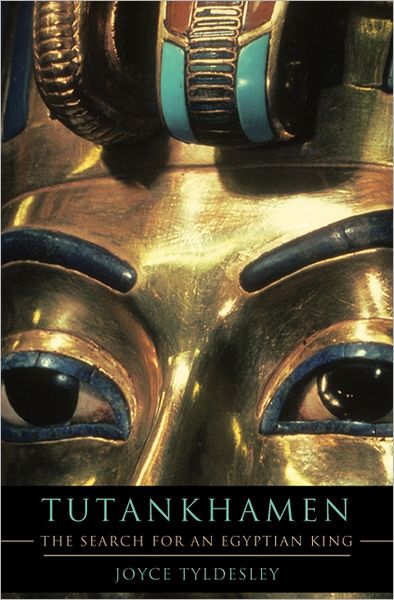
Tutankhamen: The Search for an Egyptian King by Joyce Tyldesley

A new biography of a very old figure still shrouded in mystery.


Joyce Tyldesley (Cleopatra: Last Queen of Egypt) takes on the life of King Tutankhamen, examining the many questions still surrounding his life and the archeology of his tomb, whose discovery in 1922 caused a wave of what Tyldesley calls “Tut-mania” across the Western world. As a king, Tutankhamen came to rule very young, yet managed to effect great change during his short reign–but was then removed from written records by his successors, an act with great consequence in ancient Egyptian theology. His tomb is unusual: relatively undisturbed, and as Tyldesley retraces, surrounded by mystery and myth.

The first, larger part of Tutankhamen is devoted to the archeological record and what it tells us about Tutankhamen and some of his relatives. Tyldesley discusses and critiques various theories (for example, regarding his biological parents) and acknowledges that little is known for certain. Next, she examines Tutankhamen’s legacy in our world–most notably, the rampant myths and legends about the curse on his tomb, which spread as quickly as the news of its discovery. Finally, for those interested in a clear storyline, she outlines her best approximation of Tutankhamen’s life story (while noting that it is only a well-educated theory).

Tutankhamen succeeds in making this ancient monarch accessible to the average reader. Beware of developing an appetite for Egyptology upon reading!


This review originally ran in the March 13, 2012 issue of Shelf Awareness for Readers. To subscribe, click here, and you’ll receive two issues per week of book reviews and other bookish fun!


Rating: 5 mummies.