Maximum Shelf author interview: Erik Larson

Following yesterday’s review of Dead Wake, here’s Erik Larson: Ideas and Process.


Erik Larson is the author of four national bestsellers: In the Garden of Beasts, Thunderstruck, The Devil in the White City and Isaac’s Storm, which have collectively sold more than 5.5 million copies. His books have been published in 17 countries. Larson began his writing career as a journalist, and now gets to travel the world researching his works of nonfiction. [You can read a longer and surprisingly hilarious bio written by the man himself here.]

larsonTo begin, my mother made me promise I’d ask: how do you choose the diverse subjects of your books? What makes for a compelling story that you feel driven to tell? Why the Lusitania?

Well, you tell your mother it’s none of her business. Actually, no, please tell her that, really, I have no idea. There’s more truth to that than I care to admit. The hunt for each book idea is a hard one for me, and typically takes about a year. To write the kind of history I write, I need to find real-life events that lend themselves to being told as stories–true stories–with beginnings, middles and ends. There has to be a clear, ascending narrative arc, and there has to be a rich enough trove of archival materials to make the story and characters come alive without massaging the facts. And, it has to be something I want to spend the next few years working on. I often think finding that next idea is like finding a spouse–you have to kiss a lot of frogs before you find one that kisses back.

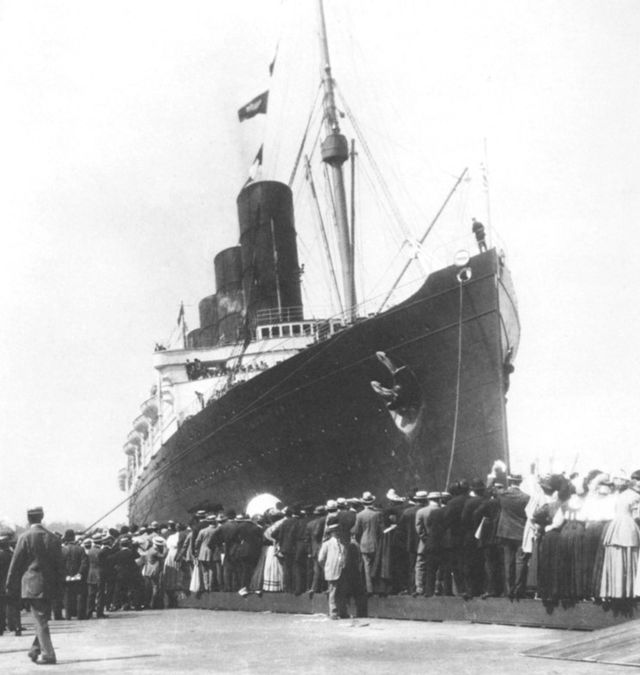
What drove me to write about the Lusitania was the potential it offered for nonfiction story-telling–for crafting a narrative full of real-life suspense. A nonfiction maritime thriller. The archival base was extraordinarily rich, full of elements that I felt no one else had adequately mined–all the things I love to work with: telegrams, diaries, love letters, secret documents, even the German submarine commander’s hour-by-hour war log. It doesn’t get any better than that. Whether I succeeded, of course, is for readers to decide.

Aside from the obvious choices to concentrate on Captain Turner and Kapitänleutnant Schwieger, how did you choose the individual stories to follow? Were they (Charles Lauriat, Dwight Harris, Theodate Pope, etc.) simply the ones who left behind the most documentation?

Exactly! The three you cite all left vivid, detailed accounts, especially Lauriat, who wrote a book on the subject, and in addition left a broad and deep documentary trail. I also liked the fact that Lauriat was a famous bookseller. How nice that a time once existed when a bookseller could become famous and travel in first class on Cunard ships and be recognized on sight. As for Pope, I found her backstory particularly compelling: her depression, her interest in the supernatural, the fact she was a pioneering female architect and pal of Henry James and that she was in that cadre of American women who were first to embrace their identity as feminists, back when the term itself was brand new.

You state in your “Note to Readers” that you are very careful to stick to the facts, with no embellishment. And yet your narrative is incredibly lively. Please explain the importance of that rule for you–the integrity of pure fact–and how you make the bare truth so gripping.

They key lies in detail. There are no shortcuts–you have to do the necessary digging to find the bits and pieces that will ignite the reader’s imagination. It’s the reader, I’m convinced, who does the animating of my narratives. I just present the details necessary to allow that to happen. For example, I often have people tell me that I must have made some things up, because I have actual dialogue in my books. But in fact, if there is dialogue, it’s pulled directly from some actual historical document, like a letter, or memoir, or newspaper interview. More often than not, however, what they point to isn’t even dialogue–it just seems to be dialogue, and reads that way in their imagination. Which is wonderful. The human mind loves to connect dots and finish sentences and make disparate bits of information seem like a coherent whole.

lusitaniaWhat do your processes of research and writing look like, and are they in fact two separate processes? What’s the most enjoyable part for you?

They are two separate processes that merge in the middle. Ideally I’d like to have all my research done before I start to write, but that never happens. Invariably I reach a point where the book just has to come out. It’s like how my wife describes pregnancy: get this baby out of my body, NOW. Passages come to mind, and I start writing. At first I’ll just write them in my journal–I keep a journal for each book–then I’ll start writing things in a computer file called “Passages.” Then I enter my page-a-day mode, where I get up early, and write a single page before breakfast, and then return to my research for the rest of the day. Pretty soon the writing supplants the research almost entirely–although the research really never ends, because you always end up having to check things. What did early NYC street lamps look like? What was the weather like on a particular day? What were people reading in the newspapers in New York on the day the Lusitania departed? That kind of thing.

How do you keep so many characters and events in such a complex world history straight?

The most powerful tool is chronology. Before I start to write, I build a chronology that contains every worthwhile fact that I’ve mined from archives, books and whatever, with each item coded in such a way that I can readily find the source document in my files. This chronology becomes a de facto outline, with various events clumping at various points, and with each character’s role clearly defined. Using this as a spine, I craft the first draft. Then, I lay the whole thing out on the floor of our bedroom and, using a scissors and tape, I literally cut everything up and move it around, hunting for the most natural structure, while hoping that no one will open a window at the wrong moment. Once my dear departed dog, Molly, walked across the manuscript for Thunderstruck. Luckily only one small passage was displaced–it wound up on the balcony outside my bedroom.

What are you or will you be working on next?

I’m exploring a possible idea. This is early for me, so, being a pessimist, I’m pretty sure the idea won’t pan out. But I’m writing a test proposal. I won’t say what the subject is, because I never talk about works in progress until they’re done. It’s very annoying for my friends and family, though my wife and daughters all know early on. The proposal is a draft of what I would eventually send my agent, and which he in turn would send to my publisher, and which ideally my publisher would love so much that she would spend gobs of money to acquire it. Doing a proposal is a good test of an idea’s strength. If you get through the process–writing an opening chapter, an overall description and a chapter outline, maybe 80 to 100 pages in all–you have a pretty good sense that it’s a viable idea and that halfway through you won’t hang yourself from boredom.


This interview originally ran on February 9, 2015 as a Shelf Awareness special issue. To subscribe, click here, and you’ll receive two issues per week of book reviews and other bookish fun!

West of Sunset by Stewart O’Nan

F. Scott Fitzgerald’s final, less glorious years in Hollywood, fictionalized with nuance and grace.

sunset

“A poor boy from a rich neighborhood, a scholarship kid at boarding school, a Midwesterner in the East, an Easterner out West,” F. Scott Fitzgerald “knew better than anyone how to live in an imaginary world.” In West of Sunset, Stewart O’Nan (The Odds) fictionalizes Fitzgerald’s final four years in the late ’30s, spent in Hollywood scraping by, writing and editing screenplays while Zelda rides out her own ups and downs at Highland Hospital. Their years of wealth, fame and adventure are behind them, and though he lives modestly by Hollywood standards, Scott’s finances are increasingly desperate, with Zelda’s hospital bills to pay, their daughter Scottie’s tuition and his own living expenses.

Between pills to sleep and pills to wake up, Scott struggles to hide his heavy drinking from his employers and eventually falls in love. He continues to visit Zelda as her mental illness persists and sees Scottie on holidays, while his girlfriend, Sheilah Graham, barely tolerates his drinking (not to mention his marriage). In these years, Fitzgerald begins but does not finish The Last Tycoon, his last manuscript.

O’Nan brilliantly, sensitively portrays Fitzgerald’s internal drama with a tone of wry wit and doom. The nuances of Zelda’s character are apt and appropriate, and appearances by Dorothy Parker, Hemingway and Humphrey Bogart add color and humor. O’Nan’s characterization and dialogue are spot-on, and his choice of the less-glamorous years of his subject’s life yields a beautiful, elegiac novel worthy of its model.


This review originally ran in the January 13, 2015 issue of Shelf Awareness for Readers. To subscribe, click here, and you’ll receive two issues per week of book reviews and other bookish fun!


Rating: 8 Cokes.

MetaMaus: A Look Inside a Modern Classic, Maus by Art Spiegelman

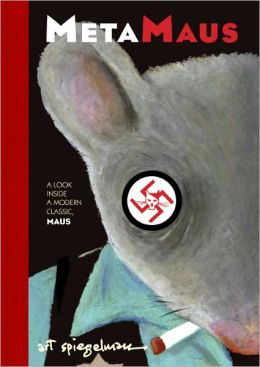
Begin with Maus I and Maus II. And then move on to MetaMaus, filled with images from the book and discussions with Art, and his wife and two children, about what it all means, his process, his motivations, and the impact these powerful little books have had on all of them.
metamaus
At the outset, let me say, holy magnificent book. MetaMaus asks the questions (according to its back cover), why the Holocaust? why mice? why comics? And of course, the Holocaust is the easiest to answer, to me: the Holocaust because it was what he knew (“write what you know”), except that he didn’t know the Holocaust. He emphasizes that. (And I confess it surprised me, that a survivors’ son could have grown up with such a limited knowledge of what happened so recently, and so centrally to his own personal and family history. I had a fairly decent, basic grasp of the Holocaust in grade school. But then, I grew up a full generation after the author did. Clearly a lot had changed.) Still, it was what arced over him, what oppressed him or at least leaned against him; what else was there? In fact, my surprise was that it wasn’t that obvious – that he wasn’t driven to write (draw) about the Holocaust, at least not that he knew: “What consciously motivated me was the impulse of wanting to do a long comic that needed a bookmark.” He needed to make a full-length comic, as it turned out. Who knew. I am baffled by the visual arts, at least as much as I am stimulated and inspired by the written/verbal ones; most of the visual artistry of Maus escaped me before reading this book, which is part of why I found it so wonderful. Unlike many monographs meant to elucidate the visual arts for us plebeians, this really brought it home to me, exposed so much more, increased my understanding & appreciation.

But the real question I was here for: why mice? Honestly, this was my chief concern (followed by: why cats, why pigs, why dogs…) and all those questions are answered, happily. And of course there are only more questions behind them, much discussion of the imagery and symbolism that belongs to animals in different cultures, for example, and some of that taking-back of the derogatory where Jews were called rats by the Nazis, for example. MetaMaus follows these paths, and lets us get to know the author. I found it very satisfying, after getting to know a version of him and feel him so strongly. We should always be so lucky.

And then the CD! This book is accompanied by a CD with complete images of both of the books; over 7,000 early sketches & studies & the like; video and audio files including recordings of interviews with Vladek; and some of the pamphlets off his mother’s bookshelf that Art used in his research. I think there were about 4 hours of Vladek interviews – the man’s actual voice! – and an hour-long home movie made by Art and Francoise on a visit to Auschwitz. Holy smokes, the CD is chock-full of goodies. I did not exhaustively study it, I confess. There was just so much; and I felt so well-served by the reading of the book itself. I did enjoy listening to Vladek’s voice, though: it brought everything to life, and was an interesting counterpoint to the relative unreality of comics.

Of course another theme of the book is the power and faultiness of memory. I love memoir, and I love that memoir almost inevitably has to confront this obstacle: the ‘mem’ in memoir is unavoidably problematic, at least enough to raise questions. In Maus‘s case, the clearest example comes when Vladek describes leaving Auschwitz and denies that there was an orchestra playing at the gates. As Art has documented, there is substantial support for the existence of this orchestra: there are photographs, and there are eyewitnesses among the Nazis, the Jews, and the musicians. But Vladek is sure there was no orchestra. What to do? I love Art’s discussion of the problem: how he could have represented Vladek’s version, or the official one, or left the whole question out of his story; but he instead elected to show the actual question. There is a panel in which there is an orchestra – followed by Vladek’s denial of the orchestra – followed by a panel in which the orchestra is no longer present, except that if you look closely, you can see the tips and shadows of their presence behind the marching prisoners. This is really something. Of course, when I read the comic, I didn’t catch that visual shadow, just the discussion of the question.

I learned a lot of intriguing details. Who knew the size of these (quite small) comics was so important to Spiegelman? Or more surprising, that he drew the originals in that same small size? And the details about the different reactions to the books in different countries (it’s been translated into some thirty languages) were fascinating to me. I had innumerable little details of the comics pointed out to me and elucidated – things I would never, in 100 readings, have figured out for myself, but value greatly once they were explained to me. But I most enjoyed the feeling of greater intimacy with a very talented, and unique artist. And I remain boggled by the dual artistry of the composition of this book as narrative, next to the visual artistry of the comic aspect. Art Spiegelman is a special man. The two Maus books were special, and should be required reading (for, I don’t know, everyone). And then if you like those – do yourself a favor and immerse yourself in this behind-the-scenes look. If you appreciate art (in any format) and are interested in process, also check this one out. And for those of you who prefer other formats than plain old reading, the CD has a great deal to offer in formats all over the map. Major win!

Additionally, I had to mark many passages for further consideration, so many philosophies I found valuable…

On communication vs. High Arts:

I do like to communicate clearly. It’s a pleasure. And as soon as one is involved with communication, one’s already suspect in the High Arts. A lot of what happens in the more rarefied precincts of art is that the word “communication” gets replaced by “communion,” and one is involved in a kind of religious experience with the artist as shaman. And that’s really different than, “Hey, I’ll tell you a yarn.” Or even “I’ll tell you a parable,” if you want to be didactic. And it’s always been either a skill or a deficiency that I try to make contact with with people.

I appreciate this, because I think High Arts (his phrase, but I like it) can sometimes let us down a great deal when it gets religious, or mysterious, or snooty. I’m not saying everything has to be forever perfectly literal and transparent, and I do enjoy moments of inexplicable beauty. But I think it’s exclusive and elitist to shun honest communication.

On the authenticity of his way of story-telling:

Everything drawn in the so-called past in the story that Vladek is telling is very clearly an attempt by the son to show what the father is telling. And that offered a margin within which to operate authentically. The fact that you’re told that I’m trying to show you what I understand of what Vladek is telling me is built into the fabric of the narrative itself, and allows that narrative to get told.

This reminds me of one of my favorite movies, 2 Seconds. There is an extended sequence where Lorenzo is telling Laurie the story of his professional bike racing career and how it ended. He speaks, and we see the action he is describing – but we see it as imagined by Laurie as she listens – but apparently Lorenzo can see it too, because he corrects it here and there. For example, he’s describing walking down a country road, and we see a young man doing just that, and kind of waddling on his clipless cycling shoes, with the cleats on them. And then we skip back to Lorenzo and Laurie sitting and talking, and he corrects her: “no no, we didn’t waddle, our shoes were soft leather” (I paraphrase). Skip back to the young man walking down the country road, smoothly on his smooth soles. I love love love this effect. In the same way, for example, in the question of the orchestra at Auschwitz, Spiegelman makes it clear that his father is correctly his visualization as they go. And this makes it honest and clear that he is only telling a story as told to him and as he understands it, which I appreciate deeply for its honesty.

On nihilism and ethics:

One night, we’re going down to feed the cats after one of our snooze-and-probe sessions, and he’s carrying those scraps downstairs and he says, apropos of I don’t remember what, that basically he’s a nihilist. And I ask him how this involves getting up in the middle of the night to talk to dying AIDS patients, and being so available to patients way past the point of it being good for his health, and he says something that one might take as just an off-the-cuff remark, but I found profound: “Well, I decided that behaving ethically was the most nihilistic thing I could do.” It delighted me as an idea, as a way of living one’s life.

This quotation launched a lengthy discussion for my father and I of the different meanings of ‘values,’ ‘morals’ and ‘ethics.’

On stories:

[The word ‘story’] comes from medieval Latin historia. It refers to those very early comic strips made before the invention of newsprint: the stained-glass windows that told a superhero story about that guy who could walk on water and turn it into wine. This is how in English, the word ‘story’ has come to mean both story as in stories of a building and story as a narrative. And at that point one is steered toward an architectural model for what a comic is, something very basic about comics narrative. Comics pages are structures made up of panels, sort of the way the windows in a church articulate a story. Thinking of these pages as units that have to be joined together, as if each page was some kind of building with windows init, was something that often happens overtly in Maus, and sometimes is just implicit in the DNA of the medium.

Story as architecture was a little mind-blowing to me, too. Allow these few examples to show how deeply thought-provoking I found this book. It’s a really dense, exciting experience.

So, to sum up: I found each Maus book thrilling and touching it itself. MetaMaus was equally thrilling and touching, increased the experience of both Mauses, and additionally set loose all kind of thought threads for me, that I have listed here as briefly as I could stand so as to not ramble on all day. Clearly I’m a fan. Pick up this book, and keep your notebook handy as you go.


Rating: what the hell, 10 sketches.

When Books Went to War: The Stories that Helped Us Win World War II by Molly Guptill Manning

A heartfelt history of Armed Services Edition paperback books that helped save the sanity of many GIs in World War II.

books went

Molly Guptill Manning (The Myth of Ephraim Tutt) opens When Books Went to War by documenting the horrified response in the United States to Nazi Germany’s book burnings, beginning in 1933. Bibliophiles fought back in what was characterized as a “total war” of both military might and ideas.

To supply bored, lonely troops with reading materials, librarians in the U.S. organized the Victory Book Campaign, which collected more than 10 million books. To educate the public, the Council on Books in Wartime recommended relevant, topical titles for readers at home, but it found its stride with Armed Services Editions (ASEs). These pocket-sized, lightweight paperbacks, designed for use in the field, not only provided entertainment, escape and enlightenment to American servicemen, but also revolutionized the paperback book in a market that had previously shunned it, employed struggling publishers and helped to jumpstart the publishing industry after the war. Between 1943 and 1947, more than 120 million copies of more than 1,200 fiction and nonfiction titles were printed and efficiently distributed to American soldiers in every theater.

In her moving history, Manning fervently describes the many GIs who returned from war with a love of reading they hadn’t had when they left home, wrote impassioned letters to authors and council members and attributed their college educations to books they discovered as ASEs. For military and general history buffs and lovers of books and libraries, it is difficult to imagine a more inspirational story than this celebration of reading in a time of war.


This review originally ran in the December 23, 2014 issue of Shelf Awareness for Readers. To subscribe, click here, and you’ll receive two issues per week of book reviews and other bookish fun!


Rating: 7 letters.

A Reader’s Book of Days: True Tales from the Lives and Works of Writers for Every Day of the Year by Tom Nissley

reader's book of daysOn this day in 1891, Zora Neale Hurston was born, and in 1972, John Berryman died. Also, in 1877…

Completed on this day when its author was not yet fifteen, Fast and Loose: A Novelette certainly promises illicit fun. As one reviewer noted, “The very title suggests something desperate. Who is fast? What is loose? … We prophesy 128 pages of racy trash & are glad to think we shall be wasting our time agreeably.” The reviewer, though, was none other than the author, Edith Jones, who not only wrote the book (for the enjoyment of a friend) but attached three wittily scathing reviews – “the whole thing a fiasco,” said another – mocking her own efforts. Eight years later, Miss Jones married and became Edith Wharton, but despite this precocious beginning it wasn’t until she was thirty-eight that she published her first novel, The Touchstone.

But don’t let’s start there. I implore you, begin reading Tom Nissley’s year in the life of books with his Introduction, which explains his love of dates and how he went about creating this book. (Among other things, it seems he became a little blind to everything else in the good books he was reading, in his hunt for dates.) It improved the book for me. I also liked that he prefaced his work with two quotations, from Dr. Johnson and Thomas Bernhard respectively, which praise & denigrate the practice of including chronology at all in one’s work (“most tasteless and… unintellectual procedure,” crabs Bernhard). I had also forgotten that my copy, a gift from my mother, was signed. Thanks, Mom.

The rest of the book is one-page-to-a-day of literary births, deaths, and anecdotes, covering both the real lives of literary figures as well as the chronologies of their fictional creations. Each month is preceded by recommended reading for that month, too.

As a quick reference it is fun and pleasant though not of course comprehensive (one page to a day! so not everything that ever happened on that day). I liked the month’s recommended reading and Nissley’s introduction best, because I liked his voice. I hope he’ll write more. And I hope you’ve enjoyed the days in book history series. Happy New Year!


Rating: 6 notes.

The World of Raymond Chandler: In His Own Words, edited by Barry Day

This collection of Raymond Chandler’s reflections and witticisms, edited into themed chapters, will equally satisfy his fans and readers unfamiliar with the noir master.

chandler

Though born in Chicago in 1888, Raymond Chandler was raised in England, so when he returned to the United States at age 24 he felt rather foreign. He had to study and learn what he called the “American” language, but conquered it in writing The Big Sleep, Farewell, My Lovely, The Long Goodbye and many short stories in the noir style–a style he helped perfect. He created the famous Philip Marlowe (an archetypal hard-boiled private investigator who has trouble with the ladies) and wrote screenplays for Double Indemnity, The Blue Dahlia and Strangers on a Train. When he died in 1959, he left a variety of written works behind, and many are respected as classics today. In The World of Raymond Chandler, editor Barry Day (The Noël Coward Reader) compiles Chandler’s published and epistolary writing to form a picture of the man behind Marlowe.

The voice of this book is as much Day’s as his subject’s. Rather than a memoir by Chandler or, as the subtitle might suggest, a narrative told in his words, this is a collection of quotations. Beginning with an excellent brief introduction, Day sketches the major events and publications in Chandler’s life, largely avoiding a standard biography. Selecting from letters and articles, but more often from Chandler’s fiction, Day patches these fragments together with commentary into chapters on themes or common topics of Chandler’s work: cops, dames, Los Angeles, Hollywood. We see Chandler invent the strong sense of place that helps define such writers as Michael Connelly and James Lee Burke today. Day makes the argument fairly successfully that Marlowe’s voice represents Chandler’s, particularly in their later years, as both softened (but not, Chandler insists, mellowed) until Marlowe in The Long Goodbye was “as hollow as the spaces between the stars.”

Chandler fans will be tickled by a great many pithy aphorisms that both describe and exemplify his distinctive style. “To justify… certain experiments in dramatic dialogue… I have to have plot and situation; but fundamentally I care almost nothing about either.” About his preference for small casts, he wrote, “If more than two people were on scene I couldn’t keep one of them alive. A crowded canvas just bewilders me.” And what Day calls the master’s “ground rules” (Chandler labeled them “Casual Notes on the Mystery Novel”) are treasures, including “The mystery must elude a reasonably intelligent reader” and (sadly) “The perfect mystery cannot be written.” At the end of this admiring collection, Day’s reader is left wondering if Chandler came closest.


This review originally ran in the December 2, 2014 issue of Shelf Awareness for the Book Trade. To subscribe, click here.


Rating: 5 disconnected quotations.

Christmas Day in book history

This post is part of a series.

To celebrate Christmas, let’s take a look at today’s date in authorly history.

reader's book of daysAs usual, I consulted A Reader’s Book of Days for today’s happenings, and found births and deaths of some literary figures unfamiliar to me.

Born in 1924: Rod Serling (Stories from the Twilight Zone), Syracuase, N.Y.

Born in 1925: Carlos Castaneda (The Teachings of Don Juan), Cajamarca, Peru

Died in 1938: Karel Čapek (R.U.R. [Rossum’s Universal Robots]), 48, Prague

Died in 1956: Robert Walser (Jakob von Gunten), 78, Herisau, Switzerland

But of real interest I found one anecdote. In 1956,

Kept from going home to Alabama for Christmas by her job as an airline ticket agent, Harper Lee spent the holiday in New York with Broadway songwriter Michael Brown and his wife, Joy, close friends she had met through Truman Capote. Because Lee didn’t have much money they had agreed to exchange inexpensive gifts, but when they woke on Christmas morning the Browns presented her with an envelope containing this note: “You have one year off from your job to write whatever you please. Merry Christmas.” Given the humbling gift of “paper, pen, and privacy,” Lee quit her job and set to work, and by the end of February she had written a couple of hundred pages of a manuscript that was first called Go Set a Watchman, then Atticus, and finally To Kill a Mockingbird.

That’s the stuff right there. I had heard (or rather read) this story before, of how Lee got the chance to write her novel, the only one she’d publish and one which has made such a difference in this country and the world over a number of years now. But the detail I hadn’t heard or at least hadn’t retained was that she had the bulk of her manuscript completed by February of a “year off” that started at Christmas. Now that’s impressive! For all those who were frustrated by NaNoWriMo last month, chew on this: Harper Lee’s masterpiece was written in two months. Whew.

And on that inspiring note… happy holidays, friends. Stay tuned for my annual “best of” and “year in review” posts in the next few days.

Teaser Tuesdays: West of Sunset by Stewart O’Nan

Teaser Tuesdays is a weekly bookish meme, hosted by MizB of Should Be Reading.

sunset
A new novel is coming out about F. Scott Fitzgerald’s final years, spent in Hollywood eking a living while Zelda wobbled along at Highland Hospital. You know I’m all over this one. Just behold the characterization in these lines.

…as he cleaned out the closets and dresser drawers, he discovered empties he couldn’t remember hiding. He would have said he’d been good about drinking, but he’d only been here six months and just upstairs there were a dozen bottles. He gathered them in a burlap sack, waited till the night watchman had passed and stuffed them deep in Bing Crosby’s trash.

And I love the oddball addition of Bing, that this suffering drunk, sordidly hiding his empties in somebody else’s trash, hid them in Bing‘s trash. Because that was his world.

I think it’s going to be a good one. Any Stewart O’Nan fans here?

This quotation comes from an uncorrected advance proof and is subject to change.

Maximum Shelf author interview: Cecilia Ekbäck

Following Monday’s review of Wolf Winter, here’s Cecilia Ekbäck: The Impact of Place.


Cecilia Ekbäck was born in Sweden, in a small northern town. Her parents come from Lapland. Ekbäck now lives in Calgary with her husband and twin daughters, “returning home” to the landscape and the characters of her childhood in her writing. Wolf Winter is her first novel.

ekbackWhat background–literary or personal–led you to this subject matter?

A wolf winter is a very cold, very bitter winter. But in Sweden, it is also the period in life when you’re faced with your mortality, when you realize that you’re alone–an illness, or the loss of a loved one or something like that, when you come face to face with death, and feel very lonely. Where you have to face sides of yourself that you didn’t know that you had, that you like less, or things that you haven’t dealt with. I wrote this book after my own wolf winter, which was when my dad passed, from cancer. He was my best friend. That was the time when I had to do a lot of soul-searching, when I had to do a lot of thinking through what I wanted to do with the rest of my life and what I was going to do with the enormous space that he left after himself. The book sort of came out of that. I wanted to take a number of characters and have them walk through their wolf winter, if you like, both literally, with the cold and the winter and the snow and the hunger and so on, but also emotionally.

The book switches perspectives slightly between several characters. What led you to that strategy?

Society in those days was very compartmentalized, so I knew that I wanted the main character to be a woman. When we read history, there’s so little about women. I wanted to write women back into that period. And I felt you had to have a few different views to get access, for example, to the church. Maija was always there; and then I felt that her character did not let her easily get involved in the more emotional or spiritual side of Blackåsen, so I let her daughter do that. And then I felt that we needed the priest to get access to the church and to the crown.

Was there a character you felt closest to?

Well… I like them all. But I like Maija and the priest very, very much. Frederika felt… a little bit close to home. I grew up in a very religious environment, and I just felt she came a little bit close to home, so I liked her less! But I was very, very fond of the priest and of Maija.

Are there heroes and villains in this story?

I think there are more strengths and weaknesses. You could say that there are certainly villains. But I guess what I wanted them to be was thoroughly human. So nobody, I don’t think, is straight out one way or straight out another. I wanted to work more with strengths and weaknesses of each character.

What kind of research did you do to evoke 1700s’ Sweden?

I read lots. I’m not a historian, and I get uncomfortable when people say this is a historical novel, because I know that I don’t have my education in that field–I have a terrible memory, and very poor attention to detail. It’s a story set in the past, is how I think about it.

I read everything I could find. In northern Sweden, very often when a town celebrates 200 years or 300 years, they publish a book. Those books are only locally published, and they give the history of the place and lots of anecdotes and so on. I worked a lot with books like that. Then, one of the most important things I did was interviews with my grandmother, her sister and their friends. Even though the story happened way earlier, Lapland didn’t actually change that much until after the Second World War. My grandmother used to say they lived like people had lived in all times. And then, one day to another, they went from shoes that they had made themselves to buying high-heeled shoes in the shop. It was a shock to everyone. It was like when falls a meter of snow and you wake up and you go out and you think, this is not my world! I recognize certain things, but not many others…. So, I spoke a lot to them about the practical details, how they cooked, how they shepherded goats, how the cold was, how the houses were, and I imagined that a lot of it wouldn’t have been that different. Because a lot of this sort of knowledge was passed down through generations–the way you did laundry, the way you worked with nature and so on. So that was really, really important for the practical life of the settlers. And I spoke to a lot of priests, but that was more to understand the faith of the state church as was in that time.

I wrote this story four times. The first time it was set in 1985, and it was really much more of a family saga. I was writing it to try and understand where we came from and why we were a certain way and why we were religious, why we didn’t speak of certain things, why we were frightened of certain things, and so on. And the second time it was set in, if I remember correctly, 1865. And then I wrote it set in the early 1800s, and then, finally, in 1717. And every time I wrote it I thought yes, but this is not where it starts, this is not the beginning. And the further I went back, the more I felt that 1717 was a great year, because the early 1700s was when the settlers began to arrive to Lapland, for various reasons. That particular year was a year when Sweden was at its peak. Sweden was a great power, but it was crumbling. The king had warred abroad for his whole life, and he had just returned to Sweden, and we were warring on several fronts and there was no more money and so many people had died in the years of war…. I thought that added something, that crumbling sense, where things change for the characters regardless of which social class they belonged to. I thought that was a good setting for them and for this story. It’s where the story felt comfortable. We’re so influenced by place, in the largest sense of the word; not just nature and climate, but political history and socially what’s going on and so on. I wanted a place that would have an impact on them, whether they were close to it or further away.

What did you feel upon completing your first novel for publication? What are you working on next?

It’s a bizarre thing, publishing your book. You’ve lived with it for so long and it’s so close to you. The delight is that others read it and talk about it, and they’ve seen things in it or found things in it that they feel are valuable, and then I feel elated. But the publication of it actually frightened me more than it made me happy. When I found out that I had actually sold the book, I went to my best friend and I cried. I said, I don’t want to be published! And he said, you’re insane. But that’s what I did. And then I called my husband and said I thought I had a brain tumor. Those are the two things I did.

Now I’m working on the second book, which is a very, very loose sequel. It’s set 130 years later, at Blackåsen, and so the mountain is the same and the supposed curse is the same, but the characters and the dilemma they face are completely different. I have found it easier in a way and harder in others, to write the second one. Easier in that I have more of a writing process. And also easier because I wrote it in so many different centuries that a lot of the research I’d already done. But harder in the sense that it’s much more real: it’s actually going to be a book! It’s not just a story for me any longer. And I find that makes it harder.


This interview originally ran on November 25, 2014 as a Shelf Awareness special issue. To subscribe, click here, and you’ll receive two issues per week of book reviews and other bookish fun!

Maximum Shelf author interview: Jonas Karlsson

Following yesterday’s review of The Room, here’s Jonas Karlsson: On Acting in Writing.


Jonas Karlsson writes plays and short fiction. One of Sweden’s most prominent actors, Karlsson has performed on Sweden’s premier stage and in several acclaimed feature films and television series. In 2005, he made his debut as a playwright, earning rave reviews from audience and critics alike. Spurred by the joy of writing for the stage, Karlsson began writing fiction. He has published several short story collections; The Room is his first novel.

jonasThe Room is a short and apparently straightforward work, but takes us deeply inside the head of Björn, which is a strange place. How difficult is it to present such seeming simplicity?

Thank you! I’m glad to hear that. As an author, I believe it’s all about trying to get inside your main character’s head. If you’re close enough to the story, you’ll get an instinct for what is important and what isn’t. If I choose to describe the right details, it will give the reader a clear image–probably not exactly the same as mine, but one shaped by the reader’s own experiences.

Your background as an actor would imply that you haven’t spent a great deal of time in office settings, but this isn’t the first work of fiction you’ve set there. What experience are you drawing on?

That is correct–I’ve never worked in an office. But I’ve visited many offices and maybe I nurture a secret dream about working in a real open office landscape. I can tell you that the environment in the theater and movie business is more similar to offices than you could imagine. There are a lot of meetings, deals, hierarchies, informal decision paths, intrigues, jealousy–not to mention weirdos–there as well.

Did you intend this as another short story that got away from you, or did you set out to write a novel?

I actually never know how lengthy a story will be when I start writing. Most often I start with a situation or some dialogue that I think seems intriguing. Then I write on and see what happens. Sometimes it turns into nothing, other times it becomes a short story, and sometimes–pretty rarely–it turns into something as lengthy as this. It all depends on what I find along the way, and if I find it exciting to keep going. (I love this feeling of freedom in the writing process. It is like being a jazz musician and starting on a piece of music, and not knowing what will happen–all you can do is hang on.) The story about Björn was hard to let go.

Your decision to write in Björn’s own perspective or voice is a large part of what makes his story so creepy. How did you make that choice?

In the beginning, I only had the part where Björn finds a room. I put myself in his shoes and, as the character took shape, he became very special. When I had the whole story set in my mind, I actually tried to change it to third person because it was so hard to describe how the people around Björn reacted to him. But this proved not to be so easily done. I felt it was like exposing him: “Look here, what a crazy guy, and look at the weird stuff he does….” It became obvious that the story had to be experienced through Björn for it to work.

Besides, I think it’s very intriguing to gradually, over time, discover your narrator isn’t to be trusted.

What do you think makes Björn such a compelling protagonist?

I hope that I’ve given him depth, despite the many comic situations he finds himself in. I always try to imagine that I’m my main character–I have to think: Okay, if I was Björn, what have I done? Kind of like I do as an actor when I play a part.

How hard, or troubling, is it to write from inside a space of darkness or even mental illness?

Above all, it is very exciting. But I did have periods when I thought it was difficult and wondered if I was going to go mad, or if my readers would think that I had become weird and had all of those crazy ideas. At the same time, it is a wonderfully mind-blowing feeling to create and enter into the mind of such a special character. Again, it is similar to acting in that way.

Did you have any role in the translation of this novel by Neil Smith into English? What does the process look like? Is there any sort of back-and-forth?

Neil is such a good translator, and I trust in his judgment 100%. We really just talked about the end, which is altered a bit from the original text. Otherwise I let him do his work, which he does so well.


This interview originally ran on November 10, 2014 as a Shelf Awareness special issue. To subscribe, click here, and you’ll receive two issues per week of book reviews and other bookish fun!