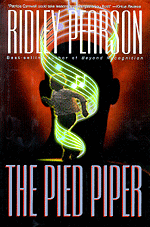
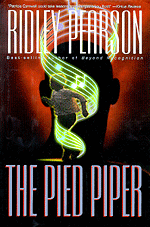
book beginnings on Friday: The Pied Piper by Ridley Pearson

Thanks to Katy at A Few More Pages for hosting this meme. To participate: Share the first line (or two) of the book you are currently reading on your blog or in the comments. Include the title and the author so we know what you’re reading. Then, if you feel so moved, let us know what your first impressions were based on that first line, and let us know if you liked or did not like the sentence. (You might also consider visiting the original post where you can link to your own book beginning.)

Today, we are on the road! Heading for the Ouachita National Forest in Arkansas. I’m equipped with audiobooks! For starters, let’s sample Ridley Pearson’s The Pied Piper:

The train left the station headed for nowhere, its destination also its point of embarkation, its purpose not to transport its passengers, but to feed them.

By early March, western Washington neared the end of the rinse cycle, a nearly perpetual curtain of ocean rain that blanketed the region for the winter months, unleashing in its wake a promise of summer. Dark, saturated clouds hung low on the eastern horizon. Well to the west, where the sun retreated in a violent display, a glimpse of blue cracked the marbled gray, as welcome to the residents of Seattle as any sight alive.

I like a well-evoked location, especially one I’m familiar with. I’ve spent some time in Seattle – have family there – and we can all recognize the reference to rain, can’t we! I really picked this book out just to expand my familiarity with popular authors in the mystery/thriller genre, but particularly this one, because I can remember someone recommending it at some point. Don’t remember who, or what was said, but it was enough to go on. 🙂 I’ll let you know!

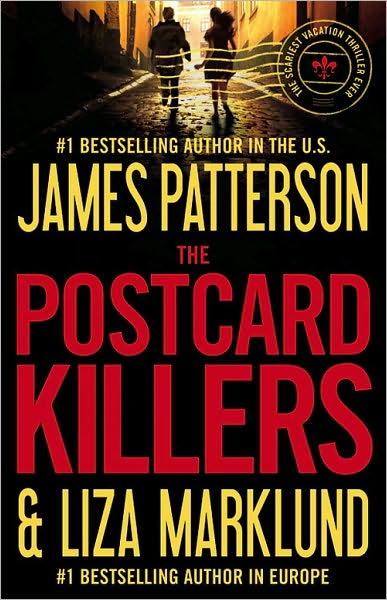
The Postcard Killers, by James Patterson (audio)


Well, my feelings on this one are mixed.

First let me speak to the format: I listened to this book on audio cd, in the car while commuting, and also brought it in to the house two nights to listen some more. I don’t listen to audio books very often at all. The Husband and I enjoyed some together on our last long road trip, and I think that’s an excellent application. But mostly I find that I enjoy reading actual, physical books. One of my main concerns is that I like to go back and reread a sentence or a paragraph that strikes me or that I want to understand better, and rewinding a cd is just not the same. The voices of the characters or the inflections aren’t always what I would imagine in my reading experience. Sometimes this bothers me. On the other hand, I’ve just “read” another book in the last week that I wouldn’t have gotten to read otherwise; I have a good hour a day spent driving that I can spend listening to audiobooks. Despite my complaints and concerns, I think it’s likely that I’ll be picking up another audiobook next week. 🙂 I guess that’s a net win for the format. But I most definitely prefer reading.

Now, on to the book in question. As I said earlier this week, I picked up this James Patterson novel – my first (I know!) – just to expand my horizons as a reader and (more importantly) librarian and readers’ adviser. I came in with some bias: I have an understanding that Patterson writes “fluffy” novels, that he really cranks ’em out (or rather, puts his name alongside numerous co-authors to crank ’em out), that maybe his mysteries are less intellectual than some. All of this is very snobby of me and I’m not proud of it, but I’m trying to address this bias honestly here.

After finishing The Postcard Killers, I remain conflicted. I had a number of real problems with this book. The plot was somewhat simplistic; there weren’t layers of meaning or action; there were no real surprises. (Of course, there was no mystery for the reader to solve, just some loose ends left to curiosity til the end of the book. We met the killers in chapter 1 and knew them all along; it was just the detectives that didn’t.) The sex was foreshadowed from the first moment; some tension was allowed to build up, but once the dam burst, so to speak, a formerly strong woman just followed the man around like a puppy dog, which I found a bit silly. The police detectives in Stockholm were incompetent beyond comedy to the point of my great frustration. I thought it was totally unrealistic. These are police officers! The characters didn’t have hobbies, interests, or personality characteristics. They were flat. It was rather a flat book in general, in many ways. Michael Connelly may be “fluffy” too, in a way (light, entertaining, pleasurable reading for the beach), but his Harry Bosch is a many-layered complex character, and he meets interesting, complex people and solves complicated cases. I’m afraid I was unimpressed by the Patterson & Marklund team in many ways.

However! I was engrossed! I knew from the start who the killers were, but couldn’t figure out how they had accomplished things. The question of motive was left open, too, although I found the solution unsatisfactory. I was anxious to get back in the car to hear what was going to happen next. And however tired and predictable the sexual tension and eventual release was for Jacob & Desi, I waited anxiously for them to get around to it. So I guess what this says is, for all my criticisms, Patterson’s predictable, flat suspense still got me interested and page-turning (so to speak). I’m not impressed, but I was entertained in the short term. I would probably even grab another one of his novels again – that is, if there were nothing better lying around, at the beach; or if the Husband and I needed an audiobook for a road trip. At any rate, I’m very glad to have exposed myself to this author and know his style. (At least in combination with one of his co-authors. There’s probably a lot I still don’t know, thus the need to pick up some more.)

As it happens, we’re hitting the road this weekend, for a drive to Arkansas and back. I’ve picked out four audiobooks, but no Patterson this time. I have:

Extreme Measures, by Vince Flynn

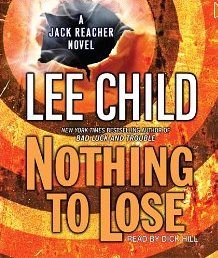
Gone Tomorrow, by Lee Child

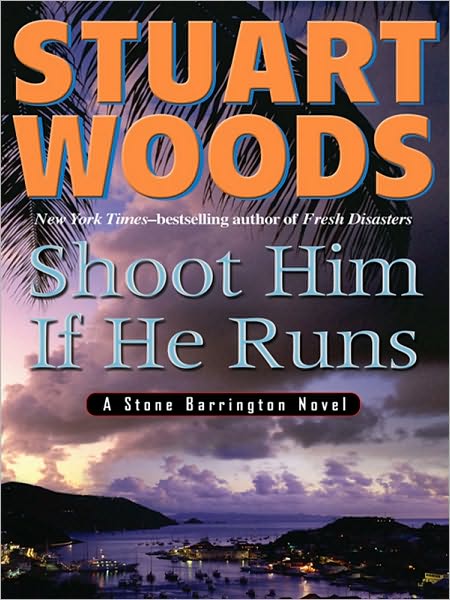
Shoot Him If He Runs, by Stuart Woods

The Pied Piper, by Ridley Pearson

The Husband and I are both fans of Lee Child and his bad-ass character Jack Reacher. The other three are in further pursuit of my well-roundedness in the mystery/suspense genre, and in the hopes of discovering more authors the Husband can appreciate. (He likes Connelly but I’ve read all of his novels and didn’t want to do repeats on this trip.)

So, I give the audio format a “meh” with strong likelihood of repeat use. I give The Postcard Killers a “meh” with medium likelihood of repeat use. I’m open to compromise. 🙂

vacation reading: a series of short reviews

The Strange Case of Dr. Jekyll and Mr. Hyde by Robert Louis Stevenson. Still a good story! Spooky and short, it’s a bit reminiscent of Poe. Action-packed and efficient. I would not have sworn I had read this before, but now I recognize that I have. What a classic. I highly recommend this as a bang-for-the buck, action-packed, early sci-fi spookster with a bit of meditation on the human condition. Not sure if I should count this for the Classics Challenge as its a re-read. :-/


Worth Dying For by Lee Child. (audiobook) Surprisingly good as audio. I wasn’t sure. I’m such a BOOK purist that audio doesn’t always work for me; but it can’t be argued with on a road trip. Part of what made it special, too, is that I got to share it with the Husband, who doesn’t normally read. He got really into it, and we shared this suspenseful adventure together. That’s priceless.

Classic Jack Reacher! He’s such a Rambo. It’s a bit comical in the over-the-top violence and general bad-ass-ness, but I eat it up. It’s great fun. We both enjoy the slight absurdity of it, while also appreciating that we can count on this guy to get it right. And I finally begin to understand, at least a little bit, what was so frustratingly up-in-the-air at the end of 61 Hours. This may be my favorite Reacher novel yet.


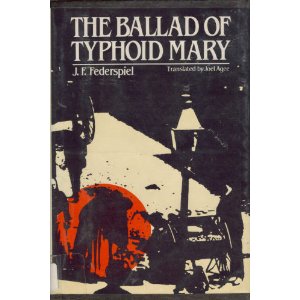
The Ballad of Typhoid Mary by J.F. Federspiel. Opening quotation: “Life is strange and the world is bad.” (Thomas Wolfe) This sets the tone.

This is another creepy story. It’s historical fiction, and I have made a note in large letters to read up on the concept of Typhoid Mary and how much we know about her in the real world. She was a carrier of typhoid fever: she never got sick herself, but she made people around her sick, to the tune of several hundred at least. She was a cook, passionate about cooking for people, despite seeming to understand that she was killing them. She wasn’t a serial killer; she didn’t do it on purpose; she just didn’t let it stop her. What can we expect, in an age with poor understanding of hygiene and the spreading of disease, of a poor, uneducated, abused & orphaned young woman with no opportunities who suspects she might, in some way, be responsible for all these deaths around her? This was a fascinating read, and another very short one, too.


The Man Who Mistook His Wife for a Hat by Oliver Sacks.This is a collection of case studies, or short stories, or essays, by a neurologist who also fancies himself a philosopher with literary leanings. It was quite attention-grabbing, and I had to keep putting it down to tell the Husband stories. Reading about brain injuries or anomalies of the brain is infinitely more interesting to me since I had my bad wreck and experienced some brain injury and healing of my own. The most interesting thing about a number of these cases is that these patients often don’t realize that anything is wrong!

Sacks’s approach is to contemplate the relationship between mind, body, and soul, which perhaps too few of our hard scientists do. It still ended up a bit on the hard-science side for me, perhaps; he made a number of references (unexplained) to other hard scientists, which made it a bit less accessible to us laypersons. But I loved the stories, the concepts, possibilities, complexities of the human mind.


In the Woods by Tana French. I’ve been hankering for more of Tana French since reading Faithful Place. I really fell for that Frank Mackey! This one opens with immediately recognizable poetry-in-prose, stark, gritty, and strongly Irish. Then I was disappointed to recognize a familiar story: grown male detective forced to confront unsolved childhood trauma of missing friend(s). Argh! But I guess why mess with a good thing…

Oh man. I stayed up nearly all night to finish this book. (and this, in a place where I LIKE to get up to watch the sun rise!) Same story my head; it did have its plot similarities but it was so gripping and spooky, like a ghost story, except even spookier because there was nothing supernatural at all, just creepily realistic human nature. I can’t wait to get the next book!

Side note: the beautiful, tragic, doomed, perfect friendship reminded me somewhat of One Day by David Nicholls, which had an entirely different tone to it.


Echo Park by Michael Connelly. (audiobook)Another highly enjoy audiobook! This one unabridged, thank goodness. (I realized AFTER we listened to Worth Dying For that it was abridged, and now have to go back and read the book.) Connelly, for all that he’s sort of stark and black-and-white, also strikes me as a poet; I love that Bosch “educates” his ice with vodka. That’s unique! I’ve read this book before, but it’s been long enough that I still enjoyed the mystery. I like all the background or frame elements in Connelly, like the jazz (and I like that the Library of Congress, and some clever librarian there, make an appearance in relation to the jazz), and the audio format took advantage and gave us a few jazz riffs in the background here and there, which was a nice touch. I hadn’t really thought about using music on on audiobook, and actually, there were some other snippets of music added that I didn’t think worked so well; but jazz behind Connelly is a strong choice.


Whatever You Say I Am (the life and times of Eminem) by Anthony Bozza.I put this in the same category as the Hefner biography, actually. These are some highly controversial men, offensive to many if not to all, who have impacted our world; without making a value judgment, I can say I find them interesting to read about. My feelings about Eminem are complicated, just like with Hefner. (I was talking with my Pops the other night along these lines and we put Reagan in the same category but that’s a whole new can of worms.) I haven’t finished this book, am less than halfway through, but I can say I really enjoy the way Bozza puts his reader fully into a time and place. For example, to help place us in the year in which Eminem was working to release his first album, he gives us a full rundown of the musical hits and award winners of the year in various categories, as well as what movies and television were hot. Now, I’m not generally all that up to date on pop culture, but this worked for me; it really evoked a time in my life. I think that works for all of us, because isn’t sound or music second only to smell as a mnemonic? Doesn’t hearing a particular song take to you a time and place? At any rate, I’m enjoying this biographical study of a controversial figure.


And finally, By-Line: Ernest Hemingway. As I’ve said, I’m enjoying reading Hemingway’s usual tone and style, that I know so well, used in journalism. I hadn’t read any of his journalism before. I guess the nonfiction I’ve read would be Death in the Afternoon and A Moveable Feast, and then all that fiction that’s so heavily autobiographical. Any Hemingway I can get, I like.


I’ll keep you up to date on the books I still have to finish; and I have a few Maisie books waiting for me. I might finally be caught up!

vacation reading.

Hello! I’m home early from my vacation; some bad weather ran us off the trails at Tyler 😦 and it was so beautiful, too. I got plenty of reading done, though, and now I’m here to tell you about it.

I finished The Cases That Haunt Us by John Douglas and read Bridge to Terabithia by Katherine Paterson, The Reversal by Michael Connelly, and Look Again by Lisa Scottoline. (I also picked up a copy of J.D. Robb’s Fantasy in Death at a big-box store in Louisiana but didn’t need it since we came home early.) And I listened to about half of Ian McKellen’s reading of the Odyssey in the car. So, you’ll have to forgive this long post!

In order:

I finished The Cases That Haunt Us, which I’ve been taking in bits and pieces for some time now. Because it’s a compilation of Douglas’s notes about various cases, it reads well this way. I got a little impatient with his style occasionally, but to be fair, this is not a professional writer, but a criminal profiler. I found his analyses very interesting and it was well worth my time. I now have a longer list of serial killers that I want to look up and read about. Is that weird? Thanks Douglas for interesting stories and facts. I’m not sure why this subject is so fascinating to me!

I picked up a copy of Bridge to Terabithia on impulse, having read about it somewhere. This children’s read is not a new book, either, but I think stories like this one stay current. It reminded me of the 1991 movie My Girl with Macaulay Culkin, in which a girl full of her own issues and problems has her perspective widened by the death of her best friend. Bridge to Terabithia involves a 5th-grader short of friends and positive moments in his life, who makes a new best friend and loses her in an accident in which he feels some responsibility. I think it’s an age-old story about friendship, society/rejection (so important especially to kids), and loss. It’s a coming-of-age story, too, because we grow a little bit older when we experience tragedy. I’m not involved with any kids’ reading choices, so this was just a diversion for me… but even an adult can enjoy a quick-read high-quality kids’ story like this one.

Then the main event: Connelly’s latest release, The Reversal. I think I can handle this one without any spoilers, staying within the bounds of the blurb you’ll find online or on the dust jacket. In this book, we have a convergence of characters: defense attorney Mickey Haller teams up with his prosecutor ex-wife Maggie McPherson (“McFierce”) to work for the people this time, and they take Harry Bosch on as their case investigator. I find it exhilarating to have these three in the same room! And we get their daughters together, too, which several of us besides Haller have been looking forward too. As expected, family connections further develop the characters on a personal level. Earlier in the series, Bosch was much more “just” a police detective, but all this personal-life-material has really developed him into a full and complete human. I love it. This is what I read Connelly for.

As expected, we get a full dose of Hollywood society and L.A. setting in this high-profile case. Also, as I’ve come to expect from the Haller books, we get extra courtroom-procedural drama; I especially like the jury selection and analysis. (Here I find a parallel to the criminal profiling I also like.) The case is interesting and convoluted, of course; that’s not optional. But to me, the personal connections and family drama amongst our 3 chief characters is what really makes the book.

I have to file one complaint: I found the ending to be a little anti-climactic and unsatisfactory. I was looking for more answers, just like Harry Bosch was. I guess maybe this is realistic; maybe this is the way cases like this do end. It’s also not the first time Connelly has done this to me, and I still love him and will keep reading. But I guess it ended a little bit abruptly for me. Maybe I’ll come back and reconsider this later, more fully, when others have read the book. If there’s any interest shown. (Chime in here.)

This is where I ran out of reading material, gasp, and stopped off at the above-mentioned big-box store in Ruston, LA. (That’s an experience.) I picked up the J.D. Robb that I never got to (maybe that’s next) along with Lisa Scottoline’s Look Again. I’ve never read her, but I’ve read about her work and it sounds interesting.

Look Again is about a reporter in Philadelphia named Ellen who gets a missing-child postcard in the mail. As she goes to throw it away, she’s stopped by the face on the card: it is, uncannily, the face of her three-year-old adopted son, Will. Amidst drama at her tenuous place of employment, Ellen takes off work and flies to Miami to investigate a two-year-old abduction, and look into her adoption. We get a number of surprises, but not perhaps where Scottoline wanted them: I found the major plot revelation to be completely predictable, while the late-book romance and brief gory, graphic violence caught me off-guard. I wasn’t bothered, but I was surprised by the change in tone, after spending so much time on family and babies. Despite all this, I enjoyed the book. It was fast-paced, kept me involved and interested even as I predicted our big “surprise”, and I really cared about Will’s fate. I’d recommend it to someone who wanted a fast-paced, exhilarating suspense-mystery about family and children, even a little romance, in which setting is important (more on this in a moment) and the ending is fully satisfying (unlike Connelly, hmph). It was a quick, easy, satisfying read.

I observed in reading the Scottoline book that significant sense of place is important to me. I really like how Connelly uses the city of L.A. (and sometimes Vegas or other locales) almost as a character; the place is realistic and very important to the action of the book. For this quality, definitely look to James Lee Burke and his depiction of small-town New Iberia, Louisiana, as well as New Orleans and occasionally other places including Galveston, TX. (His main detective character has a lot in common with Harry Bosch, too.) I’ve only read one Nevada Barr book (starring Anna Pigeon): Deep South, set in Mississippi if I recall correctly. I got the same satisfying sense of place from her, and it’s my impression that this is true of all her books. I like it. I liked that Philadelphia and Miami were well characterized in Look Again. When I read Elizabeth George and Martha Grimes, I get a pretty good sense of place too, but their mysteries are set in Great Britain, and I have much less sense of their settings; I can’t judge how hackneyed or evocative their settings are for myself, if that makes any sense. Even though I’ve never been to Miami, I feel more at home in the U.S. settings mentioned here. So, I’m just still making observations about what’s important to me in a good murder-mystery. Sense of place. Wonder if there are any good ones set in Houston out there. I have read some Susan Wittig Albert; hers are set in small-town Texas not far from Austin. But they’re a bit cute and cozy for me.

Sorry about the rambling there – moving on: the Odyssey audiobook. I was excited about hearing it read aloud to me for the first time, after many readings. This work was composed in oral form before the invention of writing, so it’s really meant to be heard and not read off the page. And Ian McKellen seemed like an excellent selection for reader (he’s Gandalf in the Lord of the Rings movie trilogy in case you don’t know). The translation makes a big difference, of course, and forgive me for being picky but I prefer Fitzgerald’s to the Fagles one read here, which is still excellent.

It’s been a few years since my last reading of the Odyssey, and one of the first things to grab me was the use of repetition. Homer helps us keep track of who’s who and where’s where by use of repeated phrases: in the Fagles translation (from memory I paraphrase), “when they’d put aside desire for food and drink, they set their mind on other pleasures” and the epithet of dawn, “young dawn with her rose-red fingers” (Fitzgerald uses “rose-fingered Dawn” and maybe just because I was raised on it I find this more satisfying somehow). I enjoyed this repetition, and of course, the poetry of this beautiful work. McKellen does a beautiful, powerful, emotional job of reading. Although I’m not sure why we need a British accent to make poetry beautiful!

On the other hand, I was a little disappointed at some of the pacing issues. Maybe I’ve been pacing myself differently on the page all these years: maybe I skim more quickly over the repetitious or descriptive parts and rush towards the action (I’ve been guilty of this before). They’re such great stories, as well as being beautiful poetry. Maybe on different days and in different readings I prioritize these two aspects differently. The beauty of reading it myself off a page is that the power is mine to rush or linger. Or maybe I was just concerned, once I got the Husband in the car, about keeping his interest – I think for him, the action definitely needed to be prioritized. You can’t speed Sir Ian up.

Maybe I’m just not sold on the audiobook format. I’ve never been a listener as much as I am a reader. And I’ll stick with “real” books over the Kindle/Nook/etc. for now, thanks. 🙂

So, the vacation may not have gone perfectly (rain in Tyler, boo) but the reading was excellent and hopefully I’ve preserved the bulk of my thoughts long enough to get them online for you. 🙂 Thanks for checking in on me. What are YOU reading these days?