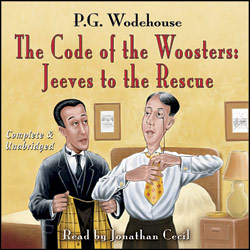
book beginnings on Friday: The Code of the Woosters by P.G. Wodehouse

Thanks to Katy at A Few More Pages for hosting this meme. To participate, share the first line or two of the book you are currently reading and, if you feel so moved, let us know what your first impressions were based on that first line.


I am always delighted to jump into another Jeeves episode by Wodehouse; they are just too darned funny! And I’ve been hooked on Jonathon Cecil’s narration of them from the start. I definitely recommend his versions on audio. Here’s our beginning of The Code of the Woosters:

I reached a hand from under the blankets, and rang the bell for Jeeves.
‘Good evening, Jeeves.’
‘Good morning, sir.’
This surprised me.

Review to come soon. Please keep your eyes open for Wodehouse; I don’t think you’ll regret it!

Girl in Hyacinth Blue by Susan Vreeland (audio)

This was a lovely little audiobook. The writing beautifully, lyrically evokes the setting. At the start of the book, I recognized the tone and I’m sure there’s a literary term for it, although it escapes me; it actually reminded me of The Picture of Dorian Gray (which, however, I didn’t like). There was that same tone of desperate passion for a work of art; there was a similar element of a painting dominating a man. It was emotional, emotive. But it seemed to calm down as the book progressed, getting more contemplative, quieter, more introspective. And that was really nice, too.

The book is about a painting of a girl in a blue smock, taking a moment’s break from sewing buttons onto a shirt to look out a window. It is variously named by different characters in the story; the title is one name for it. The book opens in a present-day setting: a teacher invites a colleague back to his house to show him a painting he’s kept secret until now. He claims it is a long-lost Vermeer. (Vermeer is the real-life Dutch master who painted The Girl with a Pearl Earring.) From there, we trace the painting’s history backwards through time, through its various owners and caretakers, back to its painter and the moment of inspiration, visiting the girl who sat for it.

An obvious comparison to this book presented itself immediately: Tracy Chevalier’s very successful Girl With a Pearl Earring, which was made into a movie starring Scarlett Johansson. I thought both the book and the movie were lovely, and for others who enjoyed either, I highly recommend Girl in Hyacinth Blue. Not only is the subject matter very like (a fictionalized explanation of the history and inspiration of a Vermeer – or a questionable Vermeer), I found the tone to be reminiscent, as well. It’s interesting to think of these two as companion pieces. It’s been a few years since I read Pearl Earring (maybe that was 2004 or thereabouts?), so maybe my memory is warped, but they struck me as very alike. And for the record, it looks like both were originally published in 1999, so I don’t think anyone copy-catted anyone else!

The portraits of life painted (no pun intended – really she’s an artist) by Vreeland are remarkable. They’re very clear and realistic and whimsical, lovely vignettes into a nice selection of times and places. We meet Dutch, German, and American characters spanning several centuries, and each is neatly portrayed and very enjoyable even as brief snippets – meaning, each might stand alone nicely even without being part of a larger story. In fact, they stand alone so well that in the audio format, with a different reader for each, I kept thinking the book had ended! A person might even say each brief portrayal of a person or family’s life resembles a Vermeer painting, particularly when we get to the middle-class Dutch folks of his own period.

Girl in Hyacinth Blue is an effortless read with beautiful characterizations and scenes of life from a number of times and places, presenting the engaging puzzle of a beautiful painting and its questionable provenance. I highly recommend it.

book beginnings on Friday: Girl in Hyacinth Blue by Susan Vreeland

Thanks to Katy at A Few More Pages for hosting this meme. To participate, share the first line or two of the book you are currently reading and, if you feel so moved, let us know what your first impressions were based on that first line.

I enjoyed Vreeland’s Clara and Mr. Tiffany so much that I was happy to find this audiobook at my local public library. So far it’s beautiful. We’re just meeting the eponymous Girl, in a painting that may or may not be an undiscovered Vermeer – evoking another lovely Girl, Girl With a Pearl Earring. But first, let’s meet Cornelius. Here’s your beginning.

Cornelius Engelbrecht invented himself. Let me emphasize, straight away, that he isn’t what I would call a friend, but I know him enough to say that he did purposely design himself: single, modest dresser in receding colors, mathematics teacher, sponsor of the chess club, mild-mannered acquaintance to all rather than a friend to any, a person anxious to become invisible.

Haven’t we learned a lot in just a few lines, and aren’t they well done? I’m liking this so far. How does your weekend reading look?

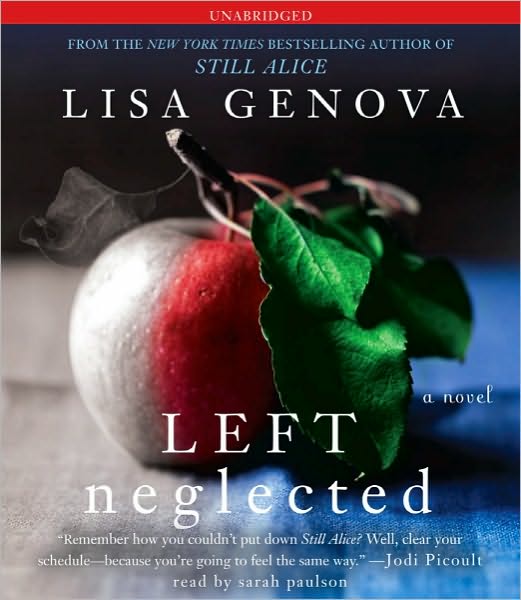
Left Neglected by Lisa Genova (audio)

Left Neglected evoked strong reactions from me, which I think is always a recommendation.

Sarah Nickerson is in her late 30’s, happily married to Bob, with three children (Charlie, Lucy and Linus), and a successful career in a male-dominated hectic corporate world of 80-hour work weeks. She is accustomed to using every odd moment to send emails, make phone calls, or read up on work; she would be lost without her nanny Abby; a slight traffic delay costs her the chance to read to her daughter before bed. In other words, she likes her life, but it’s jam-packed-full with no room for error.

The error comes one rainy day on the freeway; a traffic accident leaves Sarah with a unique sort of brain injury called “left neglect.” She’s missing the left side of her consciousness of the world. She can’t find or use her left arm, her left hand, her left leg; she can’t see things or people on the left side of the room, her dinner plate, her world. She can’t conceive of left. Sarah wakes up in a hospital and has to laboriously relearn everything. Juggling international corporate intrigue with a staff of 1000’s is no longer her primary concern; she can’t even dress herself.

Sometimes post-accident Sarah’s whining and frustration with her condition annoyed me, and sometimes pre-accident Sarah irritated me with her material and work-related priorities. But overall, she was definitely a sympathetic character; and if I was sometimes mad at her, that only made our relationship stronger in the end. As in a real friendship, we had our ups and downs, and our bond increased through those trials.

I sometimes felt that Genova tried to maximize the angst. Sarah’s flashbacks to the childhood death of her brother Nate, and its repercussions for her present-day relationship with her mother, might have been pushing the psych-drama angle a little bit. But overall, it worked.

I was reminded of another book, My Stroke of Insight by Jill Bolte Taylor. I read that one pre-blog so no review here, but it touched me very deeply. Taylor’s book is nonfiction, and deals with a different brain injury; but the two are similar in that they describe a brain injury from the patient’s perspective, along with the recovery. I suffered a brain injury in a bicycle accident in 2007, and while I was lucky to suffer less severe injury than either of these protagonists, I still found myself identifying. My own recovery was fascinating to me and made me think about things I’d never considered before; when I read My Stroke of Insight a year or so later, it helped me look at my own experience and learn from it. Left Neglected held a similar self-referential interest for me. (To go even further out on a limb: I’m now doing physical therapy following my knee surgery, and trying to get back to mountain bike racing. The connection is vague and yet I can’t help but compare my frustrations to the fictional Sarah’s. Again, my injury is very minor by comparison. But the cycle of optimism and pessimism, frustration and success, crosses over.) All of this means that when Sarah gets annoying – failing to recognize how lucky she’s been; refusing to work hard with her therapists; wanting to give up and cry – I’m annoyed, and yet I understand, too.

The massive change in the way Sarah views her world – and not just in terms of right and left – may seem ambitious, even unrealistic, to some readers. This might be said too of Taylor’s change in philosophy in My Stroke of Insight. But in both cases it rang very true for me. I felt that I had traveled so far with the protagonists, both fictional and non, that I was right there with them at the end of their stories. Is my outlook unique? Possibly, but I doubt it. I think we’ve probably all had some life-changing experience (hopefully less painful than the ones detailed here) that allows us to get inside Sarah Nickerson’s head a little bit.

Maybe it’s odd that I’m drawing such a strong parallel between two books that are really rather different, but they both affected me strongly. In the end I give Left Neglected very high marks, and I’m interested in Genova’s earlier novel, Still Alice. For those who are curious, she does have credibility in this subject matter: she has a PhD in neuroscience. Check it out. And if/when you have/do, please let me know if this book touches you as it’s touched me. Here’s to being thankful for our health!

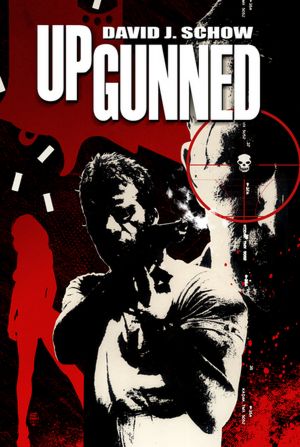
did not finish: Upgunned by David J. Schow and Cosmopolis by Don Delillo (audio)

Just very briefly here, because I didn’t get very far into either…

David J. Schow was the screenwriter of The Crow and Texas Chainsaw Massacre: The Beginning. These credentials are not terribly meaningful to me, not being a fan of horror movies, but they did give me some hope. Upgunned begins with the perspective of a semi-celebrity photographer of the scuzzy, scummy upper crust – drug-addled anorexics and the like. He is kidnapped and forced at gunpoint to take blackmail photos of a local politician. And then the perspective shifts to the man behind the gun.

The plot premise was mildly interesting to me – I can get into a good thriller regardless of framing elements if it’s done right – but the writing and characters didn’t hold up. I found both early characters a little bit cartoonish and overdone, the society in question was just a little too sickening for my taste, and the writing did nothing to redeem it. Nancy Pearl would be disappointed as I quit just 48 pages in, but I couldn’t motivate any further than that.

This DNF review is based on a galley sent to me by the publisher. Many thanks!

I have fond memories of Don Delillo from his amazing White Noise (and also my buddy Jerko is a big fan and I value his opinions). But Cosmopolis didn’t hold up. (And to be fair, Jerko specifically did not recommend it.) I made it maybe an hour in, which I think should count as 50 pages, if only just. 🙂 The story of Eric Packer’s billionaire troubles while wending his way through the city in his limousine (as pictured on the cover) failed to make me feel anything deep. Delillo’s trademark tone of detached despair is there, but the writing feels a little stilted, a little overdeveloped. Mostly though, I just couldn’t get interested in Packer’s fate.

Am I a little disenchanted and difficult-to-please these days? Hey, it’s possible. We all go through those phases. I will point out, though, that I attempted these two DNFs within a week of reading my two most recent additions to the Best of 2011 list: 11/22/63 and The Home-Maker. So maybe everything else pales in comparison. 🙂 At any rate, I’m sure there’s more outstanding reading right around the corner, and I hope the same for you as well!

Suite Française by Irène Némirovsky (audio), trans. by Sandra Smith

Pagesofjulia earlier published a guest review of this audiobook by my father. He did an excellent job of telling the backstory, so I’m just going to quote him here.

Much of the impact derives from knowing the author’s own story and how the book came to life. Born 1903, she was a Russian Jewish immigrant to France (1918), converted to the Catholic Church (1939), published numerous works of renown before the war (including one brought to film), was denied French citizenship in 1938 due to Jewish heritage, and has since been criticized for being a self-hating Jew. She was in the course of writing this work as events unfolded, expecting to create a novel in 5 parts. She finished two parts, was denounced by French collaborators and deported to Auschwitz where she died within a month. Many more of her writings were published since the war. But her daughters retained this notebook manuscript, keeping it unread until 1990 due to anxiety over the expected pain of reading her wartime “journal” – only then, before donating the pages to an archive, did they realize what powerful words those pages held. Written 1940-42, it was published in 2004, acclaimed, translated and read internationally.

(I don’t know where he gets his info from, but his write-up appears to agree with what the rest of the interwebs tells me.)

The backstory does indeed increase the impact of this story for me. For one thing, knowing that she wrote without knowledge of how the story ended makes some of her predictions and judgments especially poignant.

I think the most remarkable aspects of this book for me were the beautiful writing, and the tone of dry humor. See my Teaser Tuesday and Book Beginnings posts featuring this book for a few snippets I appreciated. The poetry flowed so naturally and yet painted such lovely pictures, without ever feeling forced. And as for the tone – Némirovsky does not spare the French, particularly the upper classes. While they are “victims” of the Nazis, they don’t read as sympathetic characters most of the time; see again that teaser post above for some of her cutting satire (and it goes on from there). The Germans sometimes come across more sympathetically, which I found interesting and not entirely expected. It’s easy to denigrate the Nazis, right? But Némirovsky gives us a truth: these were all just people, elementally.

Perhaps the point that drove Némirovsky’s story home for me the most – that is, both Suite Française and her own real-life story – was the ending of the book. Némirovsky’s daughter chose to publish as one book the first two in an intended series of five novels (so says Wikipedia). She also left behind the outlines of the third part. But in effect, this book ends very abruptly to me, leaving many threads unresolved. The abruptness of the ending was of course made more stark for me in audio format – I’m walking along, listening to the book on my earbuds, and then, nothing. What? Is that the END? I had gotten so engrossed in the story – worried about Bruno, wondering what Lucile would do next – that I’d forgotten the similar plight of the author herself (in that her future was being torn apart and eventually her life ended by the same forces at work in the book). So the cutting off of her work in progress ended up telling the same story for me that her book tells within its pages. I found that very powerful.

Suite Française has an interesting story to tell, both between its covers and without. It is beautifully written, humbling, stark and poignant. The same Wikipedia page (above) calls it “possibly the earliest work of literary fiction about World War II.” It’s really something, and you should check it out. But beware unintended cliffhangers.

book beginnings on Friday: Suite Française by Irène Némirovsky

Thanks to Katy at A Few More Pages for hosting this meme. To participate, share the first line or two of the book you are currently reading and, if you feel so moved, let us know what your first impressions were based on that first line.

I hope you’ll forgive me for using this audiobook for this week’s Teaser Tuesday as well as today’s Book Beginning; it was just too good not to use. I love this beginning.

Hot, thought the Parisians. The warm air of spring. It was night, they were at war and there was an air raid.

Lovely. And sad.

What are you reading this weekend?

Black Mask (audio)

Classic hard-boiled crime stories from the historic and genre-defining pulp magazine Black Mask, in a beautifully performed audio collection.


Black Mask magazine (1920-1951) was a defining force in the pulp-magazine genre of hard-boiled detective stories, and this collection offers five representative pieces for the first time in the audio format. The excellent spoken performances are a rare treat, especially when finding stories of this vintage is in itself a challenge. The masters of the genre are represented in this collection, including Dashiell Hammett, under a pseudonym. Don’t skip the introduction, either: it’s a worthwhile and informative history of pulp magazines, the detective/crime genre, a number of classic authors, and Black Mask in particular. Each story has its own short introduction as well, adding to the value of the collection.

“The Phantom Crook” takes on organized crime in order to free a damsel in distress from blackmail. A case of arson and apparent murder is not what it appears. Another blackmail case threatens to take advantage of a well-meaning but bad-tempered newspaper photographer. A drunken reporter tails a detective into a warehouse district in pursuit of a crook. And in the final tale, a Florida private investigator named Sail, working off his boat, investigates a case of sunken treasure while the bodies stack up. In each story, the gritty, taut suspense is reinforced by an appropriately gruff audio performance.

Black Mask has released a total of three collections of short stories. The following two promise more of the same: dark, suspenseful, character-rich crime drama. Readers of the modern hard-boiled detective/P.I. genre owe it to themselves to check out their roots in these fine examples of detective-noir classics.


I wrote this review for Shelf Awareness for Readers. To subscribe, click here, and you’ll receive two issues per week of book reviews and other bookish fun!

Teaser Tuesdays: Suite Française by Irène Némirovsky

Teaser Tuesdays is a weekly bookish meme, hosted by MizB of Should Be Reading. Anyone can play along! Just open your current read to a random page and share a few sentences. Be careful not to include spoilers!


I am listening to Irène Némirovsky’s Suite Française on audio, and finding it absolutely delightful. It’s taken me a while to follow up on Pops’s recommendation (see his guest review here), but I believe you’re right, Pops, this one is worthwhile. I had some trouble choosing lines to share with you because so many are so beautiful. Now, this is a longer-than-usual teaser, but you might agree it’s worth it for the wit:

She was proud that she kept her servants for a long time. She insisted on looking after them when they were ill. When Madeleine had had a sore throat, Madame Péricand herself had prepared her gargle. Since she had no time to administer it during the day, she had waited until she got back from the theatre in the evening. Madeleine had woken up with a start and had only expressed her gratitude afterwards, and even then, rather coldly in Madame Péricand’s opinion. Well, that’s the lower classes for you, never satisfied, and the more you go out of your way to help them, the more ungrateful and moody they are. But Madame Péricand expected no reward except from God.

I am amused. What are you reading this week?

The Autobiography of Benjamin Franklin

I have heard that this was an important, well-written and interesting autobiography. I don’t recall where I heard it, but I made a note and it stuck in my head. So I found the audiobook and gave it a try.

What I learned was a more detailed version of what I knew: Benjamin Franklin was an interesting, hard-working, thoughtful man who helped shape our nation’s history. He was an indentured servant, a runaway, a businessman, an entrepreneur, a diplomat, a politician, an inventor, an author, a militiaman, a scholar and a philosopher, and a father. He invented many items, large and small, that improved the everyday life of people in his time, showing an intelligence and curiosity about how things work that I admire. He was also instrumental in beginning both a school (which became both the University of Pennsylvania, and a free school for poor kids) and a public hospital in his adopted hometown of Philadelphia. He did a lot of good things and had some interesting ideas. He was a moralist, and wrote tracts in which he espoused a “right way” of living.

The style of his autobiography is unfortunately stiff and pompous, though. I think that perhaps the narration of my Mission Audio edition didn’t help. The language in which this book was written is necessarily dated and sounds odd to the modern ear; but if today’s actors can make Shakespeare palatable, for gosh sake, you’d think they could have found a narrator who would bring Franklin to life, too. Instead they went with a sort of whuffling, sedate, staid voice that emphasized not this senior statesman’s timeless wisdom and accessibility – which I think might be there, hidden in the text – but the distance from which he speaks. The long pauses and bombastic tone went a long way towards ruining this experience for me.

I didn’t enjoy this autobiography at all, which was a disappointment. Actually I’m not quite sure why I finished it (Husband asked, and I couldn’t answer); maybe I had that much faith in the long-lost recommendation, or maybe I was just mesmerized by the monotonous narration… I didn’t even get the consolation of learning new bits about Franklin. I came away with the same vague notion of who he was and what his legacy was that I’d started with. For educational purposes, I actually got more out of the “timeline of his life” appended at the end than I did out of the bulk of the book. I feel that the autobiography itself was probably flawed, in that it leans towards anecdotes of little consequence, moralizing, and self-congratulations. But the narration was the final straw. Unfortunately I cannot recommend this book; and if you do decide to seek it out (in which case, let me know if it goes any better for you!), for the love of Dog, avoid the Mission Audio version.