movie: Hillbilly (2019)

Disclosure: I am a degree or two removed, socially, from some of the folks involved with the making of this film.


I just think no matter where anybody’s from, if they’re honest with themselves they’re gonna have a love/hate relationship with where they’re from.

–Jason Howard
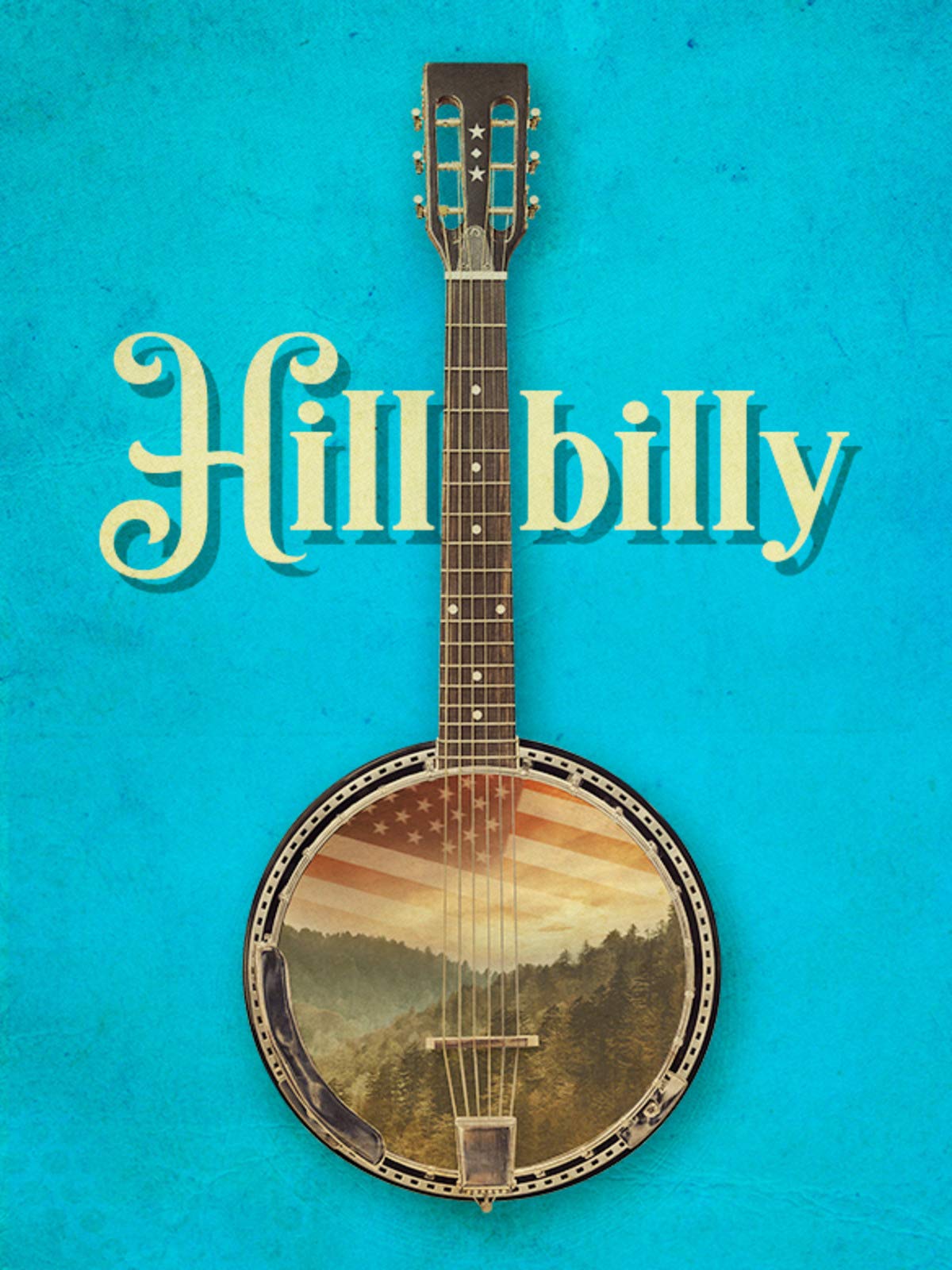
I found Hillbilly deeply moving, beautiful, and appreciated the diversity of people it put in front of the camera.

I heard about this film from several sources at once, all of them sympathetic, and some of them personally connected; the above quotation (which you know resonated with me so strongly) comes from Jason Howard, who’s been guest faculty at WVWC during my tenure as a student there. His husband Silas House is an executive producer. So I came in with a positive preconception, and it was rewarded. I was surprised (but perhaps shouldn’t have been) to see the negative reviews on Amazon; the “top reviews” were all critical of its political stance (“this is a liberal agenda documentary be forewarned”). Well, fair. I think the film’s perspective was clear from the start. As I watched, I kept thinking of confirmation bias and where we all start out from when we enter a project like this, either as creator or viewer/consumer. My politics align with those of Ashley York, co-director and narrator/”face” of the film, in many or most ways. I appreciated what she’s done here. Those with different politics are likely to appreciate the film less. As much as I loved watching it, I was left kind of sad, too, that we can’t do more real listening to each other.

Not for lack of trying on Ashley’s part. Within the narrative of the film, she introduces herself as an Appalachian native from Kentucky who now lives in Los Angeles. As the 2016 presidential election draws near, she realizes how far apart her pro-Hillary politics are from those of her pro-Trump relations, chiefly her Granny Shelby. So she travels home to talk to Shelby and others, hear their side. I am so glad somebody’s trying to do that work; little enough of it seems to be happening. Ashley is respectful and listens quietly as her family explains why they support Trump. There was not the dialog here that one might wish for, but maybe Ashley was shooting for some level of journalistic neutrality? A separate issue… Speaking of issues, there wasn’t really any discussion of issues or stances, or the gap between Trump’s talk (coal! jobs! economy!) and his concrete plans for action. In the end, this film is less about politics than it is about culture.

I empathize with Ashley’s experience some, especially when she points out how difficult it is to hear a majority-progressive community throw Trump supporters out in one homogeneous basket, in their thinking. This is especially difficult when you come from a place where you’ve rubbed shoulders with some of the people in that basket, and know them as individuals. “They” are no more homogeneous than “we” are. Her uncle tells the story of serving in the military and being ridiculed and rejected by his fellow service members – it was worst in California, he tells her, “no offense” – and he chokes up, saying that he never found the brotherhood he’d sought. I don’t care if you hate his politics, that’s a sad moment. I don’t think “we” liberals gain anything by making fun of people we don’t agree with.

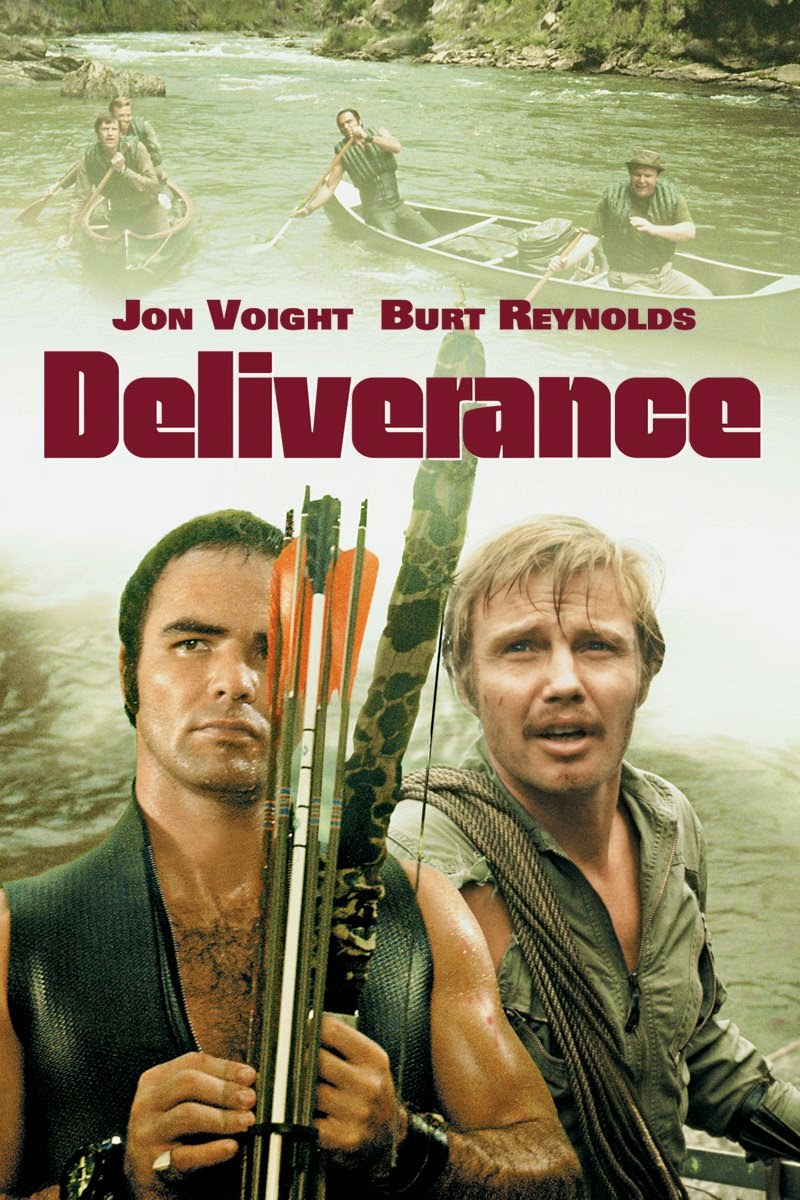
A good chunk of the movie deals with media portrayals of Appalachians. Deliverance makes an appearance, of course. Ashley visits with Billy Redden, who played Lonnie, the younger, hillbilly half of the “Dueling Banjos” scene. He works at Wal-Mart; he got paid $500 for his part in the movie; he hopes to make it to California one day. That Appalachians or hillbillies have gotten a bum deal with Hollywood, there is no question. The rest of us, somebody in the film suggested (I’m sorry I can’t say who), get to feel better about ourselves by making fun of “them.” There’s also some treatment of the history of the region, including the fact that when big business saw how much money there was to be made by extractive industries (coal, for one), it was convenient to evolve from treating hillbillies with gentle contempt, to viewing them as sinister and depraved: people from whom we should definitely take things away.

As a summing-up of a region, its history, its culture(s), and its current contradictions, Hillbilly does a neat job; it is necessarily incomplete, but what do you want from an 85-minute film? I’m so glad that it put people of color and queer people at center, too (and discussed the strange portrayal of Appalachia as white when in fact it’s quite diverse, skin-tone-wise). Any time we sum up any place, we’re going to resort to generalizations that can range from inadequate to damaging. Considering these truths, I think this movie does as good a job as it could have. If that sounds like faint praise, I don’t mean it that way. I’m just trying to acknowledge the inherent shortcomings of the form, and of any attempt to portray a place with more than, I don’t know, a couple dozen people in it.

Hillbilly gives us Election Night 2016 again, “live,” as it were, and I found it painful all over again. Silas House and Jason Howard speak with some emotion about their feelings – Silas seems to feel betrayed – he has spent his life defending his people (I paraphrase) and (he implies) they have failed to defend him with their votes. He turns to Jason: “You always say you love Appalachia. You don’t feel it loves you.” Jason replies with the line at the top of this review: “I just think no matter where anybody’s from, if they’re honest with themselves they’re gonna have a love/hate relationship with where they’re from.”

I just wanted to repeat that because I find it so true. Thank you, Jason, and everyone involved with this film.


Rating: 8 questions.

Sugar Run by Mesha Maren

Disclosure: Mesha is a visiting faculty member at my MFA program and a friend.


Sugar Run has been getting a lot of press, and it’s well deserved. This is an astonishing novel.

Jodi was seventeen years old when she was sentenced to life in prison. Eighteen years later, she is surprised to find herself paroled. She never thought this would happen, even as the lawyers and appeals pressed forward around her. Now she steps out the gates and is surprised to see that she’s been surrounded by mountains all these years in Georgia – mountains she couldn’t see, but that make her feel just that much closer to the mountains of her West Virginia home.

Jodi heads south before going home, though, to track down a boy she should have helped all those years before. She is surprised to find him transformed into a man she does not recognize; if time stood still for Jodi in prison, it hasn’t for the rest of the world. In short order, Jodi collects as well as a partial family in crisis; as she drives a new friend’s Chevette into rural West Virginia and up the mountain she calls home, the life and hopes she’s building may already be falling apart.

In flashback sections, we learn as well about the past, chiefly the buildup to the crime that got Jodi life in prison as a minor. The cast of characters is not small: Jodi’s mother, father, beloved grandmother, and younger twin brothers; Paula, a woman important to Jodi in her youth, along with her parents and brother; Jodi’s new friend Miranda, estranged from her pop singer husband, with three young sons and a coterie of associates; and the inhabitants of the West Virginia hilltop Jodi returns to, from fracking workers to activists and the locals she’s known all her life – or at least for its first seventeen years.

It’s a remarkable story. For one thing, the lives of Appalachian lesbian women are not much seen in literature, and women in prisons are somewhat underrepresented as well. (Mesha teaches writing in a women’s prison, so she has the research to back up that element.) But equally importantly, as a plot, it rips. From Jodi to Miranda, from past to present, the reader is kept totally absorbed (I would like to thank Mesha for getting me through six hours in the waiting room of an auto shop). It’s a fully realized world to fall into.

I also appreciated the strong sense of place. Jodi is deeply committed to her late grandmother’s cabin and property on a hilltop threatened by extractive industry: a classic West Virginia story, in a way, but one thoroughly fleshed out and real here. The place itself is described as carefully as the characters are. I realize that I’m portraying this book as both character- and plot-driven; it is also about the sentences, which weave and wend and take their time painting pictures as much as moving either plot or characterization along. Pacing-wise, it might be mid-range. The plot has momentum and keeps me turning pages; but the sentences take time for beauty.

This is a fine and multi-faceted novel, and I love it. Congrats, Mesha.


Rating: 8 hands.

The Rope Swing: Stories by Jonathan Corcoran

Disclosure: this author, Jonathan Corcoran, is a repeating visiting faculty member at my MFA program, and one of my favorite people. I always aspire to tell you exactly what I think of a book, but I can’t claim objectivity here because I think Jon is wonderful.


That said, The Rope Swing is also a wonderful book. This is a collection of linked stories, sharing not characters, so much (although there are some glancing exceptions), but setting and theme. Most of the stories take place in a small town in West Virginia; the last two take place in New York City, where a native of the small town has resettled. Some of the stories are told in first person, some in third, and the first story, “Appalachian Swan Song,” is told in first-personal plural, using the ‘we’ pronoun. I appreciate this choice. This first story is really about setting the scene and the tone for the rest of the book: we are in a small town that is seeing a twilight of sorts, on the day the last passenger train leaves town. It is a mood of elegy, and with some conflicted feelings about the place. The use of a collective pronoun is perfect, because this story focuses on no person in particular, but on the town and its inhabitants collectively. In this story we see a few characters very briefly who will star in their own stories later; but this collection doesn’t follow anyone in particular. The title story, “The Rope Swing,” is referred to in a later story, but it’s a quick glance.

The theme-thread that unites these stories is the experience of LGBTQ characters in this particular setting. There are a few characters that the town acknowledges as a little different, like the florist, who was “funny, we knew, in a light green shirt and a darker green ties the color of a rose stem, but he was also harmless.” Others have a harder time, like the young man who leaves for New York City.

The strengths of the collection are as broad as these characters. Having heard Jon read a few times, I was not the least bit surprised to find lovely writing at the sentence level; he has clearly paid close attention to sound and rhythm and word choice. The small actions and attentions of his characters portray lots of personality economically. About a woman who has inherited the house of a close friend, who had in turn inherited it from his parents:

She had thrown everything out of the refrigerator. She didn’t care if the jam was good for another year; that jam didn’t belong to her. In this way, she had claimed dominion over an appliance.

The place as character is one of my favorite features of the book; I love a strong sense of place, as you know, but also it’s just so beautifully done here. The book opens, “We had forgotten how much we loved our mountains in the summertime.” Such a simple sentence, but it has a definite beat and lilt to it. And what follows is description; but description with momentum and pull, easy to read and easy to see and feel. Perhaps the key is that all the details–“young leaves of the maples and sycamores,” “rivers of meltwater sprint[ing] down the cliff faces”–are experienced by the ‘we,’ seen and heard and felt and thought and remembered, rather than just delivered to us as exposition.

This author knows how to use metaphor, as in this lovely image, when a grieving woman looks up at a tree:

But then, there was the thing she hadn’t noticed before: the end of that same branch had begun growing up again, at a right angle, the wood bending toward the sky.

But it’s not heavy-handed. My quick impression is that this is not a book that relies much on metaphor, but rather, it tells the world as seen and experienced, and leaves it to the reader to make meaning. That may be a deceptive impression. If I were to go back over these stories looking for literary devices or tricks like metaphor, I might find many. But their subtlety only speaks of their power.

I appreciate, too, how these stories are organized. As I work, this semester, to write a thesis in the form of an essay collection, I’m thinking a lot about organization. I have the impression that these stories come chronologically, although that feeling is somewhat loose, since we don’t follow a single character. The timeline feels organic, though. And most impressively (as I struggle through my own work!), there is a definite feeling of accretion: each story references oh-so-subtly what’s come before, builds on the details of the town or a single image from three stories ago, to increase its impact.

Clearly, a fine example of many skills: sentence-level writing, characterization, setting, subtlety in theme, organization and structure. I’m deeply impressed, and that’s not something I would say just because I like Jon. As a bonus, this is a region, and particularly a set of experiences within a region, that’s not been written about enough. Do check out The Rope Swing. It’s well worth your time.


Rating: 9 mottled leaves of the philodendron plant.

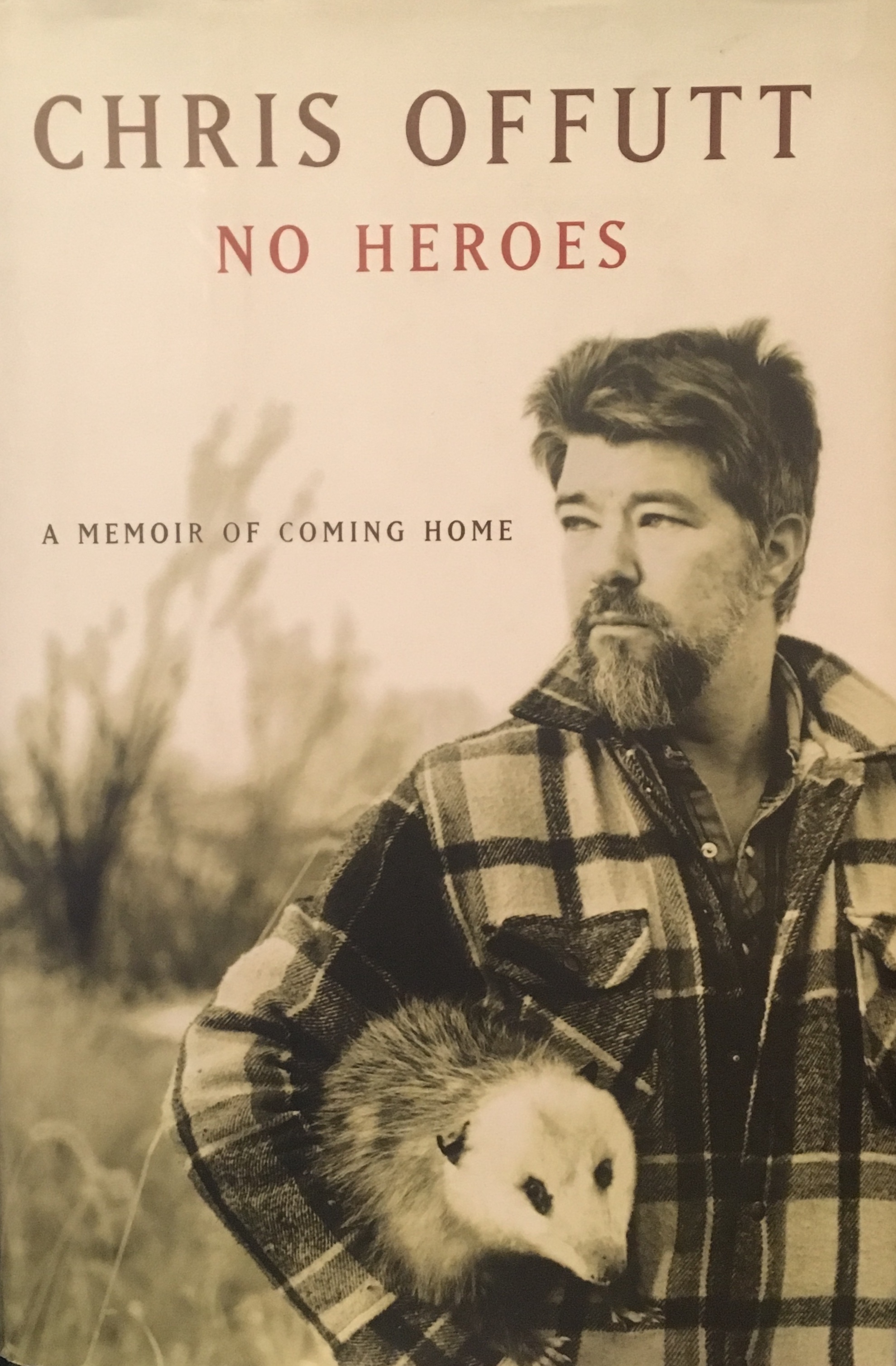
No Heroes by Chris Offutt

No matter how you leave the hills–the army, prison, marriage, a job–when you move back after twenty years, the whole county is carefully watching. They want to see the changes that the outside world put on you. They are curious to know if you’ve lost your laughter. They are worried that perhaps you’ve gotten above your raisings.

This is beginning of No Heroes. Only the prologue retains this second-person perspective, which I think would have gotten difficult for the length of the book, but it’s a perfect intro: it brings immediacy, in that you are the one facing these challenges; and it offers a dreamy, literary take on Chris Offutt’s rough-edged subject and setting. This prologue takes the form of an instruction manual (“to do this, do this”): how to return home, if home is this specific place. It concludes:

You are no longer from somewhere. Here is where you are. This is home. This dirt is yours.

It’s a perfect beginning.

This book is a close cousin to Jeremy Jones’s Bearwallow, which comes as no surprise because Jeremy recommended it to me.

It’s a fine book. In blurbs on the back, Offutt’s style is compared to that of Hemingway and Raymond Carver: strong words, but I can see the comparison. Offutt tends toward short, declarative sentences, except when he doesn’t (like Hemingway, a man perfectly comfortable with long, convoluted sentences and full-blooming metaphor when he feels like it, despite a reputation to the contrary). That is, the prose is mostly simply put together, undemonstrative, but he also knows how to turn a surprising or beautiful phrase at the moment we least expect it; the rarity of such lines adds to their impact.

Offutt’s story, like Jones’s, is of going away and coming back. Both men are from Appalachia. Offutt is from the hills of northeast Kentucky, where he went to elementary school, high school and college within ten miles, and only realized later how unusual this was. As a troubled twenty-year-old, he’d left the hills. He returns as a forty-year-old, having collected an education, written books, married and had two boys, lived and experienced lots of places. He’s back to teach at his alma mater, a humble school where he had worked maintenance while a student, a paradoxical foot-in-two-worlds experience that his cohorts on both ends–work and school–had struggled to accept. “It was more of a high school with ashtrays than a genuine college,” Offutt writes, but that criticism sounds less nuanced in isolation than it does on the page, in the midst of his obviously tortured love for this place.

In the course of No Heroes, he navigates his return to this place, whose dirt and leaves and birds he passionately loves. His parents still live here, but his love for them is less easy. His wife, Rita, and their two sons have some trouble adjusting to a place that is not theirs. Offutt came home hoping to be a hero to students like the one he was: talented but without role models, ready to slip into crime more easily than into art. The title foreshadows the end of that plot line, of course.

But there is another plot line! And it’s a doozy, complicating the story of the homesick Appalachian who has made good and therefore alienated himself. Offutt’s in-laws are finally ready to let him tell their stories. Both are Polish Jews and survivors of a string of Hitler’s concentration camps. You think you’re homesick? The narratives of Arthur and Irene humble us all. The flashback parts are different from the whole of the book: Arthur and Irene’s chapters are told in their own voices (Offutt recorded their interviews), and his own chapters told in his own voice; occasional scenes give dialog representing the interviews themselves. While a bit jarring at times (watch those chapter titles and they will guide you; I have trouble focusing on titles, for no good reason), even this effect–the jarring in and out of a painful past–suits the subject matter. It is Arthur’s admonishment about telling the complicated story, that even victims have flaws, that titles the book: “Remember, Sonny, no heroes.”

I really enjoyed this book. It’s very rooted in a beloved place, and contains two stories equally well-told. For parents, for Appalachians, for anyone facing the tension of succeeding out of the bounds of their upbringing, for the homesick, this is an engaging memoir.


Rating: 8 “crimson maple leaves with green veins that pulsed in mourning for the branch they’d left.”

movie: The Wild and Wonderful Whites of West Virginia (2009)

Note: I’m out of pocket during my residency period, beginning today with travel. I love your comments! But it may take me several days or a week or more to respond.


Sorry to follow last week’s negative review with another.

I’ve heard about The Wild and Wonderful Whites for years now, and I know a lot of people who appreciate it. When I started school in West Virginia, folks from other places mention this movie as a way to know the place. As I was watching all those other Appalachia/Southern movies for school, a friend borrowed it for me, as an optional add-on to my education, I guess.

I think it’s a shame that this movie represents the state. This documentary of the apparently legendary White family records their lifestyle: petty crime and violence, drug and alcohol abuse, no great contribution to society–excepting of course the cultural value of the tap dancing. I don’t know. The film itself presents (we assume) reality, with little or no editorializing. But the response to the film feels to me like glorifying or celebrating a lifestyle that includes a certain amount of tragedy. I’m not a prude; I appreciate partying, and I don’t judge making babies out of wedlock, or anything like that. But the matriarch crying at the drug use at her birthday party, and the pillhead whose baby is taken from her in the maternity ward, are sad stories. Why are we laughing and joking about this? Also, West Virginia doesn’t deserve this as its theme song.


Rating: 4 Xan-bars for filmography, I guess.

movie: The True Meaning of Pictures: Shelby Lee Adams’ Appalachia (2002)

This movie was assigned viewing for school, for the same seminar on “the documentary imaginary” that assigned Deliverance. It won’t surprise you to know then that I was comparing them as I watched this one.

The True Meaning of Pictures is a documentary, examining the work of photographer Shelby Lee Adams, and examining his portrayal of his home region of Appalachia. In a major departure from Deliverance, then, this movie explicitly questions how Appalachia is seen and viewed artistically, and asks if its portrayal is fair, or stereotypical, or exploitative. This is a nice answer to that other movie, and I’m so glad I watched them in this order.

Shelby Lee Adams is from Appalachia, so he “owns” it, it is his place. But the argument goes that he has chosen to photograph the stereotyped version of that place, a place he’s mostly left behind in his own day-to-day; and he has to some extent staged those images. Can you exploit the place you’re from? Or is what you see what you picture, and that’s that? The people whose lives he photographs (many of whom are close friends, who he stays with and visits for extended periods) generally appear (at least in this film) unbothered by the pictures he makes. The one woman interviewed here who was really offended by his work was the relative of one of his subjects. She had left her roots behind and didn’t like how he’d portrayed then. It makes an interesting juxtaposition, for me.

I enjoyed this documentary. I found it thoughtful, and informative. It offered me a view into a handful of people I found interesting to meet. I’m a little reluctant to make conclusions as to my own opinions about Appalachia and its portrayal; I’m an outsider to that region, which is an intriguing position to be in just now, studying it with a student body (and instructors) who are mostly insiders. I thought this movie was pretty fair in its examinations. But I’ll be interested to hear what my classmates think.

Next up is Sherman’s March, a 1986 documentary offering “A Meditation on the Possibility of Romantic Love In the South During an Era of Nuclear Weapons Proliferation.” So that sounds… interesting.


Rating: 8 holes in the screen door.

movie: Deliverance (1972)

Content warning: rape. Not discussed here in detail, but rather more graphic in the movie.


Assigned for Rebecca Gayle Howell’s seminar on “The Documentary Imaginary: One Way It Means To Be an Appalachian Writer,” and I have never seen this iconic movie before, so bring it on.

I am reminded of Urban Cowboy, how I recognized the moment in time, the cultural marker the movie made, felt nostalgic for some of its imagery, felt drawn to its presumptions, at the same time that I bridled against its crimes: stereotypes, misogyny, a casual good humor towards domestic violence. I gave it some slack for its datedness and enjoyed it some but still gave it 5 rides. And in many of the same ways, I meet Deliverance.

Four city boys take a weekend canoe trip down a backwoods Georgia river about to be dammed, which in the words of one of them, will “rape this whole goddamned landscape.” They take a decidedly nasty attitude towards the local hillbillies, who are short on teeth and don’t talk like the city boys–although it’s interesting to note that from my perspective the city boys sound pretty country, too. They have some small-scale internal conflict among them, but it’s mostly an idyllic float down the fictional Cahulawassee River. Until it isn’t.

I find myself unhappy writing about what follows, and geez, this is an awfully well-known movie. If you don’t know the plot, a simple web-search will fix you right up.

The cultural markers Deliverance has left behind are the dueling banjos, and the rape scene. The movie, it’s true, is so about more than that; but I found the rape scene quite disturbing, and didn’t realize how much so til I started trying to write about it. These are interesting observations that I imagine will be relevant to the discussion we’ll have in class, of “the documentary imaginary.”

Further, I imagine that we’ll be talking about the stereotyping of the Appalachian “mountain man” hillbilly. It’s quite ugly. Also ugly is the city boys’ attitude towards the locals when they arrive on the scene; really, they weren’t setting themselves up for any kind of good relations. A good movie in many ways; iconic, yes; musically interesting. But hard to watch, and ugly, despite the beautiful scenery. I did not find it redeemed by its profundity or higher themes or teaching value in the way that perhaps Boys Don’t Cry was. Maybe it’s just the datedness again. But I struggled; and ultimately, this movie gets the same rating as Urban Cowboy, and for similar reasons.

I look forward to being educated.


Rating: 5 missing teeth.

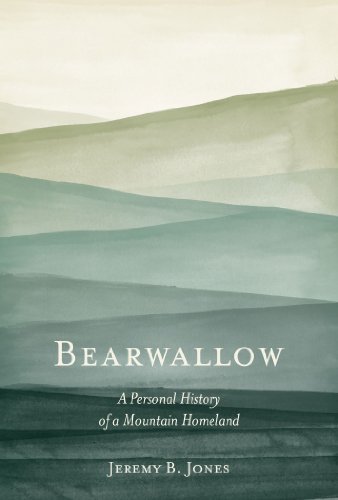
Bearwallow: A Personal History of a Mountain Homeland by Jeremy B. Jones

Disclosure: I read this book in preparation to meet its author at school in a few weeks, where he is guest faculty for the upcoming semester. There is some chance that he will be my advisor for this semester.


I bought Bearwallow more than a year ago, when I was researching MFA programs I might want to attend, and he came up as past guest faculty at WVWC, where I did end up going. I thought it would be good to get to know their faculty better by reading books like this one, but I didn’t get around to it until we got word that he was actually on his way back to serve as guest faculty again. I’m pleased I finally found time for this memoir, which does have something to teach me. And I’m looking forward to meeting Jeremy, not least because I learned in these pages that he is an avid cyclist! (Road, not mountain, but close enough. I remember roads.)

In the timeline of Bearwallow, its narrator is a young man recently returned to the shadow of Bearwallow Mountain where he grew up. Jeremy wanted to leave Appalachia, and he and his wife Sarah lived for a time in Honduras, where they taught young children English. But he kept feeling struck by those mountains’ familiarity, their relationship to his own mountains; and he ended up coming home to teach the children of his own old neighborhood. There, he teaches ESL (English as second language) to the children of immigrants. As he considers language, mountains, and our relationships to place, he watches developers parcel out the top of Bearwallow and plan for it to change. The book is about Jeremy’s life (still a short one in the book’s timeline), his family history, his region’s history, the significance of change and growth, and what place means to people. (You can see why I like this book.)

This is a young man’s memoir, which is a tricky undertaking. But Jones handles it well. For one thing, his story is not chiefly or firstly about him. He opens with the story of one of his forefathers, a Dutchman named Abraham who helped to settle the region where Jeremy would grow up. He always grounds his own experiences in their larger settings: the mountains of North Carolina and Honduras; a family history; the challenges of immigrants and immigration; a young person’s dual drive to leave home and to return to it. He also frequently references his own youth, acknowledging the uncertainties of anything he can know about himself as a man in his 20s. In fact, this book ends when the narrator and wife go off to graduate school, leaving again and only perhaps to return (as we, outside the book, know he did, at least to the region if not the town and neighborhood).

I found the narrator easy to like. He is humble, though not self-deprecatory. He has an open mind and questions his own decisions and impressions. I also liked the kind of musing he does. People and place, the dubious demands of family and inheritance, and the complexities of a place like Appalachia, all speak to me. I appreciated Jones’s use of scenes to transition into memory, or historic topics: scenes and scenery as smooth transitional material between more abstract subjects, and of course for their added interest and characterization.

This is an enjoyable, easy read, but it’s also got something to offer the writing student. In fact, its ease is one of those deceptive qualities: apparently effortless, so that the style fades into invisibility, but that’s some of the hardest prose to write. Again, on a personal level, I look forward to meeting Jeremy as a fellow cyclist (and I think of my mother, a fellow teacher of English as foreign language). Recommended.


Rating: 8 lots.

Monsters in Appalachia: Stories by Sheryl Monks

Short stories defined by their location offer a complex Appalachia filled with both light and dark.

monsters-in-appalachia

Monsters in Appalachia presents the short stories of Sheryl Monks in a collection that ranges over a region but offers a cohesive vision. United by their sense of place, these stories are compassionate and impassioned, often disturbing and filled with energy.

The dangers of coal mining strike the young and the experienced alike. A 14-year-old girl is encouraged by her mother and aunt to pursue men, but resists. A man searches for a dog he believes holds the key to better luck. An exchange at a small-town grocery drives home class inequalities and double standards. Factory workers consider devising on-the-job accidents to collect disability. And in the final, titular story, an old man hunts and captures monsters while his wife prays for punishment for the couple’s sins.

The monsters are in fact many and various, figurative and surreally literal. Monks’s characters are plagued by poverty, abuse, limited education and a shortage of resources and options–upholding some of the stereotypes of Appalachia–but in their choices, they prove more than their typecasts. Dialect and place-specific details establish settings like the mountains of West Virginia, where a panicked mother “can’t spot a single star for the heavy swag of tree branches that flank the road as it winds itself around the mountain.” A stern, moody atmosphere is one of Monks’s strengths, although there are points of light in this dark collection. Monsters in Appalachia is often painful but always authentic, both muscular and sensitive.


This review originally ran in the November 15, 2016 issue of Shelf Awareness for Readers. To subscribe, click here, and you’ll receive two issues per week of book reviews and other bookish news.


Rating: 7 serpents.

Flight Behavior by Barbara Kingsolver (audio)

flightAnother beautiful, thought-provoking book from Kingsolver; and another outstanding narration by the author herself. Like The Lacuna, which I called one of the best books I read in 2012, this will be a standout. I fear this will be one of those longer reviews, as I have so much to say…

We open with a young mother of two in a less-than-thrilling marriage, named Dellarobia Turnbow, hiking up a mountain to meet a man for adulterous purposes. On her way there, she’s distracted by an amazing sight. The hills appear to be aflame, but there is no sound and no heat. She is amazed, and disturbed, and stands up her would-be lover and goes back home; it’s something like a religious experience, although she’s not particularly religious. She does, however, attend church – one of many compromises for the sake of her mother-in-law, who terrifies her.

Dellarobia lives on her in-laws’ sheep farm in Tennessee and rarely gets to leave the property. Her husband is kind but dull. She is frustrated. The strange thing happening up on the mountain, however, will expand her world: it has implications for climate change, and is variously interpreted as an event of an environmental as well as a religious nature.

The cool orange flame on the mountaintop is a mass migration of Monarch butterflies, pushed out of their normal overwintering site in Mexico by a mudslide that killed a village, caused in turn by clearcutting and climate change. Dellarobia doesn’t have the context to begin to comprehend such happenings, so she has to learn slowly; aiding her in this process is the amazing Dr. Ovid Byron, an entomologist who has written the book (many of them) on Monarchs who shows up to park his camper on the Turnbow farm and study their special mountain. Ovid is a striking figure – physically, as a black man, he is of such a minority in the rural mountains of Tennessee as to be exotic to Dellarobia; audibly, his accent (similar to Jamaican) is mellifluous and musical; and intellectually, he boggles Dellarobia’s mind and pushes her to new ways of thinking. This is a young woman who would have gone to college if she hadn’t gotten pregnant, and her thwarted ambitions are sparked by Ovid’s presence.

Meanwhile, the local religious community becomes convinced that Dellarobia prophesied the Monarchs’ arrival, that she had a vision; she is tentatively treated as a hero or religious figure, which doesn’t sit well with her feared mother-in-law, Hester. The media – local, and then national – blows things out of proportion, highlights the sensational, and alternately threatens to turn her into a sex symbol or accuses her of suicidal tendencies. Her marriage – which we learned in the opening scene was not strong or happy – is predictably strained by all the activity and attention. And perhaps most poignantly, her small son Preston is told by Ovid that he is a scientist, and begins a new way of thinking, himself.

As a family story or the story of one woman, alone, this would be an extraordinary masterpiece. Dellarobia is a remarkable woman, and I think she is probably representative of many young women who have greater abilities than they end up exploring, trapped (in Dellarobia’s case) in rural and familial circumstances that limit her. Just as in The Lacuna, one of Flight Behavior‘s greatest strengths is Dellarobia’s realness: her quirks, her frustrations, her fantansies, her day-to-day life and thoughts. We get to experience this story inside her head, and the inside of Dellarobia’s head, all by itself, would be a glorious gift for Kingsolver to bestow upon us. The other characters too, all of them, are fully realized, more real than the people I know in the real world; they’re complex, and even the initially unlikeable ones (I’m looking at you, Hester) are multi-faceted and deserving of our sympathy in the end.

But! That’s not all! There’s more to this story than Dellarobia and her family of wonderfully real, odd people. The Monarch butterflies, climate change, the complexities of farming in a changing world, the environmental movement, 350.org, and academia are all explored and examined in a wonderfully nuanced way. Idealistic young – and old – environmentalists show up on the scene as well, and there’s a lovely scene in which one of them quizzes Dellarobia on her commitment to leave a smaller carbon footprint. As it turns out, being rural and poor puts her in a pretty good place footprint-wise already, a fact which humbles (not to say embarrasses) her interlocutor.

Dellarobia turns out to be the perfect vehicle for teaching us all the science of Monarchs, of migration, of weather patterns and geography, of climate change, and of relationships among people and cultures. She’s ignorant, but not unintelligent, and once she learns how to open her mind, she is an inquisitive student; and Ovid Byron is a wonderful teacher, and let me add, his dreamy accent, so well performed in this audio edition, is to die for. [I do recommend listening rather than reading, upon which more in a moment.] However, this is never a polemic, and Dellarobia is far, far more than a vehicle; you remember I was terribly bothered by that issue in Sophie’s World, and a little bothered by it in Ishmael, but there is no trace of it here. As I wrote above, Dellarobia is very, very real. Instead, this is a moving, complex story, starring sympathetic, believable characters, that also handles some large, important questions: like, what are we doing with our world?

I have a quick note to make on the ending, mostly for my father. Pops has noted that where Derrick Jensen is brutally honest about our future, Bill McKibben tends to draw intelligent conclusions and then inexplicably end on what feels like an unrealistically optimistic note. Well, in the same vein, Kingsolver may end things a trifle more hopefully than is realistic – it feels good, you understand, but it’s a McKibben ending rather than a Jensen one, if you follow. And then she thanks McKibben in her Author’s Note, so that’s fitting.

The Author’s Note also includes a brief discussion of what in this story is true to life (and how she found it out), and what is fiction. This is a well-researched book, and I appreciate her delineating the boundary between fact and fiction, as I always do.

The audio narration by Kingsolver herself could not be improved upon. Dellarobia has an Appalachian twang and darling figures of speech. Her BFF Dovey is even cuter and mouthier; she collects jokey church billboard sayings, some of which Dellarobia is sure she makes up (“Moses was a basket case”). Dellarobia’s in-laws have their own audible personalities; her husband Cub is nothing in life if not sloooow in all respects including speech. And Ovid Byron! Oh, the accent. Swoon. Kingsolver does all these beautifully. If you have to read this book rather than listen to the author read it, then fine, but I pity you. Get the audiobook!! Do it!


Rating: without question a perfect 10 newborn lambs.

This book is so wonderful – particularly in Kingsolver’s masterful narration – that I wonder if I should go back and try some of her earlier work again. I remember being decidedly nonplussed by The Poisonwood Bible, and I know I’ve read The Bean Trees but have no impression of it (which is not a good sign); I can’t decide if I’ve read The Prodigal Summer or Animal Dreams or not (also not a good sign). But The Lacuna and this one are both so grand, I feel I should delve more deeply. Also, while I’m pondering past readings, I wonder why I keep getting Kingsolver crossed with Margaret Atwood in my mind? I wanted to attribute The Robber Bride (which I enjoyed) to Kingsolver. Maybe it’s that I’ve found them both a little hit-or-miss; I was less impressed with The Year of the Flood and ambivalent about Oryx and Crake and The Blind Assassin; have no impression from Surfacing; but loved The Penelopiad, and found The Edible Woman mindblowing.