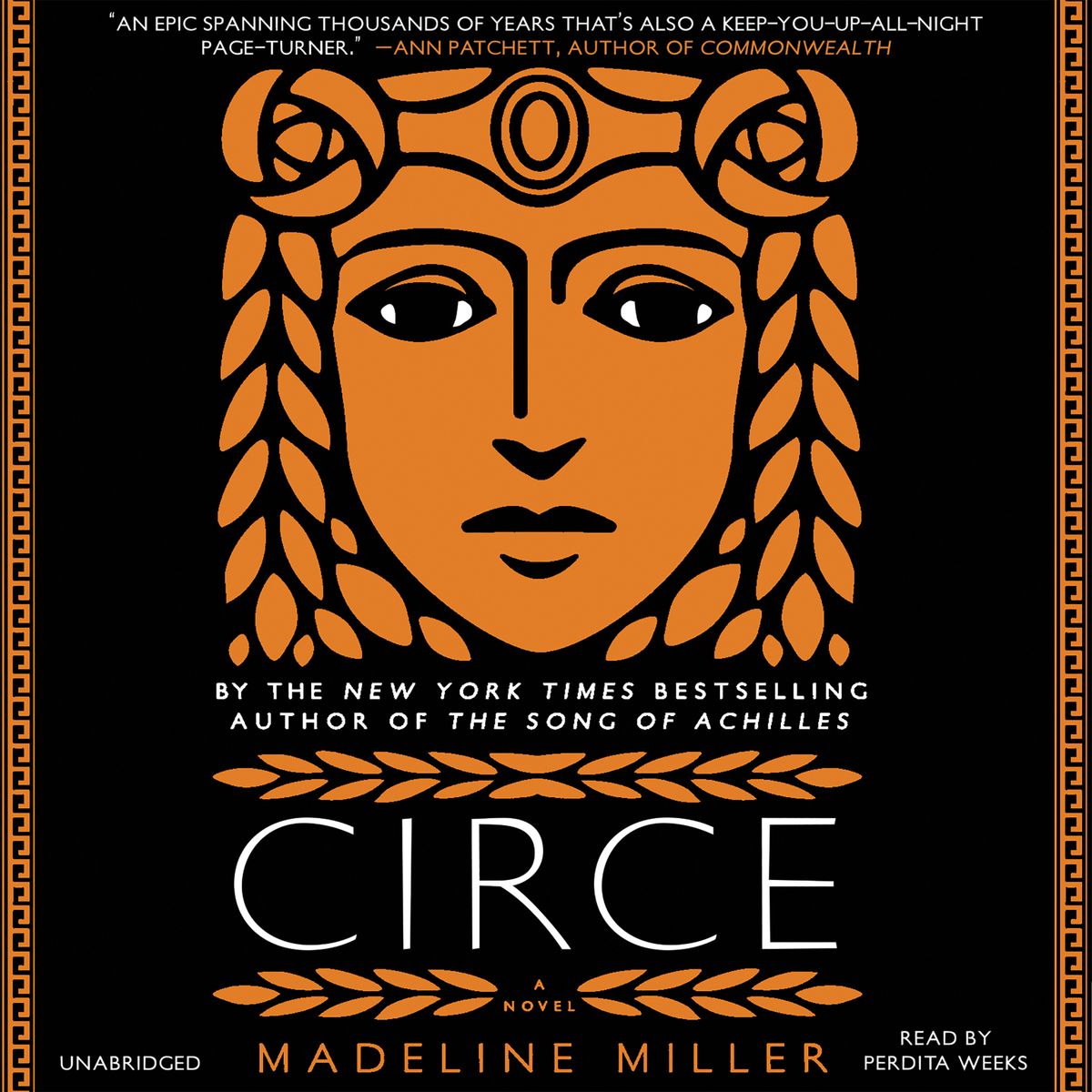
Circe by Madeline Miller (audio)

Madeline Miller, winner of the Orange Prize for The Song of Achilles, follows with another retelling from Homer’s great works with Circe. Remember, Circe was the witch-goddess who turned Odysseus’s men to swine on her enchanted island, then slept with him, and successfully tempted him to stay with her there for a year before he was able to tear himself away and continue on his ill-fated journey home (eventually successful in that he gets there, but not in too many other senses). Circe is the daughter of Helios, the sun god, and a nymph named Perse.

I had no idea that Circe had such an extended backstory – I knew her only from the Odyssey. Her story is further enlarged upon in Miller’s lovely telling here: her birth and childhood in the halls of the gods, ignored and unliked by her immortal parents, teased and picked on by the nymphs. Her love of the fisherman Glaucus, and his transformation; his love for the nymph Scylla, and Circe’s spell that transforms her in turn to the monster Scylla we know (again, from the Odyssey and other sources). Her minor role in the punishment of Prometheus, another god with a sympathy for mortals, and her eventual banishment to the island Aeaea (pronounced in this audiobook as ai-aye-uh). Then, her centuries (recall, Circe is immortal) on the island, developing her skills of witchcraft and enjoying a few sexual liaisons: first, with Hermes; later, with Daedalus; and eventually with her most famous guest, Odysseus.

Spoilers follow below (in white text – highlight to read). These are features of Circe’s history that come from myth; but they were stories I’d never encountered before, for all my love of Odysseus’s story, so they may be new for some of you, as well.

We get a lushly detailed version of Circe’s turning men to swine episodes, from her point of view and more justified than in Homeric tellings. We meet Odysseus, well into the length of Circe; and while it’s all been lovely, I have of course been leaning toward this event. Well, Odysseus through Circe’s eyes is rather a different beast (no pun intended), although recognizable. They have a relationship; his men get restless; he prepares to leave, but not before Circe (following a message from Hermes) passes on the prophecy regarding his visit to the underworld. She advises him; he pours the blood and waits for Tiresias, etc. (Pardon my glossing; this is where I know the story well.) And then… After his departure, and without his knowledge, Circe gives birth to Odysseus’s son, Telegonus. His name is a play on that of Telemachus, Odysseus’s older son with Penelope; it also means ‘born afar,’ which for Circe means born far from his father’s land of Ithaca, yes, but also far from her own family – far from the whole world, you might say. Telegonus is a difficult baby but a fine young man.

From his birth, the grey-eyed goddess Athena tries to kill him, but she won’t say why. Because of this threat, Circe worries. She spins massive spells that bear down on her; she works herself weary to protect her child; and she shelters him beyond even the average protective mother. But of course, she can’t keep him away from the world forever. It is Hermes, in fact, who secretly helps him build a boat with which to leave sheltering Aeaea. Telegonus is determined to go find his father. In one of her acts of astonishing strength, Circe wins the poison tail of the older-than-old sea god Trigon, with which she poison-tips a spear for Telegonus – to keep him safe, she thinks. But as is so often the case in Greek myth, this poison spear instead becomes the instrument of fulfilling another prophecy. In an accident, born of the miscommunication of their first meeting, Telegonus’s spear grazes Odysseus, and the yearned-for father dies. I had never known how Odysseus died! Telegonus ends up bringing Penelope and Telemachus back home to Aeaea with him, which Circe does not initially appreciate; but more unforeseen events will arise from here, not all bad. (I have to leave something untold, don’t I.)

Whew.

I was exhilarated by the retelling of Odysseus’s time spent with Circe, and its fallout, following him beyond the end of the Odyssey. All of Circe was compelling and well-told, with style; but I was always waiting for this, the headline act. I was intrigued by a different version of Odysseus than the one I’ve known before. Miller’s is a testier, more temper-prone, less admirable man. And while I don’t like having my heroes messed with, this worked out well for me. Miller’s Odysseus fits within Homer’s; they are not at odds. He was always a little apt to cruelty, and certainly self-serving, the cunning one. And Circe’s perspective necessitated the changes, I think.

A feminist retelling? I suppose, in the spirit of Atwood’s Penelopiad or Barker’s The Silence of the Girls, the women’s version might always read that way. I feel like that’s a simplification, though. It might be better classified as a correction of “history told by victors.” The victors tend to be men, but it’s not just that; it’s their power and ruthlessness and erasure of others. This is at least as much about correcting erasure (generally) as it is about the woman’s POV. Although, those men to swine, man. Well done, Miller.

I do love this Circe, who is (especially when younger) mercurial and passionate, stronger than she realizes (in her witchcraft, yes, but in other ways as well), and eventually a crafty and wise woman. She is loyal and devoted but also clever and practical. She is, in fact, Odysseus’s match. For fans of the mythology, I feel there is much to love here.

And for those less familiar, still: the storytelling is nuanced and full and rich. It might perhaps drag a bit, especially as we wait for Odysseus to appear (or is that just those of us who do know the original stories, and feel he’s the headline?); it’s a longish book. But episodes along the way intrigue and compel, too. I loved the Daedalus/Minotaur subplot.

This audio version, read by Perdita Weeks, is luscious, with a rich accent I’d call vaguely British (I am not good with accents). (Weeks is Welsh.) It feels… sumptuous. This lends a certain effect to the novel that may not suit every reader; it’s a bit grand; but it felt right for the story and for Circe’s larger-than-life (indeed, immortal) story. I’d spend another 12 hours this way, easy. I can’t wait for what’s next from Madeline Miller.

Circe is absolutely recommended for fans of the Greek myths, and for anyone who likes a good, involved, winding yarn about men and women and gods and power struggles and grudges and fantastic magic, and more.


Rating: 8 ground-up leaves.

The Silence of the Girls by Pat Barker

This retelling of the Trojan War by one of the women on the side of defeat is essential, and essentially human.

The Iliad is the story of the Trojan War told by the victors, and by men. At long last, another perspective is offered, in Booker Prize-winner Pat Barker’s The Silence of the Girls. Briseis was queen of a city near Troy and, after it fell to the Greeks, she was given as prize of honor to Achilles. After Apollo compelled him to forfeit a concubine, Agamemnon took Briseis for his own. This indignity inspires Achilles’s famous sulk, which begins the Iliad.

In the tradition of Margaret Atwood’s Penelopiad, The Silence of the Girls is a much-needed retelling. Where men sing of honor and glory, women experience a different war. They are controlled by men: by their fathers and husbands, and then by their captors. Briseis is beautiful and royal; she hates her new status as concubine, but sees the far worse treatment of the “common women” who sleep under the Greeks’ huts, with their dogs, and are used by any man who pleases. She is clever and gives nuanced portraits of many characters in the Greek encampment below Troy’s walls. She is proud, angered by the indignities of slavery. One of the book’s themes is the question of authorship: she knows that it is Achilles’s story that the world will hear, but she searches for her own within narratives of men and war.

Strong, beautiful Achilles is cold, but stops short of cruelty. Gentle Patroclus eventually befriends Briseis. Ajax, Agamemnon, Odysseus and Nestor are profiled; but equally important are the other slave women. Briseis has friends, allies and antagonists among them, but always considers their struggles. For example, Ajax’s concubine is one of several women who recommend pregnancy above all other strategies. Briseis does not love her captors. But one of her revelations involves how the Trojans will survive, in the end: the sons of the Greeks will remember the Trojan lullabies their captive mothers sang to them.

The Silence of the Girls, like the classic it’s modeled on, is an epic. Briseis’s uncertain situation brings tension and momentum. At just 300 pages, this novel feels much bigger than it is, but is never heavy. Even with the atrocities, violence and loss it portrays, the protagonist’s thoughtful, compassionate point of view emphasizes humanity. It would be too much to say she weighs both sides of an issue evenly; she is loyal to her family and angry with her captors, but she also sees the tragedy in ranks of young Greek boys killed.

This mature, reflective narrative manages the cataloging of Homer’s telling (how many tripods offered, how many bowls of wine mixed), but with a grace and an interest in individual people that is fresh and novel. Barker uses metaphor and animal imagery deftly. Her prose flows easily, like storytelling between friends. It’s an absolute pleasure to read for any devoted fan of the Iliad, but equally accessible to those new to the Trojan story; indeed, The Silence of the Girls might make the perfect entry.


This review originally ran in the August 9, 2018 issue of Shelf Awareness for the Book Trade. To subscribe, click here.


Rating: 8 waves.

Arcadian Nights: The Greek Myths Reimagined by John Spurling

Classic Greek myths starring Herakles, Theseus and more are reborn in vivid, funny, fresh forms.

arcadian

From his home in a hillside Peloponnesian village, John Spurling (The Ten Thousand Things) charmingly retells some of Western literature’s best-known stories. He balances careful attention to the originals with his own humorous voice, honoring well-loved classics with a fresh eye.

Each section focuses on a hero: Perseus, Herakles, Apollo, Theseus and the ill-fated Agamemnon. Chapters begin and end with Spurling’s own Arcadian vista, on the Gulf of Argos, which inspires his imagination. Through these lenses, Arcadian Nights (re)familiarizes readers with the curse on the House of Atreus, the Twelve Labors and the complexly intertwining genealogies of mortals and immortals in a storied era somewhere between history and myth. Spurling notes commonalities with other cultures’ and religions’ fables, and infuses the established legends with added detail: imagined dialogue lends well-known characters extra personality, and Herakles gets a perfectly apt new piece of apparel. The occasional modernization enlivens the tales, as when the newly dead line up to cross the River Styx into Hades–it “was a little like going through security in an airport today”–but this is no clumsy 21st-century resetting of Aeschylus. Rather, Spurling’s gentle, clever wit complements the originals’ themes of heroism and romance, and their reminders of the importance of hospitality, humility and memory.

Spurling’s passion and enthusiasm and the best of Greek myth shine through this new version, equally appropriate to introduce new readers or reinvigorate the appetite of those who already honor such names as Zeus, Achilles, Athena, Poseidon and more.


This review originally ran in the February 16, 2016 issue of Shelf Awareness for Readers. To subscribe, click here, and you’ll receive two issues per week of book reviews and other bookish news.


Rating: 7 golden apples.

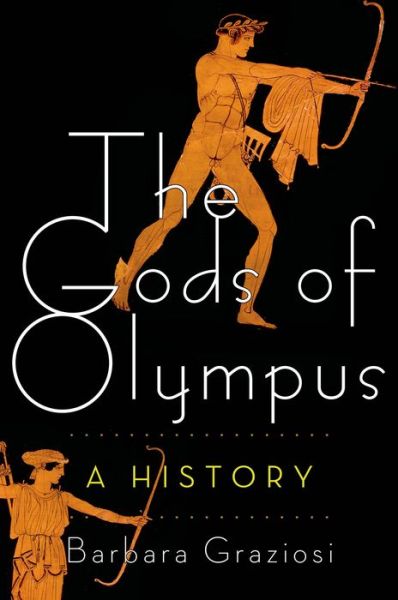
The Gods of Olympus by Barbara Graziosi

For novices and enthusiasts alike, a comprehensive and absorbing study of the gods of Olympus and how their cultural roles have changed over the centuries.

gods of olympus

From Homer and Hesiod, we know that Zeus has a large sexual appetite, that Athena is noble and warlike, that Aphrodite is the goddess of love and sexuality, that Hermes is a messenger with a sense of humor. But how did these myths and the personalities they depict survive to the present? Barbara Graziosi is a professor who’s written several academic works on the classics. In The Gods of Olympus, she directs her expertise to a more general audience for the first time, following the 12 gods and goddesses of the classical Greek pantheon from their first appearances in antiquity through our continuing modern awareness of them. Readers benefit immensely from her proficiency, which comes with a sense of humor: Graziosi occasionally appears in her own narrative, with an endearingly wry, self-deprecating tone.

The history of the immortal Olympians begins in Greece, where Graziosi explores their role in myth, ritual and cultural events. The Athens of Socrates, Plato and Aristotle reconsidered the value of the gods, in literature and in life, and when Alexander the Great expanded his empire toward the ends of the earth, he advertised his ability to travel even further than Dionysus. By gauging his own accomplishments against those of the gods, he sought to make himself like a god even as he reconfirmed the supreme importance of the deities.

Under Alexander’s rule, much of the “known world” was Hellenized, taking on Greek–and therefore Olympian–customs and culture. During the Roman Empire, the gods’ strong personalities were merged with the traditional Roman gods’ rule over matters of state, surviving in slightly different forms that best served those in power. As Graziosi demonstrates, this is the model through which they have come to us over millennia: the rise of Islam and Christianity likewise preserved the Olympians, though it transformed the gods into demons, allegories and cautionary figures. Their original worshippers are long gone, but the Olympic gods survive, flexible and changeable but continuing to inspire art and literature.

Graziosi’s knowledge is obvious, and easy to trust, accompanied by thorough notes and a helpful appendix to the original 12 gods and their corresponding Roman identities. Her writing is accessible and entertaining, her passion for her subject obvious; The Gods of Olympus will equally thrill longtime lovers of the classics, and appeal to readers seeking a friendly, engaging introduction.


This review originally ran in the March 10, 2014 issue of Shelf Awareness for the Book Trade. To subscribe, click here.


Rating: 8 centuries (just for starters).

Oedipus at Colonus by Sophocles, trans. by Dudley Fitts and Robert Fitzgerald

oedipusThis is the second play in a trilogy; see the first, Oedipus Rex, here.

At the opening of Oedipus at Colonus, 20 years have passed, during which Oedipus has wandered in exile with his daughter Antigone as faithful companion and caregiver. He initially hoped for a sentence of death from Creon, but was given banishment instead. He arrives near Athens hoping for asylum, as his second daughter Ismene appears with news. Thebes is experiencing conflict: the two sons of Oedipus, Eteocles and Polyneices, are fighting for the kingship. An oracle has instructed that Oedipus can help; but he refuses, even when Polyneices shows up to ask for his father’s blessing. Oedipus resents that his sons heartlessly allowed him to be turned out of the city. Although he wanted death in the beginning, he has since decided that his crimes were unknowing – he killed his father in a fair fight, not knowing who the man was, and defending his life; and he married his mother not knowing his relationship to her, only knowing that she was a queen whose favor he had won. And he resents the life he’s earned by his innocent crimes. At Colonus, he meets Theseus, king of Athens, who defends Oedipus and his daughters against the treachery of Creon. Following another oracle that says Oedipus will bring peace and glory to the city that offers him refuge, Theseus welcomes Oedipus to die there at Colonus.

This middle play (the only one that I had not read before) was in some ways the quietest of the three, and apparently the least known. It was followed, in my edition, by a commentary that Oedipus Rex lacked. This commentary described the principles of translation ascribed to by Fitzgerald, and gave some background information on Greek theatre and tips for presenting this in the modern era. I found it useful. I was probably least moved by Oedipus Colonus; but it did portray the loving relationship between Antigone and her father (brother) that helps establish her love of family, which we will see so strongly in Antigone. She is growing as a character; she did not speak in Oedipus Rex, and in this play she is a speaking character but still subordinate to her father’s needs. She is kidnapped, apparently helpless to defend herself, but her strength is increasing as her father’s life ends.


Rating: 5 holy places.

Oedipus Rex by Sophocles, trans. by Dudley Fitts and Robert Fitzgerald

oedipus“The Oedipus Cycle” is made up of three plays by Sophocles: Oedipus Rex, Oedipus at Colonus, and Antigone. I cannot remember at this moment what motivated me to read or reread these plays; something else I read, no doubt. I remember Greek tragic drama very fondly from high school, where Mrs. Smith inspired me in many of my present-day literary loves (hello, Hemingway and Homer).

This triptych concerns the mythic curse on the House of Thebes, which I will retell quickly in my own words. Ahead: spoilers. Oedipus was both to the Theban King Laius and Queen Jocasta, but upon his birth, an oracle prophesied that this baby boy would grow up to murder his father and marry his mother. Wishing to avoid this fate, Laius took the boy out in the woods, pierced his heels and pinned them together, and left him to die. Now, this is no way to avoid the fates. Oedipus was raised by a foster father and mother who claimed him as their own, until as a young man he heard this prophecy given, and not wishing to fulfill it against the parents he knew and claimed, he fled them. Along the road on his travels, he came across an older man who wouldn’t yield the road as Oedipus thought proper. They quarreled, and fought, and Oedipus killed the older man (guess who this will turn out to be). He continues on the road to Thebes, a city-state that has just lost its king to a mysterious murder; he solves the riddle of the Sphinx, marries their queen, and happily begets four children.

When Oedipus Rex (or “Oedipus the King”) opens, King Oedipus is struggling to relieve his city of a plague. He must appease the gods, and the oracle tells him the way to do this is to finally avenge the former king’s murder. He agrees that Laius deserves justice – ironically volunteering to serve as his child should: “I say I take the son’s part, just as though / I were his son…” (as translated in my edition by Dudley Fitts and Robert Fitzgerald). And Oedipus curses the murderer, or anyone who would hide his identity, with death or banishment. This will have consequences. The action of the play, the tension and emotion, resides in Oedipus’s earnest cursing of the murderer who turns out to be himself; adding incest to his unknown crimes is too much for him, as his queen (wife, mother) kills herself and Oedipus gouges out his own eyes and puts himself at the mercy of his brother-in-law, Creon. Here the play ends.

There is some ambivalence, at least for me, in identifying the fatal flaw or crime of the tragic hero in this play. (It will be much clearer in Antigone.) Oedipus is indeed guilty of murdering his father and marrying his mother – terrible crimes, to be sure – but he did both unknowingly, and to his knowledge had every right to kill (in self defense) and marry. I think his fatal flaw is at least shared by his parents: the crime was in trying to avoid the predestined fate assigned them all by the gods. This you can’t do! One wonders, if Oedipus had been raised at home, how these things would have come to pass; clearly differently, as he would have known his parents. Presumably he would have been more at fault. But at any rate, the point is made that it is futile to avoid the fate assigned you by the gods. Perhaps his limited responsibility here is what earns Oedipus a somewhat reduced sentence – of which, more in the next installment.

I enjoyed this play for its feeling. The characters are passionate, emotional, and all of this is well evoked by the somewhat dramatic (but this is drama, after all!) but very understandable language. I think Fitzgerald’s translation is excellent; I find it moving, and the atmosphere of building doom and foreboding is exquisite.

Coming up: the next two plays.


Rating: 7 places where 3 roads meet.

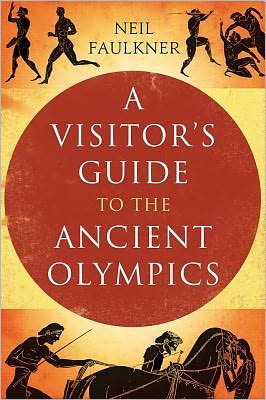
A Visitor’s Guide to the Ancient Olympics by Neil Faulkner

What an odd mix of genres this book is. It sets itself up as a travel guide: eat here, sleep here, don’t forget to pack this – but to a destination that would require time travel. As Faulkner says in his introduction, this is necessarily (by its fantastical nature!) not an entirely academic book; but he does have an academic background, and rather than wildly making things up, he does follow history & research. He just uses his imagination where it makes sense to do so, and in a way that makes sense: he makes educated guesses. (As he points out in the intro, again, he has to pick a day for each event; it is unrealistic that a guide to an Olympic festival would be unable to say when the footraces would be held.) So, note my tags for this post: travel guide; sports; historical fiction; nonfiction. It is a puzzle. A uniquely styled book.

And an enjoyable one, too. At just under 250 pages, it’s an easy read. The sections are short. There is an emphasis for most of the book on ancient Greek culture in general, and on what the Olympic Games represent in that culture (in a nutshell: this is a religious festival; sport is merely a form of religious ritual). The sport itself comes in only late in the book, and I confess that this was a slight disappointment to me: that section of the book that describes the athletic contests was very interesting to me and I wanted more of the same. But the detail on ancient Greece was intriguing, too; I have an interest in ancient Greek mythology & literature, and there were plenty of references that I was pleased to connect.

This book is probably most successful as a travel guide, which is a little awkward since as much as one might wish to, it is in fact impossible to attend the Olympic Games of 388 BC. Faulkner does a good job of elucidating the issues a person would face in attending these Games if she could. Again in a nutshell: there is no lodging, transport is difficult to arrange and expensive, food is odd and limited, and the Olympic Village would be teeming with refuse, stink, and insect activity. It would be hard to see the events on display as there are no stands; spectators 100,000 strong merely shove each other around for a view. In other words, he might have talked me out of the trip if I were planning on it. As a view into the life of ancient Greeks and especially the role of professional athletes in their society, this book was informative and fascinating. Its unique format, too, added special interest. I am bemused and intrigued. Recommended, but probably for a fairly distinct audience. I was well entertained, with my intersecting interests in sport and ancient Greece, and my tolerance for an odd format.


I read an uncorrected advance proof.

Rating: 6 events.

Ajax by Sophocles, trans. by E.F. Watling

I read Ajax from my copy of Electra and Other Plays after being reminded of his tragic story by Madeline Miller’s The Song of Achilles. It is a short play, an easy read, but like so many of the greatest ancient Greek works, very sad.

Ajax was one of the great Greek heroes of the Trojan War. Indeed, Miller says several times in her book (in the voice of Patroclus) that he would have been The Greatest if it weren’t for Achilles – kind of a poignant thought. He’s like the Jan Ullrich of the Trojan War. This play by Sophocles dramatizes the action following Achilles’s death, as known to myth. The background: Achilles quarrels with Agamemnon and boycotts the war; Greeks are dying; Patroclus goes to battle disguised as Achilles to get everybody going again; Hector (the great Trojan hero) kills Patroclus. Achilles is enraged, takes the battlefield, and in turn kills Hector, thus putting into action the prophecy that Achilles himself will die shortly thereafter. He does: killed by an arrow fired by Paris, who started all this nonsense in the first place.

With the Greeks’ hero Achilles dead, it is time for Ajax to shine. But Agamemnon chooses to award Achilles’s trophies of war, not to Ajax, but to Odysseus. Ajax is furious. And now begins the play…

Ajax has determined to kills the sons of Atreus (Agamemnon and Menelaus), Odysseus, and all the Greeks who have failed to honor him as he feels he deserves. He goes on a killing spree overnight. But Athena, good friend especially to Odysseus, tricks his eyes so that he ends up killing a bunch of livestock and no human Greeks. As the play begins, she is explaining this to Odysseus, offering him the view of Ajax, mad, blind, confused, killing sheep and calling them Greek names. Odysseus balks, but we end up seeing the scene. Ajax comes to his senses, sees how he has been shamed, and immediately begins planning his suicide. The Chorus (that tool of Greek drama, the group of citizens that comments on the action) and Ajax’s wife Tecmessa try to talk him out of it, reminding him of the pain his parents would feel, and the dubious fate of Tecmessa and their son if left without husband/father. He seems to change his mind, and goes offstage. But then his brother shows up, distraught, citing a prophecy that Ajax will die today. The scene shifts to watch Ajax bury the hilt of his sword, make a short speech, and throw himself upon it.

Tecmessa and the Chorus mourn; Ajax’s brother, Teucer, mourns, and plans to bury the body. Agamemnon shows up and makes disparaging remarks, commanding that the body of Ajax not be buried at all. Now, I’ve read these things before, and (ahem Antigone) you’d think these characters would have learned by now: you have to bury the dead! The gods are mightily displeased if you do not. This is an important tenet of custom and piety. Luckily, Odysseus next arrives on the scene. He had been insulting Ajax earlier, declared him an enemy, but here he lives up to his reputation for wisdom: Odysseus talks Agamemnon into allowing a reverent burial, and the grief-stricken family of Ajax carries on with their ritual. It seems that Teucer will take care of Tecmessa and her son.

I find this to be a moving story, despite the removal of centuries and the difference of cultures… I guess I’ve read enough related myth that I have learned to identify with it. I love the stories of gods and heroes, how they’re all interrelated and how the actions of one generation can effect so many generations to come. (See the above reference to the House of Atreus. That man’s impious mistake will continue to cost his offspring – just watch what happens to Agamemnon when he gets home from war.) And I mainly read Sophocles (et al) for the stories… so I had to remind myself to slow down and appreciate the language, too. I think I prefer the poetry of Homer, but I can just imagine actually seeing this performed… that would be a treat.


Rating: 6 dramatic gasps.

The Song of Achilles by Madeline Miller

I read this book in a day, rapt and tearful and awed. Madeline Miller, I love you. Write more, please.

I expect that most people are at least vaguely familiar with the story of the Trojan War, even if you never read the Iliad, yes? The Greeks sail to Troy in pursuit of Helen, “the face that launched a thousand ships” (that’s these ships!), the most beautiful woman in the world, stolen from her king-husband Menelaus by the Trojan prince Paris. They fight at the gates of Troy for ten years before Odysseus’s characteristically clever notion of the big wooden horse (the Trojan horse of idiom) wins the war for the Greeks. Achilles is a hero of the war, on the Greeks’ side. He had been sitting the war out in protest against an offense to his pride when his close friend (and, most scholars agree, lover) Patroclus goes into battle and is killed. In the opening scene of the Iliad, Achilles is mad with grief and rage, about to rush into battle, kill Hector, and be killed by Paris.

That’s the background. Miller, a scholar of ancient languages (including Greek) and theatre has written a novel from Patroclus’s point of view. This gave her quite a bit of leeway, since Patroclus is not given much coverage in Homer or in ancient myth generally; she got to do what she wanted with him. Here, we see him grow up from a boy: he was a disappointment to his father, then was exiled in dishonor and sent away to be fostered in another kingdom, where Achilles is the prince and heir. The two boys form a decidedly unlikely friendship, with Patroclus the dishonored and weak following in the footsteps of Achilles, whose future is prophesied to be something enormous: he will be Aristos Achaion, the greatest of the Greeks.

Patroclus joins Achilles in his studies and their bond grows closer until they become lovers. They are not eager to join the Greeks and sail to Troy to fight for another king’s wife, but circumstances (and Odysseus, the crafty one) conspire to see them off. From there, you can revisit my synopsis of the Iliad, above – except that we keep Patroclus’s perspective, which actually made the Trojan War that I thought I knew so well spring fresh from the page.

And that is one of the several strengths of this book: that an ancient myth that is familiar to many readers, like me, becomes so real, new, crisp & juicy in Miller’s hands. It definitely made me want to go back and reread the Iliad, as well as other cited works. (Check out the Character Glossary, whether you think you need it or not, for background as well as mentions of other books you’ll want to go find.) The myth of the Trojan War comes alive with Patroclus as it hasn’t before.

Another great strength is the emotional impact Miller achieves. This book is moving, sweet, heartfelt, powerful, in its tragedies as in its loving moments – and the tragedies are plentiful. There is visceral wrath in Achilles’s mother Thetis and her hatred of all mortals and Patroclus in particular; that emotion comes through just as strongly as the love that makes Patroclus put aside jealousy and envy, makes him put Achilles’s needs before his own. I noticed that the first-person voice of Patroclus rarely uses the name Achilles, but just refers to his lover as “he” – thus emphasizing the extent to which Achilles is the center of his world.

As I said at the start of this review, I want more of this! It’s so well done. If you’re taking requests, Ms. Miller, I would like to read a book about what happened to the happy family of Odysseus, Penelope and Telemachus following the conclusion of the Odyssey: how does Odysseus manage to gracefully step down from power and transfer to Telemachus without sacrificing any of his machismo? Reading The Song of Achilles raised this question for me – how a king could step down and preserve his dignity and quality of life. I wonder, too, whether Penelope ever gets grumpy about all the philandering Odysseus did along his homeward journey, while she was standing strong against the suitors.

In a nutshell, this retelling of the Trojan War and the relationship between Achilles and Patroclus is lovely, loving, sweet and deeply emotional; it preserves the grand, sweeping scale and feeling of humanity and drama in the original, but brings it freshly alive in an appealingly different format. The Song of Achilles made me sigh and think and cry, and I wanted more when it was all gone. This may very well be the best book I’ve read in 2012.


Rating: a rare 10 loving caresses.