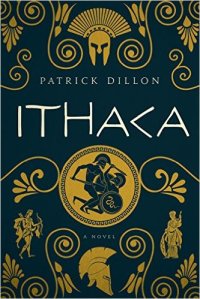
Ithaca: A Novel of Homer’s Odyssey by Patrick Dillon

This retelling of the Odyssey gives Telemachus more voice than ever before.

ithaca

Homer’s Odyssey recounts Odysseus’s 10-year journey home from the Trojan War, to where his wife and son await him. His adventures along the way take center stage. Ithaca, Patrick Dillon’s retelling, resets that center to the son. With substantially more insight into Telemachus than readers have had before, this version also offers a more fallible Odysseus, with all the drama and yearning of the original.

Dillon remains true to Homer’s setting, but the novel is told in Telemachus’s voice, and the weighty absence of a father he never met defines his existence. At 16, he worries over his role and responsibilities, and his inability to protect his mother: he has no one to teach him how to fight. These interior workings bring Odysseus’s iconic son to light as a nuanced and fully formed character. When the wise warrior Nestor assigns his daughter to be Telemachus’s traveling companion, the story gets an appealing twist: Polycaste is headstrong and capable, and her friendship has much to offer Telemachus. The gods are less present this time around; Telemachus is openly dubious. Veterans of the Trojan War roam Greece as bandits and vagabonds.

Though only slight details are changed, Ithaca is a vibrant and fresh revival; Telemachus’s struggles are illuminated through the use of his own voice. The well-loved classic is present: Penelope is beautiful, determined, fading; the suitors are shocking; Menelaus and Helen fight bitterly; the aging Nestor tries to guide Telemachus true. Dillon’s achievement is in characterization while retaining the heart and passion of Homer.


This review originally ran in the July 8, 2016 issue of Shelf Awareness for Readers. To subscribe, click here, and you’ll receive two issues per week of book reviews and other bookish news.


Rating: 8 arrows.

Luigi’s Freedom Ride by Alan Murray

A novel of love and bicycles, both funny and poignant, beginning in Mussolini’s Italy and traveling around the world.

luigi

Alan Murray (The Wealth of Choices; Showdown at Gucci Gulch) tries his hand at fiction with Luigi’s Freedom Ride, and achieves a rare blend of humor, solemnity and grace in this sweeping tale. Luigi Ferraro was born in 1921, in a small Tuscan village where he learned metalworking and a love of bicycles from his Uncle Cesare. Under Mussolini, Luigi is conscripted into the Italian army with his two best friends and trains in the cycling corps; he escapes and joins a group of partisans resisting fascism, and experiences both love and loss. The heartbroken young man then sets out on an international tour via bicycle and train, visiting Jerusalem and Sri Lanka and circumnavigating Australia, that “furthest place” he’d been seeking. Finally, Luigi dismounts in Sydney, where unexpected good fortune awaits him. With friends, family, love and pain spread around the globe, will he ever make it back to Tuscany?

Murray’s quirky tone is absolutely charming, managing to express both the brutality and ugliness of war as well as the sweetly naive foibles of a young man learning about the wider world. Luigi is deeply endearing: he is well-intentioned but inexperienced, confounded by the English dialects of the Scots, Australians and Americans he meets, loyal and quick to love. Employing the bicycle as a symbol of freedom, fun, adventure and forward movement, Luigi’s Freedom Ride is a novel about hope, self-determination and fresh starts, both heartfelt and surprisingly optimistic.


This review originally ran in the February 24, 2015 issue of Shelf Awareness for Readers. To subscribe, click here, and you’ll receive two issues per week of book reviews and other bookish fun!


Rating: 8 clicks.

Treasure Island by Robert Louis Stevenson (audio)

treasureAfter reading Under the Wide and Starry Sky, I was driven to reread Treasure Island. I suspect that I only ever read the Great Illustrated Classics version, in fact: and I loved that series for several years, but I worry now about what I missed. (I reread certain of those classics in full later on, but not all. What misconceptions am I still harboring?) Husband and I first attempted this audio version, read by David Buck, on our U-haul drive cross-country this fall. But the Scottish accent, and the story-within-a-story format, proved too difficult for the big loud truck and our navigation of unfamiliar roads. Fair warning: this is not a criticism of the book (or the audiobook), but it is not the most distraction-friendly listen I’ve encountered.

The story itself is, of course, riveting, once you get into it. It is narrated from a distance of some years by the voice of Jim, who is a young boy (perhaps 12 or so?) in the time of his tale. At his father’s seaside inn, Jim assists in hosting a mysterious sailor we call Billy Bones; Billy is apparently frightened of certain other seafaring men, particularly a one-legged man who wishes him ill. When Billy dies – of fright, after a visit from a band of related ruffians – Jim finds a map within the possessions of the deceased. Local community members Dr. Livesey and Squire Trelawney conspire with young Jim to buy and staff a ship to go looking for buried treasure they believe is indicated on the pirate map.

Here Stevenson securely establishes several tropes of pirate fiction. The cook they install on board their ship is peg-legged Long John Silver, who sings “yo ho ho and a bottle of rum,” talks in the pirate-talk (“aye, matey”), and carries a parrot on one shoulder. The treasure map, marked with an X, takes them to a deserted island, where the shipmates plan a mutiny: Squire Trelawney has haplessly engaged a bunch of pirates for his crew, and they will be captained not by the captain he’s hired, but by Silver himself. By luck, Jim finds out about their scheme in time to warn Trelawney and the doctor, and the three of them take cover – with their honest captain and a few other loyals – on the island, but Silver and his men are bent on treasure and murder. Also by luck, Jim meets a man who identifies himself as Ben Gunn: he was marooned on the same island years ago, by the very same pirates. And he knows where the treasure is.

Originally published as a story for young boys, Treasure Island keeps the pace up and the action quick, after the first few chapters of set-up at Jim’s father’s inn. (Those early chapters do run the risk of wearying the short attention span of young boys and my Husband, though.) The ship’s journey is fraught with danger, but once on Treasure Island the action really ramps up: there are battles, injuries and fatalities, double- and triple- and quadruple-crossings, treasure! and intrigue. I’ll stop with the plotline there. Jim is the unlikely but triumphant hero of this story (again betraying its original audience); by virtue but mostly by luck, he contributes every major piece of action or intelligence throughout. What fun!

Pacing and action are the clear strengths of this adventure tale, which is as it should be. David Buck’s narration is fine – he does voices and accents where appropriate – but I think this version probably missed some opportunity for theatrics that this wildly theatrical story offered. It’s still a great yarn, and sets up a number of recognizable pirate jokes we know and love today. It would still suit young boys well (although look out for a slightly slow start).


Rating: 7 pieces of 8.

The Dark Tower by Stephen King

Just to review the Dark Tower series:

The Gunslinger (I)

The Drawing of the Three (II)

The Waste Lands (III)

Wizard and Glass (IV)

The Wind Through the Keyhole (written last but fitting between books IV and V)

Wolves of the Calla (V)

Song of Susannah (VI)

And here we are with book VII, The Dark Tower.


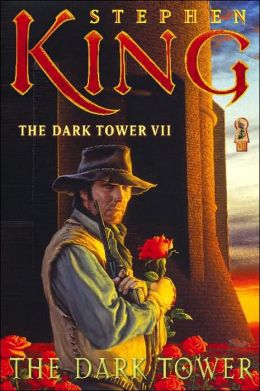
dark towerHow to even begin? Everything that was wonderful about the first six (or seven) books of this series was at least as wonderful in this, the final installment. I love our characters – and you’ll recall that I love them best when they’re all together, which they are for the most part in this book (meaning, when they split up, they reunite in a fairly speedy manner). (The thing I am perhaps happiest about in this book is that the ka-tet reunites to work as a unit once more. That was what I found most frustrating about Susannah’s Song in particular.) I love the excitement – the many challenges, with the almost assurance that they’ll make it through, right? Because ka-tet? But then again, this is the last book… I love the suspense, and I very much love Stephen King’s prodigious, just about unbelievable imagination – where does he get this stuff? I love that even the minor characters (hello, Irene Tassenbaum) or most short-lived of locations are fully explicated, fully detailed, perfectly real – you can imagine King expanding any one of those vignettes, no matter how minor, into a full-length novel of its own, because that’s how well thought-out they are.

I feel that I need to skip the plot synopsis entirely on this one. It wraps up the series, so you know it’s denouement – nearly 850 pages of denouement, so quite a bit of action & adventure of the BEST kind prior to that wrap-up, but still. I can’t tell you what happens. If you’re that interested, I challenge you to read the whole book after reading the whole series. You won’t regret it.

There is heartbreak. But in brief response to King’s Author’s Note, in which he predicts some reader unhappiness: no, I respect this ending. I am not angry. I’m miserable that it’s over, of course. But there is a beautiful resonance to the way it all ended. Almost makes me want to …go back and start it all over again.

I am deeply amused by the extent to which King plays a role in this one. He had appeared before (I call it self-referential, he calls it metafiction; which of course it is, but I share his negative feelings about that term), but was a major player in this book, to my endless entertainment. Arrogant? Maybe a little, but I’ve bought fully into the idea that Stephen King is a master, so why not play with it? And, regarding my misery that this series is over, the fact that ALL King’s books are interconnected or woven around the Dark Tower, just means that there is more (tenuously related) to read on the subject.

The references are not limited to Stephen King as person or Stephen King’s other books, either; see Harry Potter as well as the Lord of the Rings as well as Homer as well as… pop culture, life, what you will. One of the most fun things about this series is that sense of metaconnection. It’s written into the plot – “there are other worlds than these” – and so it only makes sense.

I love the plot lines for their detail, intricacy, realism, imagination, and enormous world-building power; I love the characters; and I love the masterful way King structures every level of his stories, from dialog all the way out to a 7-(or-8)-book series arc. I am mad for this stuff.


Rating: for the sake of your father, 10 turtles, may it do ya!

This is the first book in the series to have gotten a 10; but call it a 10 for the series as a whole, to boot. Thank you, SK. Keep writing, and watch out for minivans so you can keep writing for a long while yet. Thankee sai.

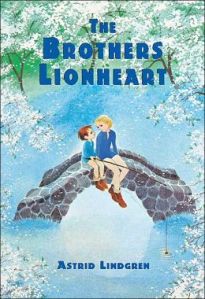
The Brothers Lionheart by Astrid Lindgren

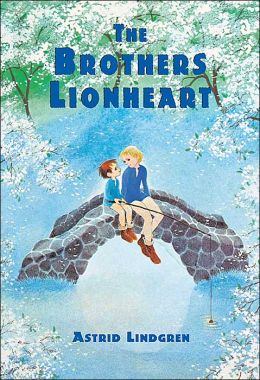
lionheartI was asked some time ago what my favorite book was as a child, and I couldn’t say. I could have listed a dozen, at least, that I loved, but I don’t know how I could have chosen one. I asked my mother, and she said my favorite book as a child was the one I was reading right that minute. I read a lot.

But something about The Brothers Lionheart has stayed with me. I don’t know when I read it, or how many times – not many, I think, maybe only once; but it made a strong impression, and I’ve found myself thinking about it over the years. (Astrid Lindgren is better known as the author of Pippi Longstocking, but I think this one kicks Pippi’s butt.) So I finally went and got my hands on a copy recently, and I’m so glad I did!

The story is fantastical. When it opens, little Karl Lion is sick; he’s been in bed for six months. But his older brother Jonathan is a good big brother, one of those golden people, beautiful and strong and talented and kind, and modest because he seems to just really not notice or care how special he is. He’s sweet to his little brother, and stays up late telling him stories. Karl knows he’s going to die. Jonathan tells him it’s okay, because he’s going to a beautiful place beyond the stars called Nangiyala, a land still in the time of campfires and sagas, where the brothers can have adventures together. Jonathan is only sorry that Karl will get there before he does, since Jonathan seems destined to live a long and healthy life.

But there is a fire, and Jonathan saves his brother’s life but forfeits his own; and when Karl succumbs to his illness, Jonathan is waiting for him at Knights Farm in Cherry Valley in Nangiyala. They have horses, and rabbits, and a vegetable garden; Jonathan tends the rose gardens of a nice woman named Sofia, and they are friends with everyone in the town. Karl is happy. But too soon, he learns of Wild Rose Valley, the next neighborhood over, where things are not so simple and joyful: an evil tyrant named Tengil has enslaved the people of Wild Rose Valley and built a wall to keep them from their friends in Cherry Valley. Jonathan and Sofia are part of the resistance; and although Karl is very small and very frightened, he finds himself involved, as well.

There are forces of evil dressed in black uniforms and scary helmets; there is an occupation; there is a fire-breathing dragon; and there are brave citizens. It is a saga itself, and Jonathan is its shining golden hero, but Karl doesn’t do too badly either. I loved this story very much, this time as much as when I read it as a child. And the ending thrills me as much as ever.

This is definitely a book for kids; the language is simple and childlike, and the thing I found most striking upon this adult read was the pacing. It moves very quickly! It takes very few pages to establish how lovely & simple & calm Cherry Valley is; and then we’re on to the darkness next door immediately. An adult book would have been longer and allowed the action to develop a little more slowly. But this made for a very enjoyable, quick read. I’d recommend it for anyone who likes fantasy and dreams and adventure, and who might not be up for a longer, more involved novel.

There is another level on which this story can be read as allegory. Tengil’s occupying force presents several clear options for comparison (and I think also offer some tips on how not to do it). One valley looks so sweet, good, prosperous and happy, and yet if you open your eyes just a little – zoom out to the point where you can see as far as just the next valley over – things are not nearly so happy or easy as you thought. Without putting too fine a point on it, I think this offers an analogy for capitalistic western culture. Speaking of capitalism, I was charmed by the idea of everyone helping everyone & taking care of one another in this idealistic Nangiyala. One can dream.

Themes include the beauty of a deeply felt brotherly love, resistance against evil, loyalty, hope, and courage; but there are also themes related to death & what happens after, tyranny, war and betrayal. The book has been criticized for its approach to suicide (although I would argue it’s not quite that simple). For me, the good is bigger than the darkness, and the ending is happy. I feel that the interplay of dark and light is part of what makes this story the kind that has stuck with me for over 20 years, and keeps it from being saccharine. But not everyone will see it that way.

I am so pleased to report that Jonathan was still simply heroic, Karl still sweet and surprisingly brave, Sophia still good and the dragon still scary, even now that I’ve grown up. Do check out my childhood favorite with me.


Rating: 9 trips along a river.

The Gunslinger by Stephen King (audio)


This is my 1000th post! Thanks for your support, friends!

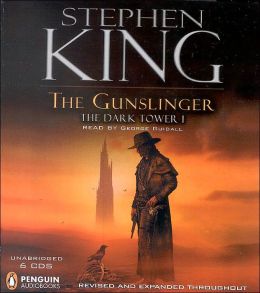
gunslingerI so very much enjoyed The Wind Through the Keyhole from Stephen King’s Dark Tower series that I had to find The Gunslinger, book one in that series. I was captivated by King’s own narration of the former, and disappointed to find that he didn’t read this one himself; but narrator George Guidall did a fine job, and I shouldn’t punish him for not being Stephen King.

In a fantastical spin on the western genre, we open with Roland Deschain walking alone with his mule, his guns holstered at his hips. He is pursuing “the man in black”, with an eventual destination of “the dark tower.” These terms are archetypal and possibly metaphorical. He has to cross a desert. He talks with a lone farmer (accompanied by a talking crow), and tells the man a story. (The story-within-the-story is repeated in The Wind Through the Keyhole, very enjoyably.) In the gunslinger’s story we experience the town of Tull, where Roland had also stayed for a spell, in pursuit of the man in black, with some nasty consequences. This is the first of the gory-bloody bits in The Gunslinger, but not the most extreme. We are also learning something of the magical nature of this world that the gunslinger inhabits. The man in black casts spells to entrap Roland; time doesn’t flow normally. At a glance, however, this could be our own world – possibly following war or other disaster.

Next, Roland meets “the boy,” Jake, who has himself come from some other world. As he describes it, Roland thinks he must be making things up; but the reader recognizes modern-day New York City. Jake and Roland travel together for a spell, still across the desert, and then have to climb a mountain, and then go into the mountain. I’ve put off saying this for long enough: The Lord of the Rings is strongly present. The dark tower, the linguistic touches, the lone-ranger type which is borrowed both from western books & movies and from Tolkien, and now the trip into the evil mountain with the ghoulish parahumans threatening them along the way, are all clearly inspired by that exemplary world-building trilogy. Come to think of it, I’m pretty sure I referenced Tolkien in my review of The Wind Through the Keyhole, too.

Anyway. They’re traveling, and Roland tells Jake a story, too – another story-within – this time about his training as a gunslinger, and the climactic, life-determining moment when he fought his teacher. This is the truly gory bit: it made me cringe a little, and I don’t consider myself a squeamish reader, so take note. This is Stephen King, after all. Horror joins western and fantasy-epic in King’s genre mashup. Roland and Jake will have a final meeting with the man in black; and I shall leave you there.

I enjoyed this book very much. Stephen King is, without question, expert at world-building and believable, fully-wrought, finely detailed backgrounds. Roland is both an archetype and a real person I easily learned to care about. The tension, suspense, and dramatic action are engaging and had me sitting up straight waiting for the next blow. The boy Jake is sympathetic. There is a mystery surrounding the man in black, and the final confrontation – I said I wouldn’t go there. On the other hand, The Gunslinger felt to me grittier, grainier, less literarily refined than The Wind Through the Keyhole, which in my memory, at least, was a superior book; but not by much. And for that matter, a grainier, less refined beginning feels like it suits this series. I am enchanted by the pulling together of genres, as I stated: western, horror, fantasy, and epic adventure. I don’t think I’m doing it justice in this review, but this is fine work, friends. I’ll be seeking out book two.


Rating: 7 slow mutants.

A Wrinkle in Time by Madeleine L’Engle (audio)

wrinkleWhat fun to dig back into this children’s classic. I only vaguely remembered enjoying this as a kid, and I got to rediscover it via this audiobook, read by the author. My memory didn’t provide much: I think I was most familiar with the opening scene, in which Meg Murry is awake and frightened in her attic room alone by a storm outside. She is grumpy, frustrated with her family: her father for being away for so long; her baby brother Charles Wallace for not feeling her pain and coming to her as he usually does.

Next, of course, Meg and Charles Wallace meet the not-quite-mortal Mrs. Whatsit, Mrs. Who, and Mrs. Which, and an unusual boy from Meg’s school named Calvin. This unlikely team will adventure together via the “tesseract” – a wrinkle in time and space as well, if you will – to try and find Mr. Murry, and save him, and save the world (and all the worlds) from the Black Thing.

This is a children’s chapter book. Madeline L’Engle notes in an introductory section that publishers thought it would be too hard for children; but her own kids loved it, and as it turns out, so does the world. It’s won several awards including a Newberry, and remains popular today. (Originally published in 1962 and still in print.) I can see how it would be “hard” for children, particularly the physics bits; but then, we don’t have to understand it fully to enjoy it, do we? And lots of adults are puzzled by physics too! This book has appeal for adults – perhaps obviously, here I am, and I don’t read a whole lot of children’s books. It still rings like a kids’ book, but I found the characters and the plot both engaging. I have a slight criticism that Meg occasionally sounds a little adult for her age; she does whine appropriately, but sometimes her observations are startlingly astute. It’s a common complaint with young characters in books. But only slightly, here.

Meg, Charles Wallace, and Calvin are all likeable but human; their parents are similarly well-rounded, sympathetic characters. The Mrs’s are charming, and the world-building – in the world of Aunt Beast, for example – is well done. I like that Meg grows some in the course of the story; and L’Engle certainly leaves us open for a sequel, what with the possibility of a burgeoning romance, and the happily-ever-after-at-least-for-now ending (with the Black Thing still looming). Mostly I was just disappointed that it was over so quickly! (Another feature of children’s books.)

I was a little surprised to find religious references within; I didn’t remember those. Not many, but a few mentions of having God on one’s side, or being the chosen ones, fighting for good. It got me thinking. I’m not particularly good at spotting religious allusions, not having been raised in church or on the bible. They mostly pass me by. But spelling out G-O-D will catch my eye every time! It’s not a technique that appeals to me but it wasn’t a central enough theme here that it threw me off much, either. A theme that is central is a good-versus-evil dichotomy, which of course could be interpreted as being religious; but the book-banners have protested certain aspects of this story, too – including the grouping of Jesus with mortal fighters-for-good such as Da Vinci, Michelangelo, Shakespeare, Pasteur, Einstein, Gandhi, Beethoven, Copernicus and a lone woman, M. Curie. So there you are: all matters of interpretation.

In a nutshell, I found this book a delightful, too-brief romp in another world. I am tempted to pursue further work by L’Engle; four books follow this in a quintet, and others of her oeuvre reference the same characters. Realistically, I don’t know if I’ll get to them. But this was an enjoyable read, and not just for children.


Rating: 7 pairs of spectacles.

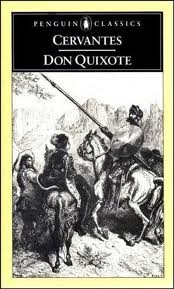
Don Quixote by Cervantes, trans. by J.M. Cohen: The First Part

Thank goodness Cervantes gives us a “First Part” division right at the halfway mark of this big book, because I need it. I have a huge number of galleys to read for review, and the Gone with the Wind readalong going on as well. So Don Quixote is getting a break. But, I am enjoying it and will be picking it back up! So, eventually, expect a Second Part.

For a chunkster, this is surprisingly easy reading. Don Quixote and sidekick Sancho are just goofily traversing the Spanish countryside, having haphazard and silly adventures which they view in different terms. At the beginning, Sancho’s perspective is that of reality, more or less, with an ongoing desire to please his master and see things his master’s way, and Don Quixote’s perspective is entirely fantastical, based on the novels of chivalry he has read until his brain became mush. (The perils of novel-reading, children!) As they continue their adventures, though, Sancho buys into the fantasy – mostly. He retains a more cynical view that his master, who is completely off his rocker where errantry is concerned.

I was definitely intimidated by its bulk, but these 900+ pages of story are split into little episodes only 2-3 pages long in some cases. What I’m saying is, if you’re intimidated by the bulk of Don Quixote, don’t be! It’s remarkably easy, and entertaining, reading.

Don Quixote is a gentleman of leisure living in the countryside of La Mancha. (This is Spain in, erm, the 1600’s or 1500’s? Published in early 1600’s. I’m not too clear on the precise setting in time, 16th vs. 17th century Spain, and the niceties thereof, not being a strong point in my education to date.) He becomes so obsessed with his novels of chivalry and the knights errant and their lady loves and great deeds, etc., that his mind becomes confused. He outfits himself in a comical assortment of bits and pieces and substitute parts, thinking he is an elegant knight. He roams the countryside on his tired old horse, with a squire named Sancho on a mule, imagining that he achieves feats of gallant and courageous battle and strength, when in fact he (famously) does battle with windmills, releases dangerous criminals from the King’s custody, gets himself and Sancho beaten repeatedly, makes promises he clearly will not be able to keep, and generally makes a fool of himself.

The book, which was originally published in two volumes (thus, two parts!), follows a meandering story line; it is more a series of small adventures, the kind that might be published serially. Some of these adventures leave Don Quixote and Sancho sidelined while we meet other temporary protagonists. These are a welcome respite when Don Quixote’s ridiculous behavior becomes tiresome. I get most excited and engrossed in his adventures when there are plenty of other characters milling about; just Don Quixote and Sancho together can get a little bit repetitive. It is easy to get annoyed with Don Quixote because he is exasperating; but this is intended. He is a ridiculous character.

I am surprised at what an easy and quick read this is turning out to be, and at how often I giggled aloud. Don’t fear the chunky Classic of Literature, friends. Although setting the book aside for now, I look forward to returning to it. Part the Second to come.