

Blue Highways: A Journey into America by William Least Heat-Moon, part 1

I am eternally grateful to Matt Ferrence for sending me this book at the right time (and then I goofed and waited three months to read it, but that’s on me). Matt is the author of Appalachia North, which I am also carrying around in the van and not getting around to as early as I’d like (I swear I’m just saving it for a special occasion). And he is a very fine teacher – check out this awesome talk on Big Hair Drum Fills, one of the highlights of last winter’s residency at my school.

First, the personal significance of this book cannot be overstated. Matt sent it to me near the start of my own van travels cross-country; Blue Highways is Heat-Moon’s travelogue of the same sort of journey. It will be hard to separate my experience of this book from my similar life experience. I will try, but it will be hard. I have so much to say about this book that I’m breaking this review into two posts, starting with general comments and moving into selections and closer looks.

A brief foreword by Bill McKibben was most remarkable to me because of McKibben’s significance to me and (more so) to my father, who points out that this book was “published and lingering on the NYT bestseller list in the year of your birth; and the author was the age you will be when you hit the road again a year from now.” He didn’t catch the foreword, though. That’s okay: there’s not much to it. It amounts to McKibben’s praise of this classic, and some cursory observations about how the world has changed since 1978 when Heat-Moon took to the road. Books have been written about the changing world; I think it’s to McKibben’s credit that he doesn’t try to write that book in the preface to this one. He gets out of the way quickly, which I appreciate.

So, in we go. At his opening, William Least Heat-Moon is in some crisis. He learns he’s lost his job teaching English; he calls to check in with his wife, from whom he’s been separated nine months, and she lets another man’s name slip. And he finally breaks, and takes off in a way (he later realizes) he’s always been tempted to do. He moves into a truck he calls Ghost Dancing, outfitted with bunk and other gear, and heads out. (This already holds many parallels to my own life.)

Heat-Moon travels the nation in a great loop, some 11,000 miles of it, and in a mere three months. (I have decided that he’s a little cagey about his timeline, although it’s there if you read closely. I’ve been out nearly twice as long now as he was, but I’ve traveled only 9,000 miles or so. And written very little.) His goals for his trip are vague, and he’s generally a little put out when asked to articulate them (something he’s asked to do rather more often than I am, possibly because dogs [see below re: dogs]). These goals get a little clearer – or a little clearer in their muddiness – as his trip progresses. This makes perfect sense to me. He had to take the trip to figure out why he had to take it.

the Blue Highways route (click to enlarge)

Along the way, he talks to people and sees the sights. He seeks out small towns with interesting place names: Nameless, Tennessee; Whynot, Mississippi; Dime Box, Texas. He wants to eat good Cajun food, and authentic diner food anywhere; he wants to hear what people think, of their place and of the changing world. He sets out to record (literally, he carries a microcassette recorder, and a camera and backup lenses), and conducts what I think I’ll call interviews, although he clearly wouldn’t call them that – not to his interviewees, who think they’re just having conversation. Heat-Moon picks up hitchhikers, of course, including a proselytizing Bible-thumper, and they match quotations: Whitman versus the Bible. It is an invigorating episode, actually, although I would not have had quite the patience Heat-Moon shows. (Maybe this is why I travel with a dog!) As McKibben advises, “If at any point these passages look like blog posts from someone’s summer trip, read them again more carefully. Savor them. Because this is about as good as writing ever got.” (I love the implication that writing is not still getting, but has got.) Well, the passages in question are blog-like: they read like journal entries, and they are chronological. But McKibben’s point is well taken. These are not mere journal entries. They add up to a greater sum. (I’m already giving the lie to what I said about the insignificance of McKibben’s foreword, aren’t I. Well, so be it.)

When a waitress in Gainesboro, Tennessee insists, “Cain’t travel without a dog!” Heat-Moon replies: “I like to do things the hard way.” If you’ve been following that other blog, you know my instant reaction to this. He continues: “It isn’t traveling to cross the country and talk to your pug instead of people along the way. Besides, being alone on the road makes you ready to meet someone when you stop. You get sociable traveling alone.” And you know, that’s true. I keep to myself quite a bit; because I’m not really by myself at all.

Hops in a van on a boat

Among the enjoyable features of Heat-Moon’s writing: he writes a hell of a phrase, often causing me to guffaw aloud in public. Indiana 66 is “a road so crooked it could run for the legislature”; Sulphur Spring, which the Shawnees believed was curative, tastes “bad enough to cure something.” “Golden Styroform from Big Mac containers blew about as if Zeus had just raped Danae. Shoot the Hamburglar on sight.” “Muddy holes a small man on a small unicycle would have disappeared in…” “Note to mapmakers: without a gas station, cafe, water tower, and stoplight, you don’t have a town.” And a coinage: he spots something with a toothy grin looming in front of his truck “just before I smunched it.” I like a good, onomatopoetic coinage. Note that, aside from the indictment of McDonald’s, these phrases are pleasing in themselves, purely for their words, and not for their greater meaning.

I love his descriptions of the strange and the wonderful in the everyday – McKibben praises this too, although he chooses different passages to highlight – me, I’m partial to the one with the bicycle in it. Driving up a steep rise in Arizona,

I shifted to low, and Ghost Dancing pulled hard. A man with a dusty, leathery face creased like an old boot strained on a bicycle – the old style with fat tires. I called a hello, he said nothing. At the summit, I waited to see whether he would make the ascent. Far below lay two cars, crumpled wads. Through the clear air I could count nine ranges of mountains, each successively grayer in a way reminiscent of old Chinese woodblock prints. The Mogollon was a spectacular place; the more so because I had not been anesthetized to it by endless Kodachromes. When the cyclist passed, I called out, “Bravo!” but he acknowledged nothing. I would have liked to talk to a man who, while his contemporaries were consolidating their little empires, rides up the Mogollon Rim on a child’s toy. Surely he knew something about desperate men.

I will forgive the dig about the child’s toy (especially since I didn’t see the bicycle in question), and recognize that the final sentence I quote here hints at a mostly unstated theme of Blue Highways. At least not until late in the book does Heat-Moon begin to address the pain of his failing marriage, and the fact that he is, on some level, running from something (its failure) or seeking something (its salvation). The desperate man who may have something to teach our narrator is one of the subtle through-lines of the book, and this moment with the leather-faced cyclist points it out. It is not til page 327 that he puts it plainly: “Some men take their broken marriages to church-basement workshops. I took mine to the highways and attempted to tuck it away for nearly eleven thousand miles.” I think it a charming touch of realism, that the reader must wait for thousands of miles, along with the narrator, to learn what the hell is really going on here.

As McKibben points out, Heat-Moon “is fluent (unobnoxiously) in the literature of our language).” Our narrator quotes Whitman and Black Elk (from Neihardt’s Black Elk Speaks) most frequently, I think, as well as Heat Moon (the author’s father), and (naturally) Thoreau; I also appreciated reference to Steinbeck’s Travels With Charley (which I read before this blog was born, and I regret that, because I’d love to compare the two. I remember it fondly). Likewise John McPhee’s The Pine Barrens. Here’s Gertrude Stein, too: “In the United States there is more space where nobody is than where anybody is. That is what makes American what it is.” Now, I have visited Big Bend and I hear tell of the wide open spaces of Montana and Alaska, but I wonder if this statement is still true at all. The quotation is credited (not here, but I found it) to Stein’s 1936 The Geographical History of America, more than 80 years ago now. I can believe it was true then. When I read this line, I stopped and put down the book to sit with it and ask myself: is this what I want? Space where nobody is? It’s part of an ongoing and important series of questions I’m asking myself these days. This is not necessarily material for this book review; but it’s significant, I think, that a book makes one stop and question.

I love an author who will teach me new words, too. Heat-Moon had me look up quodlibet, which is either “a topic for or exercise in philosophical or theological discussion,” or “a lighthearted medley of well-known tunes.” The usage here is “a mockingbird knocked out a manic of quodlibets,” so I guess we’ll go for the latter definition. He had me look up mochila, which turns out to be (prosaically) Spanish for ‘backpack.’ He teaches me conterminous, which means ‘sharing a common boundary,’ as in the conterminous or contiguous United States. Tallywhacker: slang for penis. Arrack: distilled spirit made from coconut flowers or sugarcane. Swiving: having sexual intercourse. Cockahoop: as a verb, to carouse, basically, but used here as an adjective it means something more like ‘extremely and obviously pleased.’ Whilom: former or erstwhile.

On the other hand, Heat-Moon can be a little creepy in his appreciation of the bodies of young coeds, and in his sympathies with other grown men and their appreciations. I know this is a sign of the times (as Pops pointed out, the year of my birth, this book was published – that’s four years after Heat-Moon took his trip). It’s something I’ve noted with Abbey, not to mention Hemingway – two of my all-time favorites. But still, ugh.

On the other other hand, Heat-Moon impresses with his openness to consider any- and everything put in his path, and he deserves credit for his sensitivity to issues of social justice, racism, and environmental concerns. That’s where we’ll start up again on Friday with more on Blue Highways. Now go order your copy.

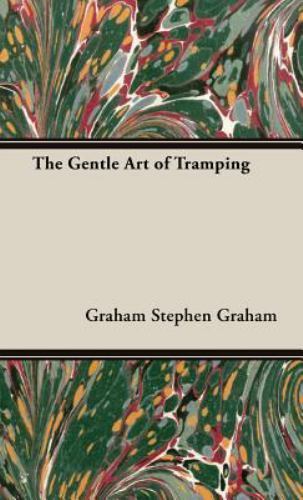
The Gentle Art of Tramping by Graham Stephen Graham

From day to day you keep your log, your day-book of the soul, and you may think at first that it is a mere record of travel and of facts; but something else will be entering into it, poetry, the new poetry of your life, and it will be evident to a seeing eye that you are gradually becoming an artist in life, you are learning the gentle art of tramping, and it is giving you an artist’s joy in creation.

I wish I could remember where I heard of this book; it’s been some time, and I know I did some searching before finding my copy, from Budge Press. I’ve had it for years. I did find a hint, late in the book: a references to Richard Jefferies’s The Story of My Heart. Perhaps the recommendations for each were linked? At any rate, I finally decided it was time to read it during my own travels, though I am no tramp because I have a van and do not go on foot. (I suspect Graham would be disgusted.)

I opened this book quite blind, and not having heard of Graham Stephen Graham, although he turns out to be quite prolific (read here) with some 34 books to his name, whew! All that biographical data is not within these pages, though. All you learn from The Gentle Art of Tramping is that Graham is a passionate tramp, or walker-wanderer. (“One includes in the category ‘tramp’ all true Bohemians, pilgrims, explorers afoot, walking tourists, and the like.”) He loves sleeping outdoors, eating and living simply; he finds this lifestyle to be a high art form, and he is well-read and often eloquent, but would be unhappy within the walls of classroom or library.

This book offers an engaging mix of practical advice (how to choose a bed for the night) and poetic or passionate holding forth (the joy of, as Graham writes, sleeping à la belle étoile). There is no question how strongly this narrator believes what he writes; he positively exults in drying off by a fire after getting thoroughly soaked. (He is surprisingly exultant in the soaking, too.) He gives medical advice, though questionable: “a waterproof worn over wet clothes is a sure way to cultivate rheumatism. The damp cannot escape outwards – and so goes inward to your very bones.”

He waxes especially elegant about fire-building.

The fire in the rain is a triumph; the night fire in darkness under the stars is the happiest, but it disputes happiness with the dawn fire.

I love to see the blue smokes crawling upward in the dawn, while, with bare legs, one struts about doing the domestic work of morning out of doors. It is part of the very poetry of the tramping life. You give a proper affirmative then to Browning’s

Morning’s at seven
All’s right with the world.

Graham is much concerned with reading and writing while one tramps. He writes that “it is in description that the keeper of a diary becomes artist,” and he does some lovely describing, as in a chapter on what he calls the “zigzag walk,” where you take the first turn the the left and then the next first turn to the right, alternating, and exploring a city in this way. (Cities get their own special treatment, although Graham, of course, favors the countryside and the wilderness.) I love more his pith and cleverness, though. His explanations of how to make coffee and what to eat are interesting side notes, but it’s his life philosophy and turns of phrase that capture me best. Here, a series of quotations to illustrate.

The best companions are those who make you freest. They teach you the art of life by their readiness to accommodate themselves. After freedom, I enjoy in a companion a well-stocked mind, or observant eyes, or wood-lore of any kind. It is nice sometimes to tramp with a living book.

All books are worthwhile; perhaps especially the living ones?

If manners could be improved we should more easily get into sympathy with ‘foreigners’; if they could be perfected there would not be any foreigners.

Lovely. Although Graham does indulge in stereotypes, none were especially negative; I found these easily forgiven (this book originally published in 1926), especially with this line to wrap them up. He is remarkably well traveled, and has thoughts to offer on many countries on several continents; sometimes (unavoidably) this information is overly simplistic, but it’s interesting to see his perspective. He is especially well-versed in Russia, where he claims to have tramped several thousand miles.

Atlases are not so good. You have to take them down from a shelf and consult them. Wall maps spare you the trouble; they consult you.

Who doesn’t love a map that is consulting you when you’re not looking?

And, in answer to that other book that I guess I’m still irritated about, Graham on class:

Class is the most disgusting institution of civilisation, because it puts barriers between man and man.

Leaving aside the ‘man’ usage (again, dated), another fine philosophy.

I found this book a slow read, but I’m not sure why; perhaps a low point in the cycles of my own attention span. Graham certainly rambles on the page as on the land. And some of his how-to advice is either obsolete, or personally irrelevant; and I am not at all convinced of the joys to be had in getting totally soaked in a deluge, while hiking or while sleeping, thank you very much. But clearly there is much to be loved, and consulted at length, in these pages. I do recommend.

I will end as Graham ends, with his final, ecstatic paragraph.

I am still on that zigzag way, pursuing the diagonal between the reason and the heart; the chart could be made by drawing lines from star to star in the night sky, not forgetting many dim, shy, fitfully glimmering out-of-the-way stars, which one would not purpose visiting. I said we would not enter a maze, but we have made one and and are in one, a maze of Andalusia and Dalmatia, of Anahuac and Anatolia, of Seven Rivers Land and Seven Kings. The first to the left, the next to the right! No blind alleys. A long way. Beaucoup zigzag, eh!


Rating: 7 coffeepots.

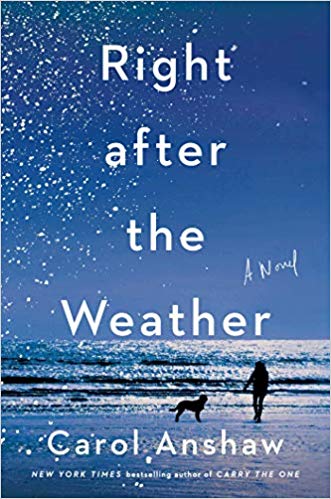
Galley Love of the Week: Right After the Weather by Carol Anshaw

Be among the first to read Right After the Weather by Carol Anshaw, a Shelf Awareness Galley Love of the Week. Presented on Mondays, GLOW selects books that have not yet been discovered by booksellers and librarians, identifying the ones that will be important hand-selling titles in a future season.

Carol Anshaw’s Right After the Weather is, as her editor, Trish Todd, writes, “a real literary event”: taut pacing, delightful and delightfully weird characters, and a mighty shock inflicted upon its readers midway through. Protagonist Cate barely makes ends meet as a set designer waiting to make it big; surrounded by eccentric friends and lovers, she will capture your heart, and just maybe, keep it all together. Todd says, “Anshaw is a master of characterization, and I love meeting her flawed but recognizable and lovable characters. Her books are short, but they are like snapshots of an entire zeitgeist.” Hilarity, pathos, loads of quirks and a wry, behind-the-scenes look at the theater combine for an unforgettable experience.

Galley Love of the Week, or GLOW, is a feature from Shelf Awareness. This edition ran here.

guest review: Bellingham Theatre Guild presents Silent Sky (2019), from Pops

From Pops, and from the Bellingham Theatre Guild, which I miss.

In its 90th year, the Guild does a great job with Silent Sky, a 2015 play by Lauren Gunderson in San Francisco, “an Arts meets Activism writer… currently recognized as America’s most produced living playwright”; she has written many about unappreciated women in history.

It was very well done here by a cast of five; great dialogue well-played, and engaging characters to tell this story of Henrietta Leavitt, who worked as a menial-labor type ‘computer’ for a famous astronomer before making the groundbreaking discovery of ‘Leavitt’s Law’ (circa 1910) that provided “a way to accurately measure distances on an inter-galactic scale” and ultimately allowed Hubble to describe an expanding universe.

It’s hard to tell if they are getting better and better, or we are just appreciating them more. It seems to me that good play-selection is a key thing.

Play selection is a huge deal, I’m sure. You also just seem to have very fine actors (and presumably directors and other behind-the-scenes decision makers), though. My failed attempt at enjoying community theatre in Asheville recently showed me what well-meaning but just poor acting can do for a play: not much good. As Egan said at that event, Bellingham attracts artists, right? Count yourself lucky! I would have enjoyed this one, I think.

Abaddon’s Gate by James S. A. Corey (audio)

His words were full of hope and threat. Like the stars.

Following Leviathan Wakes and Caliban’s War, Abaddon’s Gate makes book three of The Expanse.

Thank goodness, after that angry-making book I reviewed for you the other day, that this one was so lovely. I think I like each of these better than the one before. Corey (actually a pen name used by collaborators Daniel Abraham and Ty Franck, but I shall treat “him” as one) keeps introducing new characters to play as central in each book, alongside our consistent leads Holden, Naomi, Amos and Alex, and these new additions continue to amaze me. Also, so many of them are badass strong women, which makes me feel good.

In this edition, we meet Clarissa Mao, Carlos “Bull” de Baca, and Pastor Anna Volovodov, among others. Clarissa (aka Claire, aka Melba) is initially a villain, but she will undergo several upheavals over the course of the story (as her multiple names hint). I love a complication. Pastor Anna is more strictly a positive figure – if anything, too positive, a little saccharine in her portrayal; but she also frustrated me for some other reasons, giving her as well the complications I appreciate. Bull was more closely a “typical” (I mean this in the best way) troubled police-detective-type, à la Harry Bosch or Dave Robicheaux; and he gets an ending that I wouldn’t call deserved, but that feels appropriate. We get as well a self-important, probably corrupt major religious leader to whom Anna remains sympathetic, but I can’t say the same for myself. Also Anna’s sidekick (if you will), an unrepentant rich lady loyal to her friends. Even though the book’s plot threatens the end of humankind, the characters were tons of fun.

I’ll go light on summary as usual, because sci fi, whew. This installment of The Expanse sees all three major politic powers – Earth, Mars, and the Outer Planets Alliance (OPA) – congregate near what they’re calling the Ring, the manifestation of that alien beast thing that formed on Venus in previous books. Our villain sets up an act of terrorism and frames Holden for it; she wants him both discredited and killed. Holden enters the Ring itself to avoid his attackers, where he encounters the ghost (or what the heck is it?) of Miller, who’s been dead (we’re pretty sure) since book one, but who Holden has been regularly conversing with. From here, the basic idea is that the Ring has the ability to destroy all of humanity – not only the many ships who are loitering near the Ring, but everybody back home well – and our usual heroes have to stop it. The factions basically battling to get humanity destroyed don’t do so knowingly, but possess various motivations having to do with power-hunger, mental illness, misguided rage, a sort of hero-sacrifice-complex, and more. I appreciate that we get the usual Holden-Naomi-Amos-Alex team (yay, go team!) as well as a few new hero figures, including an unlikely surprise. I found the “surprise” element both somewhat predictable and also poetic; I’m not sure that makes much sense but it’s how I felt.

I turn again to Tor.com, whose brief reflections on this book (and its adaptability for screen) I find wise. Their writer Liz Bourke calls Anna “the emotional (even, dare I say it, spiritual) centre of this part of the narrative arc. Anna knows how to forgive. Anna cares about people. And Anna can look out into the vast depths of the unknowable, and asks, ‘But what does it mean?’ not in fear or horror, but in wonder and hope.” Well put: she’s a new element, I think, in this world where (as Amos says to Anna) “everybody in this room except maybe you and the captain has a flexible sense of morality.” Bourke is not wrong in calling Holden “bland” (though I love him still), but Anna is a little less so.

Naomi’s character development has maybe slowed down a little in this book, but I still love her, and all the other strong women (I see you, Sam). I’m a little anxious to get back to developing our central four-person team: we didn’t spend much time with just the four of them together in this book, and I’m realizing that we know almost nothing about Alex (he’s hardly more than an accent). But Amos – I think I’m ready to admit I have a crush on Amos. He’s like an even more bad-boy Jack Reacher.

Long story short, my devotion to this series continues to strengthen. See you in book four.


Rating: 8 engineers.

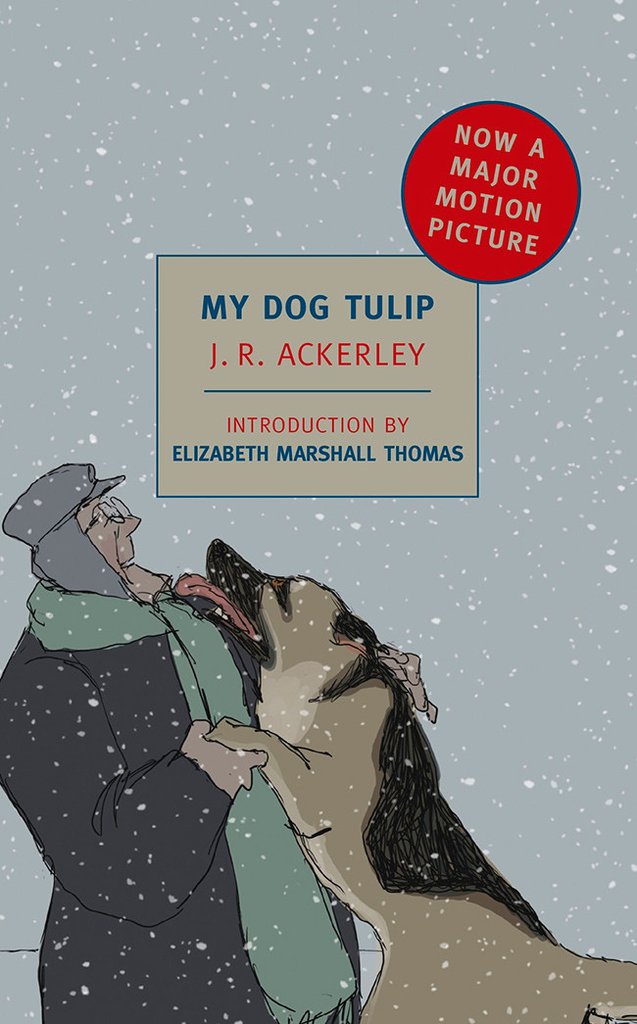
My Dog Tulip by J.R. Ackerley

Well, huh. This one didn’t age well. I thought a book about a much-loved dog, which has come to me so highly recommended, would be an obvious pleasure. I felt my first misgivings when reading Elizabeth Marshall Thomas’s praise-packed introduction, in which she “derives much satisfaction” from a certain dog-shit-versus-cyclist episode.

The book is a cataloging of the life of Tulip, a not particularly well-behaved German shepherd. And it’s true that Ackerley has a knack for description and an ability to make me laugh at some of his characterizations and turns of phrase. But I ended up resenting his small victories of this sort, because in between he kept pissing me off. For one thing, his repeated statements about class were very off-putting. Now, I can allow the strong correlation between class and education in 1940s England, but that doesn’t mean he had to be so hateful about it. He makes some nasty comments about women-in-general, too, but my favorite is when he manages to combine the two: “Women are dangerous, especially women of the working class. It is always a mistake to ruffle them.”

I found this narrator to be highly unlikeable. He thinks his dog should shit where it pleases, including in the doorway of the local green-grocer’s shop (this precipitates his comment about working-class women), and you’re an asshole if you think otherwise. He thinks his dog Tulip should get to do absolutely anything she wants, and you’re an asshole if you think otherwise. He wants to have it both ways: his dog is a creature of nature and should be allowed to behave “naturally” wherever she wants (free-bleeding on a city bus, pooping in the grocery), but she’s also a much-loved pet who sleeps in his bed with him. I think you have to pick one, myself. I guess this makes me what Thomas calls a “dog fascist”…

And then there’s Tulip’s sex life. I was surprised (especially after Thomas’s introduction sums up the book very differently) to find that fully two-thirds of the book are occupied with this topic. Tulip is ‘unaltered’ – not fixed – and so she goes into heat twice a year. Ackerley is much worked up about this: he pities her unfulfilled needs, he wants her needs fulfilled (wants her to have sex and be a mommy), has trouble having her needs fulfilled, doesn’t want her needs fulfilled, cries and wails… he admires her beautiful swollen vulva and its pretty pink. It all got to feel very Freudian and weird to me, by page 100 or so of this. Also, the snobbery about breed: he wants her litter to be “pure,” wants her bred with nothing less beautiful than herself, and goes on about the evils of ‘mongrels.’ Again, I know that this was rather typical of Ackerley’s time (and class), but it reads poorly now. Of course, Tulip prefers a mutt (because she understands inbreeding much better than her upper-class human). Oh! and he intends to drown all of her female pups (females being undesirable, don’t you know), but finds himself regrettably unable to do this “reasonable thing.” Woe is him. Anybody still like this guy? No.

There were a few moments of humor here, but I spent most of my time angry. The best thing about this book was perhaps that it was short.


Rating: 3 dead puppies on your head, mister.

another new beginning: pagesofjulia in the classroom

I am honored to announce that I’ve received one of two Irene McKinney Fellowships from my MFA alma mater, West Virginia Wesleyan College. This is a nine-month teaching appointment there on campus in Buckhannon, WV; I’ll have three sections of writing composition in the fall and three sections in the spring, one of the latter possibly being a literature course. So, I’ll be pausing my van travels there this summer, with the option to restart them the following May.

I am excited and intimidated; I think it will be great.

Again (are you accustomed to the fluctuations yet?) my work for Shelf Awareness will decrease to give me more time for my day job. I don’t yet know what this will mean for the blog, but we always work something out, don’t we? Stay tuned… it’s still some months away, but I wanted to share my news. On to the next big thing.

My Years with Townes Van Zandt: Music, Genius, and Rage by Harold F. Eggers Jr. with L. E. McCullough

Disclosure: I was sent a copy of this book by its publicist in exchange for my honest review.


Over four months ago, a publicist wrote to me offering a copy of this memoir about Townes Van Zandt. Only in the last week or so when I finally got around to opening it did I realize the honor I’d received. I’m really grateful I got to read this one; and I’m honored that I was asked. Thanks, Jennifer.

Townes Van Zandt was a tortured genius and one of the finest troubadours this country has known. Harold F. Eggers Jr. was Townes’s road manager, business partner, and much more, for some twenty years. His memoir here (cowritten with L. E. McCullough, who has the writing experience) is very much about telling Townes’s story, but Eggers’s own life is well-represented, as well. I respect the format very much. The remarkable life of Townes Van Zandt clearly inspired the writing, and that’s the name that draws readers to the book. But Eggers has lived, as well, and I’m glad he’s present.

The book opens with the early years Eggers and Townes spent together, and then flashes back to a very brief telling of Eggers’s childhood and his service in Vietnam before he went to work for Townes (thanks to his big brother Kevin Eggers, who had previously worked with Townes and set up his veteran younger brother with a job to help him out). His tour in Vietnam plays a role in the rest of the story; Eggers credits the things he saw there with his ability to adapt to this wildness of sharing a hotel room with Townes, and believes his thrill-seeking and attraction to danger was about chasing something he’d seen in war. As a parallel, Townes had tried to enlist in the armed forces but been turned away because of the electroshock therapy he’d received as a teenager (also an enormous event in Townes’s life which would follow him forever). As Eggers tells it, Townes’s disappointment cast a long shadow.

There is everything here that a Townes fan wants: insider information, jokes and stories, and that enormous and overarching sadness that we feel in his songs. (Well, almost everything. We still don’t know much about Townes’s early life, pre-shock therapy, because he didn’t remember it, himself. This is a painful hole in the record, in my opinion. But Eggers couldn’t resolve it, and he’s right not to try. I sure wish someone had approached Townes’s parents while they were alive…) It’s a thorough telling of Townes’s final twenty years or so, as seen by Eggers, who does not claim to know what he wasn’t there to see; but the two men spent a lot of time together when on tour, often living as roommates even off the road. Eggers quotes Guy Clark: “Harold, how can you stay in the same room with Townes Van Zandt? You have been doign this for years, man. I’m his friend, too, but it would wear me out. How do you put up with it?” After years of reflection, Eggers is ready to say that growing up in a large family and later his military service gave him “the ability to routinize almost any sort of irrational behavior.” Eggers has his tricks: when Townes pitches fits in public and is on the brink of getting them arrested, Eggers tells him he needs to get onstage right now; this always works. He sees Townes sabotage recording sessions and huge live shows, and wishes the musicians in the studio only knew how to manage Townes the way he does.

As told here, the two have a symbiotic relationship. Eggers babysits and manages Townes, enabling the career he was able to have, however wracked and traumatized. But Townes helps Eggers mange his own demons, too. There’s a huge amount of love here. At the beginning and the end and in between, Eggers relates that Townes wanted this book to exist, and wanted to be sure it told the whole story, and not just the pretty stuff. “Tell the truth, no matter what… do not whitewash anything. Let all the ghosts and demons have their say.” Although Eggers’s love for Townes rings loud, I think he’s honored his friend’s wish, too.

This is one of the ways I want to contrast this book with another. Without Getting Killed or Caught, a recent biography of Guy Clark, was a rich source of information about Guy, one of Townes’s best friends. But it was too saccharine in its praise, didn’t let all the ghosts and demons have their say. Eggers did, and I appreciate him for that.

The style of My Years with Townes Van Zandt is straightforward, the writing style of a man with a story to tell, rather than that of a writer of craft and artistry. No complaints; Eggers’s voice comes through clearly, and I can feel his personality, and I hung on every word. But it’s a straight relating, and not a crafted piece of creative nonfiction. I’m a little surprised, since there was a ghostwriter involved, that it didn’t get a little more polish. But I’m not sorry.

One final detail before I tell you what an important read this is. Several appendices offer a thorough discography (and then some) and Eggers’s recording philosophy, for recording live shows (which have yielded such discography). The student of Townes’s music will be well-served: I know some of what I’m shopping for next.

For the Townes fan? An absolutely essential volume to keep and study. For the reader not so sure about Townes? An important look into the music industry of the 1970s-90s, at counterculture and American roots music, and at an artist you will soon become a fan of. Don’t miss this one.


Rating: for the sake of 8 songs.

writers in video (audio)

A few links for you today that came from my parents.

My mother sent this recording of a Bellingham local Whatcom Reads program, in which Timothy Egan discusses his book The Big Burn: Teddy Roosevelt and the Fire that Saved America (and, in Q&A, a few more – remember Mom reviewed The Worst Hard Time for us). I really enjoyed listening to this one (thanks Mom for the tip that the visual part was not entirely necessary), and I am reminded that I need to try some Egan one day – he sounds in the vein of Jon Krakauer and Erik Larson, who were among the first writers I recognized as creative nonfiction and as something I loved. While I really enjoyed it, I also took exception a few times to some of Egan’s comments: his chauvinism about geography, for example, and his statement that “Indians all have creation narratives,” as if to imply that his/our own culture doesn’t have creation narratives. (I guess it’s only a creation narrative if somebody else believes it, and what *I* believe is just truth?) (Also, any time you say “all the [ethnic group] do such-and-such” you’re probably on thin ice.) These quibbles were not fatal for my appreciation, and if anything indicate that I was engaging. One of these days I will read some Egan…

And, my father sent this episode of Oregon State University’s About Words, featuring Ben Goldfarb about his book Eager: The Surprising, Secret Life of Beavers and Why They Matter. Pops appreciates beavers; we have a mutual friend (and friend to Goldfarb, apparently) named Rob Rich who is a beaver fan and advocate, and writer; and I have been seeing a lot of beavers these last few weeks on my travels. But this short video (very short, after an hour-plus with Tim Egan) is less about the beavers and more about the imperative to write, among other things.

So, a little extra to add to your listening queue! [That’s a tip: although YouTube videos, I did not watch but only listened to both clips, which was fine (visuals were just background). I signed up for a free 30-day trial of YouTube Premium, which allowed me to download these videos for offline viewing/listening.]

Thanks, Mom and Pops!

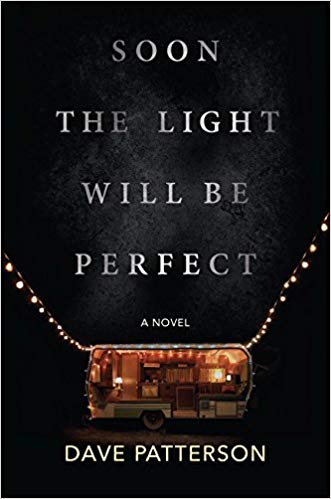
Soon the Light Will Be Perfect by Dave Patterson

This sensitive debut novel about everything that can go wrong as one grows up will touch any reader who remembers being 12 and beset by the world.

Dave Patterson’s first novel, Soon the Light Will Be Perfect, is a rough-edged coming-of-age story. Set in a poverty-stricken Vermont community at the beginning of “the desert war,” it spotlights a family in crisis within a town in despair.

The narrator is a 12-year-old boy. Along with his older brother, father and mother, he remains nameless, although more peripheral characters have proper names. As the story opens, the family has recently moved out of the trailer park–an important social step up–and they have given away their old kitchen table in an act of charity. The father is supposed to be building a new one, but this project serves as a metaphor for larger troubles. Getting the new kitchen table finished and perfect will prove daunting. In the first chapters, the family’s troubles ratchet rapidly from an overpopulation of pet cats to the mother’s cancer diagnosis.

The 15-year-old brother gets a girlfriend and distances himself from the narrator, although the boys still smoke weed together in the garage, where the kitchen-table project progresses slowly. This is a devout Catholic family, and guilt plagues the young narrator, whose burgeoning sexual interests, for example, give him trouble. Struggles with faith are central to the book. The father’s work in a weapons factory seems secured by the advent of war, a fact that the narrator has trouble reconciling with Christian teachings. His mother’s suffering at the hands of cancer, chemotherapy and radiation seems senseless. He remains committed to religion, despite these conflicts and his obsession with women’s underwear. A new girl his own age from the trailer park provides further conflicts between what he feels and what he thinks he ought to feel.

While Patterson’s gift for description brings beauty to this novel, the tone is bleak. The father labors helplessly: “In the garage the saw screams in the ceremony of my father’s self-destruction.” The sick mother delivers food to those needier than herself but also covers up a small crime, as her younger son sneaks cigarettes and self-flagellates. Amid the narrator’s crisis of faith, even the priest turns away from church. Certain plot turns and characterizations may tend toward cliché, but Patterson’s striking writing and attention to detail rescue his book from that realm. To put it another way, clichés are formed from the broadest truths of life, and Patterson aims to approach those overarching truths–perhaps why his protagonists go unnamed.

Soon the Light Will Be Perfect is an ambitious work about what it is to be young and facing problems that challenge the most capable adult. At its end, much remains unresolved, just as in life, but readers will recognize just how true that ending rings.


This review originally ran in the March 22, 2019 issue of Shelf Awareness for the Book Trade. To subscribe, click here.


Rating: 6 junked cars.