movies: When They See Us (2019) and The Central Park Five (2012)

I was keyed up for the release of When They See Us as a Netflix original miniseries at the beginning of June. (I’m treating it here as a movie, especially because “limited series” seems like such a downplay for a serious work of art and social commentary.) I viewed the four episodes in three evenings, rushing through, feeling both addicted and horrified, unable to look away. I thought I was prepared for the subject matter, but I was shocked beyond expectations.

The show handles events from 1989, when five boys (four Black, one Puerto Rican and Black) were arrested for the brutal rape and beating of a white woman jogging in Central Park. Their names are Raymond Santana, Yusef Salaam, Kevin Richardson, Antron McCray, and Korey Wise. Although there was no evidence linking them to the crime, and although their confessions were full of holes and inconsistencies and signs of police coercion, they were found guilty. The four younger boys, ages fourteen to fifteen, were sentenced to between five and ten years. Korey Wise was sixteen, and received ten to fifteen, entering adult prison directly. In 2002, another man in prison for a series of rapes, Matias Reyes, confessed to the crime, and Korey (still incarcerated) was released, and all five men’s convictions were vacated.

It’s a terribly painful story to see unfold. On the April night in 1989, we see a large group of boys running through Central Park and acting out. They push at and harass bicyclists. They beat up a man. It’s easy to see how things escalate: boys roughhousing, and then some of them take it a step too far; imagine yourself one of those boys. You’re not responsible for the actions of those you’re with; you don’t even know all of them. It turns out that the jogger was raped in the same park on the same night, beaten within an inch of her life. Three of the boys who would become known as the Central Park Five were arrested that night. The next day, police came looking for Yusef Salaam. His friend Korey was with him when they take him in, and agreed to come along, just for moral support. In an ugly-ironic twist, Korey would serve the longest sentence for this crime in which none of the Five had any involvement.

It’s unsurprising that When They See Us knocks it out of the park with Ava DuVernay as creator, co-writer and director. Under her guidance, we see the boys running through Central Park. We see them picked up by police, and interrogated without parents present for hours and hours, without bathroom breaks or food; we see them pushed around, threatened, and coached through their false confessions. We see them in court and then in prison; we see them get out and hug their families and try to put their lives back together. We see Reyes confess to the rape. I am deeply impressed by the acting performances given by both the young actors (portraying the teenaged boys) and adults. I am horrified, over and over again.

I’m glad (well, that’s a weird word) to see the story of Korey Wise’s sister given air time, too: Marci was a trans woman murdered while he was incarcerated, who we meet only through flashbacks, as he weathers solitary confinement by living in a dream world largely starring this much-loved older sister. The story of a murdered Black trans woman is unfortunately common still today, and Marci deserved this coverage. She is beautifully played by Isis King.

I was also intrigued to meet the very sympathetic (in both senses) character of Roberts, a white prison guard who goes out of his way to be kind and generous to Korey, even holding him in an embrace when he finds out about Marci’s death. Roberts does not appear to come from real life (go figure). He was a sweet departure, but his totally fiction existence feels like a final driving-home of the horror of this true story.

I find the title interesting, too. I can think of several ways to follow this phrase, from ‘when they see us, they only see one thing/they think they know us,’ to ‘when they see us, then, finally, we’ll get justice,’ in the sense that we mean when we say it feels good to be seen. The story is so clearly about racism, about the way in which these boys, these children, were handled as proxy for everything that the world feared about Black men in 1980s New York. A white woman was raped, and they came for the Central Park Five just like they came for Emmett Till. And they were just babies: that’s one of the advantages of seeing and not just reading about this story, seeing the faces of these boys and realizing how very young they were.

I think this was everything it needed to be. As a crime drama, it’s gripping and moving. As social commentary, it’s thorough in its criticisms: the cops and prosecutors demonize themselves through their actions. I wept more than once. It’s also a visually impressive piece of art – this is where I’d normally call it visually pleasing, but of course that’s the wrong adjective – it’s full of expressive images, from the wide-angle view of boys in the park to the interrogation rooms and prison cells, and expansiveness of the outdoors to a man freed. I am still recovering emotionally from this story. Well done, DuVernay and full cast.

After feeling so affected by this show, I went looking for more, which led me to the documentary covering the same events from seven years earlier. The Central Park Five did much of the same job as the Netflix series, but with original footage and the perspectives of the men looking back from years later. Necessarily, it offered a less complete view of past events, because it stuck to the footage available; we don’t see police hit or threaten or coach the boys’ confessions, obviously, but we see the taped confessions, and we see the faces of the five boys and, later, men themselves. (Antron McCray allowed the use of his voice and not his image, as an adult.)

There was not much more of the story to be gained here, then, but an advantage in seeing it come from the people actually involved. I appreciated seeing what each character looked like, in comparison to the actor(s) who played them. I enjoyed seeing period footage of New York in general, too. I think it’s probably a good documentary, but it suffers some by comparison to When They See Us, which has the obvious advantage of being able to show more – whatever DuVernay wants to depict – and more dramatically. Having the two together feels like the right final call, of course, for the viewer wanting to explore this subject matter. I’m very impressed with both.

As a final remark, I want to say that I have a friend who has come into personal contact with Linda Fairstein, the evil, racist prosecutor in this story. This friend had her own horrible experience, which upholds what we learn about Fairstein here. Friend, I am sorry again for what happened to you. We’re decades late, but I’m glad everybody’s now talking about her and holding her responsible for some of her actions. Fairstein has enjoyed a career as a crime novelist until just recently: following a social media campaign, her publisher, Dutton, a Penguin Random House imprint, has ended the relationship. Small progress.


Rating: an average 8.5 years for these two fine films.

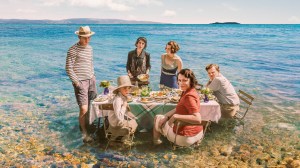
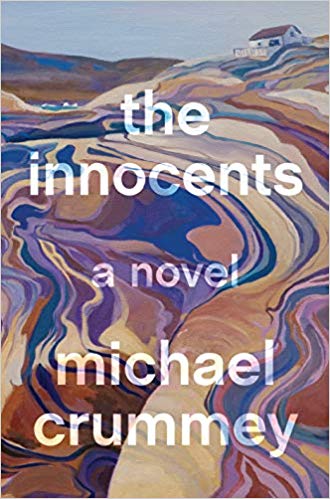
The Ghost Clause by Howard Norman

This smart, literary novel of human relationships–and a ghost–in a small town in Vermont is heart-wrenching, heart-warming and life-sustaining.

Muriel and Zachary are newlyweds living in their newly purchased old farmhouse in small-town Vermont. She has just defended her dissertation on translations of Mukei Korin’s erotic Japanese poems; that she brings this work home is a boon for their marriage. He is a private detective investigating the disappearance of a local girl who’s been missing for months now. They bought the farmhouse from semi-famous painter Lorca, a recent widow whose husband, Simon, had a heart attack and tipped overboard on a ferry en route to Nova Scotia.

The first surprise of Howard Norman’s (The Northern Lights, What Is Left the Daughter) riveting novel The Ghost Clause is that their stories are told in the voice of Simon’s ghost. The title refers to a section in Vermont real estate contracts that allows a buyer to return a house to its seller if there turns out to be a ghost in residence.

Simon still occupies the farmhouse, and feels very involved in the lives taking place there now. He appreciates that Lorca still visits, too. He observes Muriel and Zachary in their daily activities (often including their prodigious lovemaking), reads Muriel’s academic work and Zachary’s case notes, and sits in on their conversations around the clock; this gives him a near-omniscient perspective. He causes few problems, except that he keeps setting off the MOTION IN LIBRARY alarm on the home security system, which might drive his cohabitants nuts. He spends a lot of time reading Thomas Hardy; Muriel owns plenty.

Supremely enjoyable, The Ghost Clause is about the intersections of lives. At its center are two marriages–one new, one a bit older and recently rent by death–but it features many other town residents as well, and is ultimately about human relationships and families, and how we try to make it all work. Beyond this rich daily-life material lie extra layers: Korin, the poet Muriel studies, is fictional, so the erotic poems in the novel (and the difficulties of their translations, and the modernist issue of their parentheticals) are Norman’s invention. The missing-child investigation that threatens to consume Zachary for more than half the book is a thorough, often disturbing diversion. Finely detailed in its particulars and simultaneously revealing of grand-scale humanity, The Ghost Clause is both poignant and frequently gut-laugh-funny.

Norman’s prose is inspired; Simon’s narration is adorned with lyric moments (remember, he was a novelist in life): “A hammock of moon was traveling pale in hazy light,” Norman (or Simon) writes of an evening at home with Lorca when they were still alive together; there is more poetry here than Korin’s. Simon observes, “Scholarship as a form of courtship, it seemed to me.” The charm of local culture is part of the appeal, too. Muriel notes after a party that “People stayed kind of late, for Vermont.”

The Ghost Clause is one of the best kind of novels, excelling in every way: it’s delightful at line level, humorous, absorbing in individual stories and wise on a higher plane. A book for any reader who cares about people.


This review originally ran in the June 7, 2019 issue of Shelf Awareness for the Book Trade. To subscribe, click here.


Rating: 9 crabapple trees.

Mrs. Hemingway by Naomi Wood (audio)

A randomly selected audio treat recently returned me to the world of Ernest Hemingway, whom I have not read for years now, but who I feel as strongly about as ever.

This is a novel about the Missuses Hemingway: Hadley, Pauline, Martha, and Mary. Therefore it begins in Antibes, France (with flashbacks to Paris and Chicago, where Hadley and Hemingway met), and follows the strangely morphing family to Key West, Cuba, Spain, London, and Idaho. Chapters are told from the point of view of each Mrs. Hemingway in turn. These are third-person perspectives, but very close.

How to sum up this story I feel I know so well? Hadley Richardson is the first wife. Older than Hemingway, she had resigned herself to spinsterhood and is called ‘homely.’ Their marriage was most innocent, since another hadn’t ended to allow for it. They had a baby, Bumby; they lived together in Paris, dirt poor and very happy – these years are later mythologized by Hemingway in such terms. Next comes Pauline Pfeiffer, or Fife, a wealthy socialite who inserted herself into the Hemingway marriage, as a close friend to Hadley as well as to Hem; she made a concerted effort to win him, which she did. This breaking point opens the novel: Hadley gives Hem a tearful ultimatum, and then issues her conditions for divorce. She wants him and Fife to spend 100 days apart to decide if they’re really serious. Then she lifts the requirement, out of sympathy for the lovers’ plight.

Fife was Hem’s longest-lasting wife. They had two sons, Patrick and Gregory, and settled in Key West. Fife’s section also opens near its end: Hemingway returns from Spain, where he’s been covering the Spanish Civil War, and alternates between treating Fife better than ever, and sort of teasing her with his new mistress, Marty. Fife is the only one of his divorces to really fight to keep him, beg him to stay. She loses, and the two are never on excellent terms again. Cue Marty, or Martha Gellhorn, herself an accomplished war correspondent: Hemingway’s problem with her is her independence, her own writerly accomplishments, her refusal to wait at home for him. They have been apart for some time when she shows up in Madrid to find him and break it off, only to learn he’s taken a lover, Mary. This upsets Marty briefly, but then the two women meet and team up in taking care of him. His drinking and self-sabotage are worsening, and Marty is relieved to pass him on to the next wife.

Mary Welsh was there at the end, when he shot himself with both barrels of a shotgun in their home in Ketchum, Idaho, and much of her section of the book takes place after his death, as she tries to sort through papers and her own grief. Here Mary receives a final visit from a most interesting secondary character, one whom Naomi Wood invented: Harry Cuzzemano, a collector/dealer of books and literary ephemera, who has harassed all four wives for papers and especially, the famous briefcase Hadley lost at the Gare de Lyon. (If you don’t know, go look up this most fascinating mystery in the Hemingway legend.) The final meeting with Harry is part of the final wrapping-up, which is a little odd (he has been peripheral throughout) and a little appropriate (he has been a through-line, and in making his own final peace, he helps Mary find hers). The last moments involve Mary’s coming to terms with the fact that Hemingway was not the fatal victim of a gun accident, as she’s been claiming. I can only imagine how difficult this must be. There was plenty of evidence in support of a suicide – his mental health in the last years of his life, several suicide attempts, forensic evidence – but how hard it still must be.

Mrs. Hemingway was an enjoyable read (listen) for me. Each of these four women is evoked in her own fashion. I loved feeling steeped in Hemingway again, after too long. These stories were familiar, although the particulars were often new. Kate Reading (great name), who narrates the audiobook, did a good job: I did not think of her a bit, which is the ideal, meaning that her role as reader kind of disappeared for me and I felt I was receiving the book unadulterated. I see that Naomi Wood spent time with letters and papers written by each of these women, and I feel good about her fictionalized but faithful representations.

As a gentle criticism, I guess I would say that this still felt like a book about the man, more than about the women. Maybe that’s the only way to go, with such a massively larger-than-life male lead; at least three of the wives were most famous for being just that, and it seems Hemingway had this effect on women (and men, too), that everything becomes about him. They all four loved him in their own ways. They all kept in touch in their own ways, or didn’t: Hadley and Hem remained chums; Pauline was an antagonist, but a co-parent, so some contact was necessary; Marty and he never spoke after their divorce. I appreciated how they kept in touch with each other, too (or didn’t), including the friendship between Mary and Hadley, the first and last wives, whose relationship was largely a collaboration on how to best care for the man they’d all shared. There’s something deeply creepy about this polygamous-feeling string of women. But it’s true to life, as far as I can tell. (As an aside, I’ve always wondered what my relationship with Hem would have been, if we’d been alive at the same time. Would I have been able to resist his prodigious charms, and see what a cad he was?)

This is a book of high emotions, love and devotion and anger and betrayal and rejection. Looking over that last paragraph, I don’t think I mean to criticize, after all. I think the Hemingway focus is accurate. He’s what these women have in common. If it’s a little less than feminist and empowering to be so mad for this flawed man, so be it: it’s what happened. I am glad that Wood gave each woman her own time and her own personality. I’m glad to be with the flawed man again, myself. I’m very glad I read this book. It was sweet and harrowing, and engulfing. Recommended.


Rating: 7 shallow white bowls.

The Wild Boy by Paolo Cognetti

Best book of the year to date.


A city dweller returns to the mountains of his youth, and his gorgeous, reflective memoir is full of nature and humanity.

Having just turned 30, Paolo Cognetti (The Eight Mountains) felt restless and unfulfilled in the city of Milan. He missed his childhood summers–the first 20 years of his life–spent in the Italian Alps. Inspired by Thoreau’s Walden and the principled quest of Chris McCandless (subject of Jon Krakauer’s Into the Wild), he rented a renovated but rustic cabin alone in a village of ruins in a high alpine valley and undertook to learn what the mountains had to teach, to “live deep and suck out all the marrow of life.” After years of frustration, he hoped to write again.

The Wild Boy is a memoir of three seasons spent in that cabin, or, more accurately, spent hiking and exploring the mountains he remembered from when he was a boy–that wild boy he hopes to find again. The account opens briefly in winter, for background, as Cognetti makes his decision and locates his mountain home. Spring, summer and fall form the bulk of the story, which ends when he heads back down the mountain again: “I already knew all the dreams that I would have that winter.”

In the interim, Cognetti gets to know the local flora and fauna; briefly attempts a vegetable garden; studies other writers’ words; travels far and wide on foot; and makes new friends, human and otherwise. Thoreau writes of the pleasures of solitude, but this narrator finds he desires companionship–if they are the right companions. Two men in particular make strong impressions. His landlord, Remigio, is a creature of the mountains, with whom Cognetti literally makes hay. They share few life experiences, but quickly become fast friends, and Remigio turns out to suffer from writer’s block as well: “This was the story I had strayed into, hoping to find how to write again.” The other is an alpine shepherd named Gabriele, with whom Cognetti shares meals and wine. Gabriele will give him a gift at the end of their season together that Cognetti didn’t know he needed.

The Wild Boy has a lovely and profound story to tell about connections to land and history and one another. In seeking simplicity and a new start in his life, Cognetti rediscovers timeless truths about the human condition. In addition to the strength of its contents, this is a stunningly beautiful book. It is a slim volume whose simply titled chapters (Snow, Hay, Vegetable Garden, Neighbors) carry significant wisdom and weight. Cognetti’s prose is incandescent when writing about nature, about human history, about friendship and, perhaps most of all, about words: “That was why he had become such a voracious reader. He was looking for the words that would allow him to speak about himself.” For any reader who has wondered about the next step, loved a mountain or a book, struggled with writer’s block or stared in wonder into a forest, this astonishing memoir is necessary.


This review originally ran in the June 6, 2019 issue of Shelf Awareness for the Book Trade. To subscribe, click here.


Rating: 10 words.

Galley Love of the Week: Things We Didn’t Talk About When I Was a Girl by Jeannie Vanasco

Be among the first to read Things We Didn’t Talk About When I Was a Girl by Jeannie Vanasco, a Shelf Awareness Galley Love of the Week. Presented on Mondays, GLOW selects books that have not yet been discovered by booksellers and librarians, identifying the ones that will be important hand-selling titles in a future season.

Fourteen years after her friend Mark raped her, Jeannie Vanasco (The Glass Eye) asks him if he’ll talk to her about it. The result is Things We Didn’t Talk About When I Was a Girl, a nuanced effort to come to terms with Vanasco’s own trauma; her decision to include Mark’s voice in her memoir is only one of its surprising elements. Editor Masie Cochran says, “To me, the idea was devastating and captivating. Why are we not talking about these things? Jeannie destroys simplistic, binary ways of thinking about victimhood and perpetrators. She invites–demands, really–all of us all to be more rigorous in our cultural investigation and self-excavation.” This book is self-aware, scrupulously questioning every assumption at every turn. Courageous, smart and painstaking, it’s some of the most compelling writing you’ll encounter.

Galley Love of the Week, or GLOW, is a feature from Shelf Awareness. View this edition here.

Girls Like Us by Cristina Alger

Heart-racing action and a twisty-turny plot star in this thriller of multigenerational cops and murders.

Cristina Alger (The Banker’s Wife, This Was Not the Plan) crafts a gripping story of suspense with Girls Like Us. Fans of murder mysteries packed with action and plot twists will be satisfied by this edge-of-the-seat adventure into seedy Suffolk County.

FBI Agent Nell Flynn has returned home to the unbeautiful end of Long Island to sprinkle her father’s ashes, close up his house and move on. It’s her first time back in 10 years. She’s on leave from the Bureau following a traumatic on-the-job shooting, recovering from injuries both physical and emotional. Her father, homicide detective Marty Flynn, had some good buddies on the force, and it’s nice to see them again, but Suffolk County doesn’t hold many pleasant memories. Then Marty’s last partner, Lee Davis, with whom Nell went to high school, asks for her help on one last case. Two young women have been murdered: “working girls,” the cops call them; one of them was undocumented. These are the kinds of lives the department doesn’t really value. In their details, though, these murders take Nell back to the murder of her mother when Nell was seven years old.

Is there a serial killer at work in Suffolk County? Is there a link to Nell’s past? What exactly was her father’s involvement? Was his death really an accident–and was she wrong to alibi him on the night of her mother’s death? As clues mount up and point in different directions, Nell is less and less sure of who she can trust. Her wounds are not at all well healed, but she may be the only one who can prevent more deaths.

Girls Like Us is a little weak on certain details–the way a deadbolt works, the difference between prostitution and pandering charges, how a field agent might tell a suspect was dead. But its plot drives with such momentum that these details may be overlooked. With violent action and split-second turns, this is not a book to put down easily: plan accordingly. Alger’s thriller is emphatically plot-driven, but her characters hold their own, from Lee, who doesn’t quite fit in on the force, to the guys Marty Flynn was closest to in the department and the retired cop who runs the local bar.

As an added complication, the new murders and that of Nell’s mother may be class-based, as the rich summer people of the Hamptons meet the working-class section of Long Island, where Nell and the Suffolk County Police Department guys are from. Nell is a quintessential damaged cop, even if she is FBI: ignoring her own injuries, pushing too hard, taking foolhardy risks, with a strong sense of right and wrong (as her father seemed to have). Her personality serves as backbone to the electric plot of Girls Like Us, and the reader trusts that she will follow through to the truth, no matter how much it hurts.


This review originally ran in the June 3, 2019 issue of Shelf Awareness for the Book Trade. To subscribe, click here.


Rating: 6 deadbolts.

Nemesis Games by James S. A. Corey (audio)

The Expanse series: Leviathan Wakes, Caliban’s War, Abaddon’s Gate, Cibola Burn, and now book five, Nemesis Games.

Reviewing the end of that last (book four) review I wrote, I am happy to report that we did indeed get Jefferson Mays back as narrator, and Avasarala and Bobbie Draper. Of all people, Clarissa Mao returns as well. Our four central characters, the ‘family’ of Holden, Naomi, Amos, and Alex, get split up in this story, which is excruciating for each of them (some more than others), and each on their separate adventures gets substantial backstory development. Bobbie doesn’t get backstory so much as she gets screentime in which to be a friend and developing character, particularly to Alex. I love it, put simply. I don’t want to say much more, plot-wise, but don’t think I have to. It’s my impression here that the hard sci-fi stuff falls away perhaps more than ever, and the people – their relationships, personalities, and interpersonal dynamics – step forward. Which of course is what I’m here for.

The Tor.com article is called “Team Dynamics”, which is telling. I appreciate this line: “The book is about whether or not the characters can successfully come back to each other when the world as they know it is ending and make the crew — and the family they’ve built — whole again.” That built family is the heart of what I love about this series, and I agree with Tor’s Renay Williams that splitting them up for this episode was a wise move; each gets to stand alone in the spotlight in a way that’s helpful to their development, and that question of the coming-together-again feels absolutely highest-stakes to the reader. The question is foreshadowed early in the book, when Naomi argues to Jim that they have to take on more crew; he is resistant because adding to the family, he fears, will loosen its bonds. Mild spoiler alert: he ends up having to take on new crew anyway, temporarily, when his goes absent. Another mild spoiler: Bobbie’s looking like a good candidate for addition to the family, which has me totally stoked for book six.

Williams has a good point (though she doesn’t state it in these terms) that the book barely passes the Bechdel test. [To review, the Bechdel test asks three things of a story: that it 1) has women in it who 2) talk to each other 3) about something other than men.] While I think Corey does well with interesting, badass female characters (something I understand is often absent from sci fi), they tend to relate here only to other men. Avasarala and Draper are an exception, although they certainly don’t have an emotional relationship. I’m heartened by character development in general, though, and have high hopes for more.

Just a word here in defense of Amos, who gets accused (within the books, and by the friend who introduced me to this series) of being something like a sociopath, of having no empathy, of using Holden as a sort of external conscience. (Naomi uses a term like that, or maybe precisely that: external conscience.) While Amos sometimes struggles with seeing why something is ‘wrong,’ and finds it easy to use violence to solve problems, I think the idea that he is without conscience is unfair. We’ve seen him time and time again step up for justice: he has a serious soft spot, if not a trigger, where the idea of exploited and injured children is concerned. He can be sort of a vigilante. He doesn’t care about established law & order, certainly, but he knows what he thinks is right. There’s a moment where he decides to do what we might agree is the ‘right’ thing in this book, not because he feels it’s right (he tells us), but rather because he figures it’s what Holden would do. That would seem to support Naomi’s idea that Holden serves as auxiliary conscience. Except that Holden’s not there, and Amos figures out what Holden would do, which shows that he can guess what Holden would do, which means he can see the arguments in favor of right and wrong among the choices available to him. I say this refutes the idea that he is without conscience, so there. Amos is a weirdo (aren’t we all), with maybe a looser grasp of morality than some have (but that whole thing is relative, anyway), but I say Amos is fine. I trust him.

I’m totally hooked. I look forward to more: more tough decisions and strain on relationships, more backstories and developments, more challenges and adventures. This series has everything I need; I just need more.


Rating: 8 years.

movie: Paris, Texas (1984)

Wim Wenders directs this visually stunning, stately-paced film set in West Texas and Los Angeles. I’m really here for those visuals, including old shots of my hometown of Houston (shot around the time of my birth) and the Big Bend area that means so much to me. The plot is as stark as that West Texas scenery. We open with a man (Harry Dean Stanton) in a filthy sports coat and red baseball cap (which didn’t mean then what it often means now), stumbling through the desert. He turns out to be Travis Henderson, who disappeared four years earlier. After he collapses in a little shop in the desert, his brother Walt comes to rescue him, taking him back to L.A. and the household where Walt lives with his wife Anne and the eight-year-old boy who is Travis’s son but calls Walt & Anne Mom & Dad.

Slowly and sparely, Travis and the boy, Hunter, build a relationship of sorts. When Travis gets ready to go find Hunter’s mother Jane, Hunter wants to come along (of course). The two take off on a road trip back to Texas, where the reunion is somewhat dissatisfying for everyone, I think, including me the viewer.

I found the ending (which I won’t spoil too much) a little disappointing. It reminded me of an Abbey novel, when he handles gender relations most poorly. But a dear friend of mine, who is a huge Wenders fan, points out that it’s only honest to Travis’s character; and I guess that’s not wrong. I claim that I wanted something, not sappy, but more open-ended, perhaps… but then I realize I’m thinking of A Perfect World, which was sappy, so maybe I’m not being honest with myself. I can’t say the ending wasn’t realistic. Maybe I wanted something unrealistic.

At any rate, I was pleased with the movie overall. I said I came for the visuals, and these did not disappoint; I could watch several hours more of the same.

Travis & Walt, truck, desert & sky

freshly shaven Travis seeks recognition in mirror

The plot is just a frame to hold these images. Or, the West Texas desert is the central character, more than any of the human ones. Or, the plot is merely performative of the desert. Or, the point of the movie and its plot is simply to communicate that the desert dwarfs humanity and our petty hopes and goals.

I’d watch this again, maybe again and again, and keep seeing new images and metaphors. That big sky.


Rating: 7 car doors.

“A Native Hill” by Wendell Berry

In preparation for an upcoming visit to Kentucky, and because he appears everywhere around me and I have not devoted the time yet: Wendell Berry.

More than a year ago, my father bought me a copy of the new collection, The World-Ending Fire, selected and with an introduction by Paul Kingsnorth (who I do appreciate). I regret that I have not made time for it yet; and it’s currently boxed up in a storage unit (along with so many other excellent books) and unavailable to me. But Pops still set me up with some reading, beginning with an email explaining his selections, and outlining some of Berry’s major themes: sense of place; tragedies of American history; the urban-rural divide; humility; soil; honest work; naturalism; spirituality. Then he had me read Kingsnorth’s introduction to the new collection, and one noteworthy Berry essay: “A Native Hill.”

As an overall, obviously I appreciate Wendell Berry. All the right ingredients are there: strong attachment to place, defense of the land, argument against larger society, thoughtful, lovely prose. I had always assumed I would appreciate Berry. Also, I’ve heard that he can be difficult, and dated. Kingsnorth notes in his introduction that Berry’s writing technology of choice is, firmly, the pencil: I have no problem with tried and true technologies (recall Boyle). But I am a bit pricklier about gender and race, for example. Berry (like so many) uses “man” to stand for all humanity. And he is still using “Negro” in this essay, which admittedly was published in 1968. But one notices these things, in 2019.

This reading didn’t surprise me much, then. I found a few things to quibble with, which I will lay out below. But overall, I’m going to keep reading and appreciating this man, while reserving the right to quibble.

Here are a series of quotations I marked as I read, which I’m going to let stand as my review.

Why should I love one place so much more than any other? What could be the meaning or the use of such love?

Way to jump right in and steal my heart. Why, indeed? You, faithful blog reader (thank goodness for you), know how much place matters to me as a reader and as a writer. It consumes my thoughts and dreams.

About the truism that “you can’t go home again”:

But I knew also that as the sentence was spoken to me it bore a self-dramatizing sentimentality that was absurd. Home–the place, the countryside–was still there, still pretty much as I left it, and there was not a reason in the world I could not go back to it if I wanted to.

Well lucky you, Berry, but you do realize not everyone has the luxury of this experience? The places that are left untouched from our childhoods are fewer and fewer. Mine is not still there pretty much as I left it, at all. Dog help us, they tore down Fitzgerald’s.

What… made the greatest difference was the knowledge of the few square miles in Kentucky that were mine by inheritance and by birth and by the intimacy the mind makes with the place it awakens in.

Again, lucky you. And hey, I am lucky that my parents will almost certainly leave me some piece of land, but it’s not square miles, and it’s not something I was born to; it’s something they bought later in their lives and that I admire but do not feel especially close to; it’s not where I grew up. (Not for lack of effort, on my part or theirs, to make this place feel like home.) Some of these ideals are easy to live when you’re born with the right set of circumstances, hmm? And what would you say to someone whose inheritance, birth, and intimacy lay with the heart of New York City?

I had made a significant change in my relation to the place: before, it had been mine by coincidence or accident; now it was mine by choice.

and

In this awakening there has been a good deal of pain. When I lived in other places I looked on their evils with the curious eye of a traveler; I was not responsible for them; it cost me nothing to be a critic, for I had not been there long, and I did not feel that I would stay. But here, now that I am both native and citizen, there is no immunity to what is wrong. It is impossible to escape the sense that I am involved in history.

These I feel, too, with regards to Texas.

And so here, in the place I love more than any other and where I have chosen among all other places to live my life, I am more painfully divided within myself than I could be in any other place.

Because of the quotation directly above: no place we love will ever be perfect. Kentucky and Texas have their share of sins, but if one of you lives in a place that never did harm, throw your stones now.

A path is little more than a habit that comes with knowledge of a place. It is a sort of ritual of familiarity.

By contrast, a road:

Its aspiration, as we see clearly in the example of our modern freeways, is to be a bridge.

I appreciated his medium-deep dive here into paths, trails, roads, bridges, what they mean physically and metaphorically. Trails matter to me; and they make an excellent metaphor.

The pristine America that the first white men saw is a lost continent, sunk like Atlantis in the sea.

I worry about this, as another form of deifying the past, or in this case the Native Americans. Were they really doing this world no harm? I admit to the same prejudice Berry shows here, thinking that no, they did no harm. But now I wonder if that’s true? It reeks of romanticizing what we don’t understand.

It is as though I walk knee-deep in its absence.

A lovely line; I think we all know what it is to walk knee-deep in an absence of some kind; also, I’m almost certain this line was referenced by Matt Ferrence, which endears it to me again.

Near its end, this essay reminds me of Scott Russell Sanders, specifically the hawk that closes “Buckeye.” The final section of Berry’s essay offers a series of short, nearly prose-poetry segments. Third from last of these is an event that proves, for Berry, that nature knows not only peace by joy. It stars a great blue heron (parallel to Sanders’s red-tailed hawk), a bird that is important to me personally: it’s probably the first bird I learned to identify on my own, an easy one, since it’s both large and distinctive; and they have been present in many of the places I’ve traveled in this country, remote and far-flung, as well as in the urban setting of my hometown of Houston, where I used to see them fishing in the early mornings along the bayou in the Texas Medical Center as I walked from car or train station to work. This bird Berry describes as measured, deliberate, stately, “like a dignitary,” stately again – I agree on all counts – and then he sees it turn a loop-the-loop in the air, exultant, “a benediction on the evening and on the river and on me.” This transcendent moment – and Berry’s powerful prose – affected me deeply.

And then, one evening a year later, I saw it again.

Wow.

I do recommend this essay by Berry, and I will be reading more of him – though I may have to dig through that storage unit to do so.

I could not close without referring you, as Pops referred me, to “The Peace of Wild Things”. I had encountered this poem before, but Pops points out that it’s published the same year as “A Native Hill,” and condenses and distills much of the essay’s feeling. It’s worth another look, no matter how familiar you are.


Rating: 8 threads of light and sound.

hemingWay of the Day: on the writing tool

It has been too many years now since I reveled in Hemingway who I so love, and therefore since I posted a hemingWay of the Day. I blame graduate school, among other things. Lately I’m trying to read a few short stories here and there, and so of course I’ve got The Complete Short Stories of Ernest Hemingway nearby.

In the preface to section 1, “The First Forty-Nine,” Hem writes,

In going where you have to go, and doing what you have to do, and seeing what you have to see, you dull and blunt the instrument you write with. But I would rather have it bent and dull and know I had to put it on the grindstone again and hammer it into shape and put a whetstone to it, and know that I had something to write about, than to have it bright and shining and nothing to say, or smooth and well-oiled in the closet, but unused.

This is such a powerful statement, and one that I’ve thought of often in reference to other aspects of life: money, for example; energy; youth; my degenerating knees. The bicycle one hangs on the wall and keeps pristine and never rides, seems to me a waste. I had not thought about life and experience dulling one’s writing tool; and I had not necessarily thought of that tool being reconditionable in these terms. I needed this thought right now. Thank you, Papa.