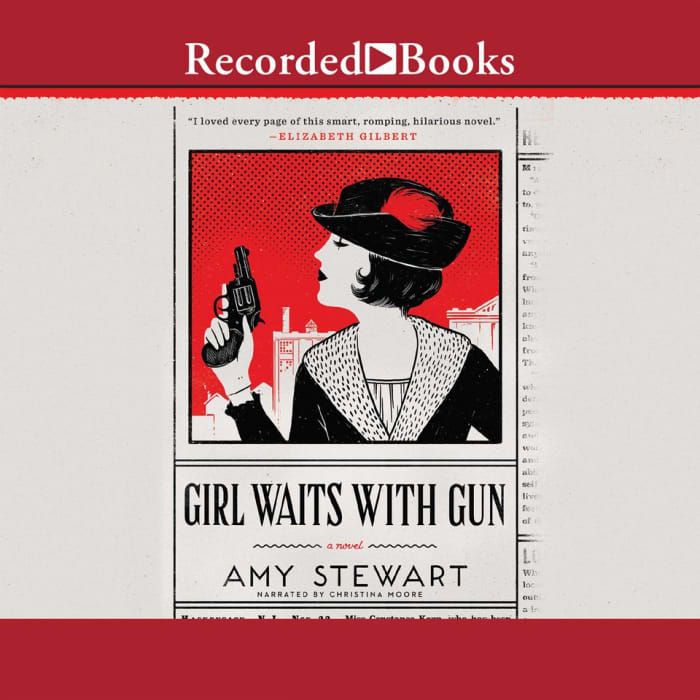
The Churn by James S. A. Corey (audio)

Holy smokes, this is the one I’ve been looking for through all these episodes in the world of The Expanse: Amos’s backstory! I’m super excited.

This audiobook was read not by Jefferson Mays but by that other guy, Erik Davies, whom you recall I did not appreciate in Cibola Burn. He did the same plodding job here, but it’s to the credit of The Churn that I didn’t even care. (Also, he got Amos’s voice right so that it was recognizable, even under – slight spoiler – a different name.)

We are back in Baltimore, and Amos (under a different name) is just “a boy,” although quite a big, strong one – a young man, I’d say, although if his age is ever given, I missed it. He’s got a new job in a criminal organization; he’s just feeling his way, although it’s clear from the start that his calm comfort with violence is already a feature. Also that amiable, puzzling smile. This is the origin story I’ve been wanting all along, although I still have some questions about his sex life.

“The Churn” refers to a cycle of violence where the security forces crack down on the criminal element; things get crazy for a while, but they’ll cycle back to the status quo. This “churn” is only different in that it offers Amos a vital choice that will propel him (pretty literally) into space, and start that other career that eventually leads him to the Rocinante. It also introduces Lydia, whose memory we see again in Nemesis Games. It reveals much, but never quite enough, because I love Amos.

I don’t want to give any more away here. If you are remotely a fan, make The Churn a top priority. Don’t wait.


Rating: 9 bites of ginger beef.

museums: MFAH and the Holocaust Museum

Over the winter break I traveled home to Texas, and had a wonderful time with all the friends, restaurants, events… and a couple of great museum visits. Just some quick notes here.

Museum of Fine Arts Houston (photo credit)

With an old friend, I visited the Museum of Fine Arts Houston to see the new Norman Rockwell exhibit there. I learned a lot about him. We all know Rockwell in some way – his better-known images are in the fiber of American culture. But (of course) there’s more story there than I knew. For instance, I hadn’t realized that after forty-some years, he left the Saturday Evening Post at least in part for moral reasons: they forbid portrayals of Black Americans outside of service roles. It was the 1960s, and he needed to depict what was happening in the real world, including the Civil Rights Movement. Look published his work in that later era, including “The Problem We All Live With” (you know this one, if not by name: it features Ruby Bridges walking to school in New Orleans, flanked by U.S. Marshals and backgrounded by ugly graffiti and a thrown tomato). I saw some striking paintings from that later career, including one of Lincoln, and several portrayals of multiculturalism and interracial camaraderie.

In the earlier Post era, especially, Rockwell is accused of being overly optimistic, of depicting an America that is homey and happy and quaint. (He’s even inspired an eponym.) I don’t think that’s entirely fair. Optimistic? Yes. But I think he was always portraying real life, even if his images had a hopeful slant to them. There is the element of the everyday, of skinned knees and half-peeled potatoes, that feels more authentic than sentimental, not that there’s an absence of the latter. Also, he likes strong girls and women, which I appreciate (think “Outside the Principal’s Office,” which I’m very sorry was not a part of this exhibit). The attention to detail and to the everyday and the modest is what seems to me to have carried him into the civil rights subjects of his later work.

In telling my father about the Willie Gillis series, he shared that my great-uncle (my father’s namesake), who died in WWII, had sent home a series of his own cartoons of military life. I was thrilled to get to see some of these that he scanned over for me, and he gave permission for me to share one here. Not every soldier was a Norman Rockwell, but many of them recorded their lives in the same way, including one of my own family that I never got to meet.

my great-uncle’s wartime art

Rockwell’s four paintings portraying the Four Freedoms were present in several iterations, and I got to read about how they each came to be; they even have the jacket that was used for the “Freedom of Speech” painting (worn by his model). At the end of the exhibit, a small room was filled with photographs taken as part of a recent project, “For Freedoms.” These images reimagine Rockwell’s originals – the same scenes, same poses – but populate them with more diverse faces and bodies. Click the link and spend a few minutes. With all that I found powerful about this exhibit, this final small room was the part that moved me most, and made me feel really good.

In short, I found the Rockwell exhibit intriguing and moving, and was glad to learn more about the man.


Holocaust Museum Houston (photo credit)

The next day, I took myself to Houston’s Holocaust Museum, which I think I last visited some 30 years ago. What to say about the Holocaust Museum? I think they’ve done a pretty good job with an unspeakable task, to communicate a history of massive scale and unthinkable cruelty and ugliness and hate… I also did some thinking about how the Holocaust is something we sort of just all know about, to some extent – except that I now know that not everyone does know, which is a piece of profound news I’m still processing, actually. I have some memory of discovering this topic for the first time, when I was a kid, in elementary school. In my memory, much of the horror was communicated in images, photographs that showed graphically what it looked like to starve to death. This museum did not rely on such graphic, upsetting images. Most of the photographs were of healthy families and children from before the war, with a note that this child was killed at age seven, etc. I think graphic images are powerful, on the one hand, because they viscerally communicate how bad things were. On the other hand, they run the risk of sensational “torture porn,” of the image itself and its shock value taking away from the message we most need to hear. I appreciate the Holocaust Museum’s approach here. Also, one notable exception: there was a video showing on a monitor, near the floor, pointed straight up at the ceiling, and in a tube, so you had to stand directly over it and look straight down – in a rather uncomfortable position. I couldn’t figure out why they’d use such a weird design, until I saw the content of the video. It was about the post-liberation coverage of the concentration camps, how Eisenhower had the media come in to record and show exactly what was there. It was that footage, of the bodies recovered near death. It was quite graphic, and very affecting, and upsetting; at that point, the physical discomfort of the position required to watch the video made sense. It felt like part of the effect. My theory is that this design is to keep small children from watching.

I also visited the Holocaust Museum’s exhibit of the Civil Rights photography of Danny Lyon, an exhibit on Dolores Huerta, and the art of Holocaust survivor Samuel Bak. It was a lot to take in, but it was all good. I was especially taken with Lyon’s photography of SNCC, the Freedom Riders, lunch counter sit-ins, MLK and Stokely Carmichael, among other landmarks. There was one, captioned something like “police officers pose at such-and-such place,” where six white cops stood around and sneered; one raised his middle finger, while another offered a crotch grab and full-body fuck-you posture. Speaking of graphic; the hate was visible. I kept thinking, I wonder where this man is now, who his children are, if they’re proud of their father.

The Holocaust Museum is no joy, even if the stories of resistance and rescue are moving. But it’s at least as important a history for us to see now as it has ever been, and I’m grateful this museum exists. I have been thinking about the balance, between graphic ugliness and truth about the horrors, and upliftingness of stories of resistance. I don’t know where the right balance lies, but I think they’re doing a pretty good job. I recommend this visit to everyone.


I find even the best museums exhausting, but I do love a good museum, and I’m glad to have had the chance to take in some such experiences while I was in Houston. Among other things, I saw some old friends, attended a great yoga class, ate at a whole pile of excellent restaurants… it’s perhaps more bittersweet every time I go back to my hometown, but I do love every visit, too.

Persepolis Rising by James S. A. Corey (audio)

Book seven in The Expanse!

Jim and Naomi and the crew of the Rocinante – Amos, Alex, Bobbie, and Clarissa – are aging. With the expansion of the known world(s), Earth and Mars are no longer the superpowers that they once were. The Transport Union, composed of those who were once known as Belters, are more or less in control of the 1,300 new worlds in the Ring System. Much has changed. But much has not changed: like human nature, the will to rule. And James Holden hasn’t changed much, in his drive to get involved in sticky situations, his need to do the right thing at all costs, and his tendency to dive blindly in. On the other hand, maybe he’s changed more than we think: early in this novel, Naomi is able to talk him into retirement, which quite catches me off guard. (The Roci‘s crew less so. They’ve been seeing him age all these years, when I just took a short break since book six.) Retirement doesn’t mean that Jim and Naomi will be any less involved in the next major historical event, however.

In this episode, a military superpower invades Medina Station, and the Roci‘s crew ends up working with former OPA factions as part of a small resistance band. Amos is asked to practice diplomacy; we can imagine how well that goes over. Perhaps I’ll leave my plot summary there.

Alex and Bobbie have become fast friends over the years, closer than ever, and the same goes for Amos and Clarissa. Neither of these alliances is romantic, but both are almost mystically deep, and one will rupture before this story is over. Naomi and Jim have a heartwarmingly constant romance, but old problems still plague, and certain practicalities are left up in the air. In other words, like all the others before it, Persepolis Rising is about people above all else. I admire Corey’s gifts: not only mind-expanding (ha) world-building, but the ability to follow this world through over many decades (not to mention the past centuries that brought us here). This volume broadens my sense of what is possible for this series, while also limiting it: if our core characters die, is there any Expanse left?

In this book perhaps more than some others, I zoned out on the technical details. I really don’t care, and am happy to just trust that people can be in places when the story says they can be, etc. Was there more of that stuff than usual, or was it just the effect of a very long drive (West Virginia to Texas) that let me drift off? No matter; I enjoyed the overall effect – that human story – as much as ever, and I’m quite looking forward to finding out what happens in the end. I’m also worried. I think book eight is recognized as the last one. There are just a few more novellas to track down; and then what? (Things don’t look good for Holden, in this light.)

I’m rambling now. These books thrill me, and I am entirely converted to the concept of sci fi, if done this way: people first.


Rating: 7 bombs.

comparative literature and lives, from Pops

The Living Mountain
Nan Shepherd (1945 / 1977)

Under the Sea Wind: A Naturalist’s Picture of Ocean Life
Rachel Carson (1941 / 1952)


I want to celebrate early – and timeless – work from two remarkable women naturalists of the 20th century. This is not really book reviewing; it is tribute to these two writers’ noteworthy similarities and differences, and appreciation of their early, largely disregarded success. The books came to me unintentionally, separately, and coincidentally; that’s always a fun thing.

As shown in these books, both authors were naturalists in the purist sense: keen observers of the more-than-human milieu around them, with a literary voice enabling them to describe what they saw, which appeared so differently to them than most people. Humans rarely feature; they appear only occasionally as natural background to the author’s higher interest in place, or other inhabitants.

While both show an informed ecological understanding of what they observe, such insight is rarely explicit; they ‘teach’ by example. Both prefer to rely on literal and figurative senses as a narrative lens, and the result on these pages, while different in style, is surprisingly similar in tone, feeling and impact. There is a sophistication to their form that impresses, especially for its time. Carson embraced the term ‘poetic prose’, which certainly applies to both.

They lived during the same era, against a backdrop of both constraint and change for women. They wrote the two works cited here within the same decade (1935-45); publication of each book was at least partially affected by the war. There is no suggestion they knew of each other.

While both traveled internationally, they lived on different continents. The focus of their attention in the natural world rarely overlapped, even while the results of their inspiration bore similar fruit on the page. Carson was a committed author and trained biologist; Shepherd, always ‘only’ a writer, and more introspective. Early writing success met Carson, followed later by greater success and international impact; Shepherd’s writing was only fully appreciated late in life, and even then mostly limited to her region.


Nan Shepherd was born (1893) and lived always within walking distance of the Cairngorm massif in Scotland’s central highlands – and walk she did, across every ridge and through every valley of her cherished place. Always a poet, sometimes an essayist, she had a brief burst of minor publication before she finished writing The Living Mountain in 1945 at age 52.

For various reasons – post-war disruption, intervention by a mentor, some factors perhaps inexplicable – the book was not published. Only in 1977 was the original manuscript revived by the author and publisher (4 years before her death); it immediately gained attention regionally. Largely due to ‘discovery’ and ardent promotion by Robert Macfarlane, it has belatedly become a classic. The Scottish five-pound note now displays her image, with a quotation.

Shepherd’s subject here is explicitly The Living Mountain, which she embraced passionately her entire life. Her brief Foreword in 1977 testifies to her continued attention to that place. While the narrative draws from her experience over decades, it is organized into 12 chapter categories of her choosing, from Water, to Plants, to Being.

Her focus never strays beyond its boundary of geography, shaped by water. But her meaning for ‘the living mountain’ encompasses everything about it: rocks and water; clouds and winds; plants and insects; large and small; above ground and below; its impact on the psyche. Implicitly, this is an ecological view. Her language is intimate, lyrical and dense – all, matching her perception of the subject. Yet her voice is calming & humble, conveying her affinity for Buddhism. There is likely nothing else in print resembling her work here.

Macfarlane’s introduction in the 2011 edition runs to 28 pages including three pages of footnotes. This is a superlative essay in itself (of course, one might say), partially because Macfarlane himself roamed these hills as a youth, and even today. But mostly this is his own tribute to Shepherd, as we hear her on these pages. As he says, this is “a formidably difficult book to describe.” I would agree, and say that about both books.


Rachel Carson was born more than a decade after Shepherd, in rural Pennsylvania. Even though she grew up land-locked her reading inspired an interest in the ocean. So it is unsurprising that the sea informed both her early interest in writing, and eventual degree in aquatic biology. Significantly, her early work in articles led to mentoring by a Dutch children’s author, who encouraged her simple, direct, descriptive writing style, which is so effective later.

Under the Sea Wind was her first book, published in 1941 at age 34. (Two subsequent books now comprise her ‘Sea Trilogy’: The Sea Around Us, and The Edge of the Sea.) While initial publication met with critical success, sales and popularity were dampened by the war. When The Sea Around Us became a bestseller in 1951, the earlier book was rediscovered and the next year also became a bestseller.

Under the Sea Wind is organized into 15 chapters, divided 5-7-3 into three sections, or ‘Books.’ Each Book is a theme that ties together its chapters in loose narrative; yet all three also naturally connect in a general sense, and comprise a generic year’s cycle.

Carson’s sightline in this book covers the broad western hemisphere, especially the western Atlantic, encompassing ocean and sea; shoreline and river; marine and freshwater; birds and fish; whales and sand fleas. Yet, on a given page, her attention is particular species, and even individuals of a species, which she sometimes assigns a proper noun. One can imagine children of a certain maturity devouring some passages; and adults of a certain proclivity cherishing its entirety.

The magic of her ecological view is how her ‘narrative’ seamlessly and endlessly follows one organism to the next, taking as a thread a trophic food chain, or an expansive migration path, or intricate inter-species symbiosis. But she rarely resorts to such jargon, any global perspective, or stated scientific facts. She simply knits together, piece by piece, story by story, an appreciation of this connected web of life.


The relaxed pace; the embracing language; the sense of peacefulness amidst natural turbulence; the reassurance in understanding how things work – both books display these things, and commend themselves to sympathetic readers.

guest review: The Marrow of Tradition by Charles Chesnutt, from Pops

Here’s how I ‘found’ this book. Your July 2019 post about various short-reads included Charles Chesnutt’s essay “The Banquet,” which I appreciated. You also linked to Wiley Cash’s fine essay recommending Chesnutt’s novel, and interpreting it in light of current events – which convinced me to eventually find a used copy. Along with the novel’s 1993 introduction, Cash’s explication of the book, its era and its implications is an excellent addition to a full understanding.


The Marrow of Tradition by Charles Chesnutt was published in 1901; I read the 1993 edition with introduction by professor Eric Sundquist. The novel was reportedly well-researched by the established black author, using the Wilmington, NC Massacre of only 3 years earlier as foundation for its story about a fictional ‘Wellington.’ Chesnutt had relatives who survived the event, and interviewed their neighbors as well; further, his personal history tied him emotionally to the wider narrative. In the book, the event itself is limited to the last ~100 pages (of 340), although that finish is given force by the involvement of fictional characters developed throughout the book. This is a fascinating, accessible look at an important historical event, through the unusual lens of informed and incisive literature of the same time.

Chesnutt’s main interest is in describing how much the post-Reconstruction period is reverting to the form of its racist legacy: white control and oppression are still functional; social relations serve to keep the town’s minority-white (~1/3) elites well-ensconced; mixed-race generations are in the shadows but ever-present (reflecting Chesnutt’s own family history). Indeed, this is a heritage of social complexity that Ta-Nehisi Coates is addressing even today in his new fiction. Chesnutt’s purpose is to give readers of the time a sense of “the complex psychology of white supremacy and black resistance” [Sundquist], for a close look at the social tensions stewing in this small town where a few white conspirators use the specter of rape to intentionally create conditions for a coup, for mobs to overthrow the elected Republican (white and black) leaders, and murder many citizens in the process. Chesnutt himself sent copies of the book to politicians of the time.

The narrative form is dated yet engaging, suggesting a period gothic novel of the antebellum south, often preoccupied with big-house romances, rivalries and closeted skeletons. Black characters too often appear mere background for that narrative. The melodramatic ending involves several fictional characters, apparently unrelated to real events. In effect, for a modern reader, Chesnutt generously ‘humanizes’ the white villains to a surprising extent, depicting their anxieties and self-justifying motives. It is curious that an involved black author, especially with historical purpose, chose this form and delivers so well; but it was an established form and likely effective – I am in no place to judge. To be fair, his description of the social mechanics of oppression are in spells direct and unvarnished. Still, I felt the limited narrative about black characters was glaring, and often served to trivialize them.

The essential 1993 Introduction (a detailed 37 pages) by white academic Sundquist addresses the author’s life and work, the country-wide factual context of reaction to Reconstruction, the factual basis of the event itself, the book’s references to real people; and convincingly analyzes the literary result. He tags the book as “One of the most significant historical novels in American literature.”

Prominent for Sundquist is this thesis: “The gender politics of the Wilmington revolution were of utmost importance to a national ethos of segregation.” This is not ‘gender politics’ in our contemporary sense. Rather, for me he refers to the broad historical morass of racism, gender and sexuality: the southern white male ego threatened by both black men and encroaching potent black culture; confusion arising from both sexual attraction and sexual assault amongst all manner of racial pairings; rape as both a weapon to dominate a people, and contrived as excuse to torture, mutilate and murder its men; biracial children as legacy complicating both the perpetuation and the extinction of white supremacy, for all parties; maybe more. His sweeping analysis defeats my capacity to summarize. Some threads of all this arguably appear in Chesnutt’s novel (e.g. the character of Chesnutt’s fictional Olivia Carteret); Sundquist provides further evidence in historical fact. His explication is compelling.

I am so thankful for this thorough review of a complicated book!

The Third Rainbow Girl by Emma Copley Eisenberg

A keen, thoughtful inquiry into relationships, place and the forces that contributed to a 1980 crime.

In The Third Rainbow Girl: The Long Life of a Double Murder in Appalachia, Emma Copley Eisenberg offers a true crime story as well as a painful look at misogyny and estrangement; a gorgeously rendered memoir of human relations; and a sensitive, perceptive profile of a misunderstood region.

In 1980, two young women were hitchhiking to a Rainbow Gathering (one of a series of events that attracted as many as 20,000 hippies) when they were killed and left in a remote clearing in southeast West Virginia’s Pocahontas County. A third young woman had parted ways with her hitchhiking companions just before they died. Eisenberg’s title points toward her fascination with this character: the one who, apparently by a stroke of luck, lived. Locals told conflicting stories about what had happened. More than a dozen years later, a local man was tried and convicted, then later won his freedom in a new trial. An imprisoned serial killer claimed responsibility, but was considered a less-than-reliable source and was never tried for these crimes.

The Third Rainbow Girl is an incisive, thoroughly researched work of true crime reporting. Eisenberg visits those close to these events–the accused, witnesses to the trial, lawyers, police investigators and local bystanders–and forms her own loose theories, while acknowledging how much will never be known. The book’s mastery, however, is in how much more it accomplishes. “If every woman is a nonconsensual researcher looking into the word ‘misogyny,’ then my most painful and powerful work was done in Pocahontas County. It could have been done in any other place, because misogyny is in the groundwater of every American city and every American town, but for me, it was done here.” Importantly in this region that is oft maligned, Eisenberg lived in Pocahontas County for a time, forging relationships and grappling with her place in the world; she begins to bridge the differences between Appalachian insider and outsider. Part of her work is indeed to study misogyny, the relationships between genders and the responsibilities and challenges of those, like herself, who wish to enter a troubled place and “do good.” This book is as much about gender and political and social relations as it is about a specific crime. In brief sections, it also contains an outstanding account of the historical forces that shape present national attitudes toward Appalachia.

Eisenberg’s gaze is unflinching, whether turned on a traumatized community, an unlikeable but probably innocent man or upon herself and her own tendencies. Her prose is incandescent, precise, descriptive and often lyrical: a medical examiner testifying at trial has “a face so pink it looked slapped” and her first time spent
working in West Virginia at a camp for girls is “dense and crackling.” The narratives of the murders, of the investigations and trials and of the author’s Appalachian life intertwine and comment on one another. The result is a subtle, steadfast examination of the sources of pain and trauma.


This review was written for Shelf Awareness for the Book Trade, but is published for the first time here.


Rating: 9 music nights.

One of the things I appreciated here is that Eisenberg was sensitive to the local perspective and her position as outsider (because even after months or years here, you go easy declaring yourself to be an insider). Unlike Ramp Hollow, this book cites sources from within the community (like Sugar Run!).

movie: Brokeback Mountain (2005)

I just recently rewatched this movie, which I saw when it first came out, and appreciated. I’m quite blown away. This is masterful understatement. Emotions run fast and deep; Jack Twist and Ennis Del Mar are men’s men in a classic sense, macho, physical, and (in Ennis’s case) of few words; they are also lovers. There is a rough physicality to their affection, as in the scene when Jack shows up at Ennis’s apartment after four years apart. It’s a deeply sexy, sensual movie, perhaps more movingly so because of how different this love and sex is from what we’re accustomed to seeing in romance movies.

And it’s a very romantic movie, in several senses. For one thing, there is the romantic relationship at its center; but there’s also the romanticism of ranching and rodeoing and the gorgeous scenery and harsh weather of the Montana mountains. (Heath Ledger and Jake Gyllenhaal are gorgeous, too.) I think the power of the film is in part in the overturning of expectations about romance (in both those meanings) and about who we expect Jack and Ennis to be. To put a point on it, we don’t expect cowboys to be gay, and we don’t expect gay men to be rough-and-tumble, macho-masculine cowboys. Those are stereotypes, and Brokeback Mountain is here to dispel them. But that makes it sound didactic when in fact it’s anything but that: it’s deeply beautiful, starkly painful, and at every point feels true.

I have dim memories of enjoying the Annie Proulx story this movie is based on, but perhaps because I saw the movie first, my standard remains this cinematic, visceral, visual version.

I could watch this movie over and over again.


Rating: 10 hats.

WVWC Dept. of Theatre and Dance presents Fool For Love (2019)

Written by Sam Shepard in the ’80s, this one-act play features just four actors/characters; this production was student-directed, and one of the lead roles was played by one of my students. (I was going to go anyway, but was extra excited when I heard that.) It was phenomenal; I’m so glad I went.

The whole thing takes place in a hotel room in a desert, where May is staying. She has just received an unexpected guest, Eddie, who appears to be a former lover. He wants to take her away to live in a trailer; she doesn’t want to go. They argue and argue and argue… she says she’s expecting a date, but Eddie isn’t sure he believes her. A strange man sits in one corner of the room, only occasionally interacting with the two main characters. Eventually Martin, the new date, does show up, and the three continue a confrontation of sorts. The story of Eddie and May, their past and their relationship, eventually becomes clear. The actual, present-tense action is fairly sparse; the plot is formed more by the backstory related in dialog than by the events within the play itself, although there are some small but significant developments there, too.

The strengths of the play as written are all about tone and atmosphere, black humor, and the kind of frustration and quiet desperation that marks Shepard’s work (and reminds me of Tennessee Williams too). It’s a hell of a play; but I’m perhaps even more impressed at how well these college kids knocked it out of the park. (I guess I expected more from Shepard than I did from them, I confess. I saw a play at the college earlier in the semester that was so bad I didn’t bother to write about it here.) That is, the two lead roles (Eddie and May) were both played by college kids–both freshmen, no less!–while the old man was played by a member of staff, and Martin was played by I think an alumnus. Still.

They knew their lines; they delivered them powerfully; I was able to lose myself in the play and forget that it was a play at all (and saw my student in a whole new light), which is the highest achievement, I think. I came home that night in a glow of appreciation. Thanks, young people. Keep up the excellent work. I look forward to seeing Steel Magnolias in the spring!


Rating: 9 glasses.

movie: We Have Always Lived in the Castle (2019)

There’s a movie version out of We Have Always Lived in the Castle! Boy, rereading that review was interesting. This blog was still pretty young back in 2011. I cringe a bit at the thought that I didn’t know the book yet, and didn’t make the Shirley Jackson connection; but that’s what life is, is a learning process. Everything you ever know, you at one time didn’t know yet! (Don’t make fun of beginners!) Also, it’s interesting to note that now the big Shirley Jackson reference is not “The Lottery” but The Haunting of Hill House, since it’s recently been made into a successful TV series. My students this coming semester will be reading “The Lottery,” of course.

First note: the movie is scarier than the book was. I recall (and it seems from my review) that the book was more spooky or creepy than outright frightening. Well, the movie is not straight horror, in the sense that there are no jump scares; but I was more upset by the things that lurk in the night. For one thing (spoiler follows here in white text, highlight to read): Cousin Charles reads as physically threatening, as in he assaults each sister in turn in what might be a sexual fashion, which I don’t recall happening in the book.

Reviews are mixed. Some reviewers found the tone of the movie off; others felt there wasn’t enough substance, or something like that. I found it to be quite a successful adaptation, and wonder if some of the criticisms aren’t missing the point, or if things I’m calling positive were what most bothered those reviewers. For example, it’s true that the aesthetic of the movie is bright and colorful – not at all matching its content. Constance is forcefully cheerful, with a bright Stepford smile; she almost seems drugged (and her pupils are dilated – how’d they do that? give her eye drops?). This contributes to a weirdly upbeat vibe, even though it’s patently faked, and often in extreme contrast to the conflicts taking places around Constance. It’s odd, but not I think by accident. Each character – weirdo Merrikat; forced-chipper, porcelain-beautiful Constance; increasingly angry Charles; and poor unbalanced Uncle Julian – delivers their own lines in varying forms of deadpan; each believes their own reality. It’s most disturbing, and that is absolutely the point.

There is a trailer here, which on the one hand gives a good impression of visuals and atmosphere, but on the other hand maybe you should go in without having seen so much of it? Maybe the latter; I’m glad I went in more or less blind.

It has been eight years since I read the book, which undoubtedly helps, but I’m inclined to say that as far as book-to-movie adaptations go, this one was quite good and less likely to frustrate the book’s fans than most. Full credit for capturing the feel of the original; great visuals and a hair-raising effect, even without your traditional horror movie’s jump scares. I’m looking forward to reading “The Lottery” with my undergrads now.


Rating: 7 pies.

guest review: The Living Mountain: A Celebration of the Cairngorm Mountains of Scotland by Nan Shepherd (introduction by Robert Macfarlane), from Pops

Months ago, back in August, my father came to visit me in my new home in West Virginia. One of our evenings was spent with my friends Doug and Melissa, down at the little brewery in their town, sharing stories and pints and a pizza. Among many other things, various author names were thrown about. Robert Macfarlane forms a meeting point for Pops and Doug. We finished up at their home, with a little casual live music from our host, and a book recommendation. My father returned home to Washington state and acted quickly. I received this email from him just a week or two later.

On Doug’s recommendation, I received this WWII-era book, lost and only first published in 1977: The Living Mountain, by a UK publisher, from Pacific Northwest provider ThriftBooks. This used copy is the 2011 edition with a 26-page introduction by Robert Macfarlane. Shepherd’s subject-homeland is the Cairngorm Mountains in Scotland, one of my favorite places from our visit, where we stayed a few days so I could take several mountain hikes, view Scots Pine recovery efforts and drink Cairngorm Brewery’s Black Gold Ale at the local pub with a view.

In 1977, The Guardian called it “the finest book ever written on nature and landscape in Britain.” Their 2011 review says “This is sublime, in the 18th-century sense, when landscapes like these were terrifying. And she achieves it in language that is almost incantatory, like a spell…” I can’t wait.

Scots pines. photo credit: Pops.

Black Gold. photo credit: Pops.

Some three months later, I received this review.

The introduction here is by Robert Macfarlane, who nearly singlehandedly has led a revival of her works of poetry, fiction and this book. And today the Scottish 5-pound note displays her image, with a quotation.

As Macfarlane says, this is “a formidably difficult book to describe.” Shepherd’s subject here is the Cairngorms: a massif, a group of peaks, a plateau – all those things, which she habitually refers to as the Mountain: an organism, an ecosystem, full of life, all its pieces intricately and inextricably linked. This place comprised her true life-long home, even as she traveled widely. She was obviously a committed and ambitious walker, in all weather; hers were no casual visits to the Mountain, and she often stayed overnight.

The Scottish author quietly lectured in English for Aberdeen College for most of her career. Eight years after writing four books in a burst, she wrote (and shelved) this one in 1945 at age 52. It was only published in 1977, inexplicably (although: Macfarlane notes the same year saw four other similar classics; again, a mystery). She died four years later.

Her language is simple, florid, passionate, and so unending it leaves one nearly breathless even if reading in silence, creating a sense of stream-of-consciousness in spite of typical narrative form. I was immediately deterred from any highlighting or marginalia; the prose is simply too dense with compelling description and notions. It is no surprise to learn she was a close reader of Buddhism; her sense of being one with the Mountain is complete: spiritually, physically, emotionally. Her ability to convey a deep and personal devotion to place challenges many others who embrace the same sense, and work hard at molding language to the task of saying so: Berry, Doyle, Sanders, Kingsnorth come to mind. Yet, reportedly, she never felt that task complete.

I was reassured all along knowing we have Macfarlane’s introduction to rely on; it’s an artful and meaningful essay in itself, and does justice to her work. He reports reading the book “perhaps a dozen times,” and his always capable language is informed by his own early-life passion for the same place, which I briefly visited as well. I only wish I had carried her slim, small volume with me when I was there, as both guide and inspiration.

What a lovely review, and strong endorsement! Thanks, Pops.

And for a postscript: Macfarlane’s 2013 Guardian article (with slideshow) about his recent visit to the Mountain, Shepherd always in mind, provides ample evidence of the magic.